
A commercial electrical upgrade is any change to a building’s electrical service, panel, or wiring that restores safe capacity, meets current code, or supports new load demands. Recognizing the signs early is what separates a planned upgrade from an emergency.
Business owners and facility managers who catch these signs early avoid costly shutdowns, code violations, and fire hazards. Electrical load calculations are the industry’s standard diagnostic tool for judging whether a system can handle its current and future demands.
The warning signs vary widely. They range from specific panel brands with known manufacturing defects to physical symptoms like burning smells and scorch marks.
1. Signs your commercial electrical system needs an upgrade: hazardous panel brands
Certain electrical panels require immediate replacement regardless of how they look or how long they have run. Federal Pacific Stab-Lok, Zinsco, Sylvania-Zinsco, and Pushmatic panels are known to fail at their core function: tripping during an overload.
That failure is dangerous. A circuit that should shut off during a fault instead stays live, turning a minor electrical problem into a fire hazard.
The failure mode is not visible from the outside. A Federal Pacific Stab-Lok breaker can look perfectly normal while being physically incapable of tripping under load.
Facility managers often discover these panels only during a routine inspection, or when a licensed electrician opens the panel door.
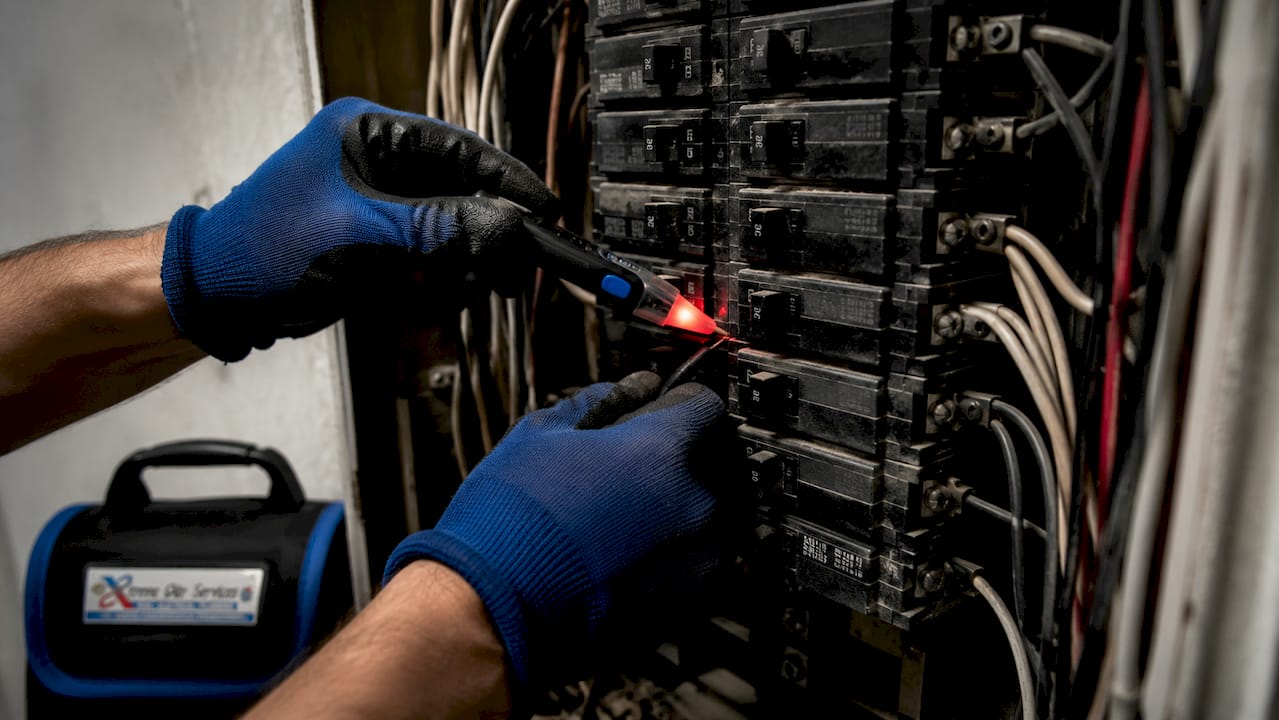
Identifying these panels is straightforward. Look for these telltale features:
- The brand name printed on the panel door or on the breakers themselves.
- Zinsco panels often have colored breaker handles in blue, green, or red.
- Pushmatic panels use push-button breakers instead of toggle switches.
Repair is not a viable option for these brands. The manufacturing defects are systemic, not isolated to individual breakers. Replacement is the only safe resolution.
| Panel risk category | Examples | Recommended action |
|---|---|---|
| Known defective brands | Federal Pacific Stab-Lok, Zinsco, Sylvania-Zinsco, Pushmatic | Replace immediately |
| Aging but functional panels | Older Square D, Siemens, Eaton | Diagnostic load calculation |
| Overloaded newer panels | Any brand with double-tapped breakers | Inspection and capacity review |
| Code-compliant panels | Properly maintained, correctly sized | Routine monitoring |
Pro Tip: If you do not know your panel brand, photograph the inside of the panel door and send it to a licensed electrician before touching anything. Never assume a panel is safe based on age or appearance alone.
2. Frequent breaker trips under normal operating load
Frequent breaker trips under normal daily load are one of the most reliable signs that a commercial electrical system is under stress. The pattern tells you the circuit is overloaded or the breaker itself is failing.
Context matters here. A breaker that trips once during an unusual power surge is simply doing its job. A breaker that trips repeatedly during normal operations is not.
The distinction matters because the fix is different in each case. An overloaded circuit needs load redistribution or a capacity upgrade. A failing breaker needs replacement. Only a licensed electrician with diagnostic tools can tell you which problem you have.
Resetting a tripping breaker without investigation is the facility management equivalent of ignoring a check engine light. The underlying cause does not go away. It compounds.
3. Flickering or dimming lights throughout the building
Flickering lights are not a nuisance. They are a symptom of voltage fluctuation, which usually points to one of three causes:
- Loose wiring connections
- An overloaded circuit
- A failing panel component
When lights dim every time a large piece of equipment starts up, the system is struggling to distribute power evenly.
In a commercial setting, this symptom carries extra weight. Voltage fluctuations damage sensitive equipment like computers, medical devices, and industrial machinery.
A single voltage spike from an unstable system can destroy equipment worth far more than the cost of an upgrade.
Persistent flickering in multiple areas of a building points to a panel-level problem rather than a single circuit issue. That distinction moves the solution from a simple repair to a full system assessment.
4. Warm panel covers, burning smells, or scorch marks
Heat coming from an electrical panel is a serious warning sign. Warm or hot panel covers, burning smells, and scorch marks all indicate that components inside the panel are overheating. Overheating is a direct precursor to electrical fires.
Scorch marks around breakers or on the panel interior show that arcing has already occurred. Arcing happens when electricity jumps across a gap, generating intense heat. Once arcing starts, the risk of ignition rises sharply.
A burning smell without a visible source is equally urgent. Overheated electrical insulation gives off a distinct smell, often described as burning plastic or a sharp chemical odor. Do not wait for a visible sign before calling a licensed electrician.
Pro Tip: Schedule a thermal imaging inspection of your electrical panel annually. Thermal cameras detect heat buildup inside panels before it becomes visible or causes damage. Many licensed electricians offer this as part of a commercial electrical inspection.
Here are the physical warning signs that demand immediate professional evaluation:
- Warm or hot panel cover to the touch
- Burning or chemical smell near the panel or outlets
- Scorch marks or discoloration on breakers or panel interior
- Buzzing or crackling sounds from the panel
- Outlets or switches that feel warm
- Flickering lights in multiple areas simultaneously
- Breakers that will not stay reset
- Double-tapped breakers (two wires connected to a single breaker terminal)
- Visible corrosion or moisture inside the panel
Any one of these signs justifies an immediate call to a licensed electrician. Multiple signs together indicate a system that has moved past the warning stage.
5. Double-tapped breakers and wiring shortcuts
Double-tapping occurs when two separate circuit wires are connected to a single breaker terminal. Most breakers are designed and rated for one wire only. Connecting two wires overloads the terminal, creates heat, and increases the risk of a loose connection or arc fault.
Double-tapping is almost always the result of someone adding circuits to a full panel without upgrading the panel itself. It is a common shortcut in commercial buildings that have grown over time without a matching electrical upgrade.
Scorch marks, double taps, and load calculation failures are measurable symptoms. Together they reliably predict underlying system failure risk.
The fix is not simply separating the wires. A panel with double-tapped breakers is a panel that has run out of capacity. The real solution is a panel upgrade or a subpanel addition.
6. How load demands and facility expansions trigger upgrade needs
New load demands trigger an upgrade need when they exceed a system’s rated capacity. Adding equipment to a commercial building without first assessing the electrical system is one of the most common mistakes facility managers make.
Professional electrical load calculations are the standard method for checking whether a system can support new high-draw equipment. That includes EV charging stations, industrial HVAC units, and commercial kitchen appliances.
A load calculation measures the total electrical demand of all equipment and compares it against the system’s rated capacity. When demand exceeds capacity, the system needs an upgrade before the new equipment is connected.
The scope of that upgrade depends on the results. Sometimes a panel upgrade is sufficient. Other times, a full service entrance conductor replacement is required, which sharply increases project scope and cost.
Knowing this before construction begins protects your budget and your timeline.
| Equipment addition | Typical load draw | Likely upgrade trigger |
|---|---|---|
| Level 2 EV charging station | 7.2 kW per unit | Panel upgrade or service entrance upgrade |
| Commercial HVAC unit | 5–20 kW depending on size | Load calculation required |
| Commercial kitchen equipment | 10–50 kW combined | Full service assessment |
| Server room or data closet | 5–15 kW | Dedicated circuit and panel review |
| LED lighting retrofit | Minimal | Usually no upgrade needed |
Proactive load planning also protects code compliance. Adding high-draw equipment without a permitted upgrade can result in failed inspections, fines, and mandatory shutdowns. The electrical contractors in Dallas at Xtreme Air Services conduct load calculations as part of every commercial upgrade assessment.
7. An electrical system that cannot support modern technology
Many commercial buildings simply were not wired for modern technology. Buildings constructed before the widespread adoption of computers, networked devices, and high-efficiency HVAC were not designed for today’s electrical loads.
A system sized for fluorescent lighting and basic office equipment cannot reliably support a modern server room, a fleet of workstations, or a building management system.
The symptom is not always dramatic. You may notice subtler signs instead:
- Equipment that runs slowly
- Power quality that is inconsistent
- Utility bills higher than expected for your square footage
These all point to a system working harder than it should to deliver adequate power.
Modern electrical systems also include arc fault circuit interrupters (AFCIs) and ground fault circuit interrupters (GFCIs) as standard safety features. Older commercial systems often lack these protections entirely. Upgrading brings the building into compliance with current National Electrical Code (NEC) requirements.
8. The age of your system matters less than you think
Age alone does not determine whether a commercial electrical system needs replacement. Older panels are not always unsafe; a properly maintained system that passes a diagnostic load calculation can stay in service.
The reverse is also true. A newer panel installed incorrectly or overloaded from day one poses a genuine fire risk.
This is the most common misconception facility managers carry into upgrade conversations. The assumption that “it’s old, so it must go” leads to unnecessary spending. The assumption that “it’s newer, so it’s fine” leads to ignored hazards.
Here are the most common misconceptions about electrical system age and replacement, with the facts:
- “My panel is 30 years old, so it needs replacement.” Age triggers a diagnostic evaluation, not automatic replacement. A load calculation and physical inspection determine the actual condition.
- “My panel was installed five years ago, so it’s safe.” Newer panels installed with double-tapped breakers, undersized wiring, or without permits can be more dangerous than older compliant systems.
- “If the breakers aren’t tripping, the system is fine.” Breakers that fail to trip during overloads are a sign of a defective panel, not a healthy one. This is the exact failure mode in Federal Pacific and Zinsco panels.
- “I only need an upgrade if I’m adding new equipment.” Physical symptoms like warm panels, burning smells, and scorch marks require immediate attention regardless of whether you are adding load.
- “A panel upgrade always solves the problem.” Load calculations often determine that a full service entrance conductor replacement is necessary, not just a panel swap. Skipping the calculation leads to incomplete upgrades.
Industry experts confirm that diagnostic load calculation results and panel condition matter far more than age when determining upgrade need. That principle should guide every upgrade decision you make.
9. Lack of permits or documentation for past electrical work
Unpermitted electrical work is a liability that compounds over time. Every modification made without a permit bypasses the inspection process that catches dangerous wiring errors.
In a commercial building, unpermitted work carries three specific risks:
- It can void insurance coverage.
- It can trigger fines during a sale or renovation.
- It can create hidden hazards that a visual inspection cannot detect.
Facility managers who inherit a building often discover unpermitted work only when they pull permits for a new project. An inspector reviewing the new work may flag the old work, requiring remediation before the new project can proceed.
The solution is a full electrical audit by a licensed electrician who can document existing conditions, identify unpermitted modifications, and create a remediation plan. This protects your liability and gives you an accurate picture of the system’s true condition.
Key Takeaways
A commercial electrical system requires a diagnostic load calculation, not just a visual check, to accurately determine whether an upgrade is needed.
| Point | Details |
|---|---|
| Hazardous panel brands | Federal Pacific Stab-Lok, Zinsco, Sylvania-Zinsco, and Pushmatic panels require immediate replacement due to manufacturing defects. |
| Physical warning signs | Warm panels, burning smells, scorch marks, and double-tapped breakers all signal a system under dangerous stress. |
| Load calculations are required | Adding high-draw equipment like EV chargers or commercial HVAC without a load calculation risks code violations and system failure. |
| Age is not the deciding factor | Diagnostic results and panel condition determine upgrade need; older maintained panels can be safe, newer ones can be hazardous. |
| Unpermitted work creates hidden risk | Past electrical modifications without permits can void insurance and create undetected hazards requiring a full audit. |
What I’ve learned from years of commercial electrical assessments
Facility managers consistently underestimate how much a commercial electrical system reveals about itself before it fails. The signs are rarely subtle.
A warm panel cover. A breaker that trips every Tuesday morning when the HVAC kicks on. A faint burning smell that comes and goes. These are not mysteries. They are a system telling you it is at its limit.
The mistake I see most often is waiting for a dramatic event before acting. A tripped breaker gets reset. A flickering light gets a new bulb. A burning smell gets attributed to something in the break room. Meanwhile, the underlying condition worsens.
The second most common mistake is skipping the load calculation and going straight to a panel replacement. A panel swap without a load calculation is like replacing a tire without checking the alignment. You may solve one problem while missing the actual cause.
I have seen buildings where a panel upgrade was completed, only for the new panel to show stress symptoms within a year. The reason was simple: the service entrance conductors were never assessed.
Hire a licensed electrician who leads with diagnostics. Get the load calculation done first. Then make upgrade decisions based on data, not assumptions. That approach protects your budget, your tenants, and your liability.
— Xtreme
Xtreme Air Services commercial electrical upgrade services
Xtreme Air Services provides full-service commercial electrical inspections, load calculations, panel replacements, and service entrance upgrades for business owners and facility managers across the Dallas area.
Every assessment starts with a diagnostic evaluation, not a sales pitch. The team identifies the specific conditions driving your electrical issues, whether that is a hazardous panel brand, an overloaded circuit, or a system that cannot support your current equipment load.
From there, Xtreme Air Services delivers code-compliant upgrades that restore safety and operational reliability. Schedule a commercial electrical inspection and get a clear picture of exactly what your system needs.
FAQ
What are the most urgent signs a commercial electrical system needs an upgrade?
Warm panel covers, burning smells, scorch marks, and breakers that trip repeatedly under normal load are the most urgent physical indicators. These symptoms signal active overheating or failure risk and require immediate professional inspection.
Do I need to upgrade my electrical panel if it’s older but working fine?
Age alone does not require replacement. A properly maintained older panel that passes a diagnostic load calculation can remain in service safely. The condition and capacity of the panel matter more than how long it has been installed.
What is an electrical load calculation and why does it matter?
An electrical load calculation measures the total power demand of all equipment in a building and compares it against the system’s rated capacity. It is the standard diagnostic tool for determining whether a panel upgrade, a service entrance upgrade, or no upgrade at all is the right course of action.
Which electrical panel brands require immediate replacement?
Federal Pacific Stab-Lok, Zinsco, Sylvania-Zinsco, and Pushmatic panels require replacement regardless of their apparent condition. These brands have known manufacturing defects that cause breakers to fail during overloads, creating a direct fire hazard.
Can adding new equipment to my building trigger an electrical upgrade requirement?
Yes. High-draw additions like EV charging stations, commercial HVAC units, and server rooms often exceed the capacity of an existing system. A load calculation performed before installation determines whether a panel upgrade or a full service entrance replacement is required to support the new equipment safely.