
Common facility maintenance oversights are recurring errors or gaps in planned building upkeep. They drive up costs, create safety risks, and trigger compliance failures.
The industry term for managing these gaps is preventive maintenance management. Most property managers who struggle with costs are failing at its most basic requirements.
Reactive maintenance costs 5–10 times more than planned maintenance. Yet it remains the default approach across commercial and residential facilities. That gap between what managers know they should do and what actually happens is where the real money gets lost.
1. Common facility maintenance oversights start with reactive repair habits
Reactive repair habits are the most common facility maintenance oversight, and they start with fixing equipment only after it breaks. Planned maintenance, by contrast, schedules inspections and servicing before failures occur.
The cost difference is not marginal. Reactive strategies cost 500–1,000% more than planned ones. Every dollar spent on emergency repairs could have been a dime spent on prevention.
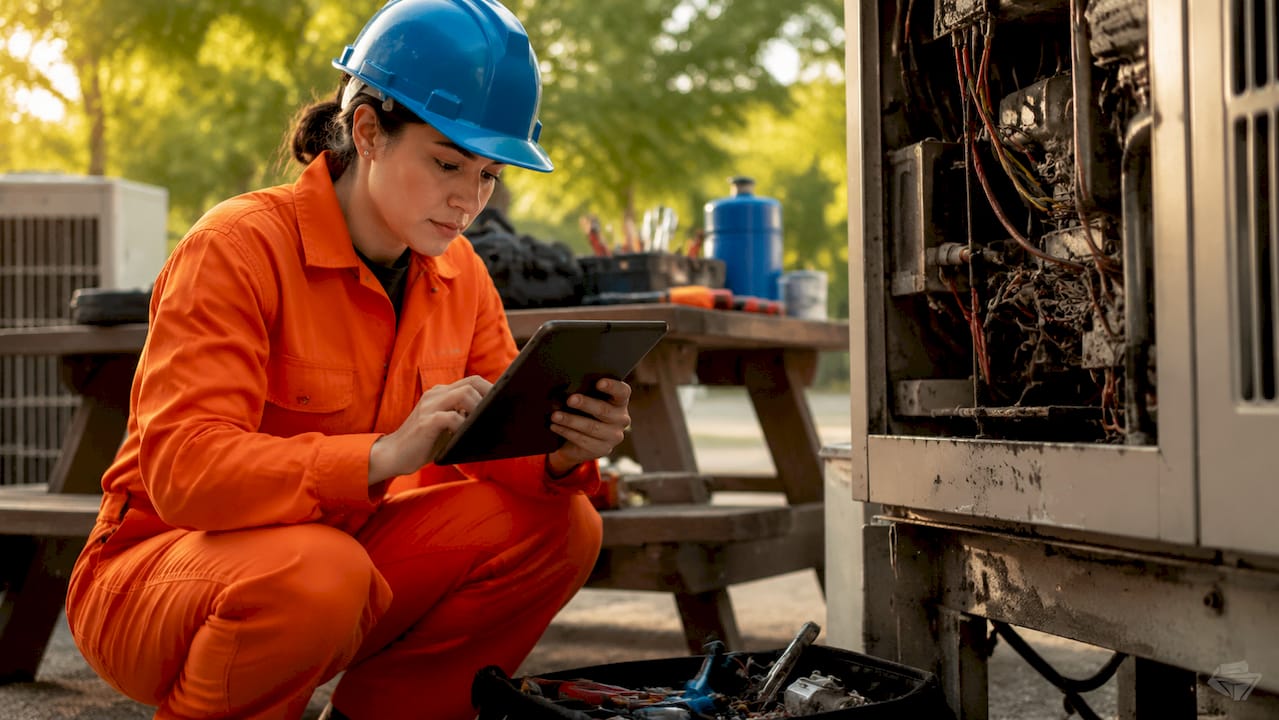
The operational damage goes beyond the repair bill. Emergency call-outs create ripple effects across the whole operation:
- They disrupt tenants and interrupt daily business
- They pull staff off scheduled work
- They often require premium-rate labor
A single HVAC failure in a commercial building can shut down operations for hours or days. Repeat failures on the same equipment signal that the root cause was never addressed. That is the clearest sign of a reactive culture.
Property managers who shift to commercial HVAC preventive maintenance report fewer emergency calls and more predictable budgets.
The shift requires three things: a scheduled inspection calendar, a work order system, and the discipline to follow through even when equipment appears to be running fine.
- Schedule inspections on a fixed calendar, not on a “when it breaks” basis
- Track repeat failures by asset to identify chronic problem equipment
- Set a budget threshold for planned maintenance separate from emergency repair funds
- Review reactive call-out logs monthly to find patterns worth addressing proactively
Pro Tip: If more than 20% of your monthly work orders are unplanned emergency repairs, your facility is running a reactive program regardless of what your maintenance policy says.
2. Poor audit documentation and orphaned defects
Poor audit documentation, not missing inspections, is what causes most facility audit failures. The failures come from missing links between what was found and what was done about it.
Standard audits now verify integrated defect-closure records. Inspectors check whether every defect recorded in an inspection report connects to a closed work order. If that link is missing, the inspection itself counts for nothing.
The specific term for this problem is an “orphaned defect.” Orphaned defects are recorded faults without linked corrective work orders. They represent the most critical hidden risk in facility upkeep.
The pattern is simple. A technician marks a fault on a checklist, submits the report, and moves on. Nobody creates a work order. Nobody fixes the fault.
Months later, the fault causes a failure. The audit trail then shows the problem was known and ignored.
Technicians often fail to escalate faults beyond inspection checklists, causing latent failures that surface during audits or, worse, during equipment breakdowns that harm tenants or operations.
Digital systems that link inspections directly to work orders transform compliance from a paper exercise into a verifiable record. Every defect gets a work order. Every work order gets a closure date. Every closure gets a technician signature.
That chain of evidence is what auditors look for. It is also what most facilities cannot produce.
- Create a mandatory rule: no inspection report closes without a linked work order for every defect
- Assign a specific person to review open defects weekly
- Use digital platforms that flag orphaned defects automatically
- Archive all closure documentation in a retrievable format, not just on paper
Pro Tip: Run a monthly orphaned defect report before your auditor does. Finding and closing gaps internally costs far less than an audit rejection.
3. Decentralized coordination and the hidden labor problem
Decentralized coordination quietly drains labor by pushing maintenance onto local site managers, and it is one of the most expensive facility management mistakes property owners make. More than 40% of facility managers cite staff and time constraints as major challenges, and decentralization is a primary cause.
When each site handles its own contractor calls, scheduling, and approvals, the results pile up:
- Inconsistent responses from site to site
- Duplicated effort across the portfolio
- No central visibility into recurring problems
The hidden labor cost is the real problem. A site manager spending three hours a week coordinating maintenance calls is not doing the job they were hired to do.
Multiply that across ten sites. You get the equivalent of a full-time position consumed by tasks a centralized workflow would handle in a fraction of the time.
Standardizing maintenance processes reduces administrative burden. It also prevents recurring issues from being treated as isolated events.
When a workflow is standardized, the same problem at two different sites gets the same response, the same documentation, and the same follow-up. That consistency separates facilities that control costs from those that constantly react to them.
| Coordination model | Response consistency | Admin burden | Audit readiness |
|---|---|---|---|
| Fully decentralized | Low, varies by site | High, duplicated effort | Poor, fragmented records |
| Partially centralized | Moderate | Moderate | Inconsistent |
| Fully centralized | High, uniform | Low, single workflow | Strong, consolidated records |
Work order approval workflows add another layer of control. Tasks below a defined cost threshold proceed without managerial review, which keeps routine work moving.
High-cost or safety-critical jobs require sign-off before work begins. That structure prevents budget overruns without creating bottlenecks on everyday maintenance.
4. Neglecting asset-specific inspection frequencies
Neglecting asset-specific inspection frequencies turns a generic schedule into a compliance trap. Identical asset types require different schedules based on usage intensity and location, so this step is critical yet often overlooked.
A water outlet used dozens of times daily needs different flushing intervals than one used once a week. Applying the same schedule to both creates over-maintenance of low-use assets or dangerous under-maintenance of high-use ones.
Regulatory standards in most jurisdictions specify minimum inspection frequencies by asset category and usage level. Applying a uniform schedule across a mixed-use facility almost guarantees non-compliance somewhere in the building.
The risk is not just a failed audit. It is a safety incident tied to an asset that was technically “inspected” but on the wrong schedule.
Competency verification compounds the problem. Outdated licenses and expired insurance can void entire site compliance documentation, so a correct inspection by an unverified contractor counts for nothing.
Property managers who do not check credentials at the site level before work begins are building a compliance record that will not survive scrutiny.
- Map every asset in the facility to its regulatory inspection category
- Assign inspection frequencies based on actual usage data, not manufacturer defaults
- Verify contractor licenses and insurance before each job, not just at onboarding
- Document technician qualifications alongside every inspection record
Verifying contractor credentials in real time, on a site-specific basis, is the standard audit-ready facilities maintain. Most facilities skip it because it requires a system, not just a policy.
5. Failing to budget for large-scale equipment replacement
Failing to budget for large-scale equipment replacement is the most expensive capital planning failure in facility management. Property managers who budget only for routine maintenance and emergency repairs consistently get caught by the cost of major equipment replacement.
HVAC systems, electrical panels, and plumbing infrastructure all have defined service lives. Ignoring those timelines does not extend the equipment’s life. It just moves the failure from a planned event to a crisis.
The consequences are severe. Cooling system failures have caused multi-year HVAC outages in residential complexes, leaving hundreds of residents without air conditioning during extreme heat.
That kind of failure does not happen overnight. It happens because nobody planned to replace aging equipment before it reached the end of its service life.
Proactive, data-driven maintenance uses early warning signs like energy consumption spikes and unusual cycling patterns to flag equipment approaching failure.
Acting on those signals months before a breakdown is the difference between a planned replacement and an emergency procurement at premium cost.
- Audit every major asset for age, service history, and manufacturer end-of-life date
- Build a multi-year capital expenditure plan that includes replacement timelines for all critical systems
- Monitor energy consumption data monthly to catch efficiency drops that signal aging equipment
- Set aside a dedicated capital reserve fund separate from the operating maintenance budget
- Schedule rooftop HVAC unit servicing annually to catch deterioration before it becomes a replacement emergency
A multi-year capital plan does not require perfect forecasting. It requires an honest assessment of asset age and a commitment to fund replacements before failures force your hand.
Facilities that do this consistently spend less over a ten-year period than those that defer every major expenditure until the equipment stops working.
6. Ignoring pest control as a maintenance discipline
Ignoring pest control as a maintenance discipline is one of the most consistently overlooked building maintenance best practices in facility upkeep. Property managers treat pest issues as one-off events rather than scheduled disciplines.
That means infestations get addressed reactively, after visible damage or tenant complaints. The reactive approach costs more and causes more disruption than a scheduled prevention program.
Commercial pest control mistakes follow the same pattern as other reactive maintenance failures:
- The problem is visible before it is addressed
- The fix costs more than prevention would have
- The root cause is rarely eliminated
Several facility maintenance issues create pest entry points, including gaps in building envelopes, standing water near HVAC equipment, and poorly sealed utility penetrations. Addressing those structural conditions is a maintenance task, not just a pest control task.
Integrating pest prevention into your standard maintenance checklist closes the gap. Quarterly inspections of utility penetrations, roof drains, and mechanical room seals catch conditions that invite infestations before they develop.
That integration also creates documentation that supports both pest control compliance and general building audit requirements.
7. Skipping energy system monitoring as a maintenance function
Skipping energy system monitoring treats a core maintenance function as an IT afterthought, and that is one of the most common facility errors property managers make. Energy monitoring belongs to maintenance, not IT.
Unusual energy consumption patterns are the earliest warning signs of several problems:
- Equipment deterioration
- Duct leaks
- Insulation failure
- HVAC inefficiency
Facilities that do not track energy use by system and by zone miss those signals entirely.
Facility managers should use energy fluctuations as early warning signs to trigger inspections before failures occur.
A 15% increase in HVAC energy consumption over two months is not a billing anomaly. It is a maintenance signal. Acting on it immediately costs far less than the repair or replacement that follows if the signal is ignored.
The practical steps are straightforward:
- Set baseline energy consumption figures for each major system
- Review consumption monthly
- Flag any deviation above a defined threshold for immediate inspection
That process takes less time than a single emergency repair call. It prevents the kind of common cooling system failures that shut down operations without warning.
Key takeaways
The most costly facility maintenance oversights share one root cause: reactive management applied to problems that scheduled, documented, proactive maintenance would have prevented or caught early.
| Point | Details |
|---|---|
| Reactive maintenance costs more | Planned maintenance costs 5–10 times less than emergency repairs; shift to scheduled inspections immediately. |
| Orphaned defects fail audits | Every inspection defect must link to a closed work order or the inspection record is worthless. |
| Centralize coordination | Decentralized site management creates hidden labor costs and inconsistent compliance records. |
| Match inspection frequency to asset use | Generic schedules create regulatory gaps; assign frequencies based on actual usage intensity. |
| Plan capital replacements in advance | Multi-year equipment replacement budgets prevent crisis-driven procurement at premium cost. |
What I’ve learned from years of watching facilities get this wrong
What I’ve learned from years of watching facilities get this wrong is simple: the real money rarely goes where managers expect. Most property managers I talk to know their maintenance program has gaps.
They expect the answer to be deferred repairs or aging equipment. The actual answer is almost always documentation and coordination failures that make every other problem worse.
An orphaned defect is not just a compliance risk. It is a signal that your team’s workflow breaks down between inspection and action. Fixing that workflow costs nothing.
Failing to fix it costs you every time. An auditor walks through the door, or a tenant calls about a system that was “inspected” but never actually repaired.
The other thing I see consistently is capital planning treated as optional. Facilities that defer HVAC replacement because the budget is tight end up spending three times more when the system fails in the middle of summer.
That is not bad luck. That is a planning failure with a predictable outcome.
My honest recommendation: start with your work order data. If you cannot pull a report showing every defect from the last 12 months alongside its closure date and the technician who closed it, your documentation system is not working.
Fix that before you invest in anything else. The data you already have will tell you exactly where your maintenance program is losing money.
— Xtreme
Xtremeairservices maintenance plans for property managers
Property managers dealing with HVAC failures, documentation gaps, and reactive repair cycles have a direct path to fixing those problems.
Xtremeairservices provides HVAC maintenance plans built specifically for commercial facilities and multi-unit properties. Each plan covers scheduled inspections, documented service records, and proactive system monitoring that replaces emergency call-outs with predictable costs.
Every plan includes technician-verified service documentation that supports audit compliance. Priority scheduling keeps your systems running through peak demand seasons.
Xtremeairservices covers HVAC, electrical, and plumbing for both residential and commercial properties across the Dallas, Plano, Irving, and Sunnyvale, TX areas.
If your facility is running on reactive repairs and incomplete records, a structured maintenance plan is the most direct fix available.
FAQ
What are the most expensive common facility maintenance oversights?
Reactive maintenance and poor capital planning are the costliest oversights. Reactive repairs cost 5–10 times more than planned maintenance, and deferred equipment replacement routinely leads to emergency procurement at premium rates.
How do orphaned defects cause audit failures?
An orphaned defect is a recorded fault with no linked corrective work order. Auditors verify that every inspection finding connects to a completed repair, so orphaned defects invalidate the inspection record and trigger compliance failures.
Why do generic inspection schedules create compliance risks?
Identical assets require different inspection frequencies based on usage intensity and location. Applying a uniform schedule creates regulatory gaps where high-use assets are under-maintained and low-use assets consume unnecessary maintenance resources.
How does centralizing maintenance coordination reduce costs?
Centralized workflows eliminate duplicated scheduling effort across sites, create consistent documentation standards, and give portfolio managers visibility into patterns that decentralized coordination hides. That visibility is what makes proactive maintenance planning possible.
How can property managers catch equipment failures before they happen?
Monitoring energy consumption by system and flagging deviations above a defined threshold triggers inspections before failures occur. Unusual energy spikes in HVAC systems are reliable early indicators of deterioration that scheduled servicing can address before the system fails.