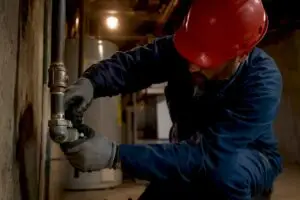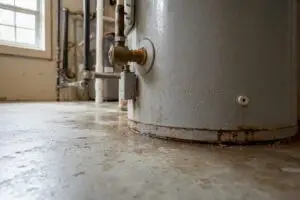


A hot water recirculation system is defined as a plumbing setup that keeps hot water continuously moving through your pipes so it arrives at the faucet within seconds, not minutes. Understanding why hot water recirculation system matters comes down to two hard facts: the average household wastes 9,000 gallons annually waiting for hot water to arrive, and that waste costs real money on water and sewer bills. EPA WaterSense estimates this at roughly 20–30 gallons per day per household. A recirculation system solves both the comfort problem and the water waste problem at the same time, though the energy tradeoffs depend entirely on which system type and controls you choose.
Why hot water recirculation systems matter for your home
A recirculation system works by adding a pump and, in most cases, a return line to your existing water heater setup. Without one, hot water sits in your pipes and cools down between uses. When you turn on the tap, that cold water has to flush out before hot water arrives. The longer the pipe run from your water heater to the fixture, the longer you wait and the more water you waste.
There are two main system architectures:
- Dedicated return line systems run a separate pipe from the farthest fixture back to the water heater. The pump circulates hot water through this loop continuously or on demand. This is the most effective layout for new construction.
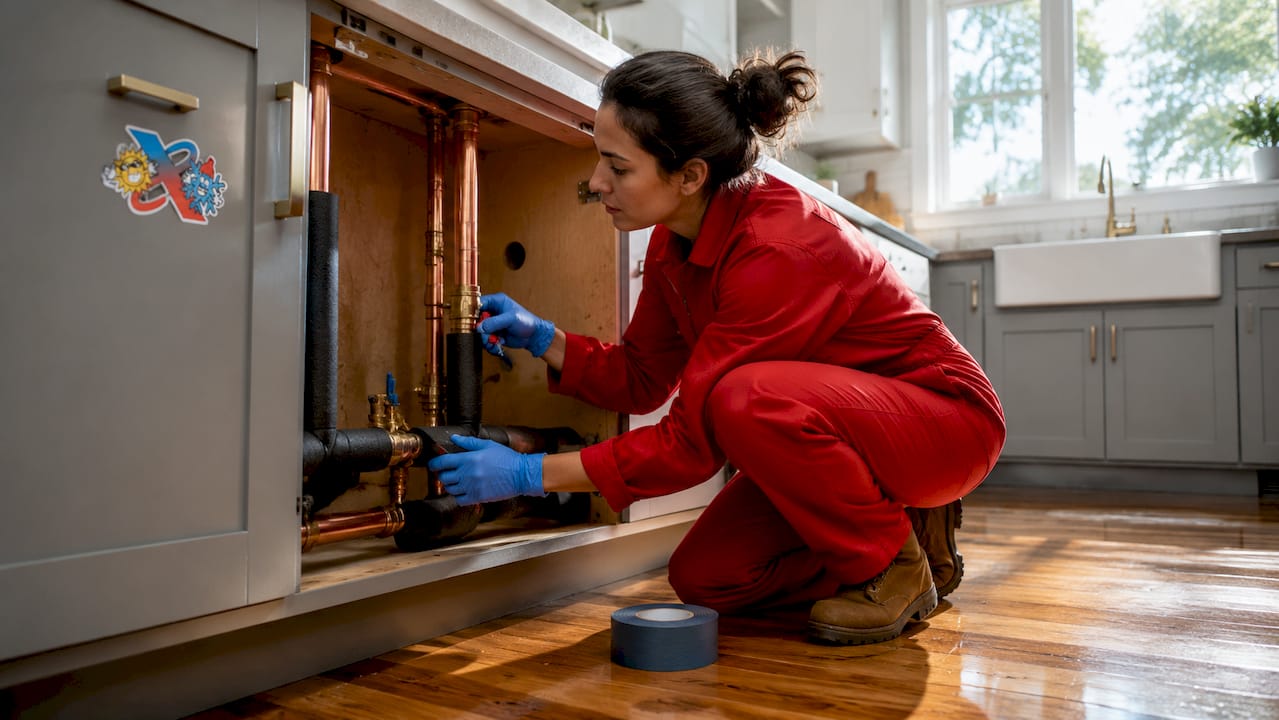
- Crossover valve systems use the cold water line as a return path. A comfort valve at the farthest fixture allows hot water to flow back through the cold line when the pump runs. These work well as retrofits in existing homes.
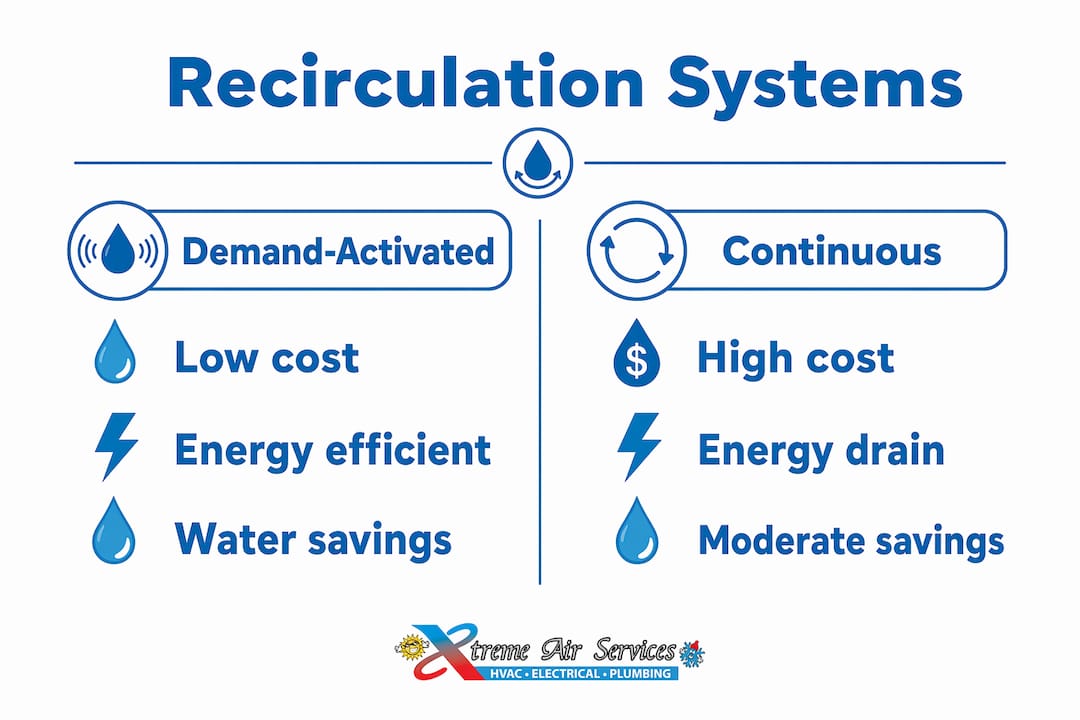
Within both architectures, you choose between two control methods. Continuous systems run the pump 24 hours a day, keeping hot water ready at all times. Demand-activated systems run the pump only when you press a button or trigger a motion sensor, typically for 30–90 seconds per cycle. That short runtime is enough to push hot water to the fixture without wasting energy all day.
The water savings are real and measurable. Demand-activated systems reduce household water waste by up to 9,000 gallons per year, translating to $135–$180 in annual water bill savings at current 2026 water and sewer rates. That number alone makes the case for installation in most homes.

Pro Tip: If your home has a long pipe run from the water heater to the master bath or kitchen, you stand to gain the most from a recirculation system. Measure the distance before calling a plumber so you can describe the layout accurately.
What are the energy costs and tradeoffs of recirculation systems?
The biggest misconception about recirculation systems is that they automatically save money on energy. That is not always true. The system type and controls you choose determine whether your energy bill goes up or down.
Demand-activated systems: the efficient choice
Demand-activated crossover systems cost between $600 and $1,800 installed and use only 80–150 kWh per year. That translates to roughly $15–$40 added to your annual electricity bill. When you stack that against $135–$180 in water savings, the net result is positive from year one.
Continuous systems: the energy drain
Continuous-loop pumps running 24 hours a day tell a different story. Lawrence Berkeley National Lab data shows these systems can increase household energy use by 10–20% due to standby heat loss. The pipes act like radiators, constantly radiating heat into walls, floors, and crawl spaces. Dedicated loop systems cost $1,000–$2,800 installed and carry higher standby losses than crossover setups.
| System type | Installed cost | Annual electricity | Water savings |
|---|---|---|---|
| Demand crossover | $600–$1,800 | 80–150 kWh ($15–$40) | Up to 9,000 gal |
| Dedicated loop (continuous) | $1,000–$2,800 | Higher standby loss | Up to 9,000 gal |
| Timer-controlled | $600–$1,800 | Moderate | Partial |
Timers offer a middle ground. You program the pump to run only during peak use hours, like 6:00–8:00 AM and 5:00–7:00 PM. This cuts standby losses compared to continuous operation, but it still runs the pump when no one needs hot water. Timers and continuous pumps can increase energy bills by 5–15% due to standby heat loss, while demand-activated systems avoid this entirely.
Proper pipe insulation and smart pump controls reduce heat loss substantially and lower operational costs. Insulating the return line is one of the highest-value upgrades you can make after installation. If you are already thinking about how your home manages energy, reviewing your heating bill patterns can reveal where recirculation fits into the bigger picture.
Pro Tip: Choose a demand-activated controller over a timer or continuous setup. The pump runs for less than two minutes per activation, which keeps electricity costs minimal while still delivering hot water on demand.
How to choose the right recirculation system for your home
Choosing the right system starts with understanding your home’s plumbing layout and your renovation status. Getting this decision right matters more than which pump brand you buy.
-
Assess your pipe layout first. Does your home have a dedicated return line already? Most homes built before 2000 do not. If yours does, a dedicated loop system with demand controls is the best fit. If it does not, a crossover valve retrofit is the practical path.
-
Decide between new construction and retrofit. Installing dedicated return lines is most practical during new builds or major renovations. Opening walls in a finished home to run a return line is expensive and disruptive. A comfort valve retrofit with demand controls is a lower-cost, less invasive option for existing homes.
-
Choose your control method. Button-activated controls are the simplest. You press a button near the sink or shower, the pump runs for 30–90 seconds, and hot water arrives. Motion sensor controls automate this step. Aquastat controls shut the pump off when the water in the return line reaches a set temperature, which prevents overheating and unnecessary cycling.
-
Check tankless water heater compatibility. Tankless heaters require minimum flow rates to activate their burners. A recirculation pump running at low flow may not trigger the heater, causing cold water to circulate instead of hot. Look for tankless units labeled “recirculation-ready” or consult a plumber before pairing these systems.
-
Plan for maintenance from day one. Recirculation pumps last 5–10 years depending on use and water quality. Sensor valves in crossover systems sometimes need replacement every two years. Budget for this when calculating your total cost of ownership.
-
Insulate the return line. This single step reduces standby heat loss and extends the time hot water stays hot in the pipe between pump cycles. Use foam pipe insulation rated for hot water lines.
A good home plumbing maintenance checklist helps you track these components alongside your other plumbing systems. Property managers overseeing multiple units benefit especially from scheduled maintenance records, since pump failures in one unit can go unnoticed until a tenant complains.
Pro Tip: For multi-story homes or apartment buildings, consult a licensed plumber before choosing a system. Pressure differences between floors affect pump sizing and return line design in ways that a standard residential kit cannot handle.
Common problems with recirculation systems and how to fix them
Recirculation systems work well when installed and configured correctly. Several common issues trip up homeowners who skip the planning stage.
-
Lukewarm cold water at the tap. This is the most frequent complaint with crossover valve systems. When the pump runs, hot water pushes into the cold water line, warming it. Using the cold line as a return causes lukewarm water at the cold tap unless a demand-activated control limits pump runtime. The fix is switching to a demand controller so the pump runs only long enough to move hot water to the fixture, not long enough to heat the entire cold line.
-
Higher energy bills than expected. Continuous or timer-based systems often surprise homeowners with increased electricity costs. Continuous-loop pumps can raise energy use by 10–20% through standby heat loss. Switching to a demand-activated controller resolves this without replacing the pump itself.
-
Pump noise. A pump that vibrates or hums loudly usually has air trapped in the line or is mounted directly against a wall without isolation. Bleeding the air from the system and adding rubber mounting pads typically resolves the noise.
-
Sensor valve failures. In crossover systems, the thermal sensor valve at the far fixture opens and closes based on water temperature. These valves wear out, sometimes within two years in high-use homes. Replacing them is a straightforward plumbing task but requires knowing the valve model and keeping a spare on hand.
-
Myths about guaranteed savings. A recirculation system does not automatically cut your total utility bill. The water savings are real, but energy costs depend on your control method. Homeowners who run continuous systems without insulation often see no net savings. The system pays off when you pair demand controls with insulated pipes.
If your water heater is already struggling to keep up, adding a recirculation pump will not fix the underlying problem. Check for signs your water heater is failing before investing in a recirculation system. A failing heater paired with a recirculation pump just circulates lukewarm water faster.
Key Takeaways
A hot water recirculation system delivers real water savings and genuine comfort, but only when you match the system architecture and controls to your home’s layout and usage patterns.
| Point | Details |
|---|---|
| Water waste is measurable | Households waste up to 9,000 gallons annually without recirculation, costing $135–$180 in water bills. |
| Control method drives energy cost | Demand-activated systems add only $15–$40 per year in electricity; continuous systems can raise energy use by 10–20%. |
| Architecture choice matters most | Dedicated return lines suit new builds; crossover valve retrofits are the practical option for existing homes. |
| Tankless heaters need special attention | Pair recirculation pumps only with recirculation-ready tankless units to avoid burner cycling issues. |
| Maintenance is part of the cost | Pumps last 5–10 years; sensor valves may need replacement every two years in high-use homes. |
What I’ve learned from years of installing recirculation systems
The comfort payoff from a recirculation system is immediate and obvious. Homeowners notice it the first morning after installation. That instant hot water at the shower feels like a small luxury, but it is actually just your plumbing working the way it should have all along.
What surprises most people is how much the system architecture decision matters compared to the pump itself. I have seen homeowners spend extra money on a premium pump and then wire it to run continuously, only to call back six months later wondering why their energy bill went up. The pump is not the variable. The control method is.
My honest advice: do not buy a recirculation system for the energy savings alone. The payback on water savings alone typically takes 5–10 years depending on local water rates. Buy it because you are tired of waiting two minutes for hot water every morning, and because wasting thousands of gallons a year feels wrong when water costs keep rising. The energy savings are achievable, but they require a demand-activated controller and insulated pipes. Without both, you are trading one waste for another.
Property managers get the clearest return. Tenants notice and appreciate instant hot water. It reduces complaints, and the water savings across multiple units add up faster than in a single-family home. If you manage a building with long pipe runs, a recirculation system is one of the highest-value plumbing upgrades available.
The technology is not complicated. What trips people up is skipping the planning stage and buying whatever the hardware store stocks. Match the system to your home, choose demand controls, insulate the return line, and the system will perform exactly as advertised.
— Xtreme
Ready to install a recirculation system? Xtreme Air Services can help
Xtreme Air Services provides full-service plumbing, HVAC, and electrical work for homes and businesses across the Dallas area. Our licensed plumbers assess your existing pipe layout, recommend the right system architecture, and handle installation from start to finish.
Whether you need a simple crossover valve retrofit or a complete dedicated loop installation during a renovation, we size the pump correctly, pair it with the right controls, and insulate the return line so your system performs from day one. We also offer HVAC maintenance plans that keep your entire home comfort system running efficiently year-round. For plumbing work in Dallas, our team is ready to help. Contact Xtreme Air Services plumbing services to schedule your consultation today.
FAQ
What does a hot water recirculation system actually do?
A hot water recirculation system keeps hot water moving through your pipes so it arrives at the faucet within seconds of turning the tap. Without one, you wait for cold water in the pipes to flush out before hot water arrives.
How much water does a recirculation system save per year?
EPA WaterSense estimates the average household wastes 20–30 gallons per day waiting for hot water, totaling roughly 9,000 gallons annually. A demand-activated recirculation system eliminates most of that waste.
Will a recirculation system increase my energy bill?
It depends on the control method. Demand-activated systems add only $15–$40 per year in electricity costs. Continuous-loop systems can raise energy use by 10–20% through standby heat loss, so control selection is critical.
Can I add a recirculation system to my existing home?
Yes. Crossover valve systems retrofit to existing homes without opening walls. A comfort valve installs at the farthest fixture and uses the cold water line as a return path. This is the most practical option for finished homes.
Are recirculation systems compatible with tankless water heaters?
Not all tankless heaters work with recirculation pumps. Tankless units require minimum flow rates to activate, and some pump flows fall below that threshold. Choose a tankless heater labeled “recirculation-ready” or consult a licensed plumber before combining these systems.