

Indoor Air Quality Solutions in Sunnyvale That Fix the Real Problem
Finding what is actually fouling your air, from leaking attic ducts to humidity swings, and fixing the cause rather than masking it.
What’s Covered on This Page
- Diagnose the Real Cause Behind Your Indoor Air Problem
- Match Your Symptom to the Right Air Quality Solution
- Skip the Whole-Home System If This Sounds Like You
- What to Expect During Installation and Startup Testing
- Ozone Action Days Make Filtration More Important in Sunnyvale
- How long does an indoor air quality visit take?
- What should I expect when your technician arrives?
- Why does my Sunnyvale home stay dusty even after I clean?
- Do I need a whole-home air purifier, or is a better filter enough?
- How can I tell if my problem is humidity or dust?
Diagnose the Real Cause Behind Your Indoor Air Problem
Dust on every surface. A musty smell that won’t quit. Allergies acting up even with the windows shut. Sound familiar? We hear this every week from folks who’ve already tried a new filter and a can of air freshener, and nothing changed.
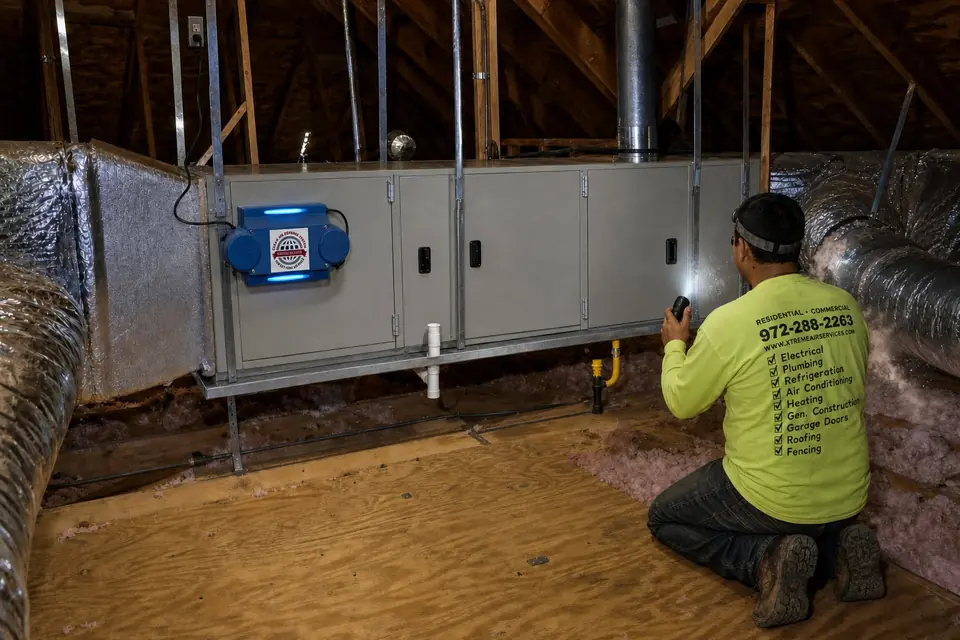
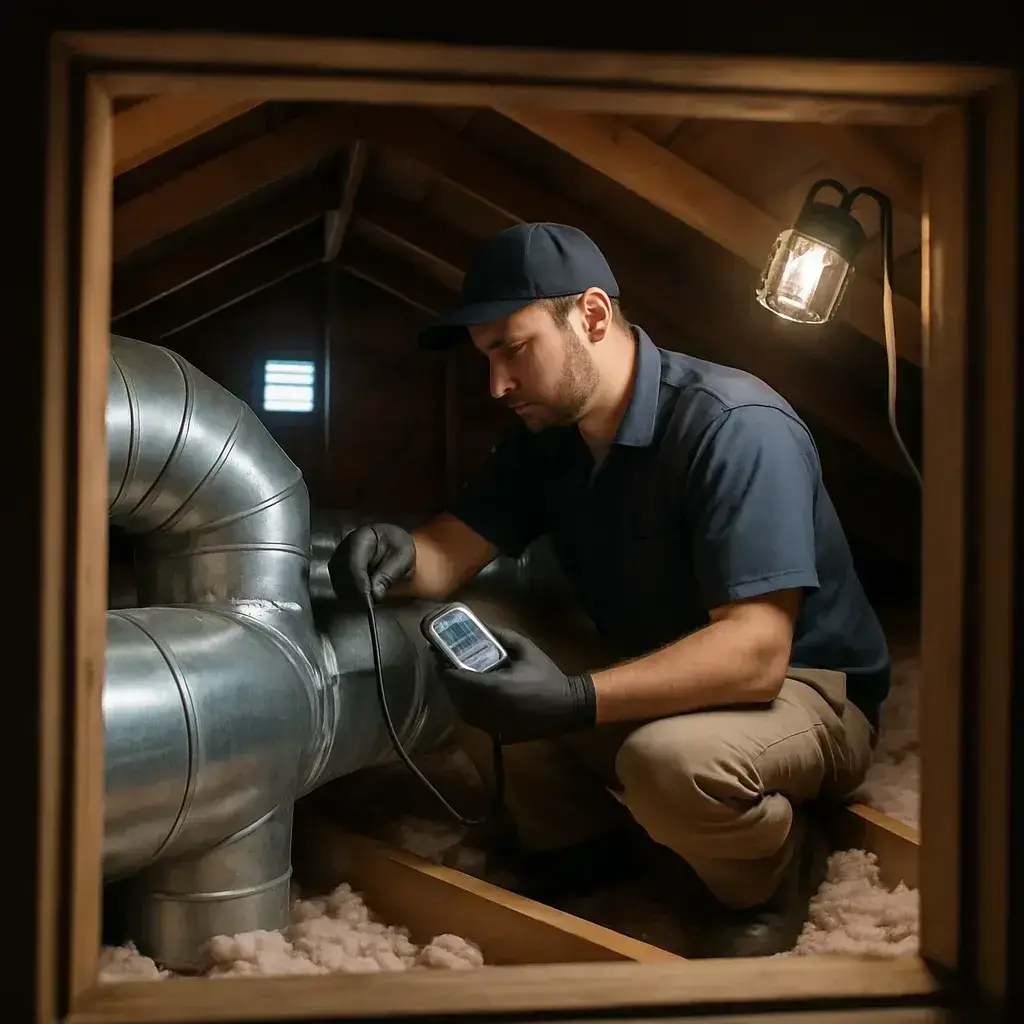
Here’s the thing: most homes in Sunnyvale run their HVAC system through the attic, and that attic space pulls in dust, insulation fibers, and outside air through gaps you can’t see from the ground. Your air handler ends up fighting a leaky supply line before the air even reaches your living room.
Humidity is the other big driver. Local weather swings from dry heat to sticky, humid stretches fast, and that shift feeds mold behind walls and musty odors in closets. When someone tells us their home smells damp, we’re usually looking at a moisture problem, not a dust problem.
- Constant dust buildup, even right after cleaning, often points to duct leaks or a weak filtration setup
- Musty or stale odors usually mean excess humidity, not dirty air alone
- Allergy flare-ups indoors that ease up outside can signal poor filtration or stagnant airflow
- Visible mold on vents or ceiling stains near ductwork means moisture’s already gotten in
We start every visit by checking your ductwork, your existing filter setup, and your home’s humidity levels before recommending anything. A UV air purifier won’t fix a moisture problem, and a dehumidifier won’t stop dust coming through a leaky return line. Get the diagnosis right, and the fix does its job the first time.
Match Your Symptom to the Right Air Quality Solution
Here’s the thing: most people don’t call us saying they need indoor air quality solutions. They call because something smells off, or the dust never stops, or their allergies act up worse at home than anywhere else. So let’s start with what you’re noticing, not the equipment name. 80 six days a week.
- Musty or stale smell even when the AC’s running fine, that’s usually moisture or mold spores getting circulated, and a UV air purifier installed right at the air handler deals with it at the source.
- Dust that resettles within a day of cleaning, especially fine dust on dark furniture, points to filtration that’s too weak for your home. HEPA filtration catches what a standard filter lets through.
- Air that feels sticky or heavy in July and August, that’s humidity, and a dehumidifier tied into your system pulls moisture out before it fogs windows or feeds mold.
- Dry skin, static shocks, or a scratchy throat in January, that’s winter dryness, and a whole-home humidifier fixes it without you running a dozen little tabletop units.
- One room always dusty or always stuffy while the rest of the house is fine, that’s often a duct problem, not an air quality problem at all.
We see a lot of homes off FM 1389 and in Sunnyvale’s newer subdivisions where the system sits up in the attic, and attic ductwork pulls in dust and pollen through tiny gaps far more than a slab-mounted system does. If that’s your setup, duct sealing might matter as much as the air purifier itself.
Not sure which one’s yours? That’s fair, symptoms overlap plenty. A tech can walk through it with you in one visit instead of you guessing and buying the wrong fix.
Skip the Whole-Home System If This Sounds Like You
Not everyone needs a whole-home setup. We’ll say that straight, because it’s true.
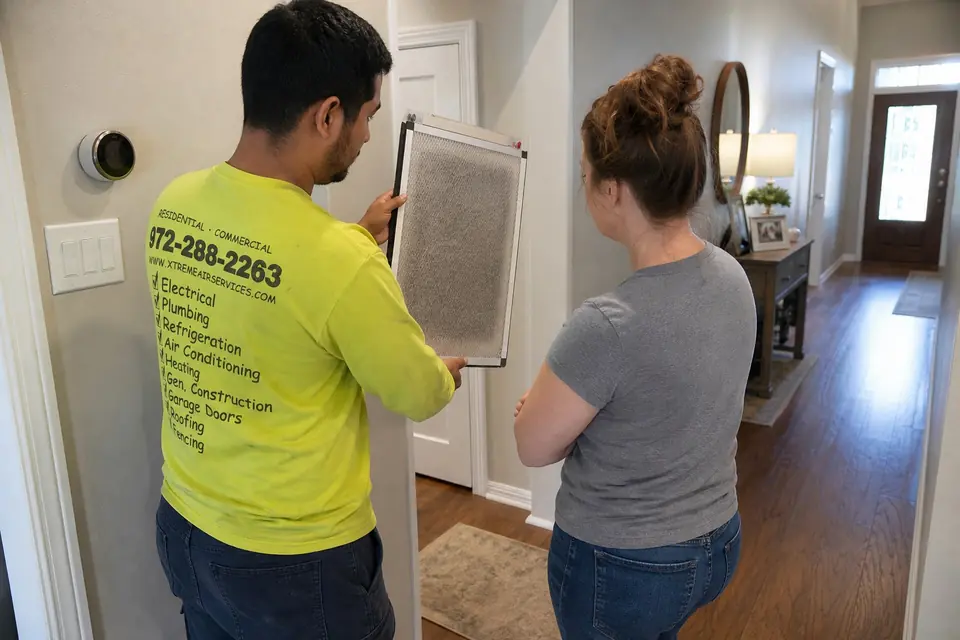
If your air quality problem is really just a dirty filter, that’s a five-minute fix, not a project. Same goes for a single stuffy room, sometimes it’s a closed vent or a blocked return, nothing more. And if you’re only dealing with seasonal pollen for a few weeks each spring, a whole-home purifier might be more than you need.
- You’ve never had the filter changed on schedule and just now noticed dust
- Only one room feels stuffy, the rest of the house is fine
- The issue shows up two or three weeks a year during pollen season
- Your ductwork was recently sealed or inspected and tested clean
- You’re smelling something new and sharp, that’s a different call entirely, maybe even electrical or gas related
Here’s the thing about newer construction around Sunnyvale: a lot of homes built in the last couple decades are sealed tighter for energy efficiency. Tighter doesn’t always mean dirtier air, it just means less outside air trading in and out on its own. That’s a comfort trade-off, not automatically a health problem.
So before you spend money on filtration, UV, or humidity equipment, rule out the simple stuff first. A stuck damper, a clogged filter, a leaky duct joint, these get blamed on “bad air quality” more often than people think.
Not sure what your Indoor air quality solutions project needs? Ask us.
Call Today, Get Service Today. Xtreme Air Services is ready to help.
What to Expect During Installation and Startup Testing
You’ve picked your equipment. Now what? Installation day isn’t complicated, but how it’s done matters. A lot of Sunnyvale homes run HVAC equipment through the attic, so tying in a whole-home filtration unit or UV light means working in tight, hot spaces, and our team plans for that ahead of time.
- We walk the space with you first and confirm the equipment location and connection points before anything gets touched.
- We protect your floors and furniture, then shut down power to the system so the work area is safe.
- The unit gets mounted or tied into your existing ductwork or plumbing lines, using the connections already in place whenever possible.
- Wiring and controls get connected, and we check that everything matches the equipment specs, no guessing.
- We power it up and run startup testing, checking airflow, humidity readings, or UV lamp function depending on what you had installed.
- We walk you through the controls and settings before we leave, so you know how to run it, not just that it’s running.
Startup testing is the part people skip in their head, but it’s the part that matters most. We’ve seen units that seem fine on day one start underperforming by week two, and testing is exactly what got skipped. We check static pressure, confirm the system is reading airflow correctly, and make sure any humidity or filtration controls are calibrated to your home, not just factory defaults. And we clean up after ourselves, haul-away of the old unit is part of the job.
Ozone Action Days Make Filtration More Important in Sunnyvale
Summer in Sunnyvale gets still. The heat sits on top of the DFW Metroplex for days, and ozone builds up close to the ground on those high-heat, low-wind afternoons. That outdoor air doesn’t stay outdoor for long. Every time your AC cycles, it pulls in whatever’s drifting near your intake, and a basic one-inch filter just isn’t built to stop the fine particles riding along with that ozone haze.
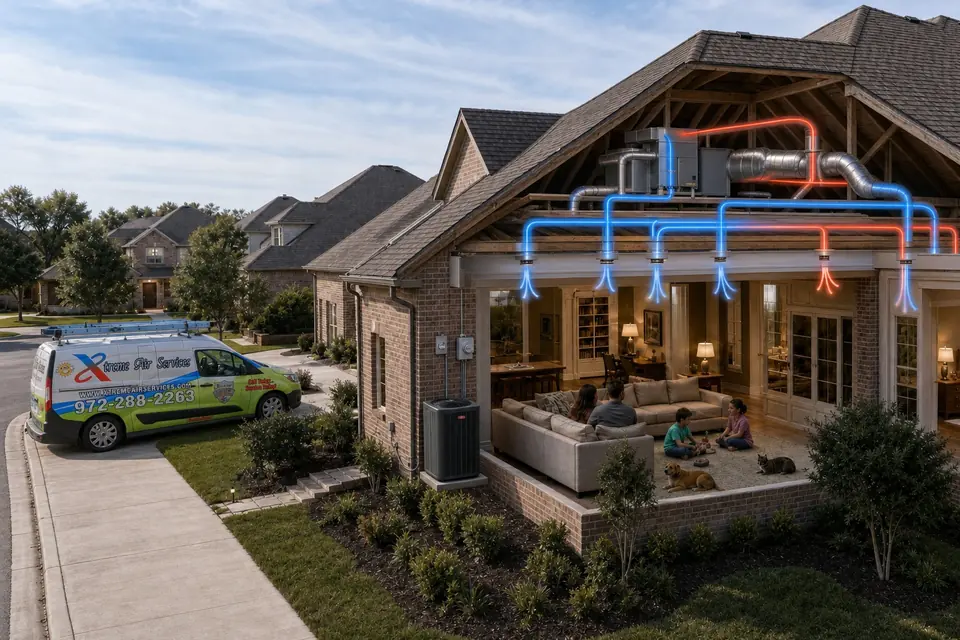
Here’s the thing nobody tells you: a standard filter is designed to protect your equipment, not your lungs. It’s rated for dust big enough to clog a blower motor, not the small stuff that gets deep into your airways on a bad air day. Families with kids, older folks, or anyone with asthma feel this first, usually as a scratchy throat or a cough that shows up only in July and August.
- Homes near busier roads pull in more fine particulate on hot, stagnant days
- Attic-mounted HVAC systems, common in Sunnyvale’s established neighborhoods, can pull in attic dust along with outside air
- Homes with pets or older ductwork tend to show ozone-season symptoms sooner
- A dirty coil combined with poor filtration makes both problems worse at once
So what helps? HEPA filtration and UV air purifier installation target different problems, one traps particles, the other deals with what grows in the humidity. Neither one fixes a duct that’s leaking unfiltered attic air into your supply lines, though. That’s why we look at the whole path air takes through your home before recommending anything.
Frequently Asked Questions
Common questions about Indoor air quality solutions
How long does an indoor air quality visit take?
Most visits take about one to two hours, depending on what we’re checking. We start by looking at your ductwork, filter, and humidity levels before touching any equipment. If you’re getting a full diagnosis plus a quote for a fix like a UV purifier or dehumidifier, plan for closer to two hours. Installation day is separate and usually scheduled once you’ve picked your equipment. We’ll give you a clear time estimate before we start, so there are no surprises.
What should I expect when your technician arrives?
Your technician walks the space with you first and points out the equipment location before any work begins. We protect your floors and furniture, then shut off power to the system so everything’s safe. Once the unit is connected, we run startup testing to check airflow, humidity, or UV lamp function. Before we leave, we walk you through the controls so you know what to do next. You won’t be left guessing how anything works.
Why does my Sunnyvale home stay dusty even after I clean?
Constant dust usually means your ductwork is pulling in dust and insulation fibers, not that you’re cleaning wrong. Many homes in Sunnyvale run HVAC through the attic, and that attic space has small gaps that let dust and outside air into the supply lines. If dust resettles within a day, especially on dark furniture, your filtration setup may be too weak for how much your ducts are letting in. Sealing the ducts often matters as much as upgrading the filter.
Do I need a whole-home air purifier, or is a better filter enough?
It depends on what’s causing the problem, and a filter upgrade is often enough if dust is your only issue. A whole-home system makes more sense when you’re dealing with musty odors, mold near vents, or allergy flare-ups that ease up outside your house. If it’s really just a dirty filter or one stuffy room, that’s a quick fix, not a full project. A quick walkthrough tells you which one you’re dealing with.
How can I tell if my problem is humidity or dust?
Musty smells and window fog point to humidity, while resettling dust points to filtration or duct leaks. Sunnyvale’s weather swings from dry heat to sticky, humid stretches fast, and that shift feeds mold behind walls and closets. If your home smells damp rather than just dusty, moisture is usually the bigger driver. A tech can check your ductwork and humidity levels in one visit, so you’re not guessing which fix to buy.
Ready to Get Started?
Call 972-288-2263 Today, Get Service Today.