


AC Electrical Repair in Sunnyvale: Fast, Licensed Fixes for Trips, Hums, and Dead Units
Licensed electrical diagnosis for Sunnyvale air conditioners that trip breakers, hum, or refuse to start.
What’s Covered on This Page
- Electrical Failures vs. Refrigerant Problems: How to Tell the Difference
- Why a Tripped Breaker or Burning Smell Means Don’t Wait
- Checks You Can Safely Make Before You Call a Technician
- What Happens During a Licensed AC Electrical Repair Visit
- Confirming the Fix: What a Completed Repair Should Look Like
- How fast can you get someone out for AC electrical repair in Sunnyvale?
- What happens when your technician arrives for an AC electrical repair?
- Why do Sunnyvale homes with attic-mounted AC systems have more electrical failures?
- How can I tell if my AC problem is electrical or a refrigerant issue?
- Is it safe to keep resetting a tripped AC breaker myself?
- What does a burning smell near my outdoor AC unit usually mean?
Electrical Failures vs. Refrigerant Problems: How to Tell the Difference
Here’s the thing customers get wrong the most. A unit that’s low on refrigerant will still turn on. Fans spin, the compressor hums, air moves, it just isn’t cold. An electrical failure is different. Something either won’t start at all, or it starts and trips off, or it makes a clicking sound and quits. That distinction alone tells us a lot before we even pull up in the truck. It is one of the more common causes we find on Sunnyvale no-cool calls.
- System won’t turn on, no fan, no hum, nothing – almost always electrical
- Breaker trips within seconds of the AC kicking on – almost always electrical
- Air is running but warm, and it’s been getting worse for a week or two – usually refrigerant
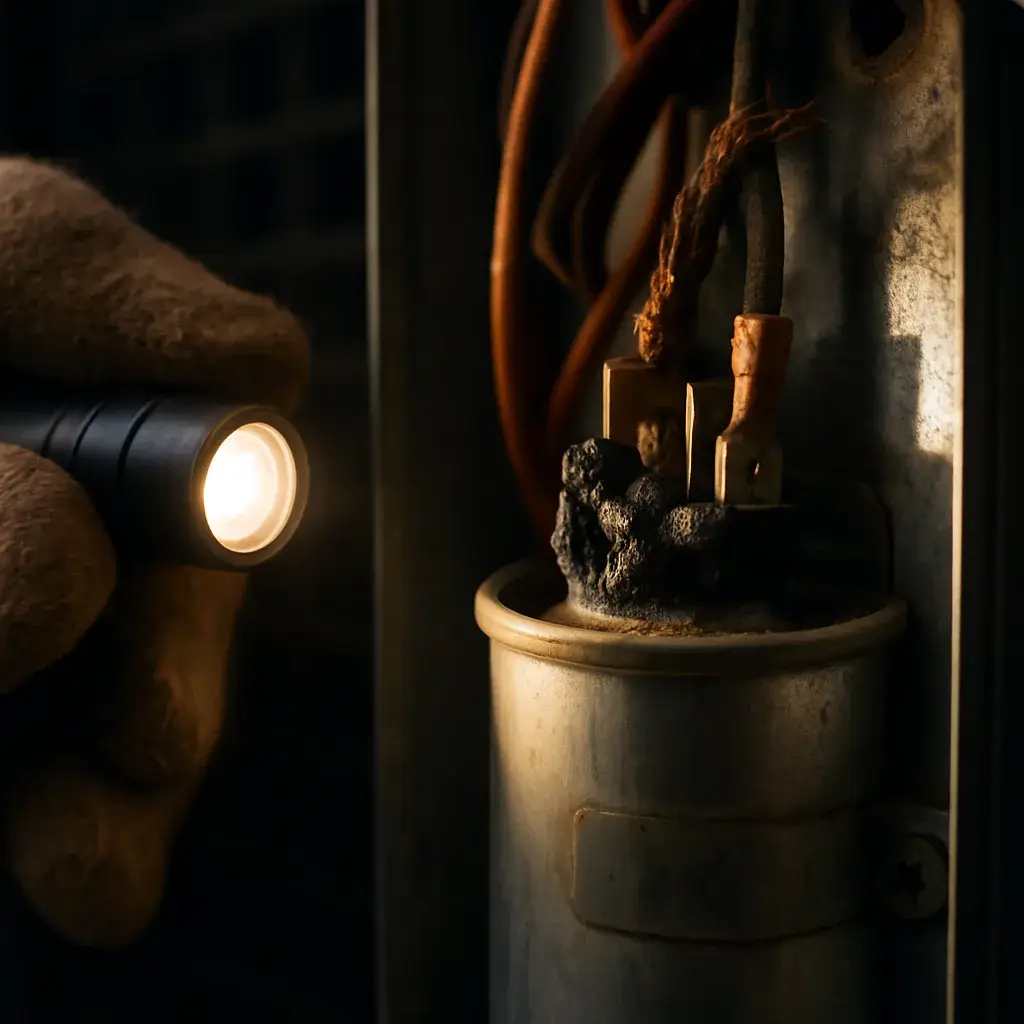
- A burning smell near the outdoor unit – electrical, and it’s not a wait-and-see problem
- Loud buzzing or clicking from the outdoor unit at startup – electrical, often a bad capacitor or contactor
So why does this matter to you? Refrigerant work needs EPA-certified handling and a leak search. Electrical work needs a tech who can safely test live voltage without frying a board. We see homeowners try to guess over the phone, and most can’t tell the two apart. That’s fine, that’s what the diagnostic visit is for.
One more clue worth knowing. Electrical failures often hit fast during Sunnyvale’s peak summer runtime, when the system’s cycling nonstop and a weak part finally gives out. Refrigerant issues rarely happen overnight.
Why a Tripped Breaker or Burning Smell Means Don’t Wait
A breaker that trips once is annoying. A breaker that trips every time your AC kicks on is telling you something else entirely.
Ever notice a faint burning smell drifting out of a vent right as the system starts up? That’s not dust burning off a coil that’s been sitting all winter. That smell usually means wire insulation is getting too hot, or a part inside the unit is starting to fail. We see this every week, a breaker that keeps flipping and the homeowner just keeps flipping it back, hoping it stops on its own.
It won’t. Electrical faults don’t heal themselves, they get worse under load.
In a lot of Sunnyvale homes, especially the ones with attic-mounted AC systems, wiring runs through tight, hot spaces where a loose connection or a failing blower capacitor can heat up fast without you seeing it. You just hear the click, smell the odor, or notice the system shutting off on its own. That’s your cue to call, not wait for the weekend.
So what makes this different from a simple no-cool call? A tripped breaker or a burning smell points to an active electrical problem, not just a warm house. Left alone, it can damage more parts, or worse, become a safety issue in your home. Caught early, it’s almost always a quick, contained repair, one bad part swapped and tested before we leave. Older Sunnyvale homes often have panels that were never sized for today’s cooling loads.
Checks You Can Safely Make Before You Call a Technician
Before you pick up the phone, there are a few things worth a quick look. Not every AC problem is electrical, and not every electrical hiccup needs a technician. Sometimes the fix is sitting right in front of you.
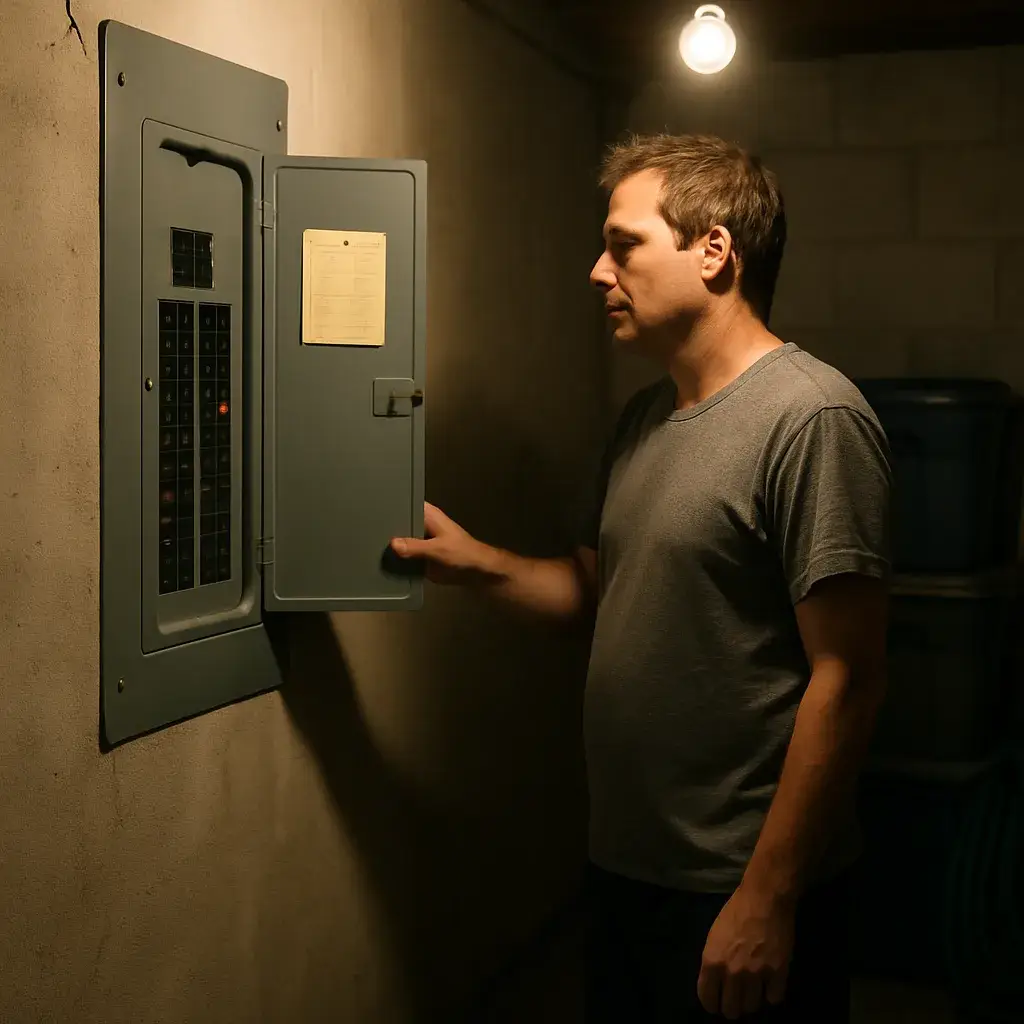
Check your breaker panel first. A tripped breaker looks like it’s stuck halfway between on and off. Flip it fully off, then back on. If it holds, your system may just need a minute to reset. If it trips again right away, stop, that’s a sign of a real electrical fault, and flipping it again and again isn’t safe. Every electrical repair we do in Sunnyvale is handled by a licensed technician, not a handyman.
- Thermostat screen blank or unresponsive, try fresh batteries first if it’s not hardwired
- Outdoor unit silent but indoor fan running, check the outdoor breaker before assuming a bigger issue
- System runs fine at night but not during the hottest part of the afternoon, this can point to a part overheating under load
- Recent storm or power blip in your area, some systems just need that breaker reset once and they’re fine
Here’s the honest line we draw. If flipping the breaker fixes it and it stays fixed, you probably don’t need us today. We’d rather tell you that than send someone out for nothing.
But if the breaker trips again within a day, or you smell anything burnt near the unit, don’t keep resetting it yourself. That’s not a DIY situation anymore, that’s a part that’s failed and is pulling too much current. At that point you’re not saving money by waiting, you’re risking a bigger repair. That matters in Sunnyvale, where a failed contactor on a 100-degree day is not a wait-until-Monday problem.
Ready when you are – get in touch today.
Call Today, Get Service Today. Xtreme Air Services is ready to help.
What Happens During a Licensed AC Electrical Repair Visit
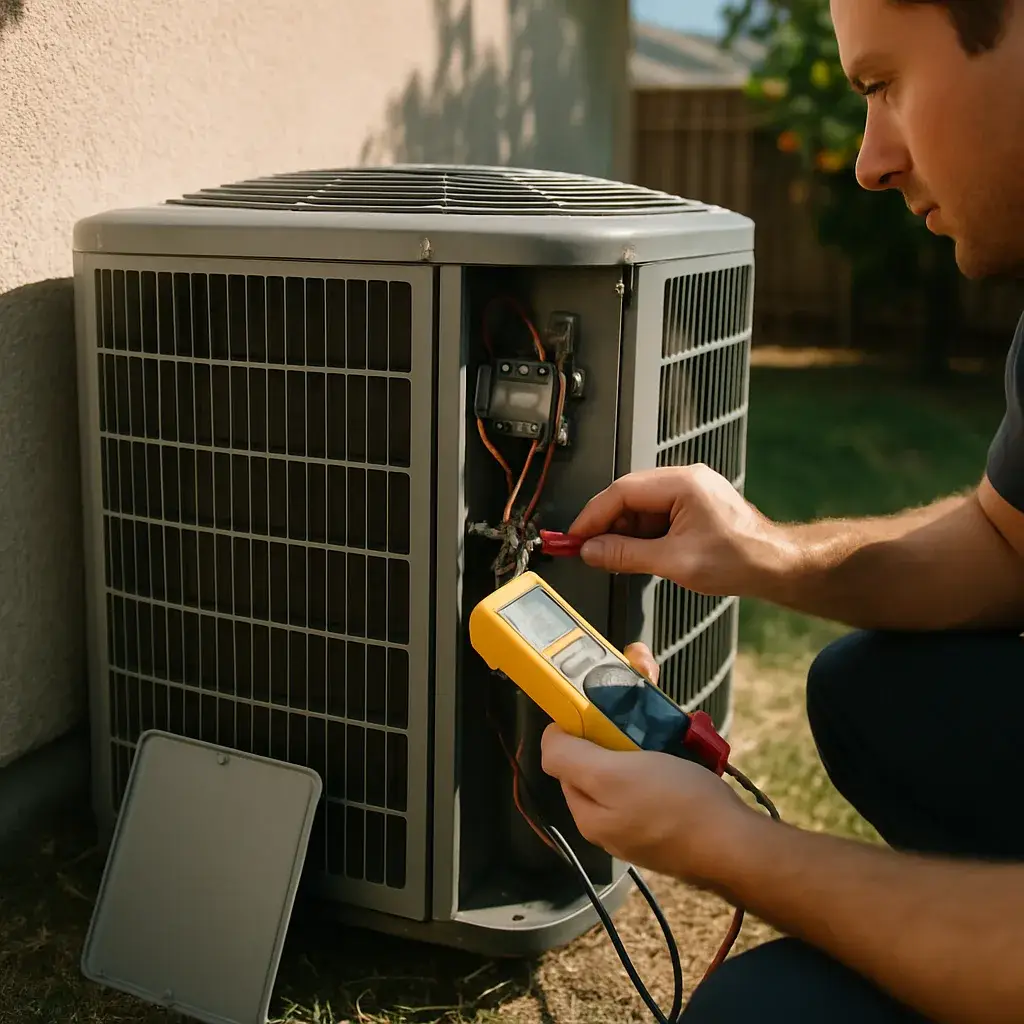
Here’s what happens once we’re at your door. A licensed technician walks straight to the unit, indoors and out, and starts checking power first: breaker, disconnect, capacitor, contactor. It’s the same short list of parts causing the trouble.
- We confirm the problem you called about and ask what you noticed, warm air, a burning smell, a breaker that won’t stay on.
- We test voltage at the disconnect, the contactor, and the capacitor to find exactly where the failure sits.
- We open the outdoor unit and the air handler to check wiring, connections, and any scorched or melted spots.
- Once we find the failed part, we explain it in plain English and give you a flat price before touching anything else.
- We make the repair, then run the system through a full cooling cycle to confirm it’s pulling and holding correctly.
That last step matters more than people think. A capacitor swap that looks fine on the bench can still trip if the contactor underneath it is pitted, so we check the whole electrical path, not just the part that failed first. We see this constantly on Sunnyvale service calls in the middle of summer.
Most calls end with one part replaced and the system running cool again before we leave your driveway.
Confirming the Fix: What a Completed Repair Should Look Like
A fixed AC unit doesn’t just turn on. It runs the way it’s supposed to, and it keeps running. Sometimes a customer calls us back not because the repair failed, but because nobody explained what a real fix looks like. Let’s fix that now.
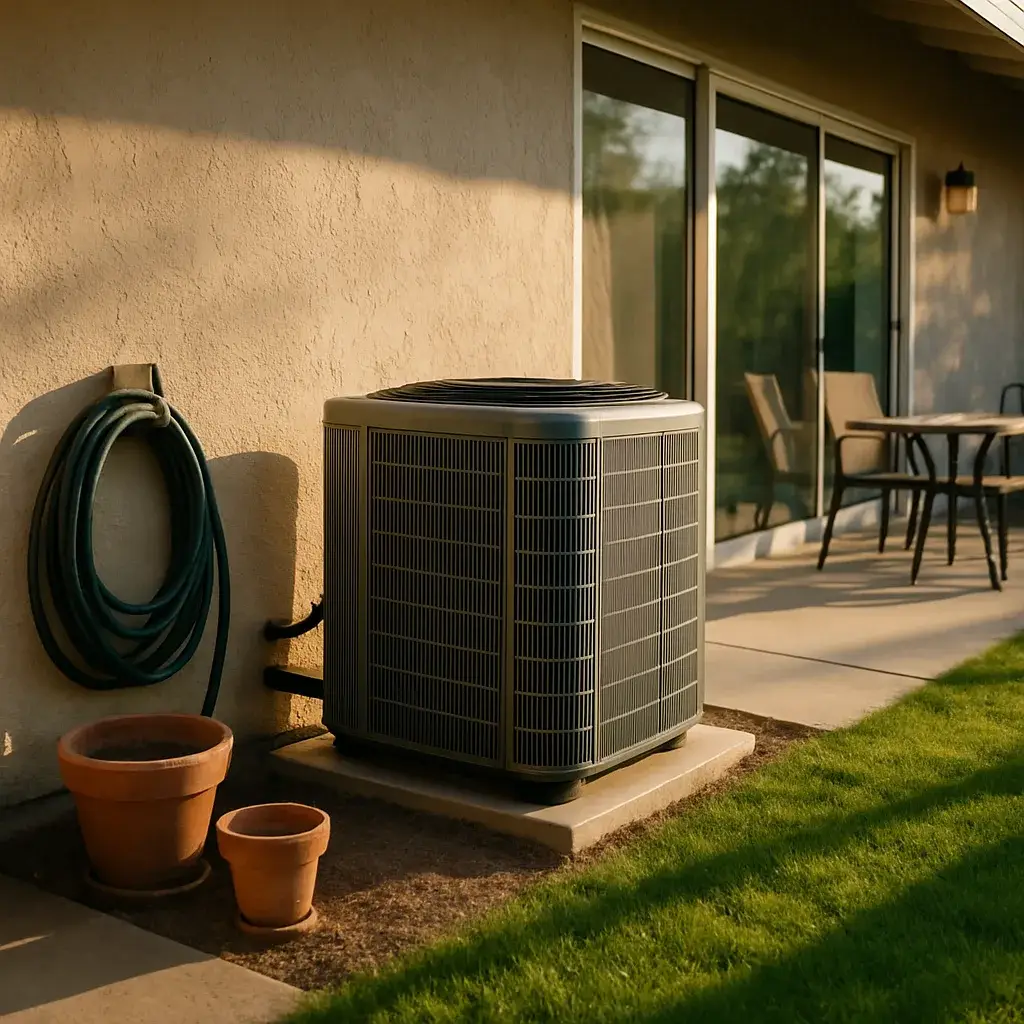
Before your technician packs up, the system should go through a full cycle, not just a quick blast of cold air. That’s the only way to catch a part that’s about to fail again. It is the kind of fault that gets worse fast in a Sunnyvale August.
- The tech checks amp draw on the motor or compressor to confirm it’s pulling power within normal range
- The capacitor or contactor gets tested under load, not just visually inspected
- Wiring connections are tightened, sealed, and checked for heat damage or corrosion
- The breaker is reset and monitored to make sure it holds without tripping
- The system runs a full cooling cycle while the tech confirms steady airflow and temperature drop at the vents
And before your technician leaves, you should hear plain English about what failed and why, not a string of part numbers. If your outdoor unit is on a slab near a fence line, drainage and debris can shorten a capacitor’s life, that’s worth mentioning if it applies to your setup.
One more thing. A completed job means the work area’s clean, panels are back on, and nothing’s left loose or exposed.
That’s what done right the first time looks like, not just cool air for an afternoon, but a system your family can count on through the next Texas heat wave.
Frequently Asked Questions
Common questions about AC electrical repair
How fast can you get someone out for AC electrical repair in Sunnyvale?
We aim to get a technician to your home the same day you call, especially during peak summer heat when electrical parts fail fast. Sunnyvale AC systems run almost nonstop in July and August, and that constant cycling is when capacitors and contactors give out. If your breaker keeps tripping or you smell burning, tell us that when you call. We move those visits to the front of the schedule because waiting can turn a simple part swap into a bigger repair.
What happens when your technician arrives for an AC electrical repair?
Your technician heads straight to the unit, indoors and out, and checks power first: the breaker, disconnect, capacitor, and contactor. We ask what you noticed, like warm air or a burning smell, then test voltage at each part to find exactly where the failure sits. Once we find the problem, we explain it in plain English and give you a flat price before starting any repair. We finish by running a full cooling cycle to confirm the fix holds.
Why do Sunnyvale homes with attic-mounted AC systems have more electrical failures?
Attic-mounted systems in Sunnyvale sit in tight, hot spaces where wiring and connections heat up faster than you’d notice from downstairs. A loose connection or a failing capacitor can build heat for days before it trips a breaker or gives off a burning smell. You usually hear a click or notice the system shutting off before you see anything wrong. That’s why attic units in older Sunnyvale homes tend to need electrical checks sooner than ground-level systems.
How can I tell if my AC problem is electrical or a refrigerant issue?
Electrical trouble usually hits suddenly, while refrigerant problems build slowly over days or weeks. If your system won’t turn on at all, trips the breaker within seconds, or makes a clicking or buzzing sound at startup, that’s almost always electrical. If the air runs but stays warm and keeps getting worse over time, that points to refrigerant. A unit low on refrigerant will still turn on and blow air, it just won’t cool. That one clue tells us a lot before we arrive.
Is it safe to keep resetting a tripped AC breaker myself?
No, resetting a breaker more than once isn’t safe if it keeps tripping right away. A breaker that holds after one reset probably just needed a moment, especially after a storm or power blip. But a breaker that trips again within a day means a part is pulling too much current and failing under load. Flipping it back on repeatedly won’t fix that, and it can let the damage spread to other components. That’s the point to stop and call us.
What does a burning smell near my outdoor AC unit usually mean?
A burning smell near your outdoor unit usually means wire insulation is overheating or a part inside is starting to fail, not dust burning off. This is common right as the system kicks on for the first cycle of the day. It’s not a wait-and-see problem, because electrical faults get worse the longer the system runs under load. Caught early, it’s almost always a quick, contained repair with one part replaced and tested before we leave.
Ready to Get Started?
Call 972-288-2263 Today, Get Service Today.