

Exhaust Hood Installation in Sunnyvale That Passes Inspection the First Time
Type I and Type II hoods sized to your cook line for Sunnyvale restaurants – CFM ratings and duct runs matched to the equipment underneath so it clears the fire marshal the first time.
What’s Covered on This Page
- Signs a Commercial Kitchen Needs a New Exhaust Hood
- Type I and Type II Hoods: Picking the Right System
- When a Full Hood Installation Isn’t the Right Fix
- What Happens During a Professional Hood Installation
- Make-Up Air and Ductwork: The Part Most Installers Skip
- How fast can you get an exhaust hood installed in Sunnyvale?
- What happens when your technician inspects my kitchen hood?
- Why do older Sunnyvale kitchens often fail exhaust hood inspections?
- How do I know if my kitchen needs a Type I or Type II hood?
- Can my exhaust hood be repaired instead of replaced?
Signs a Commercial Kitchen Needs a New Exhaust Hood
We often hear from kitchens where the hood can’t keep up anymore. Grease drips from the filters no matter how often the crew wipes them down. Smoke lingers near the ceiling during a busy lunch rush. Sound familiar? That’s usually not a dirty filter problem. The hood may be undersized or worn out.
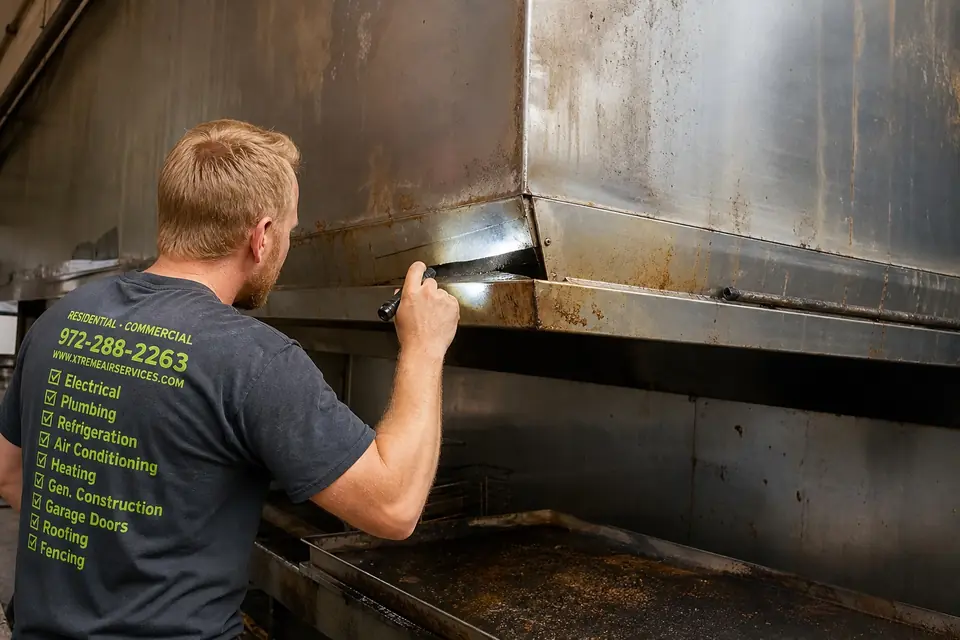
- Rust, warping, or seams pulling apart on the hood body
- Grease pooling on surfaces right after a cleaning
- Weak suction that lets smoke and heat build up in the kitchen
- A fire marshal or health inspector citing the hood during a visit
- New equipment or a menu change that exceeds the hood’s rated capacity
Many older commercial buildings around Sunnyvale predate today’s ventilation codes. Their hoods may have been sized for a different kitchen. Add a bigger fryer or second flat-top, and that old hood may not move enough air. This isn’t a cosmetic problem – it creates a real fire and air-quality risk.
An inspector doesn’t care how new your equipment looks if the hood above it fails the pull test. We see this every week. A kitchen owner expects a good cleaning to fix the smoke problem, then learns the hood needs replacement to pass inspection.
Type I and Type II Hoods: Picking the Right System
Every commercial kitchen exhaust project in Sunnyvale starts with one question: Is this a Type I or Type II hood application? Too many contractors answer it by guesswork. The National Fire Protection Association settles the matter in NFPA 96, the Standard for Ventilation Control and Fire Protection of Commercial Cooking Operations. The standard separates equipment producing grease-laden vapors from equipment releasing only heat, steam, or odor. Getting this classification wrong isn’t a minor paperwork issue. It affects duct construction, fire suppression, clearance to combustibles, and whether the Dallas County Fire Marshal approves your final inspection.
Type I hoods are required over appliances producing grease or smoke, including fryers, char-broilers, griddles, woks, and ranges. Grease residue inside ductwork is a fire fuel source. NFPA 96 requires Type I systems to have a UL 300 compliant automatic fire suppression system. They also need welded or liquid-tight ductwork and fire-rated clearances. A licensed installer coordinates the hood, suppression system, and exhaust fan as one package. Treating them as separate purchases causes many under-permitted jobs in Sunnyvale’s older strip-mall kitchens to fail inspection.
Type II hoods, sometimes called condensate or heat hoods, serve equipment that produces steam or heat but no grease. Examples include dishwashers, steamers, ovens without exposed flame contact, and pasta cookers. These systems don’t require fire suppression coordination. Installing a Type I hood where Type II would work wastes money on an unnecessary fire system. Installing a Type II hood over grease-producing equipment creates a life-safety violation and failed inspection.
- Total CFM exhaust rating matched to the linear footage and type of cooking appliances beneath the hood
- Duct velocity requirements under NFPA 96 that keep grease particles moving instead of settling in the ductwork
- Makeup air volume needed to balance the air removed by the exhaust fan
- Appliance heat output in BTUs, used to calculate capture velocity, hood overhang, and sizing
Sizing isn’t a flat rule of thumb. A licensed contractor calculates CFM from the equipment’s BTU output, hood style, and duct configuration. The contractor then documents that math for the permitting authority. Accurate sizing can mean the difference between passing the first inspection and getting red-tagged. Corrections can cost a Sunnyvale kitchen days of lost revenue.
When a Full Hood Installation Isn’t the Right Fix
Not every service call in Sunnyvale ends with a new hood on the roofline. Kitchen owners may assume any airflow problem, grease smell, or Dallas County health inspection note requires a new system. Many exhaust issues come from maintenance gaps rather than equipment failure. Clogged mesh or baffle filters and hardened grease along the hood’s interior can mimic system failure. So can a partly blocked duct run. The underlying hood, fan, and ductwork may remain structurally sound and code-compliant.
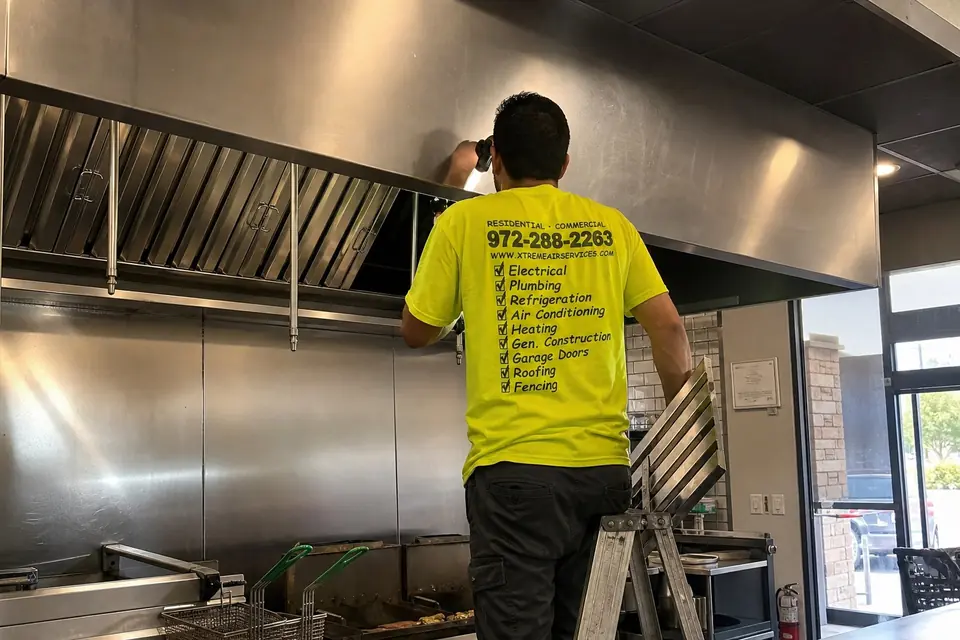
A licensed technician’s first job on a service visit is diagnosis, not sales. That means pulling filters, inspecting the plenum, checking fan belt tension, and verifying makeup air balance before discussing replacement. The hood may still meet current NFPA 96 clearance and capture requirements. If the ductwork has no corrosion or separation, cleaning and minor repairs usually cost less. They also take less kitchen downtime than a full installation.
- Dirty or saturated grease filters causing weak suction, often fixed with deep cleaning or filter replacement
- Grease buildup inside the hood cavity or ductwork, addressed through professional degreasing instead of removal
- Loose or worn fan belts and bearings that reduce airflow but don’t require a new hood body
- Minor duct seam gaps or access panel leaks that can be sealed or patched to restore proper draw
- Outdated fire suppression nozzles that need recalibration, not a hood replacement
Replacement is appropriate when a hood no longer matches the cooking equipment. Structural rust or warping that compromises fire safety also calls for replacement. A kitchen remodel may change the layout enough that duct routing and capture area no longer meet code. Without those conditions, recommending a full installation means selling a Sunnyvale kitchen owner work they don’t need. A full-service, licensed team fixes what can be fixed. It reserves installation recommendations for cases where replacement is the safer, more cost-effective long-term choice.
Thinking about Exhaust hood installation? Let’s talk.
Call Today, Get Service Today. Xtreme Air Services is ready to help.
What Happens During a Professional Hood Installation
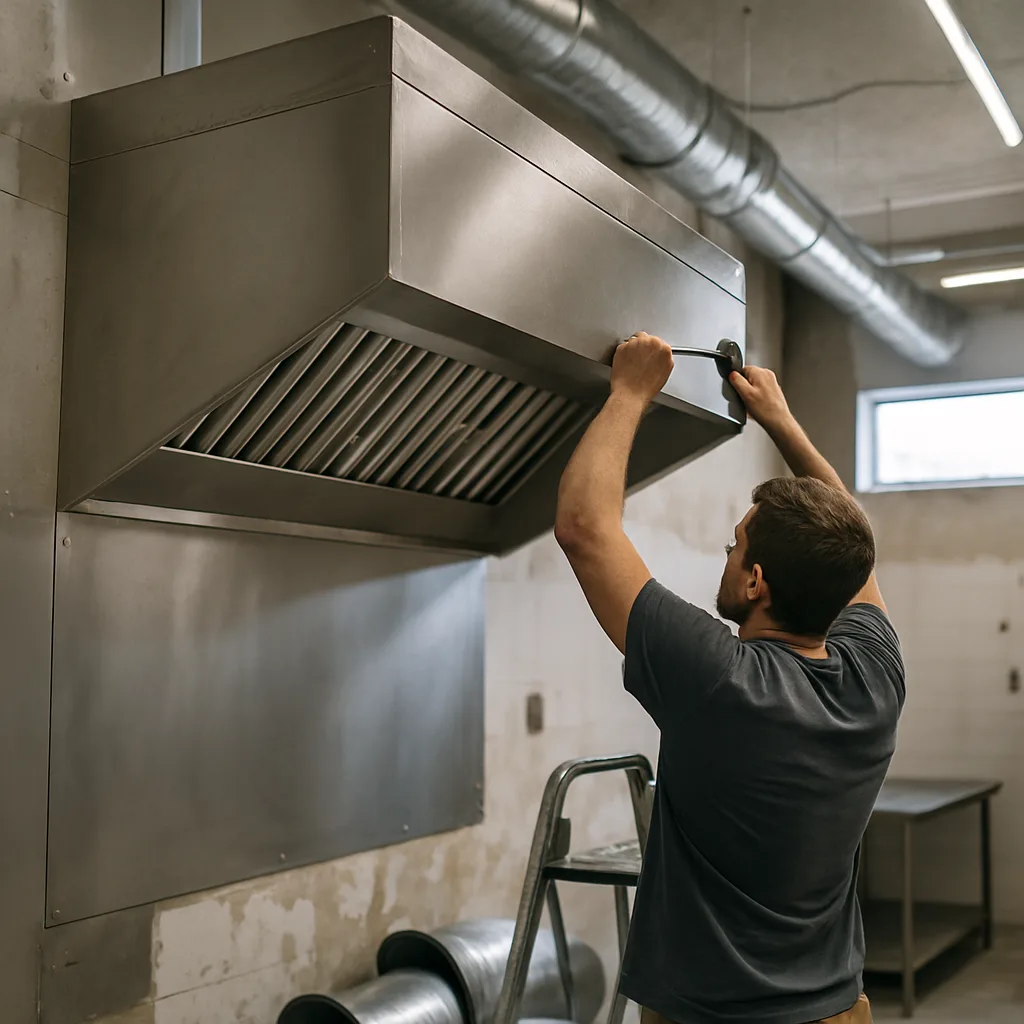
Here’s what a professional job looks like once we’re on site. We’re not just bolting metal to a wall. We’re building an exhaust system that must pass inspection and keep working through grease, heat, and steam during every shift.
- We confirm that the hood size and CFM rating match your cooking equipment and menu.
- We check the mounting surface and duct path. Older Sunnyvale buildings sometimes need extra bracing before the hood goes up.
- We set the hood and connect it to the exhaust duct and fan. Every joint is sealed so grease and smoke don’t leak into the ceiling.
- We wire the fire suppression tie-in and balance the make-up air system with the exhaust.
- We run the system, measure airflow, and test the fire suppression interlock.
- We explain the shutoffs, filters, and cleaning schedule before we leave.
That last step matters. Grease filters need regular cleaning, and a hood without maintenance can fail inspection even after a proper installation.
We see this every week in kitchens that added a fryer or grill without checking the hood’s capacity.
Most jobs finish in one day. Some take two if the ductwork needs changes or the space has tight access. We schedule around your hours when possible because a closed kitchen costs you money.
Not sure whether your current setup will pass a health inspection? Ask before you open, not after.
Make-Up Air and Ductwork: The Part Most Installers Skip
Once your hood’s CFM rating passes a certain threshold, the International Mechanical Code Chapter 5 requires make-up air. Sunnyvale and most surrounding Texas municipalities adopt this code by reference. Make-up air isn’t optional during inspection. Exhaust fans pull conditioned air from the kitchen. Without a matching air supply, negative pressure can fight your walk-in cooler doors and backdraft water heaters. It can also make the kitchen uncomfortable. Some contractors quote the hood and exhaust fan, then act surprised when the inspector flags a missing make-up air unit.
The trigger point varies by jurisdiction and hood type. As a rough rule, a Type I hood exceeding about 400 CFM per linear foot may need supplemental make-up air. Larger commercial kitchens with high-volume cooking lines may need it too. Sunnyvale’s permitting office checks this because many local kitchen buildouts occupy converted retail spaces. The original HVAC often wasn’t sized for commercial cooking loads.
The next surprise often appears in the ductwork. Older Sunnyvale buildings may have exhaust ducts sized for a previous tenant’s smaller hood. The duct material may not meet current fire-rated standards for grease exhaust. Installers handling only the hood may discover this mismatch during the project. They then hire a separate sheet-metal shop to fabricate fittings or replace entire runs. That handoff adds weeks and another point of failure. The trades must coordinate clearances, slope requirements, and access-panel placement.
- Make-up air units must offset roughly 80 to 100 percent of exhaust volume, depending on local code interpretation
- Existing ductwork should be inspected for gauge thickness, seam welding, and slope before ordering a new hood
- Duct fittings between old and new sections need continuous welding, not just rivets or tape
- Cleaning access panels must remain reachable after ductwork changes, not buried behind new equipment
Contractors who handle make-up air design and ductwork fabrication in-house remove the handoff gap. One team measures the existing duct run and calculates the make-up air load. It fabricates any needed fittings and installs the hood as one coordinated job. You don’t have to wait for a separate sheet-metal subcontractor. You also avoid finger-pointing if an inspector finds a mismatch between the hood specifications and the ductwork behind the wall.
Frequently Asked Questions
Common questions about Exhaust hood installation
How fast can you get an exhaust hood installed in Sunnyvale?
Scheduling depends on your kitchen’s setup, but most jobs start within a few days of the first site visit. We first check your equipment, ductwork, and current permits before setting an install date. Kitchens with older wiring or roof access issues, common in Sunnyvale’s older strip-mall spaces, may need extra prep time. We work around your open hours when we can, so you lose as little cooking time as possible. Call early if you have a health inspection deadline coming up.
What happens when your technician inspects my kitchen hood?
Your technician checks the filters, plenum, fan belts, and makeup air balance before talking about replacement. This diagnosis step matters because many airflow problems come from clogged filters or a blocked duct run, not a failed hood. We pull the filters, look for rust or seam separation, and test suction strength. You get a clear answer on whether cleaning fixes the issue or the hood truly needs replacing. No sales pitch, just a straight read on your equipment.
Why do older Sunnyvale kitchens often fail exhaust hood inspections?
Many older commercial buildings in Sunnyvale were built before today’s ventilation codes, so their hoods were sized for smaller or different kitchens. Adding a bigger fryer or a second flat-top often pushes airflow needs past what the old hood can handle. When that happens, the Dallas County Fire Marshal will flag it during the pull test. Getting the CFM rating and duct sizing right the first time helps you avoid a red tag and lost kitchen days.
How do I know if my kitchen needs a Type I or Type II hood?
Your hood type depends on whether your equipment produces grease-laden vapor or just heat and steam. Fryers, griddles, char-broilers, and woks need a Type I hood with fire suppression, since grease residue in ductwork is a fire risk. Dishwashers, steamers, and ovens without open flame usually only need a Type II hood. Installing the wrong type either wastes money on an unneeded fire system or creates a life-safety violation that fails inspection.
Can my exhaust hood be repaired instead of replaced?
Yes, many hood problems come from maintenance gaps rather than equipment failure. Clogged filters, hardened grease in the cavity, worn fan belts, or minor duct seam gaps can often be fixed for less than a full installation. If your hood still meets current clearance and capture requirements and the ductwork shows no corrosion, repair usually makes more sense. Replacement only becomes necessary when the hood no longer matches your equipment or has structural rust or warping.
Ready to Get Started?
Call 972-288-2263 Today, Get Service Today.