


Central Plant Upgrades in Sunnyvale: One Contractor, Three Licensed Trades
Boilers, chillers, pumps, and the piping between them upgraded in a staged sequence that keeps the building running while the plant comes apart.
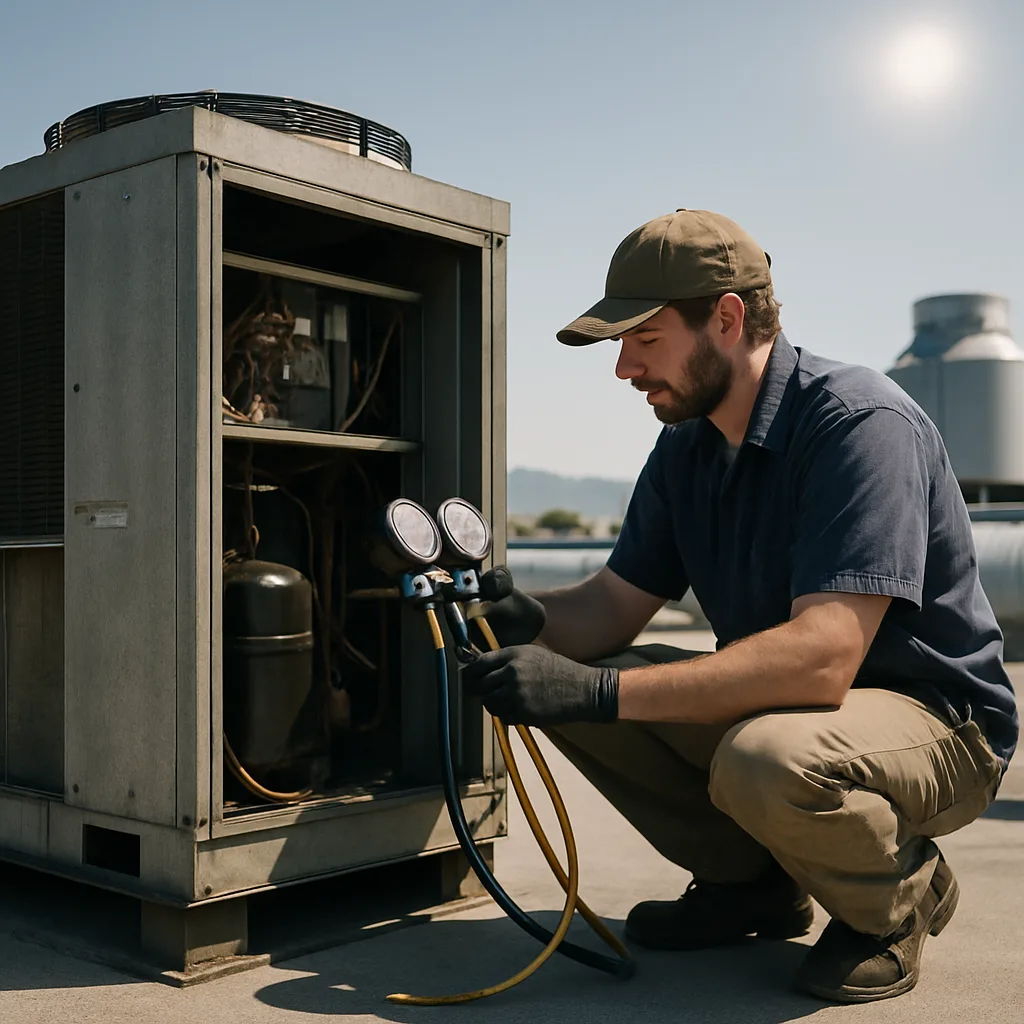
What’s Covered on This Page
- Why Sunnyvale’s Long Cooling Season Wears Out Central Plant Equipment
- Central Plant Upgrade or Standard AC Repair: How to Tell the Difference
- What Drives Central Plant Upgrade Costs Up or Down
- Phasing the Project to Keep Your Building Running
- Licenses and Trades a Central Plant Upgrade Requires
- How long does a central plant upgrade take in Sunnyvale?
- What happens when your crew arrives to start the upgrade?
- Why do central plants in Sunnyvale wear out faster than in other cities?
- How do I know if I need a central plant upgrade instead of a repair?
- Do I need permits for a central plant upgrade in Sunnyvale?
- Can my building stay open during a central plant upgrade?
Why Sunnyvale’s Long Cooling Season Wears Out Central Plant Equipment
Your central plant doesn’t get a real break here. Sunnyvale’s cooling loads stretch from early spring well into fall. Your chiller and cooling tower rack up run hours that equipment in other regions doesn’t. When a pump fails or a chiller trips offline, the cause usually isn’t one bad part. It’s years of extended run time catching up all at once.

What does that wear look like before it becomes an emergency? A few signs appear again and again in the buildings we service.
- Energy bills creeping up year over year with no change in square footage or occupancy
- Cooling towers cycling more often just to hold the same setpoint
- Pumps or compressors that once ran quietly now humming louder or vibrating
- Controls that need constant adjustment to keep temperatures stable
None of these signs means your plant will fail tomorrow. They do tell you the equipment is working harder than it should. A plant sized for Sunnyvale’s cooling demand can reduce that strain. Upgrading before a failure also costs much less than unplanned downtime. That’s the point of getting ahead of it.
Central Plant Upgrade or Standard AC Repair: How to Tell the Difference
Here’s the honest answer. If one rooftop unit quit or a single zone won’t cool, you need a repair call. Central plant work involves the equipment serving the whole building. That includes chillers, boilers, cooling towers, pumps, and the controls tying them together. We see this mix-up every week.
How do you know what you’re dealing with? Ask whether the problem is isolated or building-wide. One warm office with normal temperatures downstairs points to a repair. Several hot floors, short cycling, or a constantly tripping chiller point to a larger problem.
- One unit or zone is affected while everything else runs fine: that’s a repair
- Building-wide temperature swings or capacity that can’t keep up on hot days
- Original boilers or chillers still serving an older Sunnyvale commercial building decades after installation
- Controls that no longer communicate with each other or can’t be serviced
- Rising utility bills across the whole facility, not just one meter
Not sure where your problem fits? That’s common, and it’s a fair question. Many older Sunnyvale commercial buildings still use their original central equipment. That equipment can wear out long before anyone sees a total failure. A plant that’s quietly limping along costs you more every month than an upgraded plant.
What Drives Central Plant Upgrade Costs Up or Down
Every plant is different, so every quote is different. Two buildings of the same size can have very different costs. The difference usually comes down to a few factors we review with you before putting a number on paper.
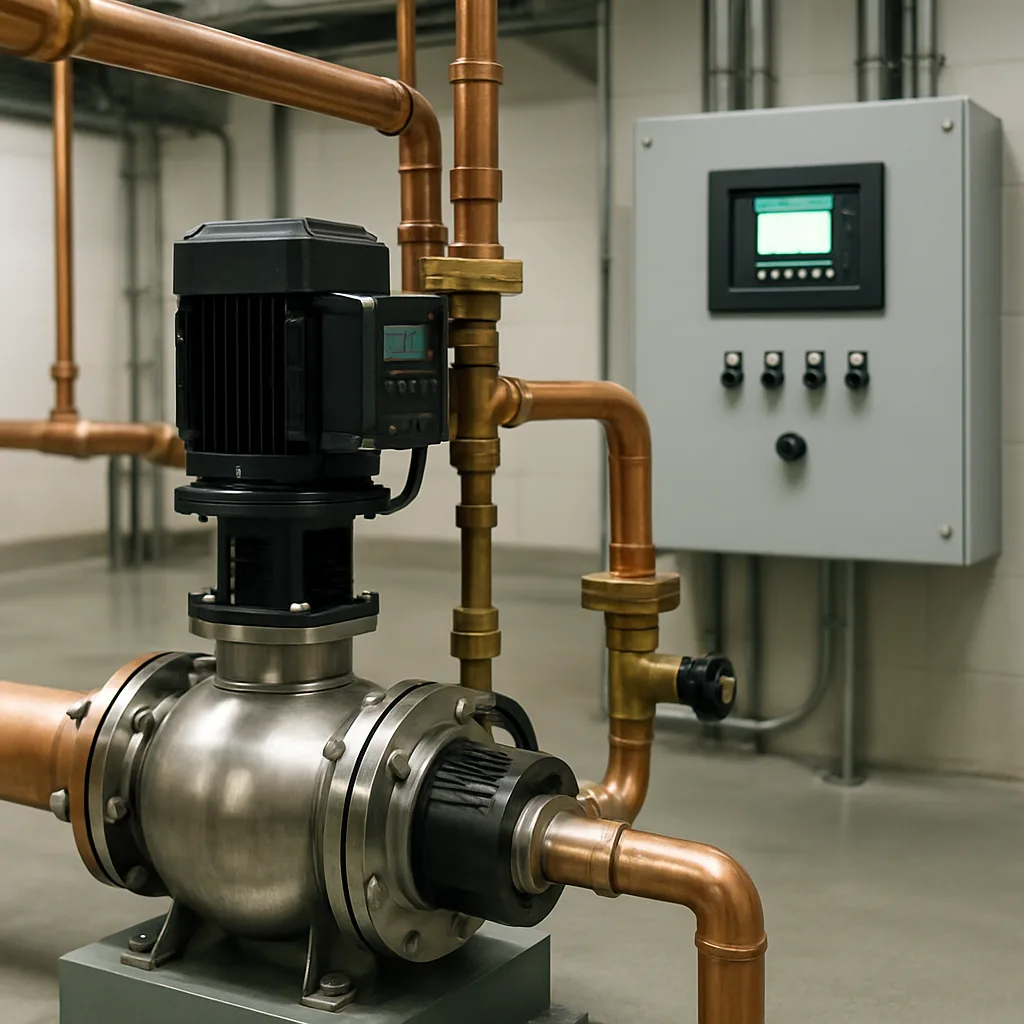
Size and capacity come first. A cooling tower for a small office differs from one serving a multistory commercial building. A bigger load calls for bigger equipment, more pipe, and more labor hours.
- Plant size and total capacity needed for the building
- The equipment you choose, including chillers, boilers, pumps, or controls
- System complexity, from a single unit to several interconnected systems
- Whether the job runs in phases to keep the building operating during work
- Code and permit requirements tied to the scope of work
People often don’t think about phasing until we bring it up. Some businesses can shut down for a weekend. Others, such as data centers or tenant buildings, can’t lose cooling or heat for an hour. Phased work takes more planning and coordination. It protects you from downtime that may cost more than the upgrade itself.
Permits and code reviews add time and cost, and this isn’t a place to cut corners. Large-scale mechanical work almost always triggers inspection requirements. We include that work in the plan from day one, not as a surprise item halfway through the job.
Ask any contractor these questions before signing: What does the quoted price include? What happens if the crew finds another problem mid-project? How will they phase the work if your building can’t go dark? Good answers tell you a lot.
Not sure what your Central plant upgrades project needs? Ask us.
Call Today, Get Service Today. Xtreme Air Services is ready to help.
Phasing the Project to Keep Your Building Running
Shutting down a whole plant for a weekend isn’t an option for most buildings. A hospital, office tower, or apartment complex still needs heating and cooling during a chiller replacement. Keeping that service running is the main challenge behind central plant upgrades. That’s why phasing matters as much as the equipment.
Phasing is a major cost driver, along with plant size and equipment selection. A single-phase swap on a small system can move quickly. A large, mixed-use building needs careful sequencing when its tenants can’t lose cooling.
We’ve worked on jobs where one chiller stayed online while its twin was replaced. The units then switched roles. That’s the approach for a building that can’t tolerate a full shutdown.
- Determine which equipment can run in parallel and which must go fully offline
- Sequence demolition and installation so at least partial capacity stays available
- Schedule the loudest and messiest work during low-occupancy hours or seasons
- Coordinate permit inspections between phases instead of waiting until the end
- Test and commission each phase before moving to the next one
What happens if you skip proper phasing? You can end up with uncomfortable tenants and an unwanted change order. Owners don’t always plan for that risk at the start. The schedule matters as much as the equipment list.
Licenses and Trades a Central Plant Upgrade Requires
A central plant upgrade isn’t a one-trade job. The work may involve chillers, boilers, cooling towers, pumps, and the controls tying everything together. Mechanical, plumbing, and often electrical work may happen at the same jobsite during the same week.

Many building owners miss one detail: permits for this work are pulled by trade, not by project. A mechanical permit covers the chiller and boiler replacement. A plumbing permit covers piping connections. New wiring or panel work requires its own inspection.
- Mechanical/HVAC licensing for chiller, boiler, and cooling tower installation and startup
- Plumbing licensing for hydronic piping, condensate, and water-side connections
- Electrical coordination for controls, motors, and power feeds to new equipment
- Building automation and controls knowledge so the new plant communicates with the old system
Xtreme Air Services carries HVAC License #TACLA29023C. Our plumbing work runs under Master Plumber Larry Breedlove’s license. That covers two of the three trades supporting a central plant job under one accountable company. You won’t have three separate subcontractors pointing fingers at one another.
Before you sign anything, ask who will pull each permit. Confirm whose license will be on record for every trade. If a contractor can’t answer clearly, keep asking.
Frequently Asked Questions
Common questions about Central plant upgrades
How long does a central plant upgrade take in Sunnyvale?
Most Sunnyvale central plant upgrades take a few weeks to a few months, depending on your building size and equipment. A single chiller swap on a small system can move fast. A large mixed-use building with cooling towers, pumps, and boilers needs more time because of Sunnyvale’s long cooling season and the code inspections built into the schedule. We give you a clear timeline before work starts so you know when full capacity comes back online.
What happens when your crew arrives to start the upgrade?
We walk the plant with you first to confirm which equipment stays online and which comes offline during each phase. The crew then sets up protection around chillers, boilers, and pumps before any demolition starts. You’ll get a check-in at the end of each work day so you know what got done and what’s next. This keeps surprises off your desk while the job moves forward.
Why do central plants in Sunnyvale wear out faster than in other cities?
Sunnyvale’s cooling season runs from early spring into fall, so your chiller, cooling tower, and pumps rack up run hours other regions rarely see. That extra strain shows up as rising energy bills, cooling towers cycling more to hold setpoint, and pumps that hum louder than they used to. None of these signs mean instant failure, but they tell you the plant is working harder than it should. Catching this early costs far less than an unplanned breakdown later.
How do I know if I need a central plant upgrade instead of a repair?
You need an upgrade when the problem affects the whole building, not just one room. A single warm office while the rest of the building cools fine usually points to a repair call. Building-wide temperature swings, a chiller that keeps tripping, or controls that no longer talk to each other point to a bigger plant issue. Many older Sunnyvale commercial buildings still run their original boilers or chillers decades later, which is often where this shows up first.
Do I need permits for a central plant upgrade in Sunnyvale?
Yes, most central plant upgrades trigger permit and inspection requirements because of the scope of mechanical work involved. This isn’t a step to skip or rush. We build permit timing into your project plan from day one, so inspections happen between phases instead of causing delays near the end. Knowing this upfront helps you plan around your building’s occupancy instead of getting surprised by a hold on the work.
Can my building stay open during a central plant upgrade?
Yes, most buildings can stay open during an upgrade if the work gets phased correctly. We keep at least partial cooling or heating capacity available by sequencing which equipment goes offline and when. For example, one chiller can keep running while its twin gets replaced, then the units switch roles. This approach protects tenants from discomfort and helps you avoid the cost of an unplanned shutdown.
Ready to Get Started?
Call 972-288-2263 Today, Get Service Today.