

Industrial Ventilation in Sunnyvale: Built for Heat, Fumes, and Code Compliance
Heat, fumes, and airborne contaminants pulled out of the space and moved clear of the roofline – sized to the load and verified at every hood.
What’s Covered on This Page
- Warning Signs Your Facility Needs Industrial Ventilation Service
- Make-Up Air and Exhaust Hoods Must Work as One System
- When a Service Call Beats a Full Ventilation Overhaul
- Ventilation Load Challenges for Sunnyvale Industrial Buildings
- Keeping Industrial Ventilation Code-Ready Year-Round
- How fast can you get out to my shop if my ventilation stops working?
- What happens when you come out to look at our ventilation system?
- Why does the air near the ceiling in our Sunnyvale warehouse feel so much hotter?
- How do I know if I need a repair or a full ventilation overhaul?
- Why do my exterior doors feel heavy or slam shut when the exhaust hood runs?
Warning Signs Your Facility Needs Industrial Ventilation Service
Walk into your shop or warehouse on a slow afternoon, and the air feels thick and sticky even with the AC running. That’s not just Texas heat pushing through the walls. The air isn’t moving.
Most facility owners don’t think about ventilation until something forces the issue. A few signs repeatedly show up on service calls. Once you recognize them, they’re hard to miss.
- Staff complaining of headaches, stuffiness, or fatigue by midday
- Smoke, grease, or fumes lingering near a hood or line instead of being pulled out
- Condensation forming on ceiling tiles, metal roof panels, or duct joints
- A musty or stale smell that gets stronger once the AC cycles off
- Rooftop units or exhaust fans running nonstop without fully cooling the space
Not sure whether it’s the ventilation system or a tired unit? That’s a fair question. If the air feels stale rather than warm, you likely have an airflow problem instead of a temperature problem. A unit can cool properly while the space still feels wrong. Stale air, fumes, or moisture may have nowhere to go. Buildings along the U.S.
Another sign is rising energy bills without a change in usage. When exhaust and fresh air aren’t balanced, your equipment works harder than it should. You may see that extra work on the bill before you notice it anywhere else.
Make-Up Air and Exhaust Hoods Must Work as One System
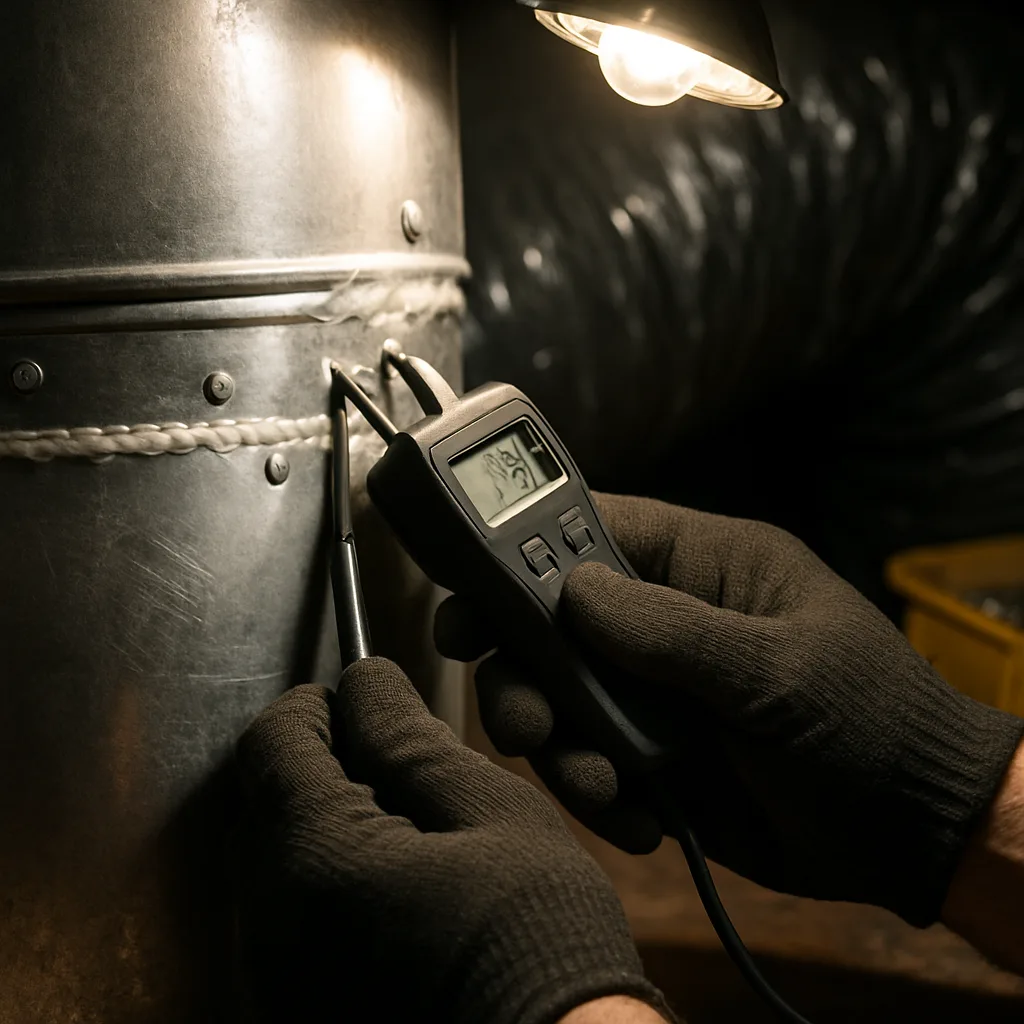
Many business owners don’t realize this until we’re standing in their kitchen with a smoke pencil in hand: an exhaust hood can’t just pull air from a building. Something has to replace that air, or the whole system fights itself.
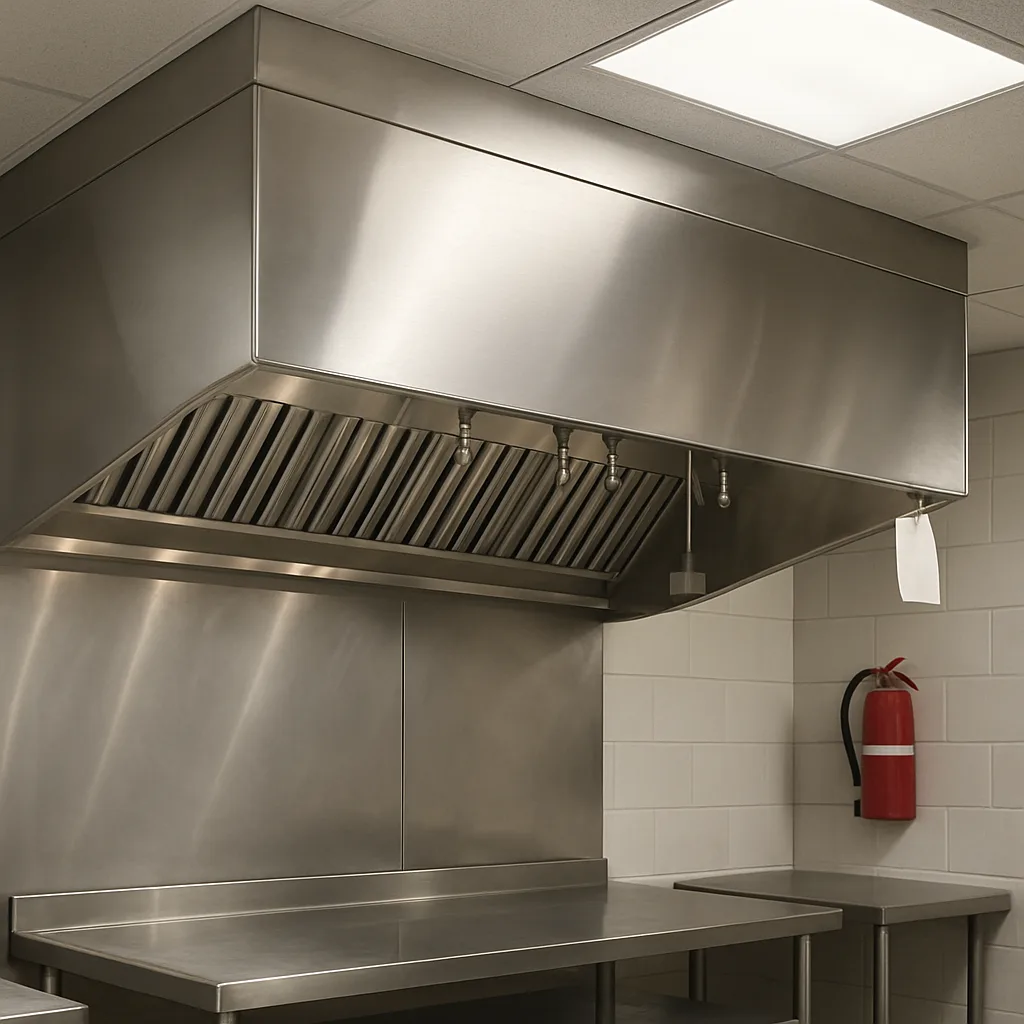
We see this every week in restaurants and shops that added an exhaust hood without upgrading the make-up air. The hood runs, but the room develops negative pressure. Doors become hard to open, and cold air slips through every available gap. In worse cases, gas appliances can backdraft. That pulls combustion fumes into the room instead of sending them outside.
How can you tell whether your make-up air and exhaust hood are balanced? Watch for these signs.
- Exterior doors that suddenly feel heavy or slam shut on their own
- Smoke or cooking odors that linger instead of clearing out
- A noticeable draft under doors even with the HVAC off
- Pilot lights that flicker or blow out during hood operation
- Uneven temperatures near the hood compared with the rest of the space
Fixing this isn’t about cranking up one unit. The exhaust hood’s cubic feet per minute must match the replacement air entering through the make-up air system. That incoming air must also be tempered so it doesn’t dump extreme temperatures where your staff works. Get the balance wrong, and you waste energy or create a safety problem. Get it right, and the entire space breathes as it should.
When a Service Call Beats a Full Ventilation Overhaul
Not every airflow problem means your whole ventilation system is done. We see the same issues each week: a kitchen exhaust hood with weak suction or a warehouse fan that squeals during startup. Sometimes one duct run is clogged with grease or dust. The problem is often one of several common culprits, not the entire system failing at once.
- One fan motor is worn out, but the ductwork and hood are still in good shape
- A single damper or louver is stuck, not the whole zoning setup
- Grease or dust buildup is choking one run, not the entire duct network
- A control board or sensor failed, but the exhaust and make-up air units still test fine
- The system worked fine until new equipment or a layout change threw off the balance
If your setup is under ten years old and passed its last inspection, a service call usually makes more sense than tearing it out. An issue limited to one room or line is another strong sign that the problem is localized rather than systemwide.
When do we tell a customer to hold off entirely? If the ventilation still works but sounds louder than you’d like, you may be hearing normal wear rather than a failure. Not every rattle means trouble.
A full overhaul makes sense when the ductwork is corroded, undersized for equipment you’ve added, or failing code in several areas. Those conditions go beyond one repairable part.
Thinking about Industrial ventilation? Let’s talk.
Call Today, Get Service Today. Xtreme Air Services is ready to help.
Ventilation Load Challenges for Sunnyvale Industrial Buildings
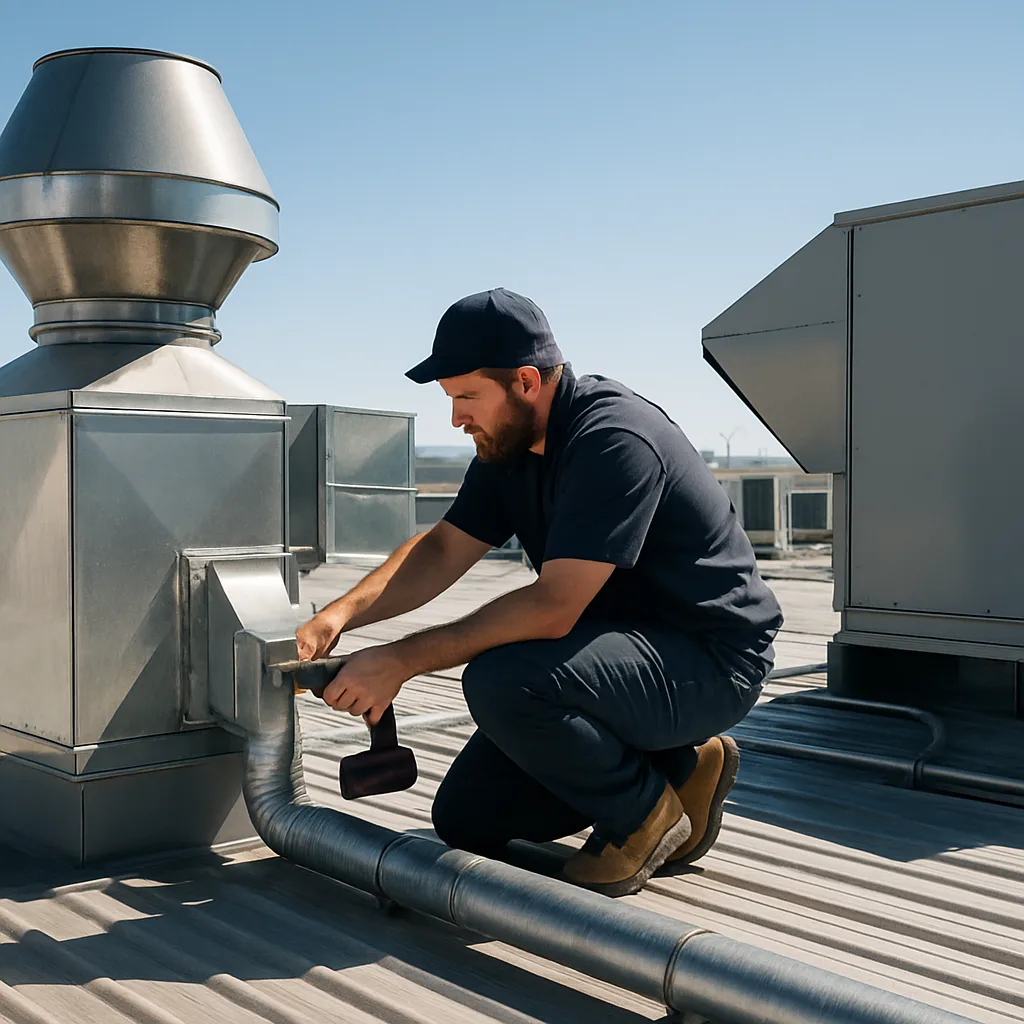
Much of the industrial space around Sunnyvale consists of metal warehouses and shop buildings with steel roofs and low insulation values. Those roofs absorb the Texas sun throughout the day. By 3 p.m. in July, air near the ceiling can be twenty or thirty degrees hotter than air at floor level. Standard rooftop units weren’t designed to move that stacked heat out quickly enough. That’s often where the ventilation problem begins.
The load on your building isn’t based on square footage alone. What happens inside the building matters too.
- Ceiling height and roof pitch: Taller buildings trap more heat near the top before it reaches an exhaust fan
- Process heat from equipment, welding, ovens, compressors, or motors that run most of the day
- The number of people and frequency of dock-door openings, both of which add moisture and outside-air load
- Existing duct and exhaust runs: Older or patched-together ductwork can choke airflow even with a strong fan
- Make-up air balance: Pulling air out without replacing it can draw heat and fumes back into the space
We often get called after someone has tried a quick fix, such as a bigger fan or second exhaust vent. It barely changes the problem because the fan wasn’t at fault. The load calculation was wrong from the start. Calculate that load correctly first. Then the duct sizing, fan selection, and make-up air can work as intended.
Keeping Industrial Ventilation Code-Ready Year-Round
A ventilation system that passed inspection last year can fail this year. It may not have broken overnight; parts simply wore down. Filters clog, belts stretch, dampers stick, and exhaust rates fall below permit requirements. Nobody may notice until an inspector arrives or the building’s air starts feeling heavy. 80 six days a week.
Sunnyvale summers push commercial exhaust fans hard for months. That constant runtime wears out belts and bearings faster than it would in a system used only a few weeks yearly. A maintenance schedule that works elsewhere may leave your system short here.
Staying code-ready is not a one-time event. It is a habit. During preventive maintenance for industrial ventilation, we check:
- Airflow rates measured against your permit and code requirements
- Filter condition and replacement schedule
- Fan belts, bearings, and motor amp draw
- Damper operation and duct-seal integrity
- Exhaust hood capture and make-up air balance
We see systems run fine until a hot spell pushes them past their limits. Catching a weak fan motor in March is better than losing it in August.
Businesses across the Dallas-Fort Worth area schedule inspections rather than wait for a failure notice. That’s the point of preventive maintenance plans: you’re not gambling on when the next problem will appear.
Documentation matters too. Keep your inspection records. If a code officer asks questions, a paper trail showing regular service carries more weight than a promise.
Frequently Asked Questions
Common questions about Industrial ventilation
How fast can you get out to my shop if my ventilation stops working?
We schedule most industrial ventilation calls within a day or two of your call, sooner if fumes or heat are building up fast. When you call, tell us what you’re seeing, like smoke lingering or a musty smell. That helps us bring the right parts the first time. Facilities with process heat, welding, or ovens running daily tend to need faster turnaround, since airflow problems there can affect staff comfort and safety quickly.
What happens when you come out to look at our ventilation system?
We start by checking airflow at the hood, ducts, and rooftop unit, often with a smoke pencil to see how air moves. This shows us right away if make-up air and exhaust are fighting each other. We check for one bad fan motor, a stuck damper, or a clogged duct run before assuming the whole system needs work. Most visits end with a clear answer: repair one part, or plan for something bigger.
Why does the air near the ceiling in our Sunnyvale warehouse feel so much hotter?
Metal roofs common in Sunnyvale industrial buildings soak up heat all day, and that heat stacks near the ceiling before it reaches an exhaust fan. By mid-afternoon in summer, that air can run twenty to thirty degrees hotter than air at floor level. Standard rooftop units often can’t pull that stacked heat out fast enough. This is a load problem, not just an old unit problem, and it needs the right size fan for your building.
How do I know if I need a repair or a full ventilation overhaul?
If your system is under ten years old and passed its last inspection, a repair is usually enough. Common culprits are a worn fan motor, a stuck damper, or grease buildup in one duct run, not the entire system. A full overhaul makes more sense when ductwork is corroded, undersized for equipment you’ve added, or failing code checks in several spots. One noisy or slow area usually points to a local fix, not a system-wide failure.
Why do my exterior doors feel heavy or slam shut when the exhaust hood runs?
That usually means your exhaust hood and make-up air aren’t balanced, and the room is pulling negative pressure. Air has to come back in somewhere, so it pulls hard on doors, gaps, and even gas appliance pilot lights. This isn’t just annoying. It can pull combustion fumes back into your space instead of sending them outside. Matching the make-up air volume to the hood’s exhaust rate usually solves it and stops the drafts.
Ready to Get Started?
Call 972-288-2263 Today, Get Service Today.