

Commercial Kitchen Ventilation in Sunnyvale: Built to Pass Inspection the First Time
Hood-face airflow and make-up air measured rather than guessed for Sunnyvale kitchens – so an older strip-center duct run gets cleaned or upgraded on numbers, and clears NFPA 96.
What’s Covered on This Page
- Signs Your Kitchen Exhaust System Needs Attention
- Hood, Make-Up Air, and Fire Suppression: What NFPA 96 Requires
- Routine Hood Cleaning vs. a Full Ventilation System Upgrade
- What Drives the Cost of a Commercial Kitchen Ventilation Project
- What Happens During a Ventilation Install and Inspection in Sunnyvale
- How fast can you get to my restaurant if the hood stops working?
- What happens when a technician checks my exhaust system?
- Why do older Sunnyvale strip mall kitchens have more ventilation problems?
- How do I know if I need a hood cleaning or a full system upgrade?
- What does NFPA 96 mean for my kitchen’s ventilation setup?
Signs Your Kitchen Exhaust System Needs Attention
You’re mid-rush on a Friday night when the line cook says he can barely see the ticket rail through the haze. That’s not a busy kitchen. It’s a hood that’s no longer doing its job. Grease vapor and smoke should pull straight up and out. When they hang in the air, your exhaust fan isn’t keeping up.
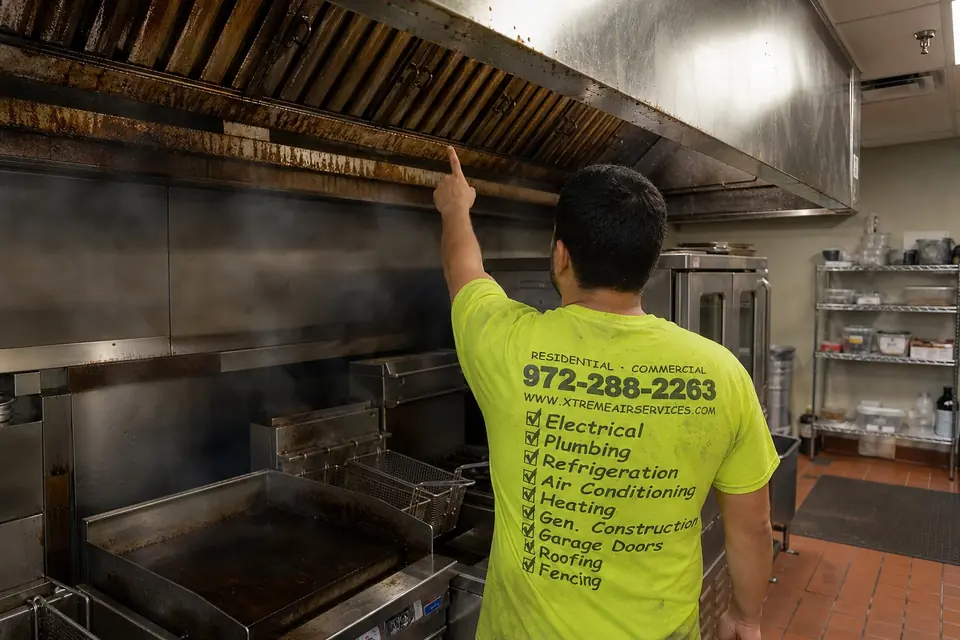
Grease is honest. It points to a failing system fast. You may be wiping sticky film from stainless surfaces more often, or the filters may look coated within days of cleaning. Both signs can mean your airflow has dropped. Weak draw may also mean your make-up air isn’t balanced correctly. That throws off airflow throughout the kitchen and can make doors harder to open or close.
- Smoke or steam that lingers near the ceiling instead of pulling out fast
- Grease film building up faster than your cleaning schedule can keep up
- A hood fan that’s suddenly loud, rattling, or barely running at all
- Kitchen staff complaining about heat, fumes, or headaches by mid-shift
- A fire suppression system that’s tripped or flagged during a routine check
We get calls from kitchen managers who thought an old building was acting up. Often, the exhaust fan motor is wearing out. The problem may also be ductwork caked with grease where nobody can see it. In older Sunnyvale strip centers, duct runs are often longer and harder to access. That makes buildup easy to miss until the airflow drops.
Hood, Make-Up Air, and Fire Suppression: What NFPA 96 Requires
NFPA 96 is the standard your health inspector and fire marshal care about. It covers grease hoods, ductwork, fans, and the fire suppression system above your cook line. If any part is missing or mismatched, an inspection may uncover it. Sometimes that means a shutdown until the problem is fixed.
Here’s the part many owners miss: your hood must be sized for the cooking equipment underneath it, not guessed at. Pull out too much air and you create negative pressure. Doors become hard to open, pilot lights blow out, and your HVAC system fights itself all day.
- An exhaust hood sized and positioned to capture grease-laden vapors from the cooking equipment below it
- A make-up air system that replaces what the hood pulls out and keeps the kitchen balanced
- A fire suppression system tied into the hood and ductwork, sized for the appliances it protects
- Grease duct clearances from combustible material, with access panels for cleaning
- A regular inspection and cleaning schedule based on how much and how often you cook
The make-up air requirement trips people up. Some older Sunnyvale buildings were never fitted with a system and relied on propped-open doors. That approach works until it doesn’t. It’s often the first problem we flag on an older setup.
Xtreme Air Services holds HVAC License #TACLA29023C, and this is the type of code detail that license covers. The hood, make-up air, and suppression system must work together correctly. That takes airflow calculations, testing, and knowledge of what your local inspector will check.
Routine Hood Cleaning vs. a Full Ventilation System Upgrade
Not every greasy hood needs a new system. Sometimes a kitchen only needs a thorough cleaning. We see this mix-up often: an owner notices smoke lingering near the ceiling and assumes the whole exhaust system is shot. The cause may be grease buildup choking the airflow, not a failed system.
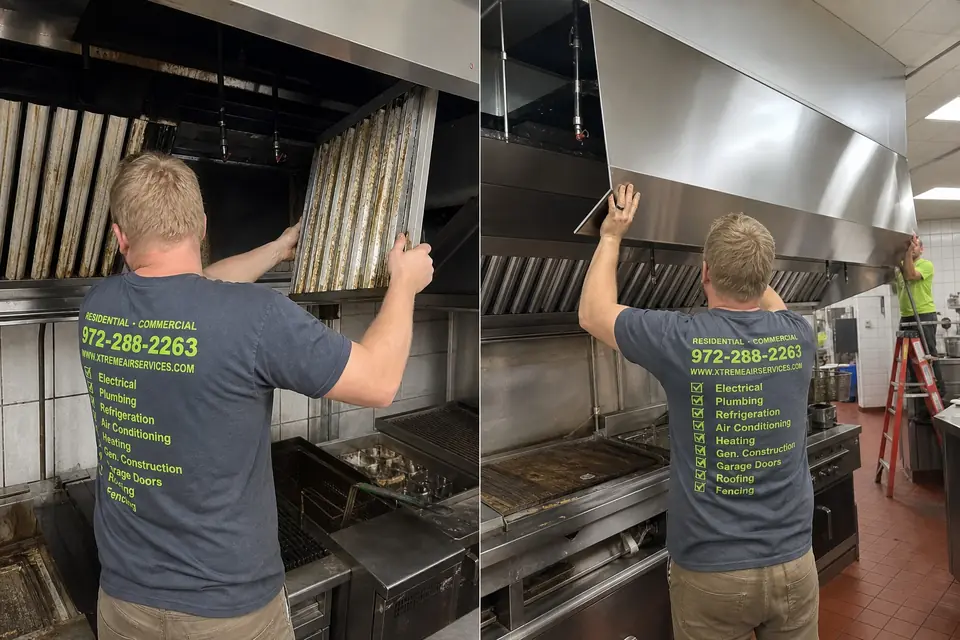
A routine cleaning clears grease from the hood, ductwork, and fan. It’s maintenance, not replacement. An upgrade is different. You may need one when the hood, exhaust fan, or make-up air system can’t keep pace with your equipment. The same applies when your kitchen layout has changed and the airflow calculations no longer match the cook line.
- Grease coats the hood and duct interior, but the fan still pulls out smoke and heat. That’s a cleaning job.
- Smoke and heat remain in the kitchen right after cleaning. That points to an airflow or capacity problem.
- You added a char-broiler, fryer bank, or wok station, but the old hood was sized for lighter cooking.
- Make-up air isn’t balanced, and doors slam shut or won’t open. That’s a system issue, not a grime issue.
- Your fire suppression inspector flags the hood or duct condition, not just grease. That often means it’s time to discuss replacement.
How do you know for sure? Have someone check the duct velocity and equipment underneath instead of only looking at the grease. A technician can measure airflow at the hood face in minutes. If the numbers remain low on a clean system, more scrubbing won’t help. Cleaning can’t fix a fan that’s undersized for your line.
Have questions? We’re happy to help.
Call Today, Get Service Today. Xtreme Air Services is ready to help.
What Drives the Cost of a Commercial Kitchen Ventilation Project
Here’s what we tell every restaurant owner who calls us: two kitchens can look almost identical yet have very different prices for ventilation work. The difference comes down to a handful of factors. Those factors can change fast once you’re behind the hood. 80 six days a week.
Most jobs we see are standard swaps that use existing connections without major building changes. These jobs typically run $12,000 to $26,000 for equipment, professional installation, startup, and testing. The full range for commercial kitchen ventilation projects spans $5,000 to $40,000. Several factors explain why that range is so wide.
- Equipment size and efficiency. Bigger hoods and higher airflow capacity cost more to move and mount.
- The brand and model of the hood and make-up air unit
- Access to the space. A cramped older kitchen takes longer than an open new build.
- The condition of the existing ductwork, wiring, or plumbing
- Any code corrections the inspector flags once the work starts
- Permits and any custom sheet metal fabrication needed for an odd-shaped space
The last factor trips up many owners. Hood and make-up air work almost always go together. You can’t pull grease-laden air out without bringing clean air back in, and that pairing affects the whole quote. Included work covers the equipment, installation, startup, testing, and removal of your old unit. Duct, electrical, or plumbing changes and permit fees aren’t part of a standard quote unless we identify them upfront.
When a contractor gives you a number, ask what’s included before comparing it with another quote.
What Happens During a Ventilation Install and Inspection in Sunnyvale
Many kitchen owners expect us to show up, bolt on a hood, and leave. The job isn’t that simple, and it shouldn’t be. Many older buildings along U.S. 80 began as retail or office space before becoming restaurants. Duct runs and roof penetrations from past remodels don’t always match what today’s hood needs.
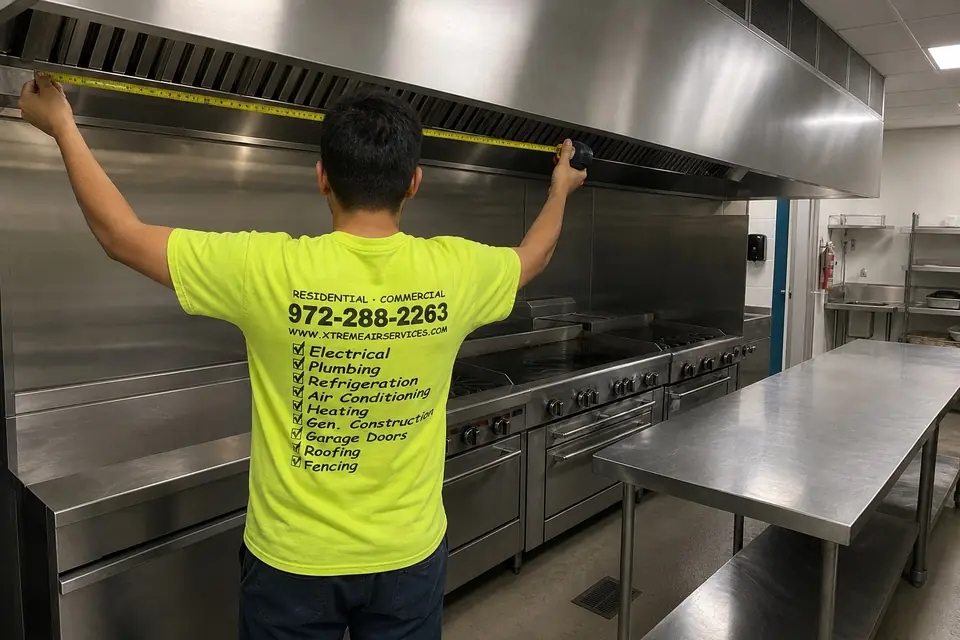
Here’s the order we follow every time:
- Walk the kitchen and measure the hood length, cooking equipment, and current duct path.
- Calculate the required exhaust airflow in CFM based on the hood type and what’s cooking under it.
- Check the make-up air setup so the kitchen isn’t pulling negative pressure from the dining room.
- Install or modify the ductwork, exhaust fan, and hood connection points.
- Start the system and balance airflow with a test instrument instead of guessing.
- Confirm the fire suppression tie-in is intact and all clearances meet code.
- Show you what we did and explain what to watch for before we pack up.
The balancing step matters more than people think. A hood can look properly installed and still move the wrong amount of air. With too little airflow, grease and smoke remain in the kitchen. With too much, you’re paying to condition air that gets pulled straight through the roof.
We test the system before calling the job done, then show you the numbers.
Frequently Asked Questions
Common questions about Commercial kitchen ventilation
How fast can you get to my restaurant if the hood stops working?
We aim to reach Sunnyvale kitchens quickly once you call, especially if you’re mid-shift and losing airflow. A hood fan that goes silent or a lingering haze near the ceiling is a same-day concern, not something to wait on. When you call, tell us what you’re seeing and hearing, like a rattling fan or smoke that won’t clear. That helps us bring the right parts and testing tools on the first visit, so we’re not guessing once we arrive.
What happens when a technician checks my exhaust system?
Your technician will measure airflow at the hood face and check the make-up air balance, not just look for grease. This takes only a few minutes and tells us if your problem is buildup or a real capacity issue. We’ll also check the ductwork, fan motor, and fire suppression tie-in for wear or code gaps. You’ll get a clear answer about whether you need a cleaning or a bigger fix, based on real numbers instead of guesswork.
Why do older Sunnyvale strip mall kitchens have more ventilation problems?
Older Sunnyvale strip centers often have longer duct runs that are harder to access for cleaning. Grease can build up out of sight for months before airflow noticeably drops. Some of these buildings were also never fitted with a proper make-up air system, so owners relied on propped-open doors instead. That workaround causes pressure problems and puts extra strain on your hood fan and HVAC system over time.
How do I know if I need a hood cleaning or a full system upgrade?
If your fan still pulls smoke out after a cleaning, you likely just need maintenance, not new equipment. But if smoke and heat linger even right after cleaning, that points to an airflow or capacity problem. Adding a char-broiler, fryer bank, or wok station to your line can also outgrow your old hood’s design. A quick airflow check at the hood face will tell you which situation you’re in.
What does NFPA 96 mean for my kitchen’s ventilation setup?
NFPA 96 is the code your health inspector and fire marshal use to check your hood, ductwork, fan, and fire suppression system. It requires your hood to be sized correctly for the equipment underneath it, with proper clearances and access panels for cleaning. Missing or mismatched parts can trigger a flagged inspection or even a shutdown until it’s fixed. Getting this right from the start saves you from scrambling during an inspection.
Ready to Get Started?
Call 972-288-2263 Today, Get Service Today.