


Smell Gas? Get Fast, Licensed Gas Leak Detection in Sunnyvale
Suspected gas odors traced with a combustible-gas detector and a pressure test, so the leak gets located instead of guessed at.
What’s Covered on This Page
- Warning Signs You Shouldn’t Ignore
- What Happens During a Professional Gas Leak Inspection
- When to Evacuate vs. When to Book a Visit
- Why Large Lots and Buried Lines Raise the Stakes in Sunnyvale
- What Affects the Cost of Gas Leak Detection
- How fast can someone come check a gas leak in Sunnyvale?
- What happens when a technician arrives to check my gas lines?
- Why do older Sunnyvale homes have more gas leak problems?
- Should I evacuate my house or just schedule a visit?
- Do Sunnyvale’s larger lots make gas leak detection harder?
Warning Signs You Shouldn’t Ignore
Gas leaks can be hard to spot because they don’t always smell strong or show up right away. A small leak behind a stove or under a slab can go unnoticed for weeks.
- A faint rotten-egg smell near the stove, water heater, furnace, or dryer
- A hissing or whistling sound close to a gas line or appliance connection
- Dead or discolored grass or plants near an outdoor gas line, even in wet weather
- A gas bill that’s higher than usual with no change in how you’re using appliances
- Headaches, dizziness, or nausea that ease once you leave the house
Some older Sunnyvale homes still have original gas lines that are decades old. Those connections wear down over time. We often see trouble around appliance shutoff valves that haven’t been touched since the house was built. If your home is older and the lines have never been checked, that’s reason enough to have them inspected.
A common call starts with someone noticing an odd smell near the water heater closet but dismissing it. Sometimes there is a leak, so trust your nose.
What Happens During a Professional Gas Leak Inspection
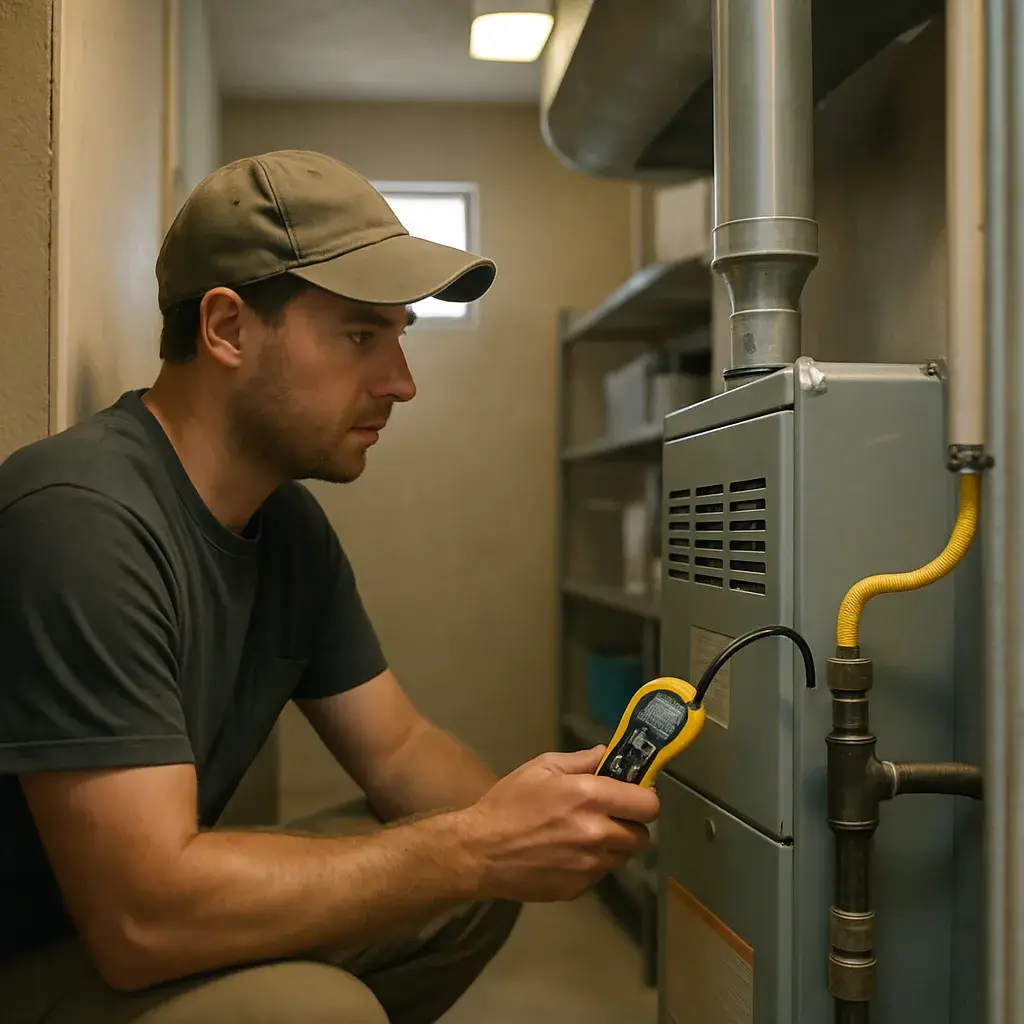
What happens once we’re standing in your driveway? We don’t rely on guesswork or a quick sniff. We use combustible gas meters that detect concentrations you may never notice on your own. Here’s how we check your property from start to finish.
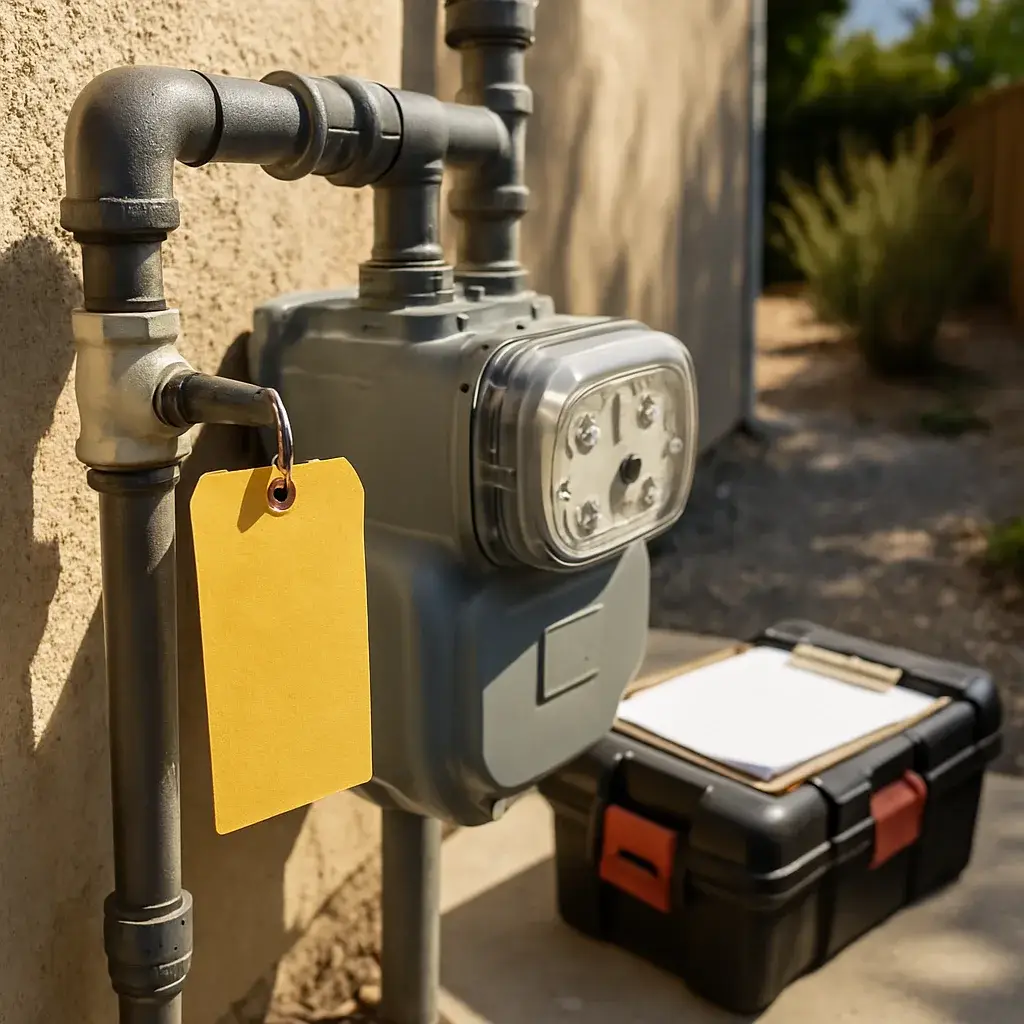
- We start outside at the meter and main line, checking for obvious signs of trouble.
- We trace every gas line into your home, including runs through the attic. These are common in Sunnyvale homes and take a beating from summer temperature swings.
- We test the connection at each appliance, including your furnace, water heater, range, and dryer.
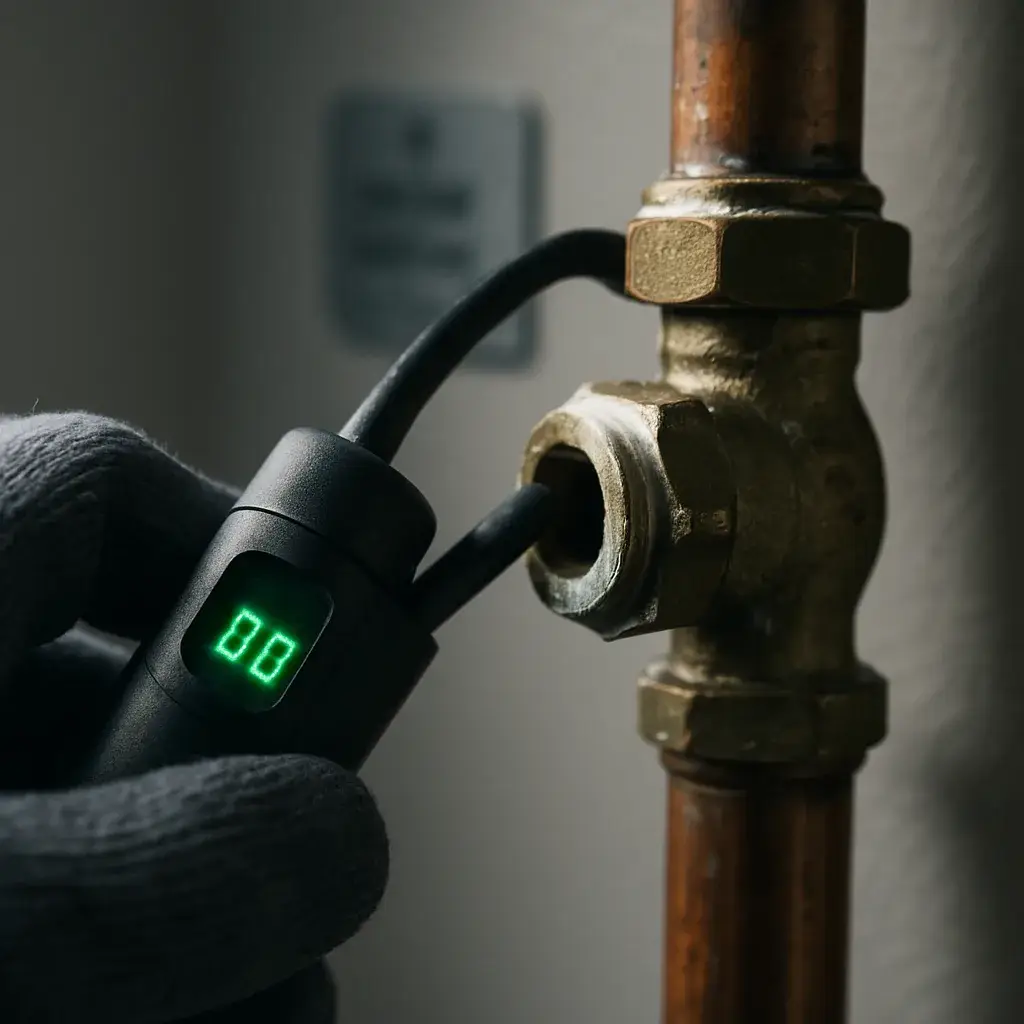
- We check fittings, valves, and flex connectors for wear, corrosion, or loose joints.
- If the location isn’t obvious, we use the meter to scan walls, floors, and crawl spaces.
- We record every reading and finding as we go instead of relying on memory later.
Attic gas lines matter more than many people realize. Texas attics can swing from freezing to well over 130 degrees. That repeated expansion and contraction can loosen a fitting after several summers. When we find a problem, it’s often a connection like that rather than a cracked pipe.
When we’re done, you get a written summary. It explains what we found, where we found it, and what comes next. You won’t be left guessing what the technician meant. You’ll have a record to reference or share with your insurance company if needed.
When to Evacuate vs. When to Book a Visit
Not every gas smell means you need to grab the kids and run outside. Some do, though, so you need to know the difference.
If the smell is strong, like rotten eggs across the kitchen floor, get everyone outside first. Don’t flip light switches or light a candle to check the room. Don’t call us from inside the house.
- Strong, constant rotten-egg odor anywhere in the home
- A hissing sound near the meter, stove, or gas line
- Dizziness, headache, or nausea that eases once you step outside
- Dead grass or bubbling in the soil near an outdoor gas line
If you notice any of those signs, leave the house. Call 911 or the gas utility from outside. Schedule service only after everyone is safe. That’s standard gas safety, not caution without a reason.
Many calls we get aren’t that urgent. You may notice a faint smell only near the water heater. Your gas bill may jump for no clear reason, or a pilot light may keep going out. Those are reasons to book a visit rather than make an emergency call. You aren’t overreacting or wasting anyone’s time by calling.
Ready when you are – get in touch today.
Call Today, Get Service Today. Xtreme Air Services is ready to help.
Why Large Lots and Buried Lines Raise the Stakes in Sunnyvale
Sunnyvale isn’t packed as tightly as some Dallas suburbs. Many homes sit on large parcels, sometimes an acre or more. A gas line may run far from the street meter to your house, shop, or detached garage. More buried pipe gives a leak more places to hide. It also gives us more ground to check before locating the problem.
On a standard city lot, we’re usually checking one line and a handful of appliances. Larger Sunnyvale properties often have more to inspect.
- Longer buried runs between the meter and the home, sometimes crossing driveways or fence lines
- Detached structures with their own gas connections, such as workshops or guest houses
- Mature trees with roots near older buried lines that can shift or stress pipes over time
- Larger properties that require more time and ground coverage to trace a line accurately
A big lot doesn’t mean the job will become a major project. Property size, line count, and appliance count affect how long detection takes and what the work involves. Checking a small home with one line near the street is usually faster. A spread-out property with several runs feeding separate buildings takes more time. We walk the property and follow the pipe instead of guessing. Bigger properties simply have more ground and longer lines to inspect.
What Affects the Cost of Gas Leak Detection
How much does gas leak detection cost? In Sunnyvale, it usually ranges from $150 to $600. The most common job costs closer to $150 to $350. That includes tracking down a suspected leak with proper meters and providing a written summary of our findings.

Several factors can move that price up or down.
- The size of your property and the number of gas lines running through it
- The number of appliances connected to the system, since each connection needs to be checked
- Access to the lines, since attic runs and pipes covered by a slab take longer to inspect
- The type of equipment needed for the job
The service call fee ranges from $26 to $99, depending on the visit. If you move forward with the repair, we credit that fee toward the work. You aren’t paying for it twice.
Before hiring anyone, ask whether the service fee applies to the repair. You should also ask whether it remains a separate charge. That’s a fair question, and a good contractor will answer it directly. We give you upfront flat-rate pricing before work starts, with no surprise charges after the meter comes out.
We also won’t quote a repair price before finding the leak.
Frequently Asked Questions
Common questions about Gas leak detection
How fast can someone come check a gas leak in Sunnyvale?
We treat gas leak calls as priority visits and aim to get to your home the same day when possible. A faint smell near the water heater or a pilot light that won’t stay lit isn’t something to sit on for days. When you call, tell us what you’re smelling and where. That helps us bring the right equipment and get the check done in one visit instead of two.
What happens when a technician arrives to check my gas lines?
We start outside at the meter, then trace every line into your home before testing each appliance connection. You’ll see us check the furnace, water heater, range, and dryer, along with fittings and valves for wear or corrosion. If nothing obvious turns up, we use a combustible gas meter to scan walls and crawl spaces. You’ll get a written summary of everything we find before we leave.
Why do older Sunnyvale homes have more gas leak problems?
Older Sunnyvale homes often still have original gas lines that have never been inspected since installation. Those connections wear down over decades, especially around appliance shutoff valves that haven’t been touched in years. A common call starts with someone noticing a faint smell near the water heater closet and ignoring it for weeks. If your home is older and the lines haven’t been checked, that’s a good reason to schedule an inspection.
Should I evacuate my house or just schedule a visit?
A strong, constant rotten-egg smell means you should leave the house right away and call 911 or the gas utility from outside. Don’t flip light switches or check the room yourself. A faint smell only near one appliance, a rising gas bill, or a pilot light that keeps going out are different. Those situations usually mean it’s fine to book a visit instead of treating it as an emergency.
Do Sunnyvale’s larger lots make gas leak detection harder?
Yes, larger Sunnyvale properties often need more time because the gas line runs farther from the street meter to the house or detached buildings. Homes on an acre or more may have workshops or guest houses with their own gas connections, and mature tree roots near older buried lines can shift pipes over time. We walk the property and follow each line instead of guessing, so a bigger lot means more ground to cover, not a bigger problem.
Ready to Get Started?
Call 972-288-2263 Today, Get Service Today.