


Chandelier Installation in Sunnyvale: Get It Hung Safely, Level, and Wired Right
Heavy and multi-light fixtures hung on rated support, wired, leveled, and tested – including stairwell and two-story foyer installations.
What’s Covered on This Page
- The Ceiling Box Decides If Your Chandelier Is Safe
- When a Chandelier Swap Is a Simple DIY Job
- Vaulted and High Ceilings Change the Installation Plan
- What Happens During a Chandelier Installation Visit
- What Drives Chandelier Installation Cost Up or Down
- How fast can you get out to install my chandelier in Sunnyvale?
- What happens when your technician arrives to hang my chandelier?
- Can older Sunnyvale homes handle a heavy chandelier without extra work?
- Do vaulted ceilings in newer Sunnyvale homes need special equipment?
- Can I swap my own chandelier, or should I call a professional?
The Ceiling Box Decides If Your Chandelier Is Safe
Here’s the part most folks never think about. That little metal box sitting inside your ceiling has a weight rating stamped right on it, usually good for a basic light fixture and not much more. Swap in a heavy chandelier and you’re asking that box to hold weight it was never built for.
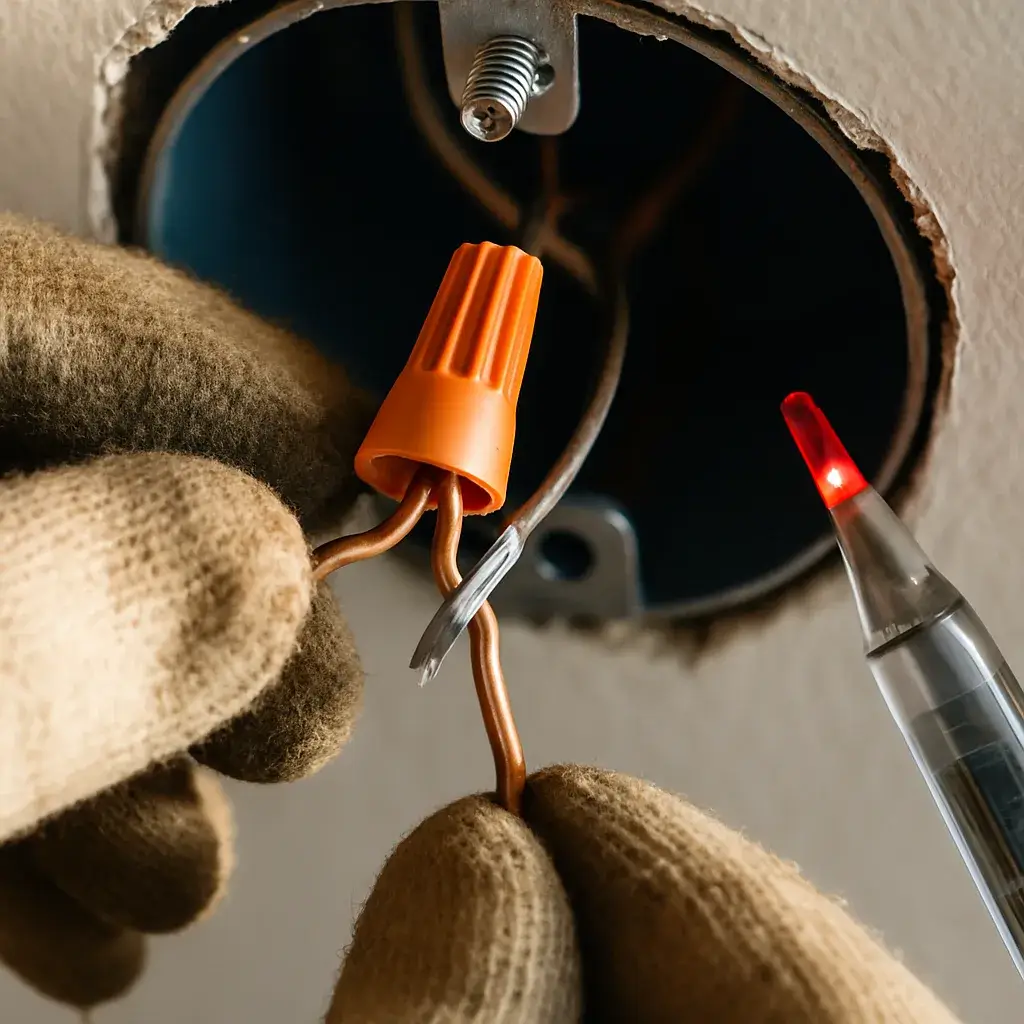
We see this every single week. Someone buys a beautiful chandelier online, hands it to a handyman, and three months later it’s sagging half an inch out of the ceiling. It’s not the fixture’s fault, it’s the box underneath it.
- The box is only screwed to drywall with no direct joist connection
- There’s visible gapping or a slight droop where the fixture meets the ceiling
- The fixture sways or wobbles when you walk past it
- You can feel the box flex if you push gently on the canopy
If any of that sounds familiar, don’t hang anything else on it. A rated box, properly braced to a joist or a support bar, is what carries the weight, the mounting screws just hold the fixture in place. Fixture weight and size are two of the biggest things that push a job’s cost up or down, along with ceiling height, the box rating itself, and whether you’re adding a dimmer. Structural bracing beyond a standard box swap isn’t included in a typical install and gets called out before we touch a tool. So before you buy that showstopper for the entryway, know its weight – it changes everything about what happens next.
When a Chandelier Swap Is a Simple DIY Job
Let’s be straight with you. Not every chandelier swap needs a pro. If you’re replacing one light fixture with another of similar weight, on a ceiling box that’s already rated for the job, and the wiring is already there, that’s a job a lot of handy homeowners in Sunnyvale can manage themselves.
Is this a job you can handle with a friend holding the ladder? Sometimes, yes. The box is rated, the wires match up color for color, you flip the breaker and follow the manual. That’s about as simple as electrical work gets.
- The new chandelier weighs close to the same as the old one
- The existing ceiling box is already rated for fixture weight, not just a plain light kit
- Your ceiling is standard height, no lift or ladder gymnastics needed
- You’re not adding a dimmer or changing the circuit
- The wiring in the box looks clean, no cracked insulation or old cloth wrapping
We see this every week – someone gets the old fixture down, looks at the wiring, and calls us anyway. That’s not a bad instinct. If the box wobbles, if it’s just a flat light kit box and not rated for a hanging fixture, or if you’ve got knob-and-tube wiring behind that plaster ceiling, stop right there. That’s not a weekend project anymore, that’s a safety issue. Older Sunnyvale homes especially can hide surprises behind a ceiling box that looks fine from below.
Vaulted and High Ceilings Change the Installation Plan
A standard eight-foot ceiling is one thing. A vaulted great room, or a two-story foyer, is a whole different job. We run into this a lot in the newer Sunnyvale subdivisions, where open floor plans mean a lot of homes have entry or living room ceilings that climb well past twelve feet.
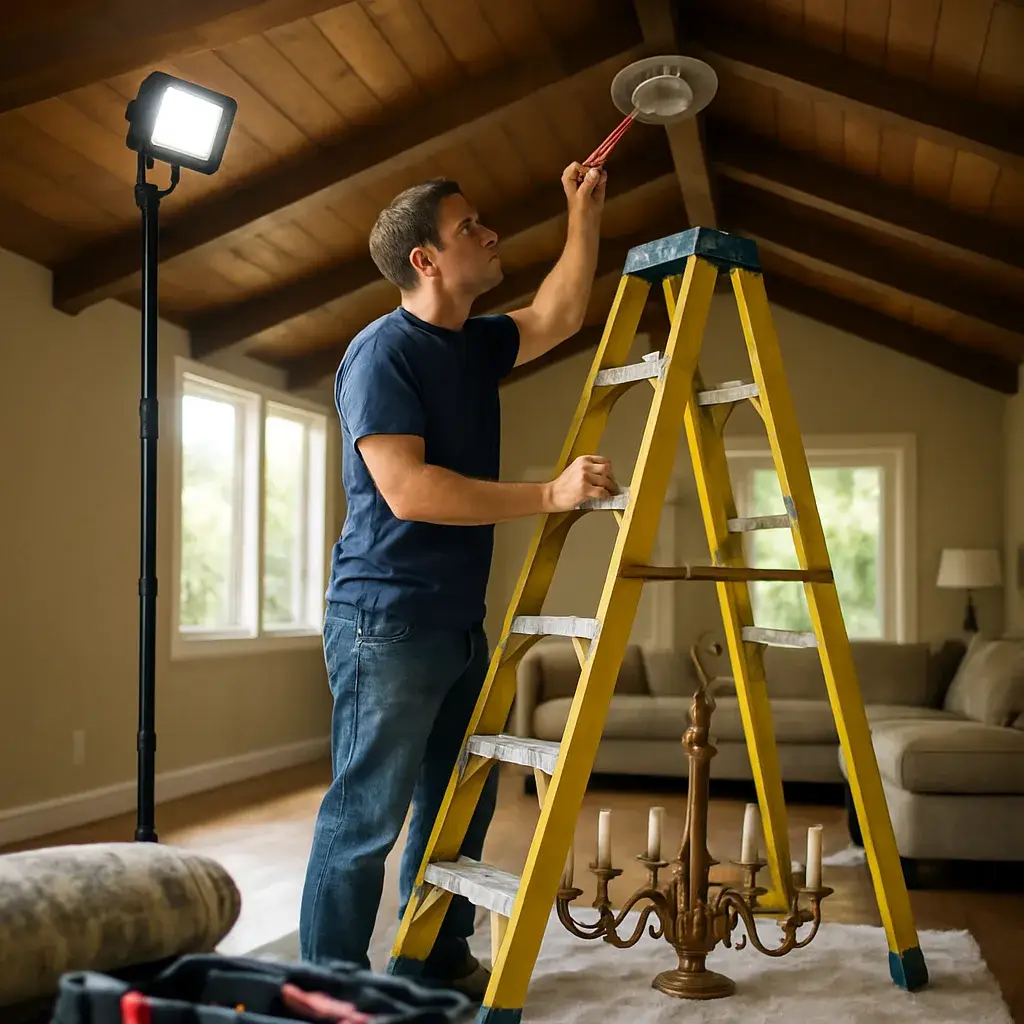
Here’s the problem with height. You can’t just grab a ladder and go. Reaching a junction box eighteen feet up means a lift, scaffolding, or an extension setup that keeps the chandelier level and the wiring secure while someone works above their head.
That access work takes time. It also takes the right equipment on the truck, which is part of why vaulted ceilings run higher than a simple flush-mount swap.
- How the existing box is anchored, since higher ceilings put more strain on a weak connection
- Whether the chandelier’s weight calls for extra bracing before it ever gets hung
- How the wiring reaches the fixture location, especially in vaulted spaces with longer runs
- What kind of lift or ladder setup keeps the job safe at that height
Not sure how tall your ceiling is? Most folks guess low. We measure it before we quote anything, because that number drives the whole plan.
Once we know the height and the fixture weight, we can tell you exactly what the install needs, and get it leveled and tested right the first time.
Not sure what your Chandelier installation project needs? Ask us.
Call Today, Get Service Today. Xtreme Air Services is ready to help.
What Happens During a Chandelier Installation Visit
Wondering what the actual visit looks like? Here’s how a chandelier installation usually goes once our technician gets to your door.
- We look at the fixture you want hung and check its weight against the ceiling box.
- We shut off power at the breaker and test the line with a meter, not a guess.
- If the box isn’t rated for a chandelier, we swap it for one that is.
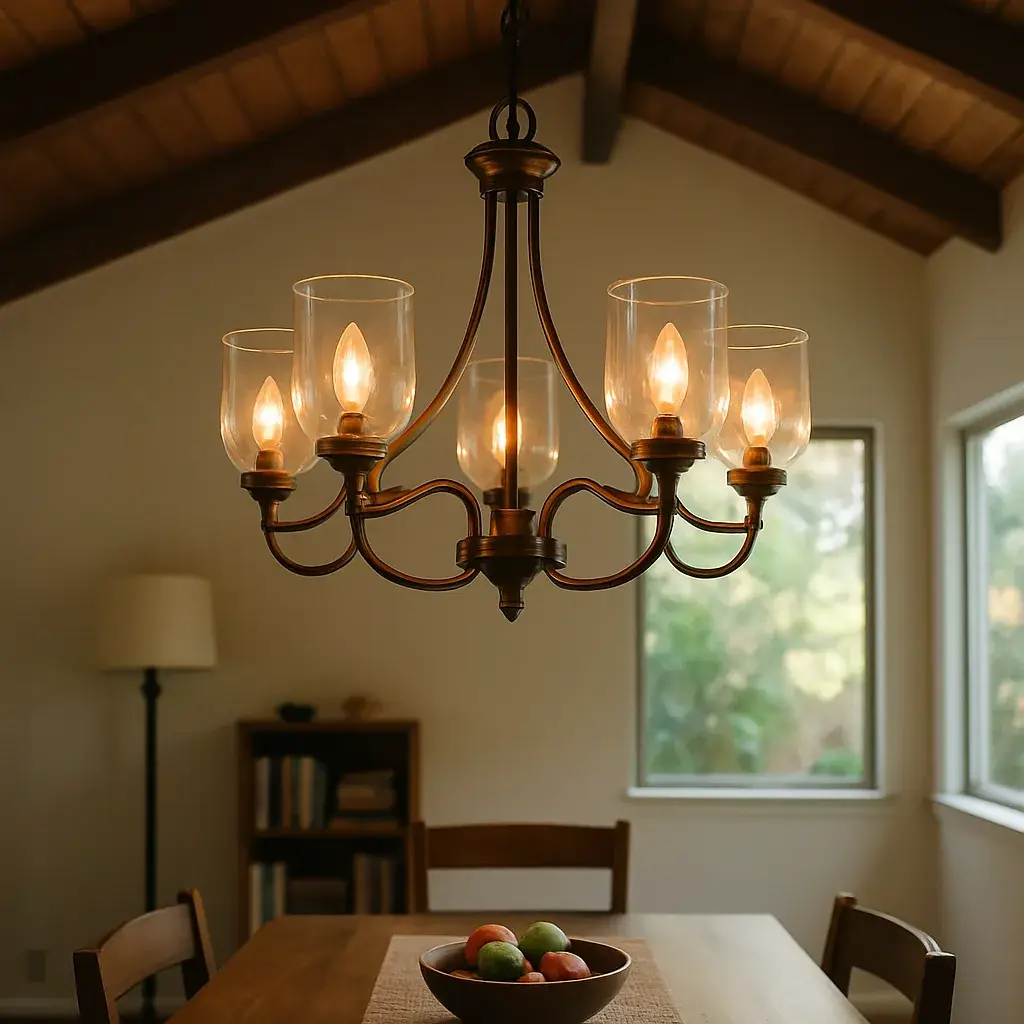
- We hang the fixture, wire it, and set the height so it clears heads and sightlines.
- We level it. A crooked chandelier bugs everybody, even if nobody says it out loud.
- We test the circuit, the switch, and any dimmer you asked for.
- We clean up and walk you through how it operates before we leave.
That box check in step three matters more than people think. Often on an older fixture swap, the existing box just wasn’t built to hold real weight, and that’s not something you want to find out after the chandelier’s already up.
Got vaulted ceilings? We bring a ladder tall enough for the job, or a lift if the space calls for it. Either way, we don’t wing it on height.
Our technicians are licensed and insured, so the wiring gets done to code, not just to look right.
What Drives Chandelier Installation Cost Up or Down
So what changes the price on a job like this? A few things, and none of them are mysterious once you know what to look for.
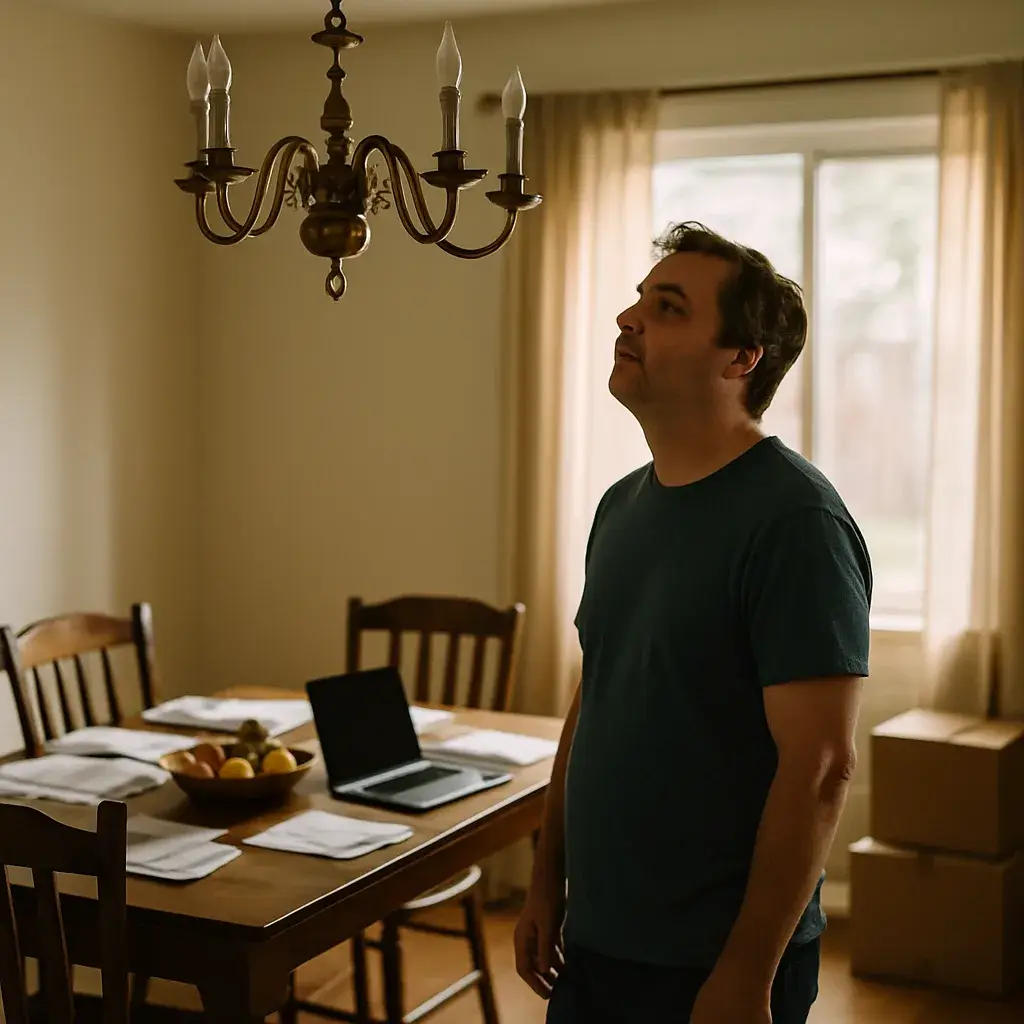
Typical chandelier installation runs $200 to $800, with the most common job landing between $325 and $550. That’s for hanging and wiring a chandelier on a properly rated box, leveled and tested before we leave. Simple, right? But a few variables push that number one way or the other.
- Fixture weight and size, a heavy crystal chandelier needs more support than a small pendant-style piece
- Ceiling height and access, vaulted or high ceilings often mean a lift or scaffold, which adds time
- Whether the existing box is rated for the fixture’s weight, or needs an upgrade first
- Adding a dimmer switch while we’re already up there
- Any code corrections needed to bring the wiring up to standard
That price includes the install, the rated box connection, leveling, and testing. It does not include the chandelier itself if you haven’t bought one yet, structural bracing, drywall repair, code corrections, or permits, unless we’ve talked about those upfront. We’ll always tell you before we start, not after.
There’s also a service-call fee, $26 to $99, and it gets credited toward the job if you move forward with us. No surprise charges, no meter running while we figure things out.
Chandeliers are where weight and access matter most. A Sunnyvale two-story foyer install often needs scaffolding or a lift simply to reach the ceiling safely, and the box above it has to be rated for the fixture plus the dynamic load of raising it into place. We confirm both before the fixture leaves its packaging, which is the step that keeps a Sunnyvale chandelier install from turning into a repair.
Frequently Asked Questions
Common questions about Chandelier installation
How fast can you get out to install my chandelier in Sunnyvale?
We schedule most chandelier installs within a few days of your call, and we can often work around your timeline if you’re waiting on a delivery. Once we know your ceiling height and the fixture’s weight, we can tell you exactly what the visit involves before we ever show up. That way there’s no guessing on install day. If your ceiling is vaulted or the box needs replacing, we plan for that ahead of time so the visit goes smoothly.
What happens when your technician arrives to hang my chandelier?
Your technician checks the fixture’s weight against the ceiling box first, then shuts off power at the breaker and tests the line with a meter. If the box isn’t rated for a hanging chandelier, they swap it before anything gets hung. After that, they wire it, level it, and test the switch and any dimmer. You’ll get a quick walkthrough of how everything operates before they leave, and the space gets cleaned up too.
Can older Sunnyvale homes handle a heavy chandelier without extra work?
Not always, and that’s something worth checking before you buy. Older homes in Sunnyvale sometimes hide knob-and-tube wiring or a ceiling box that’s only rated for a light fixture, not a hanging chandelier. If the box is only screwed to drywall with no joist connection, or you notice sagging or wobble, that’s a sign the box needs upgrading first. We check this every time before we hang anything heavy.
Do vaulted ceilings in newer Sunnyvale homes need special equipment?
Yes, vaulted and two-story ceilings usually need a lift or extension setup instead of a standard ladder. Many newer Sunnyvale subdivisions have open floor plans with entry or living room ceilings climbing past twelve feet, which changes how we reach the junction box and keep wiring secure. We measure your ceiling height before quoting the job, since that number drives the whole plan for keeping the fixture level and the install safe.
Can I swap my own chandelier, or should I call a professional?
You can often handle it yourself if the new fixture weighs about the same as the old one and the ceiling box is already rated for a hanging chandelier. If the box wobbles, the wiring looks old or cracked, or you’re dealing with knob-and-tube behind a plaster ceiling, that’s not a weekend project anymore. At that point it’s a safety issue, and calling a licensed electrician is the safer move.
Ready to Get Started?
Call 972-288-2263 Today, Get Service Today.