


Dedicated Circuit Installation in Sunnyvale: Power New Appliances the Right Way
A circuit of its own for the appliance, tool, or equipment that keeps tripping a shared breaker – sized to the nameplate load and inspected.
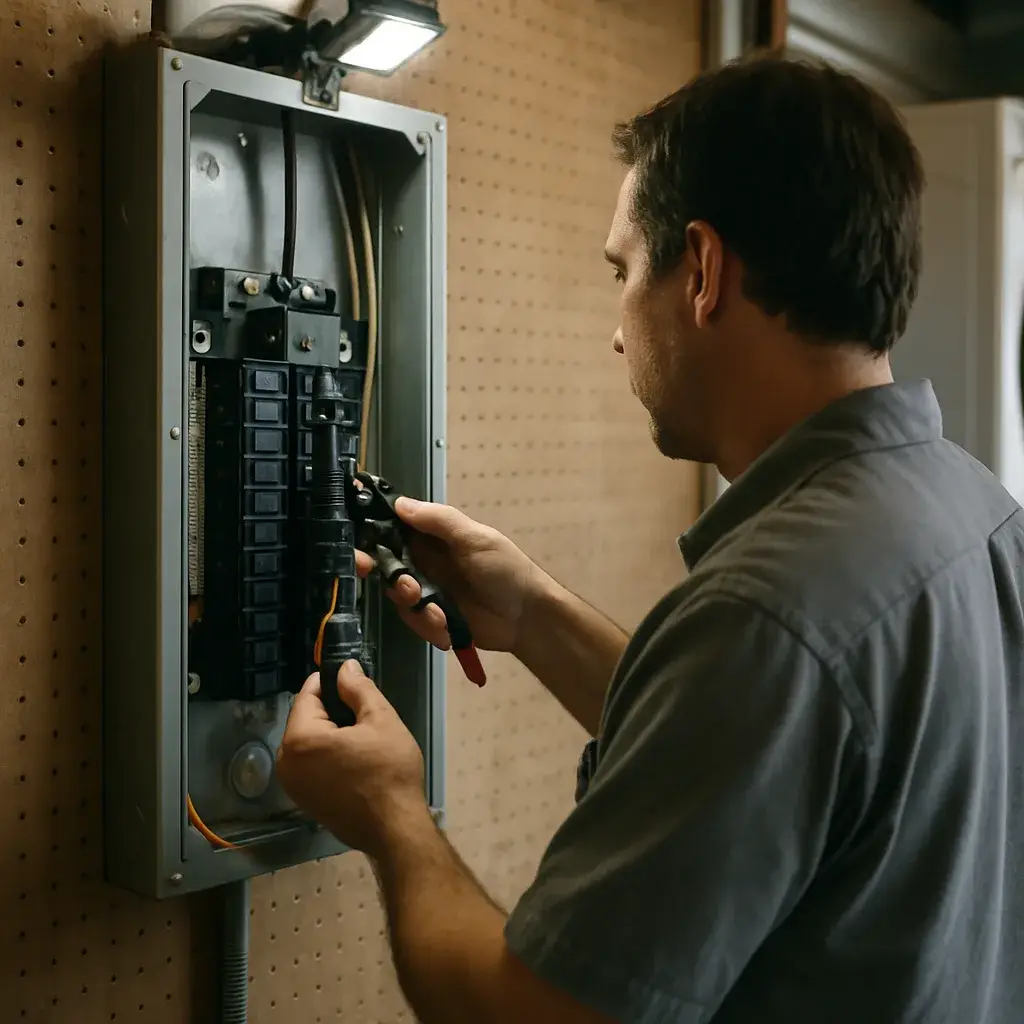
What’s Covered on This Page
- Signs You Need a Dedicated Circuit
- What Drives Dedicated Circuit Costs
- When You Don’t Need a New Dedicated Circuit
- Panel Capacity in Sunnyvale Homes
- How Installation Day Works
- How fast can you get someone out to install a dedicated circuit?
- What happens when the electrician shows up for a dedicated circuit installation?
- Why do older Sunnyvale homes need dedicated circuits more often than newer ones?
- How long does a dedicated circuit installation usually take?
- Do I need a new circuit, or is something else wrong?
- What if my panel doesn’t have room for a new circuit?
Signs You Need a Dedicated Circuit
Here’s the thing. Most people don’t think about their electrical panel until something trips it. So when a breaker keeps flipping every time the microwave and toaster run together, or the lights dim when the AC kicks on, that’s your panel telling you something. Usually it’s the same story, too many things pulling power from one circuit that was never built to handle it.
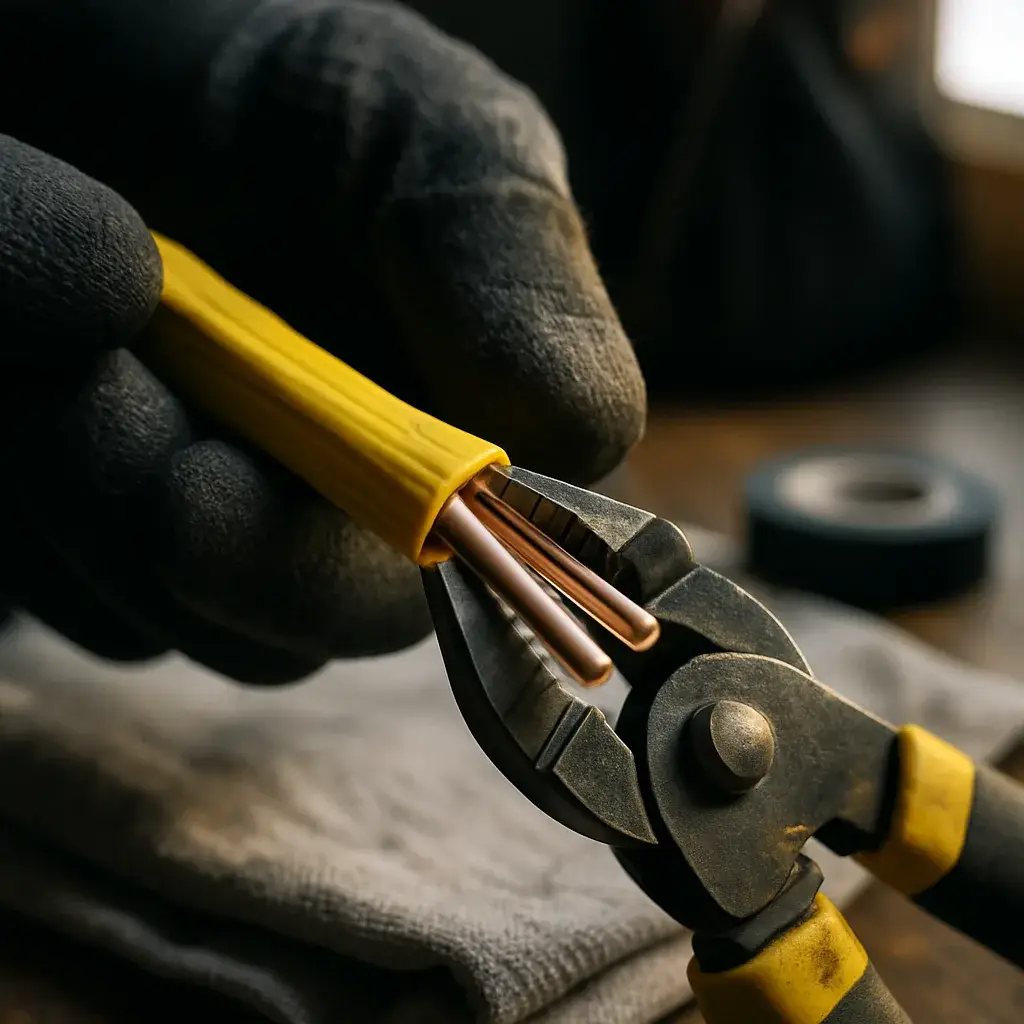
A dedicated circuit runs straight from the panel to one appliance and nothing else. No sharing, no competing for amps. Once it’s in, that breaker trips for one reason only, a real problem with that one appliance, not because the coffee maker and the hair dryer both turned on at the same time.
- The breaker trips whenever a specific appliance runs, like a window AC unit, a hot tub, or a large power tool
- You’re using an extension cord as a permanent fix to reach an outlet that isn’t there
- You’re adding an EV charger, a standby generator, or a workshop with heavy equipment
- Lights flicker or dim somewhere in the house when one appliance kicks on
- You’re plugging a new appliance into an outlet that’s decades old and wasn’t sized for it
See yourself in any of those? That’s a real sign, not a coincidence. If it’s just one outlet acting up and nothing else, that might be a smaller repair, not a new circuit at all. But if it’s a pattern tied to one appliance every single time, you’re looking at a circuit that’s overdue for its own line.
What Drives Dedicated Circuit Costs
Not every dedicated circuit job costs the same, and there’s a real reason for that. Distance from the panel matters most. A circuit for a garage fridge ten feet from the box is a different job than one running to a shed out back.
Attic and wall access play a big role too. Older Sunnyvale homes with tight crawl spaces or finished walls take more time than open new construction with easy attic runs.
- Distance from the panel to the appliance or equipment
- Wall and attic access, tighter spaces mean more labor
- Wire gauge and breaker size needed for the load
- Whether your panel has open capacity or is already full
- Any code upgrades required to bring the run up to standard
Here’s the part folks don’t always expect. A panel with no open slots changes everything. That’s a different conversation than a straightforward circuit run, and we’ll tell you straight if that’s what we’re looking at.
Most dedicated circuit jobs run $375 to $650, with the full typical range landing between $250 and $900 depending on those factors above. That price includes the circuit materials, professional installation, the breaker, connections, and testing. It does not include panel upgrades, the appliance itself, drywall repair, code corrections, or permits unless we’ve said otherwise upfront.
There’s a $26 to $99 service call fee, and it gets credited toward the job if you move forward with us. Financing isn’t typically part of a job this size, that’s more for bigger repairs and full system replacements.
When You Don’t Need a New Dedicated Circuit
Not every electrical hiccup means you need a new circuit. Sometimes the outlet you’ve got is just fine, it’s the appliance or the breaker that’s the problem. If your microwave trips the breaker once during a storm and never again, that’s not a dedicated circuit issue. That’s a fluke.
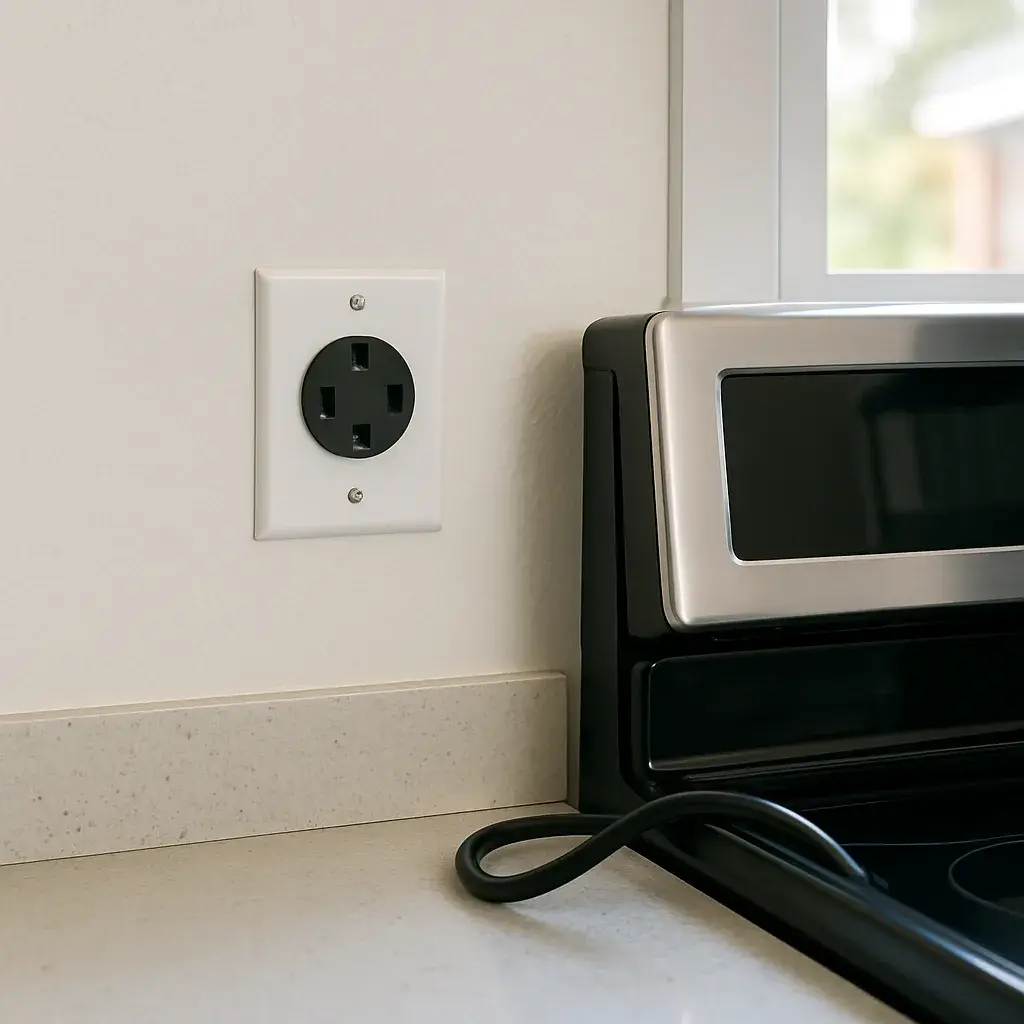
A tripped breaker that resets and behaves for weeks doesn’t need a new circuit run. Neither does a single loose outlet that just needs tightening or a swap. And if you’re moving into one of the newer subdivisions built around Sunnyvale in the last decade, the panel and wiring were often sized for modern loads already, kitchens, garages, and workshops included. A lot of those homes simply don’t need extra circuits for standard appliances.
Here’s when you can usually skip the call:
- The breaker trips only once, then holds fine for weeks
- You’re plugging in a normal household item, not a heavy-draw appliance
- The outlet works but looks worn, that’s often just a switch or outlet swap
- Your panel already has a labeled circuit for that exact appliance
Now, if breakers trip every single time you run the same appliance, that’s different. That’s usually a sign the circuit’s overloaded or missing entirely, not a fluke.
We’d rather tell you the truth than run a new circuit you don’t need. That’s just doing right by our customers.
Ready when you are – get in touch today.
Call Today, Get Service Today. Xtreme Air Services is ready to help.
Panel Capacity in Sunnyvale Homes
Here’s the thing nobody tells you until we’re already at the panel. A dedicated circuit installation only works if your panel has room to give it a home. Every breaker slot is spoken for in some houses, especially the ones built before subdivisions like Sunnyvale’s newer developments went in with 200-amp service as standard.
Older, established homes around Sunnyvale sometimes still run on 100-amp panels from decades back. That’s not a crisis. But it does change the conversation.
So what are we checking? A few things, fast.
- Open breaker slots, or space for a tandem breaker if the code allows it
- Total amperage already in use versus what the panel is rated for
- Wire gauge feeding the panel itself, not just the new circuit
- Whether the panel is original to the house or already upgraded
If the panel’s maxed out, we’ll tell you straight. A panel upgrade is a separate job and it’s not included in a standard dedicated circuit installation. We’re not going to squeeze a new 30-amp circuit into a panel that’s already screaming for relief, that’s how breakers trip and wires overheat.
Most Sunnyvale homes we work in have enough room, especially anything built in the last twenty years. And when there’s room, this becomes a same-day job, in and connected before dinner.
Not sure what your panel can handle? That’s normal, most homeowners have never looked inside their own panel and there’s no reason they should have to guess.
How Installation Day Works
So what happens once we’re at your door? Not much mystery here. A technician looks at the appliance or equipment you need powered, checks your panel, and figures out the shortest safe path to run the wire.
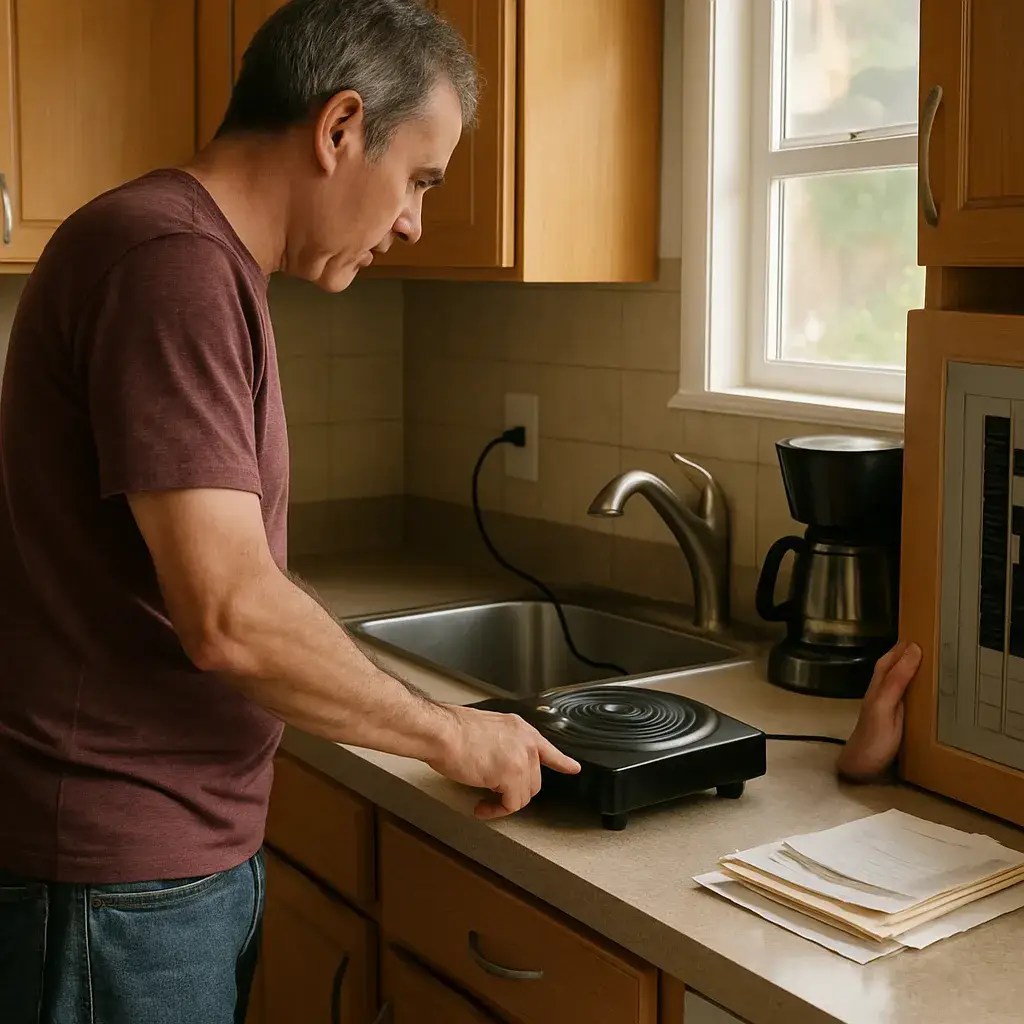
- We check your panel capacity and confirm there’s room for a new breaker.
- We map the route from the panel to the outlet, through the attic, wall cavity, or crawlspace, whichever gets there with the least drywall disturbance.
- We run the wire at the correct gauge for the load, connect it to a new breaker, and land it at the outlet or hardwired connection point.
- We test the circuit under load before we call it done, checking voltage, grounding, and breaker trip response.
- We walk you through what we did and label the breaker so you know what it’s for.
In a lot of Sunnyvale’s older homes, the attic run is the tricky part, tight framing and limited access can add time even on a straightforward job. Newer builds with open attics usually go faster. Either way, most dedicated circuit jobs wrap up the same day. No coming back tomorrow, no living with an extension cord snaking across your kitchen floor for a week.
We test everything before we leave. That’s not a courtesy, that’s the job.
A dedicated circuit is usually the honest answer when a Sunnyvale homeowner has been resetting the same breaker for months. Rather than upsizing a breaker on a shared run, which is unsafe and simply moves the failure point, we run a new circuit sized to the equipment nameplate. In many Sunnyvale homes that also means a quick look at whether the panel has a spare slot before anything is promised.
Frequently Asked Questions
Common questions about Dedicated circuit installation
How fast can you get someone out to install a dedicated circuit?
We schedule most dedicated circuit jobs within a few days of your call, sometimes sooner if a breaker keeps tripping on something like an AC unit or a hot tub. During the call, we ask what’s tripping and how often, so we can figure out if it’s urgent or something that can wait a bit. If it’s a safety concern, like a wire that feels warm or a breaker that won’t reset, tell us right away so we can move it up.
What happens when the electrician shows up for a dedicated circuit installation?
We start by checking your panel to see if there’s an open slot and enough capacity for the new circuit. Then we trace the best path from the panel to your appliance, whether that’s a short run to a garage fridge or a longer one through walls or attic space. We’ll walk you through what we find, including any access issues in older Sunnyvale homes with tighter crawl spaces, before we start cutting into anything.
Why do older Sunnyvale homes need dedicated circuits more often than newer ones?
Older homes around Sunnyvale were often built with 100-amp panels that weren’t sized for today’s appliances, EV chargers, or workshop tools. Newer subdivisions typically came with 200-amp service already built in, so those panels usually have more room to spare. If your home is a few decades old and you’re adding a heavy-draw appliance, there’s a good chance the existing circuit just wasn’t built to carry that load.
How long does a dedicated circuit installation usually take?
Most single dedicated circuit jobs take a few hours in one visit, depending on how far the run is and how easy the walls or attic are to access. A short run to a nearby appliance goes faster than one that has to travel through finished walls or a tight crawl space. If we find the panel is already full or needs upgrading, that becomes a separate conversation and a longer timeline.
Do I need a new circuit, or is something else wrong?
Not always. If a breaker trips just once during a storm and then holds fine for weeks, that’s usually a fluke, not a sign you need a new circuit. The same goes for a single worn outlet that just needs tightening or swapping out. But if the same appliance trips the breaker every single time you run it, that pattern usually means the circuit is overloaded or missing entirely.
What if my panel doesn’t have room for a new circuit?
If your panel is already full, we’ll tell you before any work starts, since a panel upgrade is a separate job from a standard dedicated circuit installation. We check open breaker slots, total amperage in use, and the wire gauge feeding the panel itself. Squeezing a new circuit into a maxed-out panel is how breakers trip and wires overheat, so we’d rather flag it upfront than cause a bigger problem later.
Ready to Get Started?
Call 972-288-2263 Today, Get Service Today.