


Pool Wiring in Sunnyvale: Safe, Code-Compliant Power for Every Pool Pump, Heater, and Light
Pump, heater, and light circuits wired with equipotential bonding and GFCI protection done properly, because pool wiring is where shortcuts get dangerous.
What’s Covered on This Page
- Warning Signs Your Pool Wiring Needs Attention
- Pump Not Running? How to Tell Wiring Issues From Equipment Failure
- What Drives Pool Wiring Costs Up or Down
- How Professional Pool Wiring Installation Works
- Bonding and GFCI Protection: The Safety Standard Behind Every Pool Circuit
- How fast can someone come look at my pool wiring in Sunnyvale?
- What happens when an electrician comes to check my pool wiring?
- Why do so many older Sunnyvale pools have wiring problems?
- Can pool wiring be fixed without trenching through my yard?
- Do I need a permit for pool wiring work in Sunnyvale?
- My pump hums but won’t start. Is that a wiring problem or a bad pump?
Warning Signs Your Pool Wiring Needs Attention
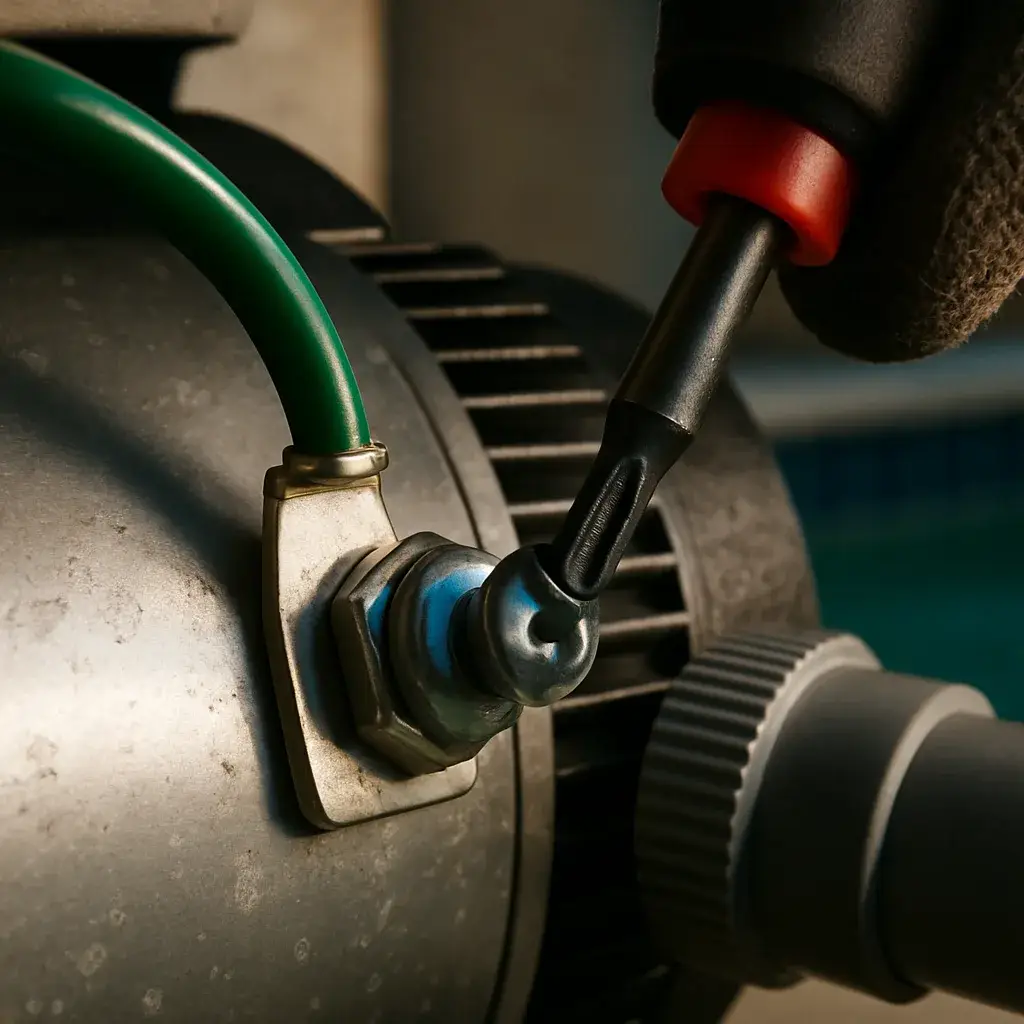
We see this every single week. A homeowner calls about a pool light that flickers whenever the pump turns on, and the bonding wire has come loose or corroded.
- A breaker that trips every time the pump or heater cycles on
- Pool lights that flicker, dim, or shut off on their own
- A tingling feeling in the water, even a mild one
- Visible corrosion or rust on equipment boxes near the pump pad
- GFCI outlets near the pool that won’t reset or trip constantly
Sunnyvale has a good number of older pools built before current bonding standards, and the copper bonding grid around the pool shell can corrode over years of pool chemical exposure. So a house with a 20-year-old pool and a newer pump replacement is a common combo we run into. Not sure if a little tingle in the water is worth a call? It is, every time. That’s your body telling you current is finding a path somewhere it shouldn’t. Our licensed and insured electricians test the whole circuit, not just the part that’s acting up, because a symptom at the light fixture can trace back to the panel.
Pump Not Running? How to Tell Wiring Issues From Equipment Failure
Pump won’t turn on. First thought is usually a dead motor. But often it’s not the pump at all.
Here’s the thing about pool equipment in Sunnyvale, most of it sits outside on a pad near the fence line, and outdoor circuits take a beating from heat, moisture, and time. A tripped GFCI breaker looks exactly like a dead pump from where you’re standing. So does a loose bonding wire or a corroded connection inside the equipment pad’s junction box. And a bad capacitor inside the motor can also look identical from the outside. You really can’t tell the difference just by staring at it.
So how do you know which one you’ve got? A few signs point toward wiring instead of the pump itself.
- Breaker trips the moment you flip the switch, not after it’s been running a while
- Pump hums but won’t spin, which can mean power is getting in but not evenly
- Other outlets or equipment near the pad also act up
- You smell something burnt near the panel or junction box
- The pump worked fine until after a storm or heavy rain
If the motor spins fine when you jump it with a multimeter but won’t fire from the switch, that’s a wiring issue, plain and simple. If the motor hums, trips breakers, or smells hot even with good voltage reaching it, that’s the equipment. We test both sides before we touch a single wire, because guessing gets expensive fast.
What Drives Pool Wiring Costs Up or Down
So why does one pool wiring job cost more than another? It comes down to a handful of real factors, not guesswork. Every pool setup is different, and the wiring reflects that.
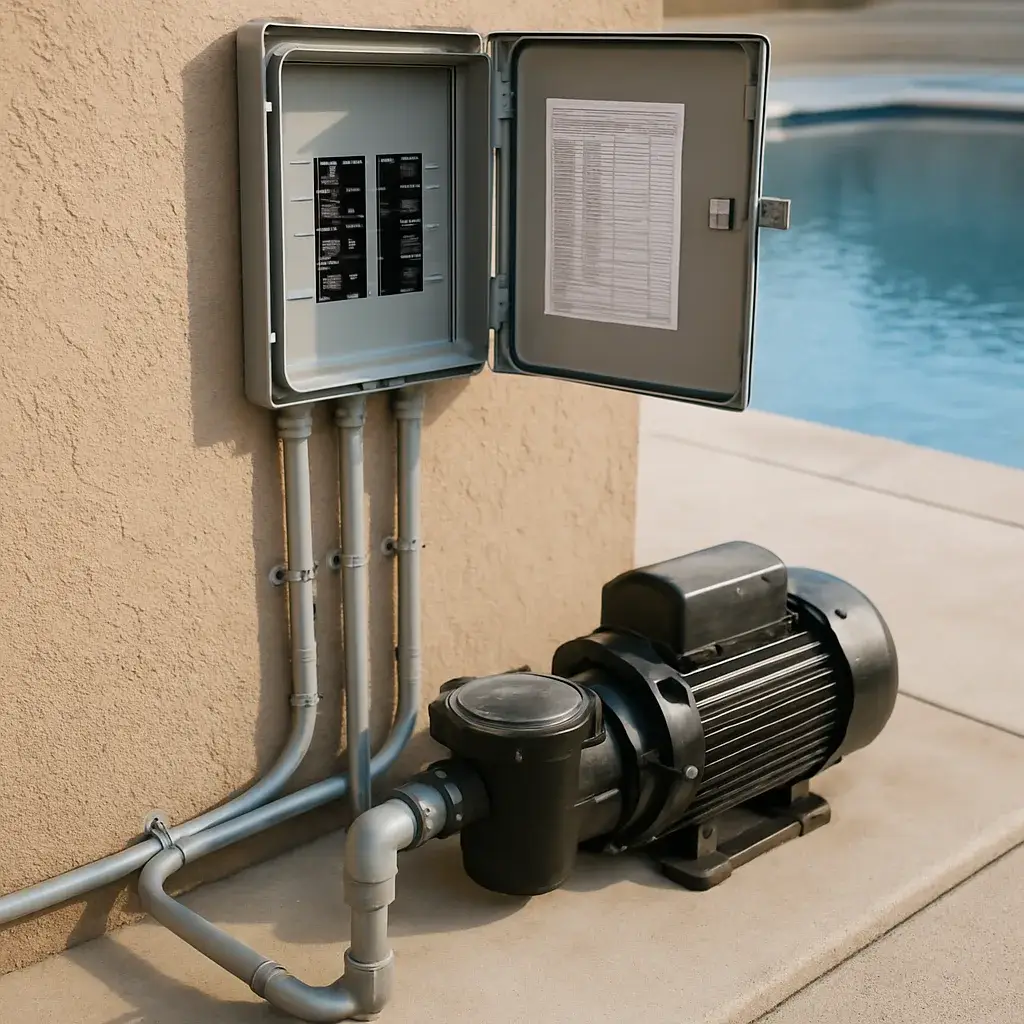
The number of equipment circuits matters most. A pump alone is simple. Add a heater, lights, and maybe a salt system, and you’re looking at more circuits, more breaker space, and more labor.
- Number of equipment circuits needed for pumps, heaters, lights, and other gear
- Bonding requirements, since every metal part near the water has to tie into one bonding grid
- Distance from your panel to the pool equipment pad, and whether trenching is involved
- How much capacity your existing panel has left to work with
- Code upgrades or permit requirements tied to your specific job
Distance is a big one. A pump pad thirty feet from the panel is a different job than one on the far side of a big backyard. And trenching through landscaping or a patio adds time nobody enjoys.
Panel capacity trips people up too. A lot of older homes around Sunnyvale still run smaller panels that just don’t have room left for new pool circuits without some rework first.
Permits play a role as well. Some jurisdictions require an inspection on pool bonding specifically, and that step adds time to the schedule even though it protects you.
Ask your electrician what’s driving your number before you sign anything. A clear answer tells you a lot about who you’re hiring.
Thinking about Pool wiring? Let’s talk.
Call Today, Get Service Today. Xtreme Air Services is ready to help.
How Professional Pool Wiring Installation Works
Pool wiring isn’t a one-and-done job. It’s a sequence, and skipping a step is how you end up with a tripped breaker every time the pump kicks on.
Here’s how we walk through it, every time, no shortcuts.
- We look at your panel first. Is there room for new circuits, or does the panel need help before we even start on the pool.
- We map out every piece of equipment, pump, heater, lights, and figure out how many dedicated circuits each one needs.
- We run the wiring from the panel to the equipment pad. In older Sunnyvale homes on slab foundations, this often means routing through the attic instead of trenching under the yard.
- We install the code-required bonding grid, tying together metal parts near the pool so stray voltage has nowhere to go.
- We test every circuit under load, not just with a meter reading, but with the equipment running.
- We schedule the inspection and walk the inspector through the work with you.
Distance matters more than people think. A pump 60 feet from the panel costs more in wire and labor than one sitting 15 feet away, that’s just physics, not upcharging.
Usually, the surprise cost on a pool wiring job isn’t the wiring itself. It’s discovering the panel can’t handle one more circuit.
And that’s exactly why we check the panel first, not last.
Bonding and GFCI Protection: The Safety Standard Behind Every Pool Circuit
Here’s the part most homeowners never think about until we explain it. Every metal part near your pool, the ladder, the light niche, the pump housing, the rebar in the deck, has to be tied together electrically. That’s called bonding. It doesn’t turn anything on. It just makes sure nothing near the water can become energized at a different level than everything else around it.
Water and electricity don’t mix, you already know that. What you might not know is how a shock happens near a pool. It’s rarely a wire falling in the water. It’s usually a stray voltage difference between two metal surfaces someone is touching at the same time, like a ladder rail and wet concrete. Bonding closes that gap.
- Pump and motor housing
- Light niches and fixture frames
- Metal ladders, rails, and diving boards
- Rebar or structural steel within the code-required distance of the pool
- Any metal fittings within reach of someone in or near the water
GFCI protection is the second half of this. It’s a breaker or outlet built to shut power off almost instantly if it senses current going somewhere it shouldn’t. On pool equipment circuits, that’s not optional.
We see this every week – a bonding wire left off the ladder because it was easy to skip and nobody could see it once the deck went in. It passes a quick glance. It doesn’t pass an inspection, and it doesn’t protect your family. Our team tests every bonding connection and every GFCI device before we call a job finished, because this is the one part of pool wiring you really can’t eyeball your way through.
Pool wiring is the one area where shortcuts genuinely become dangerous. Equipotential bonding, GFCI protection, and correct burial depth are not paperwork items, and they are what an inspector looks at first on any Sunnyvale pool permit. We wire the pump, heater, and lights as one system and document it, so a Sunnyvale pool passes inspection the first time rather than after a return visit.
Frequently Asked Questions
Common questions about Pool wiring
How fast can someone come look at my pool wiring in Sunnyvale?
We schedule most pool wiring calls within a day or two, sooner if you mention shock risk or a tingling feeling in the water. Tripped breakers and flickering lights aren’t usually emergencies, but a tingle in the pool is. Tell us that when you call and we’ll move you up. Pool equipment sitting outside on a pad takes a beating from heat and moisture, so problems tend to show up fast once wiring starts to fail.
What happens when an electrician comes to check my pool wiring?
We test your whole circuit, not just the part acting up, starting at the panel and working out to the pump pad. A flickering light can trace back to a loose bonding wire near the panel, so we check both ends before touching anything. We run the equipment under load, not just with a meter, because that’s the only way to catch a problem that only shows up when the pump or heater is running.
Why do so many older Sunnyvale pools have wiring problems?
Sunnyvale has a good number of pools built before current bonding standards, and the copper bonding grid around the shell corrodes after years of chemical exposure. It’s common to find a 20-year-old pool paired with a newer pump replacement, which is exactly the combo that trips breakers or causes flickering lights. If your pool is older than your pump, that mismatch is worth having checked.
Can pool wiring be fixed without trenching through my yard?
Often, yes. In older Sunnyvale homes on slab foundations, we can route wiring through the attic to the equipment pad instead of digging under the yard. This depends on your pump pad’s distance from the panel and how your home is built. A pad close to the panel is usually a simpler job, while one on the far side of a big backyard may need more planning.
Do I need a permit for pool wiring work in Sunnyvale?
Most pool wiring jobs need a permit, and bonding work specifically often requires its own inspection. That inspection step adds time to your schedule, but it protects you by confirming stray voltage has nowhere to go. We handle the permit process and walk the inspector through the work with you, so you don’t have to manage that part yourself.
My pump hums but won’t start. Is that a wiring problem or a bad pump?
It could be either, and you usually can’t tell just by looking at it. A humming pump that trips the breaker right when you flip the switch often points to wiring, while a hum with good voltage reaching the motor usually points to the pump itself. We test both sides before replacing anything, since a bad guess here gets expensive fast.
Ready to Get Started?
Call 972-288-2263 Today, Get Service Today.