


Register & Grille Cleaning in Sunnyvale: Clear the Dust, Restore the Airflow
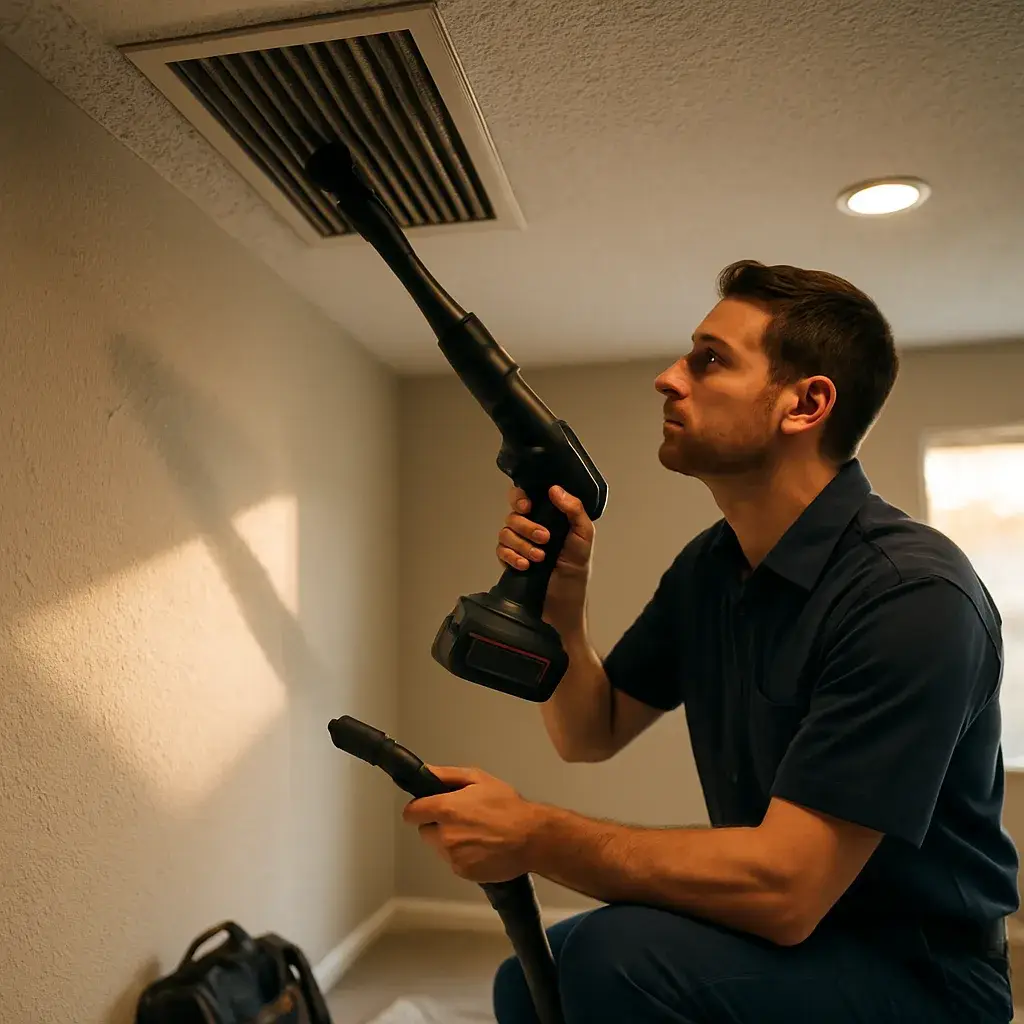
Covers pulled, washed, and reset with the boot behind them vacuumed out – the fast fix when dust returns at the vents within days of cleaning.
What’s Covered on This Page
- Dusty Registers and Weak Airflow Signal It’s Time to Clean
- Register & Grille Cleaning Is Not the Same as Full Duct Cleaning
- Skip the Service Call When a Quick Wipe-Down Will Do
- What Happens During a Register and Grille Cleaning Visit in Sunnyvale
- How Pricing Works for Register and Grille Cleaning
- How quickly can someone come clean my registers in Sunnyvale?
- What happens when the technician arrives at my house?
- Why do older Sunnyvale homes near U.S. 80 get dustier registers?
- How often should I get my registers and grilles cleaned?
- Can I clean my own registers instead of calling someone?
Dusty Registers and Weak Airflow Signal It’s Time to Clean
Look at the register covers in your bedrooms and living room. See a gray ring building up around the edges? That’s dust the fan is pushing out every time the system runs. It settles on the metal, then on your furniture, then in your lungs if you’ve got allergies.
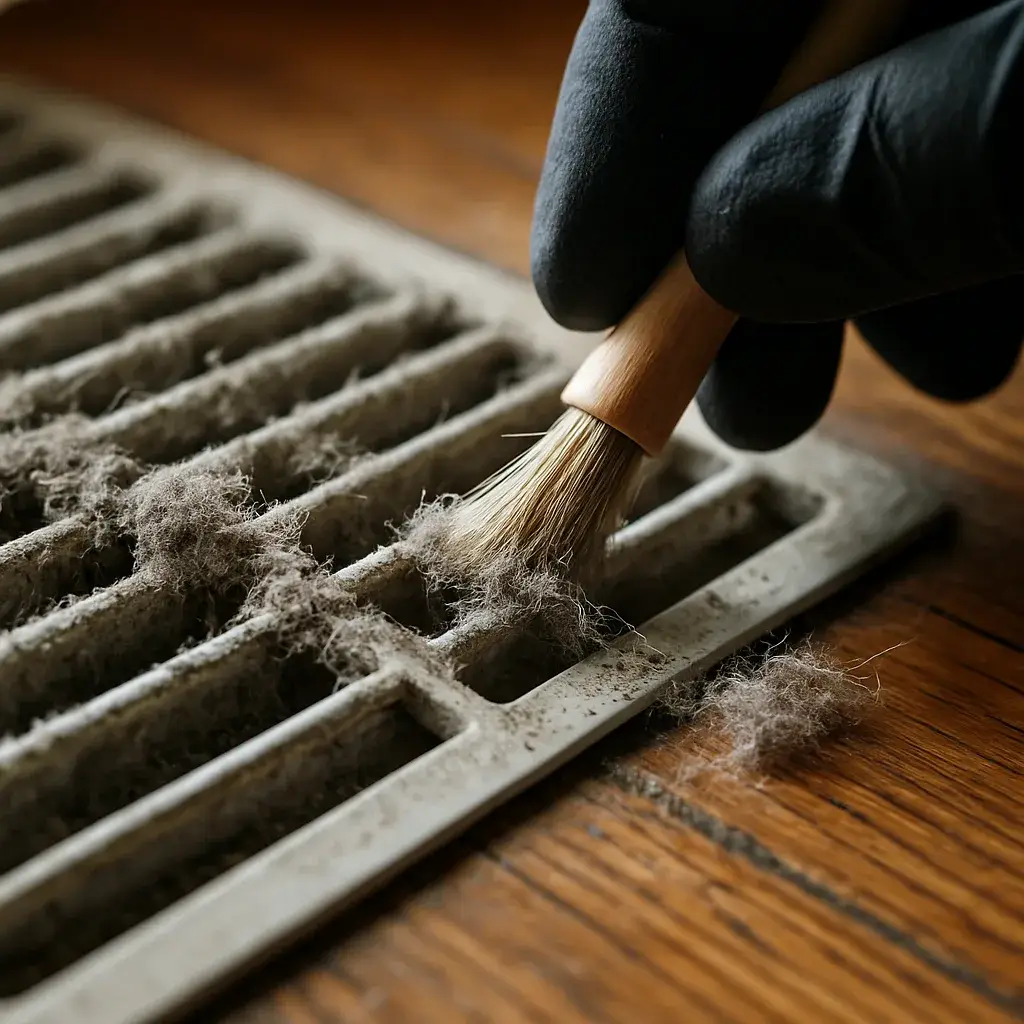
Weak airflow from one or two rooms is another tell. Usually it’s not a broken duct, it’s just a grille packed tight with lint and dust that’s choking the vent. Older homes near US-80 tend to pull in more road dust through window units and door gaps, and that dust ends up right at the register.
Notice a musty or dusty smell right when the AC kicks on? That’s often trapped debris getting stirred up, not mold in the ducts. Dirty return grilles are worse than dirty supply registers because they pull air, and dust, straight through the mesh. If your return grille looks gray or feels gritty when you run a finger across it, that’s your sign.
Register & Grille Cleaning Is Not the Same as Full Duct Cleaning
Let’s clear this up right away. Register and grille cleaning is not the same thing as full duct cleaning, and we don’t want you calling for one expecting the other.
Here’s the difference. We remove the metal covers, the parts you see on your ceiling, wall, or floor, wipe them down, and reset them. That’s the job. We’re not sending a hose or brush down into the ductwork itself. If the dust is coming from inside the duct runs, cleaning just the grilles won’t fix that. Sometimes, a homeowner calls about dusty vents and it really is just the grilles, though. Buildup collects right at that opening because that’s where airflow slows down and dust settles.
So how do you know which one you need? Look at the grille itself. Dust caked on the visible slats or a gray film around the vent opening, that’s a grille cleaning job. If you’re seeing dust blow out actively when the system kicks on, or you can smell something musty even after the grilles look clean, the problem is likely further back in the duct system.
This job doesn’t include duct cleaning, repairs, or any corrective work we find while we’re out there. If we spot something bigger during the visit, we’ll quote that separately, no surprise add-ons tacked onto your bill.
Not sure which one applies to your home? That’s a fair question, and it’s a common one.
Skip the Service Call When a Quick Wipe-Down Will Do
Not every dusty vent needs a technician. If you can see the buildup and it’s just a thin gray film, grab a vacuum attachment and a damp microfiber cloth. Pop the grille loose with a screwdriver, wipe both sides, vacuum the opening, and put it back. Five minutes a room. That handles most light dust in newer Sunnyvale subdivisions where the ductwork is tight and the attic runs are sealed well.
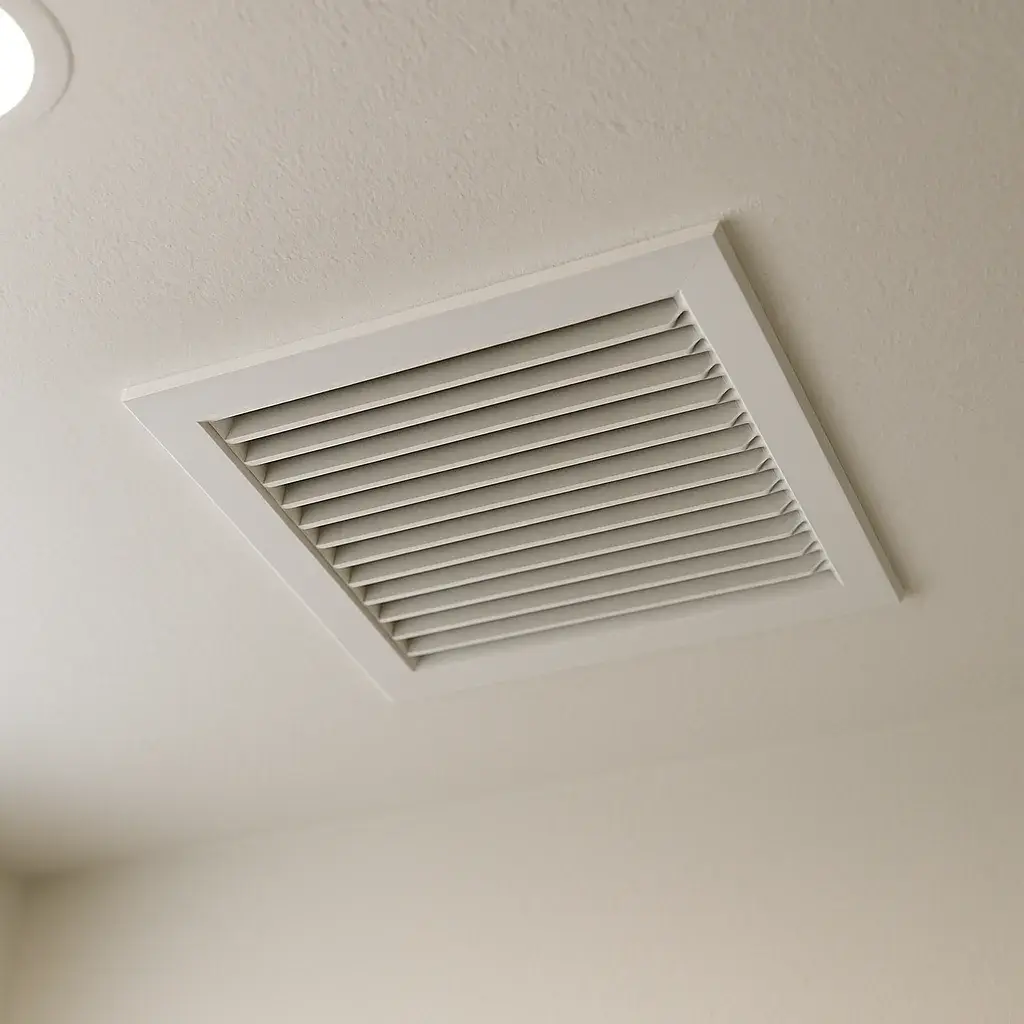
So when does a wipe-down stop being enough? Older slab homes built before the 90s tend to have more attic temperature swings, and that pulls more dust and insulation fiber down through the supply runs. If you’re seeing dark streaking around the register edges, a layer of buildup you can’t lift with a rag, or grilles that are bent or painted shut from years of repainting walls, that’s past DIY territory.
- Light surface dust on one or two vents, nothing greasy or matted
- No allergy symptoms or musty smell when the system kicks on
- Grilles come off easily with a screwdriver, no rust or stripped screws
- You cleaned within the last year and it’s just routine upkeep
We get calls every week from folks who just wanted to know if it was worth it before they touch a screwdriver. It usually isn’t, not for one or two vents. But if you’re staring down ten or fifteen registers with heavy buildup, bent frames, or that telltale musty smell, that’s a different job. That’s when it’s worth having someone look at the whole system, not just wipe a corner of it.
Not sure what your Register & grille cleaning project needs? Ask us.
Call Today, Get Service Today. Xtreme Air Services is ready to help.
What Happens During a Register and Grille Cleaning Visit in Sunnyvale
Here’s the honest truth: this job isn’t complicated, but doing it right takes a little patience. A tech shows up, walks the house with you, and counts every supply register and return grille that needs attention. In a lot of Sunnyvale homes built off U.S. 80, the return grille sits high on a hallway wall or ceiling, and the supply registers connect back to ductwork running through a hot attic. That attic connection matters because dust and insulation fibers settle in the grille slats over time, especially in summer when the system runs nonstop.
- Walk the home and count registers and return grilles
- Remove each cover carefully so the frame and screws don’t get damaged
- Vacuum and wipe down the front and back of every grille
- Clean built-up dust and grime from the slats and housing
- Reset each register and grille back into place, checked for a snug fit
- Do a quick airflow check at a few vents before wrapping up
We don’t touch the ductwork itself during this visit, that’s a separate service. And if we spot something during the walk-through, a bent damper, a cracked frame, we’ll point it out and quote it separately rather than just doing it and surprising you on the invoice. Either way, the visit is quick, quiet, and the difference in airflow is noticeable the same day.
How Pricing Works for Register and Grille Cleaning
Register and grille cleaning gets priced by count, not by the hour. We count how many supply registers and return grilles you’ve got, take a look at the buildup, and go from there. Typical jobs run 100 to 200 dollars. The full range for this service is 100 to 300 dollars, depending on your home.
So what pushes the number up or down? A few things.
- How many registers and grilles need attention
- How thick the dust and buildup has gotten
- How easy or hard they are to reach, high ceilings and tight attic runs take more time
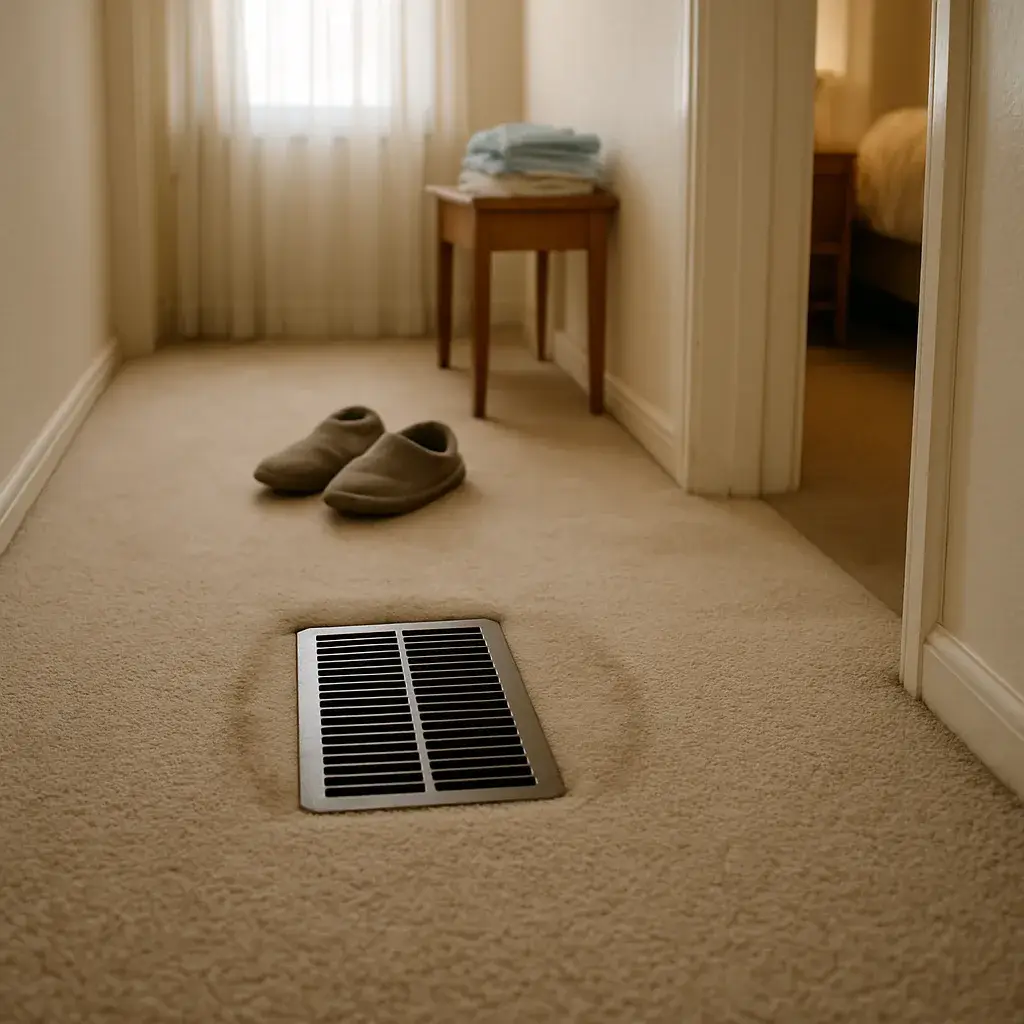
Older slab-on-grade homes around Sunnyvale often have floor registers that trap years of dust, while newer subdivisions with attic-fed systems tend to have ceiling grilles that catch attic debris. Either way, we remove them, clean them, and reset them, that’s the core job.
Here’s what’s not included. Duct cleaning is a separate service. And if we find a bent register, a cracked grille, or anything else broken while we’re in there, that’s quoted separately too, no guessing games.
There’s a service call fee, 26 to 99 dollars, but it gets credited toward the job if you move forward with us. This isn’t the kind of job most folks finance, that’s really for bigger repairs and replacements. Not sure how many registers you’ve got or what shape they’re in? That’s a normal question, and it’s easier to answer once a technician’s standing in your living room.
Frequently Asked Questions
Common questions about Register & grille cleaning
How quickly can someone come clean my registers in Sunnyvale?
We can usually get out to Sunnyvale homes within a few days of your call. Since register and grille cleaning is a shorter visit than full duct work, it’s easier to fit into the schedule than bigger jobs. If your home sits off U.S. 80 or anywhere else in town, we cover the whole area. Just give us a call and we’ll find a time that works for your house and your family’s schedule.
What happens when the technician arrives at my house?
The tech walks your home with you first and counts every supply register and return grille that needs work. Then each cover comes off carefully, gets vacuumed and wiped on both sides, and goes back in place with a snug fit. We also check airflow at a few vents before we leave. The whole visit is quick and quiet, and most homeowners notice better airflow the same day.
Why do older Sunnyvale homes near U.S. 80 get dustier registers?
Homes built off U.S. 80 from the 1950s through the 1990s tend to pull in more road dust through window units and door gaps, and that dust settles right at the register. These slab homes also run ductwork through hot attics, which causes bigger temperature swings than newer sealed subdivisions. That combination pulls more dust and insulation fiber down into the supply runs, so registers in these older homes usually need attention more often.
How often should I get my registers and grilles cleaned?
Most Sunnyvale homes do fine with a cleaning once a year as routine upkeep. If you’ve got an older slab home with heavy summer attic heat, you might need it more often since dust builds up faster. Watch for gray rings around the register edges or a gritty feel on the return grille mesh. Those are your signs it’s time, even if it hasn’t been a full year yet.
Can I clean my own registers instead of calling someone?
Yes, if it’s just light surface dust on one or two vents, a screwdriver and a damp cloth will handle it. Pop the grille loose, wipe both sides, vacuum the opening, and reset it. That’s usually enough for newer Sunnyvale homes with tighter, well-sealed attic ductwork. But if you’re looking at ten or more grilles with heavy buildup, bent frames, or a musty smell, that’s past what a quick wipe-down can fix.
Ready to Get Started?
Call 972-288-2263 Today, Get Service Today.