


UV-C Air Purification in Sunnyvale: Cleaner Air Through Long Texas AC Seasons
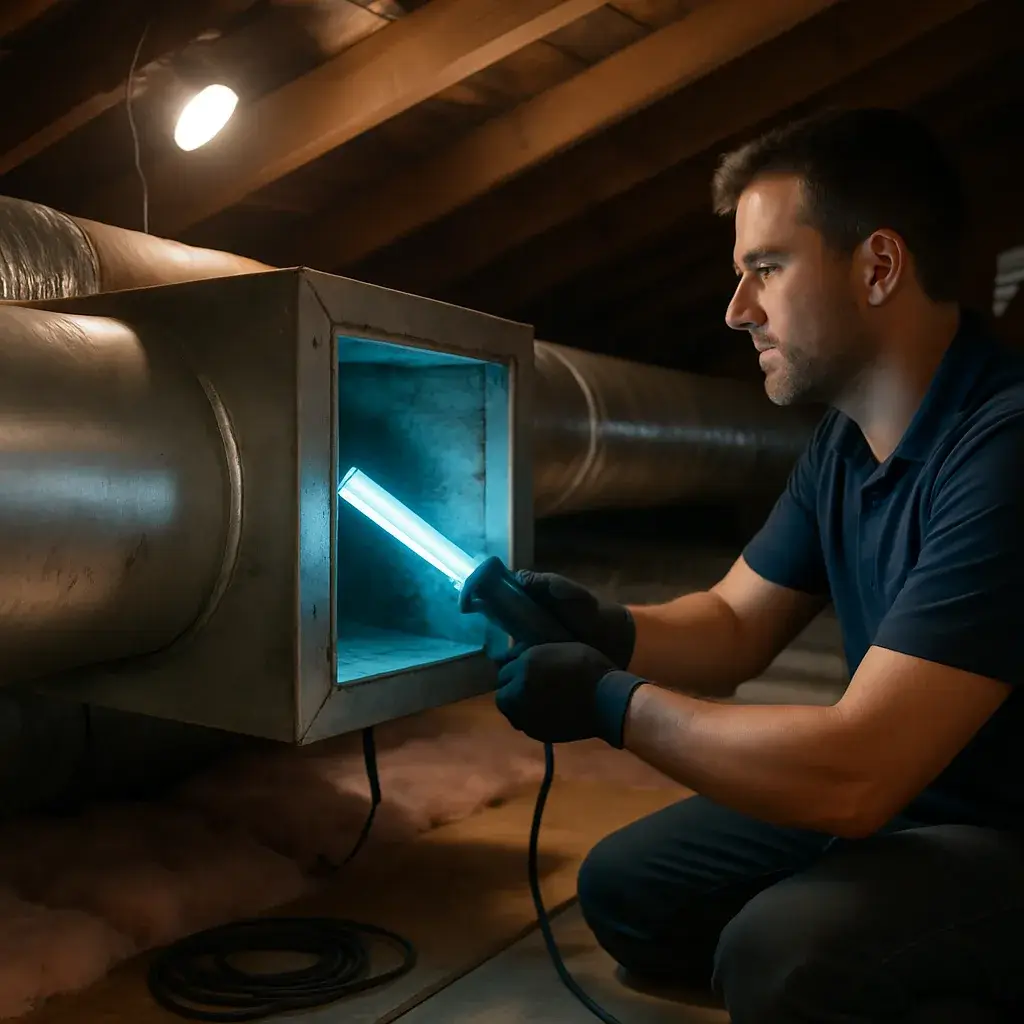
Germicidal lamps mounted in the duct or at the coil, tied into a dedicated circuit to code, sized to how long your air handler actually runs.
What’s Covered on This Page
- Signs Your Ductwork Needs UV-C Treatment
- In-Duct UV-C Systems vs. Retail Plug-In Units
- When UV-C Air Purification Isn’t the Right Fix
- What a Same-Day UV-C Install Looks Like in Sunnyvale
- Protecting Coils Through Long North Texas AC Seasons
- How fast can you get UV-C air purification installed in Sunnyvale?
- What happens when your technician shows up for a UV-C install?
- Does Sunnyvale’s humidity make UV-C air purification more important?
- Will a UV-C lamp fix the musty smell coming from my vents?
- What’s the difference between in-duct UV-C and a plug-in air purifier?
- My Sunnyvale home has older ductwork near Belt Line Road, will UV-C still work?
Signs Your Ductwork Needs UV-C Treatment
So how do you know if this is even your problem? Start with your nose. If the air smells musty or damp right when the system kicks on, that’s often mold or bacteria sitting on the evaporator coil or in the ductwork itself. We see this every single week in homes with attic-mounted air handlers, and Sunnyvale’s summer humidity makes it worse. Attic temperatures swing hard here, hot and sticky in July, and that moisture has nowhere to go but into your duct system.
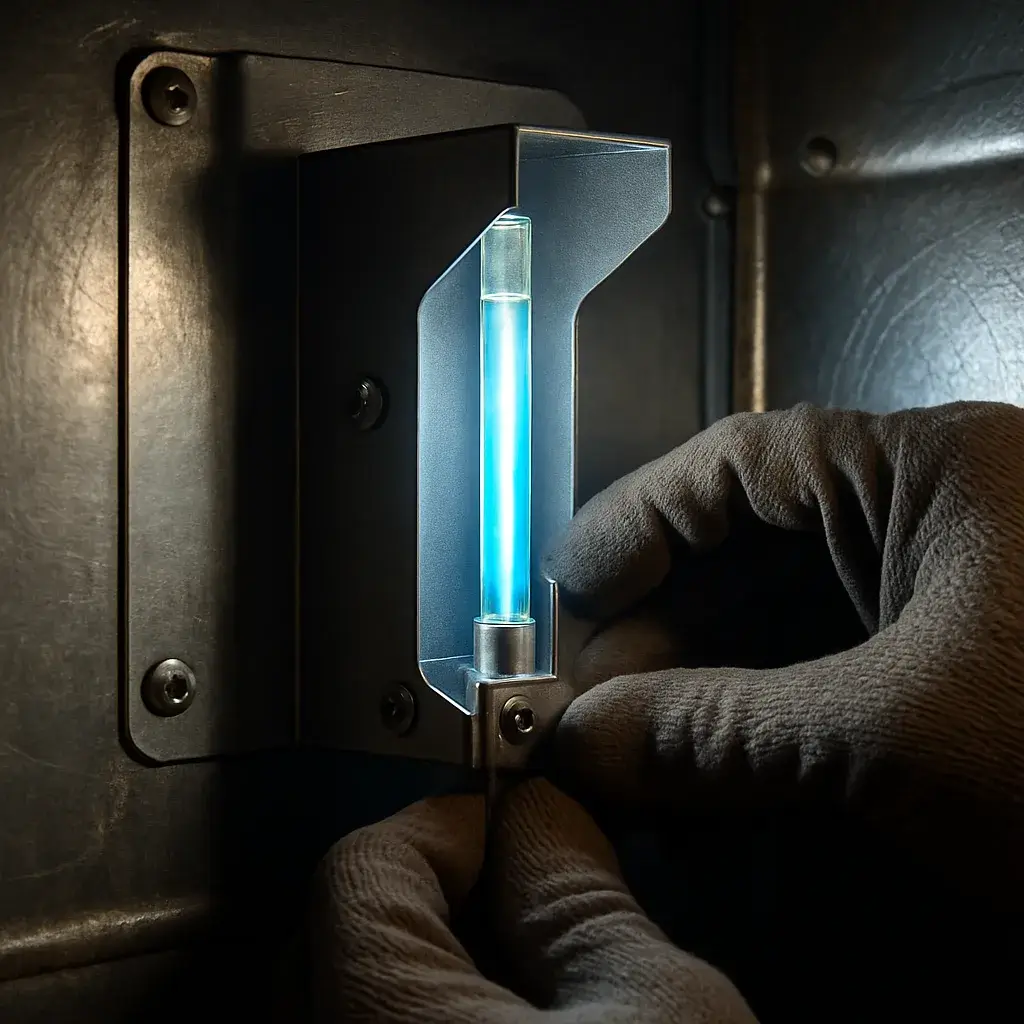
- A musty or sour smell that shows up when the AC or heat runs, then fades
- Visible dark spots or fuzzy growth on the coil or inside the return vent
- Family members with allergies or asthma who feel better away from home
- Condensation buildup around the air handler in an attic install
- A home that’s had recent water damage, flooding, or a slow roof leak
Here’s a scenario we run into a lot. A homeowner near U.S. 80 calls because their kid’s allergies flare up every time the AC turns on, worse in August than in February. Usually it’s not the filter, it’s biological growth sitting on the coil where light never reaches it. That’s exactly the spot UV-C lamps are built to hit.
In-Duct UV-C Systems vs. Retail Plug-In Units
Ever wonder why that little plug-in unit from the hardware store didn’t do much? Here’s the thing, a countertop UV device treats the air in one room, for a few hours a day, if you remember to run it. It’s not touching the air moving through your ducts. And it’s definitely not touching the mold that likes to grow on a cold, damp evaporator coil.
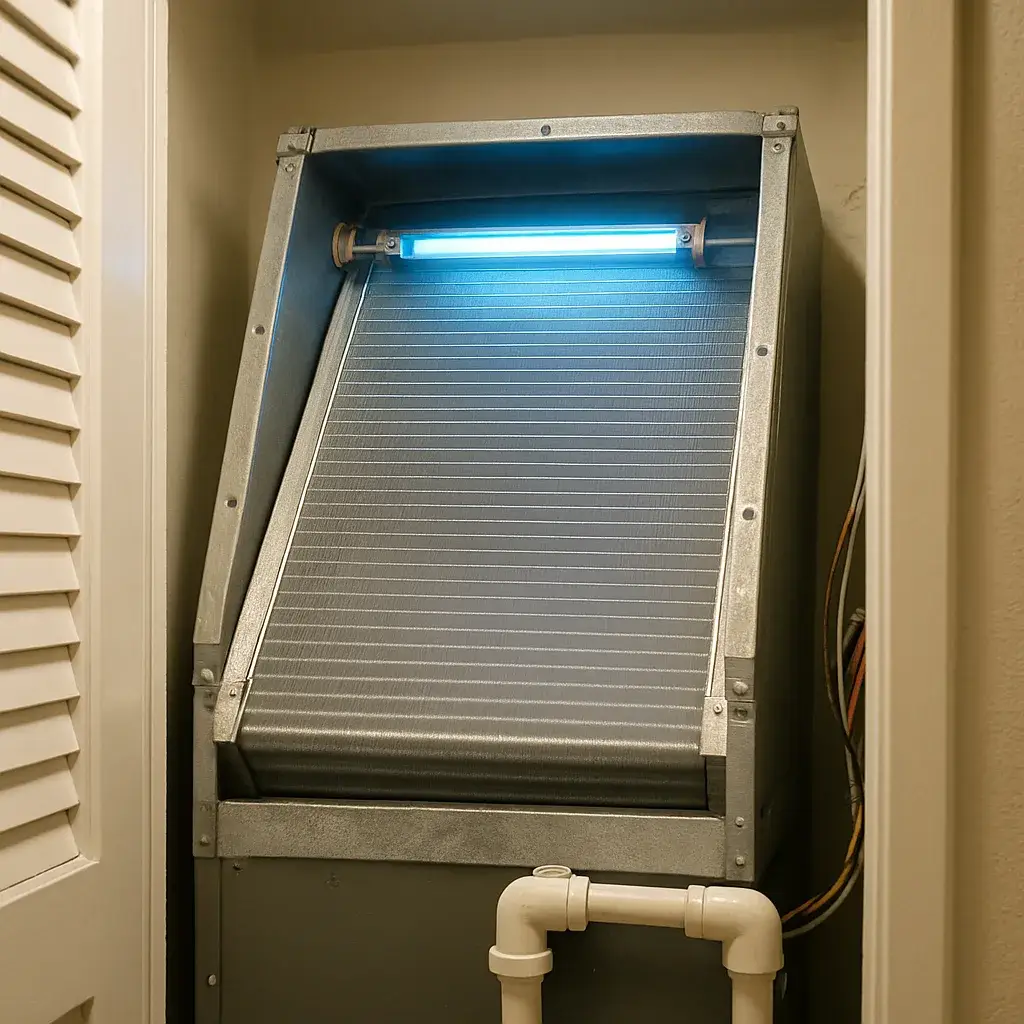
In-duct UV-C works differently. We mount the lamp system inside the ductwork, usually right near the coil or the return, so every cubic foot of air passing through your system gets exposed. Not just the air in your living room, all of it. That matters a lot in Sunnyvale, where plenty of homes run their HVAC system in the attic. Attic temperatures here swing hard in July, and that heat plus condensation on the coil is exactly the kind of environment mold and bacteria like.
- Plug-in units treat a single room, in-duct systems treat the whole airstream
- Plug-in bulbs are weak and often lack real contact time with air
- In-duct systems target the coil, where moisture and buildup collect
- Plug-in units need you to remember to turn them on, in-duct runs with your system
We get asked about the plug-in versions constantly, folks just want cleaner air without tearing into the ductwork. Fair enough. But if the goal is reducing what’s growing on your coil and moving through your vents, the in-duct setup is the one doing real work.
When UV-C Air Purification Isn’t the Right Fix
Here’s the honest part. UV-C air purification kills mold spores, bacteria, and viruses as air passes the lamp inside your duct. It does not trap dust, pet hair, or pollen. If your real complaint is a dusty house or itchy eyes from allergens, a UV-C lamp won’t touch that. You need better filtration, HEPA filtration is the right tool there, not a UV lamp.
Same goes for a musty smell right after a roof leak or an attic flood. That smell is sitting in wet insulation or a damp duct board, not floating through your airstream. A lamp installed downstream of that won’t reach the source. You’d need duct cleaning or remediation first.
- Weak airflow from a dirty coil or a failing blower motor, fix the airflow problem first, a lamp can’t compensate for a system that’s already struggling
- Leaky attic ductwork, common in older Sunnyvale homes off Belt Line Road with original 1980s duct runs, air escaping before it reaches the lamp means the lamp isn’t doing its job
- Odor from cooking or pets, that’s an airflow and filtration issue, not a microorganism issue
- A single family member with ongoing respiratory symptoms, that’s a conversation for a doctor, not a duct upgrade
So before we ever quote UV-C air purification, we ask what you’re noticing. Dust on the furniture? Different fix. A smell that showed up after a leak? Different fix. We’d rather tell you that up front than sell you something that won’t solve it.
Have questions? We’re happy to help.
Call Today, Get Service Today. Xtreme Air Services is ready to help.
What a Same-Day UV-C Install Looks Like in Sunnyvale
Most Sunnyvale homes we work on are slab-on-grade ranch houses with the HVAC system tucked up in the attic, and that changes how we plan the job. Summer attic temps here can climb past 130 degrees, so we like to get up there early in the day before it turns into an oven. A UV-C job is quick once we’re set up, and here’s the order we work in.
- Walk the duct system and coil area to find the best lamp spot for airflow coverage.
- Check electrical access near the air handler, this drives how much wiring work the job needs.
- Mount the UV-C lamp housing inside the duct, sealed tight against the metal.
- Tie the lamp into a dedicated circuit or tap off the air handler, done to code.
- Fire the system up, check lamp output, and run the blower to confirm airflow’s not restricted.
- Walk you through what the light does, how long lamps typically last, and what to watch for.
We see it every week, folks assume this means tearing into their ductwork. It usually doesn’t. If your air handler sits in a closet instead of the attic, the job goes even faster. Our licensed and insured technicians handle the whole thing start to finish, and most installs wrap up same-day, so you’re not stuck opening up your attic access twice.
One thing worth knowing up front: if your ductwork needs repair or your electrical panel is maxed out, that’s a separate conversation. We’ll tell you straight if something needs attention before the UV-C lamp goes in.
Protecting Coils Through Long North Texas AC Seasons
Your AC doesn’t get much of a break here. North Texas runs cooling season from April clear through October some years, and that coil sits wet and cold the whole time. Wet plus dark plus warm attic air around it – that’s a recipe for buildup.
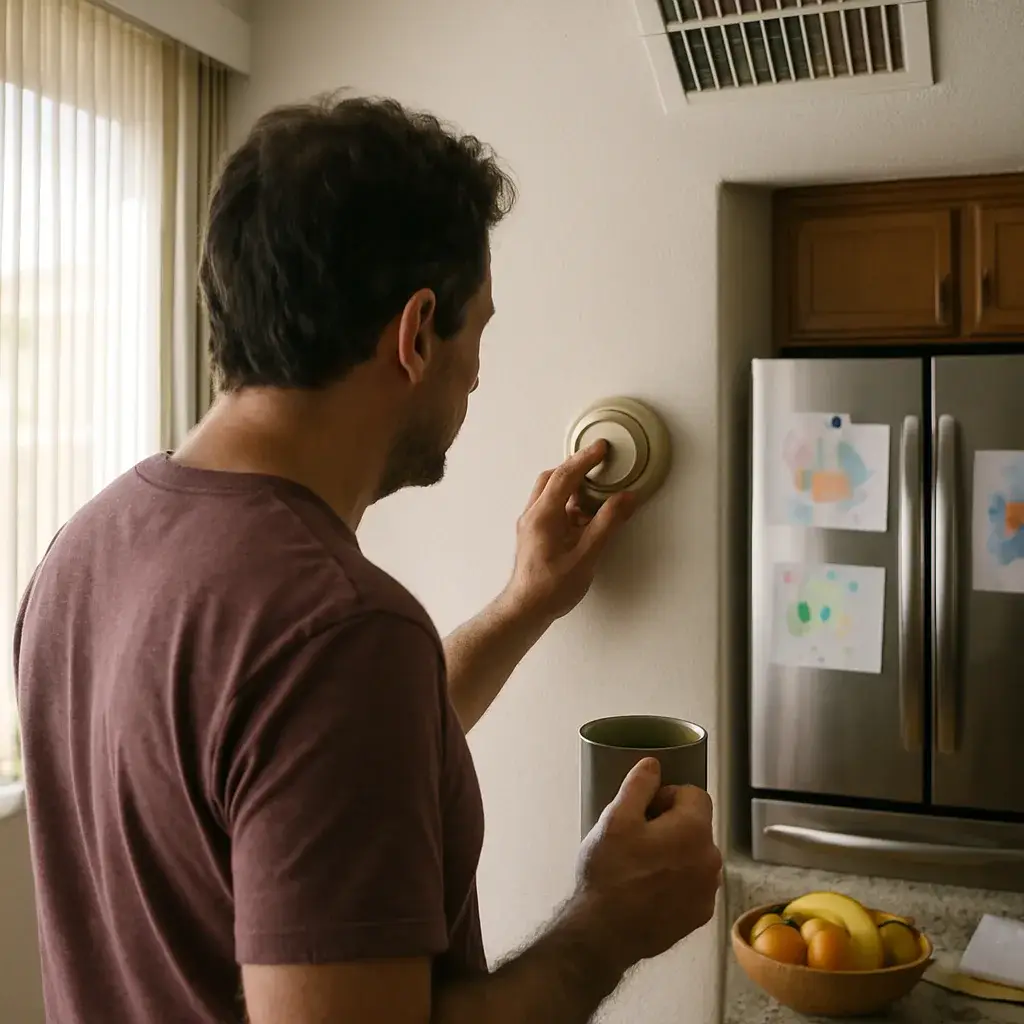
We see it every summer. A coil that was clean in April looks like it grew a sweater by August, and that layer isn’t just dust.
- Condensation that never fully dries between cooling cycles
- Dust and pollen pulled in through the return
- Mold and bacteria that thrive on that damp surface
- Biofilm that traps more dirt over time
A UV-C lamp mounted near the coil bathes that surface in light that stops mold and bacteria from colonizing it in the first place. The coil stays cleaner, it transfers heat better, and your system doesn’t have to work as hard to hit the temperature on your thermostat.
But this only works if the lamp is placed right.
That’s part of why coil and duct access matters so much when we’re pricing the job, cramped attic installs or coils buried behind tight ductwork take more time to reach safely. Get it positioned correctly once, and it just keeps working through every long, humid stretch of summer without you thinking about it again.
Frequently Asked Questions
Common questions about UV-C air purification
How fast can you get UV-C air purification installed in Sunnyvale?
Most UV-C installs in Sunnyvale wrap up in a single visit. Our licensed and insured technicians walk your duct system, check electrical access near the air handler, then mount and wire the lamp the same day. If your air handler sits in a closet instead of the attic, the job often moves even faster. We plan attic work for early morning here, since attic temps can climb past 130 degrees by afternoon in summer.
What happens when your technician shows up for a UV-C install?
Your technician starts by walking the duct system and coil area to find the best spot for lamp coverage. Then they check your electrical access near the air handler, since that determines how much wiring work the job needs. After mounting the lamp housing inside the duct and tying it into a dedicated circuit, they fire up the system and check airflow. Before leaving, they’ll walk you through what the light does and what to watch for.
Does Sunnyvale’s humidity make UV-C air purification more important?
Yes, Sunnyvale’s humid summers create ideal conditions for mold and bacteria on your evaporator coil. Most homes here run attic-mounted air handlers, and attic temperatures swing hard in July, hot and sticky, with moisture that has nowhere to go but into your duct system. That combination of heat and condensation is exactly what mold and bacteria need to grow. If you notice a musty smell when your AC kicks on, that’s often a sign your coil needs UV-C treatment.
Will a UV-C lamp fix the musty smell coming from my vents?
In most cases, yes, if the smell shows up when your AC turns on and fades afterward. That pattern usually means mold or bacteria sitting on the coil or in the ductwork, exactly where UV-C lamps are built to work. But if the musty smell followed a roof leak or attic flood, the smell is likely sitting in wet insulation or duct board, and a lamp won’t reach that. That situation calls for duct cleaning or remediation first.
What’s the difference between in-duct UV-C and a plug-in air purifier?
In-duct UV-C treats every cubic foot of air moving through your whole system, while a plug-in unit only treats the air in one room. We mount the lamp inside your ductwork near the coil or return, so it’s working every time your HVAC runs, not just when you remember to switch it on. That matters most in Sunnyvale homes with attic-mounted systems, where heat and condensation on the coil give mold a place to grow untouched by a countertop device.
My Sunnyvale home has older ductwork near Belt Line Road, will UV-C still work?
It depends on whether your ducts are leaking air before it reaches the lamp. Homes with original 1980s duct runs off Belt Line Road often have leaky attic ductwork, and if air escapes before passing the lamp, the lamp isn’t doing much of its job. We check your duct system and coil area first, so we can tell you if duct repair needs to happen before a UV-C install will help.
Ready to Get Started?
Call 972-288-2263 Today, Get Service Today.