


Coil Cleaning in Sunnyvale: Restore Airflow Before Texas Heat Wins
Condenser and evaporator coils cleaned to restore heat transfer, with airflow and temperature split measured before and after so the work is provable.
What’s Covered on This Page
- Signs Your Coils Are Cutting Cooling Power
- Evaporator vs. Condenser: Two Different Cleaning Jobs
- When a Simple Hose Rinse Is Enough (And When It Isn’t)
- What Drives Coil Cleaning Cost Up or Down
- What Happens During a Coil Cleaning Visit
- How fast can you get a coil cleaning visit scheduled in Sunnyvale?
- What happens when your technician arrives for a coil cleaning?
- Why do coils get dirty faster in Sunnyvale attics?
- Can I just hose off my outdoor coil myself instead of calling someone?
- How often should coil cleaning happen on a Sunnyvale home?
- Does a dirty coil mean my AC is about to fail?
Signs Your Coils Are Cutting Cooling Power
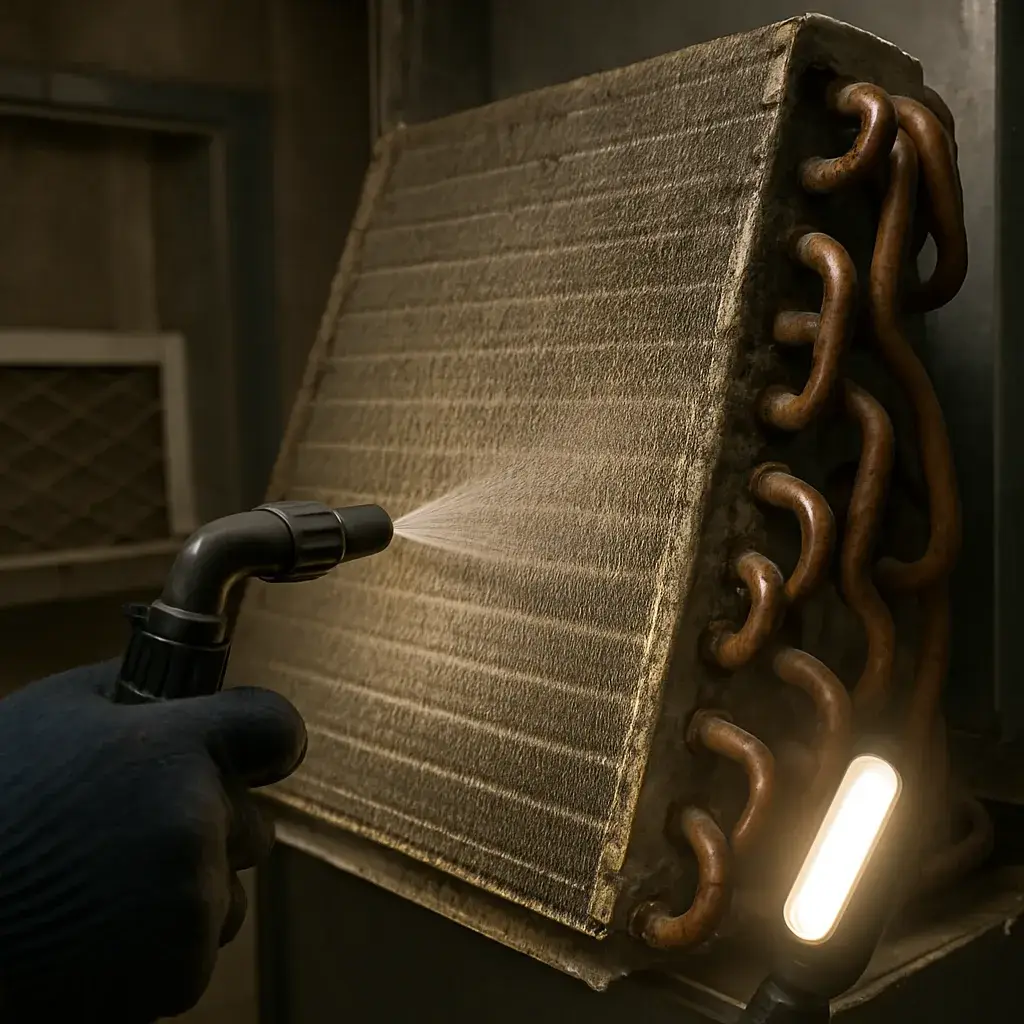
Here’s what we hear on the phone. The AC runs all afternoon and the house sits at 78 anyway. That’s classic coil trouble. Dust and pollen build up on the coil fins over a season or two, and once that layer forms, the coil can’t pull heat out of your air like it should.
- Air from the vents feels lukewarm instead of cold, even with the thermostat set low
- The system runs longer cycles than it used to, sometimes almost nonstop on hot afternoons
- Your electric bill creeps up without any change in how you use the AC
- You notice ice or frost forming on the copper line or coil itself
- Airflow feels weaker at the vents farthest from the unit
Attic-mounted systems, common in a lot of Sunnyvale homes built before the newer subdivisions went in, tend to build grime faster. That attic heat and dust cycle through the coil constantly. So if your unit sits up there and cooling feels off, coil buildup is worth ruling out first.
Evaporator vs. Condenser: Two Different Cleaning Jobs
Your AC system has two coils, and they don’t get dirty the same way. The evaporator coil sits inside, usually in the attic unit or a closet air handler. It’s the one that pulls heat and humidity out of your indoor air. Sunnyvale attics run brutally hot in July, and that heat pushes dust and lint straight onto that coil every time the system cycles.
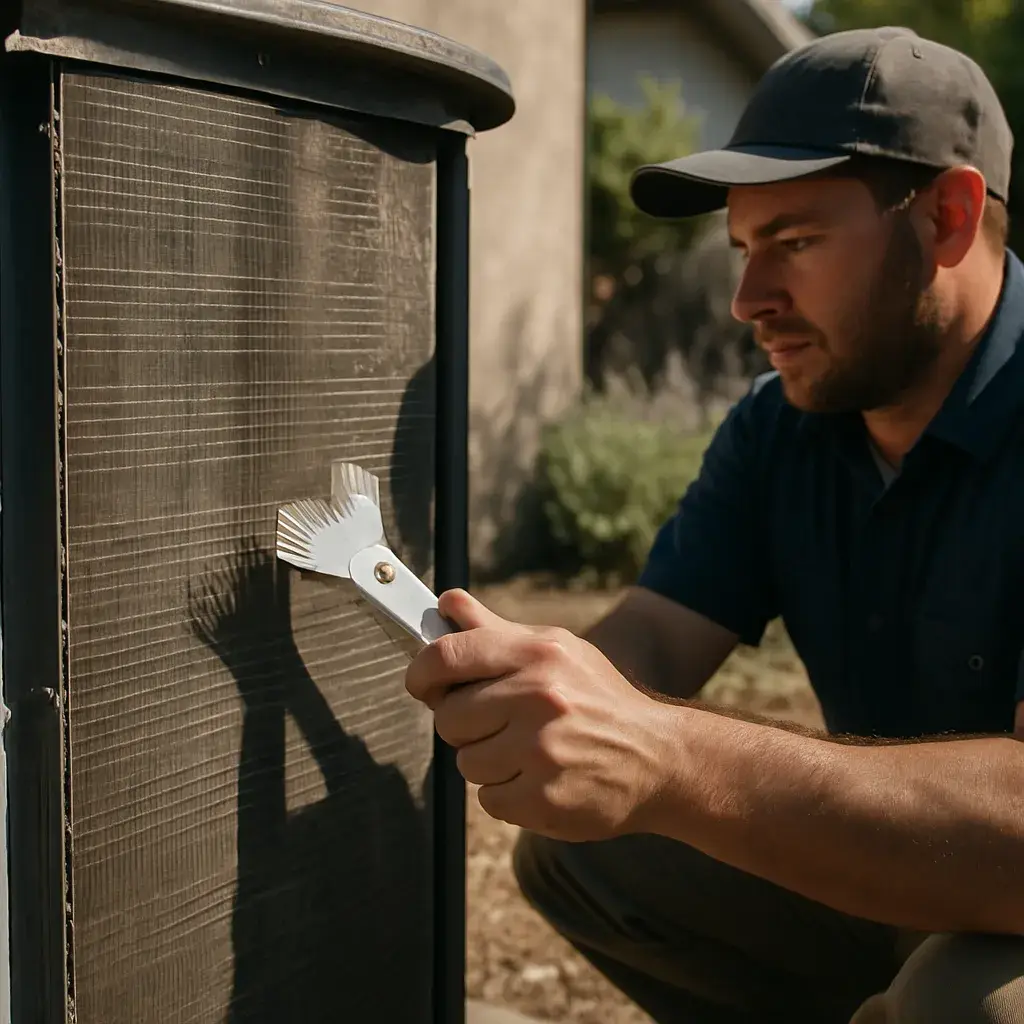
The condenser coil is the outdoor unit, the big metal box sitting on a pad by your house. It dumps that heat back outside. Around here it collects cottonwood fluff, mowed grass, and the fine dust that blows off dry fields near U.S. 80. Different dirt, different location, different cleaning approach.
- Evaporator coil: harder to reach, often needs the cabinet opened, buildup shows up as weak airflow or ice forming on the coil
- Condenser coil: easier access outdoors, buildup shows up as the outdoor fan running but the house never quite cooling down
- One coil can be dirty while the other is fine, we check both before we tell you what’s needed
So which one’s yours? Generally, if your outdoor unit looks clean but the house still feels sticky, the problem’s inside on the evaporator. We’ve pulled evaporator coils in older Sunnyvale homes caked thick enough you couldn’t see metal underneath. That’s not rare, that’s just what a few seasons without a cleaning looks like.
When a Simple Hose Rinse Is Enough (And When It Isn’t)
If your outdoor condenser unit just has a light layer of dust on the fins, a gentle rinse from a garden hose can knock that off fine. No washer, no strong chemicals, just a straight, gentle spray from outside in. That’s a real fix for real dust, and you don’t need us for that.
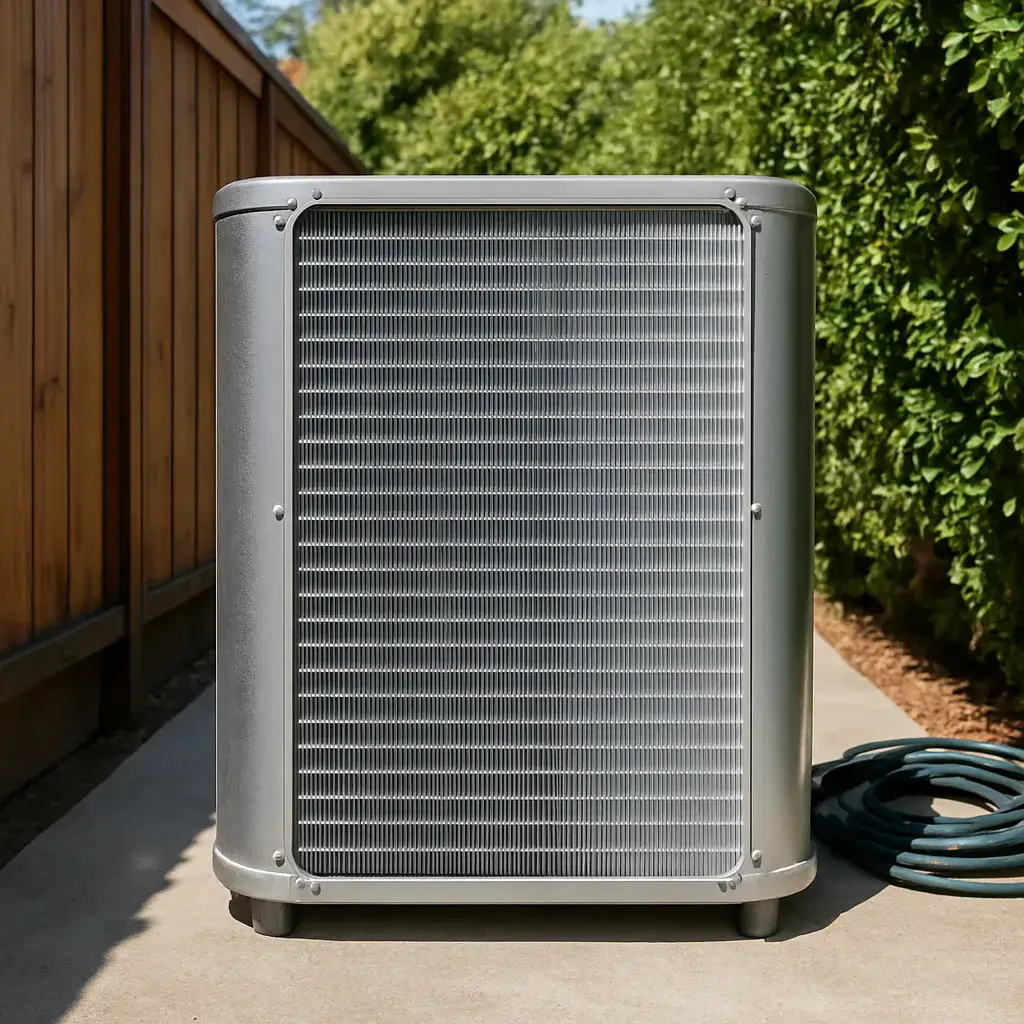
So when does a hose stop being enough? Once buildup turns into a gray, matted film that won’t budge, or the fins are packed with mower clippings and cottonwood from spring, water alone just pushes the grime deeper into the coil. And that’s common out here. Homes near open lots see more of it after a windy afternoon along Belt Line Road.
- Light surface dust on an easy-to-reach outdoor condenser: hose is usually fine
- Caked-on grime, mold film, or bent fins: needs real cleaning, not water
- Evaporator coil inside the attic air handler: not a DIY spot, ever
- AC running but cooling weaker than it used to, even after a rinse: something deeper is going on
Here’s the honest truth. We’d rather tell you to grab the hose than send a truck out for nothing. But if you’ve already tried that and the airflow’s still weak, don’t keep guessing at it.
Thinking about Coil cleaning? Let’s talk.
Call Today, Get Service Today. Xtreme Air Services is ready to help.
What Drives Coil Cleaning Cost Up or Down
Coil cleaning isn’t a one-price-fits-all job. A few things move the number, and none of them are a mystery once you know what to look for.
- Coil type and location. An evaporator coil tucked inside the air handler in your attic takes more time to reach than a condenser coil sitting out in the yard.
- How much buildup has piled up. Dust and dander are one thing. Years of grime baked on from an attic that hits 130 degrees in July is another.
- Accessibility. A coil behind a tight access panel or wedged in a closet system takes longer than one with a clean, open path.
- One coil or both. Cleaning just the outdoor condenser is a different job than servicing the evaporator and condenser together.
Typical coil cleaning jobs run in the $100 to $400 range, and the most common job, cleaning either the evaporator or condenser coil with a performance check afterward, usually lands between $100 and $225. That’s not a quote, just a general sense of where most jobs fall once we’ve seen the coil.
A service call fee of $26 to $99 applies for the visit itself. If you move forward with the cleaning, that fee gets credited toward the job, so you’re not paying twice.
Coil cleaning covers the cleaning and a performance check, nothing more. If we find a refrigerant leak or a coil that’s damaged, that’s a separate conversation and a separate quote. We won’t fold surprise repairs into your original number without telling you first.
Ask any tech you’re considering: is this a flat quote before work starts, and does it include a performance check afterward? If they can’t answer both, keep asking.
What Happens During a Coil Cleaning Visit
Here’s what happens once our technician pulls up. A lot of homes around Sunnyvale still run the original attic-mounted evaporator coil from a build in the 80s or 90s, and attic heat swings bake dust right onto those fins over the years. So the first few minutes are just looking, not cleaning.
- The tech checks your system’s airflow, temperature split, and coil access before touching anything.
- They pull the access panel or condenser cabinet and inspect how much buildup you’re dealing with.
- They clean the coil with the right method for its location, foam or brush for delicate evaporator fins, hose-down for a tougher outdoor condenser.
- They flush the drain pan and line while they’re in there, since a dirty coil and a clogged drain usually show up together.
- They run the system and check performance again, comparing airflow and temperature split to what they found at the start.
That before-and-after check matters. It’s how you know the cleaning did something instead of just looking cleaner.
One thing to know going in: this visit covers the cleaning and the performance check, nothing else. Refrigerant service, coil repair, or coil replacement aren’t part of it. If the tech finds something bigger, like a leak or a coil that’s corroded through, they’ll walk you through it and quote that work separately before doing anything. No surprise charges show up on the invoice.
Every technician we send is licensed and insured, background-checked before they ever knock on your door.
Frequently Asked Questions
Common questions about Coil cleaning
How fast can you get a coil cleaning visit scheduled in Sunnyvale?
Most Sunnyvale coil cleaning visits get scheduled within a day or two of your call. We run techs through Sunnyvale and nearby towns like Mesquite and Forney regularly, so fitting your home into the route is usually simple. During peak summer heat, when attic units are working hardest, call earlier in the week if you can. That gives you more choice on timing before afternoon heat backs up the schedule.
What happens when your technician arrives for a coil cleaning?
Your technician starts by checking airflow, temperature split, and coil access before touching anything. This tells us whether the evaporator, the condenser, or both need attention. In Sunnyvale, that often means opening an attic air handler cabinet first, since many homes still run original units from the 80s and 90s. Only after that inspection do we pull the access panel and begin the actual cleaning.
Why do coils get dirty faster in Sunnyvale attics?
Attic heat swings are the main reason coils get dirty faster here. Sunnyvale attics can hit 130 degrees in July, and that heat cycles dust and lint straight onto the evaporator coil every time the system runs. Homes built before the newer subdivisions often have attic-mounted units, so this problem shows up a lot on our service calls. If your unit sits in the attic and cooling feels weak, coil buildup is the first thing worth checking.
Can I just hose off my outdoor coil myself instead of calling someone?
A gentle hose rinse works fine if your condenser coil only has light surface dust. That’s a real fix, and you don’t need us for that kind of buildup. But once grime turns into a gray, matted film, or the fins are packed with cottonwood and mower clippings, water alone pushes the dirt deeper instead of removing it. Homes near open lots along Belt Line Road tend to see this heavier buildup after windy spring afternoons.
How often should coil cleaning happen on a Sunnyvale home?
Most Sunnyvale homes do well with a coil check once a year, ideally before the worst summer heat arrives. Attic-mounted systems and homes near open fields or construction dust may need it checked more often, since buildup forms faster in those conditions. If your bills are climbing or the house never quite cools despite long run times, that’s a sign to move the check up sooner rather than waiting for the next scheduled visit.
Does a dirty coil mean my AC is about to fail?
Not usually. Dirty coils show up as warm air, weak airflow, and higher bills, not a sudden breakdown. Your system can keep running for a while with a coated coil, it just works much harder and costs more to do it. Catching the buildup early with a cleaning and performance check protects the compressor from that extra strain, especially through a full Sunnyvale summer of nonstop afternoon cycling.
Ready to Get Started?
Call 972-288-2263 Today, Get Service Today.