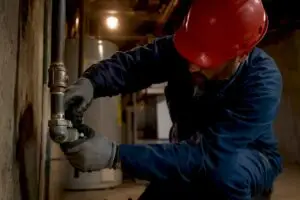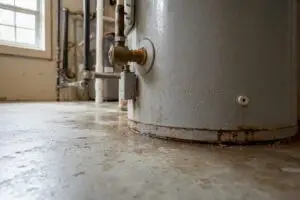


If your AC is running but not cooling, turn the thermostat to OFF immediately. Running a system that cannot cool risks seizing the compressor, turning a relatively minor repair into a costly one. Shutting the system off before you inspect anything is the single most important first move.
Here are six checks you can safely do right now, before calling anyone:
- Thermostat mode: Confirm it’s set to COOL, not FAN or HEAT. Set the temperature below the current room temp by a few degrees.
- Thermostat batteries: Swap them out. A dead battery is a surprisingly common culprit.
- Air filter: Pull it out and hold it up to light. If you can’t see through it, replace it. Consumer Reports identifies a clogged filter as the most common cause of poor cooling.
- Circuit breaker: Check your panel for a tripped breaker labeled AC or AHU. Reset it once, fully OFF then ON.
- Outdoor disconnect: Look at the gray box near your outdoor unit. If it’s open or the pull-out is missing, that’s your problem.
- Supply vents: Walk through the house and confirm all vents are open and unblocked.
Call a pro immediately if you notice any of these: smoke or a burning smell, a breaker that trips again right after you reset it, loud grinding or screeching from the unit, a hissing sound near refrigerant lines, or water actively flooding your floor. These are not “wait and see” situations. If simple checks don’t restore cooling within 30–60 minutes, schedule service. Don’t keep resetting the breaker hoping it fixes itself.
Pro Tip: Before you call, take a photo of your thermostat screen, the tripped breaker, and the outdoor unit. Technicians can often diagnose faster when they see what you saw.
Key Takeaways
A broken AC is almost always manageable if you act in the right order: turn the system off, run the six safe checks, and call a licensed technician the moment you hit a red-flag symptom or the 30–60 minute window closes without a fix.
| Point | Details |
|---|---|
| Turn it off first | If the system runs but won’t cool, switch the thermostat to OFF immediately to protect the compressor. |
| Two checks fix most problems | A clogged filter and a tripped breaker resolve the majority of no-cool calls before a technician arrives. |
| 15-year replacement rule | Units 15 years or older facing major repairs are almost always better replaced than fixed. |
| Never reset a tripping breaker twice | A breaker that trips again immediately signals a serious fault; repeated resets risk fire. |
| Xtreme Air Services for Dallas repairs | Licensed, EPA-certified technicians serving the Dallas metro area for emergency and scheduled AC service. |
Table of Contents
- How to troubleshoot a broken AC safely, step by step
- How to stay cool and safe while you wait for repair
- When to call a pro and how to decide between repair and replacement
- What you can safely do yourself and what you must never attempt
- How regular maintenance prevents most AC breakdowns
- What happens during a professional service call
- Xtreme Air Services’ take on what homeowners get wrong
- Xtreme Air Services is ready for your emergency or scheduled AC repair
- Sources
- FAQ
How to troubleshoot a broken AC safely, step by step
Most broken air conditioner calls follow a predictable pattern. Work through these in order, and you’ll either fix it yourself or arrive at a clear answer for the technician.
1. Thermostat checks
Start here every time. Set the mode to COOL and the setpoint below the room temperature by a few degrees. If you have a smart thermostat like an Ecobee or Nest, check the app for error codes or compressor delay notifications. Many smart thermostats impose a 5-minute delay after a power interruption to protect the compressor. That delay looks like a broken system but isn’t.
Replace the batteries even if the screen looks fine. A weak battery can cause erratic behavior without a low-battery warning.
2. Power checks
Go to your electrical panel and find the breaker for the air handler (usually labeled AHU, Air Handler, or AC Indoor) and the condenser (AC Outdoor or Compressor). If either is tripped, flip it fully to OFF, wait 30 seconds, then flip it back ON. Do this once.
A breaker tripping immediately on reset signals a serious electrical fault, possibly a shorted compressor or motor wiring. Stop resetting. Call a licensed electrician or HVAC technician.
Also check the outdoor disconnect box, the gray weatherproof box mounted on the wall near the condenser. You don’t need to open it. Just confirm it’s closed and the pull-out fuse block is seated.
3. Airflow and filter checks
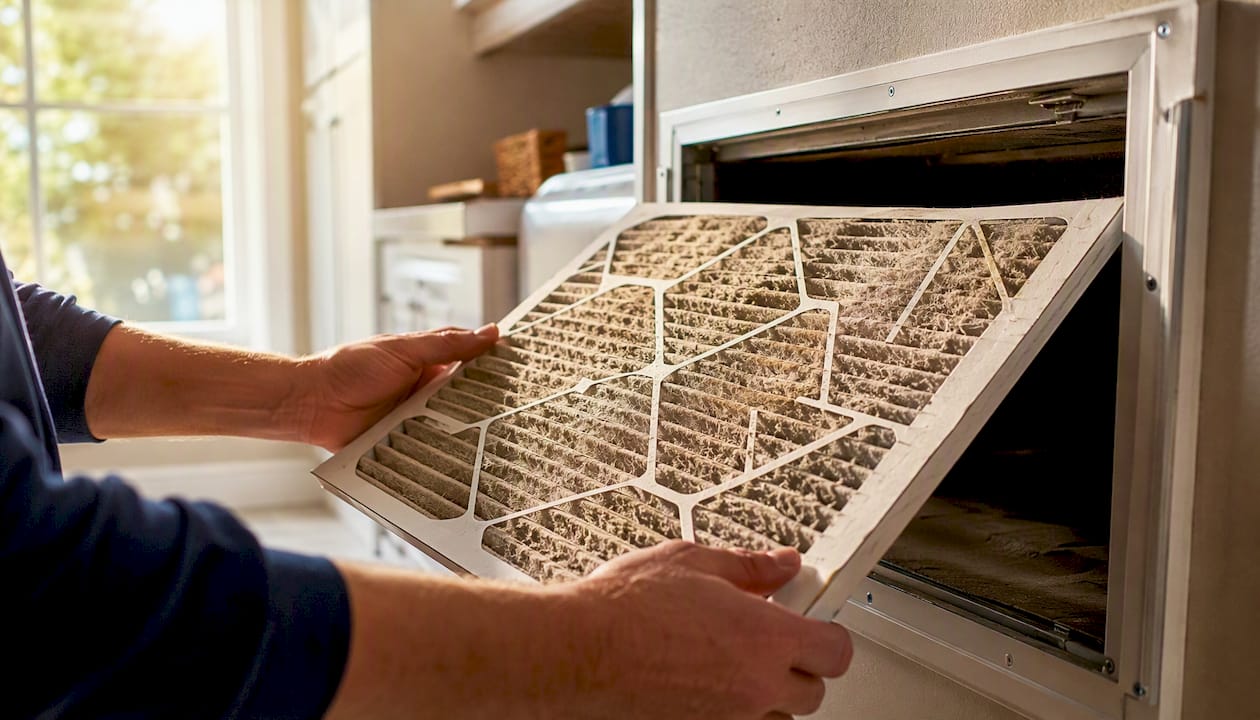
Pull the filter from the air handler or return vent. A filter clogged with dust and pet hair blocks airflow so severely the system can’t transfer heat, which eventually freezes the evaporator coil. Replace it with the correct size. MERV 8–11 is the sweet spot for most homes: good filtration without restricting airflow.
While you’re at it, walk every room and confirm supply and return vents are open. Closed vents don’t save energy; they create pressure imbalances that stress the system.
If you see ice on the copper lines near the air handler or on the indoor coil itself, that’s a frozen evaporator. The fix: turn the thermostat to OFF (compressor off), then switch the fan setting to ON so the blower runs without cooling. Give it 2–4 hours to thaw completely. A frozen coil caused by a dirty filter often resolves after thawing and replacing the filter. If it refreezes, the cause is likely low refrigerant, which requires a technician.
4. Drain and condensate checks
Your air handler has a drain pan underneath it. If that pan has standing water, the condensate drain line is clogged. Many systems have a float switch that shuts the unit off when the pan fills, which looks exactly like a broken AC.
If you can access the exterior end of the condensate drain line (usually a white PVC pipe exiting near the foundation), use a wet/dry vacuum to suction out the clog. Clear the blockage, empty the pan, and the float switch should reset. If the pan is cracked or the line is inaccessible, call a tech.

5. Outdoor unit observations
Stand near the outdoor condenser and listen. If you hear a hum but the fan isn’t spinning, that’s a strong indicator of a failed capacitor. The capacitor is what gives the fan motor and compressor the electrical kick to start. Don’t touch the unit. Note what you hear and tell the technician. Capacitor replacement is one of the most common and least expensive AC repairs.
A loud grinding, screeching, or banging noise from the compressor is a different story. That points to internal mechanical failure. Turn the system off and call for service.
6. The 30-minute power-reset procedure
This is the full reset sequence, not just a breaker flip:
- Set the thermostat to OFF.
- Flip the AC breaker(s) to OFF at the panel.
- Wait 30 minutes. This allows the compressor pressure to equalize.
- Flip the breaker(s) back ON.
- Wait 5 minutes before switching the thermostat to COOL.
This sequence clears minor control board glitches and lets the system restart under safe pressure conditions. It won’t fix a failed capacitor, a refrigerant leak, or a mechanical fault, but it resolves a surprising number of “dead” systems.
Pro Tip: Set a timer for the 30-minute wait. Most homeowners skip it and flip the breaker back on in 2 minutes, which doesn’t give the compressor pressure time to equalize.
How to stay cool and safe while you wait for repair
A broken air conditioner in July in Dallas is a genuine health risk, not just a discomfort. Staging your home and using short-term cooling tactics keeps temperatures manageable until service arrives.
- Ceiling fans: Switch them to run counterclockwise (when viewed from below) in summer. This pushes air straight down and creates a wind-chill effect.
- Cross-ventilation: Place a box fan in a window on the shaded side of the house blowing in, and open a window on the opposite side. This moves cooler outdoor air through the home during early morning and evening hours.
- Ice-and-fan trick: A shallow bowl of ice placed in front of a box fan drops the immediate air temperature noticeably for an hour or two.
- Block the sun: Close blinds and curtains on south- and west-facing windows during afternoon hours. This alone can reduce indoor temperature by several degrees.
- Avoid heat sources: Skip the oven. Use a microwave, slow cooker, or grill outside. Switch off incandescent lights, which generate significant heat.
- Pick your coolest room: Identify the lowest floor, most interior room in the house. Move pets, elderly family members, and young children there. A single portable fan in a small room is far more effective than trying to cool the whole house.
Monitor anyone vulnerable closely. Heat exhaustion can develop within hours in a hot house. Signs include heavy sweating, weakness, cold or pale skin, a weak pulse, nausea, or fainting. Keep water available and use cool, damp cloths on the neck and wrists. If someone shows signs of heat stroke (hot, red, dry skin; rapid pulse; confusion), call 911 immediately.
Pro Tip: A $30 battery-powered clip fan from a hardware store can make a single room livable for a night. Keep one in the house during summer months specifically for AC outages.
When to call a pro and how to decide between repair and replacement
Emergency signs that require immediate dispatch
Some symptoms mean you stop troubleshooting and call now:
- Smoke, burning smell, or visible scorching near the unit or electrical panel
- A breaker that trips again immediately after reset
- Loud grinding, screeching, or banging from the compressor
- Hissing near refrigerant lines (possible refrigerant leak)
- Water actively overflowing and damaging walls, ceilings, or flooring
If the issue involves electrical faults (repeated breaker trips, burning smell, scorching), call a licensed electrician, not just an HVAC tech. Xtreme Air Services handles both, which matters when the root cause isn’t clear.
Repair vs. replace: a practical decision tool
The 15-year rule is the industry standard: if your unit is 15 years or older and needs a major repair, replacement is almost always the better financial decision. A newer unit also qualifies for energy-efficiency rebates that offset the purchase price.
For units under 15 years old, use this framework:
- Get a written repair quote with parts and labor broken out.
- Compare the repair cost to roughly 50% of the replacement cost. If the repair exceeds that threshold, lean toward replacement.
- Factor in the component. A capacitor or contactor replacement on a 10-year-old unit is worth doing. A compressor replacement on a 12-year-old unit is borderline. A compressor on a 14-year-old unit is almost never worth it.
Angi’s HVAC repair cost guide gives these approximate ranges for common repairs:
| Repair | Typical Cost Range |
|---|---|
| Capacitor or contactor | $150 |
| Refrigerant recharge | $200 |
| Control board | $400 |
| Compressor replacement | $1,200 |
These are national averages. Dallas-area pricing may vary based on unit size, access, and parts availability.
Pro Tip: Before the technician arrives, locate your unit’s model and serial number (usually on a sticker on the outdoor condenser). The serial number often encodes the manufacture year, which helps confirm unit age when the paperwork is long gone.
For a deeper look at the repair-vs-replace calculation, Xtreme Air Services has a dedicated repair vs. replace guide that walks through the math for Dallas-area homeowners.
What you can safely do yourself and what you must never attempt
Safe homeowner tasks
- Replace the air filter
- Change thermostat batteries
- Open and unblock supply and return vents
- Clear leaves, grass clippings, and debris from around the outdoor unit (keep 2 feet of clearance)
- Suction the exterior condensate drain outlet with a wet/dry vacuum
- Perform the 30-minute power-reset sequence
- Thaw a frozen coil by switching to fan-only mode
Never attempt these
- Opening the outdoor cabinet or touching internal components. Capacitors store a lethal charge even when the unit is powered off. There is no safe way to discharge one without proper tools and training.
- Handling refrigerant. EPA regulations require certified technicians for all refrigerant work under Section 608. Attempting DIY refrigerant handling is both dangerous and a federal violation.
- Repeatedly resetting a tripping breaker. A breaker that trips immediately on reset is protecting you from an arc fault or short circuit. Forcing it risks fire.
- Replacing compressors, contactors, or sealed-system components. These require specialized tools, refrigerant certification, and electrical safety training.
- Working on gas lines connected to any HVAC component.
The electrical emergency signal to watch for: if you smell burning plastic or see scorch marks near any electrical panel, disconnect box, or unit, turn off the main breaker and call a licensed electrician before touching anything else. Xtreme Air Services provides electrical services in Dallas alongside HVAC, so one call covers both.
How regular maintenance prevents most AC breakdowns
The single most effective thing you can do to avoid a mid-summer emergency is schedule a professional tune-up before cooling season starts, typically in March or April in the Dallas area. Consumer Reports recommends annual inspections that cover moving parts and refrigerant levels to catch problems before they become failures.
A thorough annual tune-up covers:
- Clean the evaporator and condenser coils
- Check and top off refrigerant if needed
- Test and replace capacitors before they fail
- Tighten all electrical connections
- Inspect and clear the condensate drain line
- Measure airflow and check ductwork for leaks
- Test all safety switches and the control board
- Lubricate moving parts in the blower and fan motors
Beyond the annual visit, filter replacement is the highest-impact maintenance task you control directly. Replace filters every 1–3 months. Homes with pets or allergy sufferers should replace monthly. A single-occupant home with no pets can stretch to 3 months. In Dallas’s hot, dusty climate, erring toward monthly replacement during peak cooling season is worth the $10–$20 cost.
Flush the condensate drain line with a cup of distilled white vinegar every 3–4 months to prevent algae buildup. It takes two minutes and prevents the float-switch shutoff that looks exactly like a broken AC.
Enrolling in a maintenance plan locks in pre-season scheduling, often includes priority dispatch if something does break, and typically pays for itself by catching a failing capacitor before it takes the compressor down with it.
What happens during a professional service call
Knowing what a technician actually does when they arrive helps you evaluate the quality of the work and compare quotes fairly.
A licensed HVAC technician will typically:
- Verify voltage and amperage at the disconnect and unit terminals
- Measure capacitor microfarad ratings against spec (a weak capacitor shows up here before it fails completely)
- Check refrigerant pressures with a manifold gauge set and compare to manufacturer specs
- Inspect the evaporator and condenser coils for dirt, damage, or ice
- Test the contactor for pitting or burning
- Check the control board for error codes and burnt components
- Measure supply and return air temperatures to confirm the system is achieving the correct temperature differential (typically 15–20°F across the coil)
- Inspect the condensate drain and pan
A thorough service call for a straightforward repair typically takes 1–2 hours. Diagnostics alone usually run 30–45 minutes. If a technician quotes a repair in under 10 minutes of looking at the unit, ask questions.
Pro Tip: Always request a written estimate before any work begins. It should list the specific part number, labor hours, and warranty on both parts and labor. A reputable company will provide this without hesitation. If they won’t, that’s your answer.
When comparing quotes, ask specifically: Is the diagnostic fee applied toward the repair? What is the parts warranty? Is labor guaranteed? A second opinion is reasonable any time a repair quote exceeds $800 or involves compressor replacement.
For a full breakdown of what to expect from a service visit, Xtreme Air Services’ AC repair service page walks through the process and pricing structure.
Xtreme Air Services’ take on what homeowners get wrong
Most homeowners who call us in a panic have already made the situation worse in one of two ways: they kept running the system after it stopped cooling, or they reset the breaker four times hoping it would clear itself. Both are understandable. Neither helps.
The AC troubleshooting advice that frustrates me most is the kind that buries the safety-critical steps under three paragraphs of background. The thermostat-off rule and the stop-resetting-the-breaker rule need to be the first two things a homeowner reads, not the seventh. A seized compressor because someone ran a low-refrigerant system for three days costs $1,500–$2,800 more than the original repair would have. A house fire from a repeatedly reset shorted breaker costs everything.
What I’ve seen work: homeowners who treat the first 30 minutes as a diagnostic window, not a repair attempt. Check the filter, check the thermostat, check the breaker once. If none of those fix it, turn the system off and call. That discipline, more than any specific technical knowledge, is what separates a $200 service call from a $2,500 replacement.
The other thing worth saying plainly: refrigerant is not a homeowner task. Not because it’s complicated, but because it’s federally regulated and genuinely dangerous. Any company that offers to “top off your refrigerant” without diagnosing why it’s low is doing you a disservice. A properly sealed system doesn’t lose refrigerant. If it’s low, there’s a leak, and that leak needs to be found and repaired, not just refilled.
Xtreme Air Services is ready for your emergency or scheduled AC repair
When the quick checks don’t restore cooling, or you’ve already spotted a red-flag symptom, Xtreme Air Services dispatches licensed HVAC technicians across the Dallas metro area for both emergency and scheduled service. No waiting days for an appointment when your house is 90°F.
Call or book online and have these ready: a photo of your thermostat, your unit’s model and serial number (on the outdoor condenser sticker), and a quick note on what symptoms you noticed and when. That information cuts diagnostic time significantly and gets your system back online faster.
For homeowners weighing repair against replacement, Xtreme Air Services offers a no-pressure replacement consultation alongside the repair quote so you can make the decision with real numbers in front of you. Financing options are available for qualifying replacements.
Enroll in an HVAC maintenance plan to lock in pre-season tune-ups, priority dispatch, and documented system health records that protect your warranty and your investment. All refrigerant work is handled by EPA Section 608-certified technicians. Schedule your AC repair today and get your home comfortable again.
Sources
The following sources informed this guide. Each is worth bookmarking for ongoing reference:
- 8 Air Conditioner Problems and How to Fix Them – Consumer Reports
- Frequent questions about the phasedown of hydrofluorocarbons | EPA
Consult your local building department and the EPA directly for jurisdiction-specific refrigerant handling rules and permit requirements.
FAQ
What should I do first when my AC stops working?
Turn the thermostat to OFF if the system is running but not cooling, then check the air filter, thermostat settings, and circuit breaker before calling a technician. If you see smoke, smell burning, or the breaker trips again immediately after reset, call a pro right away.
How do I know if my AC is broken or just needs a reset?
If the system won’t start after a 30-minute power reset (thermostat OFF, breaker OFF for 30 minutes, then back ON), or if it starts but blows warm air after you’ve replaced the filter and confirmed thermostat settings, the unit has a fault that requires professional diagnosis.
How much does a broken AC repair typically cost?
Dallas-area pricing varies by unit size and access.
What causes an AC to suddenly stop working?
The most common causes are a tripped circuit breaker, a clogged air filter, a failed capacitor, a clogged condensate drain triggering the float switch, or a thermostat issue. Consumer Reports lists these as the top no-start and no-cool culprits.
Can I add refrigerant to my AC myself?
No. Refrigerant handling is federally regulated under EPA Section 608, and only certified technicians may purchase and handle refrigerants legally. More importantly, a system low on refrigerant has a leak that must be found and repaired, not just refilled.