Texas enforces GFCI protection through the state-adopted National Electrical Code, which requires it in bathrooms, kitchens near sinks, garages, outdoor receptacles, crawlspaces, basements, and anywhere near pools or spas. As of the 2026 adoption notice, the state also carved out a limited exception for certain outdoor HVAC outlets, so anyone installing or inspecting one of those circuits needs to check the current rule text before assuming standard GFCI rules apply.
TL;DR:
- All outdoor HVAC outlets in Texas are subject to the 2026 NEC exception, but inspectors must verify the current rule text before assuming GFCI does not apply.
- GFCI protection is required in bathrooms, garages, kitchens near sinks, outdoor receptacles, crawlspaces, basements, and pool areas, with specific distances and weatherproofing rules.
- Texas enforces the 2026 NEC, but the applicable edition depends on permit issuance and work start dates, which can cause compliance confusion.
- Inspectors and real estate transactions frequently flag missing or faulty GFCIs, emphasizing the importance of regular testing and early repairs.
- Homeowners should have licensed electricians check and upgrade GFCI devices, grounding, and bonding to prevent safety issues and facilitate inspections.
Table of Contents
- Quick Checklist: Where GFCI Protection Is Required in Texas Homes
- Which NEC Edition Does Texas Enforce, and What Changed in 2026?
- How Do Real Estate Inspections Treat Missing GFCIs?
- How Do You Test, Reset, and Troubleshoot a GFCI Outlet?
- Do You Need a Permit, and Which Rules Actually Apply?
- A Field Perspective on GFCI Safety in Texas Homes
- Get Your GFCI Wiring Inspected and Brought Up to Code
- Sources
- FAQ
Quick Checklist: Where GFCI Protection Is Required in Texas Homes
Walk through a Texas home with this list in hand and you will catch most of the gaps an inspector or electrician would flag. The National Electrical Code sets the baseline, and Texas enforces it statewide through the Texas Department of Licensing and Regulation.
- Bathrooms: every receptacle serving a bathroom needs GFCI protection, no exceptions for distance from the sink.
- Garages and accessory buildings: all 125-volt, 15 and 20 amp receptacles in garages, workshops, and detached structures like sheds require protection.
- Kitchens: countertop receptacles and any outlet within 6 feet of a kitchen sink need GFCI protection; a receptacle serving a dedicated appliance like a garbage disposal on its own circuit can fall outside that rule depending on installation specifics.
- Outdoor and deck receptacles: every exterior outlet needs both GFCI protection and an in-use weatherproof cover, since Texas humidity and rain make moisture intrusion a near certainty over time.
- Crawlspaces and unfinished basements: receptacles in these damp, low-clearance spaces carry the same protection requirement as garages.
- Pool and spa areas: receptacles within the vicinity of pools, hot tubs, and spas require GFCI protection, with specific distance rules governing how close equipment and outlets can sit to the water.
- Rooftop and dedicated outdoor HVAC outlets: these are the special case. Check the current state exception before assuming a rooftop condenser outlet needs the same protection as a patio outlet.
Homeowners adding a hot tub or spa should pay close attention to the wiring specifics, since pool and spa circuits carry some of the strictest bonding and GFCI rules in the entire code.
Which NEC Edition Does Texas Enforce, and What Changed in 2026?
Texas runs on the 2026 National Electrical Code as of the state’s latest rulemaking, but the edition that actually governs your project depends on timing, not the calendar year you happen to be reading this in.
The Texas Commission of Licensing and Regulation adopted the 2026 NEC as the statewide electrical code, with the adoption justification published in the Texas Register. That notice included a limited exception carved out specifically for certain outdoor HVAC outlets. It is not a blanket exemption for all outdoor equipment. Before wiring or inspecting a rooftop or pad-mounted condenser circuit, pull the actual Texas Register language or contact TDLR directly, because the scope of that exception is narrow and easy to misapply.
This adoption followed the same pattern as the previous cycle. TDLR adopted the 2023 NEC effective September 1, 2023, and its guidance on which edition applies to a given job still matters for anyone working through the transition period. If a permit is required for the job, the code edition in effect on the date the permit was issued typically governs the work. If no permit is required, the code in effect on the day the electrician actually begins installing materials applies. That distinction trips up more electricians and homeowners than any single technical requirement in the code itself, because it means two nearly identical jobs started weeks apart can legally follow different rulebooks.

For the actual NEC section text, including Section 210.8(F), the governing GFCI provision, go straight to the source. NFPA maintains the National Electrical Code as NFPA 70, and TDLR has specifically warned electricians about counterfeit or incomplete code books circulating outside official channels. A twenty-dollar knockoff codebook is a bad place to save money when the section you misread is the one that keeps someone from getting electrocuted in a wet garage.
Practically speaking, Texas homeowners and electricians should treat every new adoption notice the same way: read it, note the effective date, and check for local amendments before pulling a permit or starting work. TDLR’s compliance guide is explicit that local licensing and inspecting authorities, not TDLR itself, handle the inspections tied to local permits.
How Do Real Estate Inspections Treat Missing GFCIs?
A missing or malfunctioning GFCI is one of the most commonly flagged items in a Texas home inspection, and it can stall a closing faster than almost any other single-line item on the report.
The Texas Real Estate Commission’s Standards of Practice require licensed inspectors to report GFCI devices that are missing, improperly installed, or malfunctioning in bathrooms, kitchens, garages, and exterior areas. That is not optional language buried in fine print. It is a specific reporting obligation baked into how Texas inspectors are trained and licensed.
A few patterns show up again and again in inspection reports:
- Garage receptacles without GFCI protection get marked deficient under the relevant SOP provision, though TREC’s own inspector reference materials note ongoing committee discussion about ceiling-mounted receptacles that serve garage door openers.
- Exterior outlets missing weatherproof covers often get flagged alongside GFCI issues, since the two problems tend to travel together on older homes.
- Non-functioning test/reset buttons on an otherwise-installed GFCI device count as deficient, not compliant, even though the device is physically present.
- Kitchen counter outlets on non-GFCI circuits are a frequent surprise on homes built or remodeled before code updates caught up with kitchen-specific requirements.
For sellers, that means walking the house with a tester before listing saves a renegotiation later. For buyers, it means a clean inspection report on GFCI items is a genuine signal about how carefully the home was maintained, not just a box-checking exercise. Real estate agents working both sides of a Texas transaction do well to flag this early, since a deficient GFCI is cheap to fix but can become a point of leverage in price negotiations if it surfaces during the option period instead of before listing.
How Do You Test, Reset, and Troubleshoot a GFCI Outlet?
Testing a GFCI takes about thirty seconds, and every Texas homeowner should do it at least twice a year, not just when something stops working.
- Press the “test” button on the outlet or breaker. Power to that circuit should cut immediately.
- Press “reset” to restore power. If the outlet does not reset, or power does not cut when you hit test, the device has failed and needs replacement.
- Check for moisture at outdoor and garage outlets before resetting repeatedly. A wet cover plate or a sprinkler head aimed at the wall is the single most common cause of nuisance trips in Texas.
- Unplug everything on that circuit and reset once more. If the outlet holds without a load, the problem is downstream in something you plugged in, not the outlet itself.
- Note the time of day and weather if trips happen repeatedly. Irrigation timers, humidity swings, and shared neutral wiring all produce patterns an electrician can trace faster with a timestamp than without one.
Persistent tripping usually comes down to one of three culprits: moisture intrusion at an outdoor or crawlspace location, a failing appliance or tool with a ground fault of its own, or a shared neutral wired incorrectly between two circuits. That last one is a wiring-level problem no homeowner should chase alone.
Pro Tip: Keep a simple log on your phone. Note the date, time, weather conditions, and what was plugged in each time a GFCI trips. That five-minute habit turns a vague “it keeps tripping” service call into a fifteen-minute diagnosis instead of an hour of guesswork.
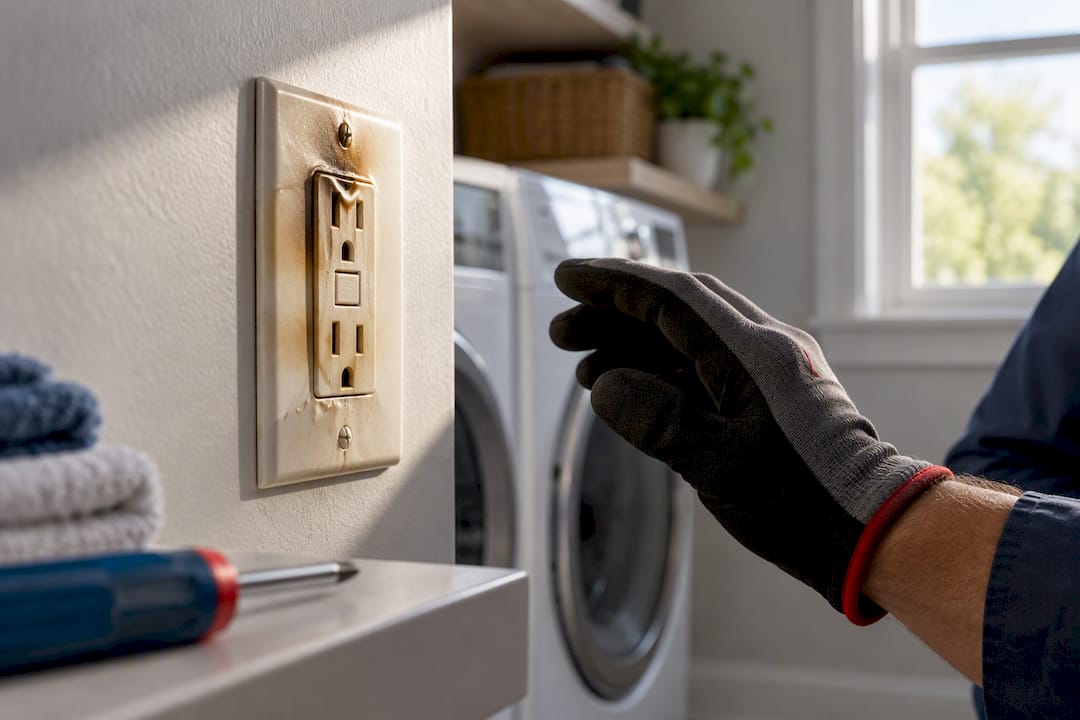
Stop and call a licensed electrician if you smell burning, see discolored or melted outlet covers, notice exposed wiring, or if a reset simply will not hold no matter what you unplug. Those are not troubleshooting steps. Those are stop-touching-it-and-call signs. For a broader rundown of what typically goes wrong in home wiring beyond GFCI issues, this electrical troubleshooting guide covers the common failure points electricians see across Texas service calls.
Do You Need a Permit, and Which Rules Actually Apply?
State code sets the floor, not the ceiling. Texas municipalities retain the authority to adopt stricter local amendments under NEC 90.4, so the rule that governs your specific address might be tighter than the statewide baseline.
The general rule of thumb: if your project requires a permit, the code edition in effect on the date the permit was issued usually controls the work. If no permit is required, the edition in effect the day the electrician begins installing materials applies instead. That timing detail matters more during an adoption transition, like the current shift toward the 2026 NEC, than at almost any other point in the code cycle.
Before starting any GFCI-related repair or installation, confirm the local rules directly:
- Call your city or county building/inspections department and ask whether local amendments apply to electrical work.
- Ask specifically about GFCI and outdoor HVAC outlet rules, since the state’s limited exception may or may not carry through to your municipality’s amendments.
- Have your property address, a description of the scope of work, and photos of the receptacle or panel ready before you call.
- Ask how inspections get scheduled and what documentation the inspector will want on-site.
TDLR’s own compliance guidance is direct on this point: local licensing and inspecting authorities handle the inspections tied to local permits, and TDLR provides technical assistance rather than performing those inspections itself. When you are correcting older wiring to bring it up to current code, a code correction service that already handles local permit coordination saves you the back-and-forth of figuring out who to call first.
A Field Perspective on GFCI Safety in Texas Homes
Texas throws specific problems at GFCI devices that milder climates rarely see. Humidity swings, irrigation systems that spray directly onto exterior outlets, and long, hot summers that degrade weatherproof covers faster than manufacturers expect all show up repeatedly in service calls across Xtreme Air Services’s coverage area.
Grounding and bonding deserve more attention than they get, even on circuits where a state exception might technically excuse GFCI protection. A device only works correctly when the underlying ground path is solid, which is exactly what TDLR’s technical bulletins on grounding electrodes address. A proper service visit typically includes testing every existing GFCI device, checking grounding and bonding at the panel, and documenting anything that needs correction before it becomes a real estate inspection surprise.
— Xtreme
Get Your GFCI Wiring Inspected and Brought Up to Code
Reading the code is one thing. Knowing whether your specific panel, garage, or pool outlet actually meets it is another, and that gap is exactly where a licensed electrician earns their visit. Technicians are licensed, insured, background-checked, and available same-day with no extra charge for after-hours or weekend calls, so a tripping GFCI at 8 PM on a Saturday does not have to wait until Monday.

A typical service visit covers a full test of every existing GFCI device in the home, a check of grounding and bonding at the panel, and a written estimate before any work begins. That documentation also comes in handy if you are prepping for a real estate inspection or need proof of code-compliant work for a permit. If you already know a panel is outdated or a garage outlet has never had protection, Residential Electrical Services covers GFCI installation, panel repairs and upgrades, and full home rewiring backed by a 100% satisfaction guarantee. Book a visit through that page and get a straight answer on what your home actually needs, not just what the code technically requires.
Sources
- Commission Adopts Rules | TDLR News and Updates
- TREC online Standards of Practice / inspector SOP materials
FAQ
Where Is a GFCI Required by Code?
The NEC requires GFCI protection in bathrooms, kitchens near sinks, garages, outdoor and deck receptacles, crawlspaces, unfinished basements, and areas near pools and spas. Texas enforces this baseline statewide, with a limited exception for certain outdoor HVAC outlets added in the most recent adoption.
What Are the GFCI Requirements for 2026 According to the NEC?
The requirements largely mirror prior editions for standard living spaces, but the 2026 NEC as adopted in Texas includes a specific carve-out for certain outdoor HVAC outlets that previous editions treated differently. Anyone wiring a rooftop or pad-mounted condenser circuit should check the exact scope of that state exception before assuming standard rules apply.
What NEC Code Is Texas Using?
Texas currently enforces the 2026 National Electrical Code, adopted by the Texas Commission of Licensing and Regulation. Which edition actually governs a specific job depends on permit timing: the code in effect at permit issuance usually controls, and the code in effect when work begins applies if no permit is required.
Does a Bathroom Need a 15 or 20 Amp GFCI?
Bathroom receptacles need GFCI protection regardless of whether the circuit is rated 15 or 20 amps. The amperage affects the breaker and wiring size, not whether GFCI protection is required.
Who Enforces GFCI Requirements in Texas, and What Happens If a Home Is Non-Compliant?
TDLR sets and adopts the statewide electrical code, while local building departments handle permits and inspections tied to that code. A non-compliant GFCI found during a real estate transaction typically becomes a repair item negotiated between buyer and seller rather than a legal penalty, though unpermitted work discovered later can complicate a sale or refinance.