


Emergency / No-Heat Furnace Repair in Fort Worth
When the heat quits, know whether it's an emergency tonight or can wait until morning – and what a repair visit involves.
What’s Covered on This Page
- Check These Things Before You Call
- What Causes a No-Heat Emergency
- What Happens During an Emergency Repair Visit
- What an Emergency Furnace Repair Costs
- Questions Worth Asking Before You Hire Anyone
- How long will I be without heat once I call for an emergency repair?
- Is it safe to keep running my furnace if it smells like something is burning?
- My furnace keeps shutting off after a few minutes. Is that an easy fix?
Check These Things Before You Call
A cold front can drop through Fort Worth overnight and leave your house chilly by morning. Your first thought is to grab the phone, and that’s fair. Before you do, take a few minutes with the checks below. If one of them fixes it, you don’t need a technician, and we’d rather you keep your money.
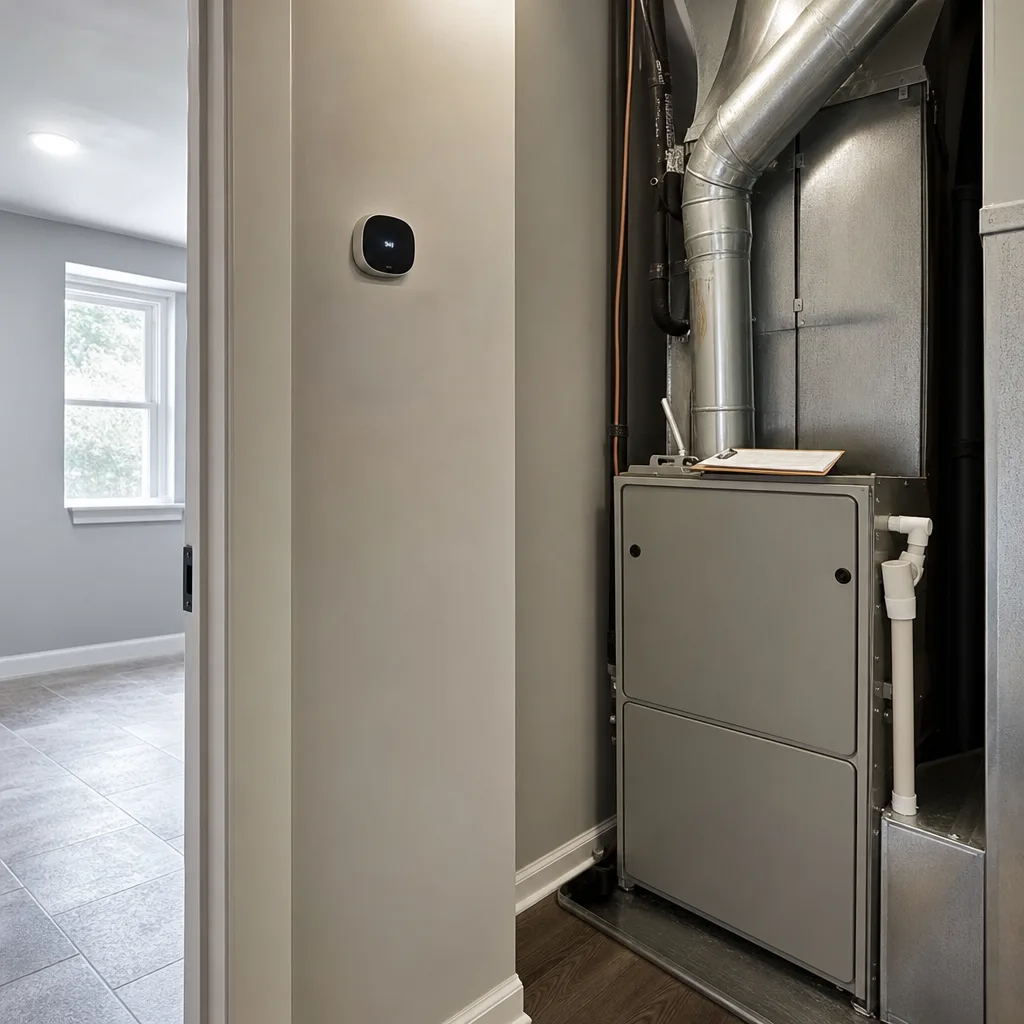
- The thermostat. Make sure it’s set to Heat, not Cool or Off, and set a few degrees above the room temperature. If the screen is blank and it runs on batteries, put in fresh ones. After a long Texas cooling season, it’s easy to forget the switch never got flipped back.
- The breaker and the furnace switch. Look in your electrical panel for a tripped furnace breaker. Push it all the way off, then back on. Also look for a switch on or near the furnace that looks like a regular light switch. These get bumped off more than you’d think, especially when the furnace sits in a closet or the attic.
- The furnace door. The blower compartment door has a small safety switch behind it. If the panel isn’t pushed in snug, the furnace won’t run. This happens a lot right after someone changes the filter.
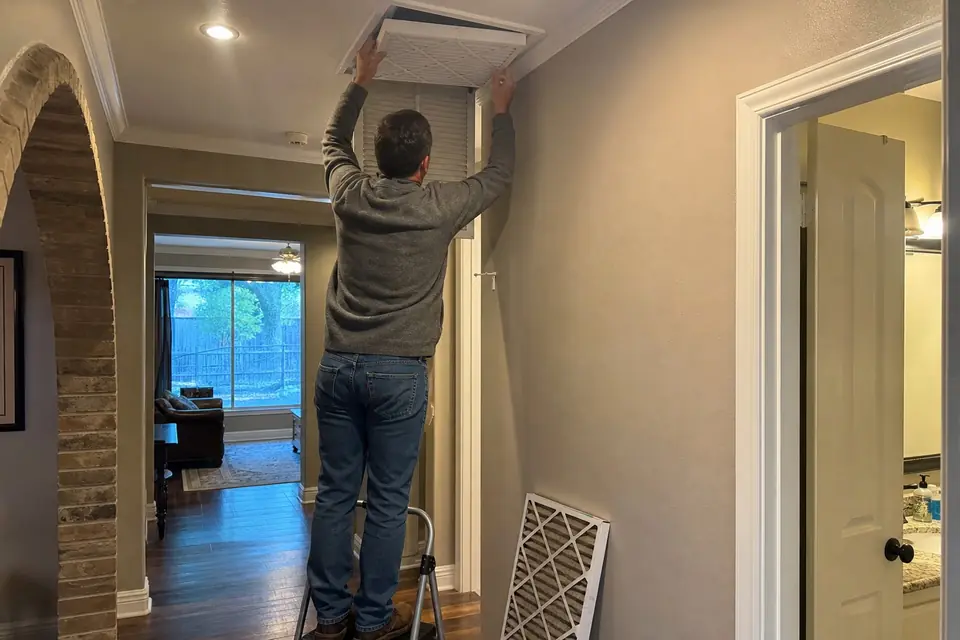
- The air filter. A clogged filter can make a furnace run too hot and shut itself off. Pull it out. If it’s gray and caked, swap in a clean one. In some homes the filter sits behind a return grille in a hallway wall or ceiling instead of at the furnace.
- A little patience. After you reset something, give the furnace several minutes. Most furnaces have a short startup delay before the blower kicks on.
In a lot of North Texas homes the furnace sits in the attic. If it’s late, you’re not steady on a ladder, or the pull-down stairs feel sketchy, skip the attic checks. Being cold for a few hours beats taking a fall.
Stop checking and call if you notice any of these:
- The furnace clicks or hums but never lights.
- It lights, then shuts off within a minute or two, again and again.
- The breaker trips again after you reset it. Leave it off.
- You smell something burning or electrical.
- A small light on the furnace keeps blinking in a pattern.
Those signs usually point to a failed part, like an ignitor, a flame sensor, or a control board. Resetting the furnace over and over won’t fix a worn-out part, and it can make the real problem harder to track down.
One helpful tip: if a light is blinking, count the blinks before you call. Many furnaces have a code chart printed on the inside of the panel door. Tell us what you saw and what you already checked. That gives the technician a head start before they even get to your door.
What Causes a No-Heat Emergency
If the quick checks above didn’t bring your heat back, the problem is inside the furnace. That sounds worse than it usually is. Most of our no-heat calls come down to a single common failure, and we fix it on the first visit.
Timing plays a big part. In North Texas, your furnace can sit unused from spring until the first cold front in the fall. During those months, dust settles on the burners and sensors. If the furnace is in the attic, it also sits through months of summer heat, which can wear on wiring and electronic parts. Then the temperature drops overnight, you turn on the heat, and a part that was already weak finally gives out.
These are the parts that fail most often, along with what you may have noticed:
- Flame sensor. This thin metal rod tells the furnace the burners are lit. When it gets coated with grime, the furnace lights and then shuts off within seconds. A cleaning often fixes it, so you may not need a new part.
- Ignitor. On most newer gas furnaces, the ignitor glows red-hot to light the gas. It’s brittle and can crack with age. When it fails, you’ll hear the furnace click or hum, but no flame appears.
- Inducer motor and pressure switch. Before the burners light, a small fan pushes old exhaust out of the furnace. A switch checks that the fan is working. If the motor is weak or the small hose to the switch is blocked, the furnace won’t light at all.
- Clogged drain line. High-efficiency furnaces produce water and drain it away. If that line clogs, water backs up and the furnace shuts itself down to stay safe.
- Blower motor or capacitor. The capacitor is a small part that gives the motor a boost to get it started. If either one fails, the burners may light but no warm air reaches your vents. The furnace can also overheat and shut off.
- Control board. This is the furnace’s brain. Storm power surges and age can damage it. If you counted blinking lights earlier, those codes often point straight to the problem.
- Electric furnace parts. Electric furnaces don’t burn gas. They use heating elements, plus relays that switch those elements on. When one fails, you’ll often get weak heat or no heat at all.
Sometimes the job is bigger. Two parts may have failed at the same time, or an older furnace may have a problem with a major component like the gas valve or the heat exchanger. The heat exchanger is the metal chamber that keeps burner exhaust separate from the air you breathe. You should know which kind of repair you’re dealing with before any work starts. That’s why our technicians find the failed part first and give you upfront flat-rate pricing to approve. No meter running, and no surprises.
If your furnace has a few years on it, you can also ask for carbon monoxide testing or a furnace safety inspection while the technician is already there. It’s a simple way to make sure the repair gets your heat back on and your home stays safe for the rest of the winter.
What Happens During an Emergency Repair Visit
When your house is cold, you don’t want a mystery. You want to know who’s coming, what they’ll do, and what it’ll cost before anything gets fixed. Here’s how an emergency no-heat visit goes with Xtreme Air Services, start to finish.
It starts with a phone call. We answer around the clock, so you’ll talk to a real person, not a voicemail box. Tell us what you already checked and anything you noticed, like a blinking light, a click with no flame, or a burner that lights and quits. Same-day service is available, and there’s no extra charge for nights or weekends. A furnace that dies at 10 p.m. on a Saturday costs the same to fix as one that quits on a Tuesday morning.
The person who shows up is a licensed technician who has been background-checked and drug-tested. That matters when someone is walking through your hallway or climbing into your attic while your kids are asleep. We’ll treat your home like family’s.
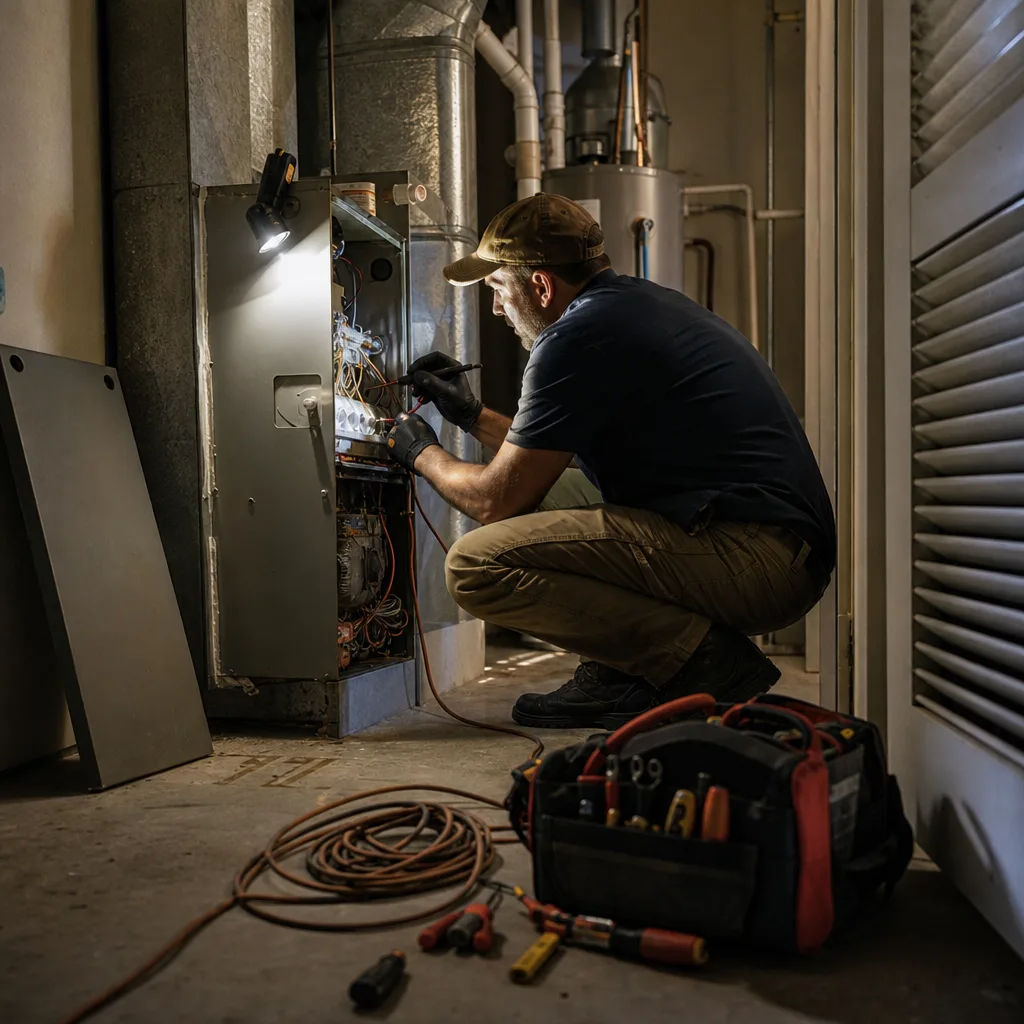
Here’s what happens once they’re at your furnace:
- Find the failed part. The technician tracks down what stopped your heat, instead of guessing or swapping parts until something works.
- Show you the price first. You get the upfront flat-rate price and decide whether to go ahead. Nothing gets fixed until you say yes.
- Repair or replace the part. Most calls come down to a single common failure, and it’s fixed on the first visit.
- Verify it runs correctly. The technician tests the system to make sure your furnace is heating the way it should, not just running for a minute.
- Clean up. Testing and cleanup are part of the job, so you’re not left with a mess by the furnace.
Here’s how the money works. The service-call fee is $26 to $99, and it’s credited toward the repair if you go ahead with us. Our most common emergency no-heat repair runs $200 to $525. Across all no-heat repairs, the typical range is $200 to $900. That price covers diagnosis, labor, the standard replacement part, testing, and cleanup.
What moves the number up or down? Mostly how far the failure goes, what the part costs and whether it’s easy to get, and your furnace’s age and brand. It also matters whether more than one part has failed. Extra failed parts, major components, code upgrades, and permits aren’t part of the standard repair. If your furnace needs any of them, you’ll get a separate quote first, so you can decide with the full picture in front of you.
Most no-heat repairs are small enough that you won’t need financing. If yours turns into a larger repair or a replacement, financing is available. You won’t have to choose between a warm house and your budget that night.
The goal of the visit is simple. Your heat comes back on, you know exactly what was fixed, and the bill matches the price you approved.
Call 817-677-1907
Have questions? We’re happy to help.
Call Today, Get Service Today. Xtreme Air Services — Fort Worth is ready to help.
What an Emergency Furnace Repair Costs
You’ve already seen our numbers above. This part is about something just as useful: how to tell if any furnace repair quote is fair, whether it comes from us or someone else. When you’re cold at midnight, it’s easy to say yes to the first price you hear. A few minutes of knowing how pricing works can save you from a bill you didn’t see coming.
Contractors usually price repairs one of two ways. With hourly pricing, you pay for the technician’s time plus parts. The clock runs while they find the problem, and sometimes while they drive to a supply house. You won’t know the final bill until the work is done. With flat-rate pricing, the price is set for the job itself. You hear the number before any work starts, and it doesn’t change if the repair takes longer than expected. That’s why we use upfront flat-rate pricing. Nobody should have to watch a clock while their kids sleep in sweatshirts.
After-hours charges are the other big surprise in this trade. Many companies add extra for nights, weekends, or holidays. In Fort Worth, furnaces tend to quit when a cold front blows through overnight, so that extra fee hits right when you need help most. Ask about it before anyone heads your way. We don’t charge extra for nights or weekends.
Before you let anyone start work, ask these questions:
- Is this a flat-rate price or an hourly estimate?
- Is there an extra charge for coming out at night or on the weekend?
- Does the service-call fee count toward the repair if I go ahead?
- Does the price cover the part, labor, testing, and cleanup?
- If you find a second problem, will you stop and quote it before fixing it?
- Are you licensed? In Texas, HVAC contractors are licensed by the Texas Department of Licensing and Regulation (TDLR). Our HVAC license number is TACLA29023C.
A clear answer to each one is a good sign. If the answers are fuzzy, that’s your cue to slow down.
Sometimes the real question is whether to repair at all. If one small part fails on a furnace that otherwise works well, like a cracked ignitor or a dirty flame sensor, a repair almost always makes sense. The math changes when a major part like the heat exchanger fails on an older furnace, or when you’ve paid for repairs two winters in a row. Then it’s fair to ask the technician to walk you through both options: what the repair costs and what furnace replacement would look like. A good technician lays out both and lets you decide. If you do go the replacement route, financing is available for larger jobs like that.
Here’s an example. Your attic furnace clicks but won’t light on a Friday night. One company quotes an hourly rate plus an after-hours fee, with the total “depending on what we find.” Another gives you a set price for the ignitor before touching anything. Even if both fix the same part, only one of them lets you know what you’re paying before you say yes.
Watch Our Video
See How We Handle Emergency / no-heat furnace repair in Fort Worth
Xtreme Air Services — Fort Worth
Questions Worth Asking Before You Hire Anyone
The price questions above protect your wallet. These protect the rest of your night. They help you tell whether a company will find the cause, send someone you’re comfortable letting in, and leave your furnace safe and running. You can ask every one of them over the phone in under five minutes.
- Who is coming to my house? Ask whether it’s the company’s own technician and whether that person has been background-checked. At 11 p.m., with your family asleep down the hall, you should know who’s at the door.
- Are you insured? If your furnace is in the attic, someone will be crawling over your ceiling joists. A slip or a broken ceiling is the company’s problem only if they carry insurance.
- Do you work on my kind of system? Gas furnaces, electric furnaces, and heat pumps fail in different ways. Tell them what you have and listen for a clear yes.
- Will you fix the cause or just the symptom? A dirty flame sensor can be cleaned in minutes. But if a clogged filter or a blocked drain line made the furnace overheat, the same shutdown can come back the next cold night. A good technician tells you why the part failed, not just that it did.
- Can you show me the old part? A cracked ignitor or a burnt wire is easy to see. You don’t need to understand it all. You just want proof the part really failed.
- If the part isn’t on the truck, what then? Part availability affects both cost and timing. Ask how long it takes to get the part, and whether they can get the heat running safely in the meantime.
- Is my furnace safe to run when you leave? If the technician has any doubt about something like the heat exchanger, you want them to say so plainly. Don’t let anyone get the heat back on just to finish the job.
Here’s a simple test. Say your furnace lights and shuts off every couple of minutes. One technician cleans the flame sensor, runs the furnace once, and heads out. Another cleans it, asks when you last changed the filter, checks the drain line, and watches the furnace finish a full heating cycle before calling it done. Both did the same repair. Only one of them made sure you won’t be calling back on Sunday.
Those are the answers we’d want for our own family, so we’re happy to give them. Our technicians are licensed and insured, background-checked, and drug-tested. Xtreme Air Services is a Trane Comfort Specialist with a 4.8-star reputation across more than 2,900 reviews on Google, Angi, and HomeAdvisor, and our Fort Worth office is on Main Street downtown. Ask us anything on the list. You’ll get a straight answer from a real person.
Call 817-677-1907
Frequently Asked Questions
Common questions about Emergency / no-heat furnace repair
How long will I be without heat once I call for an emergency repair?
Most no-heat calls get fixed the same day, since a single failed part like a flame sensor or ignitor is usually the cause. Same-day service is available all week, including nights and weekends, with no extra charge for after-hours visits. Once the technician finds the failed part, repairs are typically done in one visit.
Is it safe to keep running my furnace if it smells like something is burning?
No, stop and shut it off right away if you smell burning or anything electrical. That smell can mean a wiring problem or an overheating part, and running the furnace longer can turn a repair into a bigger, costlier fix. Call for emergency service instead of resetting it again.
My furnace keeps shutting off after a few minutes. Is that an easy fix?
Often yes, this points to a dirty flame sensor, which can be cleaned in minutes during a single visit. But the same shutdown can come back if a clogged filter or blocked drain line caused the furnace to overheat in the first place. A thorough technician checks for the root cause, not just the symptom, so you don’t end up calling again on a cold night.
Ready to Get Started?
Call (817) 677-1907 Today, Get Service Today.