


Furnace Replacement in Plano: Know When to Replace and What It Involves
An honest way to tell if your furnace is worth one more repair, and what a full replacement includes.
What’s Covered on This Page
- Repair or Replace: How to Decide
- Signs You Can Wait vs. Signs to Act Now
- What a Standard Furnace Replacement Includes
- Furnace Replacement Cost Factors in Plano
- Permits and Licensing for Furnace Replacement
- How long does a furnace last before I should plan on replacing it?
- Can I replace just the furnace, or do I need to replace the AC at the same time?
- Will a furnace replacement take care of cold rooms in my house?
- Do I need to be home for the furnace inspection after installation?
Repair or Replace: How to Decide
Here’s the honest truth. A lot of furnaces that stop working don’t need to be replaced. A furnace is a group of parts, and many of those parts can be swapped out on their own. If one small part quit on a furnace that’s otherwise solid, paying for a whole new system doesn’t make sense.
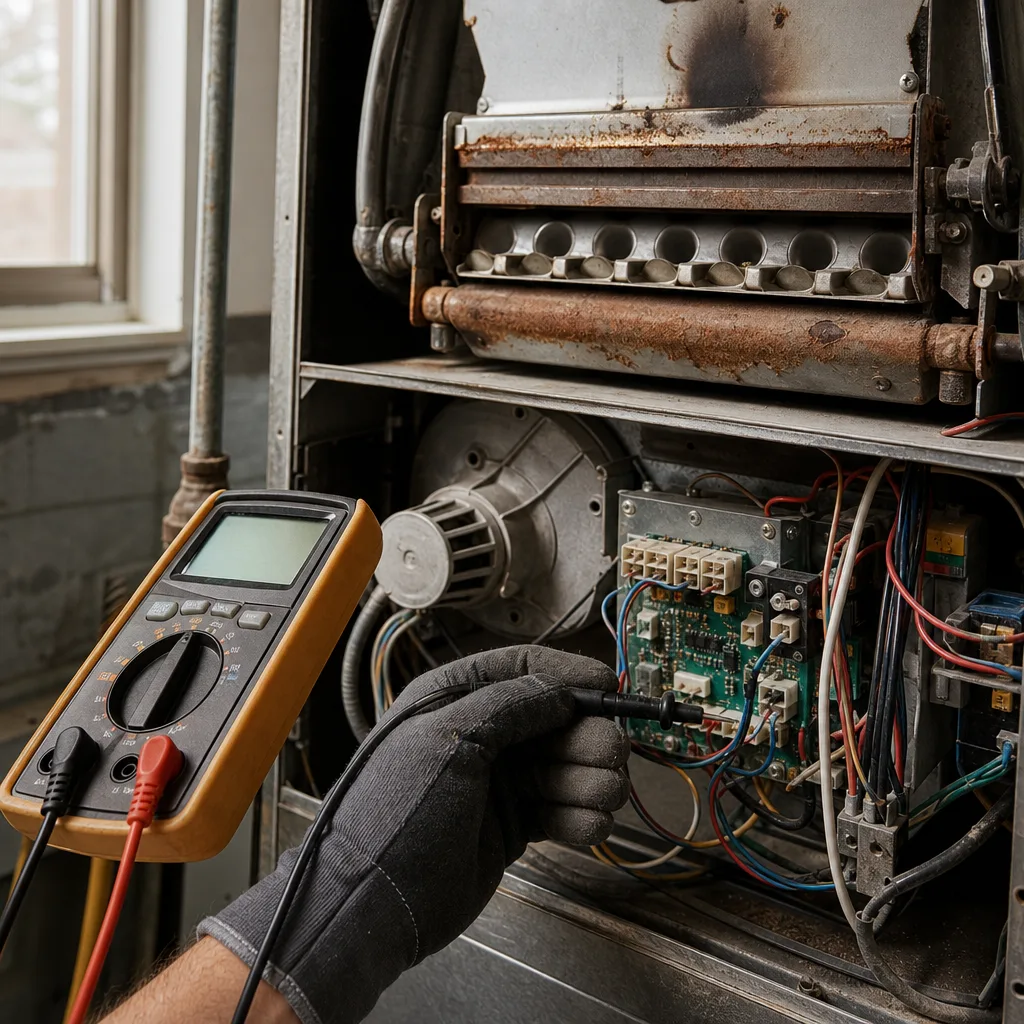
These problems usually point to a repair, not a replacement:
- The burners won’t light because the ignitor wore out.
- The furnace starts, then shuts off fast. A dirty flame sensor can cause this, and it often only needs cleaning.
- The blower is noisy or won’t spin, but the rest of the furnace runs fine.
- A control board failed on a furnace that has run well up to now.
- The thermostat isn’t telling the furnace to turn on at all.
If that sounds like your situation, a repair is probably the smart move. You don’t need a sales pitch for a new system.
Replacement starts to make more sense when you see a pattern instead of one bad day:
- You’ve paid for several repairs in the last few winters, and another one is coming.
- The furnace runs and runs but some rooms never warm up, even after the ducts and filter check out.
- A technician finds a crack or damage in the heat exchanger. That’s the part that keeps fumes separate from the air you breathe.
- The repair on the table would cost a big share of what a new furnace costs.
- Your gas bills keep climbing even though you use the heat the same way.
Plano winters make this choice a little tricky. Most of the season is mild, so an old furnace can limp along for weeks and seem fine. Then a hard North Texas cold front blows in, the furnace runs nonstop for days, and the weak part finally gives out on the coldest night. If your furnace already needed help last winter, think about this before the next freeze, not during it.
A simple test helps. Ask yourself whether you’d buy this furnace again today if it came with this repair bill. If the answer is yes, fix it. If you’d hesitate, look at replacement.
When we look at your furnace, we tell you what failed and why, and we give you upfront pricing before any work starts. If a repair makes sense, we’ll say so. Our service-call fee is $26-$99, and it’s credited toward the repair if you go ahead with Xtreme Air Services. You won’t pay twice just to find out what’s wrong.
If replacement is the better call, you’ll see that price too, so you can compare the two choices and pick the one that fits your home and your budget. Whatever you decide, it’s your decision.
Signs You Can Wait vs. Signs to Act Now
Not every aging furnace is an emergency. Some can run safely while you plan. Others shouldn’t run another night. Knowing which one you have lets you make a calm choice instead of a rushed one.
It’s usually fine to take your time and plan a replacement when you notice these signs:
- Your home still gets warm, but the furnace takes longer than it used to.
- The furnace is getting older, but it hasn’t needed a string of repairs.
- Your gas bills have crept up a little over a few winters.
- You’re thinking ahead because you just bought the house and don’t know the furnace’s history.
- The weather is still mild, and you’d like to replace it before the next cold snap.
If that’s you, waiting is a good thing. You have time to get a clear quote, ask questions, and think about efficiency. You can also look at financing, which is available on qualifying installations on approved credit. Planning ahead also means you pick the day the old furnace comes out, so you’re not left in a cold house waiting on new equipment.
Some signs mean you shouldn’t sit on it:
- Your carbon monoxide alarm goes off, or you smell gas near the furnace.
- You see soot, black streaks, or scorch marks around the furnace or its vent.
- The burner flame looks lazy, yellow, or flickering instead of a steady blue.
- A technician has already flagged damage to the heat exchanger, the safety issue covered above.
- The furnace shuts down again and again, and a hard freeze is in the forecast.
- Your home can’t stay at a safe, livable temperature, especially if you have babies, older family members, or anyone with health concerns at home.
The first few items on that list are safety issues first and a replacement question second. Get the gas and fumes question answered before anything else. We offer carbon monoxide testing and furnace safety inspections, so you’ll know whether your furnace is safe to run.
Plano’s weather is what makes timing matter. Most winter days here are easy on a furnace. That’s why a weak system can seem fine through December. Then a strong North Texas cold front rolls in, the temperature drops fast, and the furnace has to run hard for days. A furnace that was barely getting by often fails right then, when the whole area needs heat and you have the fewest choices.
Here’s a common picture. Your furnace kept the house at 68 all fall. Then the first real freeze hits, and the thermostat stalls at 62 while the furnace runs all night. That’s your furnace telling you it can’t handle peak demand. If you see that early in the season, treat it as a sign to plan now, not to wait for the next front.
If you’re not sure which list you’re on, that’s normal. Having a technician look it over gives you a straight answer, so you can decide what to do with your home and your budget in mind.
What a Standard Furnace Replacement Includes
Once you’ve decided to replace, the next question is simple. What am I paying for? You should know that before anyone pulls the old furnace out. A clear scope is what keeps a quote from growing halfway through the job.
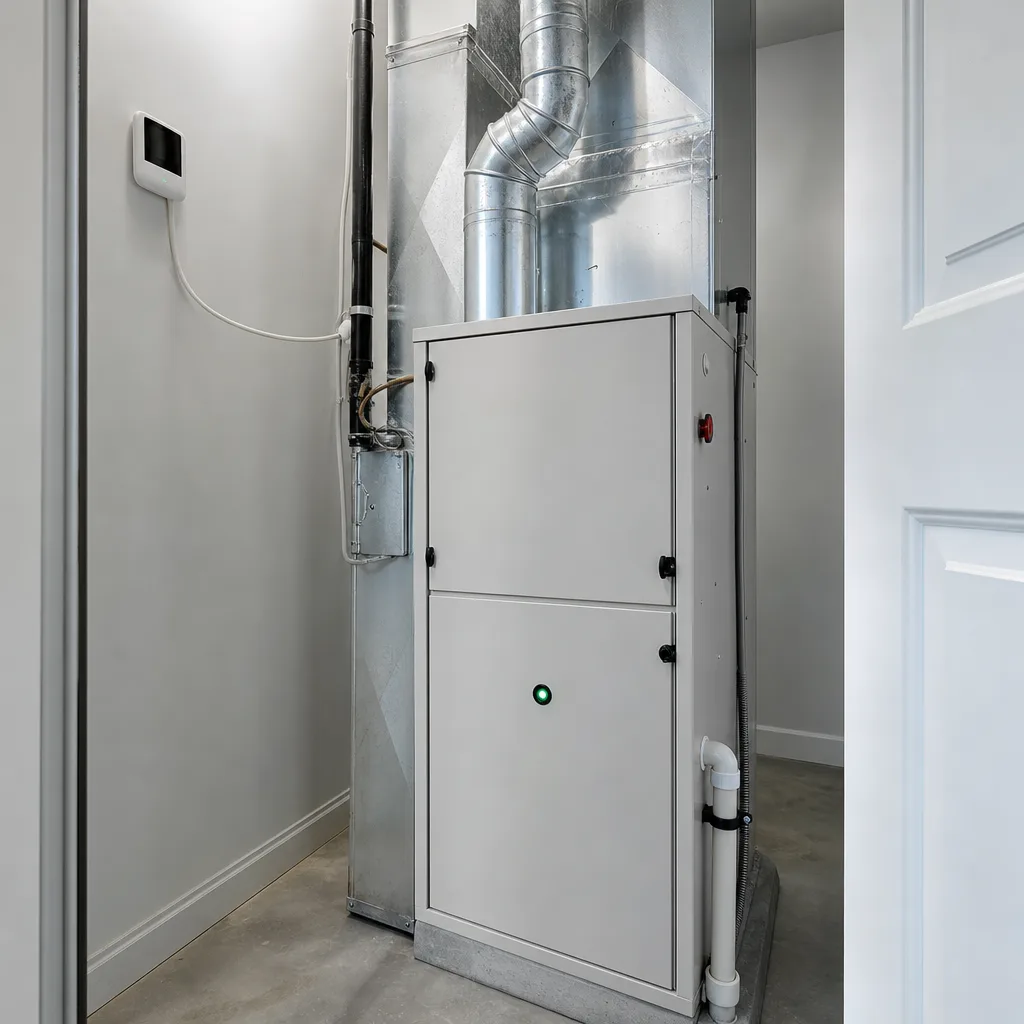
Our most common job is a standard like-for-like furnace replacement. That means the new furnace uses your existing connections, with no major modifications. That job runs $4,600-$6,300. Our typical price range for furnace replacement is $3,800-$8,000, depending on your home and the equipment you choose.
Here’s what a standard replacement includes:
- The new furnace and the materials needed to install it
- Professional installation
- Standard connections to your existing setup
- Startup and testing, so the new furnace is fired up and checked before the job is done
- Haul-away of your old unit, so it isn’t left in your garage or yard
Here’s what isn’t included unless your quote says so: changes to ductwork, electrical, or plumbing, code corrections, and permits. These aren’t hidden extras. They depend on your house, and nobody can price them without looking. If your home needs any of them, you should see them listed on your quote before work starts, not on a surprise bill after.
So why can two Plano homes with the same size house get different prices? A few things move the number:
- Size and capacity. The furnace has to match how much heat your home needs. A bigger home or a bigger unit costs more.
- Efficiency. Furnaces carry an AFUE rating, which tells you how much of the gas you pay for turns into heat for your home. A higher number means less waste and lower gas bills, but the furnace costs more up front.
- Brand and model. Features like quieter, variable-speed blowers that spread heat more evenly add to the price.
- Ease of access. Many North Texas homes have the furnace up in the attic. A tight attic with a narrow opening takes more time and care than a furnace sitting in a hall closet or garage.
- Condition of what’s already there. Old ductwork, wiring, or gas piping that’s worn out or doesn’t fit the new unit can add work.
- Code upgrades and permits. Older installs sometimes need updates to meet current code.
- Custom fabrication. If the new furnace doesn’t line up with your existing ducts, metal pieces may need to be made to fit.
Before you hire anyone, for this job or any other, ask a few plain questions. Does this price include the permit? Will my ducts, wiring, or gas line need changes, and what will those cost? Is haul-away of the old furnace included? Is the furnace sized for my home, or just matched to the old one? A good contractor will answer every one of these without hesitating.
That’s how we price it too. You get upfront flat-rate pricing that spells out what’s in and what’s out, and you approve it before any work starts. If your furnace swap is a straight like-for-like job, you’ll know it. If your home needs more, you’ll know that too, and why.
Not sure what your Furnace replacement project needs? Ask us.
Call Today, Get Service Today. Xtreme Air Services — North Plano is ready to help.
Furnace Replacement Cost Factors in Plano
You’ve seen what a standard swap includes and what pushes a quote up or down. In a Plano home, a few of those choices matter more than they would up north. Getting them right is how you avoid paying for things you don’t need and skipping things you do.
Start with efficiency. A higher AFUE furnace wastes less gas, but it costs more up front. How fast that extra cost pays you back depends on how many hours your furnace runs. In a cold northern state, a furnace runs hard for months. Here, most winter days are mild, so your furnace runs far fewer hours, and the savings add up slower. That doesn’t mean high efficiency is a bad pick. It means you should ask how long the payback takes for your home, not just how much you’ll save each year.
High-efficiency furnaces can also change the install itself. Furnaces in the 90 percent and up range make water as they run. They need a drain line for that water, and they usually vent through plastic pipe instead of the old metal flue. If your current furnace sits in the attic, adding a drain and new venting up there is real work. That kind of change falls outside a like-for-like job, so it should show up on your quote as its own line.
Your air conditioner is part of this decision too. In most North Texas homes, the furnace and the AC work as a team. The furnace blower pushes the cool air in summer, and the indoor AC coil usually sits right on top of the furnace. That’s why a new furnace can affect your summer comfort, not just your winter heat.
- If your AC is newer and working well, a furnace-only swap often makes sense. Ask whether the new furnace will work properly with your existing coil and outdoor unit.
- If your AC is old too, it’s worth pricing both together. One install visit can mean less labor than two separate jobs a few years apart.
- If summer humidity bugs you, ask about a variable-speed blower. It can run slower and longer, which pulls more moisture out of the air when the AC is on.
Sizing is the last big one. Your old furnace may not be the right size anymore. If you’ve added insulation, swapped out windows, or finished a room since it went in, your home may need less heat or more. A furnace that’s too big turns on and off in short bursts. That wastes gas, wears out parts, and leaves some rooms cold. One that’s too small runs nonstop on the coldest nights. A load calculation looks at your actual house, so you don’t pay for size you’ll never use.
Here’s a simple way to think about the whole quote. Pay for what fits how your home is really used. That might mean a mid-range furnace that matches your AC, or a high-efficiency unit if the venting works out. It might mean a smaller unit than the old one. If a bigger project makes sense, financing is available on qualifying installations, on approved credit, so the right choice doesn’t have to wait.
Watch Our Video
See How We Handle Furnace replacement in Plano
Xtreme Air Services — North Plano
Permits and Licensing for Furnace Replacement
A new furnace isn’t just a box that gets swapped out. It connects to your gas line, your electrical, and a vent that carries exhaust out of your home. That’s why the paperwork matters. A permit and a licensed installer are how you know those connections were done right and checked by someone who doesn’t work for the contractor.
Most cities in North Texas expect a permit when a gas furnace gets replaced, and Plano homeowners should plan on that too. Ask your contractor to confirm what the City of Plano requires for your address. Once the furnace is in, an inspector can check the parts that affect your family’s safety, like the gas connection, the venting, and how the furnace gets the air it needs to burn cleanly. If something’s off, it gets fixed while the installer is still responsible for it.
A permit helps you later too. When you sell your home, a buyer’s inspector may ask about work done on major systems. A permitted, inspected furnace is one less question to answer. An unpermitted one can slow down a sale or leave you paying to fix it after the fact.
As mentioned in the pricing section, permits aren’t part of a standard quote unless they’re listed. That’s not a trick. It just means you should see the permit spelled out on your quote, with a clear answer on who’s pulling it.
In Texas, HVAC contractors are licensed through the Texas Department of Licensing and Regulation, also called TDLR. You can look up any contractor’s license on the TDLR website in a couple of minutes. Our HVAC license number is TACLA29023C. We’re glad for you to check it.
A furnace job can also touch gas piping and wiring. If your new furnace needs changes to either one, you want people licensed for that work handling it. Because our team covers HVAC, plumbing, and electrical, including a master plumber, you’re not stuck coordinating three different companies to finish one furnace.
Before you hire anyone, ask these questions:
- What’s your TDLR license number, and is it in your company’s name?
- Who pulls the permit, you or me?
- Is the permit included in this price, or is it a separate line?
- Will there be an inspection, and do I need to be home for it?
- If my gas line or wiring needs changes, who does that work?
Watch for a few red flags. If someone offers to skip the permit to save you money, can’t give you a license number, or wants cash only with nothing in writing, walk away. A lower price today isn’t worth a gas connection nobody checked.
We’re licensed and insured, and we’ll tell you up front what your job needs on the permit side. You’ll know who’s handling it before work starts, so nothing about your new furnace is left to guesswork.
Frequently Asked Questions
Common questions about Furnace replacement
How long does a furnace last before I should plan on replacing it?
Most furnaces last 15-20 years with regular care, but Plano’s pattern of mild days followed by hard freezes can wear parts faster than in steadier climates. If your furnace is already in that age range and has needed repairs the last couple winters, it’s smart to plan replacement before the next cold front instead of waiting for a breakdown on the coldest night.
Can I replace just the furnace, or do I need to replace the AC at the same time?
You can usually replace just the furnace if your air conditioner is newer and running well. Since the furnace blower and the AC coil work as a team in most North Texas homes, ask whether your new furnace will pair properly with your existing coil and outdoor unit before you decide.
Will a furnace replacement take care of cold rooms in my house?
Not always. Cold rooms are often caused by duct issues or a furnace that’s the wrong size for your home, not just an aging unit. A load calculation that looks at your actual house helps make sure the new furnace is sized to heat every room evenly, instead of just matching the old unit’s capacity.
Do I need to be home for the furnace inspection after installation?
That depends on the City of Plano’s process for your address, so it’s worth asking your installer directly. Since a permitted furnace install includes an inspection of the gas connection and venting, confirm ahead of time whether you need to be present when the inspector comes by.
Ready to Get Started?
Call (469) 527-5131 Today, Get Service Today.