


Cooling Tower Installation in Frisco: What Commercial Building Owners Should Know
Cooling tower installs for commercial chilled-water plants, with the permit and mechanical code requirements explained.
What’s Covered on This Page
- Cooling Tower Installation Is a Commercial Chilled-Water Project, Not a Residential Repair
- Signs a Building Needs a New or Replacement Cooling Tower
- What Happens During a Cooling Tower Installation
- Permits and Mechanical Code Requirements for Commercial Cooling Towers
- What’s Included in a Cooling Tower Installation Project
- Can a cooling tower run while the chiller is being serviced separately?
- What happens to the water that drains out during blowdown?
- Can I keep running an old cooling tower while I plan a replacement?
Cooling Tower Installation Is a Commercial Chilled-Water Project, Not a Residential Repair
Let’s clear this up first, because it saves you time. Cooling tower installation is part of a big building’s central cooling plant. It isn’t something that goes on a house, and it isn’t a quick repair.
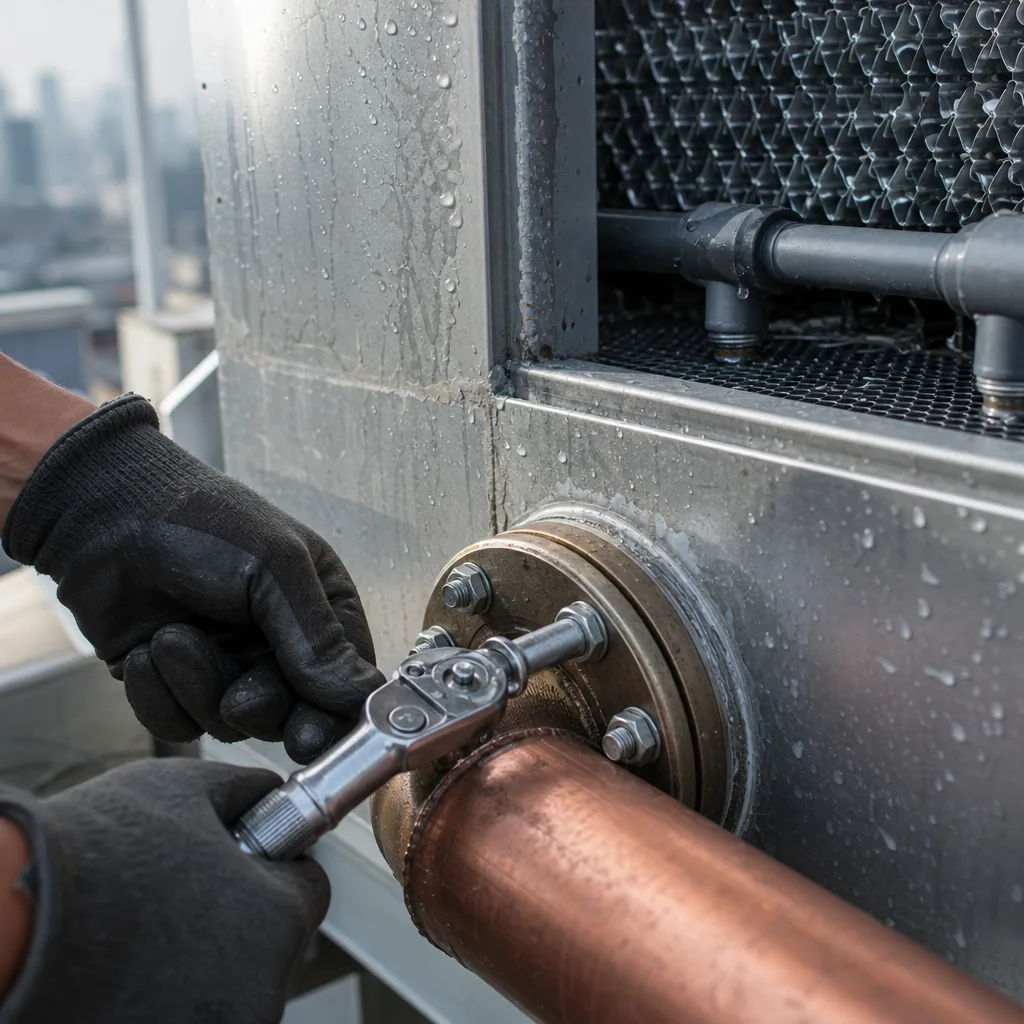
Here’s how it works in plain English. A water-cooled chiller makes cold water that cools the building. That chiller picks up heat, and the heat has to go somewhere. Warm water carries it out to the cooling tower on the roof or the ground. Inside the tower, a fan pulls air across the water while a small part of it evaporates, and that cools the rest. The cooled water then goes back to the chiller to do it again. The tower, chiller, pumps, and piping all work as one system, so the tower has to be sized to match the rest of your plant.
A home AC works differently. The outdoor unit beside your house has its own fan and coil that push heat straight into the air. There’s no tower and no chiller, and no water loop is involved.
- You likely need cooling tower installation if your building runs a water-cooled chiller and the tower is worn out, too small for a new chiller, or part of a building expansion.
- You may also need it if you’re putting in a new central plant or adding process cooling for equipment that has to stay at a steady temperature.
- Skip it if you’re a homeowner whose AC is blowing warm air. That calls for AC repair or AC replacement.
- Skip it if your shop, restaurant, or small office is cooled by rooftop units. Those need rooftop unit service, not a tower.
- Skip it if you only want better efficiency at home. A high-efficiency AC upgrade is the right conversation.
There’s one more case to be honest about. If your tower is still in good shape and you’ve got one worn part, a full new install may be more than you need. Before anyone hands you a quote for a whole new tower, ask what’s failing and whether the rest of the unit has years left in it. A good contractor will tell you straight.
For buildings that do need a new tower, it helps to have one team that can see the whole plant. On the commercial side, our work includes chiller installation, pump installation and repair, piping installation, central plant upgrades, and HVAC system balancing. A new tower can be planned around the chiller and pumps it has to work with. That way it isn’t dropped in on its own and left to sort itself out.
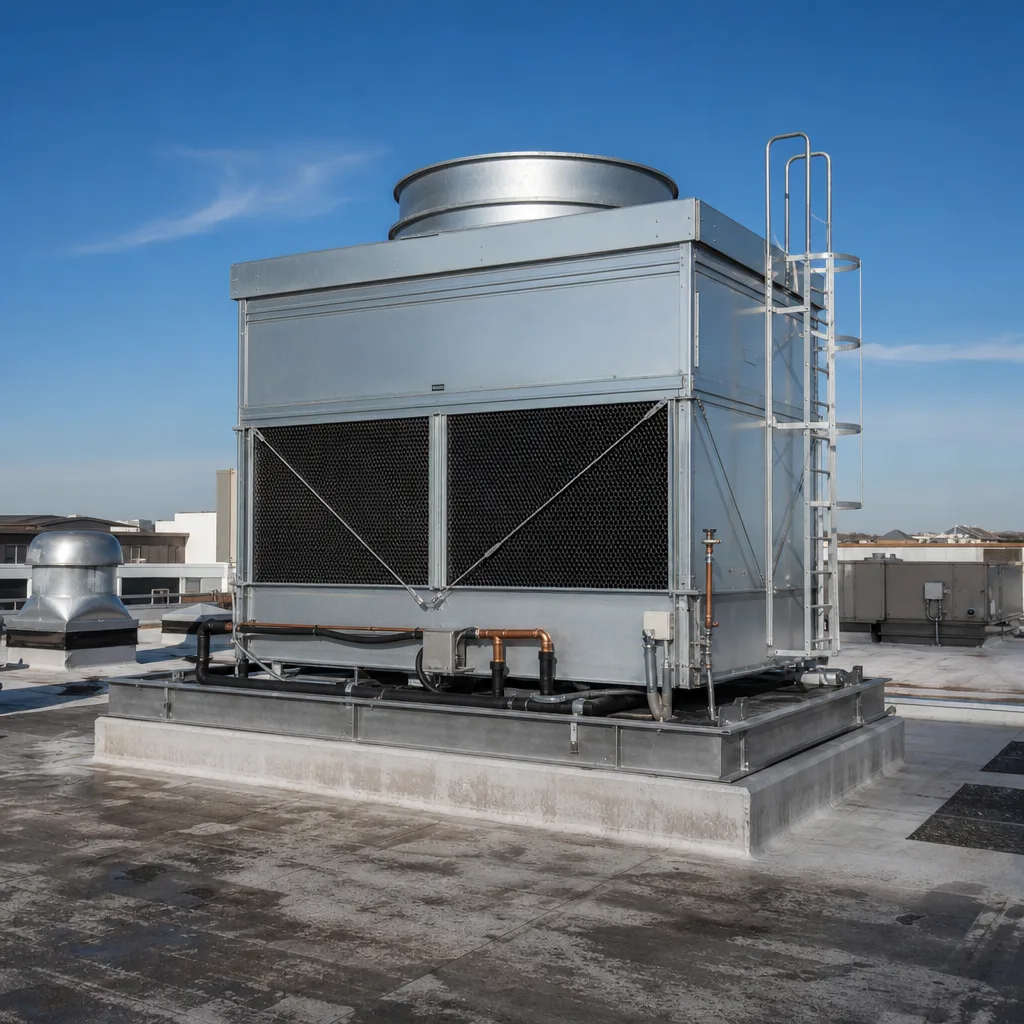
If you manage a building in Frisco and you’re not sure whether your system is water-cooled or air-cooled, look at the roof or the mechanical yard. A boxy unit with large fans on top and water inside is a cooling tower. If all you see are packaged rooftop units, you don’t have one.
Signs a Building Needs a New or Replacement Cooling Tower
Most cooling towers don’t fail all at once. They wear down slowly, and the chiller usually feels it first. If you know what to look for, you can plan a replacement on your schedule instead of in the middle of a hot week with tenants calling you.
Here are the signs worth paying attention to:
- The chiller works harder on hot afternoons. If the water coming back from the tower isn’t getting cool enough, the chiller has to push harder. You may see it trip off, run at its limit, or struggle to hold the building’s temperature when it’s hottest outside.
- Your energy bills creep up with no change in use. A tower that can’t shed heat well makes the whole plant use more power to do the same job.
- The basin leaks or shows deep rust. The basin is the pan that holds water at the bottom of the tower. Patches can buy time, but steady leaks and rust eating through the metal point to the end of its life.
- The fill is crumbling, sagging, or packed with scale. The fill is the honeycomb-like material inside the tower that spreads water out so air can cool it. When it’s clogged or broken, the tower loses much of its cooling power.
- The fan or gearbox shakes, grinds, or keeps needing work. One bearing is a repair. Repeated problems on a tired unit add up fast.
- The frame or casing is rusted, bent, or loose. That’s about safety and staying upright in a storm, not just cooling.
North Texas adds its own wear. Frisco summers run long and hot, so towers here work hard for months with little rest. Our hard water also leaves mineral scale behind as water evaporates. Over the years, that scale builds up on the fill and in the piping. It cuts airflow and heat transfer, and it speeds up corrosion. Spring hail and strong storms can crack casings and damage fan parts too. If your tower has faced many of those seasons, it’s worth a close look before the next one.
Some signs have nothing to do with wear. You may need a new or bigger tower if you’re adding a chiller, bringing new floors or tenants online, or adding process cooling for equipment. A tower sized for the building you had years ago may not keep up with the building you have now. Fast-growing commercial areas like Frisco see plenty of these changes, from office build-outs to new medical and school space.
Here’s the honest part. One sign by itself rarely means you need a whole new tower. A worn fan motor, a bad float valve, or a section of damaged fill can often be fixed or swapped. What points toward replacement is a pattern: rust in the structure, a leaking basin, falling performance, and repair bills that keep coming. When several of these show up together, putting more money into the old tower usually stops making sense.
A good inspection should look at the whole tower and how well it’s keeping up with your chiller. That way you get a clear answer on what’s failing and what still has life left, so you can decide between repair and replacement with real facts in front of you.
What Happens During a Cooling Tower Installation
A cooling tower installation is a planned project, not a one-day swap. Most of the real work happens before the old tower comes down. Knowing the stages helps you plan around your tenants and spot a contractor who’s cutting corners.
Here’s how a well-run job usually unfolds:
- Sizing and site check. The new tower has to match your chiller, your pumps, and the heat your building gives off on the hottest days. A good installer checks all of that and doesn’t just copy the old tower’s nameplate. If your building has grown since the old tower went in, this step is where it shows up. They’ll also confirm that your roof or pad can carry the weight of a tower full of water.
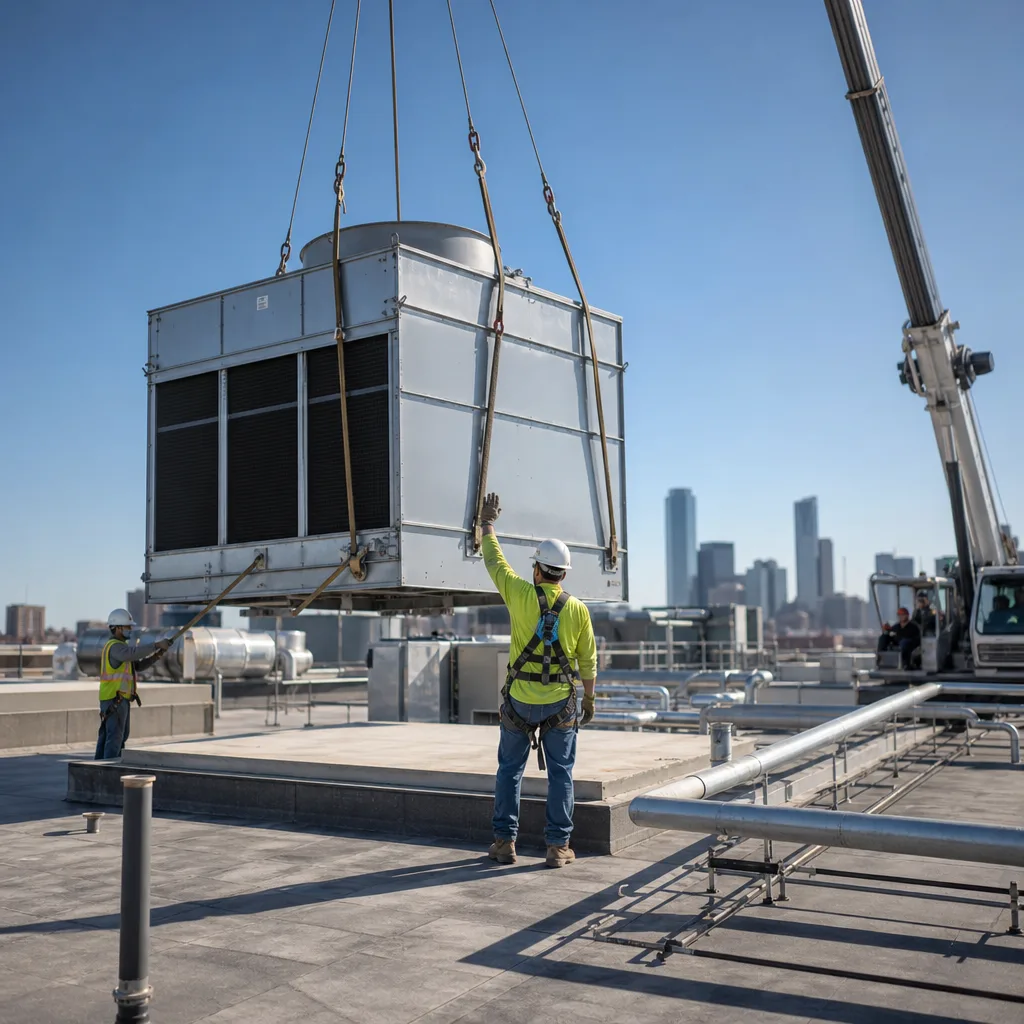
- Shutdown and lift planning. Your chiller can’t run without a working tower, so the downtime needs a plan. Many owners book the swap for spring or fall, when the building can get by on less cooling or a temporary setup. Rooftop towers usually come in by crane. That can mean blocking part of a parking lot or a drive lane for a day, so give your tenants a heads-up.
- Removing the old tower. The crew drains the old unit, disconnects it, takes it apart, and hauls it off. This is also a good time to look at the steel supports and nearby piping, since they’ve been sitting under that leaking basin for years.
- Setting and connecting the new tower. The crew lifts the new tower onto its supports, levels it, and anchors it. Then they connect the condenser water piping to and from the chiller, the makeup water line that replaces water lost to evaporation, and the drain and overflow lines. Power goes to the fan motors, and the tower’s controls are tied into your building’s system.
- Water treatment setup. With North Texas hard water, this step can’t be an afterthought. Bleed-off, also called blowdown, flushes out mineral-heavy water. It works together with a treatment program to keep scale from coating the new fill the way it did the old one.
- Startup and testing. The tower is filled, the fans and pumps are started, and the system runs under real load. Water flow gets checked and balanced so every cell of the tower carries its share. Then the crew confirms the water returning to the chiller is as cool as the design calls for.
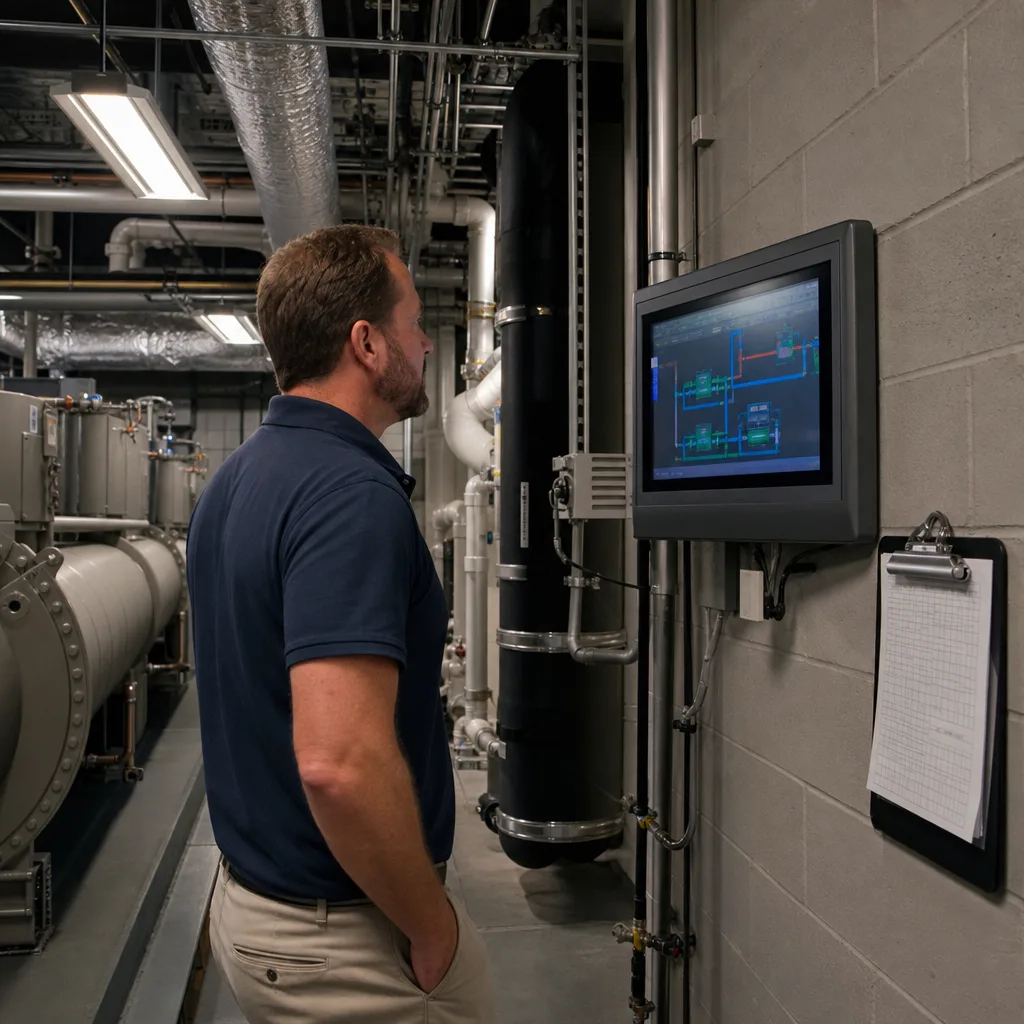
Startup and testing is where you find out whether the tower is really doing its job. Ask to see the readings: water temperature going in and coming out, flow rates, and fan amp draw. A contractor who’s proud of the work will be glad to walk you through them.
For our standard like-for-like job, startup, testing, and haul-away of the old unit are part of the installation. They aren’t extras added at the end. On the commercial side, our listed services also include HVAC system balancing, mechanical system commissioning, and building automation. That means the same team that sets your tower can make sure it works with the rest of your plant. You get one point of contact instead of three crews blaming each other.
How long the job takes depends on the tower’s size, how hard it is to reach, and how much piping or electrical work needs to change. Ask for a written schedule that shows when your chiller goes down and when it’s expected back online. That’s the date your tenants care about.
Have questions? We’re happy to help.
Call Today, Get Service Today. Xtreme Air Services — Frisco is ready to help.
Permits and Mechanical Code Requirements for Commercial Cooling Towers
A new cooling tower isn’t a swap you can do quietly over a weekend. It touches your building’s structure, its power, its water supply, and its sewer. In Frisco, the City of Frisco expects permits and inspections before the system goes into regular use. Skipping them can stall a sale or refinance, cause trouble with your insurance, or force you to open up finished work so an inspector can see it.
Here’s what usually gets a close look on a commercial tower job:
- Structure and support. A tower full of water is heavy, and rooftop units also have to stay put in high North Texas winds. The roof or pad, the steel supports, and the anchors need to be shown to carry the load. Bigger or heavier towers may need an engineer’s sign-off.
- Mechanical work. The condenser water piping, pumps, and connections to the chiller fall under the mechanical permit. The inspector checks that the work matches the approved plans and the adopted mechanical code.
- Electrical. Fan motors, controls, and the disconnect switch near the tower need proper wiring and a permit of their own. A tower that’s bigger than the old one may also need a larger circuit.
- Makeup water and backflow. The line that refills the tower is tied to the city water supply. It needs backflow protection so tower water can’t flow back into the drinking water system.
- Drain and blowdown water. The mineral-heavy water flushed out during blowdown has to go to an approved drain, not onto the roof or into a storm drain. Local utility rules can affect where and how it’s discharged.
Who pulls the permits matters. In Texas, HVAC work must be done under a contractor license issued by the Texas Department of Licensing and Regulation. Xtreme Air Services holds HVAC License #TACLA29023C. Ask any contractor you’re considering for their license number, and make sure the permit is pulled under that same license. If a bid tells you to pull the permit yourself as the owner, treat that as a warning sign.
Plan for permits in your budget and your schedule. Under our standard pricing, permits aren’t included unless they’re written into your quote. The same is true for code corrections. If the inspector finds an old drain line or electrical feed that doesn’t meet today’s code, fixing it is extra work. You should know that’s possible before the job starts, not after the old tower is already on the ground.
Timing is the other piece. Plan review and inspections add days to the project, and they don’t care about a heat wave. If you’re aiming for a spring or fall swap, start the permit side early so paperwork doesn’t push your chiller downtime into July. Also ask whether the crane lift will block a fire lane or public street. That can need its own approval from the city.
Before you sign, ask each contractor three things: which permits they’ll pull, whether permit fees are in the quote, and who meets the inspector on site. Clear answers now mean fewer surprises later.
Watch Our Video
See How We Handle Cooling tower installation in Frisco
Xtreme Air Services — Frisco
What’s Included in a Cooling Tower Installation Project
Here’s the straight answer on cost. Our typical price range for cooling tower installation is $10,000-$100,000. The most common job is a standard like-for-like swap that uses your existing connections with no major changes. That job runs $28,000-$64,000. It covers the equipment and materials, plus professional installation, startup, and testing.
The range is wide because towers are very different from one building to the next. A small tower set on a ground pad next to the building is one kind of job. A large rooftop tower with several cells, lifted by crane over a busy lot, is a much bigger one.
With our upfront flat-rate pricing, you see and approve the price before any work starts. There’s no meter running while the crew works. Here’s what that price includes:
- The new tower, along with the equipment and materials needed to install it
- Professional installation, including setting and connecting the tower
- Standard connections to the piping and power you already have
- Startup and testing under real load
- Haul-away of the old unit
Some items aren’t included unless your quote says so. These are electrical and plumbing modifications, code corrections, and permits. The permits section above explains why those last two can come up.
These are the main things that move your price up or down:
- Size and capacity. A tower that has to remove more heat from a bigger chiller costs more. Capacity is measured in tons.
- Efficiency. More efficient equipment can cost more up front but can lower your plant’s running costs.
- Brand and model. Different towers come with different price tags.
- Ease of access. A crane lift onto a tall roof costs more than setting a tower on a ground pad.
- Condition of the existing wiring and plumbing. Old piping or an undersized power feed may need work before the new tower can connect.
- Code upgrades and permits. Older buildings may need updates to meet today’s code.
- Custom fabrication. New steel supports, platforms, or piping changes add cost when the new tower doesn’t match the old footprint.
That last point matters if your building has grown. Say you’re sizing up for a new chiller or added floors. Then it’s not a like-for-like job anymore. The new tower may sit on different supports and need larger pipes or a bigger circuit, and each of those changes the price. Ask the contractor to spell this out early so the number you approve is the number you pay.
When you’re comparing bids, check that every contractor is pricing the same scope. One low quote may skip haul-away, leave out startup readings, or assume your old connections will work when they won’t. Also ask whether a water treatment program is part of the price or a separate cost. In North Texas hard water, the tower can’t do without one.
Frequently Asked Questions
Common questions about Cooling tower installation
Can a cooling tower run while the chiller is being serviced separately?
No, a cooling tower can’t do anything useful on its own. It only moves heat that the chiller’s condenser water carries to it, so if the chiller is down, the tower has no job to do. That’s why tower swaps and chiller work get planned together, often in spring or fall when the building can run on less cooling.
What happens to the water that drains out during blowdown?
That mineral-heavy water has to go to an approved drain, not onto the roof or into a storm drain. Frisco’s hard water leaves scale behind as tower water evaporates, so blowdown removes that concentrated water regularly. Local utility rules affect exactly where and how it can be discharged, so this gets worked out with the mechanical permit.
Can I keep running an old cooling tower while I plan a replacement?
Yes, as long as it’s still cooling the water enough to keep your chiller from tripping off. Many owners run a worn tower through one more summer while they line up permits, financing, and a spring or fall shutdown window. The risk is a sudden failure on a hot afternoon, so it helps to have an inspection first to see how much life is really left.
Ready to Get Started?
Call (469) 490-3595 Today, Get Service Today.