


Heat Pump Installation in Allen: Know What Drives the Price
An honest repair-or-replace call first, then a heat pump quote that shows what's included and the permit every install needs.
What’s Covered on This Page
- Repair or Replace: How to Tell Which One You Need
- What a Heat Pump Installation Quote Should Include
- What Changes the Price of Your Installation
- The Mechanical Permit Every Allen Installation Needs
- Why North Texas Weather Makes a Heat Pump a Smart Fit
- How many hours a day should a heat pump run in winter?
- Where does a heat pump have to be installed?
- Can I charge my own heat pump’s refrigerant?
Repair or Replace: How to Tell Which One You Need
Here’s the honest truth. A heat pump that quits doesn’t always need to be replaced. Often, one worn-out part is causing the whole problem. Fix that part and you could get years more out of the system you already own.
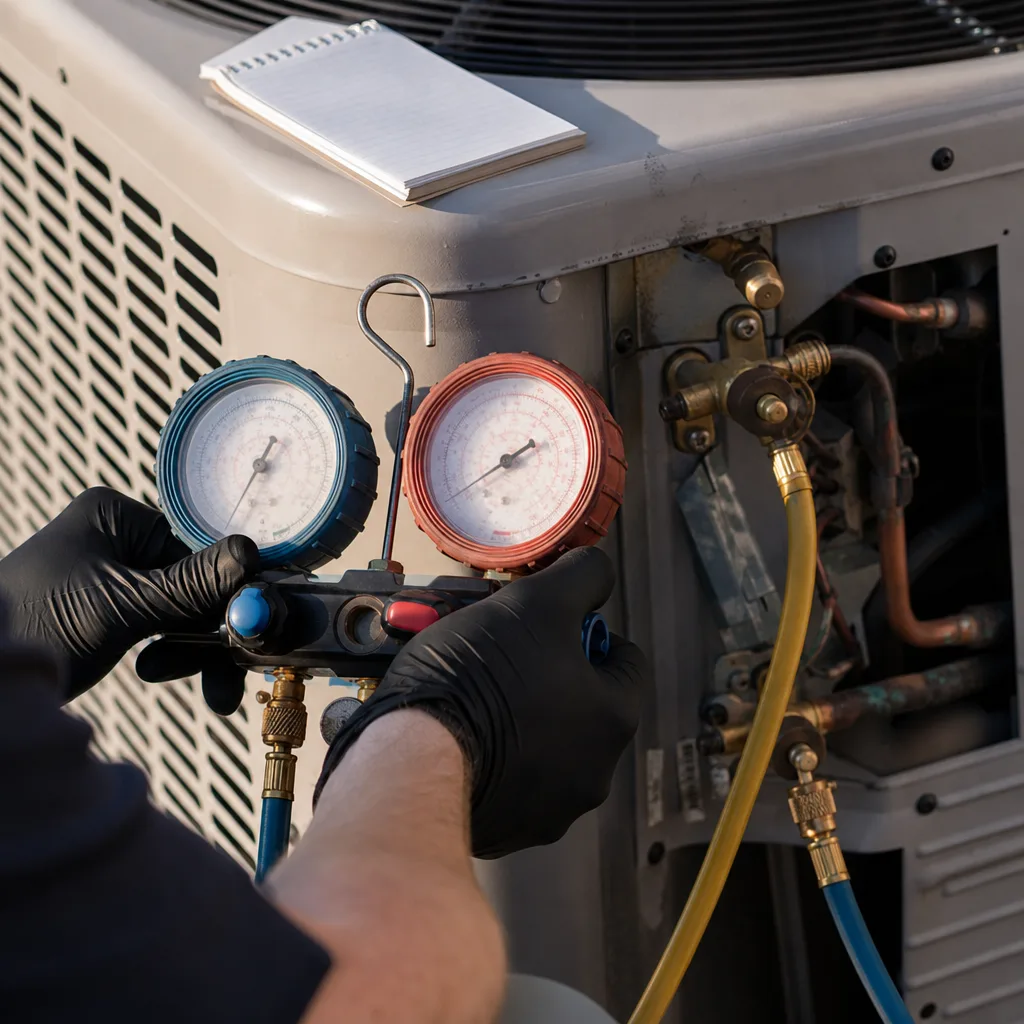
Say it’s July, the system is running, and your house won’t cool below 80. You walk outside and see the fan on the outdoor unit isn’t spinning. That’s often a capacitor or a fan motor. Both are fixable, and neither one means you need a new system.
These problems are usually worth repairing:
- A bad capacitor. It’s a small part that gives the motors a kick to get started.
- An outdoor fan motor or indoor blower motor that’s failing.
- Thermostat trouble, like wrong settings, dead batteries, or a bad connection.
- A frozen coil caused by a clogged filter or blocked airflow.
- A loose wire, tripped breaker, or burned contact in an otherwise healthy system.
- A small refrigerant leak in a newer system that can be found and sealed.
If one of these fits what you’re seeing, call for heat pump repair, not an installation. We handle both, so you won’t get pushed toward something you don’t need.
Replacement starts to make more sense when you see signs like these:
- The compressor has failed in an older system. It’s the heart of the heat pump and one of the most expensive parts to replace.
- You’re calling for repairs every season, and the costs keep adding up.
- Your system runs on R-22, the older refrigerant that isn’t made for new equipment anymore. That makes every recharge costly.
- Some rooms stay hot in summer or cold in winter no matter how you set the thermostat.
- In winter, the backup heat (often called aux or emergency heat) runs all the time. Those electric heat strips cost a lot more to run than the heat pump itself.
- Your energy bills keep climbing even though your habits haven’t changed.
North Texas is hard on heat pumps. Yours does double duty, cooling through long, hot summers and heating when a cold front rolls in. An older system that’s barely keeping up in mild weather will struggle even more when it matters most.
If you’re not sure which group you’re in, start with a diagnosis. Our service-call fee is $26-$99, and it’s credited toward the repair if you go ahead with Xtreme Air Services. You’ll get upfront flat-rate pricing before any work starts. That means you can compare the cost of a repair with the cost of a new system and decide what’s right for your home and your budget.
What a Heat Pump Installation Quote Should Include
A good quote tells you three things: exactly what you’re paying for, what isn’t covered, and why the system is the size it is. If any of those are missing, ask before you sign anything.
Here’s where our numbers land. For heat pump installation, our typical price range is $5,000-$12,000. Our most common job is a standard like-for-like swap that uses your existing connections with no major changes. That job runs $6,400-$9,200. It covers the equipment and materials plus professional installation, startup, and testing.
Your quote from us spells out what’s included:
- The equipment and materials
- Professional installation
- Standard connections
- Startup and testing, so you know it’s working right before we leave
- Haul-away of your old unit
It also tells you what’s not included unless the quote says so. That means duct, electrical, or plumbing changes, code corrections, and permits. We list these on their own for a simple reason. A like-for-like swap is easy to price. Worn-out ductwork or wiring that needs updating is something nobody can promise until they’ve looked at your home.
These are the things that push the price up or down:
- Size. Heat pumps are measured in tons, and a bigger home usually needs more capacity.
- Efficiency. SEER2 rates how well a unit cools, and HSPF2 rates how well it heats. Higher numbers cost more up front but can lower your monthly bills.
- Brand and model.
- Ease of access, like a tight attic or a hard-to-reach spot for the outdoor unit.
- The condition of your existing ductwork, wiring, and plumbing.
- Code upgrades and permits.
- Any custom fabrication needed to make the new system fit.
Picture two quotes on your kitchen table. One is a couple thousand dollars lower. Then you read the fine print. It leaves out haul-away, says nothing about permits, and assumes your ducts are fine without anyone checking. The lower number might not stay lower. That’s why the line items matter more than the bottom line.
Ask these questions of any contractor, including us:
- How did you decide what size system my home needs? A good answer is based on your home, not just the size of your old unit. We offer cooling load calculations for exactly this reason.
- Is this a flat price, or can it change once the work starts?
- Are permits included, or will they be extra?
- What happens if you find duct or wiring problems partway through?
- Do you offer financing?
With us, you get upfront flat-rate pricing that you approve before any work starts, so there’s no meter running. If the cost is a stretch right now, flexible financing is available on qualifying installations and larger jobs, on approved credit.
What Changes the Price of Your Installation
The biggest question is simple. Can the new heat pump drop right into the spot your old one left? If it can, you’re close to the $6,400-$9,200 like-for-like job. If your home needs changes to make the new system fit and run right, the price moves up from there. Here’s what that looks like in a real house.
Start with the attic. In a lot of North Texas homes, the indoor unit sits in the attic, and on a summer afternoon that space can get far hotter than it is outside. A wide walkway and a pull-down ladder near the unit make for a smoother job. A tight crawl over rafters to a unit tucked in the far corner means more time and more care, and that shows up in the price.
Next is what you’re replacing. Swapping an old heat pump for a new one is the simplest path. Switching from a gas furnace and AC to a heat pump is a bigger change. A heat pump usually has electric backup heat strips, and those need their own heavy-duty circuit. Your indoor air handler may need to be replaced too, so it matches the new outdoor unit.
Here are the home conditions that most often add work:
- An electrical panel without room or capacity for the new circuit. That calls for an electrical panel upgrade, which our licensed electricians handle under the same roof.
- Ducts that leak, sag, or were sized for a smaller system. Duct sealing or duct repair may be needed so the new unit isn’t pushing air into your attic.
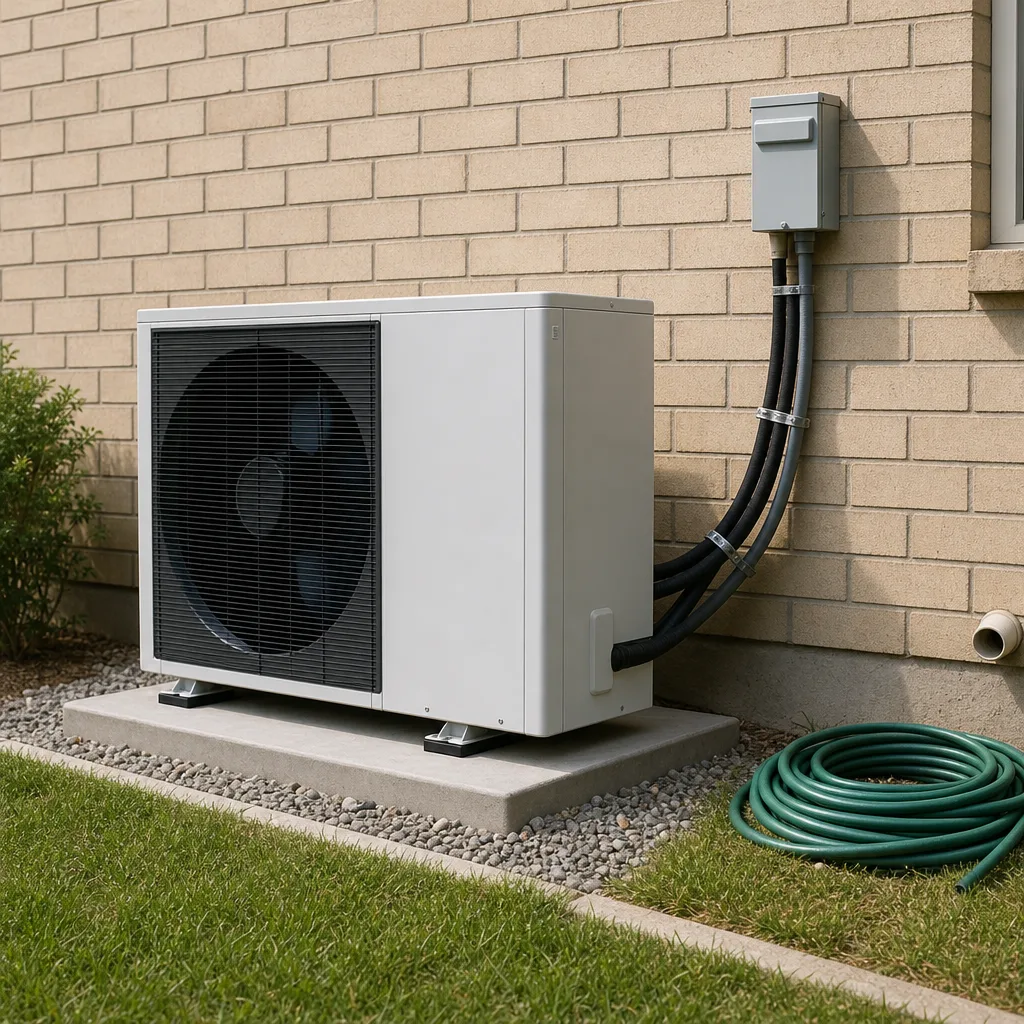
- A concrete pad that has shifted or cracked. North Texas clay soil moves as it gets wet and dries out, and that can tilt the outdoor unit over the years.
- Wiring or a refrigerant line set that doesn’t meet today’s code or doesn’t match the new equipment.
- A system that’s being upsized or downsized after a proper load calculation, which can change the ducts and connections too.
Your choice of equipment matters as much as your house does. Here, the cooling season is long and the winters are fairly mild. That’s why the cooling efficiency rating usually does more for your monthly bill than anything else. A variable-speed heat pump costs more up front. It runs longer at a lower, steadier speed, so it pulls more humidity out of the air and keeps rooms more even. For some families that’s worth it. For others, a solid single-stage system is the smarter use of the money.
None of this should be a surprise after the fact. Each of these items gets checked and priced before the job starts, so you know which kind of house you have and what it’ll cost to do it right the first time.
Need help with Heat pump installation?
Call Today, Get Service Today. Xtreme Air Services — Allen is ready to help.
The Mechanical Permit Every Allen Installation Needs
Swapping out a heat pump in Allen isn’t just an equipment change. It’s permitted work. The City of Allen’s building department needs to know about it, and an inspector needs to sign off once it’s in. That can feel like red tape when you just want your house cool again. But the permit is really the only outside check that the job was done right.
Think about where your equipment lives. In many Allen homes, the indoor unit sits in the attic, right above your ceilings, with a drain line and electrical wiring running to it. The outdoor unit needs its own power and a safe way to shut it off. If any of that is done wrong, you might not find out until there’s a water stain on your ceiling or a breaker that keeps tripping. The inspection catches those problems while the installer is still on the hook to fix them.
Here’s what an inspector usually looks at on a heat pump job:
- The electrical hookup, including the outdoor disconnect and the right size breaker and wire for the new unit.
- The condensate drain, so the water your system pulls from the air goes where it should and not into your ceiling.
- Safe access to the attic unit, with enough room to work on it later.
- Clearances around the outdoor unit and a level, solid place for it to sit.
- The refrigerant line set and connections, checked against the new equipment.
In Texas, HVAC work like this has to be done under a license issued by the Texas Department of Licensing and Regulation (TDLR). That matters, because the permit is tied to a licensed contractor who answers for the work. Xtreme Air Services is licensed and insured, and our HVAC license number is TACLA29023C. You can look it up yourself, and you should do the same for anyone you’re thinking about hiring.
Be careful if a contractor tells you the permit isn’t needed, or offers to knock some money off if you skip it. That saving can cost you later. When you sell your home, a buyer’s inspector may ask whether major systems were installed with permits. An unpermitted install can also leave you with no easy way to prove the work met code if something goes wrong.
As covered in the quote section, permits are listed separately unless your quote says otherwise. Before work starts, get clear answers to these questions:
- Who’s pulling the permit, and is the fee on my quote?
- When will the inspection happen, and do I need to be home for it?
- If the inspector flags something, who fixes it, and does that cost extra?
- Will the job pass final inspection before you call it finished?
A contractor who answers all four without hesitating expects their work to be looked at, and isn’t worried about it. That’s the kind of installer you want in your attic.
Watch Our Video
See How We Handle Heat pump installation in Allen
Xtreme Air Services — Allen
Why North Texas Weather Makes a Heat Pump a Smart Fit
A heat pump fits the way North Texas weather works. Most of the year you need cooling, and you need a lot of it. Winters are usually mild, with a few sharp cold fronts mixed in. A heat pump covers both jobs with one outdoor unit. That’s why it’s a strong pick for many Allen homes.

Here’s the simple version of how it works. In summer, a heat pump pulls heat out of your house and dumps it outside, just like a regular AC. In winter, it runs in reverse. It pulls heat from the outdoor air and moves it inside. Even cool air has heat in it. Moving heat takes a lot less energy than making heat from scratch, and that’s where the savings come from.
On a typical North Texas winter day, the heat pump handles the work on its own. When temperatures drop hard, it gets less efficient, and the backup heat we covered earlier steps in to help. Since our deep freezes are short and don’t come often, most of your heating season runs on the efficient part of the system.
There are a few things worth knowing before your first cold snap with a new heat pump:
- You may see steam rising from the outdoor unit in winter. That’s the defrost cycle melting frost off the coil. It’s normal, and it usually lasts a few minutes.
- The air from your vents will feel warm, not hot like a gas furnace. Your house still gets to the temperature you set. It just gets there in a steadier way.
- Hard freezes are part of life here. If your family wants extra peace of mind on the coldest nights, ask about models built to hold their heating output better in low temperatures.
- If you already have a gas furnace in good shape, you don’t have to give it up. A dual fuel setup pairs a heat pump with the furnace. The heat pump handles mild days, and the furnace takes over when it gets truly cold.
Here’s the honest part. A heat pump isn’t the right move for every home. If your gas furnace is fairly new and your AC still works well, replacing both just to switch may not pay off for years. In that case, it often makes more sense to wait until the AC needs replacing. Then you can add a heat pump in its place and keep the furnace as backup.
Storm season matters too. Spring hail can dent the thin metal fins on an outdoor coil, and bent fins choke off airflow. Where the unit sits, and whether it’s tucked near the house or out in the open, is worth talking through before the pad goes down.
The bottom line is that the weather here plays to a heat pump’s strengths. Sizing it for a long summer and planning ahead for a hard freeze is what turns a good fit into a system you’re glad you picked in both July and February.
Frequently Asked Questions
Common questions about Heat pump installation
How many hours a day should a heat pump run in winter?
It’s normal for a heat pump to run for long stretches in winter, even most of the day, because it works best moving heat slowly and steadily rather than blasting it. This is different from a gas furnace, which cycles on and off. In Allen’s mild winters, your heat pump can usually handle long runtimes on its own. On the rare hard freeze, backup heat strips kick in to help, and the system may run close to nonstop until temperatures climb back up.
Where does a heat pump have to be installed?
A heat pump needs an outdoor unit set on a level, solid pad with clear space around it, plus an indoor unit connected by a refrigerant line set. In many Allen homes, the indoor unit sits in the attic alongside the ductwork. The outdoor unit needs room to pull in air and a safe spot away from dryer vents, fences, or anything that blocks airflow. Where it goes affects both performance and how easy future service calls will be.
Can I charge my own heat pump’s refrigerant?
No, charging a heat pump’s refrigerant isn’t a DIY job. It requires specialized gauges, a recovery machine, and a license from the Texas Department of Licensing and Regulation to handle refrigerant legally. Getting the charge even slightly wrong can hurt efficiency or damage the compressor, which is one of the most expensive parts to replace. If your system seems low on refrigerant or isn’t cooling or heating right, that’s a call for a licensed technician, not a weekend project.
Ready to Get Started?
Call (469) 299-8996 Today, Get Service Today.