


One-Stop Commercial Service in Frisco: One Team for HVAC, Refrigeration, Plumbing & Electrical
One licensed team for your building's HVAC, refrigeration, plumbing and electrical, instead of juggling four contractors.
What’s Covered on This Page
- What One-Stop Commercial Service Covers
- Why Licensing Across Every Trade Matters for a Bundled Vendor
- Signs Your Business Needs a Multi-Trade Vendor Now
- When a Single-Trade Specialist Is the Better Call
- How Pricing Works for Bundled Commercial Service
- Can I keep my current rooftop unit tune-up schedule and just add other trades later?
- What happens if a problem turns out to involve two different trades at once?
- Do I need to get multiple quotes before switching to one vendor?
- Will switching to one vendor affect equipment still under a lease agreement?
What One-Stop Commercial Service Covers
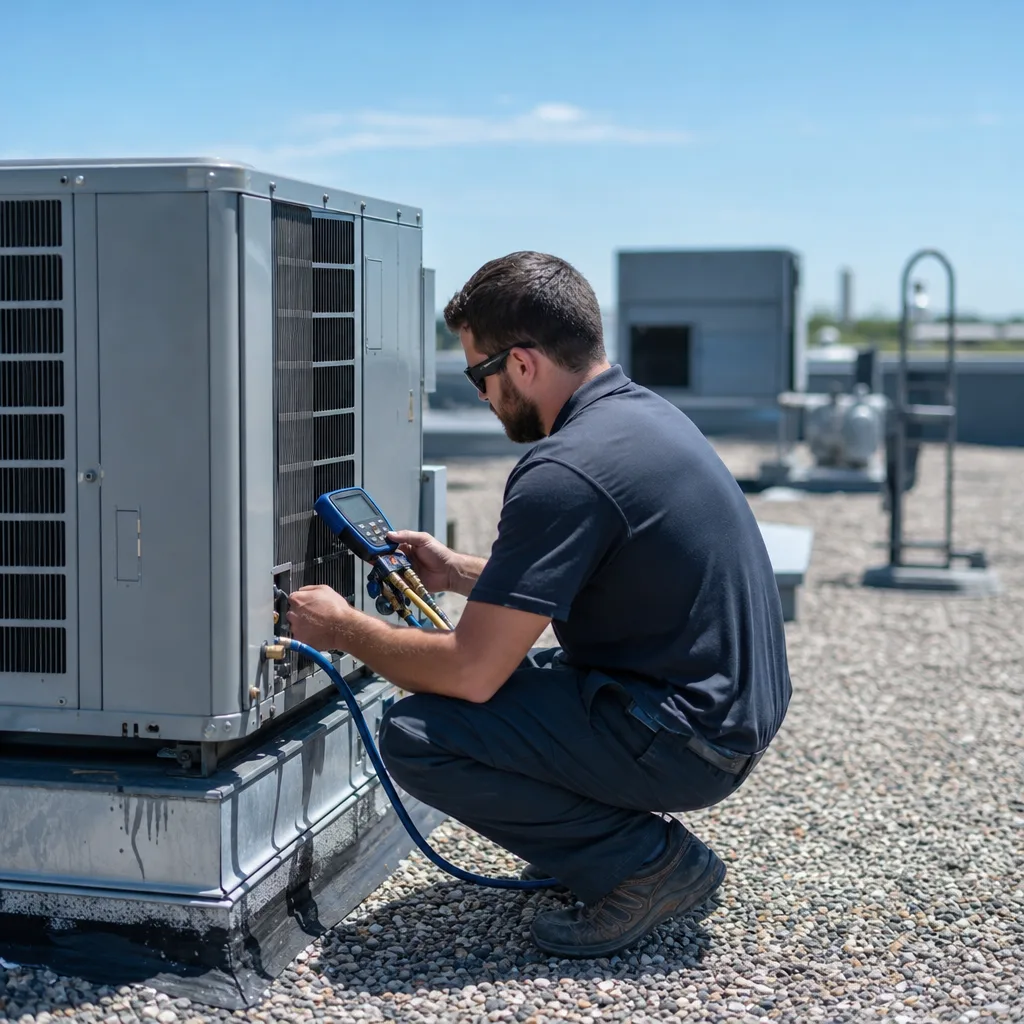
If you run a restaurant, shop, office, or clinic in Frisco, you’re probably juggling several contractors. One handles the rooftop AC. Another handles the walk-in cooler. A plumber takes care of the water heater, and an electrician comes out when a breaker keeps tripping. One-stop commercial service replaces that whole list with one team that answers for all of it.
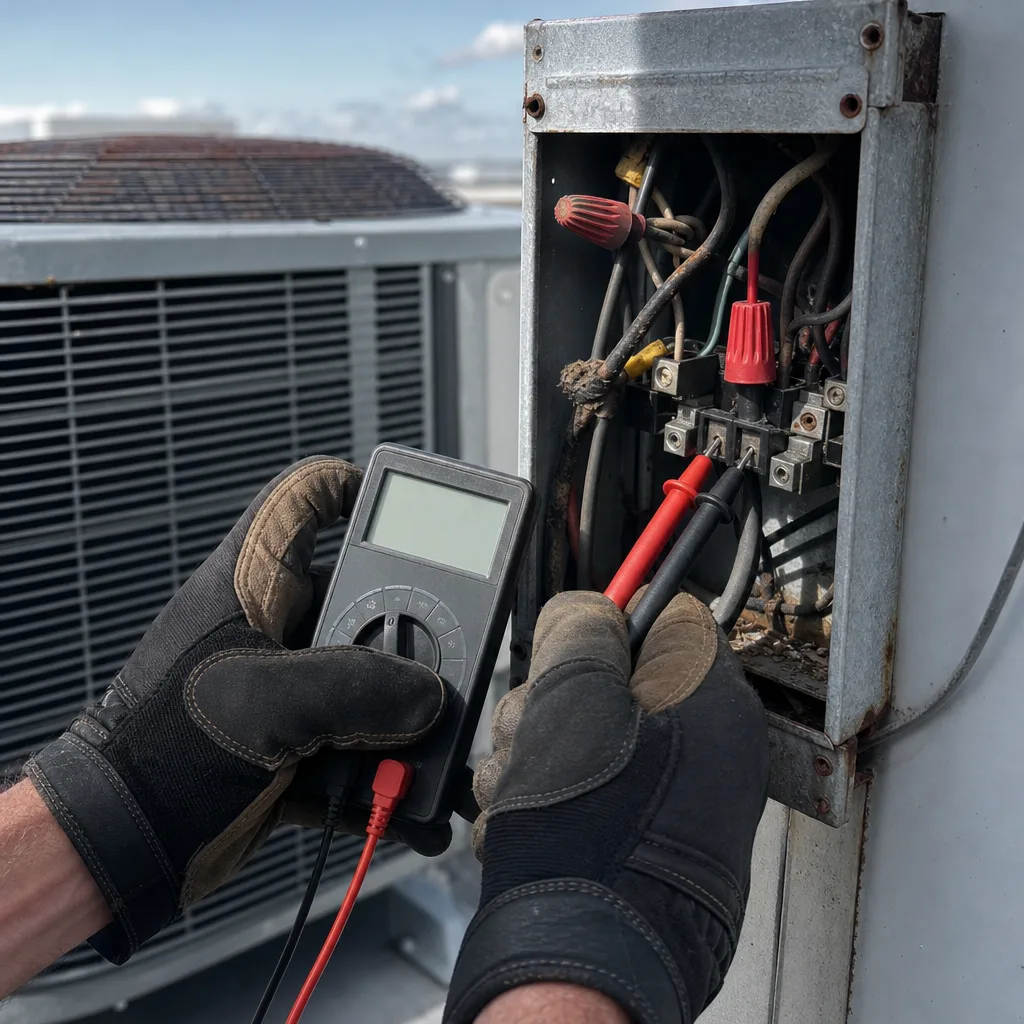
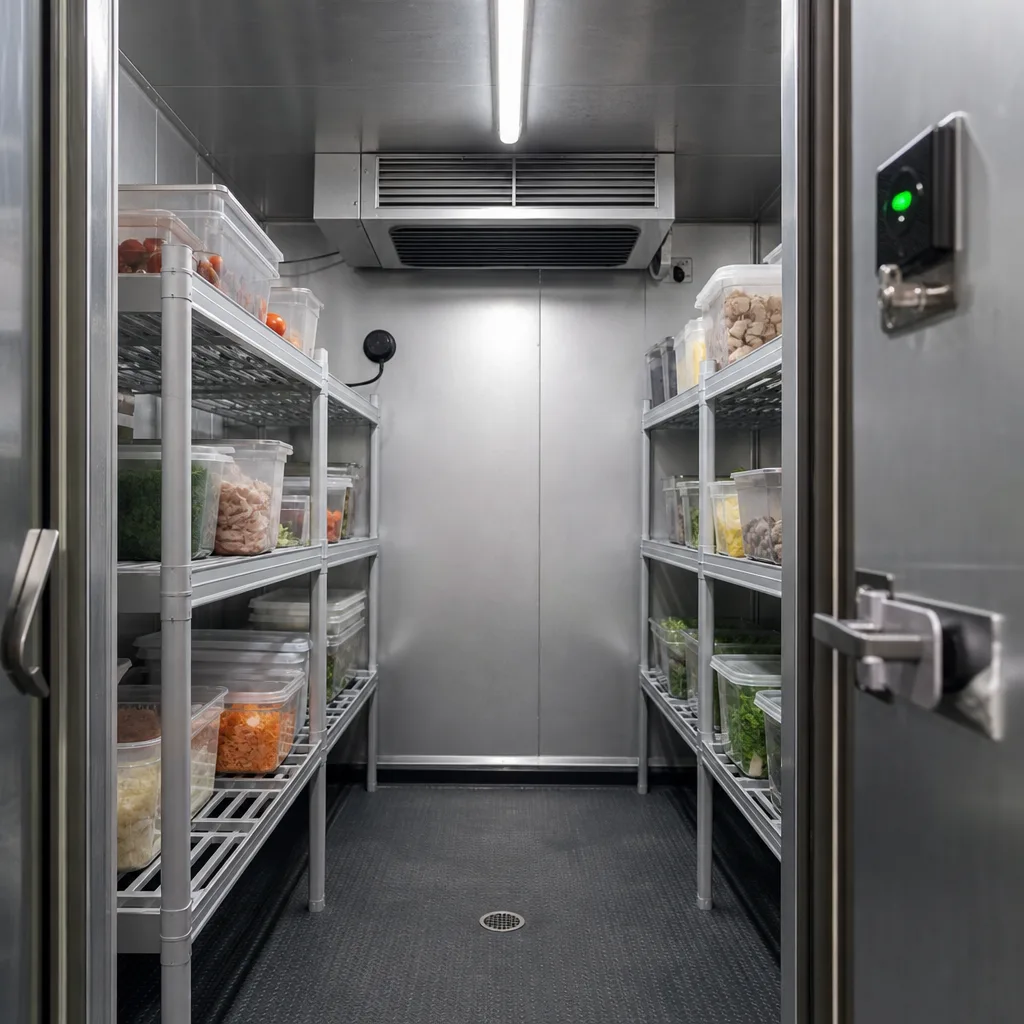
That’s the whole point. Many commercial breakdowns cross trade lines. A walk-in freezer that won’t hold temperature could have a refrigeration problem. It could also have a bad circuit feeding it. When two vendors each say it’s the other one’s job, your inventory sits there warming up. With one team, nobody can pass the problem to someone else. The same people who find the cause also own the fix.
Depending on your building, one agreement can cover:
- Heating and cooling: commercial HVAC repair and maintenance, rooftop unit (RTU) service, and building automation and controls. An RTU is the big boxed heating and cooling unit sitting on your roof.
- Refrigeration: walk-in cooler and walk-in freezer repair, ice machine repair, and refrigeration leak detection.
- Kitchen air: commercial kitchen ventilation and exhaust hood work.
- Plumbing: commercial plumbing, commercial water heaters, drain cleaning, and backflow testing.
- Electrical: commercial electrical work, plus commercial generator installation for backup power.
- Upkeep: commercial preventive maintenance, so every system runs on one schedule instead of four.
You don’t have to sign up for every trade. A small office might only need HVAC and electrical. A restaurant leans on refrigeration, the hood, and hot water every shift. We set scope and pricing for each building. The price depends on your building’s size, how many systems you have, how often you want service, and which trades you include. You’ll know what’s covered before any work starts.
Here’s what isn’t bundled in. Anything outside your agreed scope gets itemized, so you’ll see it spelled out on its own line. Large installs, like a new rooftop unit or new cold storage, are quoted separately. Your regular service plan won’t hide a big project inside it. You get to decide on large expenses one at a time. Financing is available on qualifying installations and larger jobs, on approved credit.
North Texas summers push rooftop units hard, and a kitchen can’t go long without its cooler or hot water. When the same team works on your whole building, you spend less time explaining the history of each system and more time running your business.
Why Licensing Across Every Trade Matters for a Bundled Vendor
One team for everything only helps you if that team is qualified for everything. In Texas, HVAC, plumbing, and electrical are licensed as separate trades. A company that’s licensed for air conditioning isn’t automatically licensed to work on your water heater or your electrical panel. So when a vendor offers to bundle all of it, the first thing to check is simple. Who holds the license for each trade?
This matters more in a commercial building than in most homes. Your rooftop units, your walk-in cooler, your gas water heater, and the circuits feeding your kitchen all carry real safety risk. If unlicensed work fails, you could be left with a failed inspection, an insurance claim that gets questioned, or a repair you have to pay for twice. A bundled vendor that cuts corners on one trade puts the whole agreement at risk.
Some one-stop companies are really one trade with a list of subcontractors behind it. That isn’t always a problem, but it changes who answers for the work. If the plumber on your job works for someone else, the company you hired may not be able to stand behind that repair the same way. You lose the single point of accountability that made bundling worth it.
Before you sign with any multi-trade vendor, ask these questions:
- Can you give me the license number for each trade you’re covering? You can look up HVAC and electrical licenses with the Texas Department of Licensing and Regulation (TDLR).
- Who holds the plumbing license, and does that person work for your company?
- Will your own technicians do the work, or will you send a subcontractor?
- Can you send a certificate of insurance before work starts?
- When a job needs a permit, whose license will it be pulled under?
A good vendor will answer all of these without any trouble. If you get vague answers or hear “we’ll take care of it,” that tells you something.
Here’s where we stand. Xtreme Air Services is a fully licensed and insured HVAC, plumbing, and electrical contractor. Our HVAC license number is TACLA29023C, and our plumbing work is backed by Master Plumber Larry Breedlove. Our technicians are licensed and background-checked, which matters when they’re in your kitchen, your back office, or your storeroom after hours. We put these numbers out in the open so you can check them yourself instead of taking our word for it.
Think about the walk-in freezer that won’t hold temperature. The fix might be the refrigeration system, the circuit feeding it, or both. With a team that’s licensed for each trade, the same company that finds the cause can legally make the whole repair. You don’t need a second visit from another contractor, and nobody has to hand the job off before your inventory is protected.
Signs Your Business Needs a Multi-Trade Vendor Now
Most owners don’t wake up one day and decide to switch to one vendor. It builds slowly. One more missed call, one more invoice you can’t make sense of, one more Saturday spent waiting on a tech who isn’t sure what the last guy did. If any of these sound familiar, your setup is probably costing you more than it should.
- You keep a list of four phone numbers taped by the register or saved in your phone, and you have to stop and think about which one to call.
- Every new tech asks you the same questions about your equipment, because nobody keeps the history of your building in one place.
- Your systems get serviced on different schedules, or only when something breaks. The rooftop unit got a tune-up last spring, but nobody’s looked at the water heater or the panel in years.
- You pay a separate trip charge every time a different contractor shows up, even when two of them come out for the same problem in the same week.
- Your invoices come in different formats from different companies, so it’s hard to see what you’re really spending on upkeep each year.
- Something fails after hours, and you’re not sure which vendor, if any, will pick up.
Timing matters too. A few moments make the switch easiest. One is when you’re moving into a new space or taking over a lease and don’t know what shape the equipment is in. Another is when you’re adding a walk-in cooler, an ice machine, or a bigger kitchen line. A third is right after a bad week where one breakdown turned into three phone calls and a lost day of sales. Bringing one team in at that point means someone learns your whole building from the start.
It also helps to look at what a single service visit costs you. With several contractors, each one charges its own fee just to show up. With us, there’s one service-call fee of $26-$99, and it’s credited toward the repair if you go ahead with Xtreme Air Services. You aren’t paying a pile of trip charges just to find out whose problem it is.
The signs above usually show up first in businesses that can’t afford downtime. That means restaurants that need cold storage and hot water every shift, clinics that need steady temperatures, and retail spaces where a dead AC in July sends customers right back out the door. If your business runs on more than one system and a breakdown in any of them stops your day, that’s when one accountable team starts paying for itself.
Not sure what your One-stop commercial service project needs? Ask us.
Call Today, Get Service Today. Xtreme Air Services — Frisco is ready to help.
When a Single-Trade Specialist Is the Better Call
Bundling isn’t always the right answer, even when your building has several systems. Some equipment and some kinds of work belong with a company that does one thing all day long. Here’s when we’d tell you to keep a specialist on your list.
- Your equipment is leased, and the lease says who services it. Many restaurants lease ice machines or dish machines with service built into the monthly payment. If your agreement names a service company, call that company. If someone else opens up the machine, you could end up on the wrong side of your lease.
- Your kitchen hood has a fire suppression system. The exhaust fan and ductwork are mechanical work. The fire suppression system over your cooking line is a fire-protection specialty, though. It’s inspected and serviced by fire-protection companies, and your fire marshal and insurer will expect to see their inspection tags. Keep that contractor, even if another team handles the rest of the hood.
- You run a clinic with medical gas lines. Oxygen and vacuum piping in a medical or dental office needs its own certification and inspection. That’s a narrow specialty, not everyday commercial plumbing, so leave it with the people trained for it.
- Your building controls are locked to one company. Some building automation systems run on software that only the installer or the manufacturer can access. Until that changes, the controls stay with them, even if another team services the equipment those controls run.
- You’re in the middle of a big, design-heavy build-out. If you’re finishing out a new space and already have an engineer and a general contractor lined up, they may bring their own mechanical, plumbing, and electrical subs. It often makes sense to let that team finish the build. Then you can decide on ongoing service after you open, once you know what equipment you have.
None of this means you have to pick one approach or the other. Plenty of businesses use one team for their day-to-day HVAC, plumbing, electrical, and refrigeration and keep a specialist for one carved-out system. If that’s your situation, say so up front. A clear scope spells out what’s covered and what isn’t. That way nobody shows up to work on equipment that belongs to someone else, and nobody assumes a system is covered when it’s not.
Picture a busy restaurant with a leased ice machine and a hood suppression system that’s tagged twice a year by a fire-protection company. Both of those can stay right where they are. The walk-in cooler, the rooftop units, the water heater, and the circuits feeding the kitchen line are a different story, because those are the systems that tend to fail at the same time and send you hunting for phone numbers.
The honest test is simple. If a lease, a code, or the system itself requires a specialist, keep the specialist. If you’re juggling four companies just because that’s how it’s always been done, that’s a different decision, and it’s worth taking a fresh look.
Watch Our Video
See How We Handle One-stop commercial service in Frisco
Xtreme Air Services — Frisco
How Pricing Works for Bundled Commercial Service
Bundled commercial service is quote-based. There’s no price list, because no two buildings are the same. A coffee shop with one rooftop unit and a water heater needs a very different plan than a restaurant with two walk-ins, an ice machine, and a full kitchen line. We set your price after we know what’s in your building and which trades you want covered.
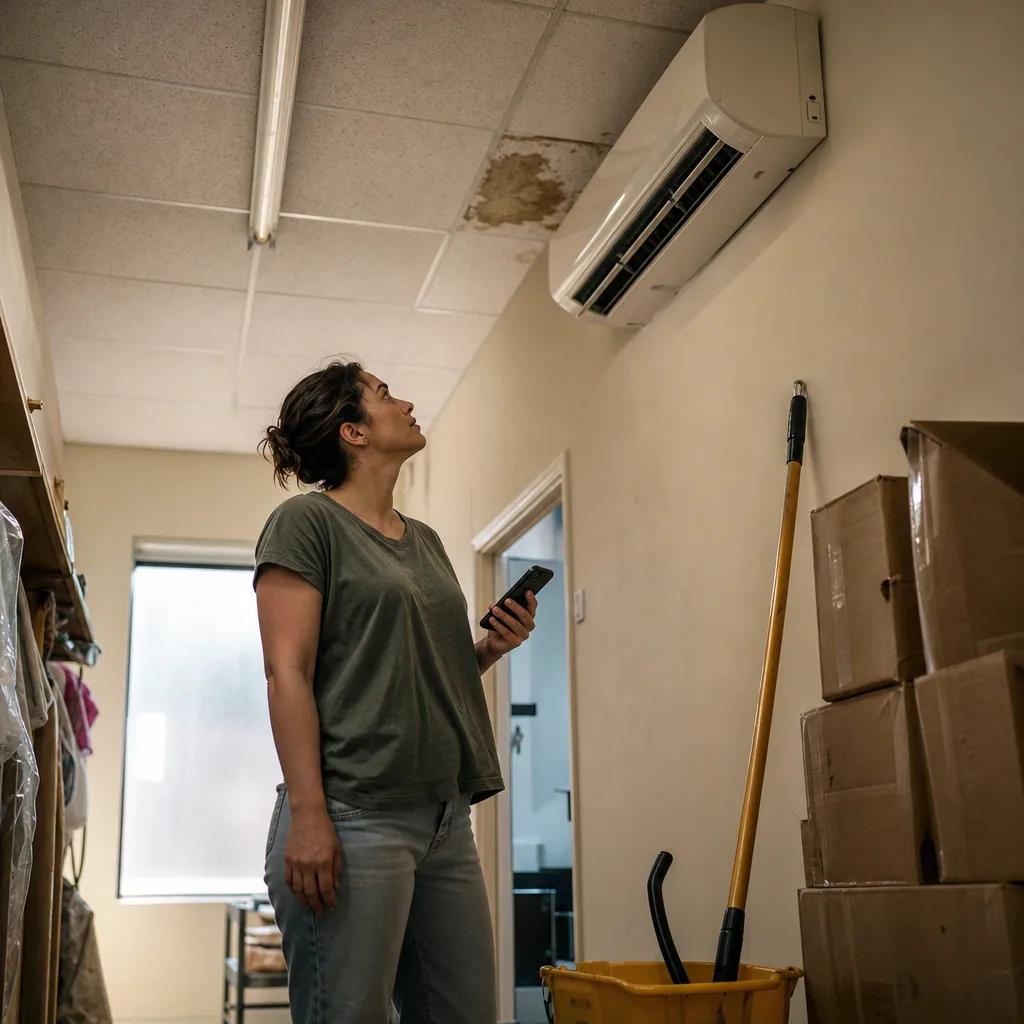
Most bundled agreements have two parts, and it helps to look at them separately. The first is the planned work, meaning the regular maintenance visits across your systems. That part is easy to budget because you know it’s coming. The second is the unplanned work, meaning repairs when something breaks. Ask any vendor how they price each part, because that’s where costs can quietly creep up.
Here’s how we handle repairs. You get upfront flat-rate pricing, and you approve it before any work starts. There’s no meter running while a tech hunts for the problem. Nights and weekends cost the same as any weekday, so a cooler that quits on a Saturday night doesn’t come with an overtime bill on top of the repair.
To find out if bundling saves you money, start with what you spend now. Pull the last 12 months of invoices from every contractor who touched your building and add up:
- Every trip charge, including the visits where nobody fixed anything
- After-hours or weekend premiums
- Emergency repairs that a regular checkup might have caught
- Sales you lost while a system was down or while you waited on the right contractor
That last one doesn’t show up on any invoice, but it’s often the biggest number. A Friday dinner rush with no hot water or a walk-in creeping past safe temperatures costs you more than the repair does.
Before you sign with any multi-trade vendor, ask these pricing questions:
- What exactly happens at each maintenance visit, for each trade?
- How are repairs priced, and do I see the price before you start?
- Do nights, weekends, or holidays cost extra?
- How are parts billed?
- Can I add or drop a trade later if my business changes?
- What happens to my price if I add equipment, like a second ice machine?
A good quote answers most of these on paper. It should name each trade and each system it covers, say how often you’ll get service, and spell out what falls outside the agreement. If a quote just says “full building service” with one number at the bottom, ask for the details before you agree to anything. You should never have to guess what you’re paying for.
The goal isn’t to lock you into something. It’s to give you one clear number for the planned work and one clear process for everything else, from one licensed and insured team that knows your building.
Call 469-490-3595
Frequently Asked Questions
Common questions about One-stop commercial service
Can I keep my current rooftop unit tune-up schedule and just add other trades later?
Yes, you can start with one trade and add more as your business needs change. Many Frisco buildings start with HVAC coverage, then add plumbing or electrical once they see how one accountable team handles repairs. Scope and pricing are set per building, so adding a trade just means updating your agreement, not starting over.
What happens if a problem turns out to involve two different trades at once?
One team handles the whole repair without passing you to another vendor. A walk-in freezer losing temperature could be a refrigeration issue, an electrical issue, or both, and a bundled team licensed in each trade can fix all of it on the same visit instead of sending a second contractor.
Do I need to get multiple quotes before switching to one vendor?
It helps to compare your last 12 months of invoices first, since that shows your real costs. Add up trip charges, after-hours fees, and any sales lost to downtime, then compare that total against a single quote covering the same systems and trades.
Will switching to one vendor affect equipment still under a lease agreement?
Leased equipment, like a leased ice machine, usually stays with whatever company your lease names for service. Keep that specialist in place and bundle the rest of your building’s systems, such as the rooftop units, water heater, and electrical, under one agreement.
Ready to Get Started?
Call (469) 490-3595 Today, Get Service Today.