


One-Stop Commercial Service in Plano for HVAC, Plumbing, and Electrical
One licensed team for your building's HVAC, refrigeration, plumbing and electrical, instead of juggling four contractors.
What’s Covered on This Page
- What One-Stop Commercial Service Covers
- Why Licensing Across Trades Is the Real Test of a One-Stop Provider
- Commercial Buildings That Benefit Most From a Bundled Vendor
- When a Single-Trade Vendor Is a Better Fit
- How Scope, Pricing, and Response Work Before You Sign On
- Can you add refrigeration or electrical to an agreement that only covers HVAC right now?
- Who do I call first if I’m not sure which trade is causing the problem?
- What happens if my building needs a permit for the repair?
- Do I need a bundled agreement if I already have in-house maintenance staff?
What One-Stop Commercial Service Covers
Here’s the short version. If it heats, cools, keeps food cold, moves water, or carries power in your building, it can fall under one agreement with us. You get one number to call and one team that’s responsible for the result.
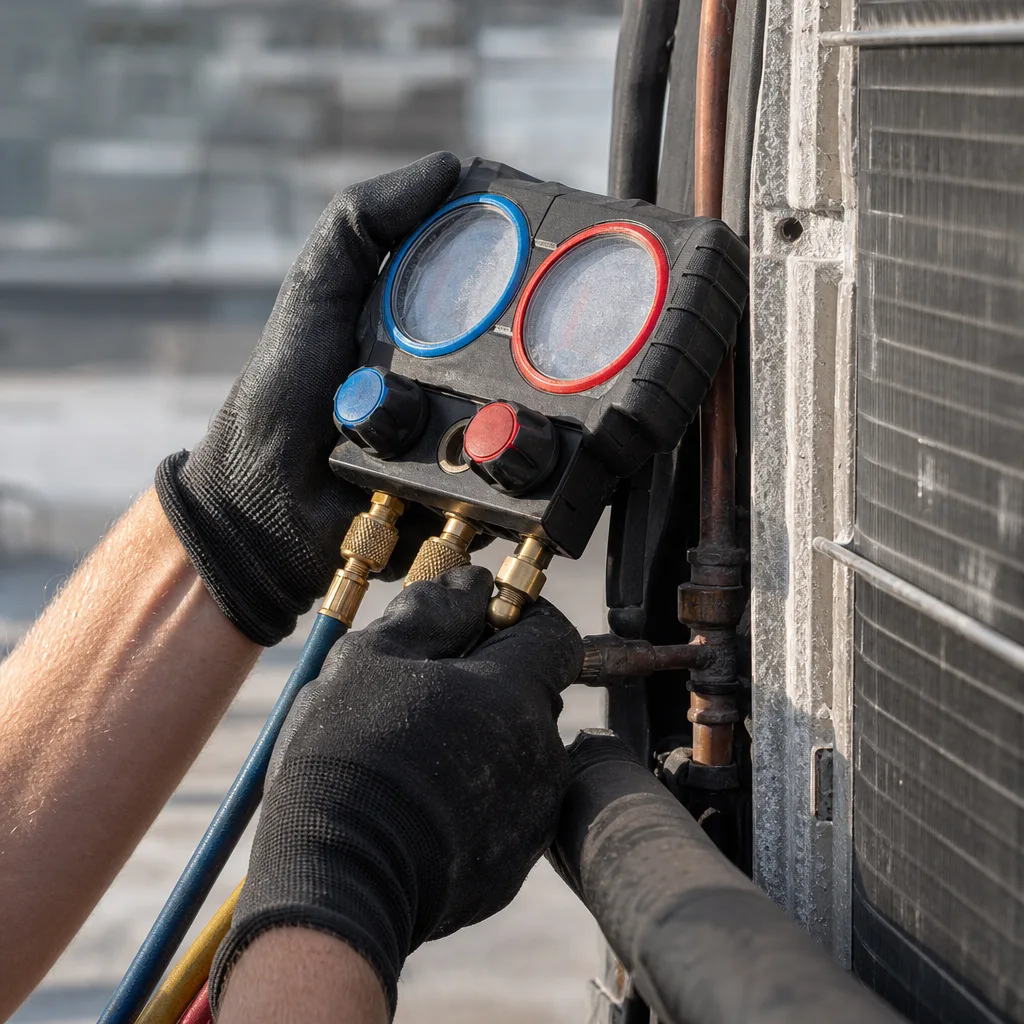
These are the four trades we cover, with a few examples of the work in each:
- HVAC: rooftop unit (RTU) service, commercial HVAC repair and maintenance, make-up air systems, commercial ductwork, and building automation and controls.
- Refrigeration: walk-in cooler repair, walk-in freezer repair, ice machine repair and installation, and refrigeration leak detection.
- Plumbing: commercial plumbing, commercial water heaters, drain cleaning, hydro jetting, and backflow testing.
- Electrical: commercial electrical work, electrical panel repair, dedicated circuit installation, surge protection, and commercial generator installation.
The trade list isn’t the real value, though. The real value is what happens when a problem doesn’t stay inside one trade. And in a commercial building, it often doesn’t.
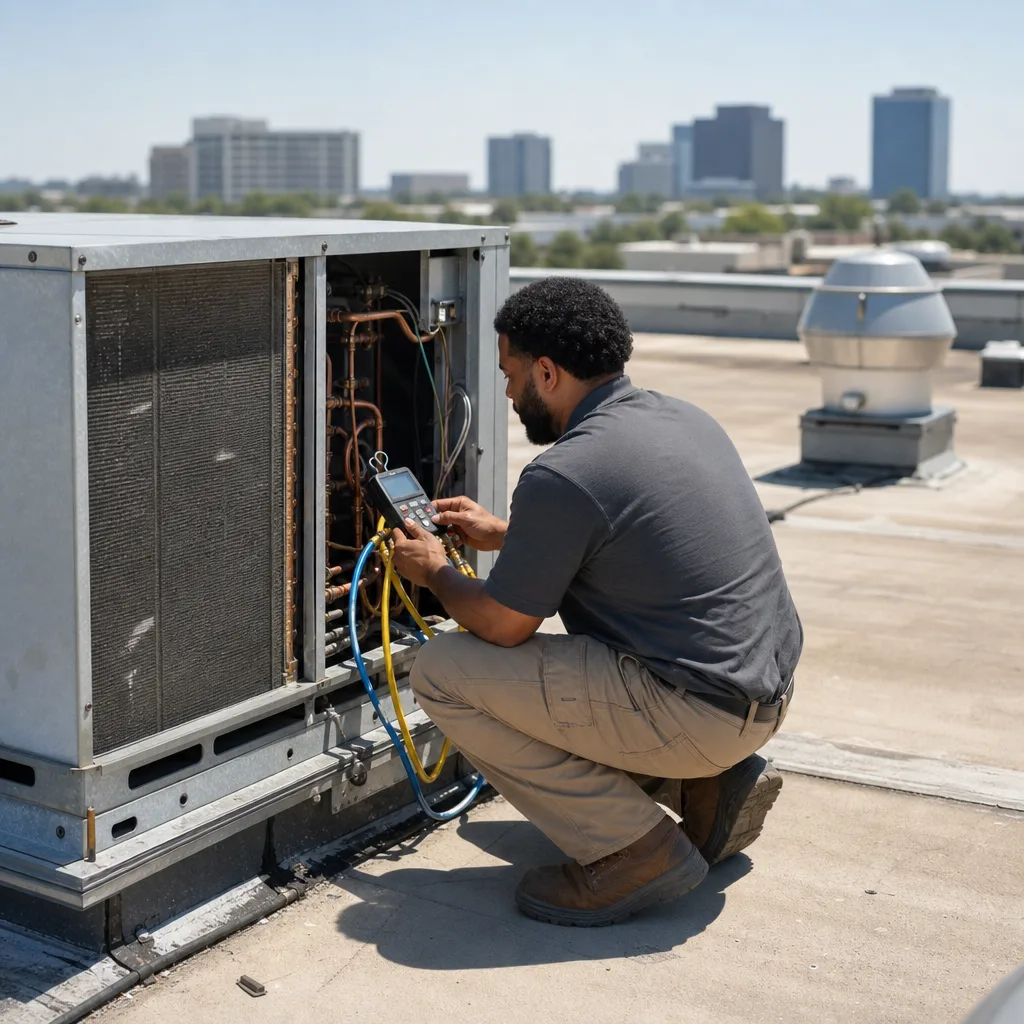
Take a walk-in cooler that’s running warm. It could be the refrigeration system. It could be a clogged condensate drain, which is a plumbing problem. Or it could be a bad circuit, which is electrical. An ice machine needs a clean water supply and steady power to make ice. A rooftop unit that won’t start in a Texas summer may have nothing wrong with the cooling side at all. It may be a breaker or a wiring issue.
When each of those trades belongs to a different company, you end up playing referee. The refrigeration tech says it’s electrical. The electrician can’t come until Thursday. Meanwhile your product is warming up and your tenants are calling you. With one team, the person who finds the problem can follow it wherever it leads. That’s the whole idea behind one-stop service: one accountable team means faster answers and less downtime for your business.
This also covers the work that keeps you from getting that call in the first place. Commercial preventive maintenance can include your HVAC, refrigeration, plumbing, and electrical systems on one schedule, so you’re not tracking four separate vendor calendars. How often we come out is part of the scope we build for your building.
To be clear about the limits: what’s included is coordinated multi-trade service under one vendor. The exact work is itemized in the scope you agree to before anything starts. Bigger projects, like replacing a rooftop unit or putting in new cold storage, are quoted separately so you can review them on their own terms. You’ll know what’s covered and what isn’t up front.
Our team is licensed and insured for HVAC, plumbing, and electrical work, and our technicians are background-checked. We’re also a Trane Comfort Specialist. Your building gets real trade licenses behind every visit, not a middleman passing your job along to subcontractors you’ve never met.
Why Licensing Across Trades Is the Real Test of a One-Stop Provider
Anyone can put “one-stop service” on a truck. The real question is whether that company holds a license in each trade it’s selling you, or whether it holds one and hires out the rest. That difference decides whether you get one accountable team, or the same four-vendor shuffle with an extra layer added on top.
In Texas, HVAC, plumbing, and electrical are licensed separately. An HVAC license doesn’t let a company wire a new circuit, and an electrical license doesn’t cover a gas water heater. Air conditioning and refrigeration contractors and electricians are licensed through the Texas Department of Licensing and Regulation (TDLR). Plumbing has its own state license. Techs who handle refrigerant, like the gas in your walk-in cooler or rooftop unit, also need federal EPA certification.
So when a single-trade shop says it “handles everything,” ask how. Often the answer is subcontractors. That’s not illegal, but it changes what you’re buying. When your walk-in runs warm and the problem turns out to be electrical, the refrigeration tech still can’t touch it. He calls the sub, the sub works on his own schedule, and you’re right back to waiting while your product warms up.
Licensing matters on paper too. Plumbing and electrical permits are generally pulled by a contractor who holds that trade’s license. If the company you hired can’t pull the permit, someone else is signing off on work done in your building. That’s worth knowing before a city inspector or your insurance carrier asks who did it.
Here’s what to check with any provider, us included:
- Ask for a license number in each trade: HVAC, plumbing, and electrical. A real one-stop provider can give you all three without stalling.
- Look each one up yourself. TDLR has a free online license search, and it only takes a couple of minutes.
- Ask which trades, if any, get subcontracted. A straight answer is a good sign, even if the answer is “some.”
- Ask who holds the permit on permitted work, and whose name goes on it.
- Ask for proof of insurance that names the company you’re hiring, not a third party.
We’d rather you check than take our word for it. Our HVAC License is #TACLA29023C, and our plumbing work is licensed under Master Plumber Larry Breedlove. Because we’re licensed across HVAC, plumbing, and electrical, the tech who finds a problem in your building can bring in the right licensed trade from our own team. Nobody has to go hunting for an outside vendor first.
That’s why licensing is the honest test. It’s the one part of a one-stop claim you can verify in a few minutes before you sign anything. If a provider can’t show a license in each trade, they’re not really one team. They’re a phone number in front of several other companies. And when your cooler, your water heater, and your panel all have the same licensed company behind them, there’s no one left to point fingers at but us. That’s exactly how it should be.
Commercial Buildings That Benefit Most From a Bundled Vendor
One-stop service pays off most when your building has a lot of systems that depend on each other, and when downtime costs you real money. If one breakdown can shut your doors, spoil your stock, or send tenants to your phone, a single team starts to make a lot of sense.
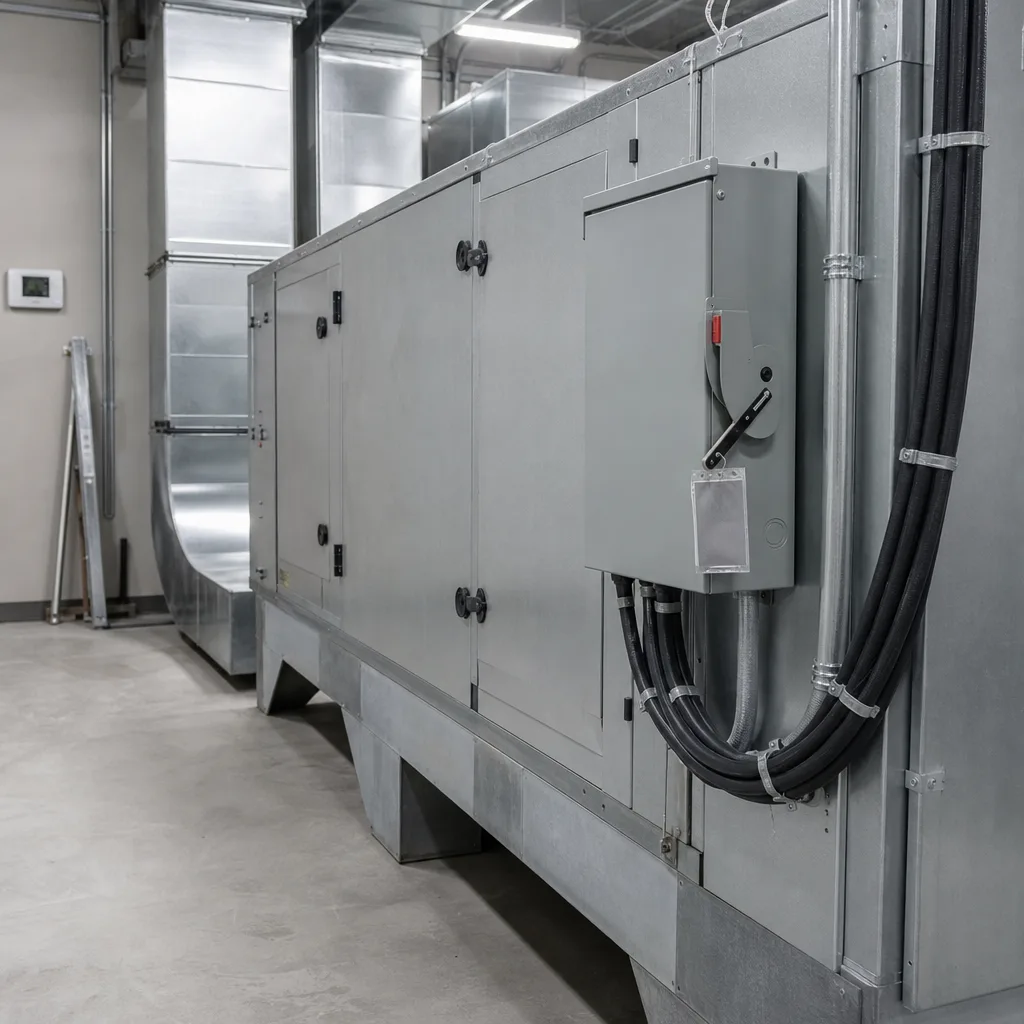
Here are the buildings where we think the bundle earns its keep.
- Restaurants and commercial kitchens. You’ve got walk-in coolers and freezers, ice machines, exhaust hoods, make-up air, commercial water heaters, floor drains, and a lot of high-draw equipment on dedicated circuits. All four trades live in the same few hundred square feet, and a problem in one often shows up in another.
- Grocery, convenience, and food retail. Refrigeration is your inventory. A case or walk-in that drifts warm overnight is product you may have to throw out. These buildings also lean hard on rooftop units to keep the sales floor cool in a Texas summer.
- Multi-tenant retail and strip centers. When you manage several suites, you’re juggling different rooftop units, separate meters, shared plumbing lines, and tenants who each call when something goes wrong. One vendor who knows the whole building beats re-explaining it to a new company every time.
- Medical, dental, and professional offices. Patients and clients expect steady temperatures, working restrooms, and lights that stay on. These offices often can’t reschedule a full day of appointments because the AC quit.
- Small warehouses and light industrial spaces. Big open areas, dock doors, office build-outs, and heavy electrical loads mean HVAC and power problems tend to overlap.
What these buildings share is simple. The systems are tied together, the stakes of a slow fix are high, and someone on your staff is spending hours chasing vendors instead of running the business.
Now the honest part. A bundled vendor isn’t the right fit for every building, and we’d rather tell you that up front.
- Your building only needs one trade. A small office with one rooftop unit and simple plumbing may do fine with a good HVAC maintenance plan and a plumber you call when needed.
- You have in-house maintenance staff. Larger facilities with their own engineers often just need a licensed contractor for specific jobs or permitted work, not a full multi-trade agreement.
- Your lease puts the systems on the landlord. Many tenants pay for repairs they’re not responsible for. Read your lease first. If the landlord covers the HVAC or the plumbing, that’s their call to make, not yours.
- You’re happy with your current vendors. If each of your trades shows up fast and the work holds up, there’s no reason to switch just to consolidate.
If your building lands on that second list, you probably don’t need a bundled agreement right now. If it lands on the first, the time you’ll save not refereeing between companies is often the biggest benefit, even before you look at the price of the work itself.
Not sure what your One-stop commercial service project needs? Ask us.
Call Today, Get Service Today. Xtreme Air Services — North Plano is ready to help.
When a Single-Trade Vendor Is a Better Fit
Even in a busy building with lots of connected systems, there are times when a specialist is the smarter call. Here’s when we’d tell you to go that route.
The system isn’t part of HVAC, refrigeration, plumbing, or electrical. Some equipment sits outside those four trades. Fire sprinklers, fire alarms, elevators, and the cooking equipment itself, like fryers, ovens, and dish machines, all need their own specialists with their own licenses and training. A one-stop agreement can cover the power to your fryer, the hood above it, and the gas water heater in the back. It won’t cover the fryer’s thermostat or your sprinkler heads. Keep a dedicated vendor for those systems.
Your brand or corporate office picks the vendors. Many franchises and national chains run facilities through a corporate vendor program. If your store is on one of those programs, going outside it can create billing headaches or break the rules in your franchise agreement. Check with your district manager or facilities contact before you sign anything with any local contractor.
You’ve got one problem, not an ongoing need. If your ice machine quit today and everything else in the building runs fine, you don’t need a multi-trade agreement. You need someone to fix the ice machine. A service agreement makes sense when you’re managing a building over time. It’s overkill for a single repair.
You run unusual equipment that a specialist installed and knows well. Think of a custom process cooling setup, a lab with tight temperature specs, or an older system with parts that are hard to find. A contractor who built it or has serviced it for years carries knowledge that’s hard to replace. If that contractor is still around and still responsive, the history they bring may be worth more than the convenience of consolidating.
You don’t have to go all or nothing, either. Plenty of businesses keep one trusted specialist for a single system and bundle everything else. A grocery store might keep the refrigeration contractor who knows its rack system and hand off HVAC, plumbing, and electrical to one team. The mix of trades covered is one of the things that shapes your scope and your quote, so a partial bundle is a normal way to set things up.
Here’s a simple way to decide. Write down every system in your building and who services it now. Then mark the ones where a slow fix or a finger-pointing match between vendors has cost you money. If that list is short or empty, you’re probably fine as you are. If the same few problems keep landing between two companies, that’s where one accountable team earns its place.
- Systems outside the four trades, like fire protection, elevators, and cooking equipment, belong with their own specialists.
- Corporate or franchise vendor programs come first. Check yours before hiring anyone locally.
- A single repair doesn’t call for an ongoing agreement.
- A specialist with deep history on unusual equipment can be worth keeping, even if you bundle the rest.
Watch Our Video
See How We Handle One-stop commercial service in Plano
Xtreme Air Services — North Plano
How Scope, Pricing, and Response Work Before You Sign On
There’s no price sheet for one-stop commercial service, and you should be a little wary of anyone who hands you one before seeing your building. Every agreement is quote-based. Scope and pricing are set per building, because a strip center with six rooftop units and a dental office with one aren’t the same job.
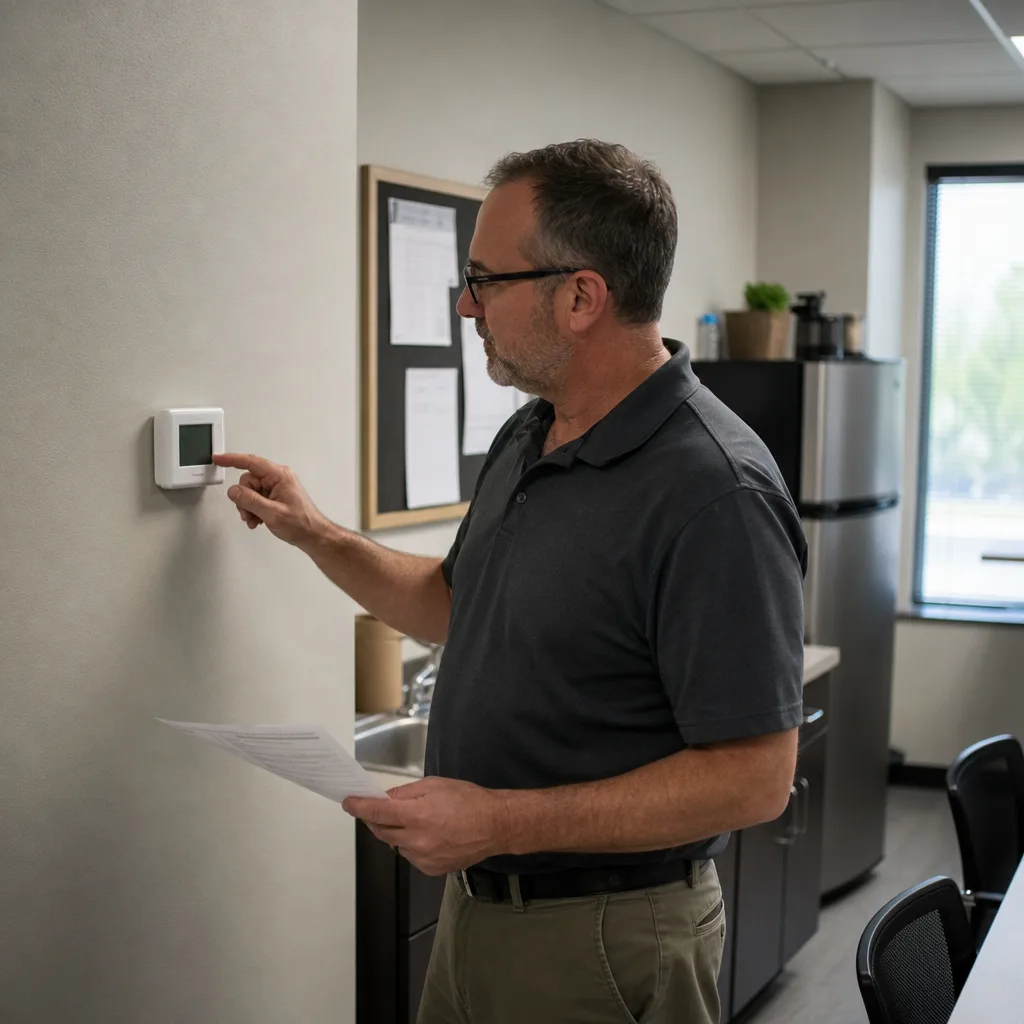
Four things move your quote up or down:
- Building size. More square footage usually means more equipment, more ductwork, and more ground to cover on each visit.
- Number of systems. Three walk-ins and two ice machines take more time than one reach-in cooler.
- Service frequency. How often we come out for preventive maintenance is part of what you’re paying for, and you help decide it.
- Mix of trades covered. Bundling all four trades prices differently than bundling two and keeping a specialist for the rest.
Once we know those, you get a custom quote. The work is itemized in writing so you can see what you’re agreeing to, and large installs are quoted on their own, as covered above.
If you need us out before you’ve settled on an agreement, say your walk-in is running warm right now, there’s a $26-$99 service-call fee. That fee is credited toward the repair if you go ahead with Xtreme Air Services. You’re not paying twice just to find out what’s wrong.
On repairs, you get upfront flat-rate pricing that you approve before any work starts. There’s no meter running while a tech stands on your roof. Nights and weekends cost the same as any weekday, which matters when your freezer quits on a Saturday night and you’ve got a full Sunday ahead. For qualifying installations and larger jobs, flexible financing is available on approved credit.
When something breaks, you call and talk to a real person. Same-day service is available, and the technician who shows up is licensed, insured, and background-checked.
Before you sign with any multi-trade provider, us included, get clear answers to these:
- What’s in the written scope, system by system, and what isn’t?
- How often will someone come out for maintenance, and what gets checked each time?
- Is there a service-call fee for repair visits, and does it get credited toward the work?
- Do nights, weekends, or holidays cost extra?
- Do I approve the price before a repair starts, or do I find out on the invoice?
- Can the scope change if I add equipment or take a trade out later?
A good provider answers all of those without hedging. If you get vague answers on pricing before you’ve signed, expect the same after.
Our Plano office is at 5465 Legacy Drive, so your building isn’t a long haul away when you need someone on site. The easiest first step is a phone call. Tell us what’s in your building and who services it now, and we’ll talk through what a scope would look like for you.
Call 469-527-5131
Frequently Asked Questions
Common questions about One-stop commercial service
Can you add refrigeration or electrical to an agreement that only covers HVAC right now?
Yes, the mix of trades you bundle is something we build around your building, not a fixed package. If you start with HVAC and later want refrigeration or electrical added, that just changes your scope and quote. The same goes the other way if you want to drop a trade and keep a specialist for it instead.
Who do I call first if I’m not sure which trade is causing the problem?
Call us first and describe what you’re seeing, like a cooler running warm or a unit that won’t start. You don’t need to diagnose it yourself before calling. One of our licensed techs can trace the issue across HVAC, refrigeration, plumbing, or electrical instead of you guessing which vendor to dial.
What happens if my building needs a permit for the repair?
Permits on plumbing and electrical work are generally pulled by the contractor who holds that trade’s license. Since we hold licenses in HVAC, plumbing, and electrical, we can pull the permit ourselves instead of relying on a subcontractor you’ve never vetted. Ask any provider who signs the permit before you hire them.
Do I need a bundled agreement if I already have in-house maintenance staff?
Not usually. If your building has its own engineers on site, you likely just need a licensed contractor for specific repairs or permitted work rather than a full multi-trade agreement. A bundled service makes more sense when no one on staff is tracking four separate vendors.
Ready to Get Started?
Call (469) 527-5131 Today, Get Service Today.