


Boiler Repair in Plano: Is It a Quick Fix or Something Bigger?
Boiler warning signs explained, what a repair visit costs and includes, and an honest call on repair versus replace.
What’s Covered on This Page
- Signs Your Boiler Needs a Repair Call
- What Happens During a Boiler Repair Visit
- What Boiler Repair Costs and What’s Included
- Repair or Replace: How to Tell
- Why a Dedicated Mechanical Contractor Matters for Boiler Work
- How long does a boiler repair usually take?
- Can a boiler repair be done the same day it stops working?
- Will hard water in Plano keep causing boiler problems even after a repair?
- Is it safe to keep running a boiler that keeps shutting off or short cycling?
Signs Your Boiler Needs a Repair Call
Your boiler doesn’t usually quit without warning. It tends to drop hints first. The trouble is that in Plano, a boiler can sit quiet for months while the weather stays warm. Then the first hard cold front rolls through North Texas, you turn the heat on, and a problem that was already there finally shows up.
Here’s what to watch for, and what it usually means:
- No heat, or only some rooms warm up. If a few radiators or a zone of radiant floor stay cold while the rest heat fine, it can point to a stuck valve, a failing circulator pump, or air trapped in the lines.
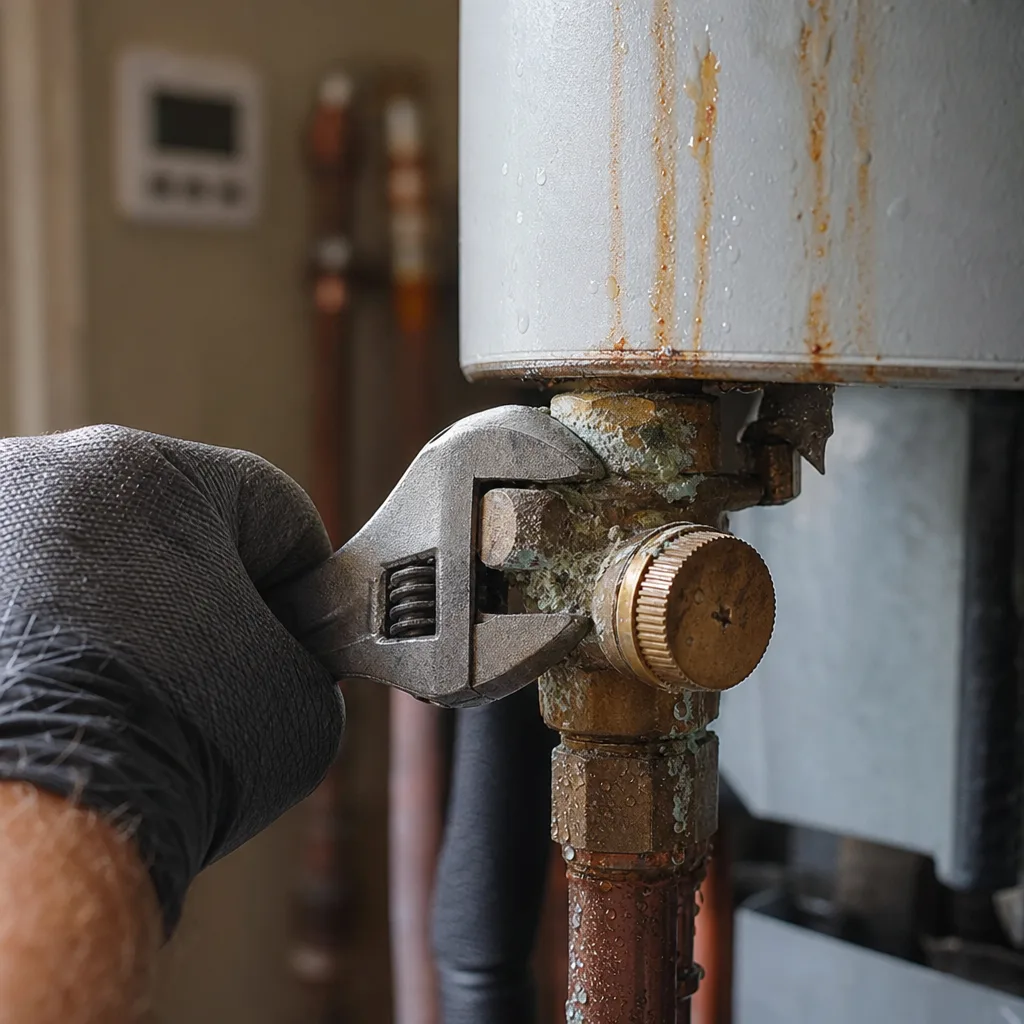
- Banging, gurgling, or a sound like a kettle boiling. These noises often come from air in the system, or from mineral scale building up inside the heat exchanger. North Texas water is hard, and that scale makes the boiler work harder for the same heat.
- Pressure that won’t stay put. The gauge on the front of your boiler should hold fairly steady. If it keeps dropping, or climbs high enough that the relief valve drips, something isn’t right with the expansion tank, the fill valve, or a leak somewhere in the loop.
- Water on the floor or drips around the unit. A small puddle under a pipe joint, pump, or valve doesn’t fix itself. Caught early, it’s often a seal or a fitting.
- The boiler keeps shutting off or won’t light. If it lights, runs a few minutes, and shuts down, or shows the same error code over and over, the ignition, the flame sensor, or a control is often the cause.
- Short cycling. The boiler turning on and off again and again wears out parts faster and wastes fuel.
- Gas bills going up while the house feels the same. That usually means the boiler has lost efficiency, often from scale or a part that’s wearing out.
None of these signs means your boiler is finished. Most of them point to one part. That matters, because the most common boiler repair we handle is just that: find the failed part, repair or replace it, and make sure the whole system runs right before we leave. Most of those calls are a single common failure fixed on the first visit.
Waiting is what turns a one-part job into a bigger one. A pump left to grind can overheat. A slow leak can lower pressure until the boiler locks out on the coldest night of the year. A short-cycling boiler puts extra wear on the same parts every time it starts. Calling while it’s still a small symptom gives you the best chance at a simple fix and a clear price.
If you run a business with a boiler, the same signs apply, but the stakes are different. A cold building means unhappy tenants, staff, or customers. A boiler that’s cycling oddly or losing pressure is worth a look before it shuts down during business hours.
What Happens During a Boiler Repair Visit
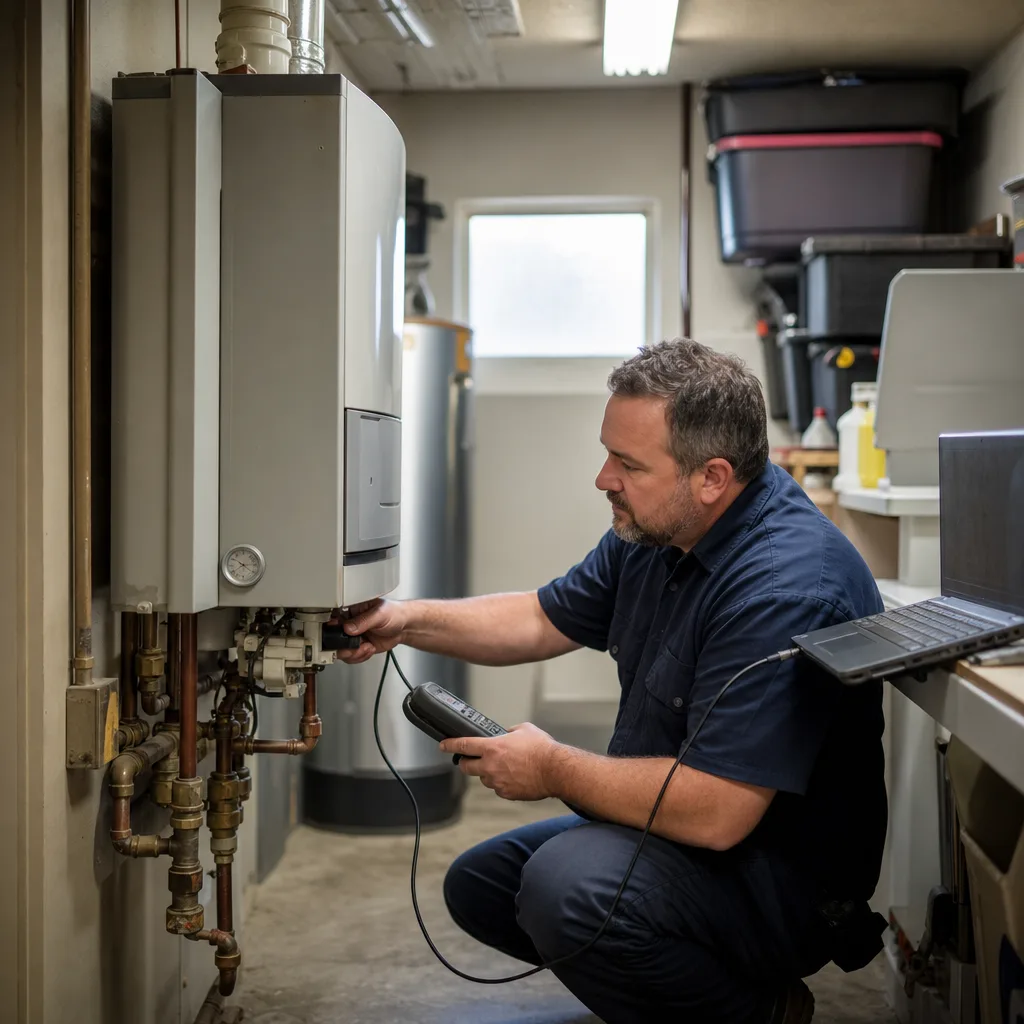
A boiler repair visit has three jobs. Find the part that failed. Repair it or replace it. Then make sure the whole system runs right before anyone packs up. Most calls are a single common failure fixed on the first visit, so most of the time you’re looking at one trip, not a string of them.
Our team is licensed and insured. Every technician who comes to your home is background-checked and drug-tested. That matters when someone is working near your gas line and your family’s heat.
Here’s how a good repair visit usually goes, step by step:
- Listen first. You know your boiler better than anyone. When did it start acting up? Which rooms are cold? Is there an error code on the screen? Your answers point the diagnosis in the right direction fast.
- Diagnose the real cause. A cold radiator is a symptom, not a diagnosis. A good tech checks pressure, the burner, ignition, controls, the pump, and valves until the actual failed part is found, so you’re not paying to swap parts on a guess.
- Explain it and price it before work starts. You’ll hear what failed, why it failed, and what it’ll take to fix it in plain English. You get upfront flat-rate pricing and approve it before any work begins. No meter running.
- Make the repair. The failed part gets repaired or replaced with the standard replacement part.
- Test the whole system. The boiler gets fired up and watched while it runs. Does it light cleanly, hold pressure, and heat every zone? A repair isn’t done until the heat is back where it should be.
- Clean up. Your floor and the area around the boiler should look the way they did before we showed up.
That second list is where surprise bills come from with some companies, so here’s how it works with us. Sometimes testing turns up a second part that’s also worn out. An older boiler might need work that brings it up to current code. If either one happens, you hear about it and get a separate price before anything extra is done. You decide.
There’s a service-call fee of $26 to $99. It’s credited toward the repair if you go ahead with Xtreme Air Services. If the boiler quits on a Saturday night during a cold snap, the price doesn’t jump. There’s no extra charge for nights or weekends.
Financing usually isn’t needed for a single-part fix like this. If the diagnosis shows a larger repair or a replacement makes more sense, financing is available for those bigger jobs. You’ll have the facts and the price in hand before you make that call.
Running a business? The visit works the same way. Let us know your hours, and tell us if parts of the building can’t lose heat while the work is done. That way the repair fits around your tenants, staff, or customers.
What Boiler Repair Costs and What’s Included
Most boiler repairs we handle cost between $300 and $1,100. That’s the most common job: find the one part that failed, repair or replace it, and test the system. Across all boiler repairs, the typical range is $300 to $2,000.
Why such a wide spread? A boiler isn’t one part. A worn seal and a dead circulator pump are both called boiler repair, but they’re very different jobs. Here’s what moves your price up or down:
- How much failed. One part on its own usually lands at the lower end. If a problem was left long enough to spread, like a slow leak that dropped pressure until another part wore out, the job gets bigger.
- Part cost and availability. Some boiler parts are common and easy to get. Others cost more or take time to track down.
- Your boiler’s age and brand. Older units can need parts that are harder to find, and some makers’ parts simply cost more than others.
- More than one failed part. Two failures mean two parts and more labor. Each extra part is priced for you before it’s done.
- When it breaks. With many companies, a night or weekend call costs more. With us it doesn’t, since there’s no extra charge for nights or weekends.
The service-call fee covered above is credited toward the repair if you go ahead with us, so it isn’t an extra cost stacked on top.
It also helps to know how pricing works in this trade. Boiler companies usually price one of two ways. Some charge by the hour plus parts, so your final bill depends on how long the job takes. Others give you a set price for the whole job before work starts. We use upfront flat-rate pricing. That means a stubborn fitting or a long test run doesn’t change what you pay. With hourly pricing, you carry that risk.
Before you say yes to any boiler company, ask these questions:
- Is this a set price for the whole job, or an hourly estimate?
- Does the price include diagnosis, labor, the part, testing, and cleanup?
- If you find a second problem, will I get a price before you fix it?
- Do you charge more for nights or weekends?
- Is the trip fee credited toward the repair?
A company that answers all five clearly is one you can plan around. If you get vague answers, that’s a sign the final bill could look different from the first number you heard.
Sometimes the price heads toward the top of the range. That usually happens when a major component has failed or several parts are worn out on an older boiler. At that point it’s fair to ask whether fixing it still makes sense or whether replacing the boiler is the better spend. Ask for a price on each so you can compare them side by side. Financing is available on larger repairs and replacements, so a bigger number doesn’t have to be paid all at once.
For most people with a cold radiator or a dripping fitting, it won’t come to that. Call while it’s still one part, and you’re likely looking at a one-visit fix at a price you’ve already approved.
Need help with Boiler repair?
Call Today, Get Service Today. Xtreme Air Services — North Plano is ready to help.
Repair or Replace: How to Tell
Most of the time, repair is the right call. If your boiler has one failed part, like a pump, a valve, an ignitor, or a leaking fitting, fixing that part gets your heat back without the cost of a whole new system. An older boiler isn’t a reason to replace it on its own. If it heats your home, holds pressure, and only needed one part, keep it running.
Replacement starts to make sense when the problems stack up, not when one thing breaks. Here are the signs worth taking seriously:
- The heat exchanger is cracked or leaking. This is the heart of the boiler, the part that moves heat from the burner into the water. When it fails, the repair is often close to the cost of a new unit.
- You’re calling for repairs again and again. One repair is normal. A new failure every winter means the whole unit is wearing out, not just one part.
- Parts are hard to find. Some older boilers use parts the maker no longer stocks. Waiting weeks for a part in the middle of a North Texas cold snap isn’t a good plan.
- Several major parts are failing at the same time. When the pump, the controls, and the burner all need work at once, you’re paying to rebuild an old boiler piece by piece.
- Your gas bills keep climbing even after repairs. Years of hard-water scale can leave an older boiler burning more fuel for less heat.
If none of those fit your situation, you probably need a repair, not a new boiler. That’s true even if someone has already told you otherwise. A single failed part on a boiler that’s otherwise in good shape is a repair job, plain and simple.
Here’s a simple way to think about it. Say your boiler is getting up there in age and the circulator pump quits. You replace the pump and the heat comes back. That’s a good repair. Now say the same boiler needed a new pump last winter, has a leak at the heat exchanger this winter, and the replacement part is back-ordered. That’s three warning signs at once. Putting more money into it is harder to justify.
When you’re on the fence, ask for two prices: one for the repair and one for replacing the boiler. Seeing both numbers side by side makes the choice much clearer. Ask the tech how much life the boiler likely has left after the repair, and whether anything else showed signs of wear during testing. A straight answer to those questions tells you a lot about the company you’re dealing with.
We’ll tell you which way we’d go if it were our own home. If a repair will do the job, that’s what we’ll recommend. If replacement is the better spend, we can handle boiler replacement too, and financing is available on bigger jobs like that. Either way, you get the facts and an upfront flat-rate price before you decide, from licensed and insured technicians, with no extra charge for nights or weekends.
Call 469-527-5131
Watch Our Video
See How We Handle Boiler repair in Plano
Xtreme Air Services — North Plano
Why a Dedicated Mechanical Contractor Matters for Boiler Work
Most homes in North Texas heat with a furnace or a heat pump. So when your boiler acts up in Plano, it’s fair to wonder who works on these. A lot of heating companies spend their days on forced-air systems and rarely open up a boiler. That matters, because the quick one-part fix only happens when the person looking at your boiler knows where to look.
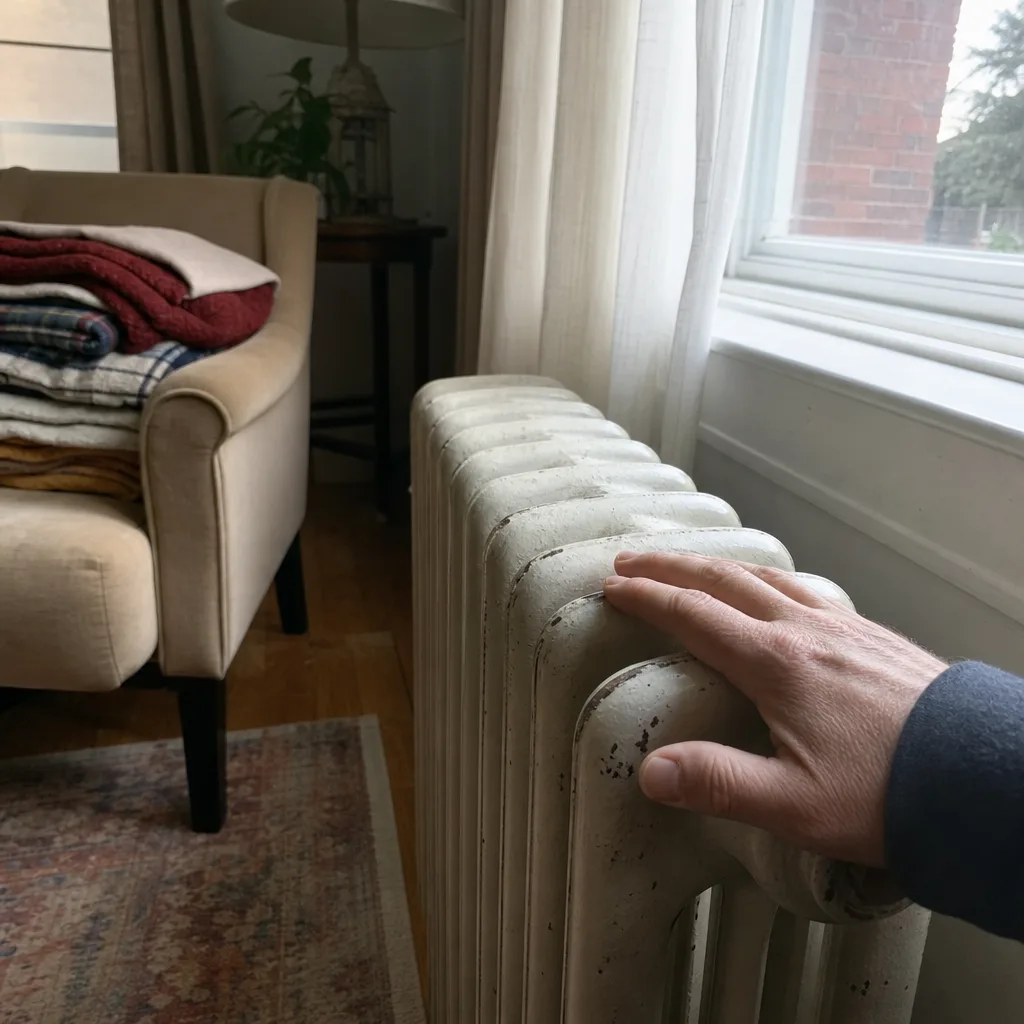
A boiler isn’t just a heater. It’s a small plant sitting in your home or building, and it touches several trades at once:
- Gas. The burner runs on a gas supply that has to be tight and safe.
- Water and pressure. The boiler heats water and pushes it through a closed loop of pipes, pumps, valves, and an expansion tank.
- Electrical. Controls, sensors, and the circulator pump all run on power and wiring.
- Venting. Exhaust has to leave the building the right way, every time the burner fires.
When a cold radiator turns out to be a wiring problem at the pump, or a pressure drop turns out to be a leaking fitting, a tech who only knows one of those trades can get stuck. That’s how you end up with a second company, a second trip fee, and a second wait in the middle of a cold front.
Xtreme Air Services is a licensed and insured HVAC, plumbing, and electrical contractor. Boiler repair, hydronic heating, pump repair, and piping work are all part of what we do, along with gas line repair and carbon monoxide testing. One trusted team covers the whole boiler, so the job doesn’t get handed off halfway through. Our office is right here on Legacy Drive in Plano.
There’s a bonus with one team, too. If hard water scale is what keeps wearing out your boiler, we also install water softeners. That way you’re fixing the cause and not just the part it keeps breaking.
Before you let anyone work on your boiler, here’s what’s worth checking:
- Are they licensed in Texas? HVAC contractors here are licensed through the Texas Department of Licensing and Regulation. Ask for the license number. Ours is TACLA29023C.
- Do they work on boilers, or mostly furnaces? Ask plainly. A straight answer is a good sign.
- Can they handle the gas, plumbing, and electrical sides themselves? If not, ask who will, and who you’ll be paying.
- Are they insured? Someone working near your gas line and your family’s heat should be.
For a business, the stakes are higher. A boiler that heats offices, a shop, or tenant spaces can’t sit cold while two companies sort out whose problem it is. One accountable contractor keeps the fix moving and keeps your building running.
Call now
Frequently Asked Questions
Common questions about Boiler repair
How long does a boiler repair usually take?
Most boiler repairs finish in one visit. A technician listens to what’s happening, finds the failed part, prices it, repairs it, and tests the whole system before leaving. Jobs only stretch past one visit when testing uncovers a second worn part that needs a separate approval.
Can a boiler repair be done the same day it stops working?
Yes, most calls are handled the same day since the common fix is just one failed part. Same-day service is available 6 days a week, so a cold radiator or a tripped boiler doesn’t have to mean days without heat.
Will hard water in Plano keep causing boiler problems even after a repair?
It can, since North Texas water is hard and leaves mineral scale inside the heat exchanger over time. That scale makes the boiler work harder and can lead to repeat noises or rising gas bills, which is why pairing a repair with a water softener addresses the cause instead of just the symptom.
Is it safe to keep running a boiler that keeps shutting off or short cycling?
It’s not a good idea to let it keep happening, since short cycling wears out the same parts faster with every start. A boiler that repeatedly shuts off or shows the same error code is usually pointing to one failing part, like the ignition or a control, that’s best fixed before it strands you without heat on a cold night.
Ready to Get Started?
Call (469) 527-5131 Today, Get Service Today.