


Commercial HVAC Repair & Maintenance in Plano
Commercial and rooftop systems repaired before one failing part takes the rest down – plus preventive maintenance.
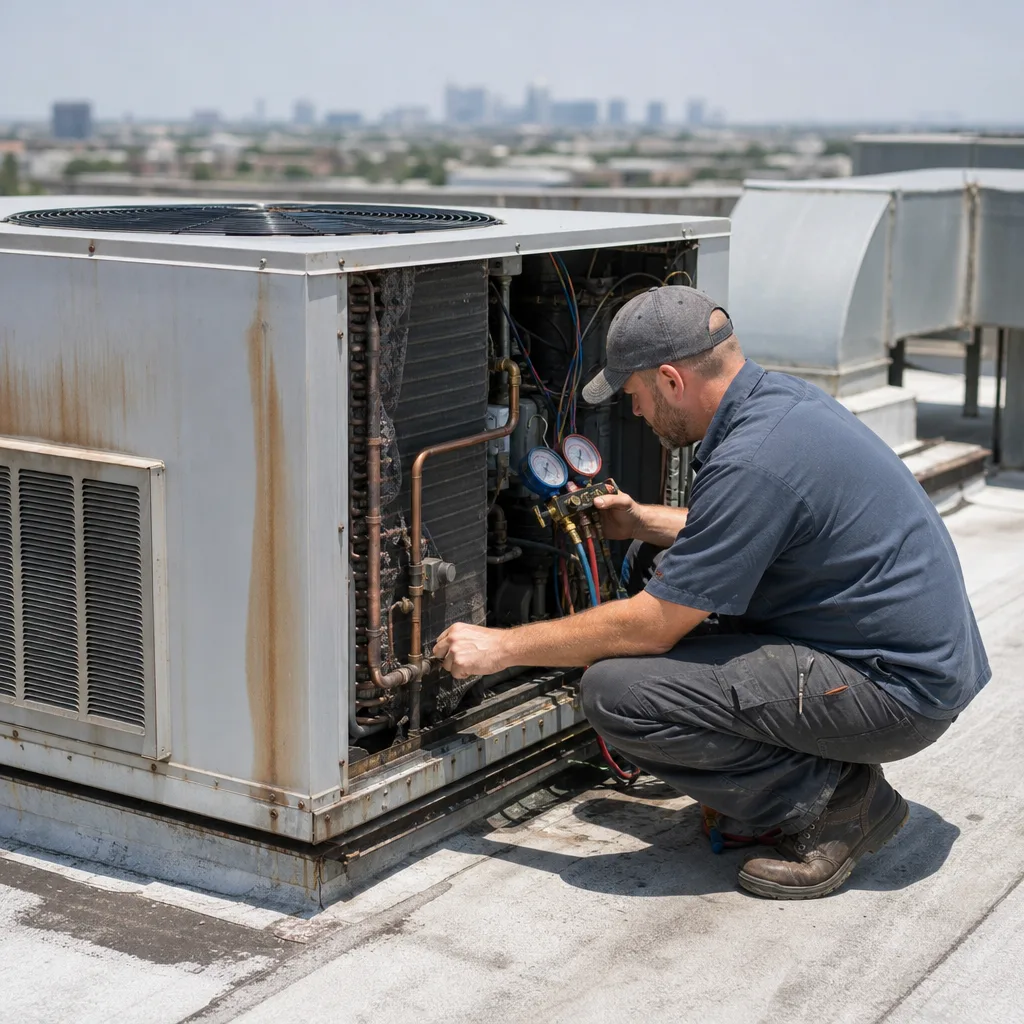
What’s Covered on This Page
- Know When a Repair Call Is the Right Move
- Spot the Signs That Mean Act Now, Not Later
- What Happens During a Repair Visit
- Ask for an Itemized Quote Before Authorizing Major Repairs
- Decide Between Reactive Repair and a Maintenance Plan
- How much does a commercial AC tune-up cost for one rooftop unit?
- Who do I call if I’m not sure whether my landlord or I am responsible for the repair?
- What’s a reasonable repair bill before I should get a second opinion?
Know When a Repair Call Is the Right Move
Not every warm afternoon means a broken system. Some problems take two minutes to fix yourself. Others get worse and cost more every hour the unit keeps running. Here’s how to tell the difference so you don’t pay for a visit you didn’t need, and you don’t wait on one you did.
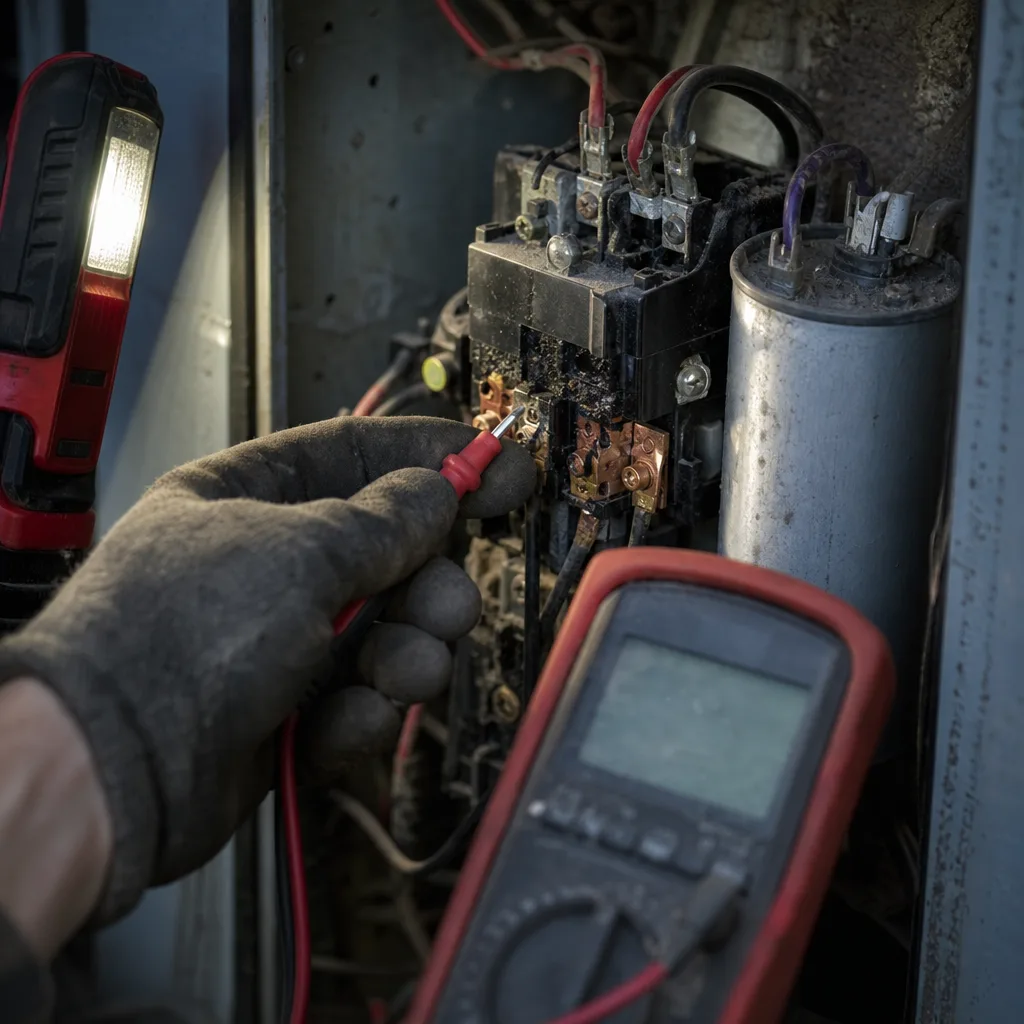
Start with these quick checks. They’re safe for anyone on your staff to do:
- Thermostat: Make sure it’s set to cool, the set point is below room temperature, and the screen isn’t blank. Dead batteries or a schedule someone changed over the weekend can look a lot like a failed unit.
- Breaker: Look for a tripped breaker in your electrical panel. If you reset it once and it holds, watch the system. If it trips again, leave it off and call.
- Filter: A clogged filter chokes airflow and can make a healthy system look sick. If you can reach it and it’s gray and caked, swap it out and give the unit some time to catch up.
If none of those fixes it, stop troubleshooting. These signs mean a part has failed or is about to, and you’ll want a technician to take a look:
- Warm or room-temperature air coming from the vents while the fan runs
- Ice on the copper refrigerant lines or the indoor coil
- Water dripping from a ceiling tile near the air handler or under a rooftop unit
- A burning, electrical, or hot-metal smell from the vents
- Grinding, banging, or loud buzzing from the equipment
- The system turning on and off every few minutes without ever cooling the space
- One area of your building running much hotter than the rest
In a Texas summer, these aren’t problems to nurse along until next week. A unit that’s struggling on a 100-degree afternoon is working its hardest. Running it with a bad part can turn one failed component into several. That matters to your bill, because the number of failed parts is one of the biggest things that drives repair cost up.
There’s one more check that can save you money. If you lease a suite in a multi-tenant office building or retail center, read your lease or call property management before anyone else. In many leases, the landlord covers the rooftop units and shared equipment. If that’s your situation, the repair may not be yours to pay for, and you shouldn’t book a contractor until you know.
If the equipment is yours and the signs point to a real failure, timing shouldn’t hold you back. Xtreme Air Services charges no extra for nights or weekends, so calling at 7 p.m. on a Saturday costs the same as calling on a Tuesday morning. There’s a $26-$99 service-call fee, and it’s credited toward the repair if you go ahead with us. That means the trip to find out what’s wrong doesn’t turn into money wasted.
Spot the Signs That Mean Act Now, Not Later
Once you know a part is failing, the next question is how fast to move. The answer depends less on the symptom and more on what’s at stake inside your building. A warm conference room and a warm server closet aren’t the same problem, even when the cause is the same.
Call the same day if any of these fit your situation:
- You smell burning or hot metal, or a breaker keeps tripping. Keep the system off until someone checks it.
- Water is coming through a ceiling tile above computers, stock, files, or an area where customers walk.
- The space holds things that can’t take the heat, like network equipment, medications, or food stock.
- Your building is full of employees, patients, customers, or tenants, and the indoor temperature is climbing on a hot afternoon.
- The unit has stopped cooling completely and the forecast isn’t letting up.
These can usually wait for a scheduled visit in the next few days:
- The system still cools, but it’s louder than it used to be.
- Your electric bill keeps rising and nothing about how you use the space has changed.
- One office runs a few degrees warmer than the rest, but it’s still workable.
- The unit runs longer than normal to reach the set point.
Here’s why we don’t tell you to sit on the borderline cases for weeks. A system that limps along on a mild spring morning is under far less strain than it will be on a July afternoon in Plano. A weak part that holds up in May can quit completely during the first real heat wave. When that happens, you’re no longer booking a repair on your own schedule. You’re scrambling with a hot building and an open business.
Catching a problem early also gives you room to plan. Part cost and availability are among the things that move a repair bill. If a part has to be ordered, you’d rather know on a slow Tuesday than on a busy Friday.
Picture a front desk on a Monday morning. By 10 a.m., the lobby feels sticky, and the thermostat says the system is running. It’s not an emergency yet. But if that office books patients or rings up sales all afternoon, waiting until things get worse means losing a full day. Calling at 10 a.m. gives a technician the best chance to find the failed part while the doors stay open.
Do you keep seeing the “can wait” signs every few months? That’s usually a maintenance question, not a repair one. Regular commercial preventive maintenance is how you catch worn parts and dirty coils before they turn into a no-cooling call. If your equipment truly can’t go down, like a walk-in cooler or freezer, treat any warning sign as a same-day problem. That equipment has its own service page.
When you’re unsure which list you’re on, lean toward the faster call. As covered above, a night or weekend visit costs the same as a weekday. So the only thing you give up by calling early is the worry.
What Happens During a Repair Visit
A commercial repair visit has three jobs. We find the failed part, repair or replace it, and then confirm the system runs correctly before we leave. The person doing that work is a licensed and insured technician who has been background-checked and drug-tested. That matters when someone is walking through your office, your stockroom, or your tenants’ space.
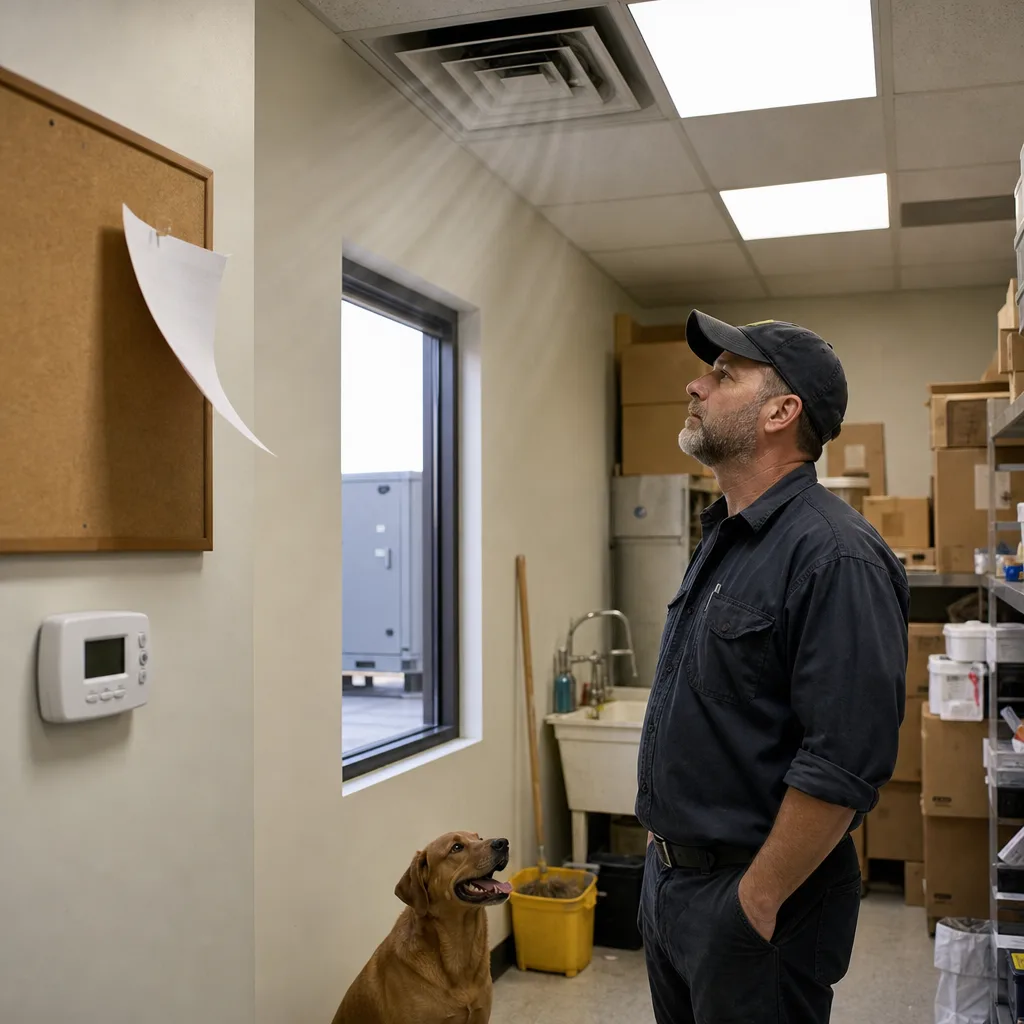
You can shorten the visit before we even get there. A few minutes of prep means less time spent finding things and more time spent fixing them:
- Know how to reach the equipment. If the unit is on the roof, find out who has the key to the roof hatch or access door. If building management controls access, give them a heads-up.
- Know which unit serves which area. Many buildings have more than one system. Telling us that the back offices are hot while the lobby is fine points us to the right unit faster.
- Write down what you noticed and when it started. Note the smell, the noise, the water, or a breaker that tripped twice. Those details help the diagnosis.
- Have someone on site who can answer questions and approve the work, or who can reach the person who does.
Once the technician finds the problem, you get the price before any repair starts. It’s upfront flat-rate pricing, and you approve it first. There’s no meter running while you decide, and no surprise line items when the invoice shows up. If you go ahead, the service-call fee is credited toward the repair, as covered above.
Here’s what that quoted repair price covers, so you know exactly what you’re saying yes to:
- Included: diagnosis, labor, the standard replacement part, testing, and cleanup.
- Not included unless quoted separately: additional failed parts, major components, code upgrades, or permits.
Most calls turn out to be a single common failure that gets fixed on the first visit. That’s the best outcome, and it’s one more reason calling early pays off. When a struggling unit keeps running, it has more chances to take other parts down with it. If the technician does find more than one failed part, or a major component is involved, you’ll hear about it and get a separate quote before anything extra is done. The decision stays with you.
Some repairs grow into bigger jobs, and some older units reach the point where replacement makes more sense. Financing is available on qualifying installations and larger jobs, on approved credit. That way, a major repair doesn’t have to come out of this month’s operating budget all at once.
The visit isn’t finished when the new part goes in. The technician tests the system to confirm it’s cooling the way it should and cleans up the work area. Before they leave, ask them to walk you through what failed and what they replaced. You should leave knowing what happened to your equipment, not just that it’s running again.
Not sure what your Commercial HVAC repair & maintenance project needs? Ask us.
Call Today, Get Service Today. Xtreme Air Services — North Plano is ready to help.
Watch Our Video
See How We Handle Commercial HVAC repair & maintenance in Plano
Xtreme Air Services — North Plano
Decide Between Reactive Repair and a Maintenance Plan
Some businesses only call when something breaks. Others pay for scheduled checkups so things break less often. Neither choice is always right. The better fit depends on how much a breakdown costs you, how old your equipment is, and who’s responsible for it.

Reactive repair means you pay nothing until there’s a problem, and then you pay for that problem. That works fine for some buildings. The catch is timing. Breakdowns don’t pick a slow week. They tend to show up when the system works hardest, on the hottest afternoons of a Plano summer, when your building is full and every hour without cooling costs you.
Maintenance flips that. A technician looks at the system on a schedule and catches small problems while they’re still small. On a typical commercial checkup, that means work like this:
- Cleaning dirty condenser and evaporator coils, so the unit doesn’t have to run longer to move the same heat
- Testing capacitors and motors, which can weaken for months before they quit
- Clearing condensate drain lines before they back up and drip through a ceiling tile
- Checking belts, electrical connections, and refrigerant levels
- Changing filters so airflow stays strong
A maintenance plan usually makes sense if any of these fit you:
- Downtime hurts. A medical office, restaurant, retail store, or server room can’t just send everyone home when the air quits.
- You run several units. More equipment means more parts that can fail, and a schedule keeps all of it from slipping through the cracks.
- You keep paying for the same small repairs, like clogged drains or failed capacitors, every year.
- Tenants depend on you. If you manage the building, steady comfort means fewer complaint calls and happier tenants.
Here’s the honest side. A plan may not be worth it for you if:
- Your lease puts the rooftop units on the landlord. Check that before you sign up for anything.
- Your unit is near the end of its life and you’ve already budgeted to replace it soon. Tune-ups won’t save a system that’s worn out.
- You have one small, newer unit serving a space where a short outage is just an inconvenience. Calling as needed may cost you less.
If you’re comparing plans from any company, ask a few plain questions first. What exactly gets checked on each visit? How often do they come out? Which parts and repairs are included, and which ones cost extra? Will you get a written report on each unit’s condition? A good plan should give you clear answers, not just a promise of a “tune-up.”
Xtreme Air Services handles both commercial repair and commercial preventive maintenance. So you can start with the repair you need today and talk through whether regular upkeep makes sense for your building. You’ll get an honest answer either way, and if calling as needed fits your situation better, that’s what you’ll hear.
Frequently Asked Questions
Common questions about Commercial HVAC repair & maintenance
How much does a commercial AC tune-up cost for one rooftop unit?
A standard tune-up checks coils, capacitors, drain lines, belts, and filters on one unit. Costs vary by how many units you have and their condition, so ask for a per-unit price before you book. If you run several units, a maintenance plan can work out cheaper per visit than calling each one in separately.
Who do I call if I’m not sure whether my landlord or I am responsible for the repair?
Call your property manager or check your lease before booking any repair. Many commercial leases put rooftop units and shared equipment on the landlord, so a quick call can save you an unnecessary expense. If you’re the owner-occupant and the equipment is yours, go ahead and schedule service once you’ve confirmed that.
What’s a reasonable repair bill before I should get a second opinion?
If a quote lands near the top of the typical range for your type of job, that usually means more than one part failed or a major component is involved. At that point, ask for an itemized quote that names each failed part and separates extra costs like code upgrades or permits. A clear breakdown lets you compare repair against replacement with real numbers instead of guessing.
Ready to Get Started?
Call (469) 527-5131 Today, Get Service Today.