


Boiler Installation in Plano: What a Licensed Install Covers
Boiler installs for buildings that heat with water, with what's included and what drives the cost explained.
What’s Covered on This Page
- Boiler Installation Is Not the Same as a Water Heater or Furnace Swap
- Signs an Aging Boiler Needs Full Replacement, Not a Repair
- What a Standard Boiler Installation Includes
- What Drives Boiler Installation Cost Up or Down
- Licensing and Permit Requirements for Boiler Work in Plano
- Do I need a plumber or an HVAC company for boiler installation?
- What size boiler does my home need?
- How long does a boiler installation take?
Boiler Installation Is Not the Same as a Water Heater or Furnace Swap
A lot of folks picture a boiler as a big water heater. It’s an easy mix-up, since both heat water. But they do very different jobs, and that changes how the install has to be done.
- A water heater warms the water you use at your sinks and shower. Water goes in, gets hot, and comes out of a tap.
- A furnace heats air and pushes it through ducts. Most homes around North Texas heat this way, with the ductwork often running through the attic.
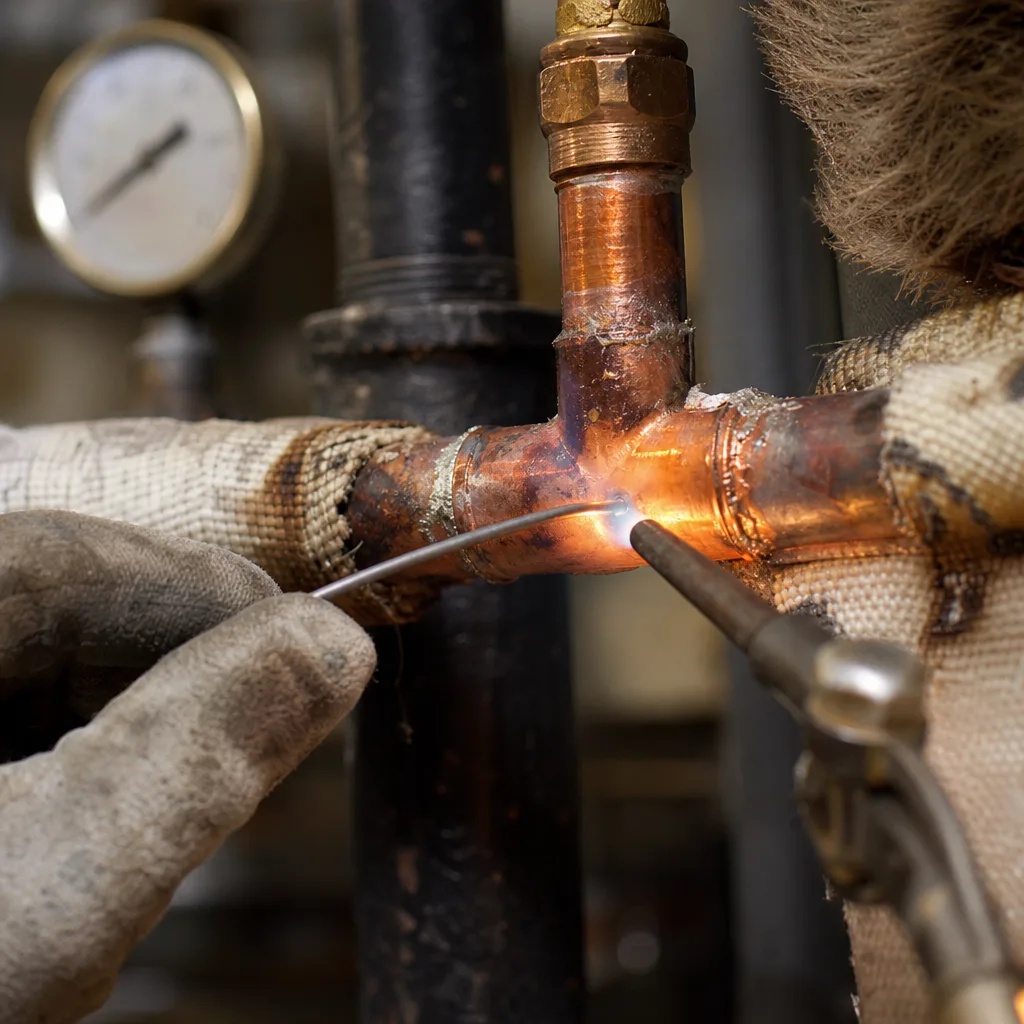
- A boiler heats water and pumps it through a sealed loop of pipes to radiators, baseboard heaters, or tubing in the floor. The same water travels around and around, giving off heat as it goes.
That sealed loop is the big difference. Your boiler only works as well as everything connected to it. Put a new boiler on a loop that’s sized wrong, full of air, or missing a key part, and you can end up with cold rooms, banging pipes, or a system that cycles on and off all day.
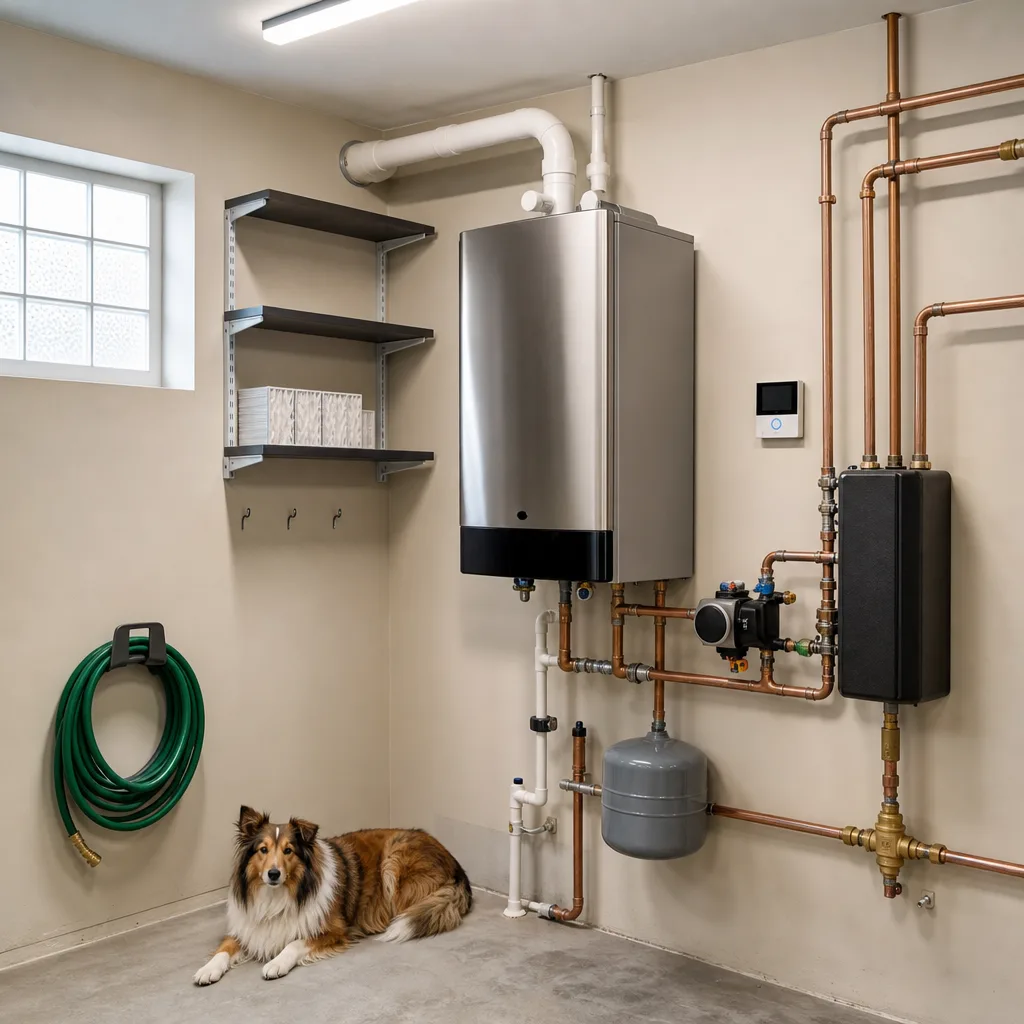
Here’s what has to work together around the boiler itself:
- The circulator pump, which moves hot water through the loop.
- The expansion tank, which gives water room to grow as it heats up so pressure stays safe.
- The pressure relief valve, a safety part that lets water out if pressure climbs too high.
- An air separator or air vents, which pull trapped air out so you don’t get gurgling, noise, or cold spots.
- The fill valve and backflow protection, which keep the loop topped off without letting boiler water back into your drinking water.
- Venting and, on high-efficiency condensing models, a drain line for the water the boiler makes as it runs.
- The gas line, electrical power, and controls, including the thermostat and any zones.
Sizing is different too. A good boiler match isn’t about the size of the old unit. It’s about how much heat your space loses on a cold night, and what kind of heat delivery you have. Radiant floor tubing in a slab, for example, wants cooler water than old cast iron radiators do. Get that wrong and you either waste gas or never feel warm enough.
Because boilers are less common than furnaces here, you’ll find them mostly in commercial buildings, older properties, and custom homes with radiant floors. That also means fewer installers work on them every day. So it’s fair to ask anyone you’re considering how they’ll check the loop, the venting, and the controls, not just the boiler box.
This is where having one team helps. A boiler touches gas piping, water lines, electrical power, and heating controls all at once. Xtreme Air Services is a licensed and insured HVAC, plumbing, and electrical contractor, so the same crew can handle each of those connections instead of you juggling three different companies. You get one team that’s responsible for the whole system working right, done right the first time.
Signs an Aging Boiler Needs Full Replacement, Not a Repair
Not every boiler problem means you need a new boiler. A worn circulator pump, a leaky relief valve, or a bad igniter can usually be fixed. A good repair can keep a healthy boiler running for years. The real question is whether the boiler itself is wearing out, or just one part around it.
These are the signs that point toward replacement:
- Water leaking from the boiler body. A drip from a fitting or valve is often an easy fix. Water coming from the heat exchanger or a cracked cast iron section is a different story. The heat exchanger is the core of the boiler, and a crack there usually can’t be patched for good.
- Repairs that keep stacking up. One fix in a season is normal wear. A new part every few weeks means you’re putting money into a unit that’s tired.
- Parts that are hard to get. Older models may be discontinued. Then a simple repair turns into a long wait while your home or building sits cold.
- Rust, heavy corrosion, or soot around the burner or vent. These can mean the boiler isn’t burning clean, or that water has been getting where it shouldn’t for a long time.
- Gas bills that keep climbing while your use stays the same. Older boilers usually have a lower AFUE rating. That number tells you how much of the gas you pay for turns into heat. A lower rating means more of your money goes up the vent.
- Cold rooms that stay cold even after the loop has been bled of air and balanced. If the delivery side checks out, the boiler may not be making enough heat anymore.
There’s a North Texas twist worth knowing. A sealed loop shouldn’t need much fresh water. If someone in your building tops off the system every week, or you watch the pressure gauge keep dropping, there’s a leak somewhere. Every top-off brings in more of our hard water. Over time, those minerals coat the inside of the heat exchanger like a crust. That scale acts like a blanket. The boiler has to run longer to push the same heat through it. It also wears faster. Years of constant refilling can leave a boiler too far gone to be worth saving.
Now for the honest side. If your boiler is sound and the trouble is one part, repair it. A boiler that heats evenly, has no leaks from the body, and has parts available doesn’t need replacing just because it’s old. Any contractor you call should be willing to tell you that, even when a new boiler would be a bigger job for them.
If replacement does make sense, don’t assume the new boiler should match the old one. The old unit may have been oversized from the start. Rooms may have been added or closed off. Radiant floors may have been put in where radiators used to be. A replacement is the right time to recheck sizing and look over the loop it connects to. That way your new boiler isn’t stuck working around the same problems that wore out the last one.
What a Standard Boiler Installation Includes
Our most common boiler job is a like-for-like replacement. The new boiler hooks up to your existing connections, with no major changes to the piping, gas line, or wiring. For that kind of job, the price with Xtreme Air Services is $8,800-$14,500.
Across all the boiler installations we do, the typical range is $6,000-$20,000. Commercial jobs run higher. Where your job lands depends on what you have now and what it needs to become.
Here’s what a standard installation includes:
- The boiler and the materials needed to install it.
- Professional installation by our licensed and insured team.
- Standard connections to the lines that are already in place.
- Startup and testing, so the system is running before we call the job done.
- Haul-away of your old boiler, so you’re not left with a heavy unit to get rid of.
A standard installation does not include duct, electrical, or plumbing modifications. It also doesn’t include code corrections or permits, unless your quote says it does. That’s not a trick. Those costs depend on your building, and nobody can price them without seeing it.
Say your current boiler sits in a tight closet and the new one needs a different vent path. Or the gas line is too small for the new unit, or the wiring doesn’t meet today’s code. Each of those is real work beyond a simple swap. If we find one, we’ll show it to you and explain it in plain English before anything changes.
These are the things that move the price up or down:
- Size and heating capacity. Bigger buildings and bigger heat loads need bigger boilers.
- Efficiency. A higher AFUE rating means more of your gas turns into heat. These boilers usually cost more up front and less to run.
- Brand and model.
- Ease of access. A boiler in an open mechanical room is a different job than one squeezed into a crawl space or tight closet.
- The condition of your existing wiring and plumbing.
- Code upgrades and permits.
- Any custom fabrication your setup needs.
You’ll get upfront flat-rate pricing that you approve before work starts. No meter running and no surprises halfway through. If you’d like to spread out the cost, we offer flexible financing on qualifying installations and larger jobs, on approved credit.
There’s a $26-$99 service-call fee for the visit. It’s credited toward the work if you go ahead with Xtreme Air Services.
When you compare quotes from anyone, check the same things. Does it list the boiler model and size? Does it say whether permits, haul-away, and startup are included? Does it spell out what happens if hidden problems turn up? A quote that answers those questions is one you can plan around.
Have questions? We’re happy to help.
Call Today, Get Service Today. Xtreme Air Services — North Plano is ready to help.
What Drives Boiler Installation Cost Up or Down
Two boilers that look alike on paper can land at very different prices. The boiler itself is only part of the bill. The rest depends on how your current setup gets along with the new one. Here’s where the big swings usually come from, and why.
Going high-efficiency can change the venting. Older, standard-efficiency boilers often vent hot exhaust up a chimney or metal flue. A high-efficiency condensing boiler pulls so much heat out of the exhaust that the gas leaving it is cool and wet. That usually means a new vent path, often plastic pipe run out a side wall. You’ll also need a drain line for the water the boiler makes, and often a small neutralizer so that slightly acidic water doesn’t eat at your drain. None of that is a markup. It’s the cost of the better boiler working safely. In return, more of the gas you pay for every winter turns into heat.
Right-sizing can save money, or cost a little up front. If your old boiler was oversized, which is common, a properly sized replacement may be smaller and cost less. It also runs in longer, steadier cycles instead of short bursts. If rooms were added or radiant floors were put in, the right boiler may be bigger than what you have. A heat-loss check settles this with numbers instead of guesses.
The loop’s condition matters more than most people expect. A new boiler hooked to old water full of sludge and scale won’t stay new for long. Some loops need a full flush before startup. Others need a dirt separator or strainer added to catch debris. Many modern boilers hold less water than old cast iron units. The piping around them may need to be rearranged so water flows through the boiler at the rate it was built for. That’s extra pipe, fittings, and labor, but it protects your investment.
A few more things can push a price up:
- Gas supply. A larger or higher-efficiency boiler may need more gas than your current line can deliver. If the line is undersized, it has to be upgraded or rerouted.
- Getting the old one out and the new one in. Cast iron boilers are heavy. A unit in a basement-style mechanical room, a tight closet, or up a flight of stairs takes more people and more time.
- Controls and zones. Adding zones, an outdoor temperature sensor, or smart controls changes the parts list. So does tying the boiler into a building automation system.
- Commercial scope. Larger buildings may run more than one boiler, need bigger pumps, or require work scheduled around tenants and business hours.
Some things can bring the price down. A boiler in an open, easy-to-reach space, a loop in good shape, and a gas line and vent that already fit the new unit are what keep a job close to a straight swap.
When you get a quote, ask what the installer found in your venting, your gas line, and your loop water. Those three answers tell you whether your job is a simple swap or something bigger. They also tell you why the number is what it is.
Watch Our Video
See How We Handle Boiler installation in Plano
Xtreme Air Services — North Plano
Licensing and Permit Requirements for Boiler Work in Plano
A boiler install isn’t one kind of work. It’s three. Someone connects the gas line, someone ties into your water supply, and someone wires the power and controls. In Texas, each of those is licensed work. The people doing each piece should hold the right license for it.

HVAC contractors in Texas are licensed through the Texas Department of Licensing and Regulation, or TDLR. Xtreme Air Services holds HVAC License #TACLA29023C, and our team includes master plumber Larry Breedlove. We’re licensed and insured for HVAC, plumbing, and electrical work. So the gas, water, and wiring on your boiler don’t get handed off to someone you’ve never met.
Most boiler replacements in Plano need a permit from the city before work starts and an inspection after it’s done. Don’t think of the permit as red tape. It’s a second set of eyes from someone who doesn’t work for your installer. That’s real peace of mind on a gas-burning appliance in your home or building.
An inspector will usually look at things like these:
- The gas connection, and whether it was tested for leaks.
- The vent path and the space around the boiler, so exhaust leaves your home safely.
- Where the pressure relief valve drains, so hot water lands somewhere safe if it ever opens.
- Enough air for the burner to burn clean.
- Backflow protection on the fill line, so boiler water can’t get into your drinking water.
- The electrical hookup and the shutoff.
Who pulls the permit matters. The licensed contractor doing the work should pull it. Some installers ask the owner to pull it instead. That puts your name on the paperwork, and if the job fails inspection, you’re the one stuck sorting it out. If anyone asks you to do that, ask them why.
Gas piping, venting, and the boiler hookup aren’t weekend projects. A small mistake in any of them can mean carbon monoxide, a gas leak, or a failed inspection that holds up selling your home later. This is one job where the license really does matter.
If you own a commercial building, plan for more steps. Commercial boilers can carry extra inspection requirements beyond the city permit. Inspections may also need to be scheduled around tenants and business hours. Ask early how your installer will handle that, so your heat isn’t off longer than it has to be.
Before you hire anyone, ask these questions:
- What are your license numbers for the HVAC, plumbing, and electrical work?
- Who pulls the permit, you or me?
- Is the permit in the quote, or is it billed separately?
- When is the inspection, and will someone from your team be there?
- If the inspector asks for a change, who pays to fix it?
A good installer will answer all five without hesitating. Since permits sit outside a standard install unless your quote says so, the third question also keeps your final bill clear from the start.
Call 469-527-5131
Frequently Asked Questions
Common questions about Boiler installation
Do I need a plumber or an HVAC company for boiler installation?
You need both, since a boiler connects gas lines, water piping, and heating controls all at once. In Texas, HVAC contractors are licensed through TDLR, and plumbing work needs a licensed plumber. Xtreme Air Services is licensed and insured for HVAC, plumbing, and electrical work, and our team includes master plumber Larry Breedlove. That means one crew handles every connection instead of you hiring separate companies for each piece.
What size boiler does my home need?
The right size depends on how much heat your home loses on a cold night, not the square footage alone. A 2,000 square foot home with radiant floor tubing needs a different boiler than the same size home with old cast iron radiators, since radiant floors run on cooler water. Sizing by square footage guesses can leave you with cold rooms or a boiler that short-cycles and wastes gas. A heat-loss check settles this with real numbers instead of a square-footage rule of thumb.
How long does a boiler installation take?
A straight swap on an easy-to-reach boiler in good working order is usually a quicker job than one that needs new venting or gas line upgrades. If your current boiler sits in a tight closet, needs a different vent path, or the gas line is undersized, those extra steps add time beyond a simple replacement. We’ll walk your setup first and explain what the job needs before any work starts, so you know what to expect.
Ready to Get Started?
Call (469) 527-5131 Today, Get Service Today.