


Boiler Repair in Allen: Who to Call and What It Takes to Fix It Right
Residential and commercial boilers repaired by finding the part that failed – and the system tested before we leave.
What’s Covered on This Page
- Boiler Repair Starts With an Accurate Diagnosis, Not a Guess
- Signs Your Boiler Needs a Repair Call Today
- Boilers Are Less Common in Allen’s Newer Homes – Here’s Where They Show Up
- Why Boiler-Specific Experience Matters More Than General HVAC Know-How
- What Drives the Cost of a Boiler Repair Up or Down
- How many years does a boiler usually last before it needs major work?
- Who should I call if I’m not sure whether I have a furnace or a boiler?
- Is it worth fixing a boiler instead of just living with the noise or slow room?
Boiler Repair Starts With an Accurate Diagnosis, Not a Guess
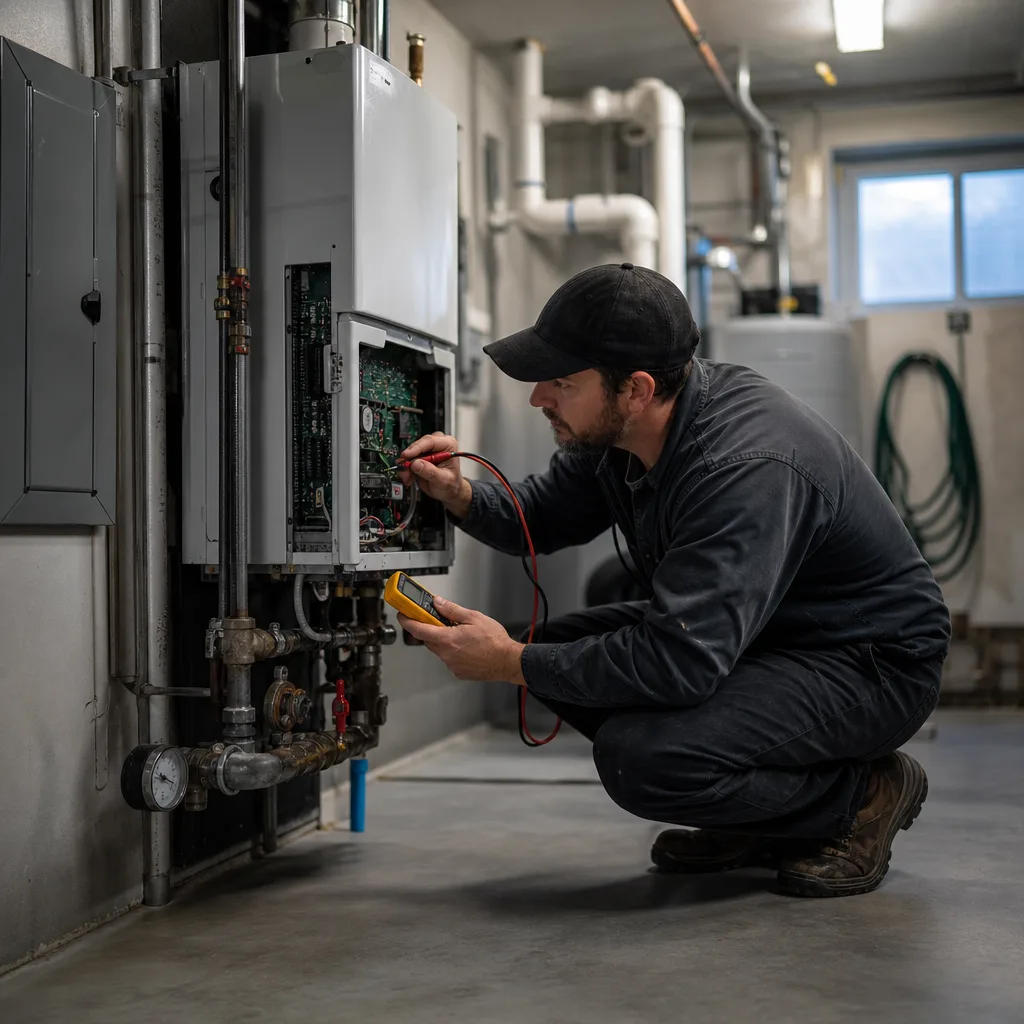
Boiler repair goes wrong when someone treats the symptom instead of the cause. Your boiler is a team of parts working together: the burner and igniter, the gas valve, the circulator pump that pushes hot water through your pipes, the expansion tank, the pressure relief valve, and the controls that tell it all when to run. When one part fails, the trouble you notice often shows up somewhere else.
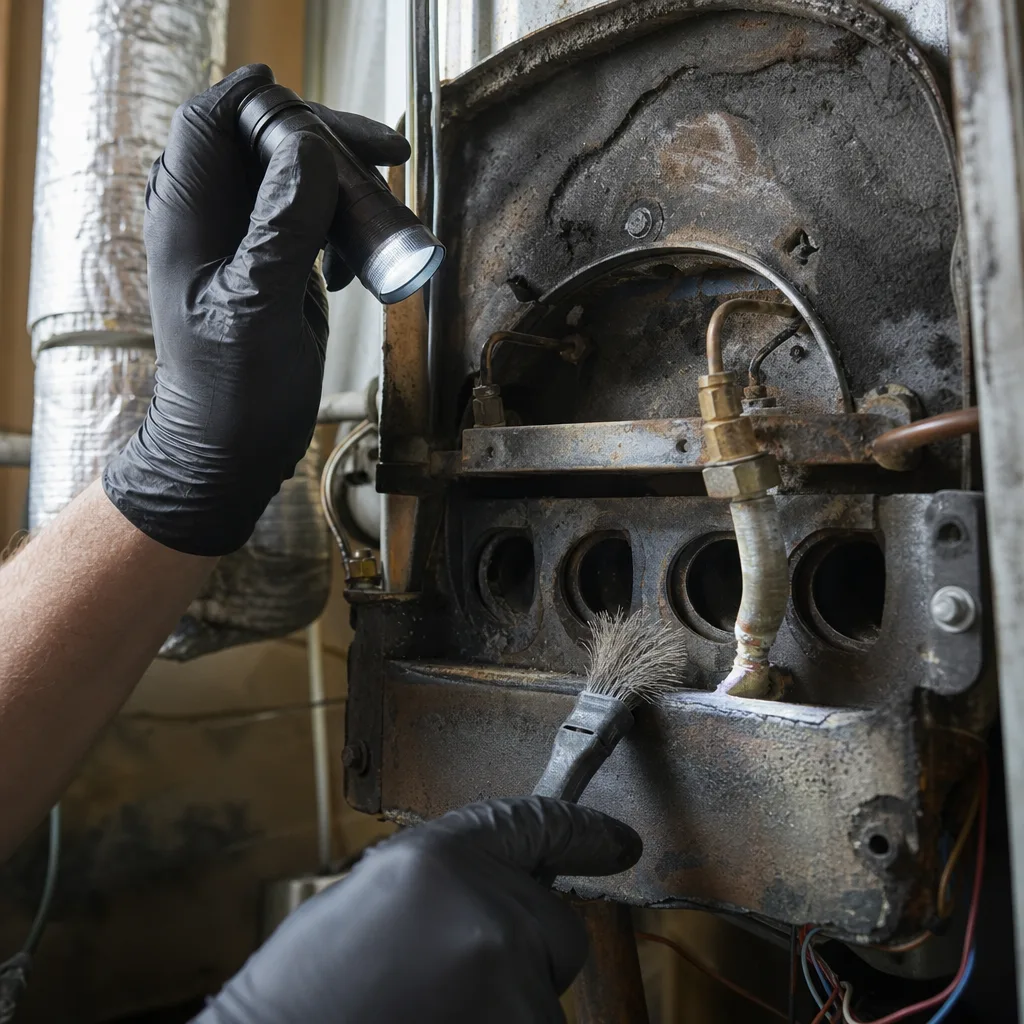
That’s why a good diagnosis matters more than a fast guess. Here’s how the same complaint can trace back to very different problems:
- No heat at all: a worn igniter, a dirty flame sensor, a bad gas valve, low system pressure, or a thermostat that isn’t calling for heat.
- Heat in some rooms but not others: a stuck zone valve, air trapped in the lines, or a circulator pump that’s losing strength.
- Water dripping from the pressure relief valve: sometimes the valve itself, but often a waterlogged expansion tank or a system that’s been overfilled.
- Banging, rumbling, or a kettle-like noise: mineral scale on the heat exchanger or poor water flow through the boiler.
Take that dripping relief valve. It looks like the obvious bad part. But if the real problem is the expansion tank, a new valve will start dripping again within days, and you’ve paid for a part you didn’t need. Checking pressure, testing the tank, and looking at the whole system first is what keeps you from paying twice.
Water quality plays a part here in North Texas, too. Our water is hard, and every time a boiler takes on fresh makeup water to replace a slow leak, it brings in more minerals. Over time that scale coats the inside of the boiler, cuts efficiency, and causes that kettling sound. So a noisy boiler can also point to a small leak somewhere in the system that needs finding.
Most homes in Allen heat with forced air. So if you have a boiler, it may be running a radiant floor, serving a custom home, or heating a commercial building where downtime costs real money. Either way, you want someone who checks the whole hydronic system, not just the box in the mechanical room.
Here’s how a boiler repair with Xtreme Air Services works: locate the failed part, repair or replace it, and verify the system runs correctly. Most calls are a single common failure fixed on the first visit. You’ll see upfront flat-rate pricing and approve it before any work starts, so there’s no meter running while we troubleshoot. The $26-$99 service-call fee is credited toward the repair if you go ahead with us. If we find a second failed part or a major component that needs attention, we’ll tell you plainly and quote it separately so you stay in control of the decision.
Signs Your Boiler Needs a Repair Call Today
Not every boiler hiccup is an emergency. Some problems can’t wait, though, and knowing the difference saves you money and a cold night. Here’s how to tell.
Call today if you notice any of these:
- No heat while a cold front is moving in. North Texas weather can drop from mild to a hard freeze in a day. A boiler that quits right before that can leave your home cold and your pipes at risk.
- Water on the floor around the boiler or under the pipes. Even a small puddle means water is leaving a closed system. Every refill brings in more hard-water minerals, so a slow leak gets worse over time.
- A pressure gauge that keeps climbing past its normal range or keeps dropping after you’ve refilled it. Either way, something in the system isn’t holding.
- A boiler that locks out again and again. If you reset it and it shuts down again within hours, the reset isn’t fixing anything. It’s only hiding the problem.
- Loud banging or rumbling that’s new or getting louder. That points to a flow or scale problem that puts stress on the heat exchanger, one of the costliest parts to replace.
- A commercial boiler serving tenants, a kitchen, or a building where downtime costs money every hour it’s off.
These can usually wait for a scheduled visit:
- One radiator or zone that warms up slower than the rest, while the rest of the house stays comfortable.
- A faint ticking or gurgle that hasn’t changed in weeks.
- Heating bills that crept up over a season with no other symptoms. That’s often a sign the boiler needs servicing or cleaning, not an urgent repair.
Before you call anyone, check the simple stuff yourself. Make sure the thermostat is set to heat and its batteries aren’t dead. Look at the breaker and the boiler’s power switch, which can look like a light switch on the wall near the unit and gets bumped off more often than you’d think. If one of those was the problem and the boiler runs normally afterward, you don’t need us. If you do this and the boiler still won’t run, or it runs and shuts down again, that’s when a technician should take a look.
Timing matters too. A problem that’s small on a Tuesday afternoon can turn into a bigger repair after two more days of running. That’s why our team answers the phone around the clock and works to get to you the same day, with no extra charge for nights or weekends. You won’t have to choose between waiting until Monday and paying a premium.
If you’re not sure which list your problem belongs on, describe what you’re seeing when you call. A real person will help you decide if it needs attention today or can wait for a regular appointment.
Call now
Boilers Are Less Common in Allen’s Newer Homes – Here’s Where They Show Up
If you’ve got a boiler in Allen, you’re not the norm. Most of the city grew up fast, with subdivisions built around attic furnaces and heat pumps. That makes a boiler a little harder to get fixed, because plenty of HVAC companies rarely touch one. Knowing what kind of system you have helps you find the right help and explain the problem clearly.
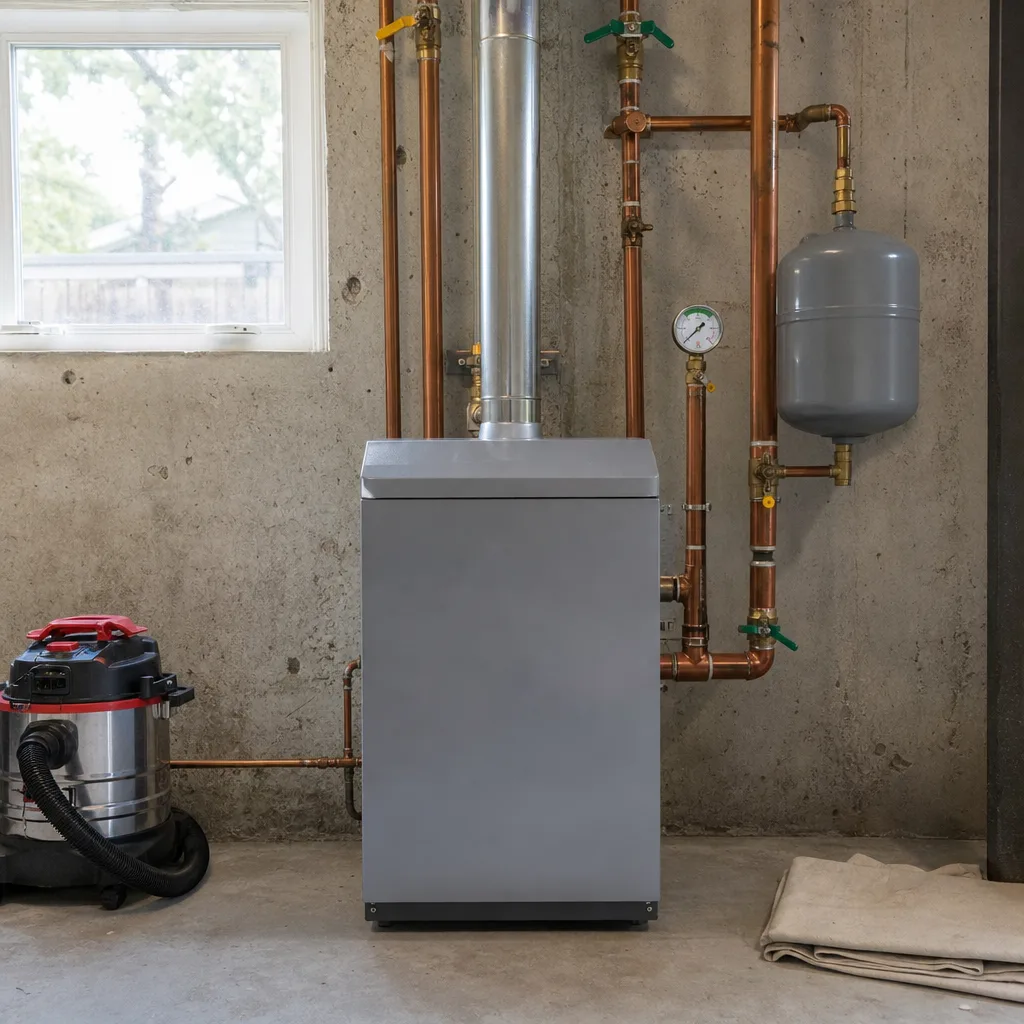
Here’s where boilers usually turn up around here:
- Radiant floor heat in custom and higher-end homes. Hot water runs through tubing under the floor or inside the slab and warms the room from the ground up. It’s quiet and even, but you can’t see most of the system, so finding a problem takes careful checking.
- Hot-water baseboard or panel radiators. These are less common in North Texas, but some owners chose them for steady, dust-free heat.
- Combination setups. Some boilers heat your home and your hot water too. When one of these acts up, you may notice cold showers and cold rooms at the same time.
- Commercial buildings. Offices, churches, schools, restaurants, medical spaces, and apartment buildings often run larger boilers for heat or hot water. When one goes down, tenants, customers, and staff feel it fast.
Radiant floors deserve a quick word. Because the tubing sits in or under your slab, a leak there isn’t something you’ll spot. What you’ll notice is a pressure gauge that keeps dropping or a boiler that keeps taking on water. North Texas clay soil shifts with wet and dry seasons, and that movement stresses anything tied into a slab. Good testing tells you whether the leak is at the boiler, in the piping you can reach, or somewhere under the floor.
Our hard winter freezes matter here too. A boiler that sits idle most of the year can have a part that’s quietly worn out, and you won’t find out until the first cold snap. If your system only runs a few months a year, a check before winter can catch a weak pump or a sticking valve while it’s still an easy fix.
For businesses, the question is simple: how long can you go without heat or hot water? A restaurant can’t run a kitchen without hot water. An apartment building can’t leave tenants cold overnight. That’s why a commercial boiler problem is worth a call the day you notice it, not after the weekend.
When you call, a few details help us show up ready:
- What the boiler heats: floors, radiators, water, or a whole building
- Gas or electric
- The brand and model on the label, plus a rough age if you know it
- What you’re seeing, like a pressure reading, an error code, water on the floor, or a noise
You don’t need to know all of it. Tell us what you can and we’ll take it from there. Boiler repair is one of the services we offer, along with boiler servicing, hydronic and radiant heating installation, and commercial plumbing, so one licensed and insured team can handle the whole system, not just the box on the wall.
Need help with Boiler repair?
Call Today, Get Service Today. Xtreme Air Services — Allen is ready to help.
Why Boiler-Specific Experience Matters More Than General HVAC Know-How
A furnace and a boiler both make heat, but they move it in different ways. A furnace heats air and blows it through ducts. A boiler heats water and pumps it through a sealed loop of pipes. A tech who’s great with furnaces can still miss what matters on a boiler, because most boiler trouble lives on the water side.
Here’s what boiler know-how really covers:
- Pressure and temperature. Knowing what your gauge should read when the system is cold and when it’s hot, so a bad reading gets caught instead of ignored.
- Air in the loop. Trapped air causes cold zones, gurgling, and pump wear. Someone who knows hydronics knows where air collects and how to clear it for good.
- Near-boiler piping. The way the pump, valves, and connections are laid out matters. A poor layout can cause repeat problems that no new part will fix.
- Safety controls. The low-water cutoff, high-limit switch, and relief valve are there to protect you. Bypassing one to get the heat back on isn’t a repair.
- Radiant mixing. Floors need cooler water than radiators. A failing mixing valve or control can leave floors cold or run them too hot.
- Condensate and venting. Many newer high-efficiency boilers make a mildly acidic water that has to drain away. A clogged condensate line can shut the whole boiler down.
Picture a radiant floor that feels cool. Someone turns the boiler temperature up, and the room warms a little. Problem solved? Not really. If the real cause was a sticking mixing valve, the boiler is now working harder than it should, and the floor still heats unevenly. A tech who understands radiant systems checks the mix before touching the boiler setting.
So how do you tell who knows boilers? Ask a few plain questions before you book anyone, us included:
- Do you repair boilers and hot-water heating systems, or mostly forced air?
- Will you check system pressure, the expansion tank, and the safety controls, or only the part I called about?
- Will I see and approve the price before any work starts?
- Are your technicians licensed and insured?
Good answers sound specific and calm. If you hear something vague, like “we’ll take a look and see,” with no mention of the water side or the price, keep calling around. You deserve someone who can explain your system to you in plain English.
You’re welcome to ask our team every one of those questions. When you call, you talk to a real person. Our licensed and insured technicians are background-checked and drug-tested, and your neighbors have given us a 4.8-star rating across more than 2,900 reviews on Google, Angi, and HomeAdvisor. You’ll get straight answers on the phone and upfront flat-rate pricing before anything gets fixed.
Call 469-299-8996
Watch Our Video
See How We Handle Boiler repair in Allen
Xtreme Air Services — Allen
What Drives the Cost of a Boiler Repair Up or Down
Here are the real numbers. Most boiler repairs with Xtreme Air Services fall between $300 and $2,000. Our most common job runs $300-$1,100. That’s finding the failed part, repairing or replacing it, and making sure the system runs correctly. Most calls are a single common failure fixed on the first visit.
Where your repair lands in that range depends on a few things:
- How far the failure has spread. A worn igniter or a dirty flame sensor is a small fix. A leak that’s been running long enough to scale up the heat exchanger is a much bigger job.
- Part cost and availability. Some parts are on the truck or easy to get. Others have to be ordered, and some cost a lot more than others.
- Your boiler’s age and brand. Parts for older or less common boilers can be harder to find and pricier when you do find them.
- Whether more than one part has failed. A circulator pump that ran too long without enough water can take a seal or a valve down with it.
- Timing. Many companies charge more after hours. We don’t. Nights and weekends cost the same as a weekday.
The price you approve covers diagnosis, labor, the standard replacement part, testing, and cleanup. A few things aren’t included unless we quote them separately: extra failed parts, major components, code upgrades, and permits. Code upgrades usually come up on older systems. A safety control or vent setup that passed years ago may need updating before the boiler can be put back in service. If that’s the case, you’ll hear about it and see the price before we touch it.
Say your boiler keeps locking out. If the cause is a bad igniter, you’re likely near the low end. If testing shows the igniter failed because the heat exchanger is cracked, that’s a major component and a very different conversation. You’ll know which one you’re dealing with before you spend a dollar on the repair.
That bigger conversation sometimes includes a fair question. Is this boiler still worth fixing? If you’ve got an aging boiler and a costly part has failed, it makes sense to weigh the repair against boiler replacement. We’ll lay out both options plainly and let you decide. Financing isn’t typically offered for smaller repairs like most of the ones on this page. It’s available on larger repairs and replacements, so a big bill doesn’t have to be paid all at once.
When you compare quotes from anyone, ask what’s included, what’s excluded, and whether the price is set before the work starts. A low number that leaves out the part or the testing isn’t really low.
Call now
Frequently Asked Questions
Common questions about Boiler repair
How many years does a boiler usually last before it needs major work?
Most boilers run well for 15-20 years with regular care. Hard water in Allen can shorten that lifespan because mineral scale builds up inside the heat exchanger over time. A boiler that’s kept clean and checked before each winter tends to hold up longer than one that only gets attention when it breaks.
Who should I call if I’m not sure whether I have a furnace or a boiler?
Call a technician who works on both, since most Allen homes have forced-air furnaces and boilers are less common. Tell them what you’re seeing, like radiant floor heat, baseboard radiators, or hot water that cools off at the same time as your rooms. That detail alone helps narrow down whether you’re dealing with a boiler problem.
Is it worth fixing a boiler instead of just living with the noise or slow room?
Yes, small issues like a slow-warming room or a faint ticking sound are worth fixing before they turn into bigger problems. A single cool zone often points to a stuck valve or trapped air, which is a simple fix now. Left alone, trapped air can wear down your circulator pump and turn a small repair into a costlier one.
Ready to Get Started?
Call (469) 299-8996 Today, Get Service Today.