


Boiler Repair in Frisco: Fix the Failure, Not Just Guess
Residential and commercial boilers repaired by finding the part that failed – and the system tested before we leave.
What’s Covered on This Page
- Boiler Repair Covers a Specific Set of Problems
- Residential and Commercial Boiler Systems Both Get Service Here
- What Happens During a Boiler Repair Visit
- Boiler Repair Costs Depend on What Failed
- Signs a Boiler Problem Can’t Wait
- Why is my boiler making a banging or gurgling noise?
- Can a boiler repair wait, or should I call today?
- What should I check before calling about my boiler?
- Do I need a different company for a boiler than for my furnace?
Boiler Repair Covers a Specific Set of Problems
When your boiler stops heating on a cold Frisco morning, it’s easy to think the whole system is finished. Usually it isn’t. Boiler repair is about locating the failed part, repairing or replacing it, and verifying that the system runs correctly. That’s the main idea of this page: before you start pricing a new boiler, find out which part quit.
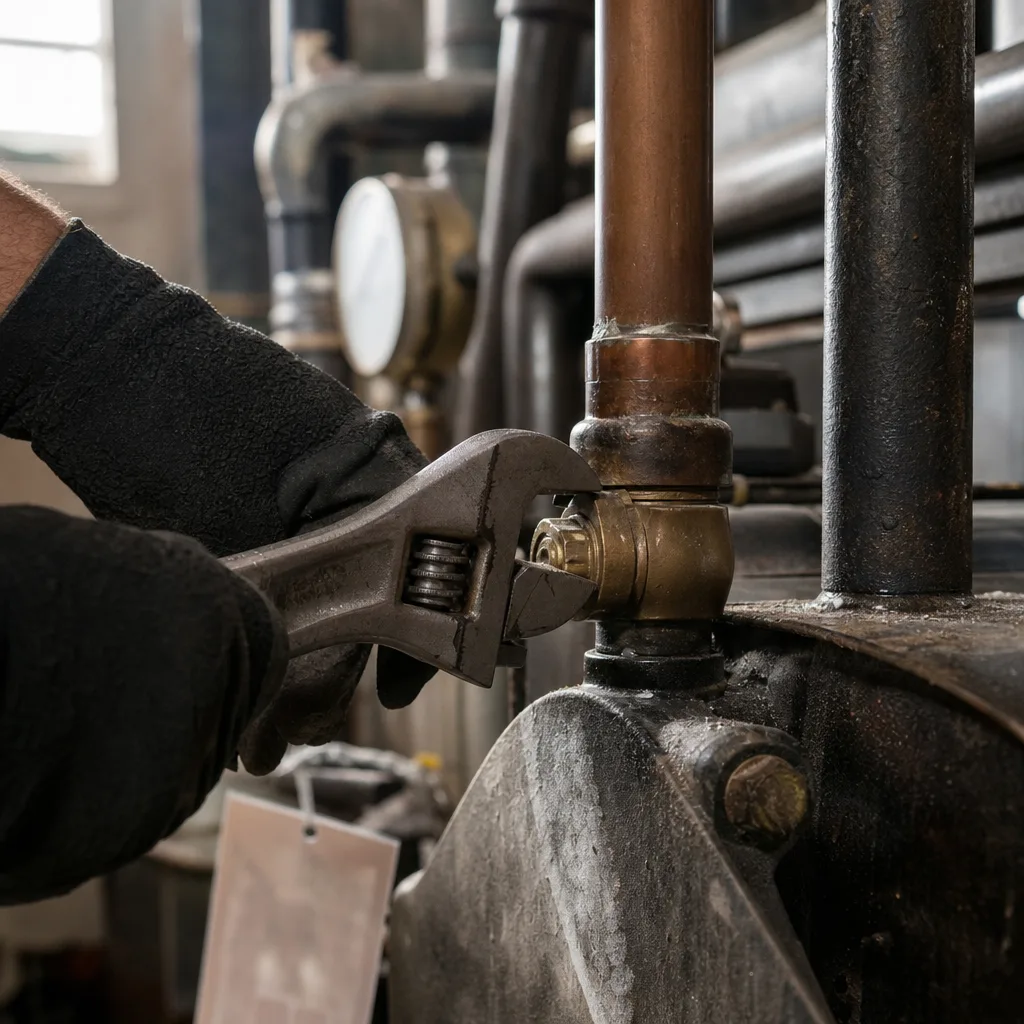
A boiler heats water and pushes it through pipes to your radiators, baseboard heaters, or radiant floor tubing. It has an igniter, a burner, a pump, valves, a pressure tank, and controls. Each one can fail on its own while the rest of the boiler keeps working. What you see or hear usually points to the part that’s in trouble.
- No heat, and the burner won’t light: often an igniter, a flame sensor, or a control board problem.
- Some rooms are warm and others stay cold: a stuck zone valve, air trapped in the lines, or a bad thermostat for that zone.
- Banging, gurgling, or a rumble like a kettle: air in the system, or mineral scale built up inside the boiler. Hard North Texas water can speed up that buildup.
- The pressure gauge reads too high or too low: a worn expansion tank, a faulty fill valve, or a slow leak somewhere in the loop.
- Water dripping from the relief valve or pooling under the unit: the valve may be releasing extra pressure, or a fitting or pump seal has worn out.
- The pump hums but the heat doesn’t move: a failing circulator pump motor or worn bearings.
- The boiler turns on and off every few minutes: a thermostat, sensor, or control issue.
Timing matters here. North Texas cold fronts can roll in fast, and a boiler that sat quiet for months often shows its first problem on the first chilly night. A part that held up through mild weather can give out once it has to run hard. If you run a business in Frisco, a cold office, restaurant, or shop can mean unhappy tenants, staff, or customers. Getting the heat back quickly keeps your doors open.
Here’s what a standard boiler repair from Xtreme Air Services includes: diagnosis, labor, and the standard replacement part, plus testing and cleanup. Some things are not included unless we quote them separately: additional failed parts, major components, code upgrades, and permits. If we find more than one problem, you’ll hear about it before any extra work starts.
Sometimes a repair isn’t the smart move, for example on an old boiler with several worn parts. In that case boiler replacement is its own service with its own conversation. But a cold house or a strange noise isn’t proof you’re there yet. Our licensed and insured technicians start by finding the real cause, so you’re paying to fix what’s broken.
Residential and Commercial Boiler Systems Both Get Service Here
Whether your boiler heats a house or a whole building, we can work on it. Xtreme Air Services serves homeowners and businesses across Frisco from our office at 6160 Warren Pkwy. The approach stays the same at any size: find the part that failed, fix it, and get your heat back before anyone talks about replacement.
Boilers aren’t the most common way to heat a home in North Texas. Most houses here run on furnaces or heat pumps. That’s exactly why it can feel hard to find someone who knows your system when your boiler acts up. If your home has radiant floor heat, baseboard heaters, or radiators, you’ve got a hot-water system. It needs a technician who understands how water, pressure, and pumps work together.
A home boiler is usually a smaller unit. It might run one zone or split the house into a few. When it fails, you notice fast. Floors go cold, one bedroom won’t warm up, or the unit starts making noises you’ve never heard before. Because there are fewer parts, a home boiler problem is often easier to trace to one spot.
Commercial boilers are a bigger job with higher stakes. An office, restaurant, shop, or multi-tenant building may rely on one large boiler or several working together. These systems often have more pumps, more valves, and more controls, and sometimes they tie into a building automation system. When one piece fails, it can leave a whole floor cold, a kitchen without the heat it needs, or tenants calling the front office. For your business, the real cost is the downtime.
Here’s how the work lines up for each kind of system:
- Homes: no-heat calls, cold zones, pressure problems, leaks at the unit, and noisy boilers on radiant floor or baseboard systems.
- Businesses: getting heat back to offices, restaurants, retail spaces, and multi-tenant buildings so you can stay open.
- Both: tracking down the failed part, whether it’s an igniter, a circulator pump, a zone valve, an expansion tank, or a control board, and checking that the system runs right before we leave.
Timing matters more when people are counting on you. We get to you the same day, and there’s no extra charge for nights or weekends. If your building’s boiler quits on a Saturday, you won’t pay more to get it running before Monday.
Some boiler needs go beyond a repair. If your commercial boiler needs regular upkeep or an inspection, boiler maintenance and boiler safety inspections are separate services. If the problem traces back to a pump elsewhere in your piping, pump installation and repair covers that too. You’ll hear which service fits before any work starts.
On every call, home or business, you get licensed, background-checked technicians who respect your space. Because we also handle HVAC, plumbing, electrical, and refrigeration, one team can look at the whole picture if your boiler problem turns out to involve a gas line or an electrical issue.
What Happens During a Boiler Repair Visit
A boiler repair visit follows three steps. First we find the part that failed. Then we repair or replace it. Last, we check that your system runs correctly before we call it done. You see the price and approve it before any work starts, so you’re never watching a meter run.
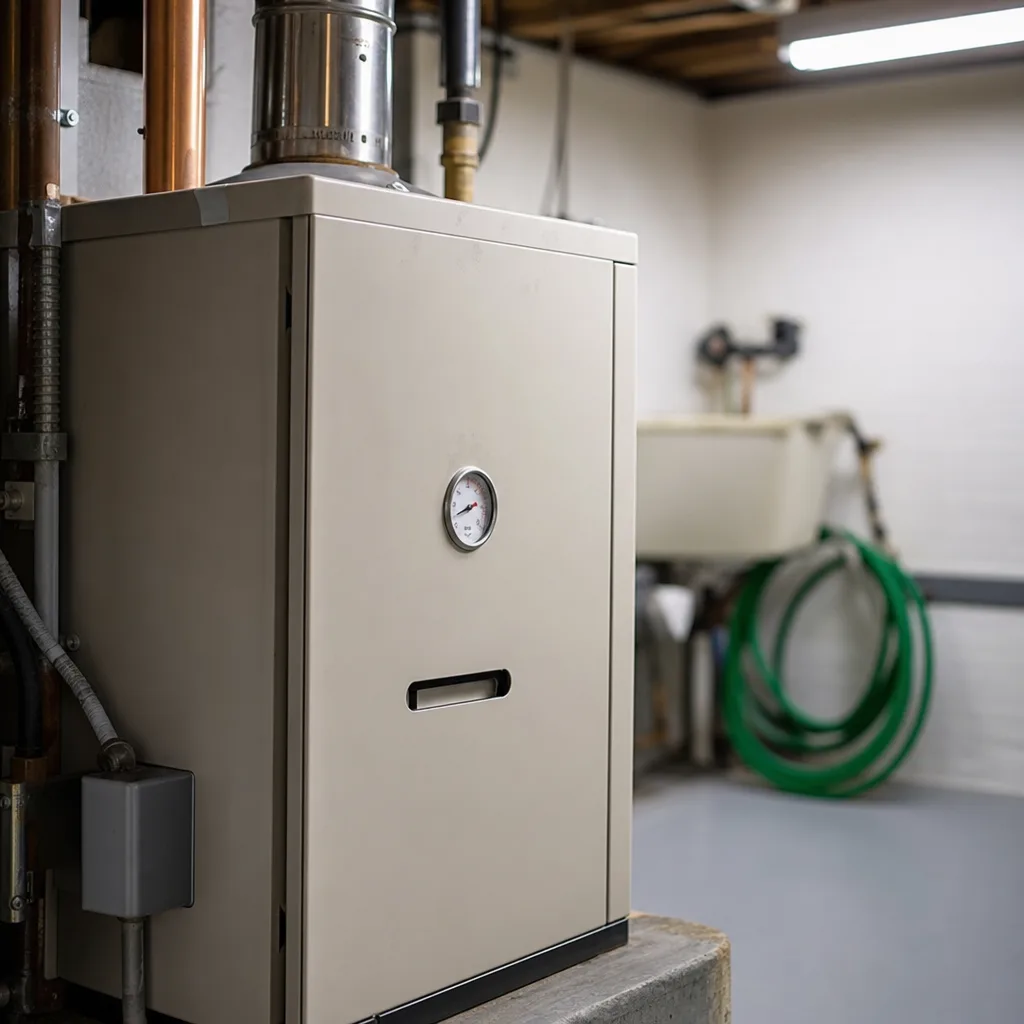
Most boiler calls come down to one common failure that gets fixed on the first visit. Here’s how that visit plays out, and what you can do to help it go faster.
Before the technician arrives, jot down a few things you’ve noticed. These details point straight at the part in trouble, so they can save time once we’re there:
- What the pressure gauge on the boiler reads right now.
- Which rooms or zones are cold, and which ones still warm up.
- Any sounds you’ve heard, like banging, gurgling, humming, or clicking.
- Whether you’ve seen water under the unit or dripping from a pipe or valve.
- When the problem started, and whether it showed up on the first cold night of the season.
- If it’s easy for you, clear a path to the boiler so the technician can get to it.
Diagnosis comes first because a symptom can have more than one cause. A cold bedroom might be a stuck zone valve, air in the line, or a bad thermostat for that zone. Guessing means you pay for parts you didn’t need. Finding the real cause means you pay to fix what’s broken.
There’s a service-call fee of $26 to $99 to come out and find the problem. If you go ahead with the repair through Xtreme Air Services, that fee is credited toward the repair. So it isn’t an extra charge stacked on top of the fix.
Once we know what failed, you get upfront flat-rate pricing for the repair. If the diagnosis turns up a second worn part, or something outside a standard repair, you’ll hear about it with its own price before we touch it. You decide what gets done. If the boiler is old and several parts are wearing out together, we’ll tell you that straight, so you can weigh one more repair against a bigger plan.
For a smaller repair, financing usually isn’t part of the picture. If the job turns into a larger repair or a replacement, financing options are available, and we can walk you through them then.
After the repair, the system gets tested so you know the heat is moving through your home or building, not just that a new part is in place. In practice that means warm floors or radiators in the zones that were cold, a steady pressure reading, and a boiler that runs without short-cycling or new noises. Cleanup is part of the job too.
Through all of it, the person in your home or building is a licensed and insured, background-checked and drug-tested technician who explains what they found in plain English. You’ll know what broke, why it broke, and what it cost to fix before we leave.
Need help with Boiler repair?
Call Today, Get Service Today. Xtreme Air Services — Frisco is ready to help.
Boiler Repair Costs Depend on What Failed
Most boiler repairs from Xtreme Air Services cost $300 to $1,100. That’s the range for the most common job: find the one failed part, repair or replace it, and test the system. Across all the boiler repairs we do, the typical range runs $300 to $2,000. Where your bill lands depends mostly on which part quit and what else it affected.
That’s why finding the real cause matters to your wallet, not just your heat. Two boilers can leave a house equally cold. One needs a small part like an igniter. The other needs a new circulator pump motor. If someone prices the job by the symptom alone, you could pay for the bigger fix when the smaller one would have done it.
Here’s what moves the price up or down:
- How big the failure is. A part that simply wore out is a smaller job than a failure that took other parts down with it.
- The part itself, and how easy it is to get. Some parts are common. Others have to be ordered, and those can cost more.
- Your boiler’s age and brand. An older unit, or a less common brand, can mean harder-to-find parts and more time to do the job right.
- Whether more than one part has failed. A second worn part gets its own price before any work on it starts.
- When you call. This one doesn’t change your bill. We charge no extra for nights or weekends, so a Saturday repair costs the same as a Tuesday repair.
Some cases call for an honest talk. If your boiler is old and the repair is heading toward the top of that range, with more worn parts lined up behind it, it’s fair to ask whether one more fix still makes sense. We’ll give you the numbers and the facts, and you make the call. If a single part failed on a boiler that’s otherwise in good shape, a repair is usually the better buy.
Whoever you hire, these questions help you know what you’re paying for before you say yes:
- What part failed, and can you show me?
- Is this a flat price, or does it change with how long the job takes?
- What isn’t included in this price?
- Did you find any other worn parts, and what would each one cost?
- Does the service-call fee count toward the repair if I go ahead?
You should get a clear answer to every one of them. With us, you’ll hear those answers in plain English before any work starts, along with the upfront flat-rate price you approve.
Call 469-490-3595
Watch Our Video
See How We Handle Boiler repair in Frisco
Xtreme Air Services — Frisco
Signs a Boiler Problem Can’t Wait
Not every boiler problem is an emergency. Some are, though. Knowing the difference helps you act fast when it counts and stay calm when it doesn’t.

Once everyone’s safe, these are the signs that mean your boiler should get looked at today, not next week:
- Water is actively leaking and spreading. A slow drip can turn into a soaked floor, damaged drywall, or ruined flooring. If you can safely shut off the boiler’s water supply, do it, and then call.
- You have no heat and a hard freeze is on the way. North Texas cold fronts can drop temperatures fast. A boiler loop that sits cold during a freeze puts the pipes themselves at risk, and so does a house with no heat.
- The boiler keeps shutting itself off and won’t stay running. Built-in safety controls often trip for a reason. Resetting it over and over hides the problem instead of fixing it.
- You hear loud banging that’s new or getting worse. A little noise you’ve lived with for years is one thing. A sudden change in sound means something inside has changed.
- Someone in your home depends on steady heat. A newborn, an older parent, or a family member with a health condition turns a cold night into more than an inconvenience.
- A business can’t open without heat. A cold restaurant kitchen, office, or tenant space costs you every hour it stays that way.
Here’s the honest part. Some boiler problems can wait a day or two, and you shouldn’t feel rushed into an emergency call for them. One room is a little cooler than the rest, but the house is still comfortable. The boiler makes a faint gurgle when it first starts up, then settles down. The heat works fine, but it feels like it takes longer to warm up than it did last winter. Those are worth booking a regular visit for, not worth panicking over.
Even then, don’t let them slide all season. A small problem caught on a mild week is easier to deal with than the same problem on the first freezing night, when the boiler has to run its hardest.
If you’re not sure which group your problem falls into, that’s a fair question to ask us over the phone. Tell us what you’re seeing and hearing. We’ll help you figure out whether it needs a technician today or can wait for a scheduled visit. Since there’s no extra charge for nights or weekends, waiting for a weekday won’t save you money if the problem can’t wait.
Call now
Frequently Asked Questions
Common questions about Boiler repair
Why is my boiler making a banging or gurgling noise?
That noise usually means air trapped in the lines or mineral buildup inside the boiler. North Texas hard water speeds up that buildup, which makes the sound louder over time. A faint gurgle that settles down fast can wait for a scheduled visit, but a loud bang that’s new or getting worse should get checked right away.
Can a boiler repair wait, or should I call today?
It depends on what you’re seeing. A slightly cooler room or a mild startup gurgle can wait for a regular appointment. But active water leaks, no heat before a hard freeze, or a boiler that keeps shutting itself off need same-day attention, since those signs point to a part that could fail completely.
What should I check before calling about my boiler?
Write down the pressure gauge reading, which rooms are cold, and any sounds you’ve heard. Also note when the problem started and whether water is pooling anywhere near the unit. Those details point a technician straight to the failed part and can save time once they arrive.
Do I need a different company for a boiler than for my furnace?
Not with us, since boilers are less common in North Texas than furnaces, but they still need a technician who understands water, pressure, and pumps. Xtreme Air Services works on both home and commercial boiler systems across Frisco, so you don’t need to search separately for a boiler specialist.
Ready to Get Started?
Call (469) 490-3595 Today, Get Service Today.