


Boiler Installation in Dallas: Is It the Right System, and Who’s Qualified to Install It
Boiler installs for buildings that heat with water, with what's included and what drives the cost explained.
What’s Covered on This Page
- Signs Your Boiler Needs Replacing, Not Repairing
- Boiler vs. Furnace: Confirming You Need This System
- Why Boiler Installation Requires Mechanical-Contractor Qualification
- What Happens During a Boiler Installation
- What Drives Boiler Installation Cost
- What are the main types of boilers I could choose between?
- How long does a boiler installation take?
- Can I keep using my radiators or floor heat with a new boiler?
Signs Your Boiler Needs Replacing, Not Repairing
Let’s be straight with you. A boiler that won’t fire up on a cold morning doesn’t automatically need replacing. A bad igniter, a stuck valve, a worn pump, or a faulty thermostat can all shut down your heat, and each one can usually be fixed. If your boiler is in decent shape and this is its first real problem, repair is often the smart move.
These are the signs that point the other way:
- The same problem keeps coming back. If you’ve paid for repairs two or three winters in a row, you’re likely patching a system that’s wearing out from the inside.
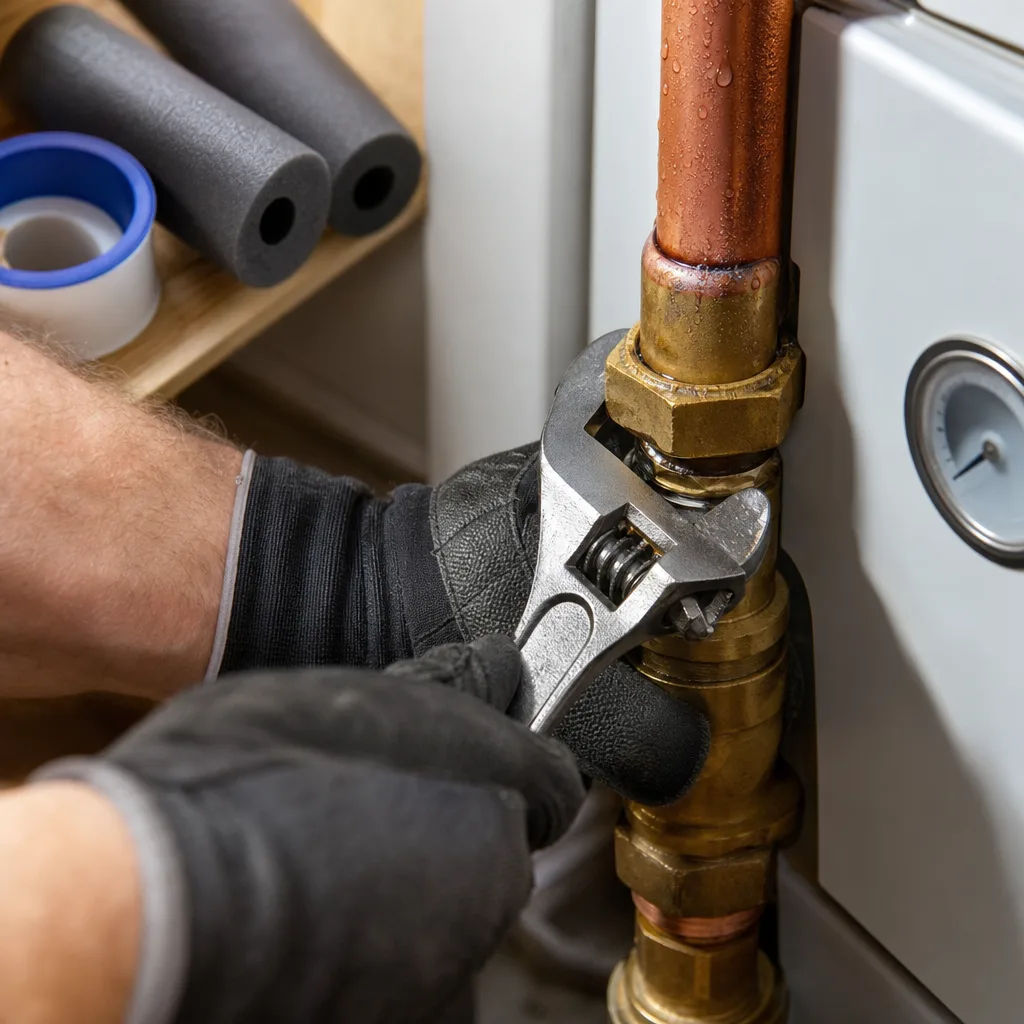
- Water is pooling under the boiler, or you see rust on the boiler itself. A leak from a pipe fitting can be fixed. A leak from a corroded or cracked boiler section usually can’t be fixed in a way that lasts.
- Your gas bills keep rising while your comfort keeps dropping. Older boilers lose efficiency as they age. You’ll often notice rooms that never quite warm up.
- You hear banging, rumbling, or a kettle-like whistle. In North Texas, hard water leaves scale inside the boiler. Over time that buildup makes the boiler overheat in spots, work harder, and wear out sooner.
- Parts are hard to find. On many older boilers, replacement parts get scarce or expensive. A simple repair can turn into weeks of waiting.
- You see a yellow or flickering flame, soot near the burner, or your carbon monoxide alarm goes off. Treat this as a safety problem first. Shut the boiler off and get it looked at before anyone runs it again.
Dallas adds a few local twists. Boilers here are mostly found in older homes and in commercial and multi-unit buildings, so many of the systems still running have been in place a long time. A hard freeze can split piping or a boiler section that was already weak. Our expansive clay soil shifts with wet and dry seasons, and in older slab homes that movement can stress the pipes that feed your boiler. None of that means your boiler is done. It does mean age and local wear deserve a close look, not a guess.
Here’s a simple way to weigh it. Add up what you’ve spent on repairs over the last couple of years. Compare it to what replacement would cost and how much life your current boiler realistically has left. If the repairs are small and rare, keep fixing it. If they’re big and frequent, every repair dollar is going into a system that’s on its way out.
You don’t have to make that call alone. Xtreme Air Services charges a $26-$99 service-call fee to diagnose the problem, and that fee is credited toward the repair if you proceed with us. If the boiler only needs a repair, we’ll tell you that. If the signs point to replacement, you’ll get the reasons plainly, with upfront flat-rate pricing, so you can decide what’s right for your home or building.
Boiler vs. Furnace: Confirming You Need This System
Before you price a new boiler, make sure a boiler is what you have. People mix up boilers, furnaces, and water heaters all the time, and that mix-up can send you down the wrong path.
Here’s the difference. A boiler heats water and pumps it through pipes to radiators, baseboard heaters, or tubing under your floors. A furnace heats air and blows it through ducts and out of vents in your ceilings or walls. Both keep you warm. They just do it in completely different ways, and you can’t swap one for the other by changing out a box in the closet.
You can usually tell which one you have in about two minutes:
- Warm air coming out of vents means you have a furnace or a heat pump, not a boiler.
- Radiators under windows, metal baseboard heaters along the walls, or floors that feel warm with no vents in sight mean you have a boiler.
- Look at the unit itself. A boiler has water pipes going in and out, a small pump, a pressure and temperature gauge, and often a round expansion tank nearby. A furnace has a big metal duct coming off the top or side.
- A tank that only feeds your faucets and showers is a water heater. It’s not part of your heating system, even if it sits right next to it.
In Dallas, most houses are heated with forced air. The furnace or air handler often sits in the attic or a hall closet, with ducts running through the attic. If that’s your setup, you don’t need a boiler. You need furnace replacement or heat pump installation, and we cover those on their own pages.
If you do have a boiler, it’s usually best to replace it with another boiler. Your radiators or floor tubing and your piping are already in place, so a like-for-like swap is the simplest and most affordable path. Older buildings may have a steam boiler instead of a hot-water boiler. That’s worth knowing up front, because the two work differently and the replacement needs to fit your system.
What about switching systems? Going from a furnace to a boiler means adding piping and radiators or floor tubing all through the house. That’s a big project. For most homes, it only makes sense if you really want radiant floor heat and you’re already remodeling. Going the other way, from a boiler to forced air, means adding ductwork that the building was never designed for. In some older homes that’s doable. In others there’s simply no good place to run the ducts.
One more thing to keep in mind. A boiler heats your home, but it doesn’t cool it. If you have boiler heat and no ducts, you still need a way to stay cool through a Dallas summer. Ductless mini-splits are one common answer, since they cool room by room without needing ductwork.
If you’ve looked and still aren’t sure what’s in your utility room, that’s fine. A quick look by a technician will settle it before anyone talks about new equipment.
Why Boiler Installation Requires Mechanical-Contractor Qualification
A boiler isn’t one appliance. It’s four systems in one box: a gas burner, a sealed loop of hot water under pressure, a flue that carries exhaust out of your home, and electrical controls that tie it all together. If any one of those is set up wrong, the boiler can run poorly, wear out early, or put your family at risk. That’s why who installs your boiler matters as much as which boiler you buy.
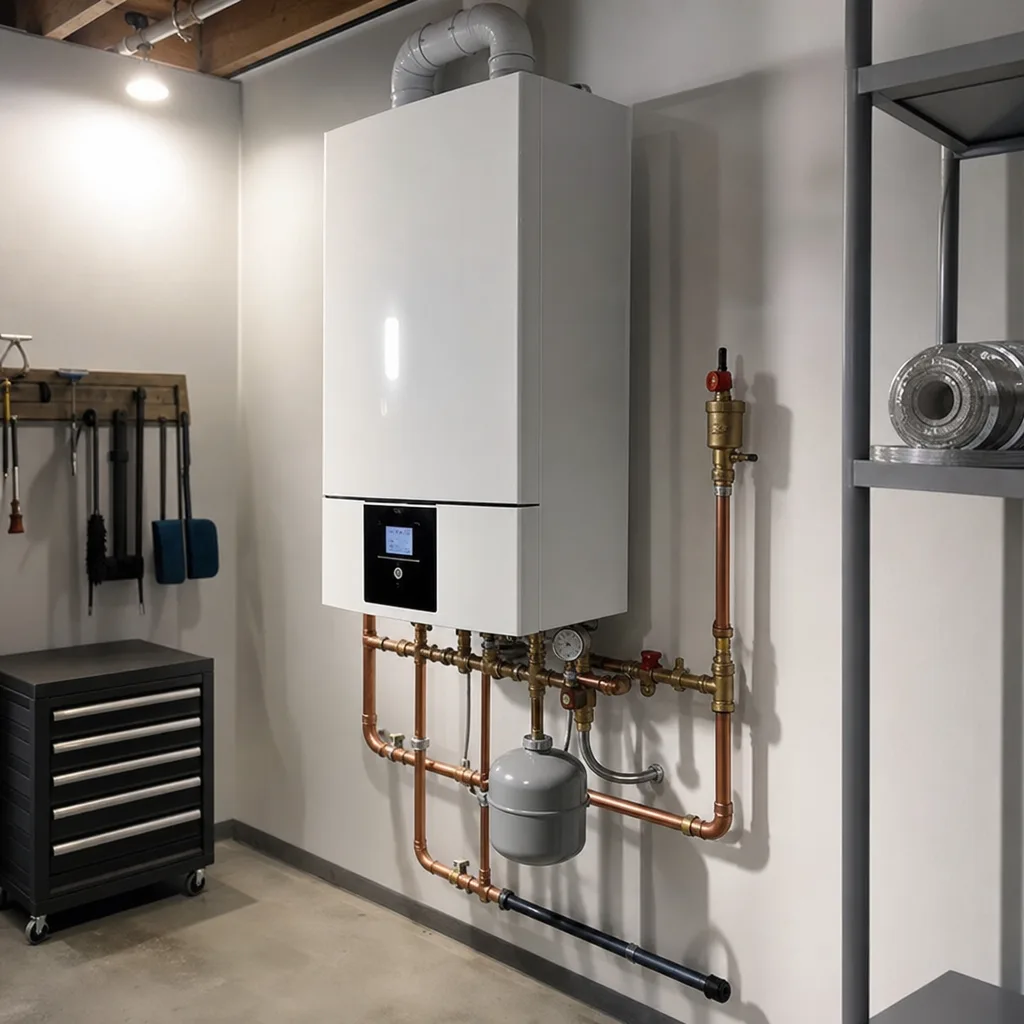
Here’s what a proper boiler installation touches:
- Gas piping. The gas line has to be sized for the new burner, tightly sealed, and leak tested. A small leak at a fitting is easy to miss and dangerous to ignore.
- Venting. Exhaust gases, including carbon monoxide, must leave your home through the right type of vent pipe at the right slope. Many high-efficiency boilers need different venting than the old one did.
- Pressure and safety valves. A boiler holds hot water under pressure. The relief valve, expansion tank, and low-water safeguards are what keep that pressure in a safe range.
- Water and piping connections. Your new boiler has to tie into existing radiators, baseboards, or floor tubing without trapping air or starving rooms of heat.
- Electrical controls. The pump, thermostat, and safety switches all need correct wiring so the boiler shuts down when something goes wrong.
Sizing is part of the job too. A boiler that’s too big turns on and off all day, wastes gas, and wears out sooner. One that’s too small can’t keep up on the coldest nights. Getting it right means looking at your building and your heating system, not just reading the label on the old unit and ordering the same number.
In Texas, HVAC contractors are licensed by the Texas Department of Licensing and Regulation, also called TDLR. Xtreme Air Services is licensed and insured, and our HVAC license number is TACLA29023C. You can look up any contractor’s license yourself on the TDLR website before you sign anything. A licensed contractor has passed state requirements and answers to a state agency if the work isn’t done right.
Permits matter here as well. Boiler work in Dallas involves gas, venting, and pressure equipment, so it’s the kind of job inspectors want to see. A qualified installer will tell you up front whether a permit is needed and who’s pulling it. On our quotes, permits are listed separately unless stated, so you’ll know exactly what’s covered.
Before you hire anyone for a boiler installation, ask:
- What’s your license number, and are you insured?
- How will you size the new boiler for my home or building?
- Does the new boiler need different venting or gas piping than my old one?
- Who handles the permit, and is it included in the price?
- What does startup and testing include before you leave?
A good contractor will answer every one of these without hedging. If someone can’t, or brushes the questions off, that tells you what you need to know. A low bid from someone who skips the venting check or the gas leak test isn’t a savings. It’s a cost you’ll pay later, often in the middle of a cold snap.
Have questions? We’re happy to help.
Call Today, Get Service Today. Xtreme Air Services — North Dallas is ready to help.
What Happens During a Boiler Installation
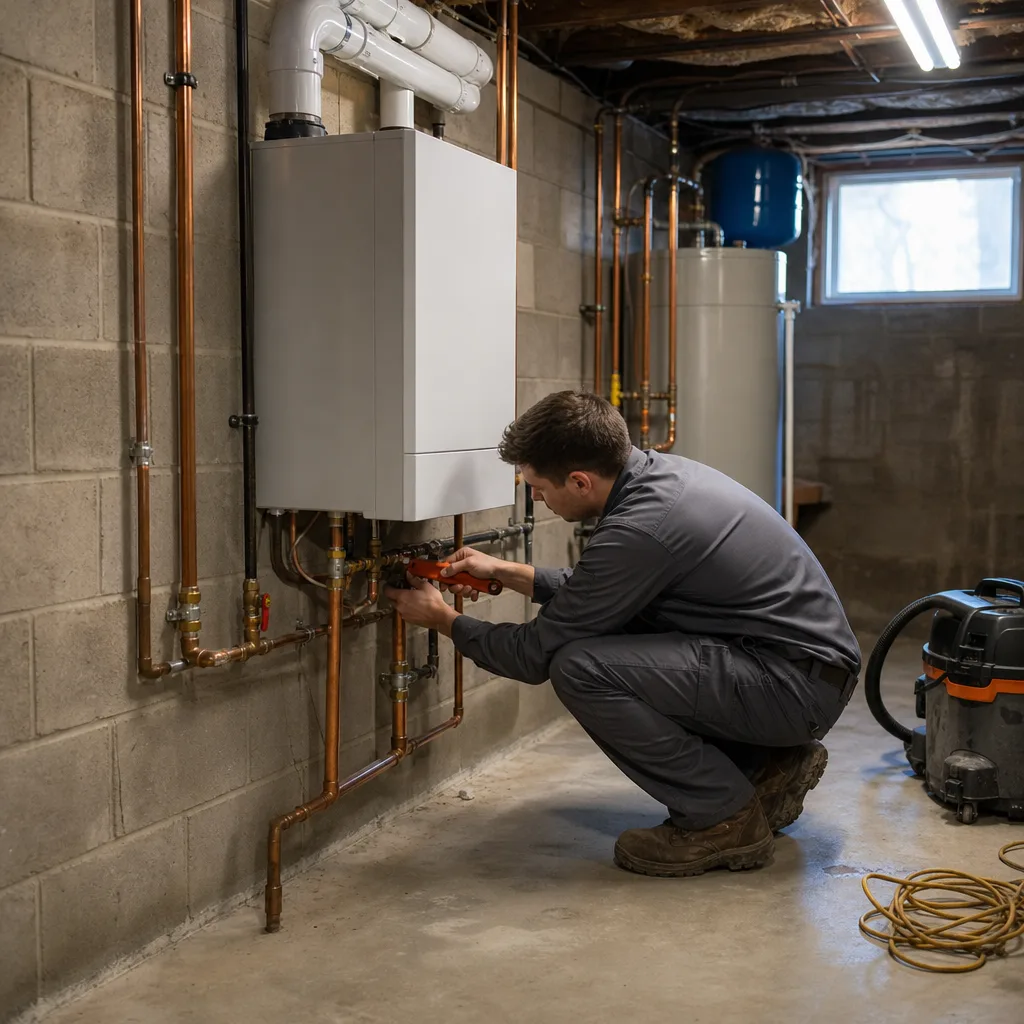
A boiler installation follows a clear order: plan it, shut the old system down, swap the boiler, refill and bleed the loop, then fire it up and test it. Knowing these steps helps you spot a careful job and plan your day around it.
It starts before anyone carries in new equipment. Your installer should look at your current boiler, your piping, and the space it sits in. That visit settles the sizing, venting, and permit questions covered above, so you get a firm price for your building and not a guess. With Xtreme Air Services, you see upfront flat-rate pricing and approve it before work starts.
On install day, a proper job generally goes like this:
- Shut it down safely. The gas, power, and water to the boiler are turned off. Then the heating loop is drained so the old unit can come out.
- Take out the old boiler. Older cast-iron boilers can be very heavy, so clear a path from the boiler room to the door if you can. Haul-away of the old unit is included in our installation price.
- Clean out the loop. Water that has sat in old pipes for years often carries sludge and rust. North Texas hard water adds scale, as we covered earlier. Flushing that out keeps it from clogging the new boiler.
- Set and connect the new boiler. The new unit ties into your existing radiators, baseboards, or floor tubing, plus the gas, vent, and electrical controls.
- Fill and bleed. The loop is refilled and the trapped air is purged. Air left in the pipes is what causes gurgling and cold radiators.
- Start up and test. The boiler is fired, gas joints are leak checked, and the pressure, temperature, and safety controls are tested before anyone calls it done.
Your heat will be off while the work is happening. If you’re replacing a failed boiler during a cold snap, plan for that gap. A space heater in the main room, or a night with family, can make it easier. If you can replace a tired boiler in the fall instead of waiting for it to quit in January, you get to pick the day.
Here’s what our price for the most common job covers. A standard like-for-like boiler installation uses your existing connections with no major changes. It includes the equipment and materials, professional installation, standard connections, startup and testing, and haul-away of the old unit. Duct, electrical, or plumbing changes, code corrections, and permits are not included unless your quote says so.
That line between included and extra is where surprises usually show up. Say the old boiler comes out and the pipe behind it is badly corroded. Or the gas line or venting doesn’t meet current code. That’s real added work. A trustworthy installer stops, shows you the problem, and gets your okay on the cost before going further. You shouldn’t learn about it for the first time on the final bill.
Before the installer leaves, ask for a quick walkthrough. You should know how to read the pressure gauge, where the shutoff switch is, how the thermostat runs the new boiler, and what a normal pressure reading looks like. A few minutes of explanation means you’ll notice right away if something ever changes.
Watch Our Video
See How We Handle Boiler installation in Dallas
Xtreme Air Services — North Dallas
What Drives Boiler Installation Cost
Here’s the honest range. Boiler installation with Xtreme Air Services typically runs $6,000-$20,000. Our most common job is a standard like-for-like swap that uses your existing connections with no major changes, and it runs $8,800-$14,500. Commercial jobs cost more. Where your home or building lands depends on a handful of things, and none of them are a mystery.
- Size and capacity. A bigger building with more radiators or more floor tubing needs a bigger boiler. Bigger boilers cost more, which is one more reason proper sizing matters. You don’t want to pay for capacity you’ll never use.
- Efficiency. Boiler efficiency is rated by AFUE, which tells you how much of the gas you pay for becomes heat. A higher-efficiency boiler costs more up front but wastes less gas every winter. It may also need the different venting covered earlier, and that adds to the job.
- Model. Features, controls, and build quality vary from one boiler to the next, and so does the price. We’ll help you match the model to how you use your heat.
- Access. A boiler in an open utility room is easier to swap than one wedged into a tight closet or a hard-to-reach mechanical space. More time and more labor to get equipment in and out means a higher price.
- The condition of what’s already there. Old piping, wiring, and gas lines may not be ready for a new boiler. Older Dallas homes and buildings often have systems that have been in place for decades, so it’s worth checking before you assume a simple swap.
- Code upgrades and permits. If the gas line, venting, or safety controls don’t meet current code, they have to be brought up to standard. Permit costs vary by job.
- Custom fabrication. Sometimes the new boiler doesn’t line up with the old piping, and parts have to be made to fit. That’s extra work, and extra cost.
Think about it this way. If you’re replacing an aging boiler with a similar one in the same spot and the piping is in good shape, you’re likely near the common-job range. If you’re moving to a high-efficiency model in a cramped space with older gas and vent lines, expect your price to land higher. As we covered in the install section, some of that added work sits outside the standard price, so ask for it in writing.
When you compare quotes, compare the same things. Is the boiler sized for your building? Is haul-away included? Are permits and code fixes listed, or left vague? A lower number that leaves those questions open isn’t really lower.
If the price is the hard part, we offer flexible financing on qualifying installations and larger jobs, on approved credit. That can let you replace a failing boiler now instead of nursing it through another Dallas winter.
Call now
Frequently Asked Questions
Common questions about Boiler installation
What are the main types of boilers I could choose between?
The main types are hot-water boilers and steam boilers, and within those, standard-efficiency and high-efficiency condensing models. Most Dallas homes with radiators or baseboard heat use hot-water boilers, while older buildings sometimes still run on steam. A high-efficiency condensing boiler costs more upfront but uses less gas, though it often needs different venting than an older unit. Your installer should tell you which type fits your current piping before quoting a replacement.
How long does a boiler installation take?
A standard like-for-like boiler installation usually takes one working day, from shutdown to startup testing. The process includes draining the old system, removing the old boiler, flushing the piping, setting the new unit, and refilling and testing the loop. If the job uncovers corroded pipe or code issues behind the old boiler, it can take longer. Your heat will be off during the swap, so plan around that gap if it’s cold outside.
Can I keep using my radiators or floor heat with a new boiler?
Yes, in most cases your existing radiators, baseboard heaters, or floor tubing connect right to the new boiler. A like-for-like swap uses your current piping and heat distribution, which keeps the job simpler and more affordable. The main exception is switching from a steam boiler to a hot-water system, since those work differently and need matched equipment. A technician can confirm your setup during the initial look at your piping and space.
Ready to Get Started?
Call (469) 213-3107 Today, Get Service Today.