


Boiler Replacement in Plano: How to Know It’s Time
A straight answer on repair, service or replacement first – then what a standard boiler replacement includes and costs.
What’s Covered on This Page
- Repair, Service, or Replace: Making the Call
- What a Standard Boiler Replacement Includes
- What Changes the Price of Your Replacement
- Why Plano Homes Rarely Have Boilers – And What That Means for Your Job
- One Licensed Team for the Full Boiler Lifecycle
- Who should I call for boiler replacement, a plumber or an HVAC company?
- Is installing a new boiler a big job?
- Is it worth replacing a boiler just because it’s old?
Repair, Service, or Replace: Making the Call
A boiler that quits on a cold night doesn’t automatically need replacing. Before you spend money on new equipment, you deserve a straight answer about whether the boiler you have is worth saving. Here’s how to sort it out.
A repair usually makes sense when:
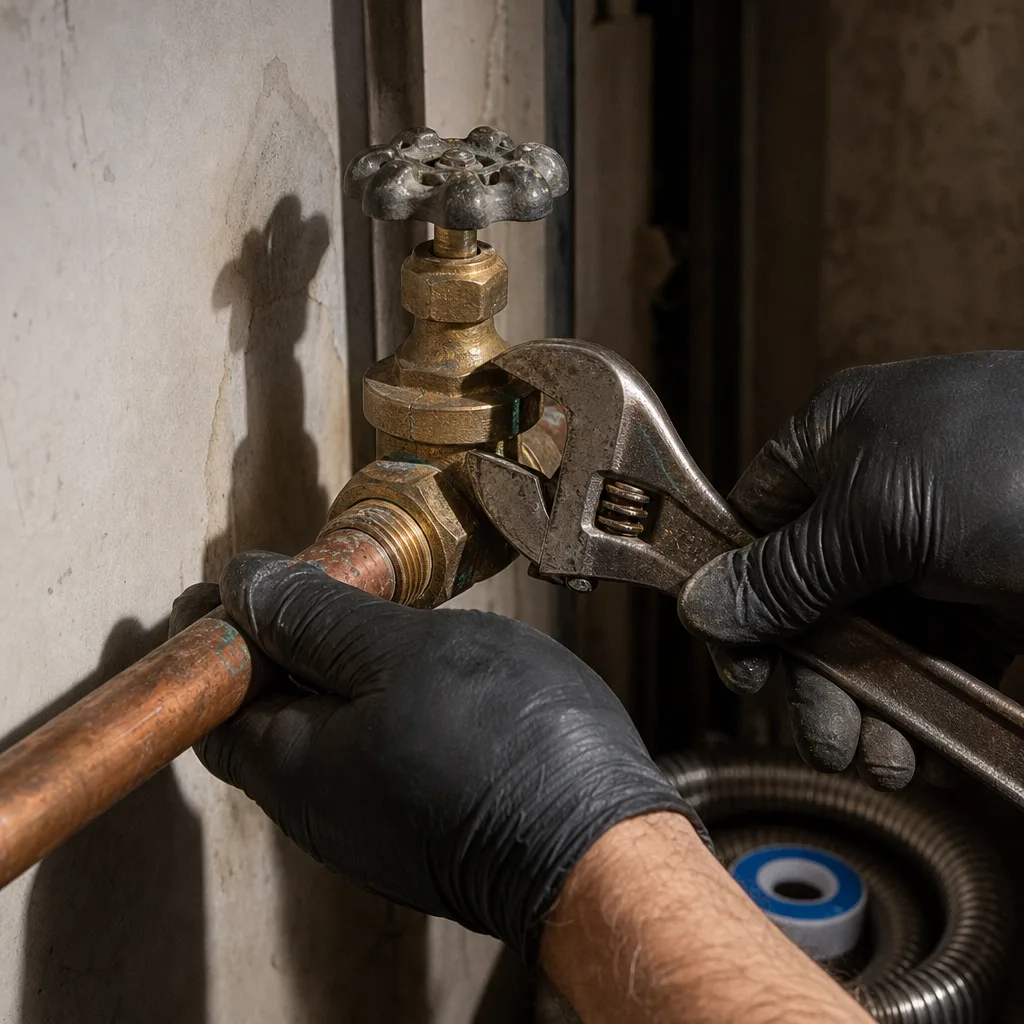
- One part failed, like a circulator pump, igniter, pressure relief valve, expansion tank, or thermostat, and the rest of the boiler is in good shape.
- The boiler worked fine until a recent freeze or power outage, and now it won’t fire.
- Pressure keeps dropping, but there’s no sign of a leak in the boiler itself.
Service or a cleaning is often enough when:
- The boiler still heats, but it rumbles, bangs, or makes a kettle-like sound.
- It turns on and off more often than it used to.
- It hasn’t been looked at in a while, and you want to know where it stands before winter.
Hard water is part of life in North Texas. Over time, minerals can build up as scale inside a boiler. That scale makes the boiler work harder and can cause that kettle-like noise. A good cleaning and tune-up can bring a scaled-up boiler back in line, so it’s worth trying before you think about replacing it.
Replacement usually makes sense when:
- The heat exchanger is cracked or leaking. That’s the heart of the boiler, and it’s rarely worth fixing.
- You’re paying for one repair after another, and the total keeps climbing toward the cost of a new boiler.
- Parts for your model are hard to find or no longer made.
- Your gas bills keep rising, and some rooms still never warm up all the way.
Age alone isn’t a reason to replace a boiler. If yours is older but heats evenly, holds steady pressure, and passes a safety inspection, keep it running and keep it maintained. Swapping out a healthy boiler just because of its age doesn’t save you money. It only spends it sooner.
If you’re on the fence, the deciding question is simple. Will the repair buy you real, reliable years, or just get you through this week? A licensed technician can check the heat exchanger, pressure, venting, and controls, then tell you plainly which side of that line your boiler is on.
Our licensed and insured team uses upfront flat-rate pricing that you approve before any work starts, so you can compare a repair and a replacement side by side with no meter running. If you go ahead with Xtreme Air Services, the $26-$99 service-call fee is credited toward the repair. That means you’re not paying twice just to find out where you stand.
What a Standard Boiler Replacement Includes
A standard boiler replacement swaps your old boiler for a new one that fits the same spot. It hooks up to the connections you already have, with no major changes to your piping, wiring, or venting. That like-for-like job is our most common boiler job, and it typically runs $9,200-$15,500.
Across all boiler replacements, our typical range is $6,000-$22,000. Where your job falls depends on what’s in your home or building. It isn’t a guess, and it isn’t a number pulled out of the air.
Here’s what’s included in a standard replacement:
- The new boiler and the materials needed to install it
- Professional installation by our licensed and insured team
- Standard connections to the lines you already have
- Startup and testing of the new boiler
- Haul-away of your old unit, so a heavy, rusted boiler isn’t left sitting in your garage or yard
These items aren’t included unless your quote says they are:
- Changes to plumbing, electrical, or ductwork
- Code corrections
- Permits
These aren’t hidden fees. Nobody can price them until they’ve seen your setup. If your quote lists them, they’re covered. If it doesn’t, ask before you sign. A good contractor will tell you plainly whether your job needs any of them.
These are the things that move the price up or down:
- Size and capacity. The boiler has to match how much heat your space needs. A bigger home or building needs a bigger boiler, and that costs more.
- Efficiency. Boilers carry an AFUE rating, which tells you how much of the gas you pay for turns into heat. A higher rating costs more up front but wastes less fuel every month.
- Brand and model. Different makers and product lines come at different prices.
- Ease of access. A boiler in an open mechanical room is quicker to swap than one wedged into a cramped closet with a narrow door.
- Condition of your existing plumbing and wiring. Corroded pipes or worn electrical connections may need work before the new boiler can go in safely.
- Code upgrades. Venting and safety rules may have changed since your old boiler was installed.
- Permits. These depend on the job and where your property sits.
- Custom fabrication. If the new boiler’s connections don’t line up with your old piping, parts may need to be built to fit.
Say you get a quote that lands near the high end of the range. Look at that list and ask which items are driving the price. You should get a clear answer, like a tight space, a higher-efficiency boiler, or piping that needs rework. You approve the flat-rate price before work starts, so you’ll know what you’re paying for before anything gets torn out.
If the number is more than you planned for, flexible financing is available on qualifying installations and larger jobs, on approved credit. That way, a boiler that’s failing doesn’t have to wait until your budget catches up.
What Changes the Price of Your Replacement
The cost factors above set your range. What moves your quote inside that range usually comes down to one question. Is your job truly like-for-like, or does something about your setup turn it into more? Here’s where that line tends to get crossed.
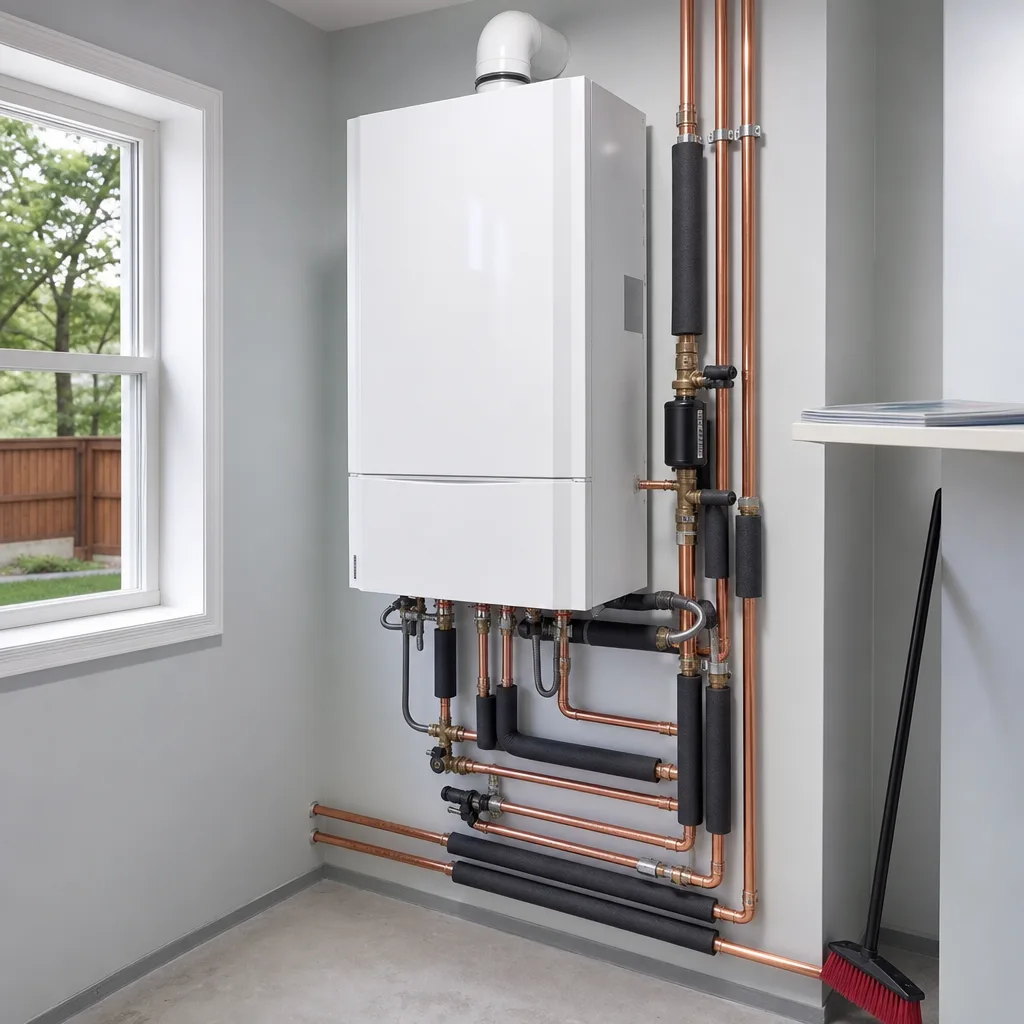
- Moving up to a condensing boiler. A condensing boiler pulls extra heat out of its own exhaust, so less of your gas money goes up the vent. That cooler exhaust turns into water, though. So the boiler needs a drain line and usually a different kind of vent pipe than your old one. If your current boiler vents up a metal flue or chimney, switching takes the job past a standard swap.
- A gas line that’s too small. Some newer boilers need more gas flow than the old line was sized for. If yours can’t keep up, the line has to be upsized before the new boiler can run right.
- Worn parts in the rest of the loop. Your boiler is one piece of a system of pipes, pumps, valves, and radiators or radiant tubing. If the circulator pump, expansion tank, or the piping right next to the boiler is tired, it can make sense to replace it now. Bolting a brand-new boiler onto worn-out parts can mean another service call later.
- Dirty water inside the system. Older heating loops can collect sludge, rust, and hard-water scale over the years. Newer boilers often have narrow passages that don’t handle that well. Your quote may include cleaning the system so the new boiler starts out on clean water.
- Commercial buildings. A building with several boilers, or tenants who need heat while work is underway, may need the job done in stages. That takes more planning and more labor than a single home boiler.
High efficiency isn’t always the right money move, and you should hear that plainly. North Texas winters bring hard freezes, but the heating season here is shorter than in colder parts of the country. A condensing boiler saves gas every month it runs. Fewer heating months, plus the cost of new venting and a drain line, means it can take longer to earn back the extra cost. If your old boiler vents easily and your space heats well, a like-for-like replacement can be the smarter choice. Ask for both options priced side by side, then decide.
When you’re looking at a quote, these three questions tell you a lot:
- Is this a like-for-like swap, or does it include changes to venting, gas, or piping?
- Which line items fall outside a standard replacement, and why does my home or building need them?
- What happens if something unexpected turns up once the old boiler comes out?
A good contractor answers all three without hedging. Because you approve the flat-rate price before work starts, you’ll know which of these items are part of your job before anyone picks up a wrench. If a condensing upgrade or a gas line change shows up on your quote, you’ll know exactly what it’s for.
Ready when you are – get in touch today.
Call Today, Get Service Today. Xtreme Air Services — West Plano is ready to help.
Why Plano Homes Rarely Have Boilers – And What That Means for Your Job
Most homes in Plano don’t have a boiler. In North Texas, cooling runs the show for most of the year, so most houses were built with ductwork, central air, and a gas furnace or heat pump. A boiler is a different kind of heater, and it’s far less common here. If you have one, you’re dealing with a less common setup. That changes how you should plan the replacement and who you should trust to do it.
Before you go further, make sure a boiler is really what you have. People often use the word for any big heater in the garage or closet. Here’s a quick way to tell:
- You have a boiler if it heats water and sends it through pipes to radiators, baseboard heaters, or tubing under your floors. Rooms warm up quietly, with no air blowing.
- You have a furnace if warm air blows out of vents in your floors, walls, or ceilings. That’s a furnace replacement, not a boiler job.
- You have a water heater if it’s a tank or wall unit that only feeds your sinks, showers, and washing machine. That’s a separate job too.
If it turns out you have a furnace or a water heater, this page isn’t your answer, and that’s fine. You’ll want the page for the system you have, so you aren’t comparing the wrong prices.
In Plano, boilers usually turn up in a few places. Some custom homes use them for radiant floor heat, with warm water running through tubing in the slab or under the flooring. Some homes use a boiler to feed a water coil inside an air handler, so the heat still comes out of vents. Commercial buildings, like offices, schools, and multi-unit properties, are more likely to run boilers than single-family homes.
Here’s what a less common system means for your replacement:
- Plan ahead if you can. The right boiler for your home or building may need to be ordered, not pulled off a truck. If yours is showing its age, don’t wait for a hard freeze to start the conversation.
- Hire someone who works on boilers. A lot of residential heating work in this area is furnaces and heat pumps. Ask any contractor directly whether boilers and hydronic systems are part of the work they do.
- Match the boiler to how your heat is delivered. Radiant floors run on cooler water than old cast-iron radiators. That’s one reason a condensing boiler, covered above, can be a good fit for radiant heat.
- Look at the whole loop. Pumps, valves, and piping in a less common system need to be checked along with the boiler itself.
Our team works out of our Plano office on West Park Boulevard. Boiler replacement, boiler repair, hydronic heating, and radiant heating installation are all part of the work we offer. So you don’t have to hunt for a specialist just because your home heats differently than the house next door.
Call 469-217-9095
Watch Our Video
See How We Handle Boiler replacement in Plano
Xtreme Air Services — West Plano
One Licensed Team for the Full Boiler Lifecycle
A boiler replacement doesn’t stop at the boiler. It can touch your gas line, your electrical connections, your water piping, and the pumps and valves in the rest of the loop. When each of those belongs to a different contractor, you end up being the one who coordinates them. And if something doesn’t line up, you’re the one stuck in the middle.

Xtreme Air Services is a licensed and insured HVAC, plumbing, and electrical contractor, with all of it under one roof. Our HVAC license number is TACLA29023C. Your replacement might turn up a gas line that needs upsizing, a circuit that needs updating, or piping that needs rework. If it does, the same company that quoted your boiler can handle that work too. You get one quote, one point of contact, and one team accountable for how it all turns out.
Boilers aren’t the usual setup in Plano, so it helps to work with a team whose boiler work covers every stage, not just install day. Here’s what that covers:
- Before the job: Boiler consultation and boiler system design, so the new boiler fits your space and the way your heat is delivered.
- Out with the old: Boiler decommissioning, with haul-away of your old unit included in a standard replacement.
- Install day: Boiler installation, plus the gas line, piping, pump, and electrical work your quote calls for.
- Startup: Boiler commissioning, which means checking that the new boiler runs the way it was designed to before you count on it.
- The years after: Boiler servicing, maintenance, cleaning, and safety inspections, plus boiler repair if something goes wrong.
That last stage matters more than most people think. The hard-water scale covered above doesn’t stop building just because your boiler is new. Regular cleaning and maintenance help your new boiler keep heating evenly and running the way it did on day one. When you call the same team that installed it, they already know your system, your piping, and what was done to it.
If you own or manage a commercial building, one team matters even more. Your tenants, staff, or students need heat, and you don’t want three companies pointing at each other while the building gets cold. Commercial plumbing, commercial electrical, and boiler work all fall under the services we offer.
You also want to know who’s walking into your home or building. Our technicians are licensed and background-checked. Your neighbors across North Texas have given us a 4.8-star reputation across more than 2,900 reviews on Google, Angi, and HomeAdvisor. We answer the phone around the clock, and there’s no extra charge for nights or weekends.
Call 469-217-9095
Frequently Asked Questions
Common questions about Boiler replacement
Who should I call for boiler replacement, a plumber or an HVAC company?
You want a contractor whose team handles both HVAC and plumbing, since a boiler job can touch gas lines, water piping, and electrical connections all at once. Many plumbers rarely work on boilers, and many HVAC techs mostly handle furnaces and heat pumps, since those are what most Plano homes have. Ask directly whether boilers and hydronic systems are part of the regular work a contractor does before you book them.
Is installing a new boiler a big job?
A standard boiler replacement, swapping your old unit for a new one in the same spot, is usually a contained job that connects to your existing piping, wiring, and venting. It becomes a bigger job if you’re upgrading to a condensing boiler, which needs a new drain line and different venting, or if your gas line needs upsizing. Asking upfront whether your quote is a like-for-like swap or includes those extra changes tells you how big the job really is.
Is it worth replacing a boiler just because it’s old?
No, age alone isn’t a reason to replace a boiler. If an older boiler still heats evenly, holds steady pressure, and passes a safety inspection, it’s worth keeping running and maintained rather than swapping it out early. The real red flags are a cracked or leaking heat exchanger, repairs that keep piling up, or parts for your model that are getting hard to find.
Ready to Get Started?
Call (469) 217-9095 Today, Get Service Today.