


Commercial HVAC Installation in Plano: What to Know Before You Buy
New commercial systems scoped and sized for your building, with what's included and what costs extra laid out first.
What’s Covered on This Page
- Know Whether You Need Replacement or Repair First
- Commercial HVAC Installation Is a Licensed Mechanical Contractor Job
- What a Standard Installation Includes – and What It Doesn’t
- Permits and Inspections for Commercial Jobs in Plano
- How the Installation Process Protects Business Uptime
- What’s the best HVAC system for a commercial building in Plano?
- What counts as commercial air conditioning versus a home AC system?
- Can my business stay open during a commercial HVAC installation?
Know Whether You Need Replacement or Repair First
Before you budget for a new commercial system, find out what’s wrong with the one you have. A unit that quits on a hot afternoon isn’t always a unit that’s done. Sometimes it’s one worn-out part, and fixing it gets your business running again for a fraction of what a new install costs.
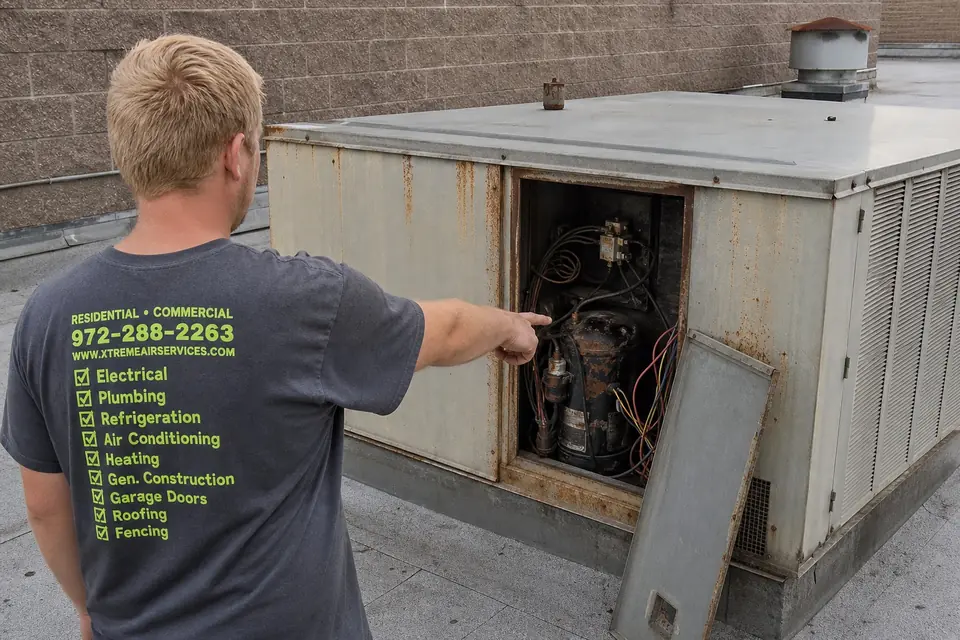
Here’s the honest version. If your system is still in the middle of its working life and a single part has failed, repair it. A bad capacitor, a burned-out fan motor, a clogged drain line, or a refrigerant leak can all be found and fixed. Paying for a full installation in those cases doesn’t make sense, and you shouldn’t let anyone talk you into it.
Replacement starts to make sense when you see a pattern rather than a single breakdown:
- The same unit has needed several repairs in the last year or two, and the calls keep coming.
- A major part like the compressor has failed on an older system, and the repair would cost a big share of what new equipment costs.
- The system runs nonstop through a Plano summer but still can’t hold temperature in your space.
- Your energy bills keep climbing even though your hours and use haven’t changed.
- The unit runs on an older refrigerant that’s getting harder and more expensive to find.
- You’ve changed the space, like adding a kitchen, more staff, or new equipment, and the old system was never sized for it.
For a business, the question isn’t just about cost. It’s also about downtime. Picture a restaurant whose rooftop unit fails on a Friday in August, or an office where tenants keep calling about warm suites. When a system is old enough that the next breakdown is a matter of when, not if, planning a replacement on your schedule beats an emergency on the busiest day of your week.
If you’re not sure which side you’re on, start with a diagnosis. Our service-call fee is $26-$99, and it’s credited toward the repair if you go ahead with Xtreme Air Services. That way, you get a clear answer about what failed and what it’ll take, with upfront pricing before any work starts. If a repair is the right move, we’ll tell you so and handle it through our commercial HVAC repair and maintenance service.
If the numbers point to replacement, you’ll know why. You’ll be choosing a new system because it’s the better investment for your building, not because someone pushed you into it.
Commercial HVAC Installation Is a Licensed Mechanical Contractor Job
A commercial HVAC install isn’t a swap-and-go job. In Texas, air conditioning and heating work has to be done under a license issued by the Texas Department of Licensing and Regulation (TDLR). That license is your first protection when you’re spending real money on your building. It means a qualified person is responsible for the work, and you have a state agency to turn to if something goes wrong.
Here’s why it matters so much on a commercial job. A new rooftop unit or split system touches almost every system in your building. It ties into your electrical service. It may tie into a gas line. It sits on your roof or a pad, it connects to your ductwork, and it moves refrigerant that federal rules say only certified technicians can handle. One shortcut in any of those spots can mean a failed inspection, a voided insurance claim, or a system that never runs right.
Permits are part of this, too. In Plano, like most cities, a commercial equipment change usually needs a permit and an inspection before it’s signed off. A licensed contractor knows that step is coming and plans for it. An unlicensed crew may skip it, and you won’t find out until you sell the building, file an insurance claim, or a city inspector walks through.
Xtreme Air Services is a licensed and insured contractor, and our HVAC license number is TACLA29023C. You can look it up yourself on the TDLR website. We think you should. Any contractor who asks you to trust them with your building should be easy to check.
We’re also licensed for plumbing and electrical work, so the gas, drain, and power connections on your install don’t have to wait on a second or third company. One team, one point of contact, and one company accountable for the whole job.
Before you hire anyone for a commercial install, ask these questions:
- What’s your TDLR license number? Then verify it yourself.
- Are you insured for commercial work, and can I see proof?
- Who pulls the permit and schedules the inspection?
- How did you size the new system for my space, and will you show me how you got that number?
- What’s included in the quote, and what’s not? Ask about ductwork, electrical changes, code corrections, and permits by name.
- Who’s doing the work on my roof? Are they your own background-checked technicians or subcontractors?
- Does the price include startup, testing, and hauling away the old unit?
A good contractor won’t flinch at any of these. They’ll give you straight answers and put them in writing. If a bid comes in far lower than the others, these questions usually show you why. Often it’s because something on that list got left out.
On our installs, startup and testing are part of the job. So is hauling away your old equipment. We don’t consider the work finished when the new unit is bolted down. It’s finished when it’s running, checked, and doing what your building needs it to do.
What a Standard Installation Includes – and What It Doesn’t
You want to know what you’re paying for before you sign anything. That’s fair, so here are the real numbers. A commercial HVAC installation with Xtreme Air Services typically runs $10,000-$100,000. That’s a wide range because a small office’s split system and a large rooftop setup are very different jobs.
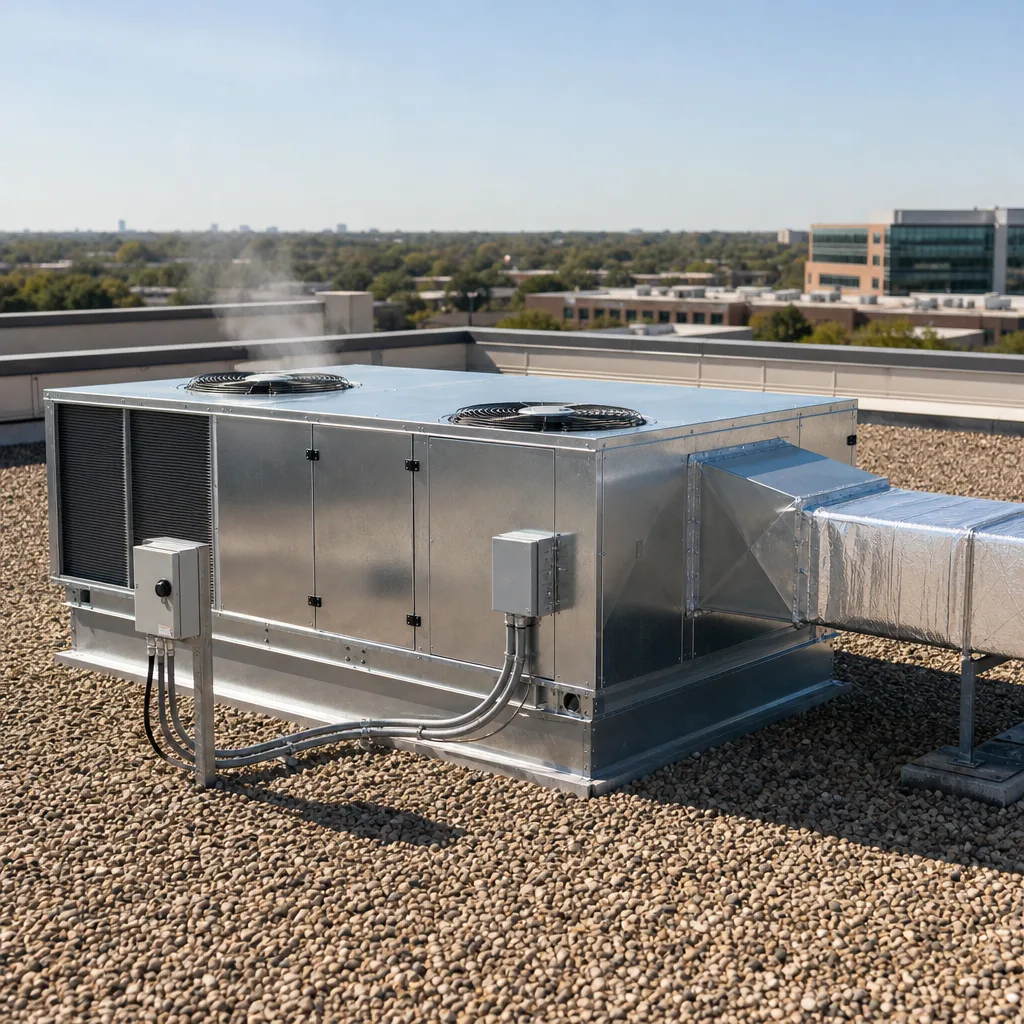
Our most common job is a standard like-for-like replacement. That means new equipment goes in where the old equipment was, using your existing connections, with no major changes to the building. That job usually lands at $28,000-$64,000.
Here’s what a standard installation includes:
- The new equipment and materials
- Professional installation
- Standard connections to your existing setup
- Startup and testing
- Haul-away of the old unit
Here’s what it doesn’t include unless your quote says so:
- Changes to ductwork, electrical, or plumbing
- Code corrections
- Permits
Why leave those out of the base price? Because nobody knows what they’ll cost until someone looks at your building. One Plano storefront might have ductwork in good shape and an electrical service that fits the new unit fine. The suite next door might have leaky old ducts or wiring that has to be brought up to code before new equipment can go in. Rolling a guess into everyone’s price would mean some customers pay for work they don’t need. We’d rather show you each item on its own line so you can see exactly where your money goes.
Your final number depends on a handful of things:
- Size and capacity. Bigger spaces need more tonnage, which is how cooling power is measured. More tons means more equipment.
- Efficiency. Higher SEER2 ratings for cooling and higher AFUE ratings for gas heat cost more up front. In return, they use less energy every month, which adds up through a long Texas cooling season.
- Brand and model. Different equipment lines come at different prices.
- Ease of access. A unit on a ground-level pad is simpler to reach than one on the roof of a multi-story building.
- Condition of what’s already there. Worn ducts, wiring, or plumbing can add work.
- Code upgrades and permits. Older buildings sometimes need updates to meet current rules.
- Custom fabrication. If parts like ductwork transitions have to be built to fit your space, that adds cost.
If one of those items applies to your building, you’ll hear about it before work starts, not after. With upfront flat-rate pricing, you approve the price first, so there’s no meter running and no surprise bill at the end.
When you’re comparing bids, hold each one up against these two lists. A lower number often just means something on the “not included” side got left out, and you’ll end up paying for it later anyway.
Need help with Commercial HVAC installation?
Call Today, Get Service Today. Xtreme Air Services — West Plano is ready to help.
Permits and Inspections for Commercial Jobs in Plano
The permit isn’t just paperwork. It’s the step that proves your new system was put in safely, and it can affect your schedule as much as the install day does. If you plan for it from the start, it’s a short stop on the way to a working system. If nobody plans for it, it’s the reason your job drags into a second or third week.
On a commercial job in Plano, the permit goes through the city before work starts. After the equipment is in, an inspector comes out to check it. Nobody should call the job finished until that inspection passes.
Inspectors usually check the parts of the install that matter most for safety and for how long your system lasts:
- The installed equipment matches what was listed on the permit.
- The electrical hookup, including the shutoff switch near the unit, is wired and sized correctly.
- Any gas connection is tight, properly piped, and has a shutoff valve where it belongs.
- Condensate, the water your AC pulls out of the air, drains where it should and not onto your roof or into a ceiling.
- The unit is mounted securely, whether that’s on a roof curb or a ground pad, with the right clearance around it for service and airflow.
- Duct connections are sealed and supported.
If something on that list doesn’t pass, the inspector writes it up. Then the fix has to happen and a second inspection has to be scheduled. That’s the delay you want to avoid. A clean first inspection depends on the work being done right the first time, not on luck.
Timing matters more for a business than for a homeowner. Picture a dental office or a restaurant in a Plano shopping center. You may need the old unit pulled and the new one set on a day you’re closed, with the inspection soon after so your space isn’t running on borrowed comfort for days. Ask early how the permit and inspection fit into your install date, so you can plan staff, appointments, or deliveries around it.
If you lease your space, there are a few extra things to handle before work begins. Your landlord or property manager may need to approve the work, give roof access, or have their own maintenance team on site. Some buildings have rules about when cranes or heavy equipment can be used. Sorting those out ahead of time keeps the permit, the install, and the inspection lined up.
Here’s what you can do to make this step go smoothly:
- Check your quote to see whether the permit is included or listed as a separate cost.
- Ask who will be on site for the inspection and how you’ll hear the result.
- Get written landlord approval and roof access details before the install date.
- Keep a copy of the approved permit and passed inspection with your building records.
That last one is easy to skip, but don’t. A passed inspection on file makes things simpler when you sell the building, renew a lease, or file an insurance claim. It’s proof the system on your roof was installed the right way.
Watch Our Video
See How We Handle Commercial HVAC installation in Plano
Xtreme Air Services — West Plano
How the Installation Process Protects Business Uptime
The biggest cost of a new system often isn’t on the quote. It’s the hours your doors are closed, your staff is sweating, or your tenants are calling. A good installation is planned around that. Most of the work happens before the old unit ever comes down, so the swap itself takes as little of your business day as possible.

Here’s how a well-run commercial install keeps your downtime short:
- Measure before ordering. The new system should be sized for your space as it is today. That includes your people, your equipment, any kitchen, and the sun coming through your windows. Ordering by the old unit’s label can repeat an old sizing mistake.
- Order equipment early. Commercial units aren’t always sitting on a shelf. Locking in your equipment before the swap date means you won’t be waiting on a truck while your space heats up.
- Prep before swap day. Check the roof curb or pad, the electrical shutoff, the gas line, and the duct connections ahead of time. If anything needs an adapter or a custom piece, it should be built before the old unit comes out, not after.
- Schedule the heavy lifting around you. Depending on your building’s rules, crane lifts and roof work can often be set for early mornings, closed days, or weekends.
- Swap, connect, and start up. The old unit comes out, the new one is set, and the connections are made. Then the system is started and tested before anyone calls it done.
Startup and testing are where you find out the job was done right. That means checking that the unit cools and heats the way it should, that air reaches every part of your space, that the condensate drains, and that your thermostat or controls talk to the equipment. Startup and testing are included on our installs, along with hauling away the old unit. You won’t be left with a dead unit on your roof, or with a problem you only discover on the first hot Monday.
Timing matters too. In Plano, summer is when systems work the hardest and when installers are the busiest. If your system is already on the replacement side of the line, planning in spring or fall gives you more choice of install dates and less risk of being forced into one. Picture a medical office that books its swap for a Saturday in April instead of losing a full week of patients in July.
You stay in control the whole way. With upfront flat-rate pricing, you approve the price before any work starts, and our licensed, background-checked technicians do the work. We plan every job to finish on time and on budget, because a day late is a day your business pays for.
Call 469-217-9095
Frequently Asked Questions
Common questions about Commercial HVAC installation
What’s the best HVAC system for a commercial building in Plano?
The best system depends on your building, not a single brand or type. A rooftop unit works well for storefronts and offices with roof access, while a split system may suit a smaller suite better. What matters most in Plano is sizing the unit correctly for your space and picking a high SEER2 rating, since cooling runs hard through our long, hot summers. A contractor should size the system based on your actual building, equipment, and staff, not just match the old unit’s label.
What counts as commercial air conditioning versus a home AC system?
Commercial air conditioning is built to cool larger spaces like offices, restaurants, and retail stores, often using rooftop units instead of the split systems found in houses. These systems handle higher cooling loads, tie into a building’s electrical service, and sometimes connect to gas lines for heat. Because commercial units serve more people and equipment, they need a licensed mechanical contractor to size, install, and connect them correctly under Texas Department of Licensing and Regulation rules.
Can my business stay open during a commercial HVAC installation?
In many cases, yes, since most of the prep work happens before your old unit ever comes down. Measuring the space, ordering equipment, and checking the roof curb or electrical shutoff all happen ahead of swap day. The actual swap, where the old unit comes out and the new one goes in, is the part that needs your doors closed or your space empty, and that can often be scheduled for early mornings, closed days, or weekends depending on your building’s rules.
Ready to Get Started?
Call (469) 217-9095 Today, Get Service Today.