


Commercial HVAC Repair & Maintenance in Plano
Commercial and rooftop systems repaired before one failing part takes the rest down – plus preventive maintenance.
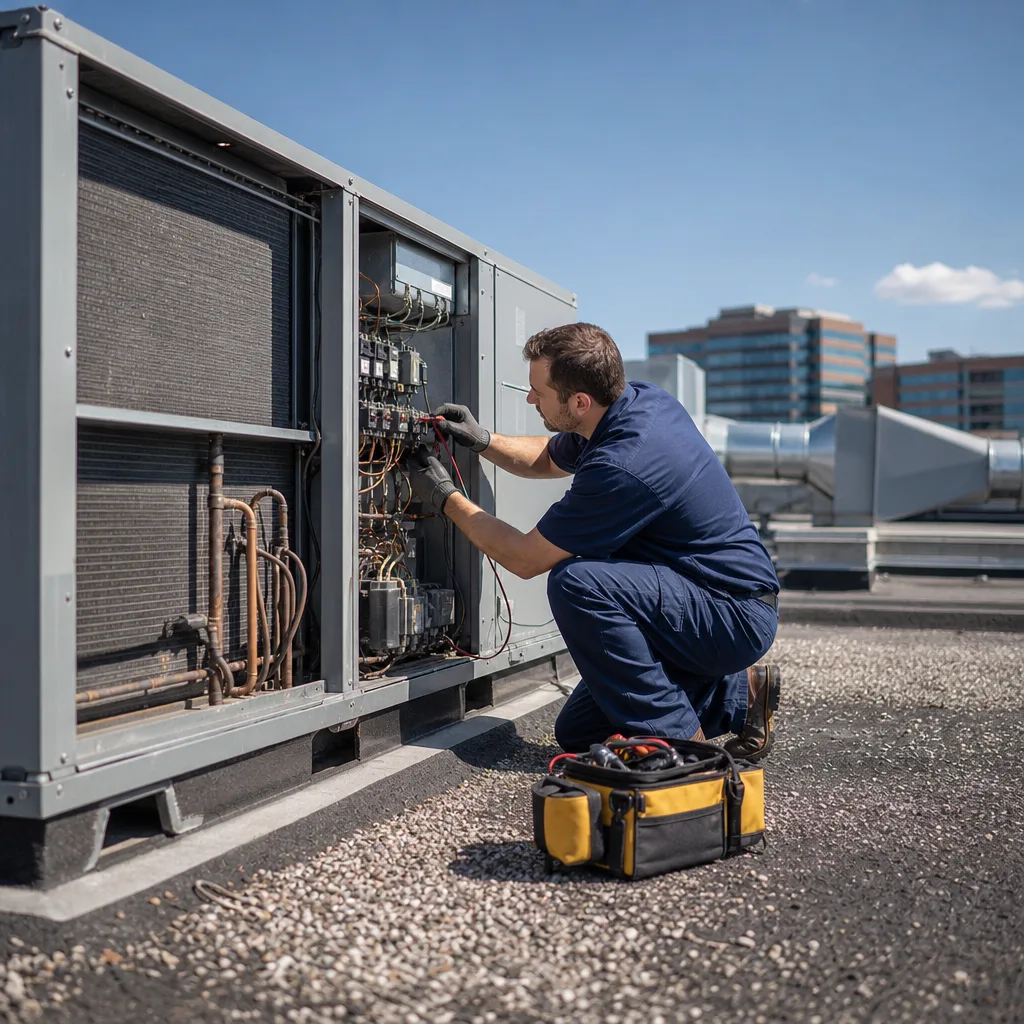
What’s Covered on This Page
- What a Commercial HVAC Repair Visit in Plano Includes
- Common Commercial Equipment Failures We Diagnose
- Deciding Between a Repair and a Replacement
- Questions to Ask Before Approving a Commercial Repair Quote
- Signs a Commercial System Needs Service Now
- How often should a commercial HVAC system in Plano be serviced?
- What is the $5,000 rule for HVAC systems?
- What does a commercial HVAC maintenance visit cover?
What a Commercial HVAC Repair Visit in Plano Includes
When your unit goes down, you care about two things: getting the space cool again and knowing what it’ll cost. Here’s how a repair visit works with our team, so nothing catches you off guard.
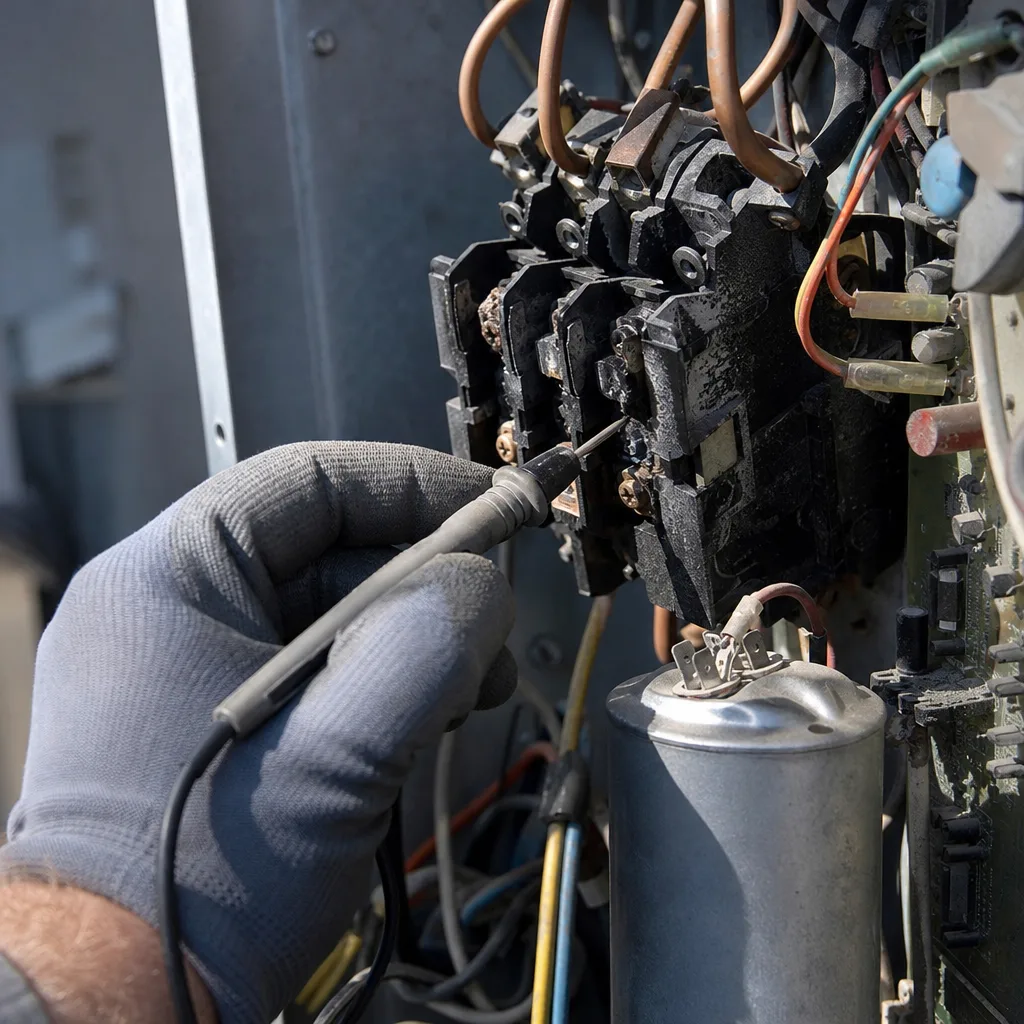
The job is simple to describe. We find the part that failed, repair or replace it, and then make sure the whole system runs the way it should. Most calls come down to one common failure, and most of those are fixed on the first visit. That means your office, store, or restaurant is back to normal sooner, and you’re not waiting on a second trip.
- Diagnosis, so you know exactly what broke and why the system stopped keeping up
- Labor to make the repair
- The standard replacement part for that repair
- Testing after the fix, so you know the system is really running right before we leave
- Cleanup, so your space is left the way we found it
Some things aren’t part of the standard repair price. These are quoted separately, and you’ll hear about them before any work begins: additional failed parts beyond the first one, major components, code upgrades, and permits. If we open up a rooftop unit and find a second problem, you decide what happens next. Nothing gets added to your bill without your okay.
The service call is $26 to $99. If you go ahead with the repair through Xtreme Air Services, that fee is credited toward the job. You aren’t paying twice just to find out what’s wrong.
The most common repair runs $300 to $2,400, and commercial repair and maintenance work overall falls between $300 and $5,000. Where your job lands depends on a few honest factors: how far the failure has gone, what the part costs and whether it’s in stock, the age and brand of your equipment, and whether more than one component has failed. If you’ve ever had a part that took days to arrive, you know availability alone can change the picture.
One thing that won’t change your price is the clock. A lot of Plano businesses can’t shut down during the day for a repair, so after-hours work matters. We charge no extra for nights or weekends. If your unit quits on a Saturday afternoon in August, you pay the same as you would on a Tuesday morning.
We give you upfront flat-rate pricing, and you approve it before the work starts. There’s no meter running while a technician is on your roof. For larger jobs and qualifying installations, flexible financing is available on approved credit. That can help if the fix turns out to be bigger than one part and you’d rather spread out the cost than take the hit all at once.
Common Commercial Equipment Failures We Diagnose
Most commercial breakdowns start with a small, clear sign. The space feels warmer by mid-afternoon. A unit hums but the fan won’t spin. Water shows up where it shouldn’t. Each of those signs points to a short list of parts, and finding the right one is how a repair gets done right the first time instead of turning into guesswork.
Here’s what you might notice, and what’s usually behind it:
- The unit hums but won’t start, or it starts and quits fast. This often points to a weak or failed capacitor. That’s the small part that gives the motors a jolt to get going. Long North Texas summers put a lot of strain on it.
- The air blows, but it isn’t cold. This can mean low refrigerant from a leak, a dirty condenser coil that can’t shed heat, or a compressor that’s struggling. Each one needs a different fix, so it has to be checked, not guessed.
- Weak airflow from the vents. A clogged filter, a failing blower motor, or a frozen evaporator coil can all cut airflow. A frozen coil usually means something else is wrong too, like low refrigerant or poor airflow.
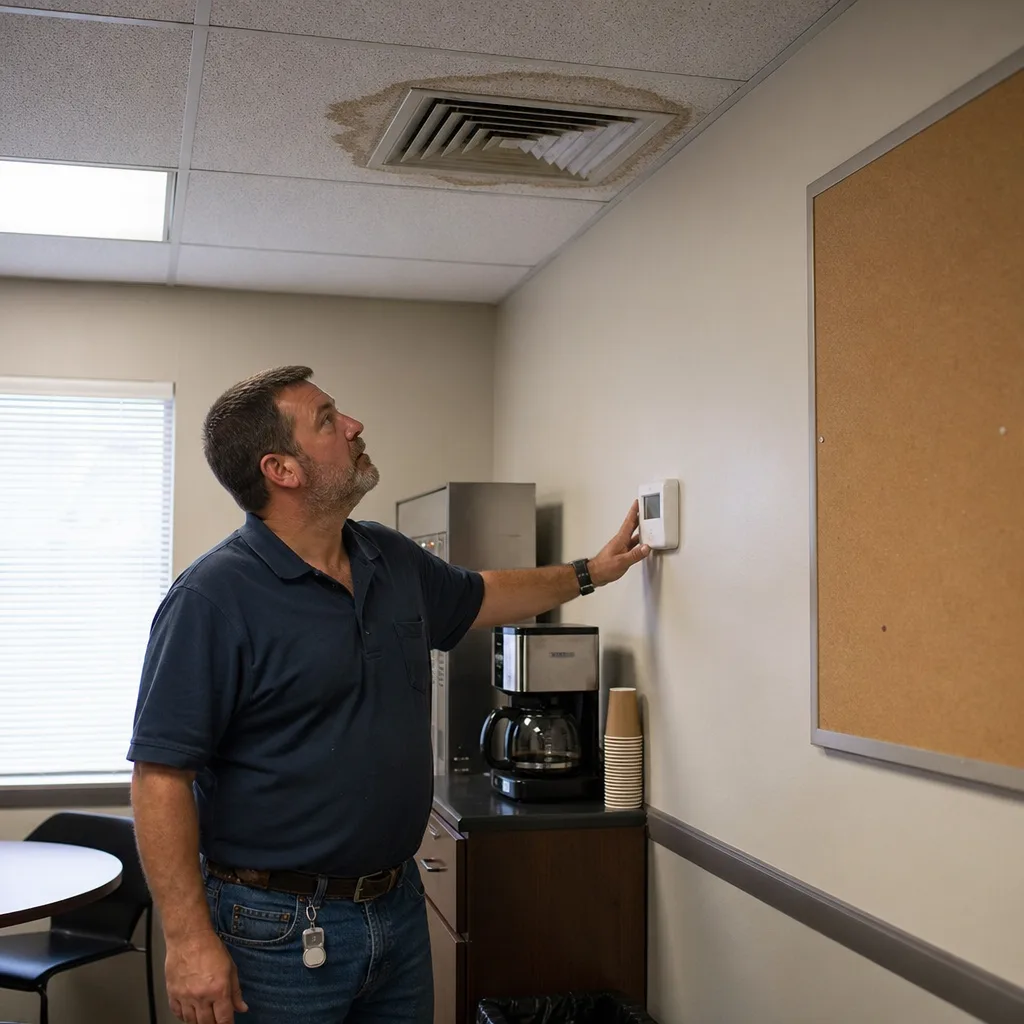
- Water leaking near the indoor unit or dripping through a ceiling tile. A clogged condensate drain line is a common cause. It’s a simple fix, but you don’t want to ignore it in an office or retail space.
- One zone is too hot while another is fine. Thermostat trouble, a control board fault, or a building controls issue can tell part of the system the wrong thing.
- The rooftop unit runs nonstop and never catches up. That can be a dirty coil, a failing fan motor, low refrigerant, or a unit that’s simply worn out from years of hard work on a hot roof.
- Loud grinding, squealing, or banging. These sounds usually mean a motor bearing, belt, or fan blade is failing. Catching it early can keep a small repair from becoming a bigger one.
If you run a restaurant or store with cold storage, the same thinking applies to walk-in coolers, walk-in freezers, and ice machines. A cooler that won’t hold temperature, ice building up on the coil, or a door that won’t seal are all signs worth checking before you lose inventory. We handle commercial refrigeration too, so one call covers both your comfort system and your cold storage.
Some of these signs you can check yourself before you call. Look at the filter. A badly clogged one can cause weak airflow and even a frozen coil. Make sure the thermostat has power and is set right, and check whether a breaker has tripped. If one of those fixes it, great. If the problem comes back or the unit still won’t keep up, it’s time for a technician.
Why does the diagnosis matter so much? Because several symptoms share the same causes. Warm air might be a five-minute capacitor swap or a refrigerant leak that needs real repair work. Our licensed and insured technicians find the part that failed first. Then you get a clear, upfront price for that fix, and you decide what happens next.
Deciding Between a Repair and a Replacement
Most of the time, you should repair it. If one part failed on a unit that’s otherwise in decent shape, fixing that part is the smart, lower-cost move. Replacement starts to make sense when the repairs keep stacking up, the parts get hard to find, or the fix costs close to what a new system would.
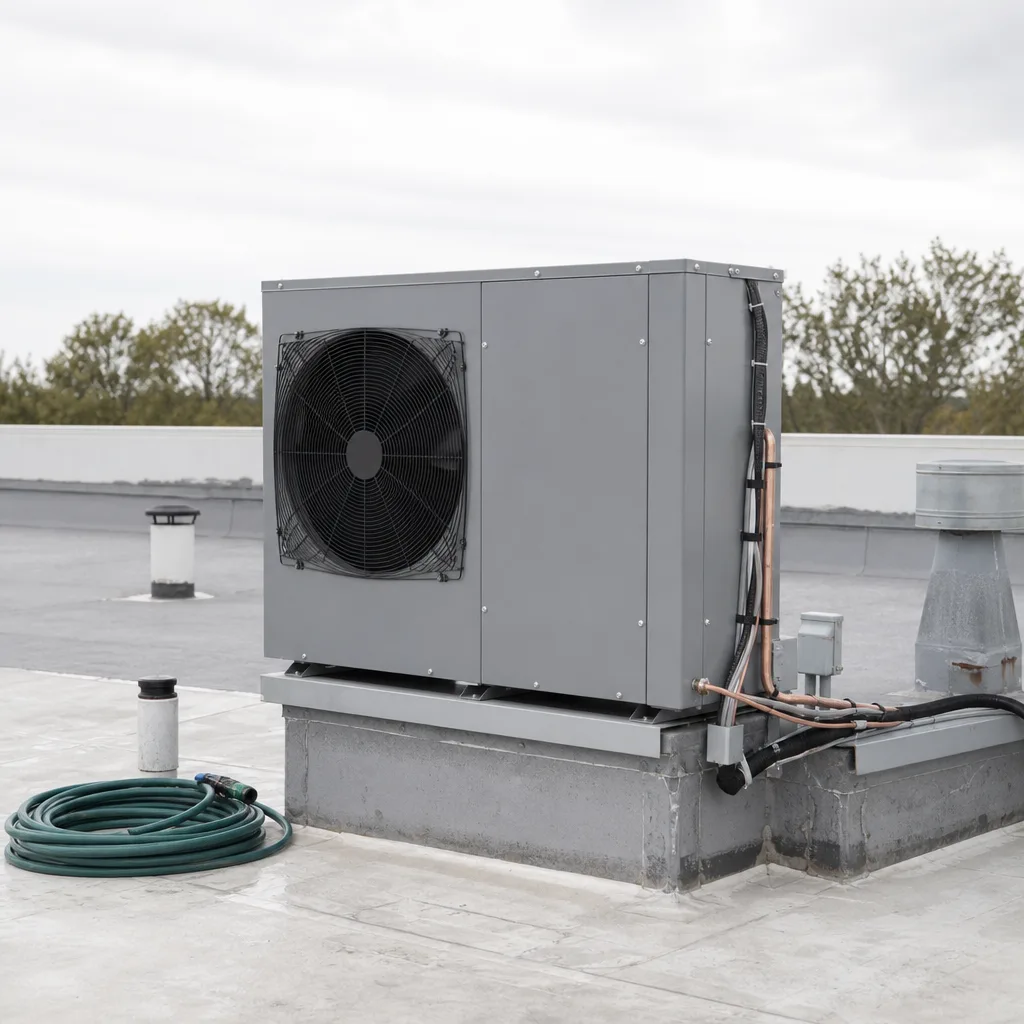
Here’s the honest version. A failed capacitor, a clogged drain line, or a worn fan motor on a solid rooftop unit isn’t a reason to buy new equipment. That’s a repair. You’ll get your space cool again and keep your money in the business. Nobody should talk you into a whole new system over one bad part.
Things change when the problem is bigger or keeps coming back. These are the signs that replacement is worth a real conversation:
- More than one major component has failed at the same time, like a compressor and a coil.
- You’ve paid for several repairs in the last year or two, and the unit still can’t keep up on hot afternoons.
- The equipment is old enough that parts are hard to get, so every breakdown means days of waiting.
- The unit runs on an older refrigerant that’s no longer made, which can make leak repairs costly.
- Your energy bills keep climbing even though nothing about your building or hours has changed.
- The repair quote is a big share of what a new unit would cost, and the system is near the end of its life.
Think about what downtime costs you, too. If you run a restaurant, a medical office, or a shop full of customers, a unit that quits every few weeks costs more than the repair bill. Lost sales, unhappy tenants, and staff working in a hot room add up. Long North Texas summers are hard on rooftop equipment, and a system that’s already struggling in June usually won’t get better by August.
When our technician finds the failed part, you’ll hear what’s wrong and what it costs to fix. If the unit has bigger problems, like a major component or more than one failed part, you’ll get those quoted separately before anything happens. That way you’re comparing real numbers, not guesses. You can choose the repair, or ask what replacing the unit would look like. It’s your call either way.
If replacement is the right answer, we also handle commercial HVAC installation, and as a Trane Comfort Specialist, we can walk you through newer, more efficient options in plain English. A more efficient system uses less power to cool the same space, which can help with those summer bills. Flexible financing is available on qualifying installations and larger jobs, on approved credit, so you don’t have to take the whole hit at once.
Not sure which way to go? You don’t have to figure it out alone. Our licensed and insured technicians will tell you straight whether your unit is worth fixing, with upfront flat-rate pricing and no extra charge for nights or weekends.
Call now
Not sure what your Commercial HVAC repair & maintenance project needs? Ask us.
Call Today, Get Service Today. Xtreme Air Services — West Plano is ready to help.
Questions to Ask Before Approving a Commercial Repair Quote
A good quote should answer your questions before you ask them. If it doesn’t, ask. These questions work with any contractor, us included. A tech who knows the job will answer each one in plain English without getting defensive.
- What exactly failed, and how did you confirm it? You want a named part and a reason, like “the capacitor tested weak” or “the drain line is clogged.” “It’s not working right” isn’t a diagnosis.
- Why did it fail? A part that wore out after years of hot summers is different from one that failed because of something else, like low refrigerant or a dirty coil. If there’s a root cause, fixing only the part means you may be calling again soon.
- Is this the whole price for this repair? Ask if the number covers everything needed to get the unit running, or if anything else could be added once the work starts.
- Did you see anything else I should know about? A worn belt or a dirty coil might not need fixing today. You still want to know it’s there so you can plan for it instead of being surprised in August.
- Is the part in stock? If it has to be ordered, ask how long it’ll take. For a restaurant or a busy office, waiting days can matter more than the price.
- Does this repair need a permit or any code work? Most simple repairs don’t. If yours does, you want that spelled out up front so it’s not a surprise later.
- What refrigerant does my unit use? Older units may run on refrigerant that’s no longer made. That can change whether a leak repair is worth the money.
- How will you show me it’s fixed? Ask what testing happens after the repair, so you know the system is really running right before the tech leaves your roof.
- Is your company licensed in Texas? HVAC contractors here are licensed through the Texas Department of Licensing and Regulation. Ask for the number and look it up.
Watch for a few red flags, too. Be careful with pressure to decide on the spot, a replacement pitch before anyone has tested a single part, or a price that keeps moving once the work begins. A fair quote gives you time to think and real numbers to compare.
Our own answers start with our HVAC License #TACLA29023C. We’re licensed and insured, and we’ll walk you through what failed and what it costs before any work starts. If something else turns up while we’re working, you hear about it first and you decide. You won’t get a sales speech, and you won’t find surprise add-ons on your bill.
If you already have a quote from someone else and it doesn’t feel right, that’s a fair reason to get a second look. Getting the diagnosis right comes before getting the price right.
Call 469-217-9095
Watch Our Video
See How We Handle Commercial HVAC repair & maintenance in Plano
Xtreme Air Services — West Plano
Signs a Commercial System Needs Service Now
Call today if the problem puts your people, your inventory, or the equipment itself at risk. If it doesn’t touch any of those three, it can usually wait for a scheduled visit. That one test sorts most situations fast, so you’re not paying for a rush you didn’t need or waiting on one you did.
These are the signs that mean you should pick up the phone now:
- Your walk-in cooler, freezer, or reach-in is climbing in temperature. Food and stock don’t wait. Every hour the box runs warm, you get closer to throwing product away.
- Water is coming through a ceiling tile near computers, a register, inventory, or electrical equipment. A drain problem is a small fix. Water on a server rack or a sales floor isn’t.
- A breaker trips again right after you reset it, or you smell something burning near the unit. Stop resetting it and have it checked. Those signs point to an electrical fault, not a comfort problem.
- A grinding, banging, or squealing sound is getting louder. Running a failing motor or bearing can take other parts down with it and turn a modest repair into a big one.
- The space is already warm by late morning on a hot day. In a North Texas summer, a unit that’s losing ground at 10 a.m. will be far behind by 4 p.m., when the heat peaks.
- Customers, patients, or tenants are noticing. Complaints, staff working in a hot room, or a server closet heating up all cost you money while you wait.
Timing matters more than most people think. Calling early in the day gives a technician more daylight to find the problem and track down a part if it isn’t on the truck. And since nights and weekends cost the same as a weekday with us, there’s no money reason to limp along until Monday.
Now the other side, because not everything is an emergency. These can usually wait a few days for a scheduled visit:
- One office or zone runs a degree or two warmer than the rest, but the building is still comfortable.
- A steady hum or rattle that hasn’t changed in weeks and isn’t getting worse.
- Energy bills creeping up over a few months while the space still stays cool.
- A dirty filter you’ve already swapped, and the system came back to normal.
Those are worth fixing, just not tonight. Write them down and bring them up when you book. They’re often the early warnings that a unit needs attention before summer gets serious.
That’s also the case for commercial preventive maintenance. A rooftop unit works hard through long Texas summers, and the parts that fail on the hottest afternoon usually showed wear weeks earlier. A scheduled check catches a weak capacitor, a dirty coil, or a slow drain line on your timeline instead of during a lunch rush. It won’t make breakdowns impossible, but it can make far fewer of them a surprise.
If you can’t tell which list your problem belongs on, that’s fine. Describe what you’re seeing, hearing, or smelling when you call, and a real person will help you decide whether it needs same-day service or can wait for a scheduled visit.
Frequently Asked Questions
Common questions about Commercial HVAC repair & maintenance
How often should a commercial HVAC system in Plano be serviced?
Most commercial units need a professional check-up twice a year, once before summer and once before winter. Plano’s long, hot summers put heavy strain on rooftop units, so a pre-summer visit catches a weak capacitor or dirty coil before it fails on a 100-degree afternoon. Regular checks also mean fewer surprise breakdowns during your busiest hours.
What is the $5,000 rule for HVAC systems?
It’s a quick way to judge whether to repair or replace: multiply the age of your unit by the repair cost, and if that number tops $5,000, replacement usually makes more financial sense. For example, a 10-year-old unit with a $600 repair quote comes to $6,000, which leans toward replacing. It’s a helpful gut check, but the real answer depends on how many parts have failed and whether your equipment can still get parts easily.
What does a commercial HVAC maintenance visit cover?
A maintenance visit checks the parts most likely to fail before they do, like the capacitor, condenser coil, drain line, and airflow. A technician cleans what needs cleaning, tests the system’s performance, and flags anything wearing out so you can plan for it instead of getting caught off guard. This is different from a repair call, which happens after something has already broken.
Ready to Get Started?
Call (469) 217-9095 Today, Get Service Today.