


Cooling Tower Installation in Plano: A Mechanical Contractor’s Guide for Facility Owners
Cooling tower installs for commercial chilled-water plants, with the permit and mechanical code requirements explained.
What’s Covered on This Page
- Cooling Tower Installation Is a Commercial Mechanical Project, Not a Home AC Job
- Signs Your Building Needs a New or Replacement Cooling Tower
- What Happens During a Cooling Tower Installation
- What Drives Cooling Tower Installation Cost
- Questions to Ask Before Hiring a Cooling Tower Contractor
- How long does a cooling tower installation take from start to finish?
- Can my building run without cooling during the installation?
- What happens to my old cooling tower after installation?
- Why does hard water matter so much for a cooling tower in Plano?
Cooling Tower Installation Is a Commercial Mechanical Project, Not a Home AC Job
Cooling tower installation in Plano usually comes up for one of three reasons. An old tower is near the end of its life, a chiller plant is being upgraded, or a new space needs a way to get rid of heat. If that’s you, you’re in the right place. If you’re a homeowner whose AC just quit, you don’t need a cooling tower, and here’s why.
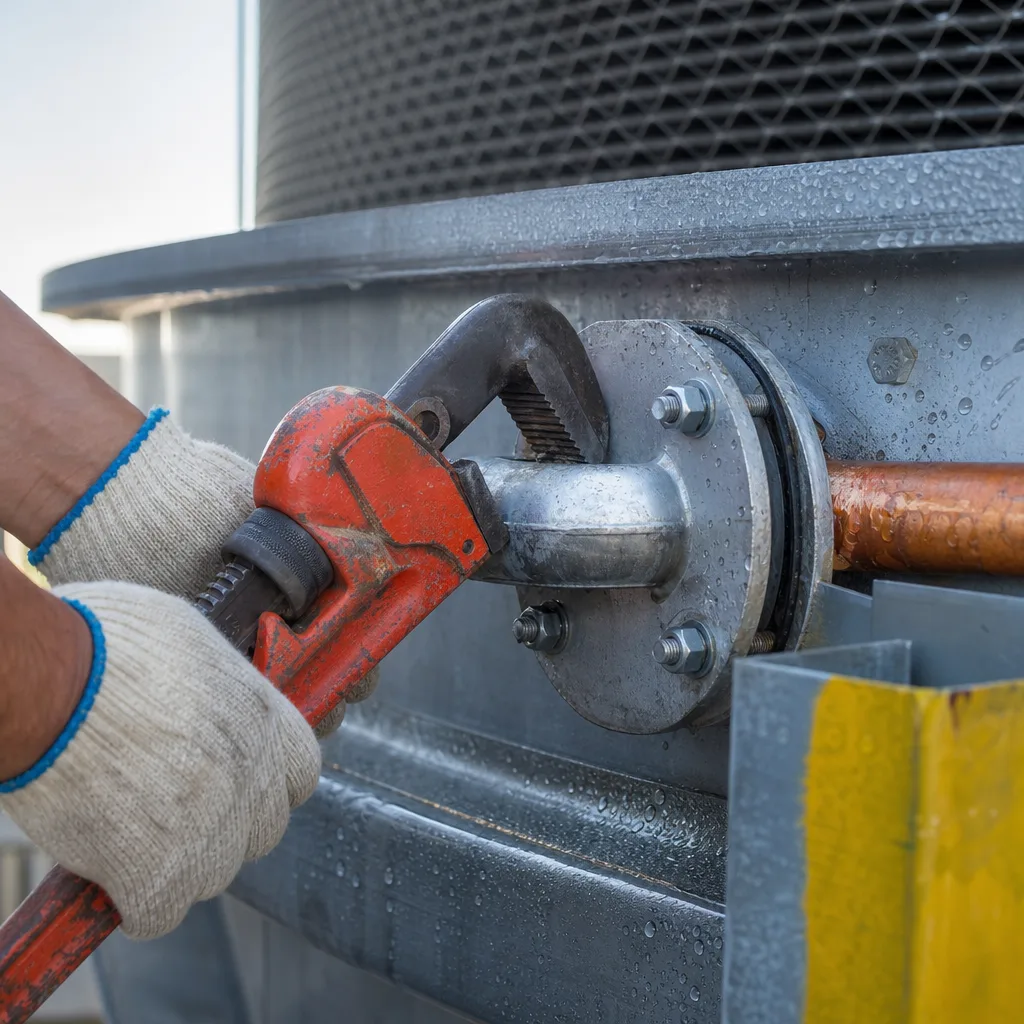
A cooling tower is the big box, often on a roof or a ground pad, that pulls heat out of the water running through a chiller. Warm water trickles down over packing inside the tower called fill, while a fan pushes air through it. A small part of that water evaporates and carries the heat away. The cooled water then goes back to the chiller to pick up more heat. During a North Texas summer, that loop runs hard for months, so the tower has to be sized for real peak heat, not a mild spring day.
Homes don’t work this way. Your house almost always has an air-cooled condenser, which is the outdoor unit with a fan on top. If your home AC is failing, you need AC repair or A/C system installation, not a tower. Calling about the right job saves you time and money.
On a commercial building, the tower is only one piece of a system. A full installation has to account for all of these:
- Condenser water piping that carries water between the tower and the chiller
- Pumps that move that water and need to match the tower’s flow
- Electrical power for the fan motors and controls
- Building automation, so the fan and pumps speed up or slow down with the cooling load
- Water treatment, because evaporation leaves minerals behind, and the scale they form cuts efficiency, especially with hard water
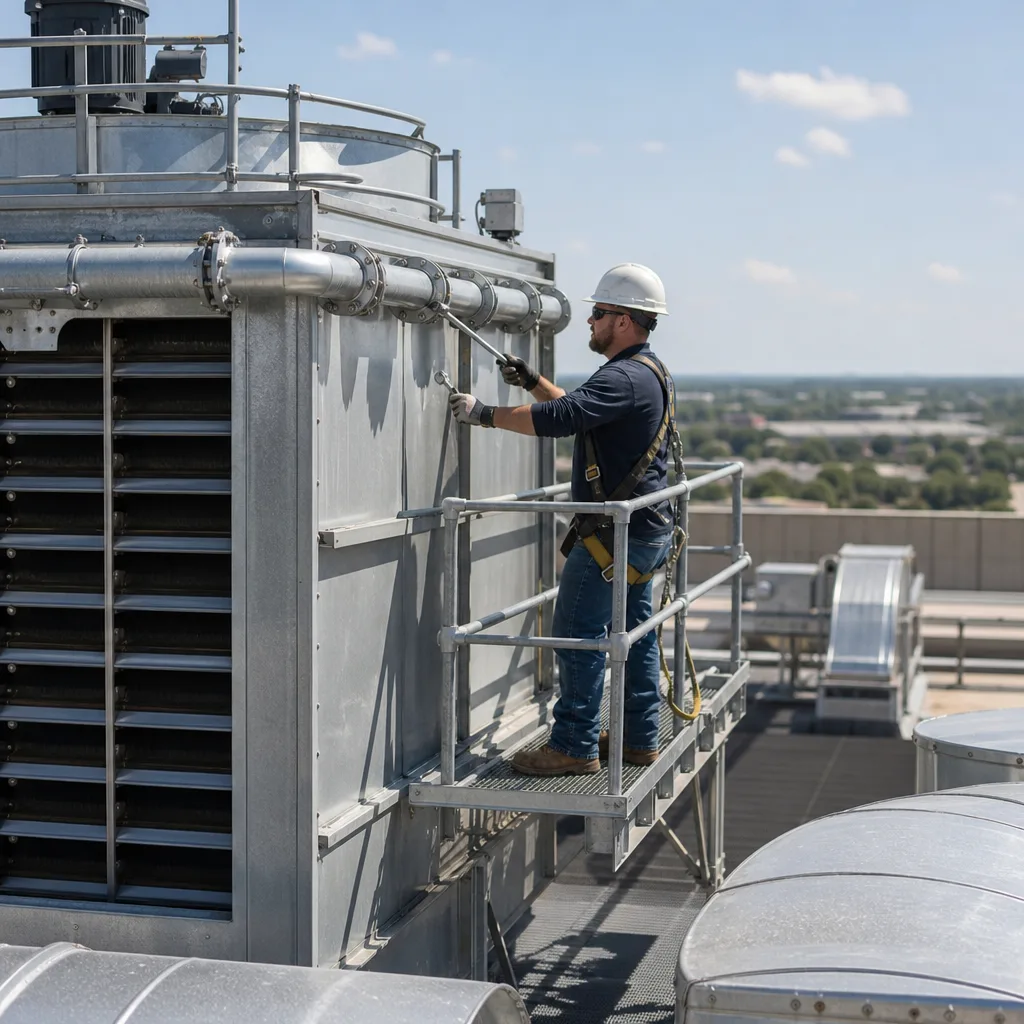
- Structural support and rigging, since a tower full of water is heavy and is often set in place by crane
- Permits and code requirements set by the city
Here’s the main point. A tower isn’t a drop-in part. If one of those pieces is off, the whole system pays for it. You can end up with a chiller that runs hot, higher power bills, or downtime for your tenants and your business. That’s why the first question on any job is scope. Is this a straight like-for-like swap that uses the existing connections, or do the piping, power, or supports need work too? That answer shapes your schedule and your budget more than anything else.
Xtreme Air Services is a licensed and insured HVAC, plumbing, and electrical contractor (HVAC License #TACLA29023C) with an office at 5055 W Park Blvd in Plano. Chiller installation, pump installation and repair, piping installation, commercial electrical, and building automation are all services we offer. That gives you one team responsible for how the pieces fit together, instead of several contractors each handling one part.
Signs Your Building Needs a New or Replacement Cooling Tower
Most cooling towers don’t fail all at once. They wear down a little at a time, and the clues show up in your chiller, your water bills, and the tower itself. Here’s what to watch for, and what each sign usually means for your building.
Picture a hot August afternoon. Your chiller trips offline around 3 p.m., right when the building needs it most. Tenants call about warm offices. By evening it’s running fine again. That pattern is one of the clearest hints that your tower can’t shed enough heat at peak load anymore.
- Your chiller runs hot or shuts down on the hottest days. If the water coming back from the tower is warmer than it should be, the chiller has to work harder. It may trip on high pressure, and your power bill climbs with it.
- The fill is clogged, sagging, or falling apart. That packing inside the tower can get choked with scale, algae, and dirt. Once it breaks down, water channels through instead of spreading out, and cooling drops off fast.
- The basin or casing is rusting through. Corroded steel, leaking seams, and water pooling under the tower point to structural wear. Patching it can buy time, but it rarely holds up long.
- Your makeup water use keeps going up. If you’re adding more water than normal, the tower may be leaking, splashing out, or losing water through worn parts.
- The fan, motor, or gearbox is loud, shaking, or failing often. Constant vibration wears out mounts and bearings. It can also loosen the structure around it.
- Repair calls are stacking up. When you’re fixing something new every season, you’re paying for a new tower in pieces without getting the benefits of one.
- Your building’s cooling needs have grown. A new tenant, more equipment, or an added wing can push the load past what the old tower was sized for.
North Texas weather adds its own stress. Long stretches of triple-digit heat keep a tower running near full output for months. Hard water speeds up scale on the fill, as noted earlier. Hail and severe storms can crack panels and damage fan parts up top. A tower that limps through a mild year can come apart during a brutal July.
Not every one of these signs means you need a new tower, and you should know that before anyone quotes you one. A bad fan motor, a worn pump, or clogged fill can often be replaced on its own if the frame and basin are still solid. Poor water treatment can make a healthy tower look like it’s dying. In those cases, a repair or a cleanup plan is the smarter spend.
Replacement starts to make sense when several signs show up together. Watch for structural rust plus falling performance plus frequent repairs. It also makes sense when your building simply needs more cooling than the old tower can deliver. The honest way to decide is to look at the whole system, not just the part that failed last. A tower problem can sometimes turn out to be a pump, piping, or controls issue, and fixing the wrong piece won’t solve it.
What Happens During a Cooling Tower Installation
A cooling tower job happens in stages. Most of the work comes before the old tower ever comes down. Here’s how a typical installation goes, so you can plan for your tenants and your business.
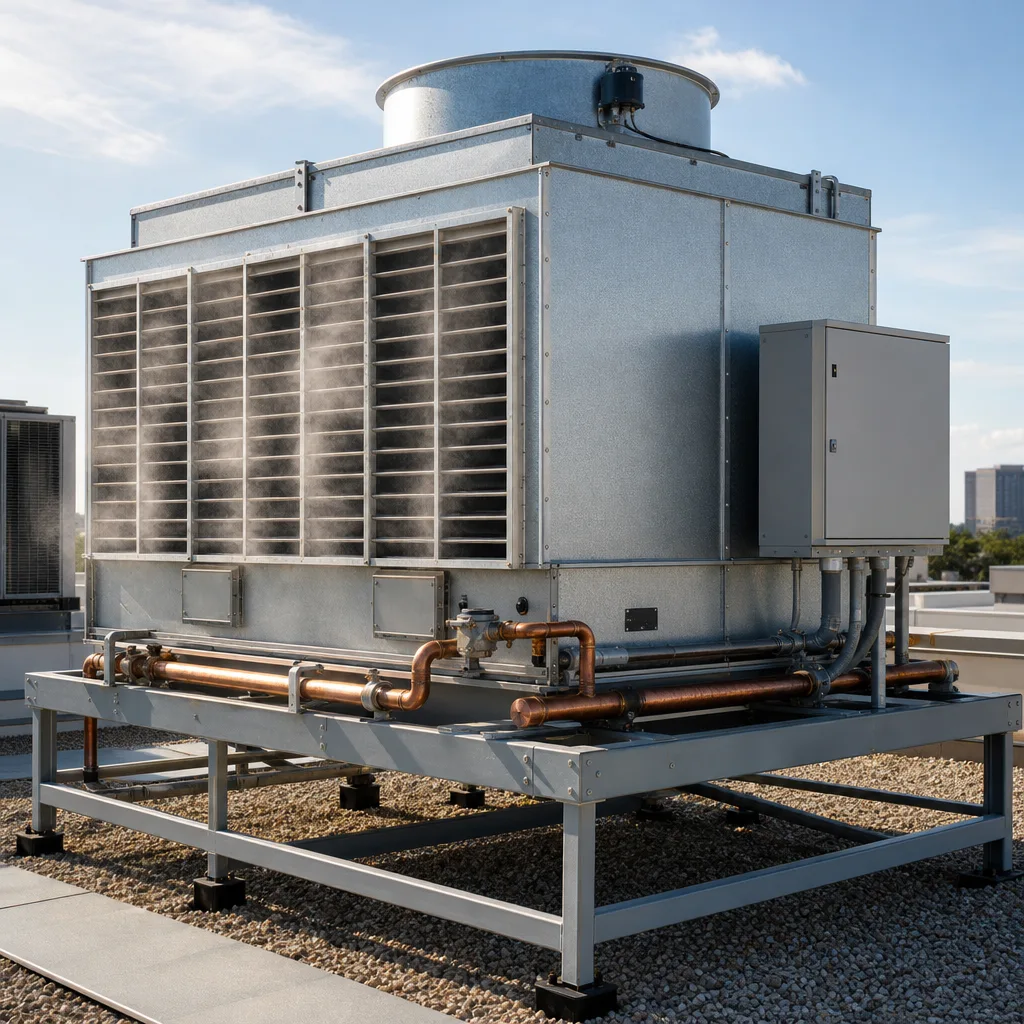
1. Survey and sizing. It starts on your roof or pad, not with a catalog. The installer checks how much heat your chiller has to reject and what the old tower was rated for. They also look at the piping, power, and supports already in place. Sizing should be based on North Texas peak summer conditions, not an average day. A tower that’s sized too small will struggle every August.
2. Structural check and permits. A new tower may weigh more than the old one, or sit differently on its supports, so the roof or pad has to be able to carry it full of water. Permit and inspection rules for mechanical work in Plano are set by the City of Plano. That paperwork should be part of the schedule from day one, not something added at the end.
3. Ordering and timing. Cooling towers are usually built to order, so there’s a wait between signing off and delivery. Use that time to pick your shutdown window. Many owners aim for spring or fall. That way the building isn’t counting on the tower during the hottest months, and a delay won’t leave anyone sweating.
4. Removal and setting the new tower. On shutdown day, the system is drained and the old tower is taken apart or lifted off. The new tower is then rigged into place, often by crane. Crane days take planning. Street or parking lot access, lift permits, and weather all matter, and high wind or a spring storm can push a lift back.
5. Hooking it up. Next, the condenser water piping, pumps, electrical power, and building controls are connected to the new tower. On a like-for-like job, this means tying into the existing connections. If anything doesn’t line up, this is where it shows. That’s why the survey in step one matters so much.
6. Filling, treating, and starting up. Before the tower carries a full load, the loop is filled, flushed, and set up for water treatment. Many new galvanized towers also need a careful break-in period. It helps the metal build a protective layer before it faces harsh water chemistry. Skipping this step can shorten the life of a brand-new tower.
7. Testing. Startup isn’t just flipping it on. A good startup checks these things:
- Water flow across the fill, so it spreads evenly instead of channeling
- Fan rotation, speed control, and vibration
- Water levels and makeup water operation in the basin
- How closely the water leaving the tower gets to its design temperature
- Controls that ramp the fan and pumps up and down with the load
When our team handles a standard like-for-like cooling tower installation, startup and testing are included, along with haul-away of the old unit. If the survey shows the electrical, plumbing, or code work needs changes, or permits are needed, those are separate items unless your quote says otherwise. You’ll see them spelled out before work begins, so you won’t run into surprises halfway through the job.
Have questions? We’re happy to help.
Call Today, Get Service Today. Xtreme Air Services — West Plano is ready to help.
What Drives Cooling Tower Installation Cost
Here’s the honest answer up front. Our cooling tower installations typically run from $10,000 to $100,000. Our most common job is a standard like-for-like swap that uses your existing connections with no major changes, and it usually falls between $28,000 and $64,000. That covers the equipment and materials plus professional installation, startup, and testing.
That’s a wide range, and there’s a good reason for it. Two buildings can both need a new tower and end up with very different bills. As we mentioned earlier, scope is what decides where your project lands.
These are the things that push your cost up or down:
- Size and capacity. A tower is rated by how much heat it can reject, measured in tons. A bigger building or a heavier load needs a bigger tower, and the price climbs with it.
- Efficiency. A more efficient tower and fan setup can cost more up front. Over a long North Texas summer, it can also trim what you spend running the system.
- Brand and model. Different models come with different materials, features, and build quality.
- Ease of access. A tower on a ground pad near the street is simpler to reach than one on a tall roof with tight access. Hard-to-reach spots mean more rigging and more labor.
- Condition of what’s already there. If the existing wiring or plumbing is worn out or doesn’t match the new tower, it has to be fixed before the tower can run right.
- Code upgrades and permits. Older setups may need updates to meet current requirements, and permits add their own cost.
- Custom fabrication. If the new tower doesn’t line up with the old supports or pipe connections, custom steel or piping work adds time and money.
It also helps to know exactly what’s in the price. Our installation includes the equipment and materials, professional installation, standard connections, startup and testing, and haul-away of your old unit. Duct, electrical, and plumbing modifications, code corrections, and permits are not included unless your quote says so.
That line between included and excluded is where many budgets go wrong. A like-for-like quote looks great until someone finds the pipe connections don’t match or the power supply needs an upgrade. That’s why it pays to ask a few plain questions before you hire anyone:
- Is this quote for a straight swap, or does it include piping, electrical, or support changes?
- Are permits, crane time, and haul-away covered?
- Was the tower sized for peak summer heat, or just copied from the old nameplate?
- Who handles startup, testing, and the controls hookup?
If the number feels heavy for one budget year, we offer flexible financing on qualifying installations and larger jobs, on approved credit. That can let you replace a failing tower now instead of patching it through another hot season.
Call 469-217-9095
Watch Our Video
See How We Handle Cooling tower installation in Plano
Xtreme Air Services — West Plano
Questions to Ask Before Hiring a Cooling Tower Contractor
The questions in the cost section help you read a quote. These help you size up the contractor behind it. A cooling tower job puts a crane over your building, shuts off your cooling for a stretch, and ties into systems your tenants count on. You should know who you’re trusting with that before you sign.
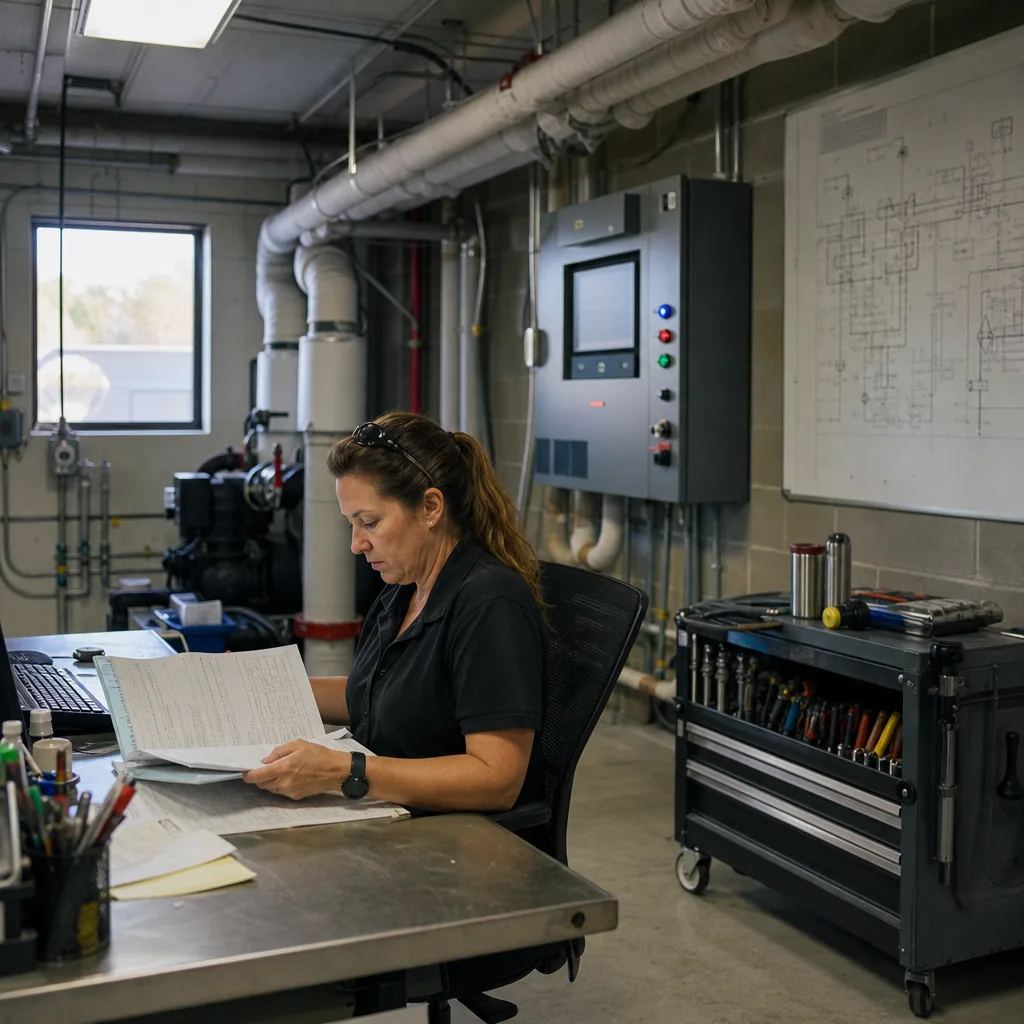
- Are you licensed and insured for this work? HVAC contractors in Texas are licensed through the Texas Department of Licensing and Regulation (TDLR). Ask for the license number and look it up yourself. Get proof of insurance before anyone rigs a crane over your roof.
- Will your own team handle the piping, pumps, electrical, and controls, or will you sub some of it out? Every handoff is a spot where something can slip. If subs are involved, ask who’s responsible when the pieces don’t work together.
- Who confirms the roof or pad can carry the new tower full of water? Ask whether a structural engineer reviews it and whether that cost is already in your quote.
- What’s the shutdown plan? Ask how many days the building will run without tower cooling, which days you’d pick, and how your tenants will be kept in the loop. If your building can’t go without cooling at all, bring that up now, not the week of the swap.
- What happens if the tower ships late or wind cancels the crane day? A solid contractor already has a backup date and tells you right away when plans change.
- Who sets up the water treatment and the break-in period on a new tower? Skipping that step, as covered above, can shorten the life of the equipment you just paid for.
- Will I get the full scope and every exclusion in writing before work starts?
- Who do I call after startup if something doesn’t seem right?
Watch for a few warning signs. One is a price handed over before anyone has looked at your roof, piping, or power. Another is pressure to replace a tower whose frame and basin are still sound. A third is fuzzy line items like “allowances” that don’t say what they cover. On the other hand, a contractor who tells you a repair will hold for now is often the one worth calling back when it’s time to replace.
Here’s how we answer those questions. Xtreme Air Services is licensed and insured, under HVAC License #TACLA29023C, and our office is on W Park Blvd in Plano. Chillers, pumps, piping, commercial electrical, and building automation are all services we offer, so one team is responsible for how the system fits together. You get upfront pricing with no surprises. We’ve also earned a 4.8-star rating across more than 2,900 reviews on Google, Angi, and HomeAdvisor.
Call 469-217-9095
Frequently Asked Questions
Common questions about Cooling tower installation
How long does a cooling tower installation take from start to finish?
Most of the timeline is spent before the crane ever shows up. Because towers are built to order, you’ll wait on delivery after you sign off, then plan a shutdown window around that date. Many building owners schedule the actual swap for spring or fall, so the removal, rigging, hookup, and startup testing happen when the building isn’t depending on the tower for peak summer cooling.
Can my building run without cooling during the installation?
You’ll need a shutdown plan, since the chiller loop has to be drained before the old tower comes out. That’s why picking the right window matters so much. If your building truly can’t go without cooling at all, bring that up with your contractor early so they can plan around it instead of surprising you on swap day.
What happens to my old cooling tower after installation?
On a standard like-for-like swap, haul-away of the old unit is included as part of the job. Your contractor should spell this out in the quote so you know it’s handled and won’t need a separate crew or dumpster rental on your end.
Why does hard water matter so much for a cooling tower in Plano?
Hard water speeds up mineral scale buildup inside the tower’s fill, which is the packing that spreads water out for cooling. Once scale clogs the fill, water channels through instead of spreading evenly, and cooling performance drops fast. That’s why water treatment and a proper break-in period for new galvanized towers matter so much here.
Ready to Get Started?
Call (469) 217-9095 Today, Get Service Today.