


Emergency Plumbing in Dallas: Know What Counts and What It Costs
Active leak, backup or no water? Call, tell us what you're seeing, and a licensed plumber heads your way.
What’s Covered on This Page
- Signs You Have a Real Plumbing Emergency
- When Your Plumbing Problem Can Wait
- Rule Out a City Water Issue Before You Call a Plumber
- What Happens During an Emergency Plumbing Visit
- What Emergency Plumbing Costs in Dallas
- If a pipe bursts late at night, will the same plumber come back to finish the repair?
- What are the most common plumbing problems that turn into emergencies in Dallas?
- Does calling after hours or on a weekend cost more?
Signs You Have a Real Plumbing Emergency
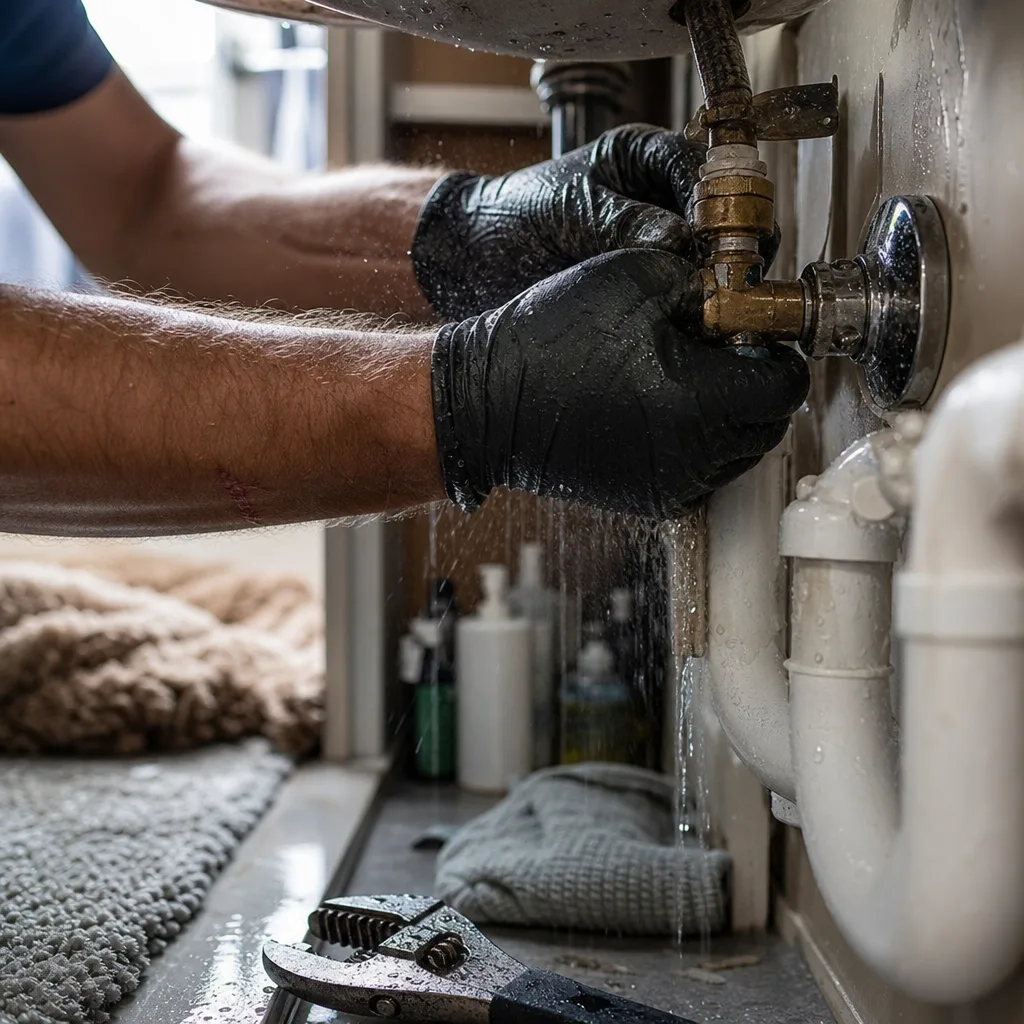
Here’s the simple test. Ask yourself whether the damage is getting worse while you stand there. If water is still moving, still spreading, or still coming from somewhere you can’t reach, you’ve got an emergency. If the problem is annoying but holding steady, it can usually wait.
These are the signs that mean you shouldn’t wait:
- Water spraying or pouring from a pipe, fitting, or supply line, and it won’t stop on its own.
- Sewage or dirty water backing up into a tub, shower, or floor drain, especially if it shows up in more than one spot.
- Every drain in the house is slow or gurgling at once. That points to the main sewer line, not one sink.
- A brown stain, sag, or drip in a ceiling, which can mean a leak from a water line or water heater in the attic.
- A warm spot on a tile or wood floor, or the sound of running water when every faucet is off.
- Your water heater is leaking from the tank itself, not just a loose fitting.
- No water at all after a hard freeze, or a pipe you can see is split or bulging.
Some of the worst leaks in Dallas are the ones you can’t see. Many homes here were built on concrete slabs, and the expansive clay soil underneath swells when it’s wet and shrinks when it’s dry. That movement puts stress on the pipes running through and under the slab. A slab leak can run for days before you notice it. The clues are small: a floor that feels warm under bare feet, a water bill that jumps for no reason, damp carpet with no spill, or new cracks near the baseboards.
Attics are the other hidden trouble spot. Plenty of Dallas homes run water lines or keep the water heater up there. Summer attic heat and winter freezes are both hard on pipes and fittings. A leak overhead soaks insulation and drywall before it ever drips into the room, so a fresh ceiling stain is worth taking seriously, even if it’s small.
Picture this. It’s Saturday night, and you notice the hallway carpet is damp near the bathroom. Nothing is overflowing, and every faucet is off. That’s not something to sleep on. Water you can’t trace is still running somewhere, and every hour it runs, it’s soaking into the floor, the walls, or the slab.
Now for the honest part. Not every plumbing problem needs a same-day truck. A faucet that drips, a toilet that runs now and then, or one slow sink while the rest of the house drains fine can usually wait for a regular weekday appointment. You won’t hurt anything by booking it for later in the week. Save the emergency call for water you can’t control and damage that keeps growing. When that’s what you’re looking at, a fast response is what keeps a repair from turning into a remodel.
When Your Plumbing Problem Can Wait
Plenty of plumbing trouble looks worse than it is. If the problem stays in one spot, the water stays where it belongs, and you can still use the rest of your home, you can usually book a regular visit and get some sleep. Here are the common ones that can wait.
- Low pressure at one faucet. If the kitchen sink barely trickles but the bathroom is fine, the problem is usually at that faucet, not in your pipes. Dallas has hard water, and the minerals build up in the little screen at the tip of the faucet over time. That’s a slow problem, not an urgent one.
- One clogged toilet when you have another that works. Try a plunger. If it won’t clear, use the other bathroom and schedule a visit.
- A garbage disposal that hums but won’t spin. It’s usually jammed. Flip it off at the switch and leave it alone until someone can look at it. Your sink still drains.
- Water that’s lukewarm, or runs out faster than it used to. If the tank isn’t leaking and there’s no gas smell, your water heater is losing ground, but it isn’t an emergency.
- A dripping outside faucet. Common in spring after a winter freeze. It wastes water, but it isn’t soaking anything inside your home.
- A toilet that runs on and off. Hard water can wear down the rubber parts inside the tank. It’s annoying and it adds to your bill, but it won’t flood the floor.
You can make most of these easier to live with for a few days. Under most sinks and behind most toilets, there’s a small valve on the water line. Turning it to the right shuts off water to just that fixture. Everything else in the house keeps working. If a drip under a sink is bothering you, set a bowl or towel under it and keep an eye on it.
It also helps to know where your main water shutoff is before you ever need it. In a lot of Dallas homes, it’s near the street in a ground box by the meter, or where the line comes into the house. Find it now, on a calm day, so you’re not hunting for it with a flashlight later.
A problem that can wait today won’t always stay that way. Check back on it. Any of these signs means it’s time to stop waiting:
- The slow drain spreads, and now a second or third drain is slow too.
- A drip turns into a steady stream, or the bowl under the sink fills faster than before.
- Shutting off the fixture valve doesn’t stop the water.
- The water heater starts leaking from the tank, or you smell gas near it.
Here’s the bottom line. A problem you can shut off and live around for a few days is a scheduling decision, not an emergency. Waiting until a weekday won’t make it worse, and you’re not doing anything wrong by holding off. The emergency call is for water you can’t stop. You’ll know the difference, and now you know what to watch for.
Rule Out a City Water Issue Before You Call a Plumber
If your water suddenly stops, drops to a weak trickle everywhere, or comes out brown, the problem might not be in your home at all. Dallas Water Utilities runs the mains under your street. When one of those breaks or a crew is working nearby, every house on the block feels it. A few quick checks can save you a service call you don’t need.
Start with these:
- Ask a neighbor. Text the folks next door or check your neighborhood group. If they’ve lost water too, it’s almost certainly a city issue.
- Look outside. Water bubbling up through the street or curb, or a city crew with orange cones down the block, points to a main break or planned repair.
- Check every faucet, not just one. If one sink is weak and the rest are fine, that’s a fixture problem we covered above. If the whole house is affected, keep going.
- Test hot and cold separately. If only the hot water is weak or rusty, the trouble is likely your water heater, not the city.
- Call the city’s 311 line or check the city’s website for posted outages and boil-water notices.
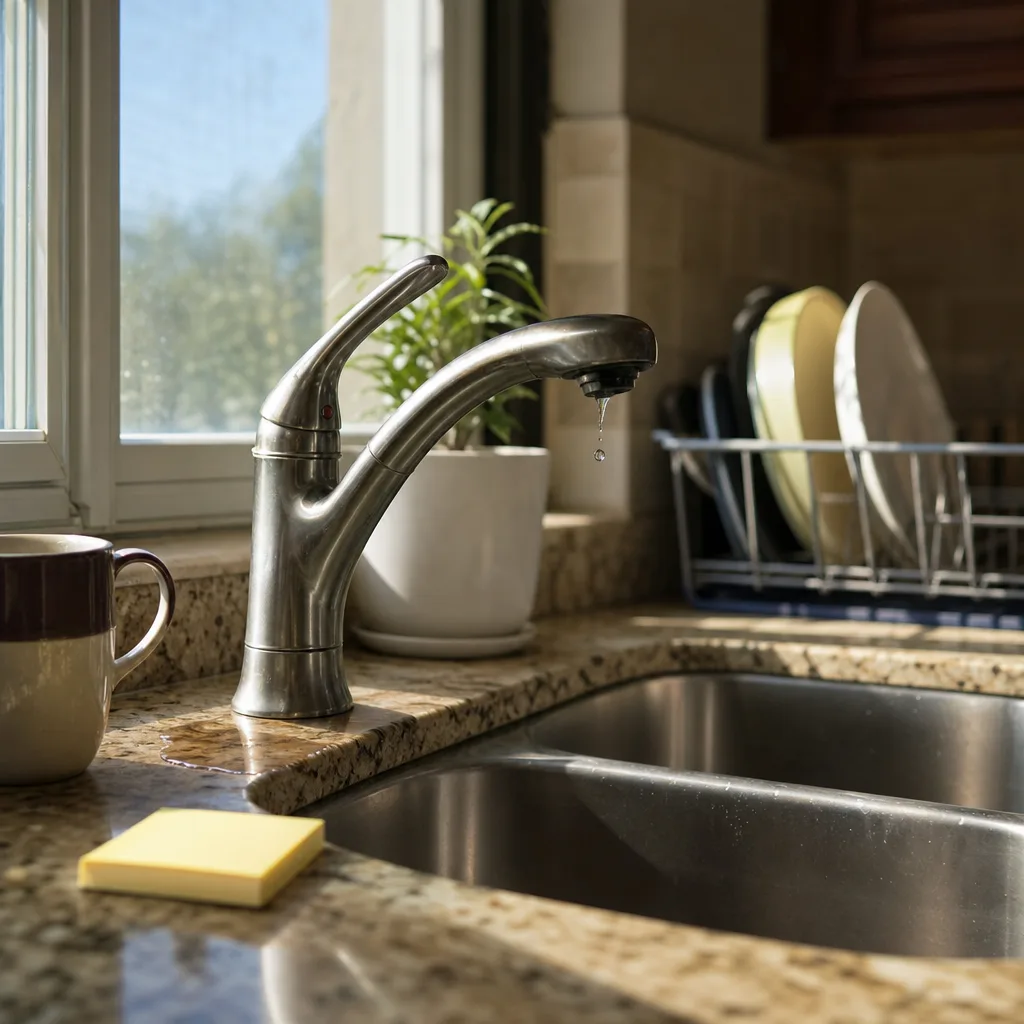
Your water meter is the best tool you’ve got, and it’s in that ground box near the street we mentioned earlier. Turn off every faucet, the dishwasher, the washer, and the ice maker. Then lift the lid and watch the meter. Most have a small dial or triangle that spins when water is moving. If it’s spinning with everything off, water is leaving your pipes somewhere between the meter and your home. That’s a leak on your side, and it’s worth a call.
In most cases, the city is responsible for the line up to the meter, and you’re responsible for everything from the meter to your house. So if water is pooling in your yard between the meter and your foundation, that’s usually yours to fix. If it’s pooling at the street or the meter box itself, report it to the city first.
Brown or cloudy water often shows up after a nearby main repair or hydrant work stirs up sediment in the city lines. It tends to clear on its own once the work is done. If it hangs around for more than a day, or it’s only coming from your hot side, it’s time to look closer at your own plumbing.
Low pressure across the whole house, with no outage on your street, is a different story. First make sure your main shutoff is turned all the way open, since it sometimes gets bumped partway closed. If it is, the culprit is often the pressure regulator, a bell-shaped valve near where the main line enters your home. When it wears out, pressure can drop or spike. That’s a repair job, but it’s usually a scheduled one, not a midnight emergency.
Here’s the short version. If your neighbors are dry too, call the city and wait it out. If it’s just your house, and especially if that meter is spinning, the problem is on your side of the meter.
Thinking about Emergency plumbing? Let’s talk.
Call Today, Get Service Today. Xtreme Air Services — North Dallas is ready to help.
What Happens During an Emergency Plumbing Visit
Once you know it’s a real emergency, here’s what the visit looks like. When you call Xtreme Air Services, you talk to a real person. Tell them what you’re seeing, where the water is, and whether you’ve been able to shut it off. Then we’re on the way, with same-day service available and a licensed, background-checked technician headed to your home.
While you wait, turn off the main shutoff you found earlier if water is still moving. Then move rugs, boxes, and anything you care about out of the water’s path. That’s all you need to do. You don’t have to figure out the cause before we get there.
Here’s how the work goes once the technician is at your door:
- Find the problem. The first job is tracking down where the water is coming from. In a Dallas home, that might be a line in the attic or a pipe under the slab, not the spot where the water showed up.
- Stop the damage. Next, we stop the leak or clear the blockage so the water is under control and the damage stops growing.
- Get a price before any repair. You get upfront flat-rate pricing, and you approve it before the work starts. There’s no meter running while you decide.
- Make the repair. We fix what failed so you have working water and drains again.
- Test and clean up. The repair gets tested to make sure it holds, and the work area gets cleaned up before we leave.
The time of day doesn’t change the price. There’s no extra charge for nights or weekends, so a pipe that bursts at 2 a.m. on a Sunday costs the same to fix as one on a Tuesday afternoon. You shouldn’t have to wait for Monday to save money while water soaks into your floors.
Here’s what you can expect to pay. The service-call fee is $26 to $99, and it’s credited toward the repair if you go ahead with Xtreme Air Services. Our most common emergency job is finding the problem, stopping the leak or blockage, and making the repair to restore service. That usually runs $200 to $550. Emergency plumbing jobs typically fall between $200 and $1,000, depending on how severe the problem is, what type of emergency it is, and what parts it needs.
Your price includes the diagnosis, the labor, the standard repair, testing, and cleanup. It doesn’t include major component replacement, code upgrades, or permits. If your repair needs any of those, we’ll quote them separately so you can see the cost before you decide.
Sometimes the emergency points to a bigger problem, like a slab leak that needs more than a quick fix or a water heater tank that’s done. When that happens, we’ll stop the immediate damage first. Then we’ll walk you through your options for slab leak repair or a new water heater, with a clear price for each. Bigger repairs and replacements also come with financing options, which usually aren’t needed for a smaller emergency fix. Either way, you make the call, and nothing moves forward until you say so.
Watch Our Video
See How We Handle Emergency plumbing in Dallas
Xtreme Air Services — North Dallas
What Emergency Plumbing Costs in Dallas
You’ve already seen our numbers above. The real question is where your job will land. Three things decide that: how bad the problem is, what kind of emergency it is, and what parts it needs. The clock isn’t one of them, since nights and weekends cost the same as a weekday with us.
Here’s how those three things play out in a Dallas home:
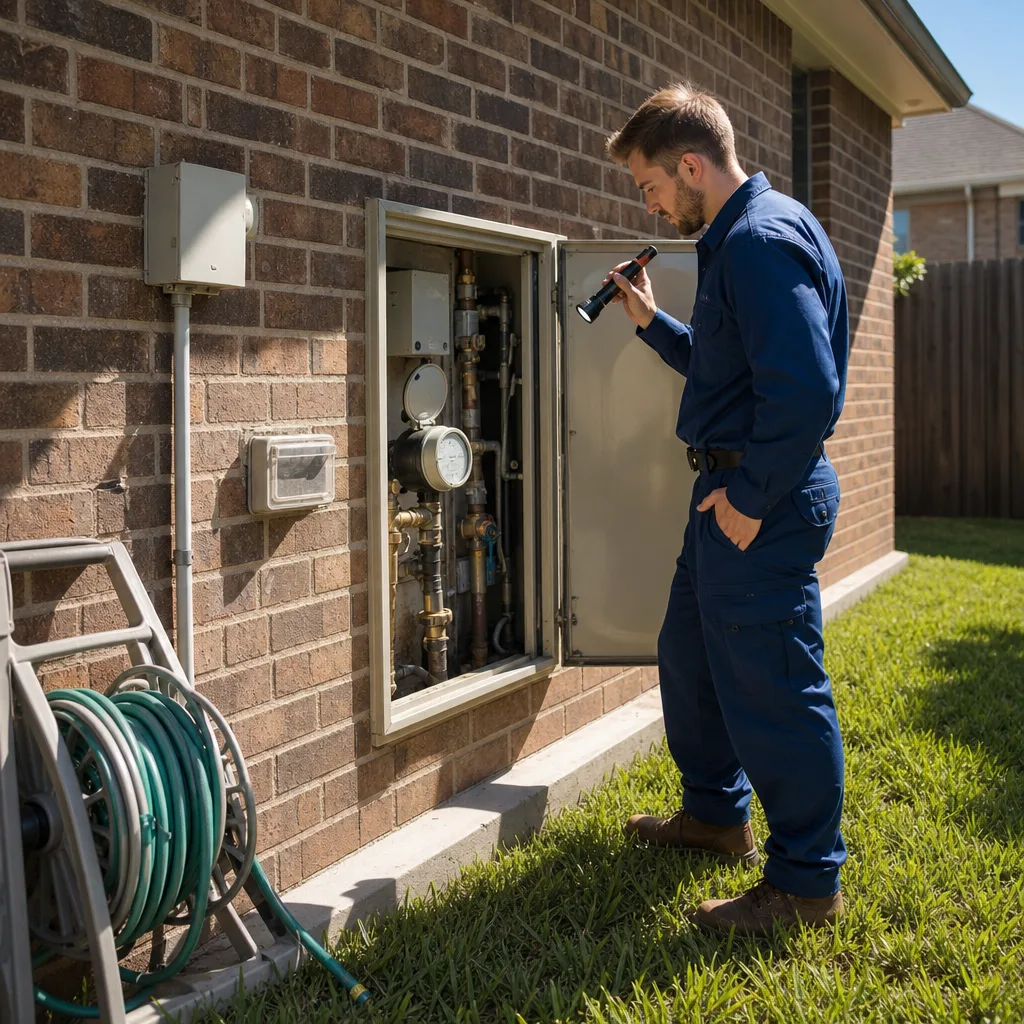
- A leak you can see is usually the simpler fix. A split supply line under a sink or a failed fitting at the toilet is easy to reach and needs only small parts.
- A leak you can’t see takes more work to find. Water under a slab or above a ceiling has to be tracked down before it can be fixed, and that adds time.
- A main line backup is bigger than a single clogged drain. When every drain in the house is backing up, the blockage is out in the sewer line, not under one sink.
- Bigger parts cost more. A new valve costs less than a new pressure regulator. A leaking water heater tank can move the job from a repair to a replacement.
It also helps to know how plumbers charge, because not every company prices the same way. Some bill by the hour, so the total keeps climbing the longer the job takes. Some add a premium for nights, weekends, or holidays. Others, like us, give you a flat price for the whole job before any work starts. With a flat price, a stubborn fitting or a hard-to-reach attic line doesn’t change what you agreed to pay.
Whoever you call, ask these questions before anyone starts working:
- Is there a trip or service-call fee, and does it count toward the repair?
- Is the price for the whole job, or is it by the hour?
- Does the price change at night or on the weekend?
- Are testing and cleanup included?
- Will I see and approve the price before you start?
- Are you licensed and insured?
A good plumber will answer all six without hesitating. If you get vague answers on the phone, you’ll probably get a vague bill later.
You can also help keep the cost down. Shut off the water as soon as you can, because the repair is only part of the cost and water damage is what turns a small bill into a big one. Clear a path to the problem. That means emptying the cabinet under the sink, moving boxes away from the water heater, or making sure the attic hatch isn’t blocked. Then tell us exactly where the water showed up first and when you noticed it. If your water bill jumped recently, mention that too. With hidden leaks, those small details can help shorten the search.
The cheapest emergency is the one you catch early. A damp spot found tonight usually costs far less than the same leak found after it has soaked the subfloor for a week.
Call now: 469-213-3107
Frequently Asked Questions
Common questions about Emergency plumbing
If a pipe bursts late at night, will the same plumber come back to finish the repair?
Yes, our technician handles the full repair during the same visit, not just a temporary fix. We find the source of the leak, stop the damage, give you a price, then repair and test it before leaving. You won’t need to schedule a separate follow-up appointment for the same problem.
What are the most common plumbing problems that turn into emergencies in Dallas?
The most common ones are burst supply lines, sewage backups affecting multiple drains, and hidden leaks under slab foundations or in attics. Dallas homes sit on expansive clay soil that shifts with moisture, which stresses pipes running under the slab. Attic water heaters and pipes also take a beating from summer heat and winter freezes, so ceiling stains and warm floor spots are worth checking quickly.
Does calling after hours or on a weekend cost more?
No, nights and weekends cost the same as a weekday visit with us. There’s no overnight or holiday premium added to your price. That means a burst pipe at 2 a.m. on a Sunday is priced the same as one found on a Tuesday afternoon.
Ready to Get Started?
Call (469) 213-3107 Today, Get Service Today.