


Water Heater Installation in Allen: Know What’s Standard Before You Buy
Like-for-like tank swaps by licensed plumbers, with what the price covers and when a permit applies spelled out.
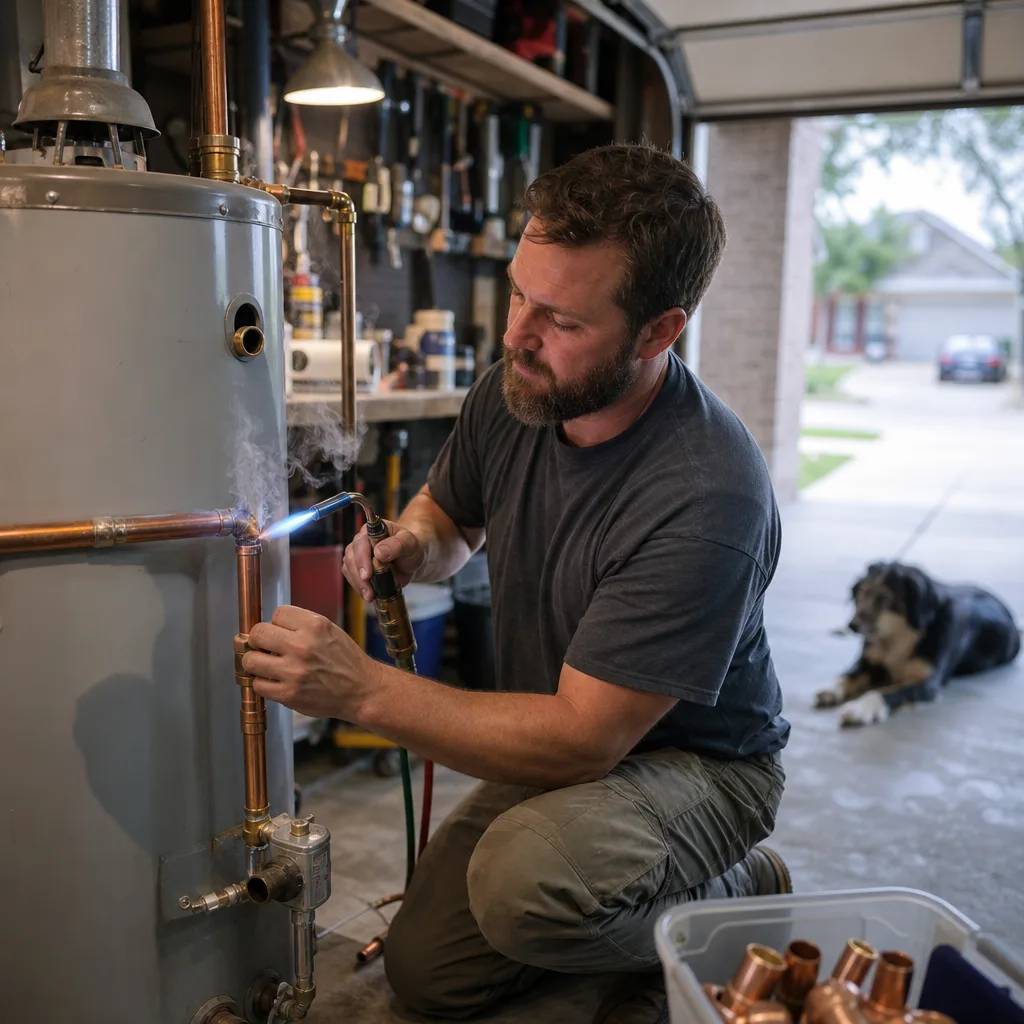
What’s Covered on This Page
- Standard Installation vs. Code-Upgrade Jobs
- Why a Licensed Plumber Is Legally Required for This Work
- Signs Your Allen Home Needs Replacement, Not Repair
- Tank vs. Tankless: Choosing the Right Setup for Your Home
- What Drives Your Installation Cost Up or Down
- Does a plumber or an electrician install a water heater?
- How long does a water heater installation take?
- Do I need a permit to replace my water heater?
Standard Installation vs. Code-Upgrade Jobs
When two quotes for the same water heater are hundreds of dollars apart, this is usually why. The tank itself isn’t the whole job. What’s around it matters just as much: the pipes, the gas line, the vent, the wiring, and whether your setup still meets current rules.
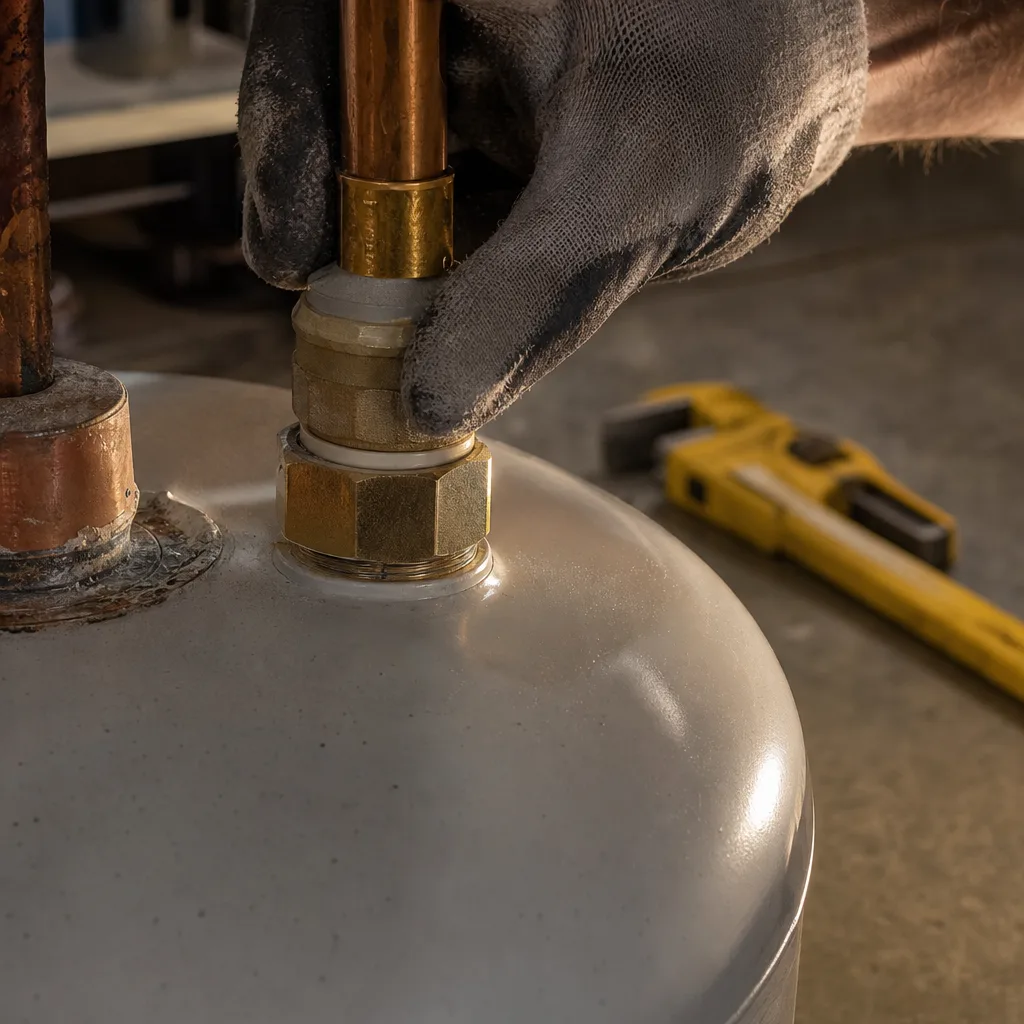
A standard installation is a like-for-like replacement. Your old tank comes out and a new one of the same type goes in, hooked to the connections you already have. No major changes are needed. For our customers, this is the most common job, and it runs $1,700-$2,600. That price covers the equipment and materials, professional installation, standard connections, startup and testing, and hauling away your old unit.
A code-upgrade job is different. Your old water heater may have gone in years ago, before some current requirements took effect. Or it may have been installed by someone who cut corners. Once the old tank is out, the new one has to be installed the right way, and sometimes that takes extra work. Examples include:
- Plumbing changes, such as rerouting lines that don’t line up with the new tank or adding parts your system now needs
- Gas line or venting changes so the new heater gets the gas it needs and sends exhaust safely outside
- Electrical work for electric models, such as wiring or a circuit that doesn’t match the new unit
- Updates for a heater in an attic or tight closet, where access and drainage protection matter more
- Permits, when the job calls for one
These items aren’t part of the standard job. Plumbing, electrical, and duct modifications, code corrections, and permits are excluded unless they’re stated in your quote. That’s why our typical price range for water heater installation is wider, from $1,200 to $3,500. The low end is a simple swap with easy access. The high end covers bigger tanks, higher-efficiency models, hard-to-reach spots, and setups that need real correction work.
Switching types is its own category. Going from a tank to a tankless water heater isn’t a like-for-like swap. The gas, venting, and sometimes electrical needs change, so it’s quoted as a separate tankless water heater installation.
The good news is you don’t have to guess which bucket you’re in. Our technician looks at your current setup and tells you whether it’s a standard job or whether something needs fixing to meet code. You’ll get upfront flat-rate pricing approved before any work starts, with no meter running. The $26-$99 service-call fee is credited toward the job if you move forward with us.
If a quote seems low, ask whether it includes code corrections and permits. A low number that leaves those out can end up costing more than an honest quote that covers them from the start.
Why a Licensed Plumber Is Legally Required for This Work
In Texas, plumbing work done for pay has to be done by a licensed plumber or by someone working under one. A water heater counts. It ties into your water supply, it holds water under pressure, and if it runs on gas, it connects to a gas line and has to vent exhaust out of your home.
This isn’t just paperwork. A new tank can look fine on day one and still have a problem hiding in the connections. Here’s what a licensed plumber is trained to get right:
- The gas connection, so there are no leaks at the fittings or the shutoff
- The vent, so exhaust from a gas heater goes outside and not back into your garage or closet
- The temperature and pressure relief valve and its discharge line, the safety part that lets a tank release pressure instead of building it up
- Pressure control, such as an expansion tank when your system needs one
- Drain pans and drain lines for heaters in attics or upstairs closets, where a leak can soak a ceiling before anyone notices
Here’s the honest part. Texas law generally lets a homeowner do plumbing work on the home they own and live in. So if you’re handy and confident, you’re allowed to swap your own water heater. City permit and inspection rules can still apply in Allen, though, and you take on the risk if a gas fitting or vent isn’t right. A rental property, or a job someone else does for you for money, is different. That work needs a license.
The gray area is the unlicensed handyman who offers to “just drop in a new tank” for a lower price. If something goes wrong, you may have no license board to turn to. And if the work wasn’t permitted or done by a licensed plumber, an insurance claim for water or fire damage can get harder. A low price can stop looking low pretty fast after that.
Before you hire anyone, ask for their plumbing license number and check it on the state’s online license lookup. Ask whether they’re insured. Ask whether the price includes a permit when your job needs one. A good plumber will answer all three without blinking.
At Xtreme Air Services, our plumbing work is done under Master Plumber Larry Breedlove. Our licensed and insured technicians are background-checked and drug-tested before they ever step into your home. Many homes around Allen have their water heater in the garage, an upstairs closet, or the attic. When we arrive, we check the gas, venting, and drainage setup for the spot your heater sits in, not just the tank. If something needs to be brought up to current rules, you’ll hear it from us before work starts, along with the price.
Signs Your Allen Home Needs Replacement, Not Repair
Not every water heater problem means you need a new one. Some fixes are quick and worth doing. The real question is whether the tank itself is wearing out, or just one part on it.
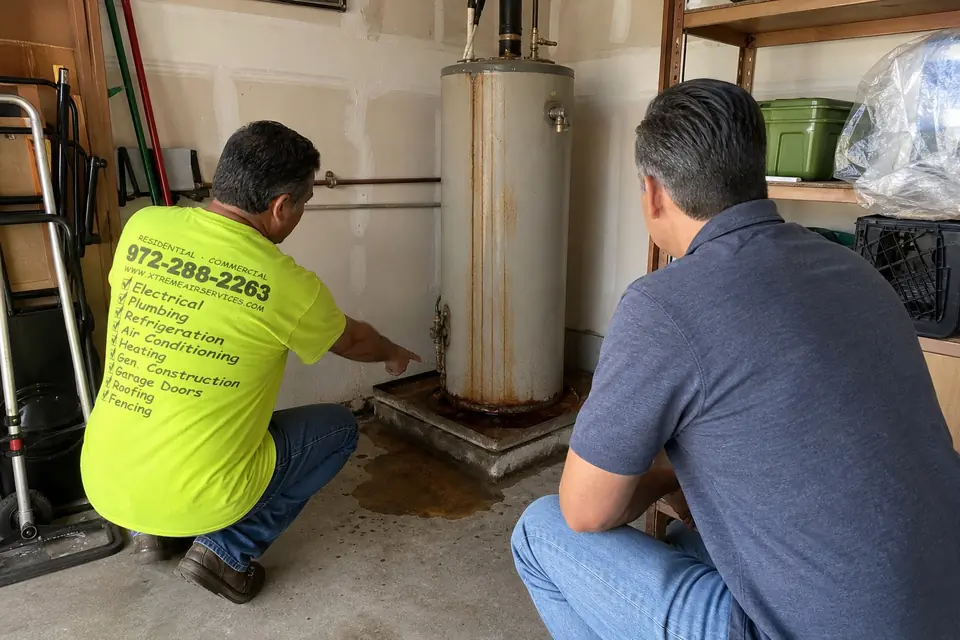
Start with age. Look for the sticker on the side of the tank. The serial number usually has the year it was made built into it, and a quick search of the brand will show you how to read it. A tank around 10 years old or older is living on borrowed time. Paying for a repair on a tank that age often just buys you a few months before the next problem.
These signs point toward replacement:
- Water pooling under the tank, coming from the tank body itself. Once the steel tank starts leaking from the inside, it can’t be patched.
- Rusty or brown water from your hot taps only. If the cold water runs clear, rust is likely coming from inside the tank.
- Loud popping, rumbling, or banging when the heater runs. That’s often a thick layer of mineral buildup at the bottom. After years of it, the tank works harder and wears faster.
- Hot water that runs out much faster than it used to, even though your family’s habits haven’t changed.
- Rust or corrosion on the outside of the tank, especially around the bottom or the fittings on top.
- A second or third repair call in a short stretch. When parts keep failing, the tank is telling you something.
Hard water plays a big part here in Allen and across North Texas. The minerals in the water settle in the bottom of the tank every day. Over time, that crust eats into how well the heater works and how long it lasts. It’s a big reason the popping noise and shrinking hot water supply show up as a tank gets older. If hard water wore out your old heater, a water softener can help the new one last longer.
Now the honest side. A repair often makes more sense when your tank is younger and the problem is one part, not the tank. That includes:
- A gas heater whose pilot won’t stay lit, which can be a worn thermocouple or a dirty burner
- An electric heater with no hot water or lukewarm water, which is often a bad heating element or thermostat
- A drip at a fitting, pipe connection, or the relief valve, not the tank itself
- A dripping drain valve at the bottom of the tank
If that sounds like your situation, water heater repair may be all you need. A newer tank with one bad part isn’t a reason to buy a new heater, and we’ll tell you so.
One more check before you decide. Make sure the problem isn’t something simple. On a gas heater, see if the gas valve is on and the pilot is lit. On an electric heater, check whether a breaker tripped. If you smell gas near the heater, don’t troubleshoot it. Leave the area and call your gas company from outside.
If your tank is older, leaking from the body, or giving you rusty water, putting money into it usually doesn’t add up. That’s when a new installation is the smarter way to spend.
Not sure what your Water heater installation project needs? Ask us.
Call Today, Get Service Today. Xtreme Air Services — Allen is ready to help.
Tank vs. Tankless: Choosing the Right Setup for Your Home
Once you know you need a new water heater, the next question is usually whether to stick with a tank or go tankless. Neither one is always better. The right choice depends on how your family uses hot water, where the heater sits, and what your gas or electrical setup can handle.
A tank heater keeps a set amount of water hot and ready, all day. A tankless heater has no storage. It heats water only when you turn on a hot tap. That one difference drives everything else.
A tank usually makes sense when:
- Your current tank worked fine for your family, and you just want reliable hot water back fast.
- You want the lowest upfront cost and the simplest job, since a like-for-like swap uses the connections you already have.
- Several people use hot water at the same time, like two showers running while the dishwasher goes. A properly sized tank handles that burst well until it runs low.
- You want hot water during a power outage. Many standard gas tanks with a standing pilot keep working without electricity. Tankless units need power to run.
Tankless is worth a look when:
- Running out of hot water is a daily headache. A tankless unit doesn’t run dry the way a tank does.
- You want your garage or closet space back. Tankless units mount on the wall and take up far less room.
- You plan to stay in your home for years, so you’ll get the long-term benefit of lower standby energy loss, since you’re not keeping 40 or 50 gallons hot around the clock.
Here’s the part that often gets left out. Tankless heaters are sized by how many gallons per minute they can heat, not by how much they hold. If you run too many fixtures at once, the water can turn lukewarm. They also have to work harder in winter, when the water coming into your home is colder. A good installer sizes the unit for your real peak use, not a best-case guess.
Your home’s setup matters too. A gas tankless unit often needs a larger gas line and new venting. An electric tankless unit can draw a lot of power, and some homes don’t have the electrical capacity without upgrades. That’s why switching types is quoted as its own job, as mentioned above.
Hard water affects both types. In a tankless unit, minerals build up inside the small heat exchanger instead of settling at the bottom of a tank. So tankless heaters need regular descaling in North Texas water to keep running well. If you’re already thinking about a water softener, it helps here too.
Our honest take: if your old tank served your family well and your hookups are in good shape, a like-for-like tank is often the smart, budget-friendly move. If you’re always out of hot water or short on space, tankless can be worth the extra work. We install both, and our technician will look at your gas line, venting, and electrical before recommending either one.
Watch Our Video
See How We Handle Water heater installation in Allen
Xtreme Air Services — Allen
What Drives Your Installation Cost Up or Down
Two homes on the same street can get very different quotes for a new water heater. That’s not a trick. A few specific things move the price, and once you know them, you can look at your own heater and get a good idea of where your job will land.
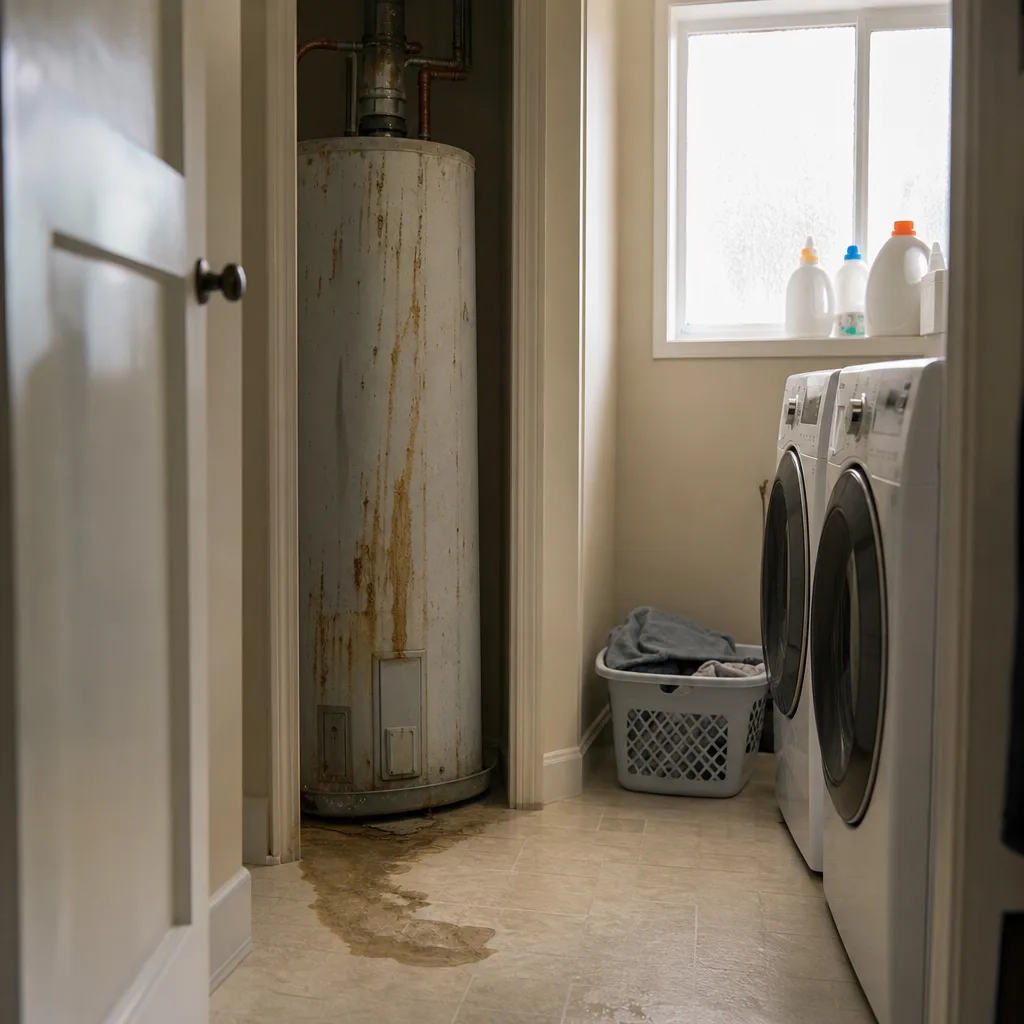
Size and capacity come first. A bigger tank costs more to buy and can be harder to move into place. Bigger isn’t always better, though. If your family has grown, or you keep running out of hot water, going up a size may be worth it. If your old tank kept up just fine, the same size is usually the right call.
Efficiency and model matter too. Higher-efficiency heaters cost more up front because they’re built to waste less energy keeping water hot. That can pay you back on your monthly bills, especially if you plan to stay in your home a long time. We’ll explain what you’re paying for, so you can decide if it’s worth it to you.
Where your heater sits can change the labor a lot. A tank in an open garage is the easiest job. A tank in an upstairs closet or an attic takes more time and more hands. The old one has to come out safely and the new one has to go up, through tight doorways and down narrow walkways. Those spots also need a drain pan and drain line done right, because a leak there lands on your ceiling.
The shape of your existing connections is the factor most people don’t see coming. Here’s what can push a quote higher:
- A water shutoff valve that’s stuck, corroded, or won’t fully close
- Old supply lines or fittings that are crusted with minerals or starting to rust
- A gas connector or vent pipe that’s worn, damaged, or the wrong size for the new heater
- Wiring on an electric heater that’s aged or doesn’t match the new unit
- A new tank that’s taller or wider than the old one, so pipes, vent pieces, or a stand have to be custom fitted
Permits and code corrections can also add to the total, as covered above, and they’ll be listed on your quote when your job needs them.
What keeps your cost on the lower side? Replacing the same type and size of heater, in an easy-to-reach spot, with connections that are still in good shape. If that sounds like your home, you’re likely looking at a simple swap.
When you get a quote, ask the installer why they picked the size they did and what they checked in your current setup. A good answer should mention your household, your hot water use, and the condition of your valves, lines, and vent. If they can’t tell you, that’s worth noticing.
If the total is more than you planned for, you don’t have to pay it all at once. Xtreme Air Services offers flexible financing on qualifying installations and larger jobs, on approved credit. Our technician will walk you through each part of the price before any work starts, so the number you approve is the number you pay.
Frequently Asked Questions
Common questions about Water heater installation
Does a plumber or an electrician install a water heater?
A licensed plumber handles water heater installation, even on electric models. Plumbers are trained on the gas connections, water lines, and relief valve, and they can wire an electric unit as part of the job. If your home needs a new dedicated circuit or panel work beyond the heater itself, that part may call for an electrician working alongside the plumber.
How long does a water heater installation take?
A standard swap usually takes a few hours since the technician reuses your existing connections. A code-upgrade job, like one needing new gas, venting, or electrical work, takes longer because those extra steps have to be done right before the new tank goes in. Your technician can tell you which bucket your job falls into once they see your setup.
Do I need a permit to replace my water heater?
It depends on your job and where your property sits, since permit rules can differ across North Texas. Many straightforward like-for-like swaps don’t need one, but code-upgrade work often does. Your technician will flag whether a permit applies to your job and include it in your quote before any work starts.
Ready to Get Started?
Call (469) 299-8996 Today, Get Service Today.