


Water Heater Installation in Dallas: Is Your Job a Simple Swap or More?
Like-for-like tank swaps by licensed plumbers, with what the price covers and when a permit applies spelled out.
What’s Covered on This Page
- Signs Your Water Heater Needs Replacing, Not Repair
- Why Some Installations Are a Simple Swap and Others Are Not
- Who Is Legally Qualified to Install a Water Heater in Texas
- What’s Included in Your Installation Quote
- What Happens During and After Installation
- Do I need a permit to install a water heater in Dallas?
- How long does a typical water heater installation take?
- What’s the labor cost difference between a 40-gallon and 50-gallon water heater install?
Signs Your Water Heater Needs Replacing, Not Repair
Here’s the simple way to think about it. Almost every part on a water heater can be swapped out. The tank can’t. Once the steel tank starts to fail, no repair will save it, and money spent on parts just buys you a little time.
These are the signs that point to a new unit:
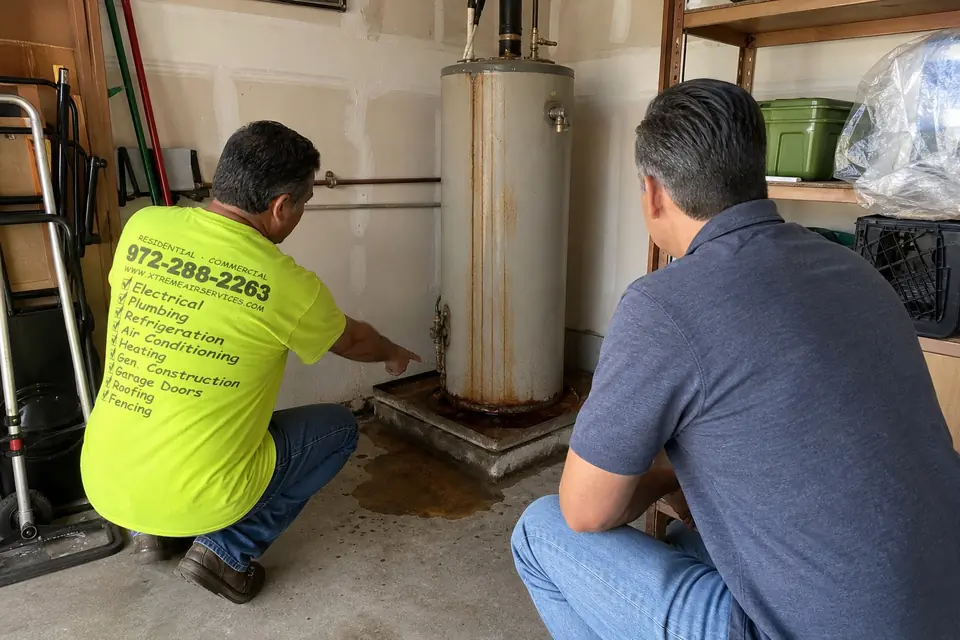
- Water pooling under the tank, with no clear source. A drip from a pipe fitting or the relief valve can usually be fixed. A leak from the tank body or seams means the inside has rusted through, and it’ll only get worse.
- Rust on the bottom of the tank or around the base. Corrosion you can see on the outside often means it’s already happening on the inside.
- Rusty or brown water from the hot side only. Run a cold tap and then a hot one. If only the hot water looks off, the tank lining is likely breaking down.
- The unit is around 10 years old or more. You’ll find the age on the label on the side of the tank, usually built into the serial number. An older tank with a new problem is rarely worth a big repair bill.
- Rumbling, popping, or banging when it heats. That’s sediment cooking at the bottom of the tank. Flushing can help a younger unit, but on an older one the buildup has usually done its damage.
- Hot water runs out faster than it used to. Sediment takes up space the tank used to fill with water. If your family has also grown, your tank may simply be too small now.
- You’ve paid for more than one repair in the last couple of years. When fixes start stacking up, the next one is coming.
Dallas water plays a part in this. Our hard water leaves minerals behind every time the tank heats, and that scale settles on the bottom as sediment. It’s a big reason tanks around here start making noise and losing capacity as they age. If you notice crusty white spots on your faucets and shower heads, the same thing is building up inside your water heater.
Location matters too. A lot of Dallas homes have the water heater in the garage, a closet, or the attic. A tank that fails in the garage makes a mess on concrete. A tank that fails in the attic or a hall closet can soak ceilings, drywall, and floors. If yours sits above living space and it’s showing the signs above, don’t wait for it to give out on its own schedule.
Now the honest part. Plenty of water heater problems aren’t a reason to buy a new one. No hot water at all on a gas unit is often a pilot, thermocouple, or gas control issue. Lukewarm water on an electric unit is often a burned-out heating element or thermostat. Those are normal water heater repairs, and on a tank that’s only a few years old, fixing it is usually the smart call.
If you can’t tell which side of the line you’re on, that’s what a diagnosis is for. Our licensed and insured technicians will tell you straight whether it’s a part or the tank, and you’ll get upfront flat-rate pricing before any work starts. That way you decide with the facts in front of you.
Why Some Installations Are a Simple Swap and Others Are Not
Two homes on the same street can get very different water heater quotes. It’s rarely about the tank itself. It’s about what has to change around the tank to install the new one safely and correctly.
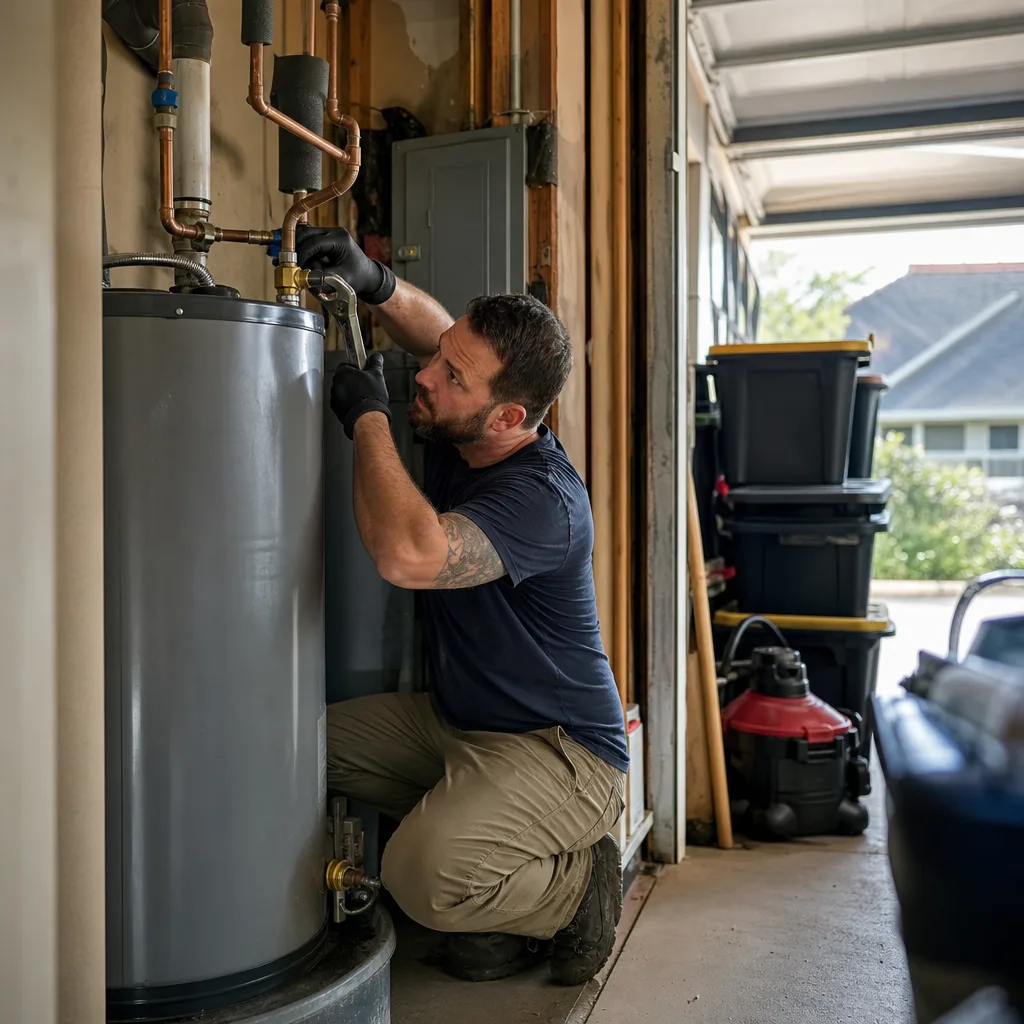
The simplest job is a like-for-like swap. The new unit uses the same fuel, is the same size, goes in the same spot, and hooks up to connections that are already in good shape. That’s our most common water heater installation, and it runs $1,700 to $2,600. That price covers the equipment and materials, professional installation, standard connections, startup and testing, and hauling away your old unit.
Here’s what can turn a simple swap into a bigger job:
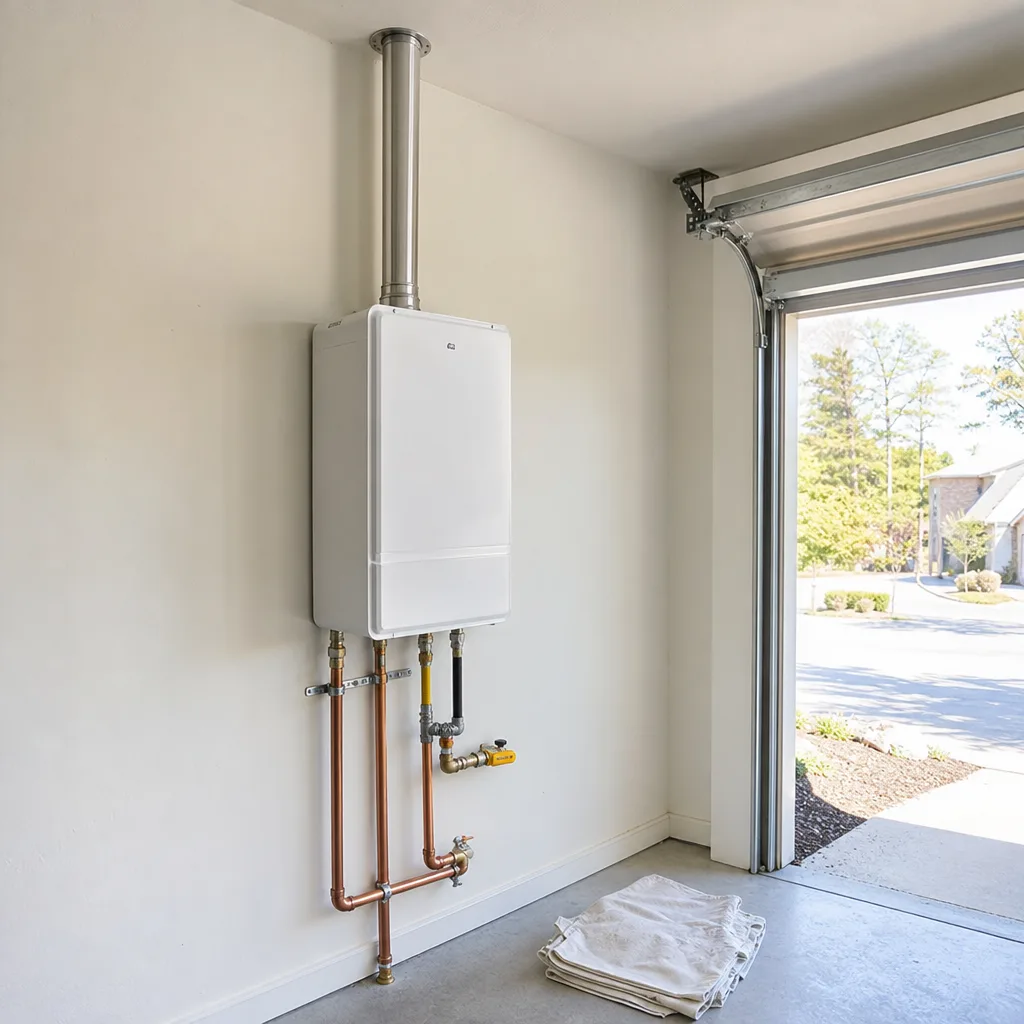
- Changing what you have. Moving from electric to gas means running a gas line and adding venting. Moving from gas to electric may mean adding a new circuit at your panel. Going tankless is its own project with its own planning.
- Going bigger. If your family has outgrown a 40-gallon tank, a 50-gallon unit is taller and wider. It may not fit through the attic opening or into the same closet without changes.
- Tough access. A tank in the garage is easy to reach. A tank in a tight attic or a cramped hall closet takes more time, more hands, and sometimes some carpentry to get the old one out and the new one in.
- Tired plumbing around the tank. Shutoff valves that won’t close, corroded fittings, or old pipe that crumbles when it’s touched all have to be fixed before the new heater goes on.
- Code updates. Rules have changed since many older tanks were put in. Your new unit may need a drain pan, an expansion tank, updated venting, or relief valve piping that runs to the right place. Those items aren’t optional extras. They’re part of doing the job right.
Your home’s age plays a big part. Many Dallas homes built between the 1950s and 1990s are slab-on-grade ranch houses, and a lot of them have had two or three water heaters over the years. Each one was installed to the rules of its day, and sometimes by whoever was handy. That’s where we’re most likely to find outdated venting, old valves, or a setup that doesn’t meet today’s code. Newer subdivisions usually have cleaner, more up-to-date connections, so a swap there is often closer to plug-and-play.
So, what’s included and what isn’t? Our standard install covers the swap itself. Changes to plumbing, electrical, or ductwork, code corrections, and permits are priced separately unless your quote says otherwise. That isn’t a trick. It’s the reason a like-for-like job can have a clear price, while a job with extra work gets its own line items.
The good news is that you won’t find out about any of this halfway through the job. We look at your setup first. Then you get upfront flat-rate pricing that spells out the swap and any extra work, and you approve it before we start. If your connections are in good shape, you’ll know it’s a simple swap. If they’re not, you’ll know exactly what needs attention and why.
Who Is Legally Qualified to Install a Water Heater in Texas
In Texas, water heater installation is plumbing work. When someone gets paid to do it, they need a state plumbing license. That rule covers more than the pipes. A water heater has a relief valve, a gas or electric hookup, and often venting. Each one affects your family’s safety if it’s done wrong.
Here’s how it breaks down in plain terms:
- A licensed plumber can install your water heater, connect the water lines, and handle the relief valve and drain piping.
- Gas units need extra care. Hooking up the gas line and venting the exhaust is licensed plumbing work, because a bad vent can push carbon monoxide back into your home.
- Electrical changes go to a licensed electrician. Adding a new circuit or upgrading your panel for a bigger electric unit or a tankless heater is electrical work, not plumbing.
- A handyman without a plumbing license shouldn’t be installing a water heater for pay, even if the job looks simple.
What about doing it yourself? Texas generally gives homeowners some room to work on plumbing in a home they own and live in. That doesn’t take you off the hook for local rules. Dallas and most nearby cities still expect a permit and an inspection when a water heater is replaced. So even a DIY swap is supposed to get checked.
We’ll be straight with you. If you’re handy and you’re swapping an electric tank for the same size electric tank in your garage, it’s a job some homeowners take on. Gas is a different story. If you’re not comfortable with gas fittings, leak testing, and venting, that’s the line where you should stop and call a pro.
So why does the license matter so much when you hire someone? A few reasons:
- Inspections. In most cases, a licensed plumber is the one who can pull the permit and get the work inspected.
- Insurance. If an unlicensed install leaks into your attic or ceiling, your homeowners insurance may push back on the claim.
- Selling your home. A buyer’s inspector will look at your water heater. Missing drain pans, wrong relief valve piping, or bad venting can show up right when you least want them to.
- Accountability. A licensed plumber answers to the state. If something goes wrong, you have somewhere to turn.
Before you hire anyone, ask these questions:
- Who holds the plumbing license, and what’s the license number?
- Are you insured?
- Will you pull the permit, or is that on me?
- If my gas unit or electric hookup needs changes, who does that work?
A good installer won’t mind any of these. If someone gets vague or says a permit isn’t needed, take that as your answer.
Xtreme Air Services is a licensed and insured plumbing, HVAC, and electrical contractor. Our plumbing work is done under Master Plumber Larry Breedlove. That matters on a water heater job. If your new unit needs a gas line, a new circuit, or updated venting, you don’t have to juggle a plumber and an electrician. One licensed team handles it, and our background-checked technicians treat your home like family while they do.
Not sure what your Water heater installation project needs? Ask us.
Call Today, Get Service Today. Xtreme Air Services — North Dallas is ready to help.
What’s Included in Your Installation Quote
A good installation quote shows you one clear price for the new water heater and the install, then lists any extra work as its own line. You should be able to read it at your kitchen table and know exactly what you’re paying for before anyone touches a wrench.
Our water heater installations typically run $1,200 to $3,500. Where your job lands in that range mostly comes down to the heater itself: its size and capacity, the brand and model, and how efficient it is. A bigger tank costs more than a smaller one. A higher-efficiency unit costs more up front but can cost less to run each month. The rest depends on the setup around your heater, which we covered above.
When you get a quote from us or anyone else, look for these things in writing:
- The tank size and fuel type. You should know if it’s a 40 or 50-gallon unit and if it’s gas or electric.
- The brand and model. That way you can look it up yourself.
- Haul-away of the old unit. A water heater is heavy and awkward. You don’t want it left in your driveway.
- Startup and testing. The job isn’t finished until the new heater is running and checked.
- Each extra item on its own line. If you need a drain pan, an expansion tank, new valves, or a new circuit, each one should be named and priced.
- Who handles the permit, and what it costs.
Here’s why that matters. Say one quote comes in a few hundred dollars lower than another. It looks like a win. Then you notice it doesn’t mention haul-away, the expansion tank, or the permit. Those costs didn’t go away. They just aren’t on paper yet. A clear quote lets you compare the full price, not just the first number.
If we come out to look at your setup, there’s a $26 to $99 service-call fee. It’s credited toward the work if you move forward with Xtreme Air Services, so it isn’t an added cost when you go ahead with the job.
Need to spread the cost out? Flexible financing is available on qualifying installations and larger jobs, on approved credit. That can help if your old tank gave out with no warning and the timing just isn’t great.
With us, you get upfront flat-rate pricing that you approve before the work starts. There’s no meter running and no extra charge for nights or weekends. If something on your quote doesn’t make sense, ask. Our licensed and insured technicians will walk you through every line until it does.
Call 469-213-3107
Watch Our Video
See How We Handle Water heater installation in Dallas
Xtreme Air Services — North Dallas
What Happens During and After Installation
A good installation follows the same basic order every time. Knowing that order helps you understand what’s happening in your garage or attic. It also helps you spot a corner being cut.

Here’s what a proper swap looks like, step by step:
- Shut everything off. That means the water supply to the tank and the gas or the breaker. Nobody should touch a fitting until both are off.
- Drain and remove the old tank. A 40 or 50-gallon tank holds a lot of water, and in Dallas it often holds a layer of hard-water sediment too. It gets drained through a hose to a safe spot, then carried out.
- Set the new unit in place. This includes any code items your setup needs, like the drain pan or expansion tank covered above.
- Connect the water lines, then the fuel. On a gas unit, the gas line gets connected and checked for leaks, and the vent gets fitted so exhaust goes outside. On an electric unit, the wiring gets connected at the heater.
- Fill the tank before turning on the heat. An electric heater turned on with an empty tank can burn out a heating element in seconds. The tank should be full and the air bled out through a hot tap first.
- Start it up and test it. That means checking every joint for drips, making sure the relief valve is piped correctly, confirming a gas unit is venting properly, and setting the temperature.
With our standard install, you get professional installation, standard connections, startup and testing, and haul-away of your old unit. The old tank leaves with us, not on your curb.
How long will you be without hot water? A like-for-like swap in an easy-to-reach garage is usually a few hours of work. An attic install, a size change, or a gas-to-electric conversion takes longer. Once the job is done, give the new tank some time to heat a full load before you plan a long shower.
In the first few days, here’s what’s normal and what isn’t:
- Normal: faucets that spit or sputter for a minute the first time you use them. That’s leftover air working its way out of the lines.
- Normal: a faint smell the first time a gas unit fires. New parts can burn off a little residue.
- Not normal: water around the base of the tank, a damp drain pan, or a drip at any fitting.
- Not normal: a gas smell that doesn’t go away, or hot water that never gets hot. Call right away if you notice either one.
If a permit was pulled for your job, there may also be a city inspection after the install. That’s the check described earlier, and it’s one more set of eyes making sure the work meets code.
Once your new heater is in, Dallas hard water will start building scale again. Draining some water from the tank from time to time helps keep sediment from settling in. If the white crust on your fixtures keeps coming back, a water softener installation can slow that buildup inside your new heater too.
Call 469-213-3107
Frequently Asked Questions
Common questions about Water heater installation
Do I need a permit to install a water heater in Dallas?
Yes, Dallas and most nearby cities require a permit and inspection when you replace a water heater. This applies whether a licensed plumber does the work or you do it yourself as the homeowner. The inspection checks things like the drain pan, expansion tank, venting, and relief valve piping to make sure they meet current code. Skipping the permit can cause problems later, especially if a home inspector spots the missing paperwork when you sell.
How long does a typical water heater installation take?
A like-for-like swap in an easy-to-reach garage usually takes a few hours. Jobs get longer when the tank is in a tight attic, when you’re changing size or fuel type, or converting from gas to electric. Once the new tank is in, give it time to heat a full load before planning a long shower, since it needs to recover from being filled cold.
What’s the labor cost difference between a 40-gallon and 50-gallon water heater install?
Labor costs more for a 50-gallon tank mainly because it’s taller and wider, which can mean extra work to fit it through an attic opening or into a tight closet. A straightforward swap, same size and same spot, keeps labor simple. Moving up a size often means adjusting the space around the tank, which adds time and cost beyond the equipment itself.
Ready to Get Started?
Call (469) 213-3107 Today, Get Service Today.