


Sewer Line Repair in Allen: Know Your Repair Before You Dig
Sewer line problems confirmed before anyone digs, with a step-by-step repair and a quote that shows what's included.
What’s Covered on This Page
- How to Tell a Sewer Line Problem From a Simple Clog
- Why Allen Homes Develop Sewer Line Damage
- When You Don’t Need Sewer Line Repair
- What the Camera Inspection and Repair Process Involve
- Trenchless Repair vs. Dig-and-Replace: How the Decision Gets Made
- How long does a sewer line repair usually take?
- Will my yard be torn up for a sewer line repair?
- Can I use my water and toilets during a sewer line repair?
- What if my neighbors are also having sewer backups?
How to Tell a Sewer Line Problem From a Simple Clog
Here’s the simplest way to think about it. Every drain in your house feeds into one main line that carries waste out to the city sewer. A clog in a single sink or toilet only affects that one fixture. A problem in the main line affects everything upstream of it, so the whole house starts acting strange at once.
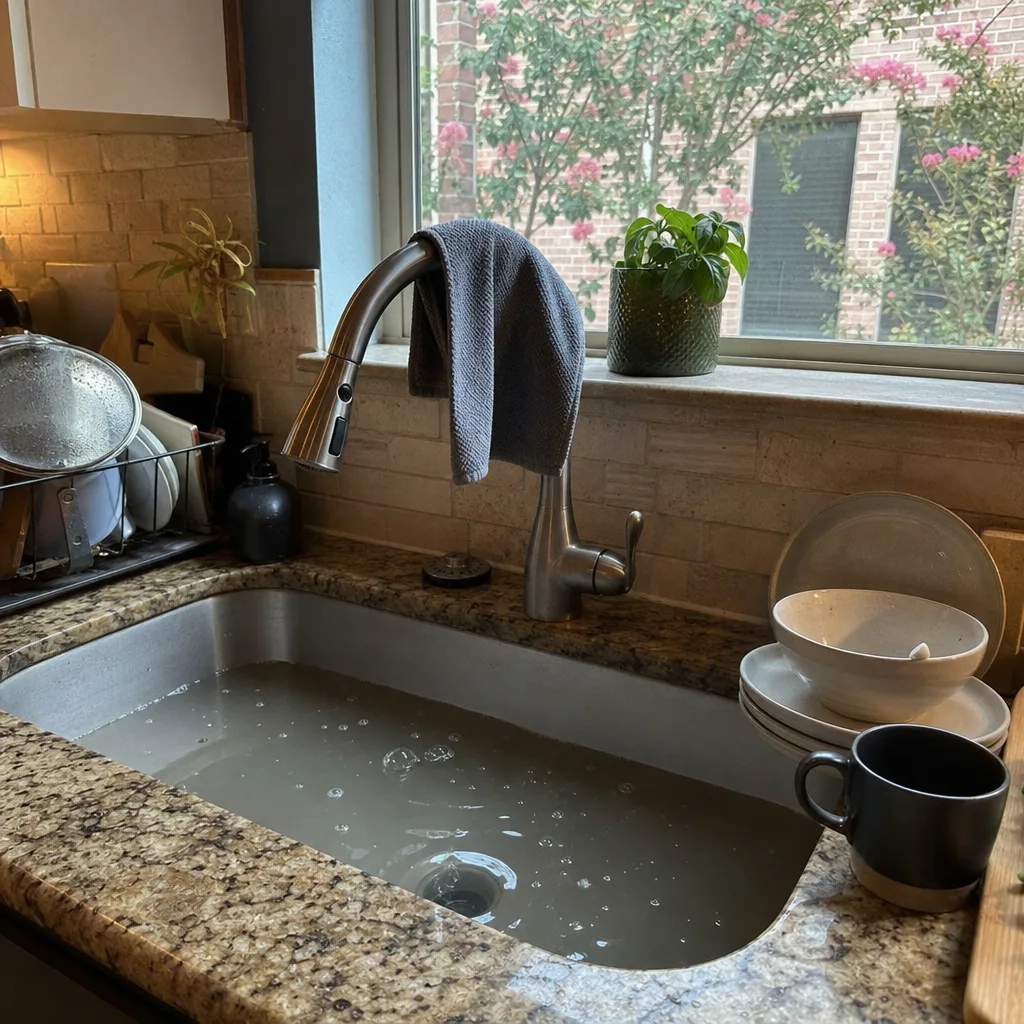
Start with the one-drain test. If your bathroom sink drains slowly but the tub, toilets, and kitchen sink are fine, that’s almost always a local clog from hair, soap, or grease. Try a plunger first. If that doesn’t clear it, a standard drain cleaning usually will. You don’t need sewer line repair for that, and we’d tell you so.
These signs point past a simple clog and toward the main line:
- More than one fixture is slow or backing up at the same time, especially in different rooms.
- Water comes up in the shower or tub when you flush a toilet. Your lowest drains fill first when the main line can’t move water out.
- Toilets gurgle or bubble when the washing machine or dishwasher drains.
- You smell sewage inside the house or near the yard, even when the drains seem to be working.
- Your outdoor cleanout pipe is full of water or overflowing.
- You notice a soggy, sunken, or unusually green patch of grass between the house and the street.
- The same clog keeps coming back a few weeks after it’s cleared.
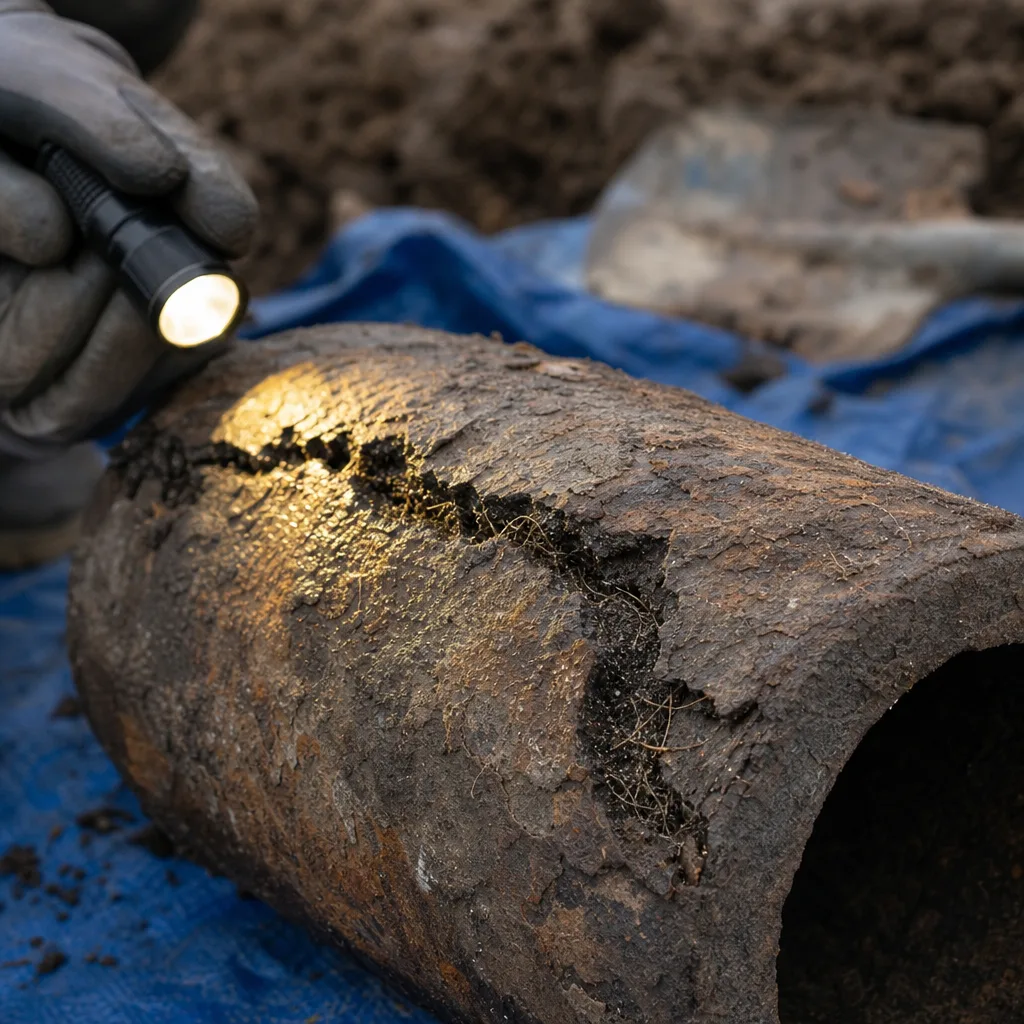
That last one matters more than people think. If you’ve had the main drain cleaned and the backup returns, the line probably isn’t just dirty. Something is physically wrong with the pipe, like a crack, a root intrusion, a sagging section that holds water, or a joint that’s pulled apart.
In Allen and across North Texas, the ground itself is part of the story. Our expansive clay soil swells when it’s wet and shrinks during hot, dry summers. That steady movement can shift buried pipe, stress joints, and open small gaps that tree roots find fast. So a backup after a long drought or a stretch of heavy rain isn’t a coincidence. The soil around your line may have moved.
You don’t have to guess from symptoms alone. A sewer camera inspection sends a small waterproof camera down the line so you can see exactly what’s wrong and where it is. That tells you whether you need a cleaning, a section repair, or something bigger before you spend money on digging.
One practical tip while you’re deciding: if you suspect the main line, cut back on water use. Hold off on laundry, long showers, and the dishwasher. Every gallon you send down has to go somewhere, and with a blocked main line, that’s often your lowest drain.
Why Allen Homes Develop Sewer Line Damage
Sewer lines rarely fail for no reason. Something specific happens to the pipe, and that something decides what the repair looks like. In Allen, most of it comes down to three things: the ground the pipe sits in, what the pipe is made of, and what’s growing or flowing around it.
You already know our clay soil moves with wet and dry seasons. Here’s what that movement does to a buried pipe over time:
- Bellies or sags. When soil under a section settles, that stretch of pipe drops lower than the rest. Water and waste sit in the low spot instead of flowing out. You get slow drains and repeat clogs. A cleaning won’t fix the dip, so that section usually needs to be re-laid at the right slope.
- Offset or separated joints. Pipe comes in sections joined together. When the ground shifts, one section can slide out of line with the next. That creates a lip that catches waste, or a gap that leaks into the soil. This is often a fix for one joint or one short run, not the whole line.
- Cracks and breaks. Steady pressure from swelling clay, or weight from a driveway or heavy equipment above, can crack a pipe. A single crack may be a spot repair. A pipe cracked in many places is a different conversation.
Pipe material matters too. Older homes may have cast iron or clay pipe, which can rust, scale up inside, or crack with age. Newer homes usually have PVC plastic pipe, which doesn’t rust but can still sag, shift at the joints, or break if it wasn’t bedded well when it was installed. Knowing what’s in your yard helps tell you whether you’re fixing one bad spot or dealing with a pipe that’s wearing out end to end.
Trees are the other big player. Roots don’t break into healthy, sealed pipe. They follow moisture to a crack or a loose joint, slip in, and keep growing. Inside the pipe, they catch grease, wipes, and paper until the line chokes. Cutting the roots out clears the flow for a while, but the opening they came through is still there. That’s why root problems tend to come back until the damaged joint or section gets repaired.
What goes down your drains plays a part as well. Cooking grease cools and hardens inside the pipe. So-called flushable wipes don’t break down the way toilet paper does. On their own, these usually cause clogs, not broken pipe. But in a line that already has a sag or a rough joint, they pile up fast and turn a small defect into a full backup.
Many Allen homes sit on slab foundations, so part of your drain system may run under the concrete before it reaches the yard. Damage outside in the yard is usually easier to reach. Damage under the slab takes more planning, and that changes how the repair is approached.
Put it all together and you can see why the cause matters so much. A sag, a separated joint, a root-filled crack, and a worn-out pipe all cause the same backup in your house. They don’t all need the same fix. Pinpointing which one you have, and exactly where it is, is what keeps a repair to the section that’s damaged instead of tearing up more yard than you need to.
When You Don’t Need Sewer Line Repair
A lot of drain trouble looks scary and turns out to be minor. Here are the times you don’t need sewer line repair, even if your drains had a rough week.
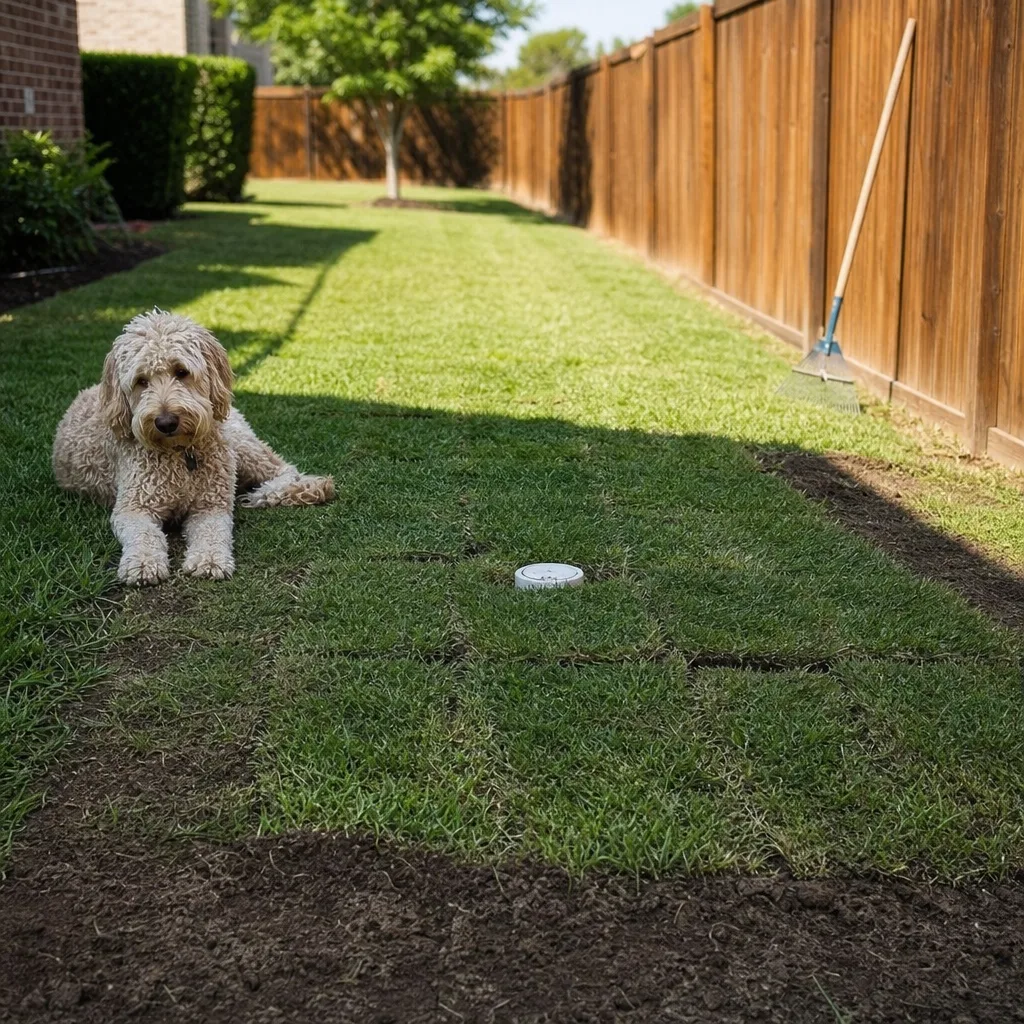
The backup cleared and stayed clear. Maybe a guest flushed wipes, or grease went down the kitchen sink after a holiday meal. If one main drain cleaning fixed it and nothing has backed up in the months since, the pipe is probably fine. It was a blockage, not a break. Keep wipes and grease out of the drains and move on with your life.
The camera shows buildup, not damage. Sometimes the line is just dirty. Older cast iron pipe can build up scale inside, and any pipe can collect grease over time. If the inspection shows a pipe that’s round, lined up, and free of cracks or gaps, a good cleaning or hydro jetting is the fix. Hydro jetting uses high-pressure water to scrub the inside of the pipe. Nobody needs to dig.
The smell is coming from a dry drain. If you notice a sewer smell near a guest bath or a basement-level shower you rarely use, the trap may have dried out. A trap is the curved bit of pipe under a drain that holds a little water to block sewer gas. Run the faucet or flush the toilet for a minute and the smell should fade. If it does, you’re done.
The problem is on the city’s side. If your neighbors are dealing with backups at the same time you are, the blockage may be in the public sewer main under the street, not in your private line. In that case, call the City of Allen first. Fixing your pipe won’t help if the city’s line is the one that’s stopped up.
The pipe is too far gone for a spot fix. This one cuts the other way. If the camera shows cracks, sags, and root entry along most of the run, repairing one section just moves the next failure a few feet down the line. Patching piece by piece can end up costing you more than replacing the line once. When the whole pipe is wearing out, a section repair isn’t the honest answer.
There are also times when waiting is reasonable. A camera might find a small amount of scale or a minor rough spot that isn’t catching waste yet. If your drains are moving well, it’s fair to watch it and check again later instead of fixing it today. Keep an eye out for repeat clogs, gurgling, or a soggy patch in the yard. Those are your signs that it’s changed.
The point is simple. Sewer line repair is for a pipe that’s physically damaged in a specific spot. If your pipe isn’t broken, you shouldn’t pay to dig it up, and a straight answer from the camera should tell you that.
Need help with Sewer line repair?
Call Today, Get Service Today. Xtreme Air Services — Allen is ready to help.
What the Camera Inspection and Repair Process Involve
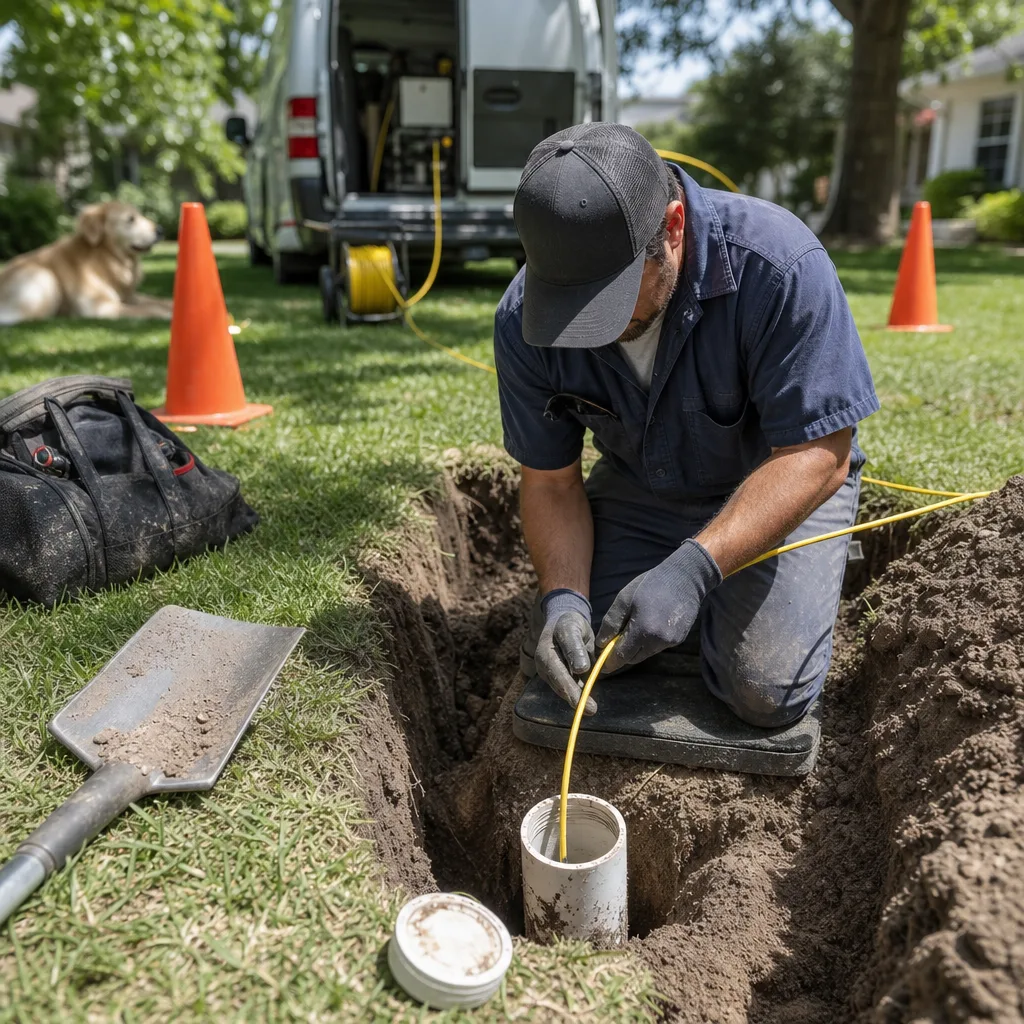
A good sewer line repair has two jobs. First, find exactly where the pipe is damaged and why. Then fix that stretch and nothing more. When the first job is done well, the second one gets smaller, faster, and easier on your yard.
The camera does more than confirm there’s a problem. Most sewer cameras carry a small locator in the head, so a technician standing in your yard can mark the spot on the ground and estimate how deep the pipe is. You should come away knowing four things: where the damage is, how deep it sits, what the pipe is made of, and what caused it, whether that’s a sag, a pulled-apart joint, a crack, or roots. Ask to see the footage yourself. A clear look at the problem is the best protection you have against paying for work you don’t need.
With the damage marked, the repair usually goes one of two ways:
- Dig and replace a section. A hole or short trench is dug right at the marked spot. The bad piece is cut out and new pipe is set in. Then it’s bedded so it holds steady in our shifting clay and sloped so waste keeps moving. This is the go-to fix for a sag, because the low spot has to be physically raised back into line.
- Trenchless repair. The pipe is fixed from the inside through small access points, so there’s less digging. It works best when the pipe still holds its shape. It’s not a cure for a belly, since a new lining follows the same dip.
Damage under your slab takes more planning, because the pipe has to be reached under the concrete instead of through open yard. That’s worth talking through before anyone starts, so you know what access will look like inside or around your home.
Before digging, buried utilities like gas, electric, and cable should be marked so nothing gets hit. During the repair, plan on going light on water. Your main line is open, so the less you send down, the better.
Know what’s in the scope before you say yes. Our sewer line repair covers locating the damage, excavation or access, the repair itself, and testing. It does not cover full line replacement, putting back landscaping or concrete, or permits unless your quote says so. If your repair crosses a driveway or a flower bed, ask up front who restores it. That way the finished job holds no surprises.
The job isn’t done when the new pipe goes in. It’s done when the line is tested and water flows the way it should. Run a few fixtures, flush the toilets, and make sure the drains that were backing up now clear fast. If you want extra peace of mind, ask for a second camera pass so you can see the repaired section for yourself: round, lined up, and moving water out to the street.
Watch Our Video
See How We Handle Sewer line repair in Allen
Xtreme Air Services — Allen
Trenchless Repair vs. Dig-and-Replace: How the Decision Gets Made
Trenchless sounds better to almost everyone. Less digging, less mess. But the right method isn’t the one that sounds nicer. It’s the one that fits what’s wrong with your pipe. The camera footage makes that call, not a sales pitch.
Here’s what tips the decision one way or the other:
- The shape of the pipe. If a section has sagged, it has to be dug up and re-laid at the right slope. A sag is the clearest case for dig-and-replace, and no amount of lining changes that.
- How much of the pipe is still intact. A crack, a root entry point, or a leaky joint in a pipe that’s still round and lined up can be a good fit for trenchless. A section that has collapsed or broken apart usually can’t be fixed from the inside.
- What’s sitting on top. A short run under open grass is often simple to dig. The same damage under a driveway, a patio, or the roots of a big shade tree changes the math, because tearing that out costs time and money of its own.
- How deep and how long the damage runs. A shallow, short break is a small hole. A deep line or a long damaged stretch means a lot more excavation, and that’s where trenchless can start to make more sense.
Picture two homes on the same street with the same backup. In the first, the camera shows one pulled-apart joint about four feet down in the side yard. Digging that spot out is quick and direct. In the second, roots got into a crack under the driveway, but the pipe still holds its shape. Breaking up the concrete there could cost more than the pipe repair itself, so a trenchless fix is worth a hard look. Same symptom, different answer.
Those same factors drive the price. Depth and length of the damaged run, how hard it is to reach and dig, and whether trenchless methods are used are what move cost up or down. Our most common job is locating and repairing or replacing a damaged section of sewer line and verifying proper flow, which typically runs between $1,500 and $4,000. Across all sewer line repair, the typical range is between $1,500 and $7,000. Keep in mind that putting back concrete or landscaping isn’t included unless your quote says so. That’s one more reason access matters so much.
Before you agree to either method, ask three things. Why does this method fit my pipe? What would the other method look like here? What will my yard or driveway look like when you’re done? A plumber who has really looked at your line can answer all three in plain English while pointing at the footage.
With Xtreme Air Services, you get upfront pricing before any work starts, so there’s no meter running while you decide. Our service-call fee is $26 to $99, and it’s credited toward the repair if you move forward with us. For larger jobs, flexible financing is available on approved credit.
Call now
Frequently Asked Questions
Common questions about Sewer line repair
How long does a sewer line repair usually take?
Most section repairs take one day once the damage is located and marked. A simple dig-and-replace on an open stretch of yard is often the quickest, while trenchless work or a repair under a driveway can take longer because of the extra access planning involved.
Will my yard be torn up for a sewer line repair?
Only the exact spot that’s damaged gets dug up, not the whole line. A camera inspection pinpoints the problem first, so the hole or trench is as small as possible, and trenchless methods can avoid a large trench entirely when the pipe still holds its shape.
Can I use my water and toilets during a sewer line repair?
You should cut back on water use while the line is open. Hold off on laundry, long showers, and the dishwasher until the repair is tested, since every gallon you send down has to go somewhere while the main line is being worked on.
What if my neighbors are also having sewer backups?
That points to a problem in the city’s sewer main, not your private line. If backups are hitting multiple homes on your street at the same time, call the City of Allen first, since fixing your own pipe won’t help if the public line under the street is blocked.
Ready to Get Started?
Call (469) 299-8996 Today, Get Service Today.