


Sewer Line Repair in Carrollton: Know Before You Dig
Sewer line problems confirmed before anyone digs, with a step-by-step repair and a quote that shows what's included.
What’s Covered on This Page
- Signs Your Sewer Line Is Broken
- One Slow Drain Is Usually Not a Sewer Line Problem
- What Causes Sewer Line Damage in Carrollton Yards
- How a Camera Inspection Confirms the Real Problem
- Trenchless Repair vs. Dig-and-Replace: What Decides the Method
- Is trenchless sewer repair worth it for my home?
- Can I get a camera inspection done before agreeing to any repair?
- Will the city fix my sewer line if the problem is in the main line?
Signs Your Sewer Line Is Broken
Most drain problems aren’t broken pipes. Hair, grease, or wipes can stop up one fixture, and a good drain cleaning fixes it. A damaged sewer line acts differently. The trouble spreads across your home, it keeps coming back, or it shows up outside where no clog could explain it.
Here’s what points to a real problem in the line:
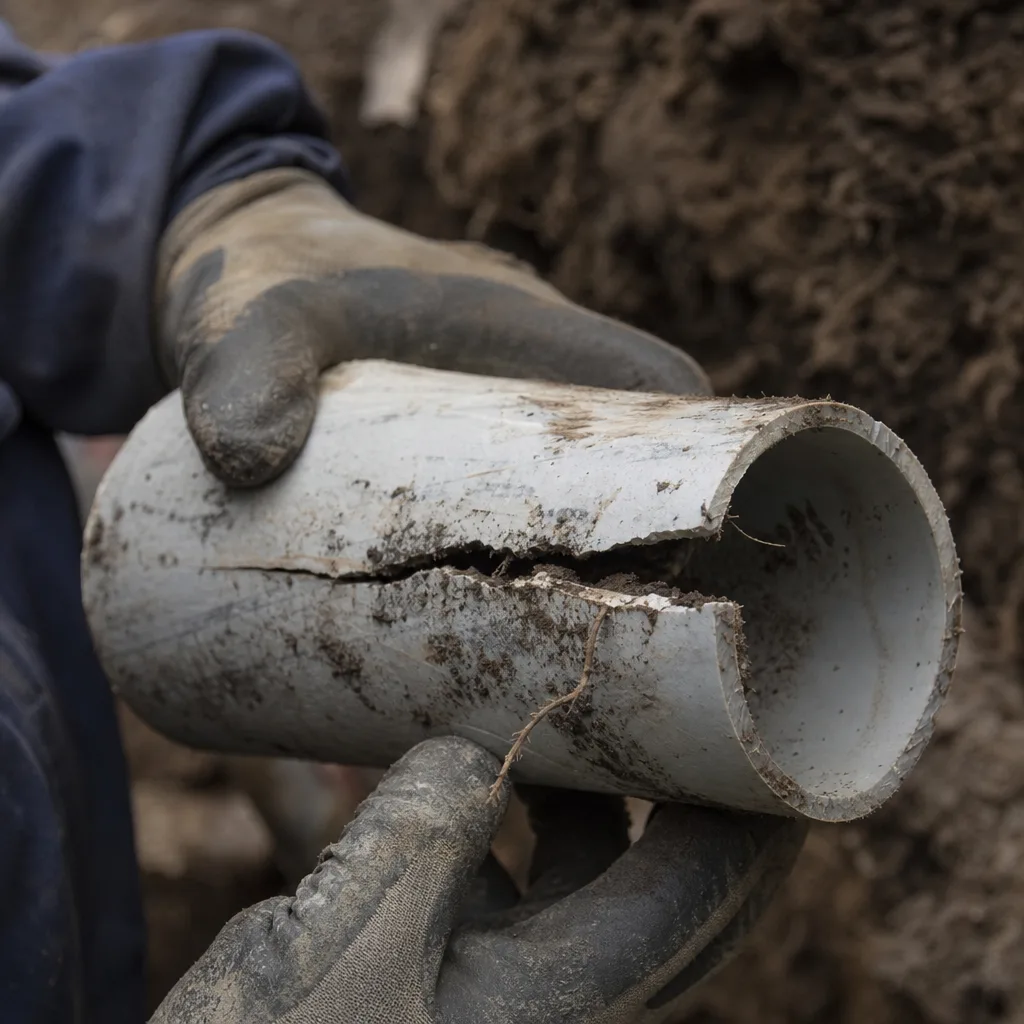
- More than one drain backs up at the same time. Your sewer line is the one pipe every fixture shares. When the tub fills with dirty water as the washer drains, or a toilet bubbles when you run the sink, the blockage is past the branch lines. It’s in the main line.
- The lowest drain goes first. Water takes the easy way out. If the line is blocked or collapsed, wastewater comes back up at the lowest opening, often a shower or a first-floor tub.
- The clog comes back soon after you clear it. If a drain cleaning works for a few weeks and then the backup returns, something is catching waste. That could be tree roots growing through a cracked joint, a section that has sagged, or a pipe that has shifted out of line.
- You smell sewage and can’t find the source. A cracked line lets sewer gas escape into the soil around your home, and sometimes into the house itself.
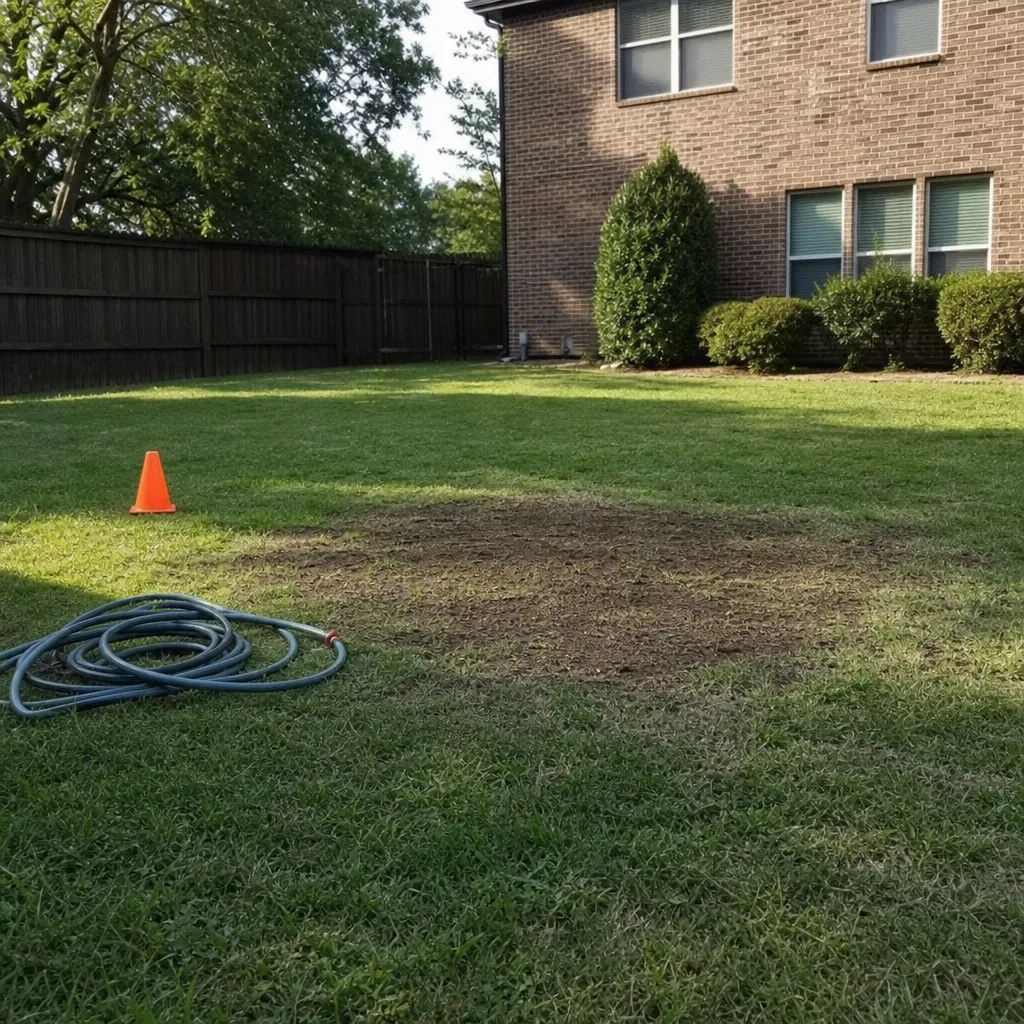
- Your yard tells on the pipe. Watch for a strip of grass that’s greener and thicker than the rest, a spot that stays soggy when it hasn’t rained, or a low area that’s sinking. Leaking wastewater feeds the grass and washes soil away from the pipe.
- Gurgling that won’t stop. Toilets or drains that gurgle when other fixtures run can mean air is trapped behind a blockage in the main line.
North Texas soil adds its own pressure. Our clay swells when it’s wet and shrinks during long, dry summers. That movement can shift older sewer pipes, open up joints, and give roots a way in. Many homes here also sit on slab foundations, so part of the sewer line runs under the concrete. If you notice musty smells, damp flooring, or new cracks near the slab along with drain trouble, the damaged section may be under the house. That’s a different repair from a break in the yard, and we cover it under slab leak repair.
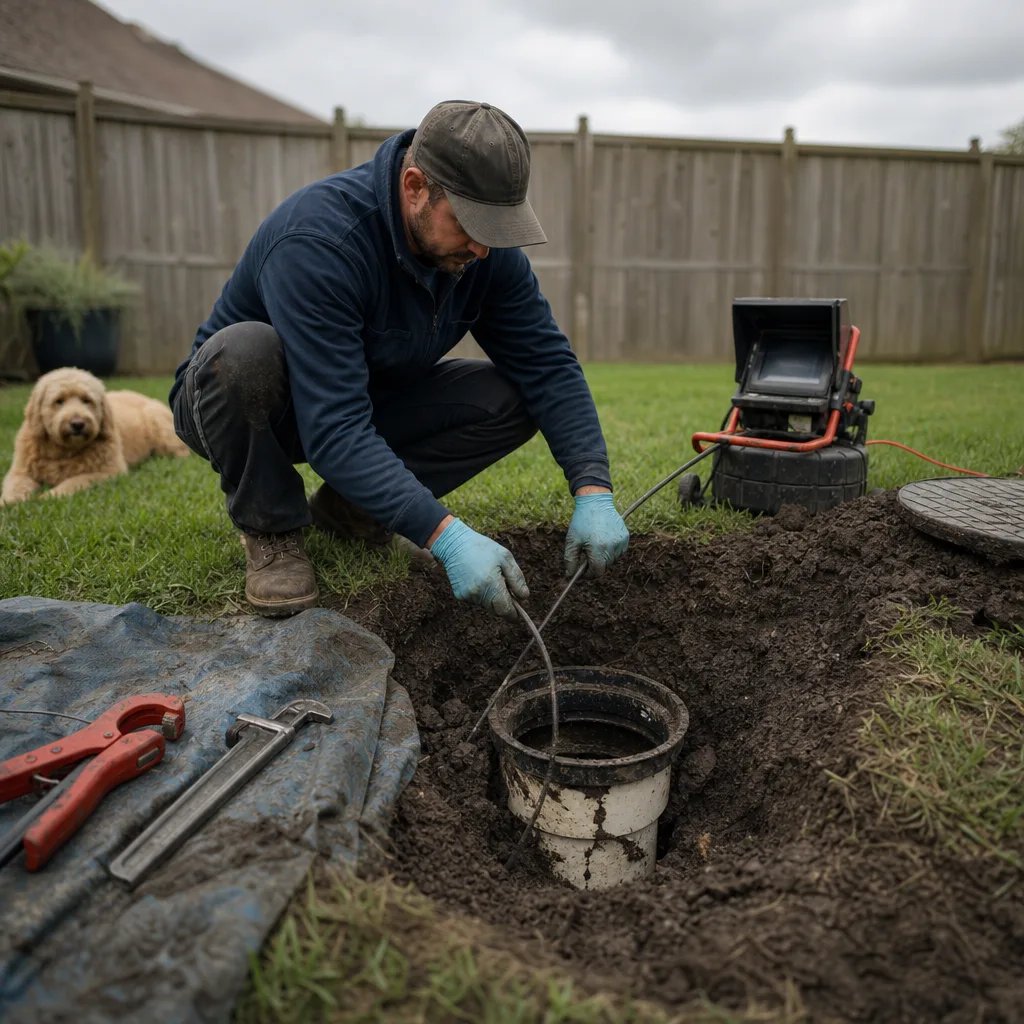
None of these signs proves exactly where the damage is or how bad it is. A sewer camera inspection settles that. A small waterproof camera goes down the line and shows the inside of the pipe, so you can see roots, cracks, sags, or a simple clog for yourself. That matters because it tells you whether you need a quick cleaning, a repair to one section, or something bigger. You’ll know before you pay to dig up a single foot of your yard.
One Slow Drain Is Usually Not a Sewer Line Problem
If one sink, tub, or toilet is slow and everything else in your home drains fine, you almost certainly don’t need sewer line repair. Your main line can’t be broken for just one fixture. The trouble is in that fixture’s own drain or the short branch pipe behind the wall, and that’s a much smaller fix.
Here’s a quick way to check. Run the bathroom sink and flush the toilet in another room. Then start the washing machine or let the kitchen sink drain a full basin. If none of that makes the slow drain worse, and no other fixture gurgles or backs up, the main line is moving waste the way it should.
Some common single-drain problems you can often handle yourself:
- A bathroom sink or tub that drains slowly. Hair wrapped around the stopper is the usual cause. Pull the stopper out, clean it off, and the drain often runs clear again.
- A toilet that clogs once. A plunger with a good seal usually clears it. If that toilet clogs again and again but the rest of the house is fine, the problem is the toilet or its drain, not the sewer.
- A kitchen sink that backs up after a big meal. Grease and food scraps build up in the kitchen branch line over time. That’s a drain cleaning job, not a sewer repair.
If a plunger doesn’t do it, a professional drain cleaning is the right next step for a single stubborn drain. It costs far less than any repair to the line, and there’s no reason to start with a camera or a shovel when only one fixture is acting up.
Waiting is also a fair choice in some cases. If a drain cleaning clears a backup and it stays clear for months, you don’t need to chase it further. One clog after the kids flushed something they shouldn’t have, or after a house full of holiday guests, isn’t a pattern. Keep an eye on it. If it comes back, that’s the time to look deeper.
Look outside your own home, too. If your next-door neighbors are dealing with backups on the same day you are, the blockage may be in the city’s main sewer, not your line. In Carrollton, that’s a call to the city, not a plumber, and you shouldn’t pay to fix a pipe that isn’t yours.
One more honest piece of advice. If anyone tells you a single slow drain means you need a full sewer line replacement, ask to see proof. A camera inspection shows the inside of the pipe, and a real crack, root intrusion, or sag is something you can see with your own eyes on the screen. If a contractor can’t show you the damage, you have every right to get a second opinion before you agree to dig up your yard.
Sewer line repair makes sense when the line itself is damaged, and that shows up across your whole home, not in one corner of it. If your problem lives in just one drain, start small. You’ll save money, and you’ll still know exactly where to turn if the signs ever spread.
What Causes Sewer Line Damage in Carrollton Yards
Most sewer lines don’t break all at once. They wear down, shift, or get pushed out of shape over years until waste can’t get past. The cause matters because it tells you whether you’re fixing one bad spot or dealing with a pipe that’s failing end to end. Here are the usual culprits under a North Texas yard.
Tree roots. Roots go looking for water, and a sewer line is full of it. A root doesn’t crack a healthy pipe. It finds a tiny gap at a joint, slips in, and keeps growing. Over time it fills the pipe like a hairball, catching paper and waste. Big shade trees planted near the line decades ago are often the reason a backup keeps coming back after every cleaning. Cutting the roots out buys time. Sealing or replacing the joint they got through is what stops them.
Ground movement. You read above how our clay swells and shrinks. That push and pull doesn’t just open joints. It can pull a pipe out of line or crack it where it meets the house, especially along a slab foundation that moves a little differently than the yard around it.
Sags, or bellies. When the soil under a pipe settles or washes away, that section dips. Water and solids pool in the low spot instead of flowing downhill. A belly won’t always leak, but it collects waste and keeps clogging. Sometimes the fix is just re-laying that one stretch at the right slope.
Old pipe material. What your line is made of depends a lot on when your home was built.
- Cast iron is strong, but it rusts from the inside. Scale builds up, the walls thin out, and the bottom of the pipe can wear through.
- Clay pipe holds up well on its own, but it comes in short pieces. Every joint is a spot where roots can get in or the pipe can slip apart.
- Orangeburg, a fiber pipe made with tar, was used in some homes in the middle of the last century. It can flatten or blister as it ages.
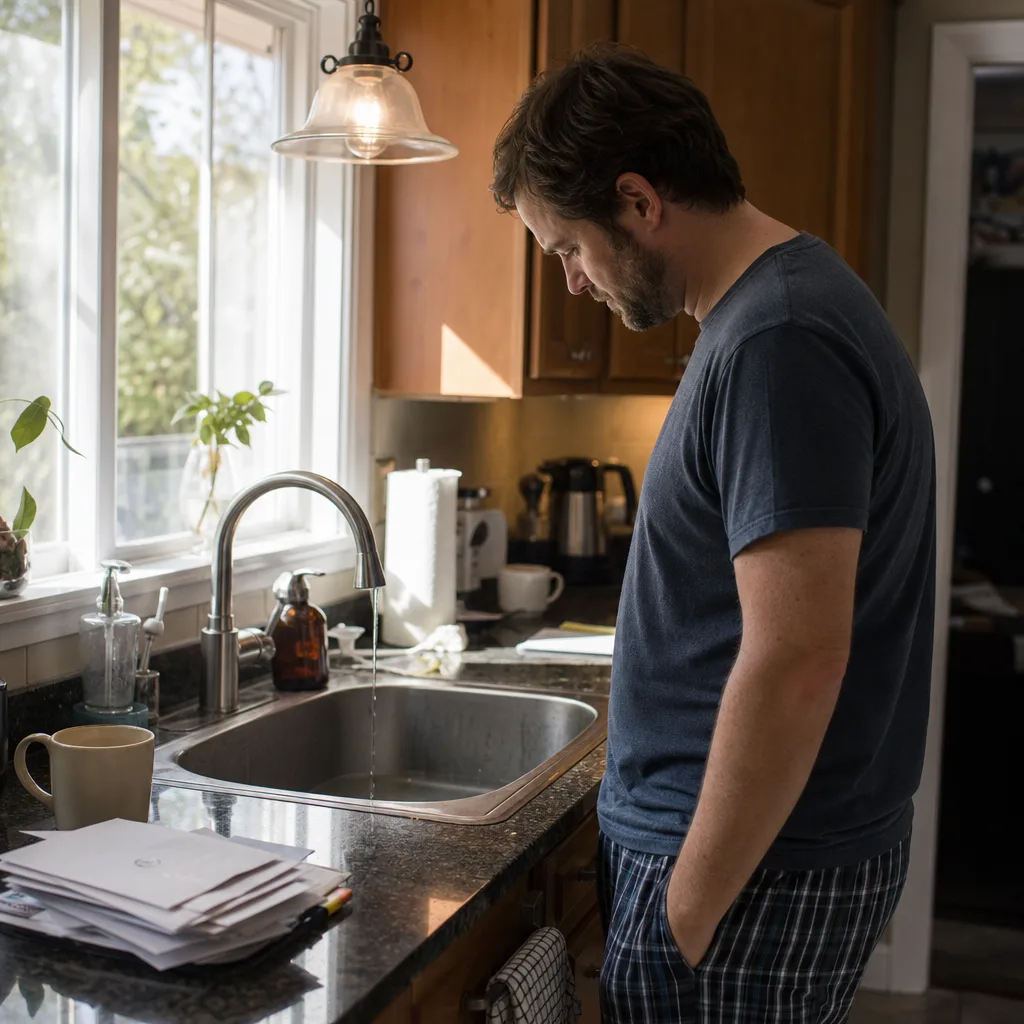
- PVC, the white plastic pipe in most newer homes, resists roots and rust. It can still crack or sag if the ground under it moves or it wasn’t bedded well.
Weight and digging on top of the line. A driveway added over the sewer path, heavy trucks parked on the lawn, or a fence post or sprinkler line dug in the wrong spot can crush or puncture a pipe. If your trouble started soon after yard work or a new project, mention that when you call. It can point straight to where the damage is.
Here’s why all of this matters to you. A root at one joint or a single belly is a section repair. A cast iron line that’s thinning along its whole length is a different conversation. That’s exactly why a camera inspection comes before any shovel. Once you can see the cause on the screen, the right repair, and a fair price for it, becomes clear. You only fix what’s broken.
Need help with Sewer line repair?
Call Today, Get Service Today. Xtreme Air Services — Carrollton is ready to help.
How a Camera Inspection Confirms the Real Problem
A camera inspection turns a guess into an answer. It shows you what’s wrong with your sewer line, exactly where it is, and how deep it sits. It also shows whether the rest of the pipe is healthy. Those four facts decide your repair, and they’re the reason you only pay to fix what’s broken.
The camera usually goes in through a cleanout. That’s a capped pipe sticking up near your foundation or out in the yard. If your home doesn’t have one, a toilet drain or roof vent can work as the way in. If the line is packed solid with roots or waste, it may need to be cleared first so the camera can see past the blockage.
Here’s what the footage tells you:
- What kind of damage it is. Roots look like stringy masses poking through a joint. A crack shows as a dark line in the pipe wall. A joint that has slipped out of line looks like a step or a ledge. A belly shows up as standing water that won’t drain away. Cast iron with heavy scale looks rough and narrowed, like the inside of an old kettle.
- How far down the line it is. A counter on the cable tracks the distance from the access point, so you know the problem sits 40 feet out and not right next to the house.
- Where to dig and how deep. Many camera heads carry a small transmitter. A locator held above ground picks up the signal, so the spot can be marked on your lawn and its depth measured. Depth and access are two of the biggest things that move the price, so this matters to your wallet.
- Whether it runs under the slab. If the damage sits under your foundation, the footage shows it. That changes the plan from digging in the yard to the slab work we mentioned earlier.
The part people forget to ask about is the rest of the pipe. One root-filled joint in an otherwise clean line is a section repair. The same root problem showing up at joint after joint along an old clay line points to a bigger job, and it’s better to know that now than after you’ve paid to patch one spot.
The footage also tells you whether trenchless repair is even an option. Trenchless methods fix a pipe with little or no digging. A liner follows the shape of the old pipe, so it can seal cracks and gaps at joints. It can’t fix a sag, and it can’t go through a section that has collapsed. If the camera shows a belly or a crushed pipe, that stretch usually needs to be dug up and re-laid. Seeing this on the screen keeps you from paying for a method that can’t solve your problem.
When you’re the one paying, you have every right to watch. Ask to see the screen. Ask for the distance and depth of each problem spot. Ask what the healthy parts of the line look like, too. A good tech will gladly walk you through it, because the picture makes the case on its own. If the damage is real, you’ll see it. If it isn’t there, you shouldn’t be paying to dig for it.
Watch Our Video
See How We Handle Sewer line repair in Carrollton
Xtreme Air Services — Carrollton
Trenchless Repair vs. Dig-and-Replace: What Decides the Method
Your pipe picks the method. What’s on top of the pipe comes second. Trenchless repair isn’t always better, and digging isn’t always worse. The right choice depends on the kind of damage the camera found, how much of the line it covers, and what you’d have to tear up to reach it.
There are two main trenchless methods, and they work in very different ways.
- Pipe lining. The line is cleaned out, then a resin-soaked tube is pushed inside and left to harden. It forms a new pipe inside the old one. It seals cracks and gaps at joints where roots get in. It needs the old pipe to still hold its shape, though, and the new wall makes the inside of the pipe a little smaller.
- Pipe bursting. A new pipe is pulled through the path of the old one. A cone-shaped head breaks the old pipe apart as it goes. It needs a small pit dug at each end, but not a trench along the whole run. It can replace a pipe that’s in too rough a shape to line.
Dig-and-replace is just what it sounds like. A trench is opened over the bad section, the broken pipe comes out, and new pipe goes in. It’s the only way to fix the slope of a pipe, which is why a belly or a crushed spot usually ends up here, as you saw on the camera footage.
Here’s what tips the decision one way or the other:
- How long the damaged stretch is. One bad joint a few feet long in open lawn is often fastest and simplest to dig out. Damage spread along most of the line makes trenchless worth a hard look, since a long trench means a lot of torn-up yard.
- What sits on top. A driveway, patio, sidewalk, or big shade tree over the line changes the math. Breaking and pouring concrete, or cutting through the roots of a tree you love, can cost more and take longer than the pipe work itself.
- How deep the pipe runs. A deeper line means a bigger hole, more soil to move, and more time. That pushes some jobs toward trenchless.
- What the pipe is made of and what shape it’s in. Liners need a pipe that’s still round. Old fiber pipe that has flattened, or cast iron worn through at the bottom, may not hold a liner well.
- Whether the ground has moved the pipe. When clay soil has pulled a joint out of line, a liner can’t straighten it. That joint may need to be dug up and reset.
Think about the whole picture, too. Our repair price covers locating, excavation or access, the repair, and testing. It doesn’t cover putting your landscaping or concrete back the way it was. So if the damage sits under your driveway, ask how each method affects what’s left to restore afterward.
A good recommendation should line up with what you saw on the screen. If you’re told to line a pipe that the camera shows has sagged or collapsed, ask why. If you’re told to dig a long trench through your yard when the pipe is round and the damage is only cracks and roots, ask whether trenchless was considered. You’re paying for the repair, so you should understand why one method fits your pipe and the other doesn’t.
Frequently Asked Questions
Common questions about Sewer line repair
Is trenchless sewer repair worth it for my home?
It’s worth it when the camera shows damage like cracked joints or root intrusion along a pipe that’s still round and intact. Trenchless methods save your yard, driveway, or mature trees from being torn up. But if the pipe has a belly, a crushed section, or has shifted out of line, trenchless can’t fix the slope, and dig-and-replace is the better call. The right answer always comes from what the camera footage shows, not a blanket rule.
Can I get a camera inspection done before agreeing to any repair?
Yes, and you should ask for one before any digging starts. A camera inspection shows the kind of damage, how far down the line it sits, and how deep it runs, so you only pay to fix the section that’s broken. Ask to see the screen yourself and ask for the distance and depth of each problem spot. If a contractor can’t show you real damage on the footage, get a second opinion before you let anyone dig.
Will the city fix my sewer line if the problem is in the main line?
No, but it’s worth checking whether the blockage is even yours to fix. If your neighbors are having backups the same day you are, the problem may be in the city’s main sewer line, not the pipe running to your house. In that case, the call goes to the city, not a plumber, and you shouldn’t pay to repair a pipe you don’t own.
Ready to Get Started?
Call (469) 269-6099 Today, Get Service Today.