


Drain Cleaning in Carrollton: Know the Real Cost Before You Call
Clogs cleared, with what's included in the visit and what drives the price explained before we start.
What’s Covered on This Page
- Signs Your Drain Needs Professional Cleaning
- When a Plunger or Basic Drain Tool Is Enough
- What Happens During a Standard Drain Cleaning Visit
- What Drives the Cost of Drain Cleaning
- Why Some Clogs Point to a Bigger Problem
- Is it safe to use chemical drain cleaner before you call a plumber?
- Can I run water or use the sink while I wait for my drain cleaning appointment?
- Will drain cleaning fix a clog that keeps coming back every few months?
Signs Your Drain Needs Professional Cleaning
Most clogs give you a warning before they turn into a mess. The trick is knowing which warnings mean “grab the plunger” and which ones mean “call someone today.” Here’s how to tell them apart.
- More than one drain is slow at the same time. If the tub and the bathroom sink both drain slowly, the clog is probably past where those pipes meet. A plunger on one fixture can’t reach it.
- Your toilet gurgles when the sink, tub, or washer runs. That bubbling sound is air being pushed back up through the water because it can’t get out the normal way. It often means a blockage farther down the line.
- Water comes up somewhere else. You flush the toilet and water rises in the shower. You run the washing machine and the floor drain or tub backs up. This is a classic sign of a main line clog.
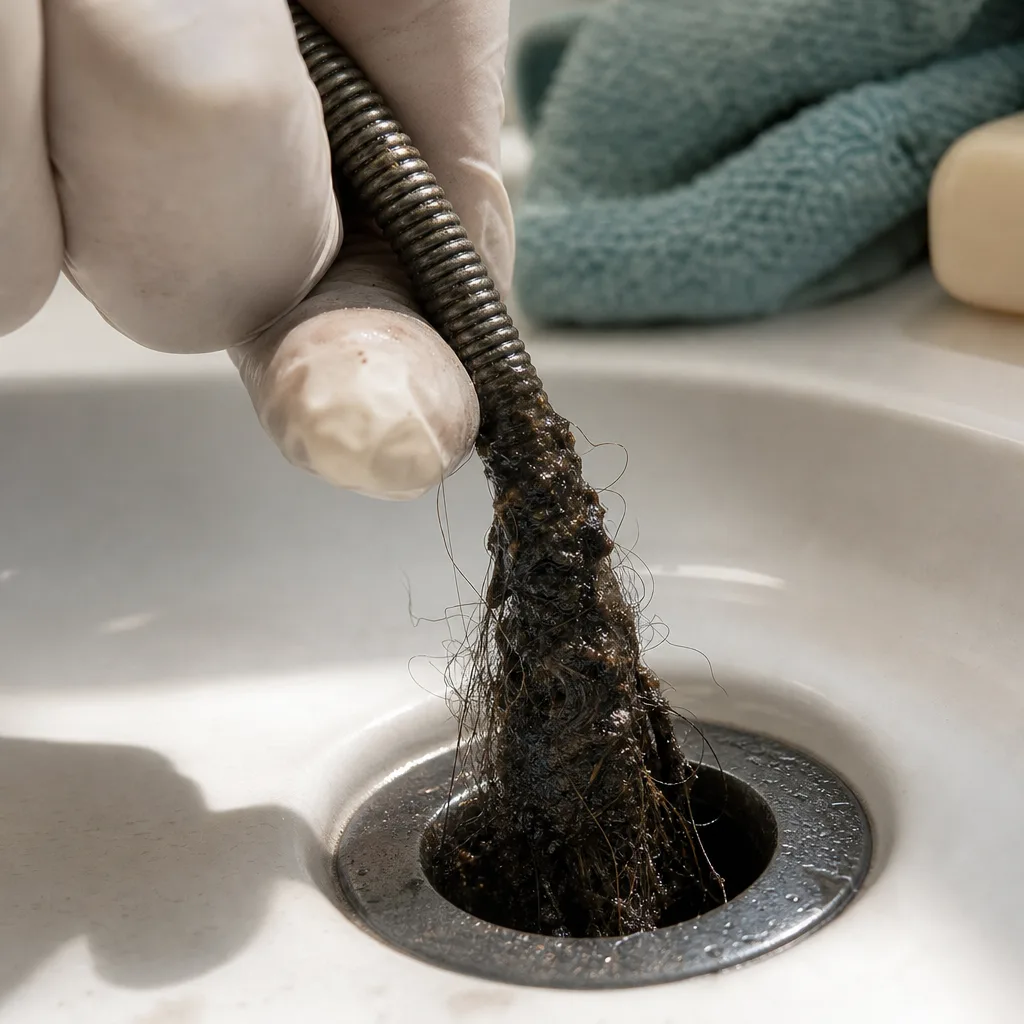
- The same clog keeps coming back. You plunge it, it works for a week or two, then it’s slow again. That usually means you poked a hole through the clog without clearing it. Grease, hair, and buildup are still sitting in the pipe.
- A sewer smell won’t go away. A rotten-egg or sewage smell from your drains, even after you’ve cleaned them, can mean waste is sitting in the line instead of moving out.
- Store-bought drain cleaner didn’t work. If a chemical product didn’t fix it, don’t keep pouring more. It can sit in the pipe and make the job harder and less safe for whoever works on it next.
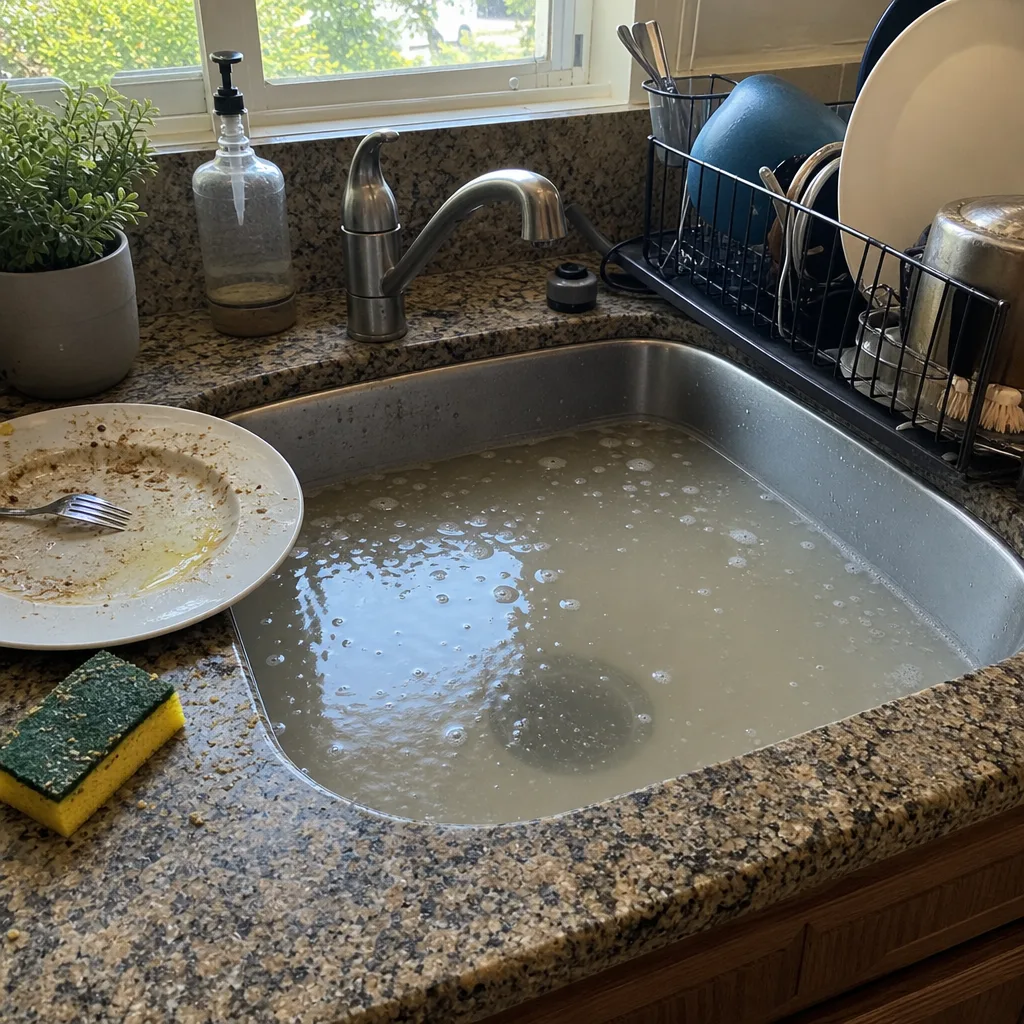
Here’s a common picture. Your kitchen sink drains slowly on a Sunday after a big family meal. By Monday the dishwasher leaves water in the bottom, and the sink gurgles when it runs. That’s not two problems. It’s one clog, usually cooking grease that cooled and hardened farther down the pipe, and it’s catching everything that comes after it.
Your home itself matters too. Most houses in Carrollton and across North Texas sit on slab foundations, so the drain lines run under the concrete where you can’t see or reach them. Our clay soil swells when it’s wet and shrinks when it’s dry, and that movement can shift pipes over time. A small sag or offset joint gives grease and debris a place to settle. That’s one reason a clog that keeps returning deserves a closer look, not just another round of plunging.
Now the honest part. If just one sink or tub is slow and everything else in your home drains fine, try the easy fixes first. Pull the hair out of the tub stopper, clean out the sink’s P-trap (the curved pipe under the sink), or use a plunger the right way. Plenty of single-fixture clogs end right there, and you don’t need to pay anyone for that.
But if you’re seeing two or more of the signs above, or water is backing up anywhere in your home, it’s time for professional drain cleaning. Waiting rarely makes a deep clog smaller, and a backup can damage floors and cabinets fast.
When a Plunger or Basic Drain Tool Is Enough
A plunger or a simple hand tool is enough when three things are true. Only one fixture is affected. The clog is close to the drain opening. And you have a good idea what caused it. In those cases the blockage usually sits in the first foot or two of pipe, right where these tools can reach.
Here are the clogs you can usually handle yourself:
- A bathroom sink that slowed down over a few weeks. Hair, soap, and toothpaste tend to collect on or just below the pop-up stopper. An inexpensive plastic drain strip with little barbs on it can pull most of that out in a minute.
- A shower or tub that drains a little slower every week. That’s almost always hair wrapped around the strainer or the stopper, not something deep in the line.
- A toilet that clogged once because of too much paper. One good round with the right plunger usually clears it.
- A kitchen sink that backed up right after you ran a big batch of peels or rice through it. Starchy food can pack into the curved pipe under the sink, and it’s often within easy reach.
Using the right tool makes a real difference. A flat cup plunger works on sinks and tubs because it seals against a flat surface. For a toilet, you want a flange plunger, the kind with an extra rubber sleeve sticking out the bottom, so it can seal inside the bowl. If plunging doesn’t do it, a small hand auger (a crank-style snake) can reach a few feet past the trap. That’s about the limit of what store-bought tools can do.
Give it a fair try, then stop. If a couple of honest rounds with a plunger or hand tool don’t bring back normal flow, the clog is probably farther down than you can reach. A few other signs tell you you’ve hit that limit:
- The snake stops at a hard spot and won’t go any farther, no matter how you work it.
- The drain clears, then turns slow again within a few days.
- The fixture you’re working on drains, but you start noticing the warning signs from the section above somewhere else in your home.
There are also a couple of times when it’s better not to start. If something solid went down the toilet, like a toy, a phone, or a bottle cap, plunging can push it deeper into the pipe, where it gets stuck and becomes much harder to reach. And if your garbage disposal hums but won’t spin, the problem is likely the disposal itself, not the drain. That calls for garbage disposal repair, not a plunger.
If a basic tool fixes the problem and the drain stays clear for months, you’re done. That’s a good outcome, and you saved yourself a service call. Keep the plunger handy and move on with your day.
What Happens During a Standard Drain Cleaning Visit
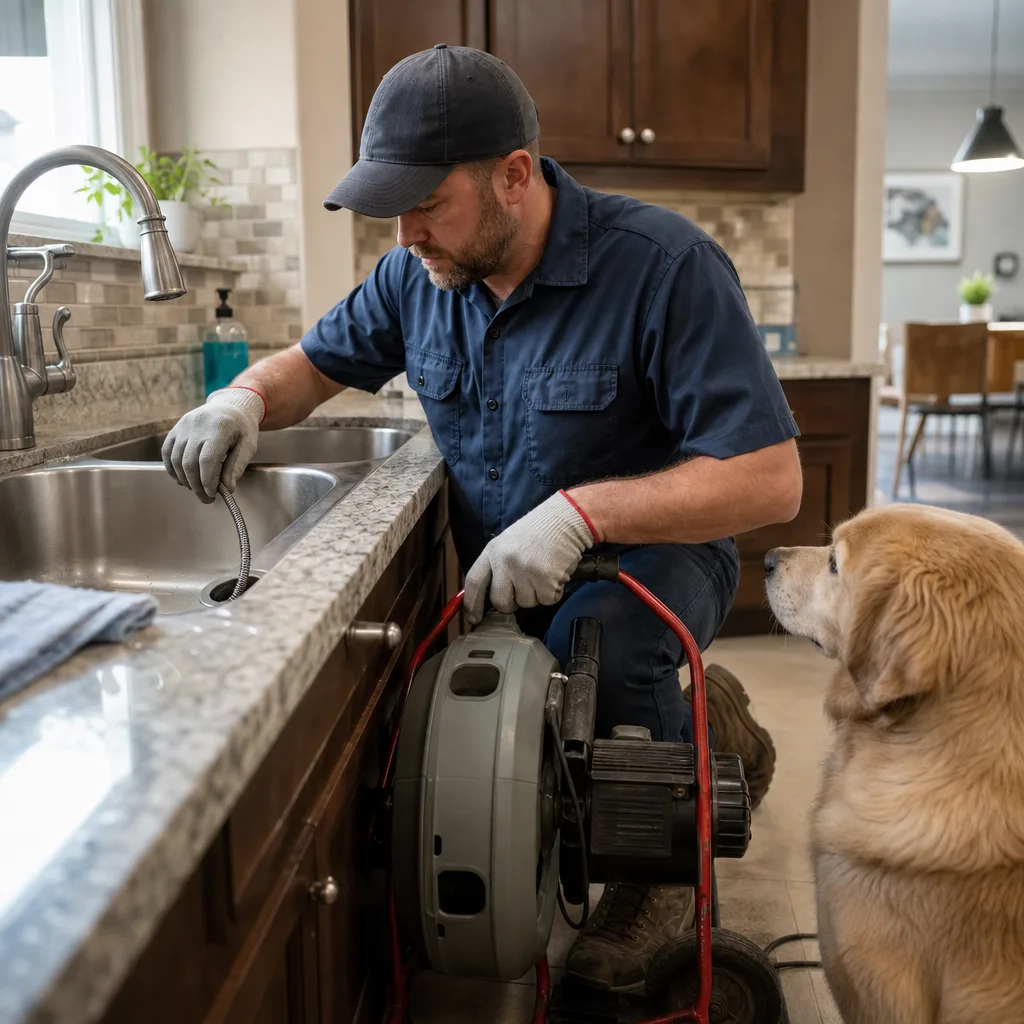
A standard drain cleaning visit has one job: clear the clogged drain and confirm proper flow. That’s it. Most calls are resolved on the first visit, so for a typical clog you can expect to be running water normally again before the technician leaves.
Here’s how a professional drain cleaning usually goes, from the moment the technician walks in.
- You walk them through what you’ve noticed. Which drains are slow, when it started, and whether water has come up anywhere it shouldn’t. Those details help pinpoint where the clog is sitting, so it’s worth jotting them down before the visit.
- They find the best way into the line. For a single sink, that may be right under the cabinet. For a deeper clog, it’s often the cleanout. That’s a capped pipe that gives straight access to your main drain line. On many slab homes, it sits outside near the foundation.
- You get the price before any work starts. We use upfront flat-rate pricing that you approve first. No meter running while someone works.
- The clog gets cleared. Professional drain cleaning typically uses a motorized cable machine. It reaches much farther than a store-bought snake and cuts through grease, hair, and buildup instead of just poking a hole in it.
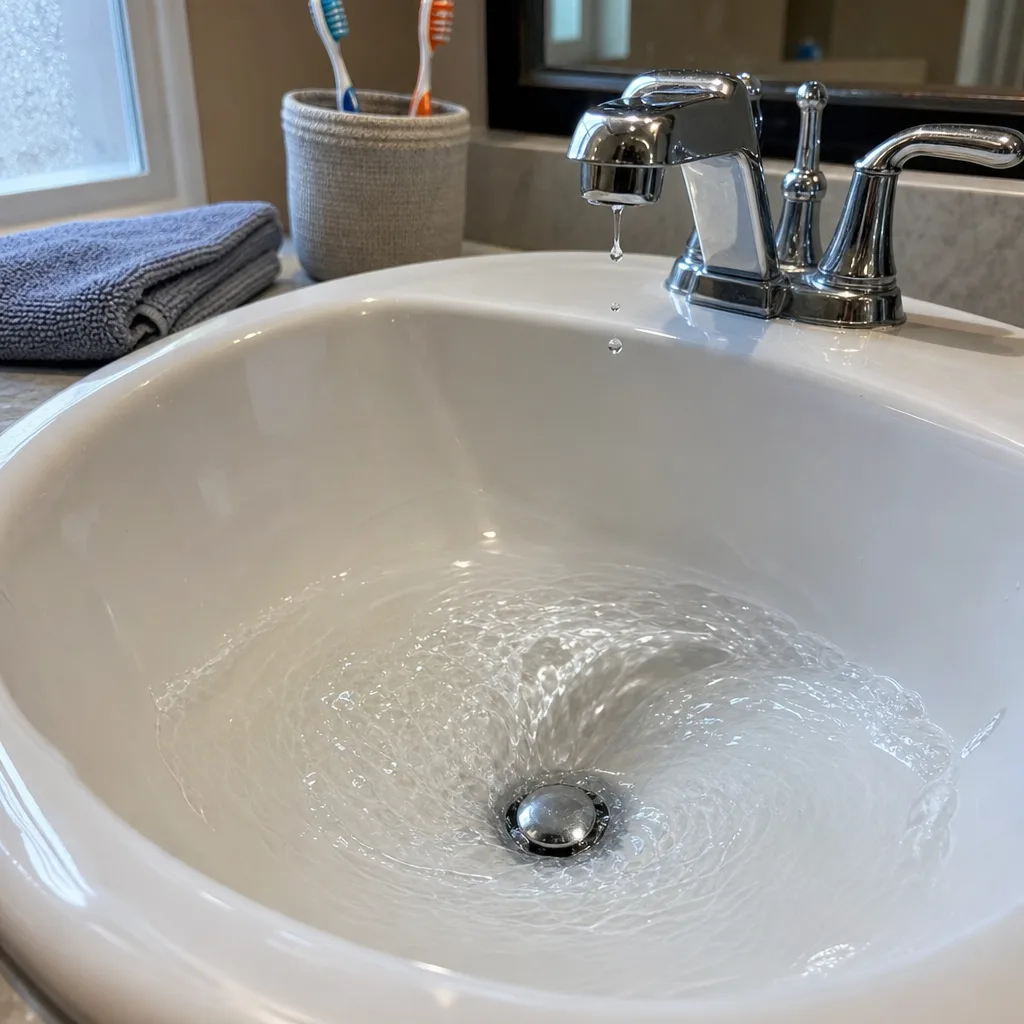
- Flow gets tested. Water runs through the cleared drain, and often through nearby fixtures too, to make sure everything drains the way it should.
- The work area gets cleaned up. You shouldn’t be left wiping up after anyone.
Our standard drain cleaning includes drain clearing, flow testing, and cleanup. Some jobs need more than that. Hydro-jetting, pipe repair, and root removal aren’t part of a standard drain cleaning. They’re quoted separately, and you’ll hear about them before anything is done, not on the bill afterward.
So when does a visit go past the basics? A camera is worth it when the clog keeps coming back, when the cable hits a hard stop, or when roots or a shifted pipe are suspected. That last one matters on slab homes in Carrollton because of the soil movement covered above. A sewer camera inspection lets you see inside the line instead of guessing. If the camera shows heavy grease or scale coating the pipe walls, hydro jetting may be the better fix. It’s a high-pressure water cleaning that scrubs the whole inside of the pipe.
What drives the cost up or down is simple to follow. It comes down to how severe the clog is and where it is, how easy it is to reach the cleanout, and whether a camera or hydro-jetting is needed. There’s a $26-$99 service-call fee, and it’s credited toward the repair if you go ahead with Xtreme Air Services.
A few things make the visit faster for you:
- Stop running water into the problem drain, including the dishwasher and washing machine.
- Clear out the cabinet under the sink if that’s the slow fixture.
- If you know where your outdoor cleanout is, make sure the path to it is clear.
- Tell the technician if you’ve used chemical drain cleaner, so they can work safely around it.
You’ll know what’s being done, what it costs, and that the drain works before the visit wraps up.
Ready when you are – get in touch today.
Call Today, Get Service Today. Xtreme Air Services — Carrollton is ready to help.
What Drives the Cost of Drain Cleaning
Here are the real numbers. A drain cleaning with Xtreme Air Services typically runs $150-$500. Our most common job, clearing a clogged drain and confirming it flows right, usually lands at $150-$300. Where your job falls in that range depends on the factors from the visit section above. Here’s how each one plays out in a real home.
- Where the clog sits. A hair clog in a bathroom sink line is short and easy to reach. A main line clog that pushes water up into your tub sits much farther down, often under the slab, so it takes more cable and more time.
- How bad it is. A soft clog of soap and hair breaks up fast. Grease that has built up and hardened over months takes more work to cut through. The same goes for wipes that have balled up in the line.
- How easy the cleanout is to reach. If your cleanout is clear and the cap comes right off, the job moves quickly. If it’s buried under mulch, hidden behind shrubs, or the cap is stuck tight, it takes longer. Some older homes don’t have a usable outdoor cleanout at all. Then the line may have to be reached through a fixture, such as by pulling a toilet, and that adds time.
- Whether the job needs more than clearing. A camera inspection or hydro-jetting adds to the cost. Pipe repair and root removal do too. Those are quoted separately, so they never get buried in the base price.
One thing that doesn’t change the price is the clock. There’s no extra charge for nights or weekends. If your kitchen backs up on a Saturday night, you pay the same as you would on a Tuesday morning. That matters, because clogs don’t keep business hours.
The $26-$99 service-call fee is credited toward the repair if you go ahead with the work. In practice, the fee only stands on its own if you decide not to move forward.
Financing usually isn’t offered for a smaller job like a standard drain cleaning. It is available on larger repairs and replacements. So if a camera shows a broken or sagging line that needs sewer line repair, you’ll have options to spread out the cost.
Whoever you hire, a few questions will protect your wallet:
- Is this a flat price or an hourly rate? With hourly billing, a stubborn clog can quietly double the bill.
- Does the trip fee count toward the work, or is it on top of it?
- What’s included, and what would cost extra?
- If you recommend more work, can I see the camera footage or the problem for myself?
A company that answers all four plainly, before anyone touches your pipes, is one you can trust with the job. Our upfront flat-rate pricing exists so you never have to wonder what the final bill will say. You know the number, you say yes, and then the work starts.
Call 469-269-6099
Watch Our Video
See How We Handle Drain cleaning in Carrollton
Xtreme Air Services — Carrollton
Why Some Clogs Point to a Bigger Problem
Sometimes the clog isn’t really the problem. It’s a sign of one. A drain cleaning clears what’s blocking the pipe today. But if the pipe itself is cracked, sagging, or rough inside, it keeps catching grease, paper, and hair. The same clog then builds up in the same spot. That’s why the right fix depends on why the drain clogged, not just where it clogged.
These are the pipe problems that most often hide behind a clog that keeps coming back:
- Tree roots. Roots look for water, and a tiny crack or loose joint in a sewer line gives them a way in. Once inside, they grow into a net that snags everything flowing past. If the cable comes back with stringy root fibers on it, that’s your answer.
- Scale in old cast iron pipes. Many Carrollton homes built from the 1950s through the 1970s have cast iron drain lines. Over decades, the inside of that pipe rusts and builds up rough scale that narrows the opening. A clog can clear fine and still come back, because the rough walls keep grabbing debris.
- A sag or belly in the line. When part of a pipe sinks, often from the soil movement covered above, water and waste sit in the low spot instead of draining away. Solids settle there and pile up.
- A cracked or separated pipe. A break can let soil wash into the line and leave a ledge that catches debris. Under a slab, a broken drain line can also leak into the ground below your home.
- A blocked vent. Your plumbing has vent pipes that run up through the roof so air can get in behind draining water. If a vent gets blocked, drains can run slow and gurgle even when the line is clear.
A few clues point past a simple clog. The drain clogs again every few months, even after a professional cleaning. The clog keeps showing up at the same distance down the line. You notice a soggy patch or a strip of extra green grass over the path of your sewer line. Or you smell sewage outside near the house. In a slab home, a damp spot or crack in the flooring near a bathroom deserves a look too. If it’s a leak under the slab, that calls for slab leak detection, not more drain cleaning.
Here’s the honest side of it. Plenty of repeat clogs have nothing to do with a damaged pipe. Cooking grease poured down the sink, wipes labeled flushable, and a kitchen that runs heavy on starchy food can clog a perfectly healthy line over and over. Changing a few habits fixes those for good. A sewer camera inspection is the fastest way to tell which kind of problem you have, so you aren’t guessing or paying for cleanings that won’t last.
If the camera does show damage, you’ll see it on the screen for yourself. Then you can decide on next steps, such as sewer line repair or trenchless sewer repair. Either way, the decision stays yours, and you’ll know exactly why the work is needed before any of it starts.
Frequently Asked Questions
Common questions about Drain cleaning
Is it safe to use chemical drain cleaner before you call a plumber?
It’s best to stop after one try, because repeated doses can sit in the pipe and make the clog harder and less safe to clear later. If the first bottle didn’t work, don’t pour in more. Let the technician know you used it so they can work around it safely.
Can I run water or use the sink while I wait for my drain cleaning appointment?
It’s best to stop running water into the problem drain, including the dishwasher and washing machine, until the appointment. Extra water can push the clog further or cause a backup somewhere else in your home. Clearing the cabinet under the sink also helps the visit move faster.
Will drain cleaning fix a clog that keeps coming back every few months?
Sometimes, but a clog that returns again and again often points to a bigger problem than buildup. Tree roots, old cast iron scale, or a sagging pipe section can keep catching debris even after a cleaning. A camera inspection is the fastest way to see which one you’re dealing with before paying for another cleaning that won’t last.
Ready to Get Started?
Call (469) 269-6099 Today, Get Service Today.