

Boiler Commissioning in Sunnyvale: Verified Startups for Commercial Systems
Zone-by-zone combustion testing and safety device verification before a Sunnyvale boiler is handed over – proof that it runs right, not an assumption that it does.
What’s Covered on This Page
- What Boiler Commissioning Verifies
- Commercial Boilers Near Sunnyvale’s US-80 Corridor Need This Most
- The Commissioning Process, Step by Step
- When Your Boiler Doesn’t Need Full Commissioning
- Texas Boiler Law, Certificate of Operation, and Your Commissioning Report
- How long does boiler commissioning take in Sunnyvale?
- What happens when the technician arrives for commissioning?
- Why does boiler commissioning matter more for buildings near Sunnyvale’s US-80 corridor?
- What is a common problem commissioning catches in Sunnyvale buildings?
- Do I need to be present for the commissioning visit?
- What if the boiler fails a safety test during commissioning?
What Boiler Commissioning Verifies
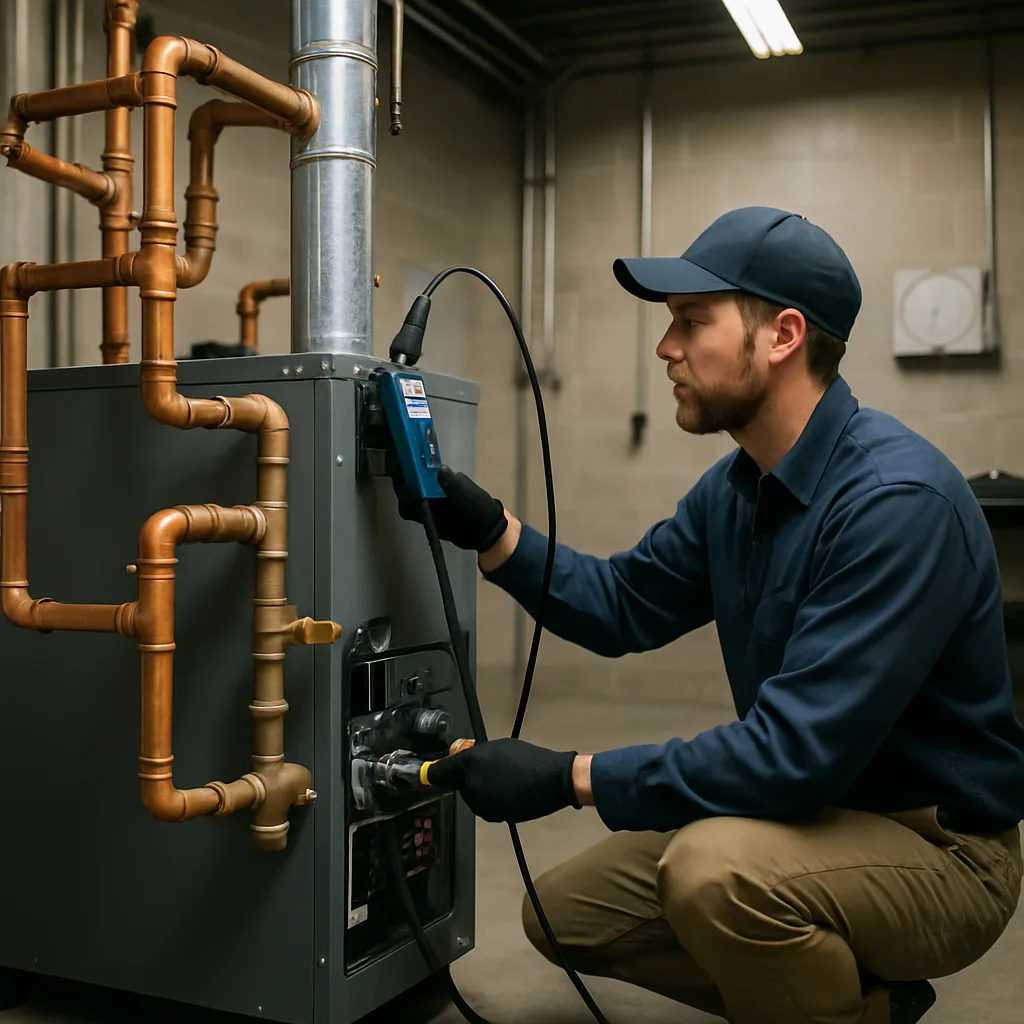
Installation and commissioning are often lumped together, but they are not the same task. Installation is the physical work: setting the boiler, running gas and water lines, wiring controls, and connecting venting. Commissioning comes next. A technician starts the system and verifies that it operates as the manufacturer and local code intend. Many Sunnyvale buildings pair older gas infrastructure with newer high-efficiency condensing boilers. This verification can catch mismatches that a mechanical installation checklist may miss.
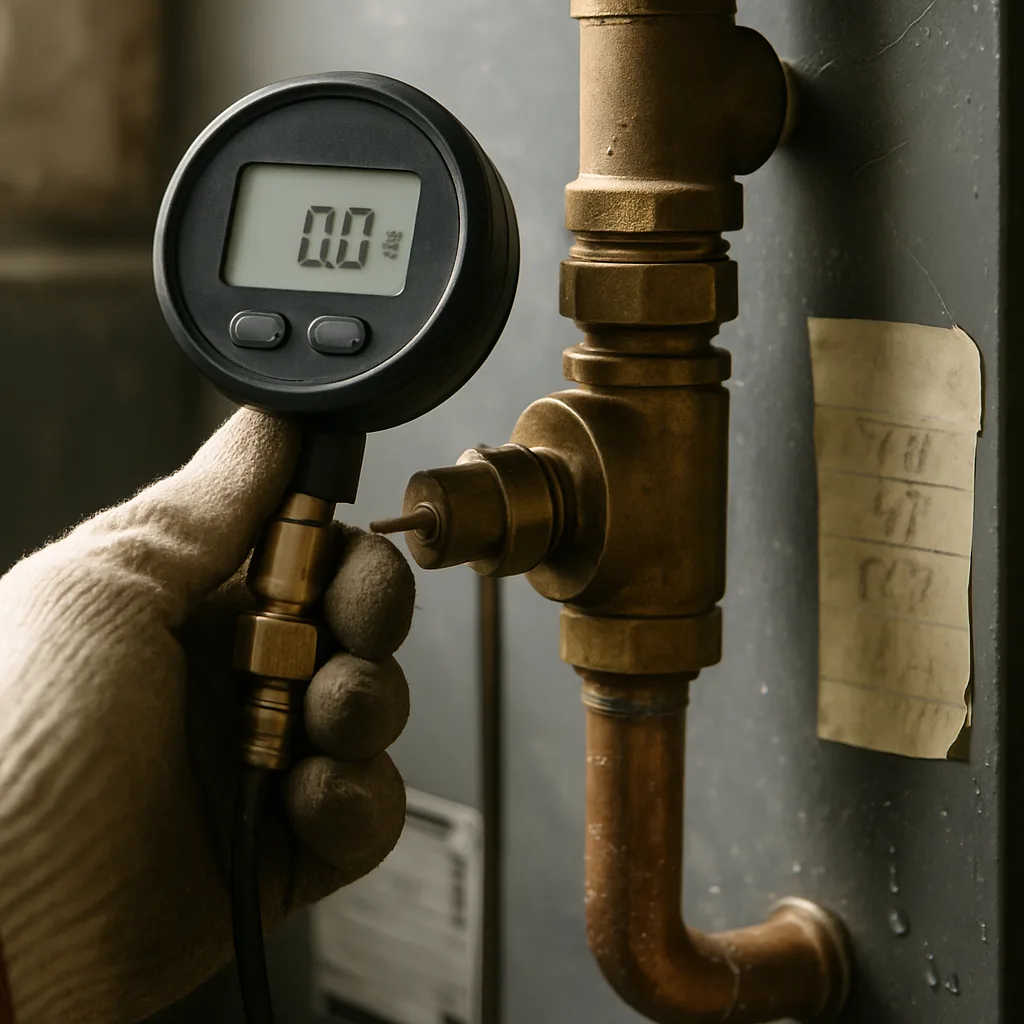
Combustion tuning is one of the first commissioning checks. A technician uses a combustion analyzer to measure flue gas oxygen, carbon monoxide, and stack temperature. The technician then adjusts the gas valve and air shutter until the burn meets the manufacturer’s target range. This affects efficiency and safety. An improperly tuned burner can waste fuel or produce dangerous carbon monoxide levels.
- Combustion analysis and burner adjustment to meet manufacturer combustion specifications
- Safety device testing, including high-limit switches, low-water cutoffs, relief valves, and flame supervision controls
- Ignition sequence verification to confirm proper light-off and flame stability under load
- Control and zone verification to check that thermostats, aquastats, and zone valves communicate correctly with the boiler
- Gas testing under static and operating conditions to confirm the supply matches equipment requirements
- Venting and draft verification so combustion byproducts exit safely
Each safety device is manually tripped or simulated to confirm the boiler shuts down correctly. A technician does not assume it works because it is wired in. Control and zone verification matters just as much in multi-zone Sunnyvale buildings, from single-tenant offices to multi-tenant retail. One miswired zone valve can leave an area cold while the rest of the system runs normally.
The process ends with a written commissioning report. This document lists combustion readings, safety test results, and completed control checks. It gives you proof that the work was done correctly, rather than a verbal assurance. Property owners should request the report and keep it with their equipment records. It can help with warranty claims, insurance documentation, and future service calls.
Commercial Boilers Near Sunnyvale’s US-80 Corridor Need This Most
Drive along Sunnyvale’s US-80 corridor and you’ll pass warehouses, small manufacturing shops, and commercial kitchens. Many use boiler systems that heat more than office space. Some feed process equipment, while others connect to multiple zones with separate controls. These systems are far more involved than a single-boiler installation. That raises the stakes for proper commissioning.
We see this every week along that stretch. A boiler gets installed or upgraded, someone starts it, and it seems fine. But fine isn’t the same as verified. On a commercial system, combustion tuning must happen at each stage. The controls must also communicate correctly under real loads, not just while idling at startup.
- Zone-by-zone combustion checks instead of one reading
- Control sequencing tests so each zone fires and modulates as intended
- Documentation your insurance carrier or landlord may require before sign-off
- Safety checks suited to the equipment’s size and complexity
For a business, downtime isn’t an inconvenience. It’s lost revenue. A commissioning report gives you a paper trail. If something goes wrong six months later, you have a record of what was tested and tuned. You can also see what was signed off when the system started running.
The Commissioning Process, Step by Step
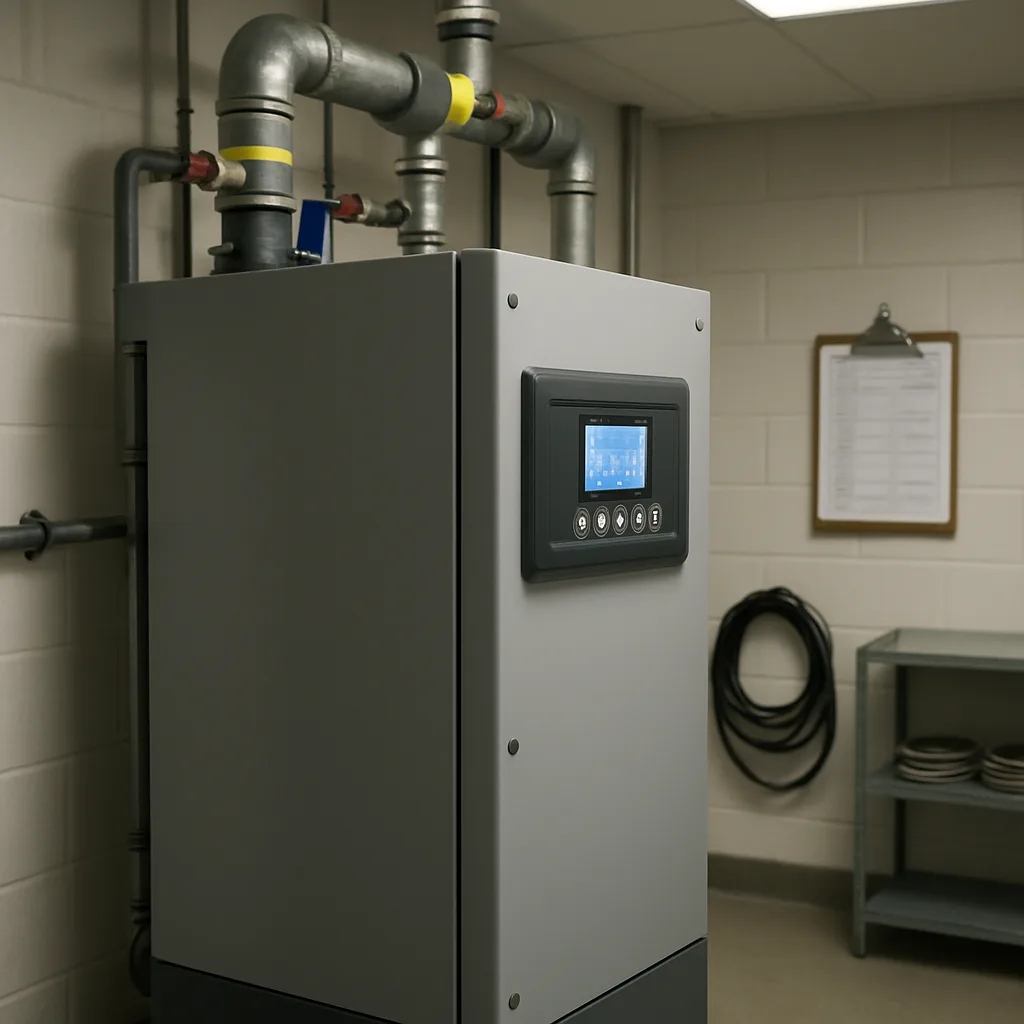
Boiler commissioning in Sunnyvale follows the same sequence whatever the system size. Technicians work through each stage because a skipped step can hide a problem. It may surface later as a nuisance shutdown, efficiency loss, or safety hazard.
- System review: Check installation specifications, gas line sizing, venting, water chemistry, and manufacturer requirements before applying power.
- Startup sequence: Run the boiler through its normal ignition cycle. Observe flame establishment, buildup, and the initial temperature rise.
- Combustion tuning: Adjust the air-to-fuel ratio using combustion analyzer readings to meet target efficiency and emissions levels.
- Safety cutoff testing: Verify high-limit switches, low-water cutoffs, relief valves, and flame failure response. These checks commonly reference the ASME CSD-1 standard for controls and safety devices on automatically fired boilers.
- Zone and control verification: Confirm each zone valve, circulator, thermostat, and building automation point responds correctly and in sequence.
- Documentation: Record combustion readings, setpoints, test results, and adjustments. Then provide a written report for warranty and code compliance purposes.
Most Sunnyvale commissioning jobs are completed in one visit. Time on site depends on system size, zone count, and the required documentation. A single-zone boiler in a small building might take a couple of hours from startup through the signed report. A commercial system with 12 zones, building automation, and detailed compliance paperwork can take much longer. Realistic scheduling helps technicians avoid rushing tests on complex systems.
Pricing follows the same scope-based approach as timing. System size, zone count, and documentation requirements determine the final number. Total commissioning costs typically run between $1,000 and $5,000. Most Sunnyvale jobs fall in the $1,000 to $2,800 range. An initial trip fee of $26 to $99 applies. It is credited toward the job if you move forward. For a full breakdown of pricing factors, see the pricing and cost guide.
Not sure what your Boiler commissioning project needs? Ask us.
Call Today, Get Service Today. Xtreme Air Services is ready to help.
When Your Boiler Doesn’t Need Full Commissioning
Not every boiler needs full commissioning. Replacing a bad zone valve or failed circulator pump on an otherwise working boiler is a repair call, not a startup. Full commissioning is for a new or replaced boiler. It also applies after major work, such as adding a zone or replacing a heat exchanger. Those situations call for the full checklist again.
Here is one we hear often. The owner of an older Sunnyvale building installs a new thermostat and asks us to “commission” the boiler because the heat feels uneven. The problem may be thermostat wiring or a stuck zone valve, not combustion or safety. We’ll troubleshoot it as a repair first.
How do you tell which service you need? Ask whether the equipment itself is new or has changed. If it hasn’t, you probably don’t need full commissioning.
A boiler that has run for years without major work may only need annual maintenance. If your system shows an error code but worked fine last week, you likely need a diagnostic visit. We’d rather inspect the system first than sell you commissioning you don’t need. That’s doing right by our customers.
Commissioning matters most after installation or a major change. At that point, combustion, controls, and safety devices need to be checked together before the system runs unattended all winter.
Texas Boiler Law, Certificate of Operation, and Your Commissioning Report
Texas boiler safety rules are not optional paperwork. Under Texas Health and Safety Code Chapter 755, most boilers must be inspected before entering service. They must also hold a valid Certificate of Operation. The Texas Department of Licensing and Regulation administers this requirement through its Boiler Program. It tracks registered boilers and authorizes inspectors. Those inspectors sign off on new installations, alterations, and recurring inspections. Skipping this step creates a compliance risk. It can also void insurance coverage and create liability if something goes wrong.

Commissioning and the code-required inspection are related, but they are different processes. Commissioning is the installing contractor’s detailed startup and verification work. It covers combustion settings, safety controls, water chemistry, gas or oil pressures, and system performance. The TDLR-authorized inspection is a regulatory checkpoint for code compliance. It also supports the issuance or renewal of the Certificate of Operation. A boiler can pass its state inspection yet be poorly commissioned. It might run inefficiently or use settings that shorten equipment life. Thorough commissioning can help the state inspection move faster because the system is already tuned and documented.
- Most low- and high-pressure boilers in Texas require registration with TDLR and a Certificate of Operation before use
- Certificates must be renewed on a schedule tied to boiler type and inspection results
- Commissioning records, including combustion analysis and control testing, can support and speed up the state inspection process
- New installations, major repairs, and relocated boilers typically trigger a new inspection requirement
This is where one team helps. Our HVAC work is performed under Texas license TACLA29023C. Master Plumber Larry Breedlove handles plumbing tie-ins, boiler feed water lines, backflow prevention, and required drainage. Sunnyvale property owners don’t have to coordinate separate HVAC and plumbing contractors or reconcile their paperwork. You get one commissioning report covering both trades. That makes the path to a Certificate of Operation more direct.
Frequently Asked Questions
Common questions about Boiler commissioning
How long does boiler commissioning take in Sunnyvale?
Most jobs finish in a single visit. A single-zone boiler usually takes a couple of hours from startup to the signed report. A commercial system with many zones and building automation takes longer, since each zone needs its own combustion check and control test. We schedule based on system size and zone count, not a fixed time slot. That way, no test gets rushed just to hit a clock.
What happens when the technician arrives for commissioning?
The technician starts with a system review before touching any power. This means checking gas line sizing, venting, and water chemistry against the manufacturer’s specs. After that, they run the boiler through its normal startup sequence and watch how the flame builds. Combustion tuning, safety cutoff testing, and zone verification follow in order. You’ll get a written report at the end showing every reading and test result.
Why does boiler commissioning matter more for buildings near Sunnyvale’s US-80 corridor?
Buildings along that corridor often run boilers that feed more than office space, like process equipment or multiple zones with separate controls. These commercial systems need zone-by-zone combustion checks instead of one single reading. Controls also need to be tested under real operating load, not just while idling at startup. Skipping this step on a busy commercial system can lead to downtime later, which costs more than a delayed opening.
What is a common problem commissioning catches in Sunnyvale buildings?
A miswired zone valve is one of the most common issues we find. It can leave one part of a building cold while the rest heats normally, and nobody finds out until commissioning catches it. This happens often in Sunnyvale’s multi-zone buildings and small commercial spaces, where older gas infrastructure sometimes gets paired with a newer high-efficiency condensing boiler. That mismatch can hide until a technician tests each zone.
Do I need to be present for the commissioning visit?
You don’t have to be present, but it helps to have someone available who can answer questions about the system’s history. Access to the mechanical room and any prior installation paperwork speeds things along. If you’re not able to stay, we can walk you through the written report afterward. That report covers combustion readings, safety test results, and every control check completed.
What if the boiler fails a safety test during commissioning?
If a safety device like a low-water cutoff or relief valve doesn’t respond correctly, we won’t sign off until it’s fixed. Each device gets manually tripped or simulated, so a failure gets caught before the system goes into regular use. We’ll explain what failed and what needs adjusting or replacing. You’ll still get a full written report once the issue is corrected and the system passes.
Ready to Get Started?
Call 972-288-2263 Today, Get Service Today.