

Commercial Water Heater Service Keeping Sunnyvale Businesses Open and Running
Sized by recovery rate and peak-hour demand rather than average use, so a Sunnyvale business does not run cold in the middle of its busiest hour.
What’s Covered on This Page
- Recognizing When Your Commercial Water Heater Is Failing
- Sizing and Selecting the Right Commercial Water Heater
- Simple Fixes That Don’t Require a Full Replacement
- What Happens During a Commercial Water Heater Installation
- Guarding Commercial Water Heaters Against North Texas Freezes
- How do I know if my commercial water heater needs repair or replacement?
- What should I expect when a technician arrives for a commercial water heater installation?
- How fast can you get to my Sunnyvale business if the water heater stops working?
- Does cold weather in Sunnyvale cause problems for commercial water heaters?
- What size commercial water heater does my business need?
- Can a commercial water heater be repaired instead of replaced?
Recognizing When Your Commercial Water Heater Is Failing
The first sign is often water that won’t get hot enough anymore. A dish pit that once reached the right temperature in seconds now takes longer or never gets there. That’s usually sediment buildup or a failing heating element, not something you want to guess about.
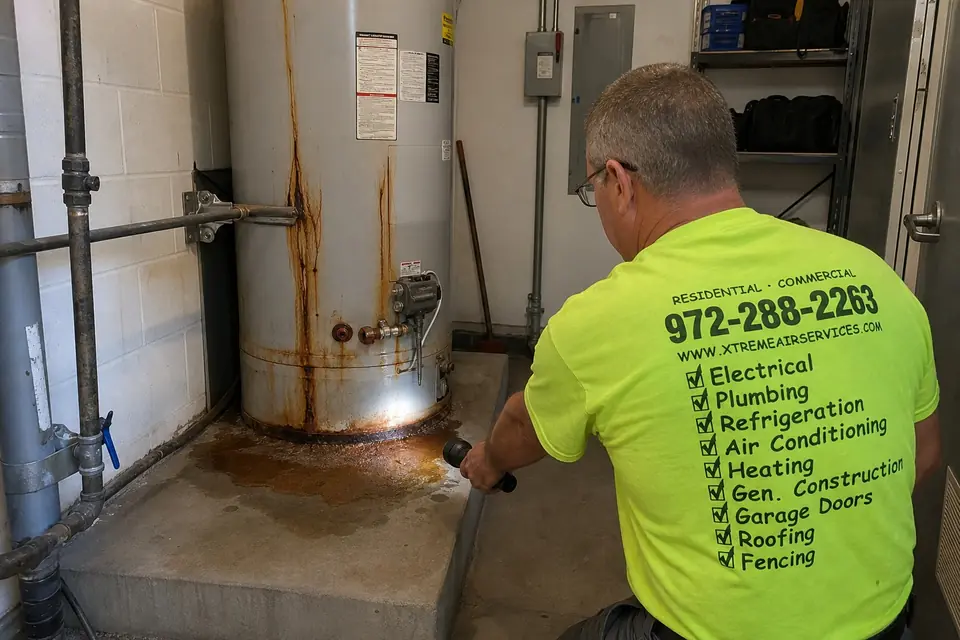
What does a real failure look like before it happens? Rust-colored water is a big sign because it means the tank’s lining is breaking down from the inside. Popping or rumbling when the burner starts can point to mineral buildup baking against the tank wall. That noise gets worse, not better, and often means the unit is on borrowed time. Buildings along the U.S.
- Water that’s lukewarm or inconsistent across multiple fixtures
- Rust or discolored water coming from hot taps
- Popping, rumbling, or cracking sounds from the tank
- A pilot light that won’t stay lit or a burner that short-cycles
- Water pooling near the base of the unit
- A gas or electric bill that’s crept up with no other explanation
A small restaurant kitchen notices the wash sink water going tepid during the lunch rush. Staff assume it’s a fluke until it happens three shifts in a row. By the time someone calls, the tank is already leaking at the base. We see this pattern often: a small hiccup gets ignored, followed by a Friday-night no-hot-water call.
Not every symptom means replacement. Some point to a repair, while others signal something more serious. Waiting rarely makes the decision easier or cheaper.
Sizing and Selecting the Right Commercial Water Heater
Picking the right commercial water heater isn’t about grabbing the biggest tank on the truck. It comes down to how your business uses hot water. A small office break room needs very little. A restaurant kitchen or multi-unit building runs through hot water quickly, all day and back to back.
We look at a few things before recommending a unit.
- Recovery rate – how fast the unit can reheat water after a big draw
- First-hour rating – how much hot water it can deliver during the first hour of heavy use
- Peak demand – your busiest hour, not your average hour
- Fuel type – gas or electric, based on what’s already run to the space
- Space and venting – where the unit sits and how it exhausts
In many cases, the existing unit was undersized from day one. That’s why it runs out of hot water during the lunch rush or morning shift change.
If your building has tenants sharing one system, demand stacks up quickly. What worked for one unit won’t work for three. Tankless setups can suit tight mechanical rooms with steady, moderate demand. Tank-style units still work well when you need a large supply of hot water ready when someone turns the tap. Either way, the unit should match your usage rather than the old unit’s size. That keeps your business running instead of waiting on hot water. 80 six days a week.
Simple Fixes That Don’t Require a Full Replacement
Not every commercial water heater problem ends with a new tank. Many calls we get involve units that need attention, not replacement.
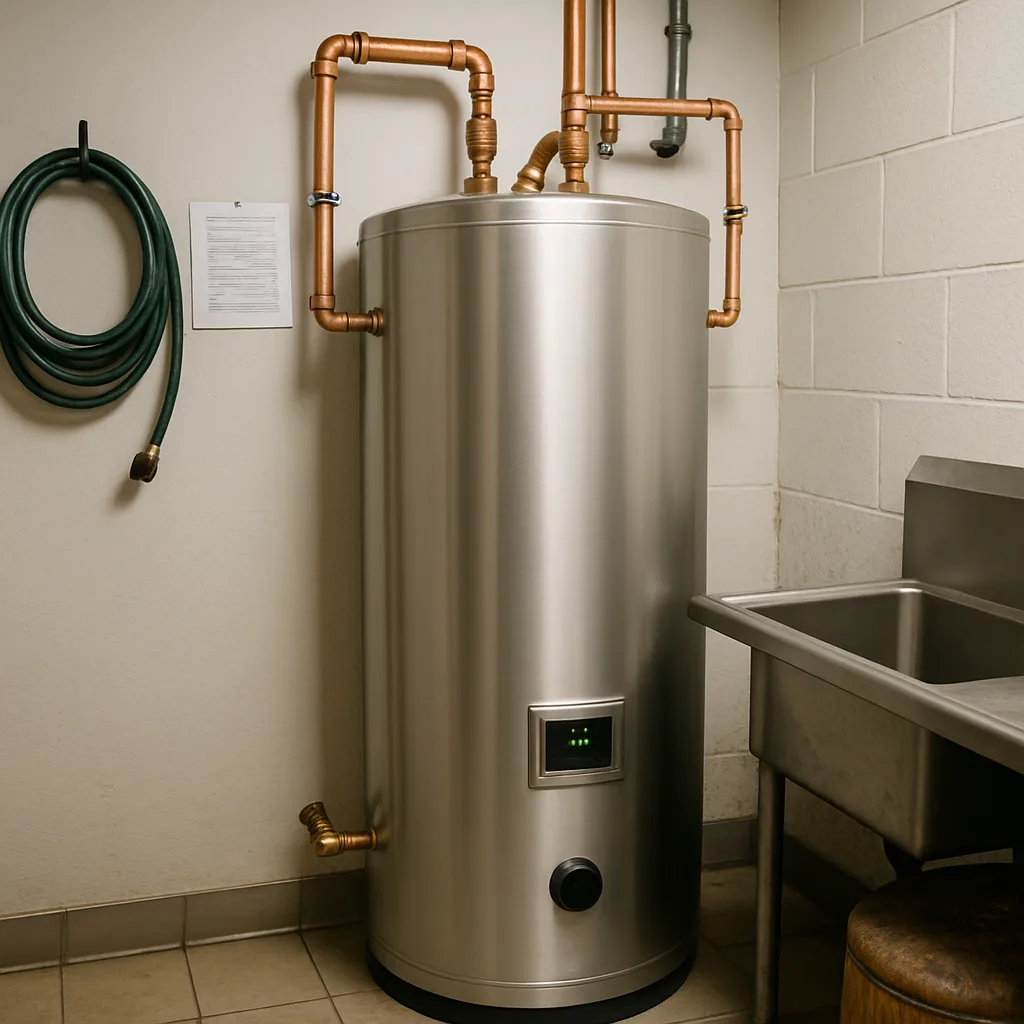
How do you know which problem you have? Cold water at the tap, a pilot that won’t stay lit, odd-smelling water, or a slow drip at a fitting can often be repaired. None automatically means your unit is finished.
- Sediment buildup in the tank that causes popping noises and slow recovery time
- A failed thermocouple or gas control valve on gas units, often mistaken for a dead unit
- A corroded anode rod that lets rust and odor into your water supply
- A dripping relief valve that usually needs a simple part swap
- A tripped high-limit switch or failed heating element on electric units
If the tank isn’t leaking or rusted through, we can often get it running properly again. Age matters too. A commercial unit working hard every day for 10 to 15 years calls for a different conversation. A five-year-old unit with a bad part may still have years of service left.
If your tank is sound, the fix is usually a part, a flush, or a control swap. We’ll tell you plainly. We won’t talk you into a new installation when your equipment still has good years left.
Ready when you are – get in touch today.
Call Today, Get Service Today. Xtreme Air Services is ready to help.
What Happens During a Commercial Water Heater Installation
What happens once you approve the work? It’s usually less disruptive than you’d think. Most commercial jobs follow the same process, from a small office break room to a full restaurant kitchen.
- We shut off the water and gas or power to the old unit, then drain it fully before touching anything.
- We disconnect the old water heater and haul it out. Disposal is included, so you don’t have to arrange it.
- We check the existing connections, gas line, vent, and water lines to determine what can be reused.
- We set and level the new unit, then connect the water lines, gas or electric service, and venting.
- We start the unit, check for leaks, and test the temperature and relief valve.
- We walk you through the controls and answer your questions before leaving.
A standard swap with the same size, location, and connection type usually moves quickly. A bigger tank, tight mechanical room, or old piping can add time. That’s normal, not a red flag.
Our technicians are licensed and insured. Each one is background-checked before stepping onto a job site. That matters when you’re letting someone into a commercial space around your staff and customers.
We test everything before calling the job done, so there’s no guessing or return visit next week just to check it.
Guarding Commercial Water Heaters Against North Texas Freezes
Sunnyvale doesn’t get long winters, but cold fronts can be sharp. Temperatures can drop forty degrees overnight when one rolls through North Texas. Mechanical rooms on an exterior wall or in an unheated back room feel that cold quickly. That’s when a commercial water heater and its supply pipes face the greatest risk.
A burst supply line doesn’t wait for business hours. We get calls at 6 a.m. from restaurant owners standing in an inch of water after a pipe breaks overnight.
Prevention costs less than cleanup, and a few steps can make a real difference.
- Insulate exposed supply and return lines, especially any run near an exterior wall or loading dock door
- Keep mechanical room doors sealed so cold air doesn’t pool around the tank
- Set a low-temperature alarm or smart sensor if the water heater sits in an unconditioned space
- Know where your main shutoff is before you need it, not during a flood
Older Sunnyvale commercial buildings often have thinner wall insulation and pipe runs that were never wrapped. They can take the brunt of a hard freeze. Newer construction usually fares better, but nothing is freeze-proof if the heat and power go out. That can happen during a winter storm.
If your tank or lines froze last winter, it wasn’t simply bad luck. The setup needs another look before the next cold front comes through.
Frequently Asked Questions
Common questions about Commercial water heater
How do I know if my commercial water heater needs repair or replacement?
The tank’s age and condition usually tell us the answer. Rust-colored water, popping sounds, or a leak at the base often mean the tank itself is failing and replacement makes more sense. A pilot that won’t stay lit, a dripping valve, or slow recovery time can often be fixed with a part swap instead. We check the unit’s age and condition before recommending anything. If your tank is sound, we’ll say so and fix the part instead of pushing a new install.
What should I expect when a technician arrives for a commercial water heater installation?
You can expect a clear process from start to finish. We shut off the water and power, drain and remove the old unit, and check your existing gas, vent, and water lines before setting the new one. Once it’s connected, we test the temperature and relief valve and walk you through the controls. Disposal of the old unit is included, so you won’t need to arrange that yourself. A standard swap moves quickly, while a bigger tank or tight mechanical room can add time.
How fast can you get to my Sunnyvale business if the water heater stops working?
We know a dead water heater during business hours can shut down a kitchen or office fast. We aim to get to Sunnyvale businesses the same day whenever possible, especially for no-hot-water calls that affect staff or customers. When you call, tell us what symptoms you’re seeing, like lukewarm water or popping sounds, so we can bring the right parts and equipment the first trip out.
Does cold weather in Sunnyvale cause problems for commercial water heaters?
Yes, sharp cold fronts can stress a commercial unit even though winters here stay mild overall. Temperatures can drop forty degrees overnight when a front rolls through North Texas, and that swing puts extra strain on gas lines, venting, and older tanks. A unit already struggling with sediment or a weak heating element is more likely to fail during one of these sudden drops. Regular checks before winter help catch a weak unit before a cold night takes it down.
What size commercial water heater does my business need?
It depends on how your business uses hot water, not just the size of your building. We look at recovery rate, first-hour rating, and your busiest hour of demand, not your average hour. A restaurant kitchen or a building with shared tenants needs a lot more capacity than a small office break room. Many units we replace were undersized from the start, which is why hot water runs out during a lunch rush or shift change.
Can a commercial water heater be repaired instead of replaced?
Often, yes, especially if the tank itself isn’t leaking or rusted through. Sediment buildup, a failed thermocouple, a corroded anode rod, or a tripped high-limit switch are common problems that a simple part or flush can fix. A unit that’s only a few years old with a bad part likely has years of good service left. Age still matters, though, and a tank pushing ten to fifteen years of hard daily use calls for a different conversation.
Ready to Get Started?
Call 972-288-2263 Today, Get Service Today.