


Pump Installation and Repair in Sunnyvale That Starts With a Real Diagnosis
Condensate and circulator pumps diagnosed before they are replaced in Sunnyvale – because a pump that keeps failing is usually reporting a problem somewhere else.
What’s Covered on This Page
- Signs Your Condensate or Circulator Pump Is Failing
- Repair or Replace: Making the Right Call for Your Pump
- When a Leak Isn’t a Pump Problem
- What Happens During a Pump Service Call in Sunnyvale
- Testing and Verifying the Fix Before We Leave
- How fast can you get to my Sunnyvale building for a pump failure?
- What happens when a technician arrives for a condensate pump check?
- Why do rooftop units along the U.S. 80 corridor go through condensate pumps so fast?
- How do I know if I need a pump repair or a full replacement?
- How can I tell if my ceiling leak is really a pump problem?
- How do you make sure my pump is fixed before you leave?
Signs Your Condensate or Circulator Pump Is Failing
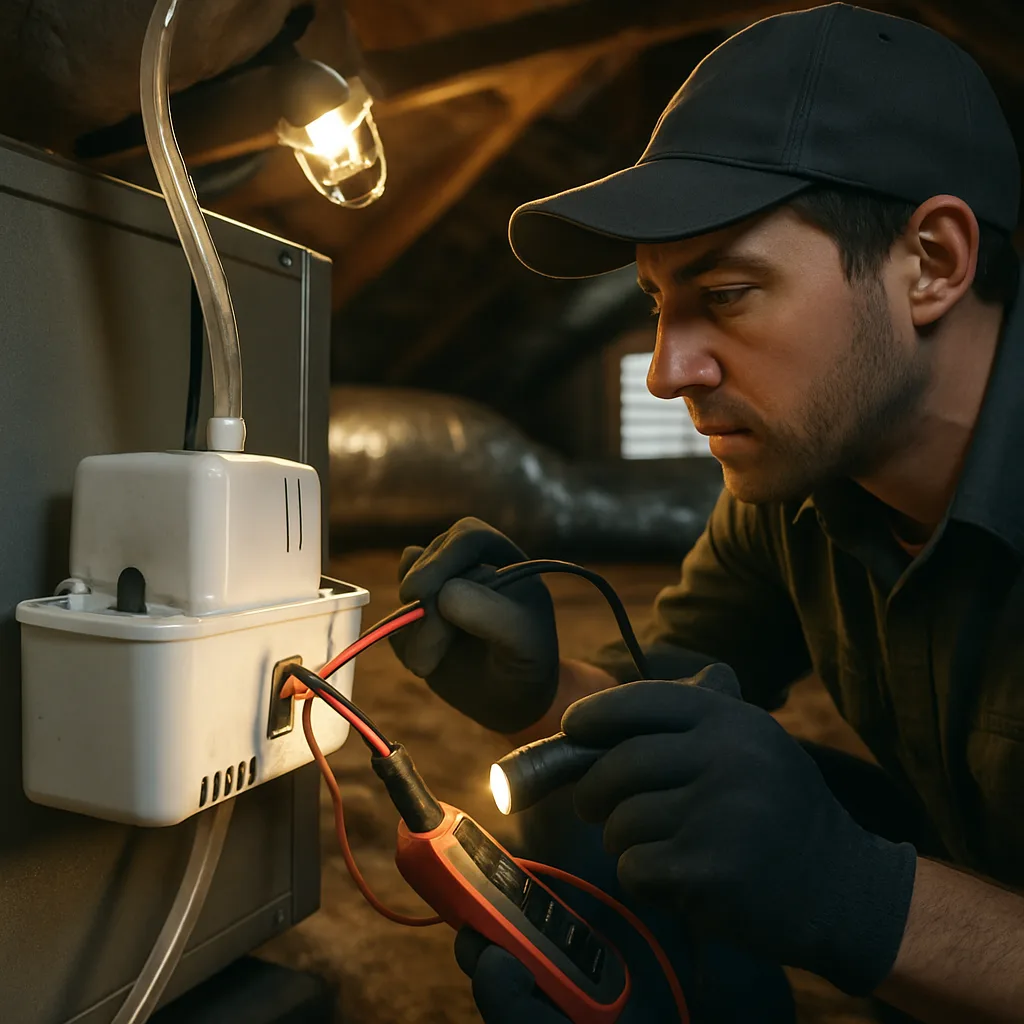
A pump is the least visible thing in a mechanical room right up until the day it stops. Condensate pumps lift the water an air handler or rooftop unit pulls out of the air. Circulator pumps move the heated or chilled water that actually conditions the building. Neither one asks for attention while it works, and both take the system down with them when they quit.
- Staining on ceiling tile beneath an air handler, or a wet patch spreading across a suspended ceiling grid
- A safety switch shutting off the AC even though the outdoor weather seems mild
- A pump that runs constantly or clicks on and off every few minutes
- A new gurgling, humming, or grinding noise from the unit
- A musty smell around the mechanical room or near a rooftop curb
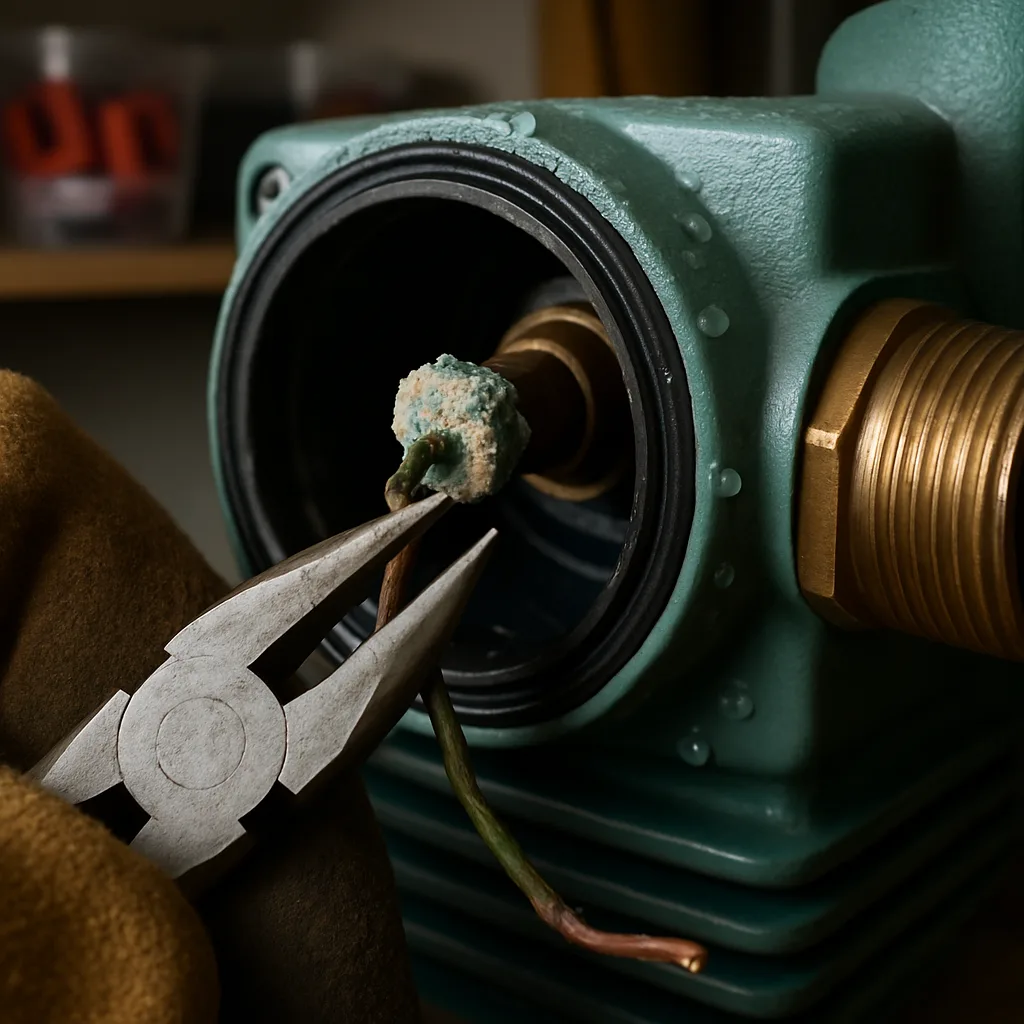
On the flat-roof retail and light industrial buildings around Sunnyvale, condensate has to be lifted before it can drain anywhere, so a stuck float switch shows up as a stained ceiling tile long before anyone finds standing water. A unit that keeps locking out on its safety switch usually has a float that is jammed or worn. A motor humming without moving water is a pump already past the point of a cheap fix.
Repair or Replace: Making the Right Call for Your Pump
Here’s the truth: most pump failures we see involve one part, not the whole unit. A condensate pump may clog, a circulator pump may seize, or the motor may burn out. Often, the pump itself is the only problem. Buildings along the U.S.
How do you know whether it’s a bad part rather than a dying system? Age matters. A pump that’s a few years old with one clean failure is usually worth repairing. The calculation changes if it has failed twice this year. Replacement may also make sense when parts for the brand are hard to find.
- How old is the pump, and has it failed before?
- Did one part fail, or are other components damaged?
- Are replacement parts still made for this brand?
North Texas runs a cooling season most of the country never sees, and a rooftop unit on a Sunnyvale strip center can produce condensate for six months without a real break. That duty cycle is what wears these pumps out. It also explains why the calls cluster between June and September, when a pump that was already marginal in April finally gives up during the busiest week of the year.
We won’t tell you to replace something that only needs repair. If the unit is still solid, we fix the failed part and test it. If it’s near the end of its service life, we’ll tell you plainly. You can decide based on useful information instead of guessing.
When a Leak Isn’t a Pump Problem
Not every water problem near a unit is the pump. We get called to buildings where the pump has already been blamed, replaced, and blamed again. Sometimes it was never the fault.
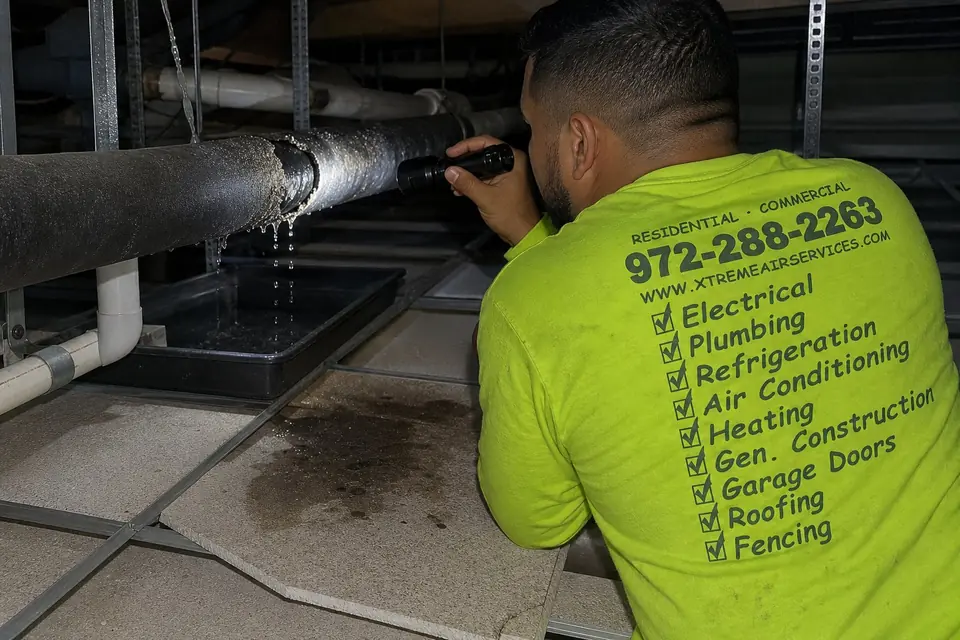
When water shows up on the ceiling under a rooftop unit, the pump is the first thing anyone points at. A slow drip well away from the unit usually means a clogged drain line or a cracked drain pan instead. On buildings with long horizontal runs, an underinsulated refrigerant line will sweat enough to soak a ceiling tile entirely on its own. From the floor, all three look identical.
A true pump failure looks and sounds different.
- The motor hums or buzzes, but water isn’t moving
- Your AC shuts off because the float switch tripped
- Water collects beside the unit rather than farther down the drain line
- The pump cycles on and off far more often than it should
Water on a slab floor without a clear HVAC connection is a different problem. It could be a slab leak and needs a plumber’s inspection, not a pump replacement. Water heater pans and sump areas also use different types of pumps. 80 six days a week.
Not sure which problem you have? That’s common. We can often sort it out over the phone or by taking a quick look at the unit.
Have questions? We’re happy to help.
Call Today, Get Service Today. Xtreme Air Services is ready to help.
What Happens During a Pump Service Call in Sunnyvale
Most of the pumps we service around Sunnyvale sit somewhere gravity drainage was never an option: a rooftop curb, a mechanical mezzanine, or a boiler room below the fixtures it feeds. Those installations run long duty cycles and fail quietly. Here is what a service visit looks like from start to finish.
- We arrive during your service window and inspect the pump before touching a tool.
- We test the pump, float switch, and wiring to locate the failure.
- We give you a flat price before repairs begin. You approve the price before we work.
- We repair or replace the failed part with a standard replacement carried on the truck.
- We run the system through a full cycle and confirm that water moves where it should.
- We clean up and explain what failed and why.
Often, the pump itself is the problem rather than the wiring or drain line. It’s usually a straightforward repair completed in one visit. The $26 to $99 service call fee is credited toward the repair when you proceed that same visit. You don’t pay that fee on top of the repair.
Commercial buildings with a boiler or hydronic loop usually have a circulator pump instead. The service process is similar: diagnose, quote, repair, and test.
Testing and Verifying the Fix Before We Leave
A pump that runs isn’t necessarily fixed. Anybody can flip a switch and watch water move for thirty seconds. That test doesn’t tell you enough.

Before we call the job done, we put the system through a proper test. We pour water into the condensate pan and watch the float switch start the pump automatically. We check the discharge line for backflow and listen for grinding, humming, or poor cycling. For circulator pumps in a boiler or hydronic system, we check the flow. We also check for cavitation, when trapped air disrupts the pump’s operation and can damage it.
On a rooftop or mezzanine install, a bad float switch or a blocked discharge line can push water into the ceiling of an occupied space before anyone downstairs notices. That is why we do not simply watch the pump run. We fill the pan and watch the entire shutoff sequence complete.
- Float switch starts the pump automatically at the correct water level
- Discharge line drains freely without backflow into the pan
- Motor runs quietly without grinding, humming, or short-cycling
- Electrical connections are tight, and the safety switch shuts off power if the pump fails
We clean up before we leave. No facility manager should be finding pump grease or a discarded housing in the mechanical room a week later. If anything looks wrong during testing, we deal with it before we go.
Frequently Asked Questions
Common questions about Pump installation and repair
How fast can you get to my Sunnyvale building for a pump failure?
We schedule most pump calls inside the service window you book, and often the same day. Rooftop and mechanical-room pumps work hardest through a North Texas summer, so we hold extra capacity in peak months. When you call, tell us whether water is already coming through a ceiling and whether the unit has locked out on its safety switch. That determines which pump and float assembly goes on the truck, and it is usually the difference between one visit and two.
What happens when a technician arrives for a condensate pump check?
We inspect the pump before touching any tools, then test the pump, float switch, and wiring to find the real cause. You get a flat price before any repair starts, and nothing happens until you approve it. Most jobs finish in one visit using a standard replacement part carried on the truck. Before we leave, we run the system through a full cycle so you can see the fix working.
Why do rooftop units along the U.S. 80 corridor go through condensate pumps so fast?
Two reasons, and they compound. Condensate on a flat-roof building has to be lifted rather than drained by gravity, so the pump carries the full load on every cycle. And a North Texas cooling season runs far longer than this equipment is rated around, which means roughly six months of near-continuous operation instead of three. Add the scale that local hard water leaves in the reservoir and you get float switches that stick and impellers that lose efficiency well before the nameplate life is up.
How do I know if I need a pump repair or a full replacement?
It usually comes down to age and history, not guesswork. A pump that’s a few years old with one clean failure is normally worth repairing. If it has failed twice this year, or parts for the brand are hard to find, replacement often makes more sense. We check the pump, the failed part, and part availability, then give you a straight answer instead of pushing one option.
How can I tell if my ceiling leak is really a pump problem?
Not every ceiling drip near your AC unit means the pump failed. A slow drip far from the unit often points to a clogged drain line, a cracked drain pan, or poor insulation on a refrigerant line. A true pump failure looks different: the motor hums but water doesn’t move, or the float switch trips and shuts off your AC. If you’re not sure, we can often sort it out over the phone.
How do you make sure my pump is fixed before you leave?
We test the full shutoff sequence, not a quick switch flip. We fill the pan and watch the float start the pump on its own, then check the discharge line for backflow. On circulator pumps in a hydronic or chilled water loop we verify flow and listen for cavitation, which will chew through a mechanical seal long before the motor ever complains. That step matters most on rooftop and mezzanine installs, where a missed fault ends up in the ceiling of an occupied space.
Ready to Get Started?
Call 972-288-2263 Today, Get Service Today.