


Refrigerant Piping Installation in Sunnyvale: Built for Texas Heat
Line sets brazed under a nitrogen purge, pressure tested, and vacuumed down – built for roof and plenum temperatures that top 130 degrees on an August afternoon.
What’s Covered on This Page
- Warning Signs Your Refrigerant Lines Need Replacing
- New Equipment, New Lines: Why Old Piping Often Can’t Be Reused
- When You Don’t Need New Piping – Just a Recharge or Repair
- Inside a Professional Refrigerant Piping Installation in Sunnyvale
- What Drives Refrigerant Piping Cost Up or Down
- How soon can you get to my Sunnyvale building for a refrigerant piping problem?
- What happens when a technician checks my refrigerant piping?
- Why do older Sunnyvale buildings have more refrigerant piping issues?
- Do I need new refrigerant piping when I install a new AC unit?
- How long does a refrigerant piping installation usually take?
- How can I tell if it’s a small leak instead of a bad line set?
Warning Signs Your Refrigerant Lines Need Replacing
How do you know it’s the piping and not just a dirty filter? Look at the copper lines running to your outdoor unit. Frost or ice on the lines, even in July, is a major sign. A hissing or bubbling sound near the connections is another. Neither is normal or likely to fix itself.
- Ice or frost on the copper line set, even during peak heat
- A faint hissing or bubbling sound near the line connections
- Oily residue or dark stains around joints and fittings
- The AC runs constantly, but the building never quite feels cool
- The system needed a refrigerant top-off more than once in a season
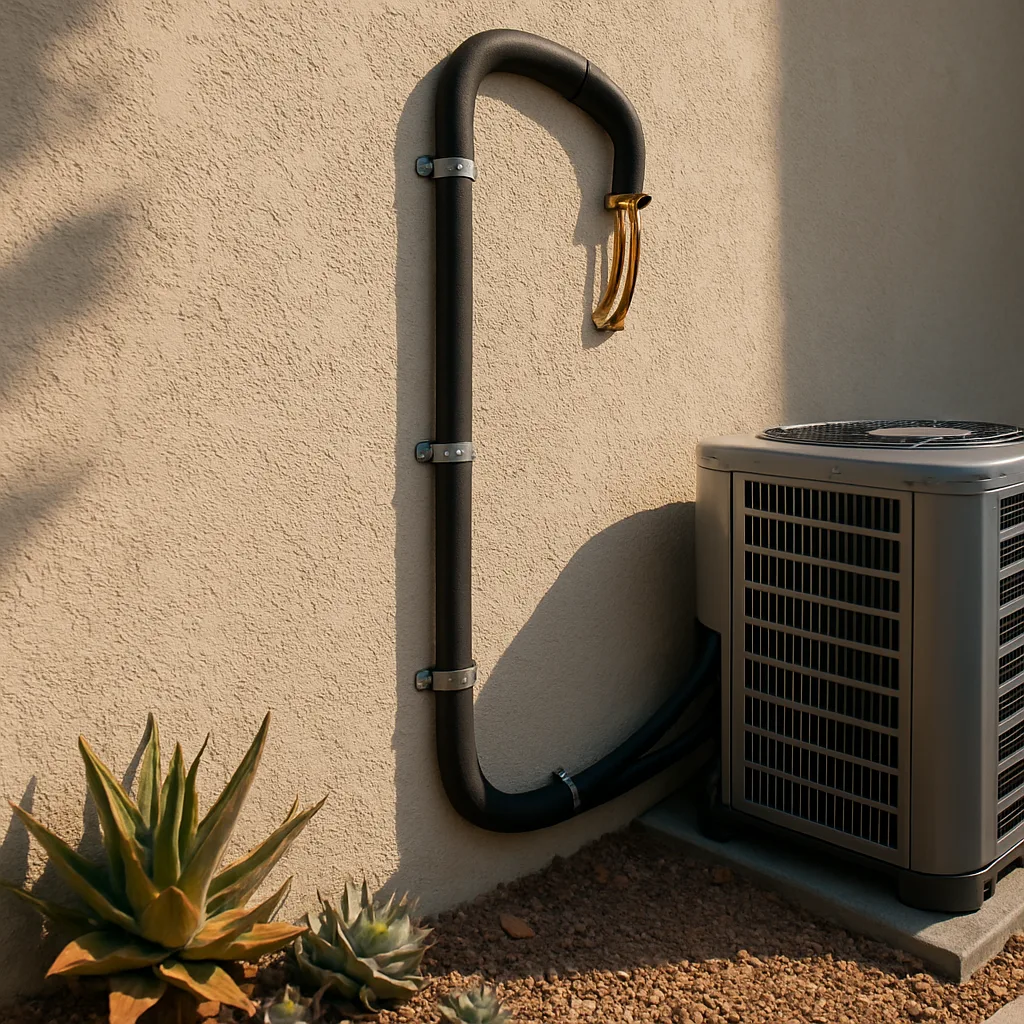
- Line insulation is cracked, sun-bleached, or missing in spots
We see this often in Sunnyvale buildings with air handlers above the ceiling and line sets run across the roof. That line set takes punishing heat, sometimes 130 to 150 degrees on a summer afternoon. Insulation breaks down faster than most building owners expect. Once it’s gone, the copper sweats, corrodes, and eventually leaks.
If your energy bill keeps climbing but nothing else in the building has changed, bad piping could be the reason. Your system works harder to move refrigerant through a leaky or undersized line. That extra work can show up on your electric bill before the system breaks down.
New Equipment, New Lines: Why Old Piping Often Can’t Be Reused
Here’s something building owners don’t expect: new equipment doesn’t always work with old copper. If your system uses older R-22 refrigerant and you’re upgrading to a modern unit, the line set must change. Different refrigerants require different pressures and oil types. The old copper may not be built for them.
Sizing matters too. A higher-capacity or higher-efficiency unit often needs a different line diameter from the one already running through your ceiling plenum or chase. The wrong size can cause poor cooling and higher energy use. It also makes the compressor work harder than it should.
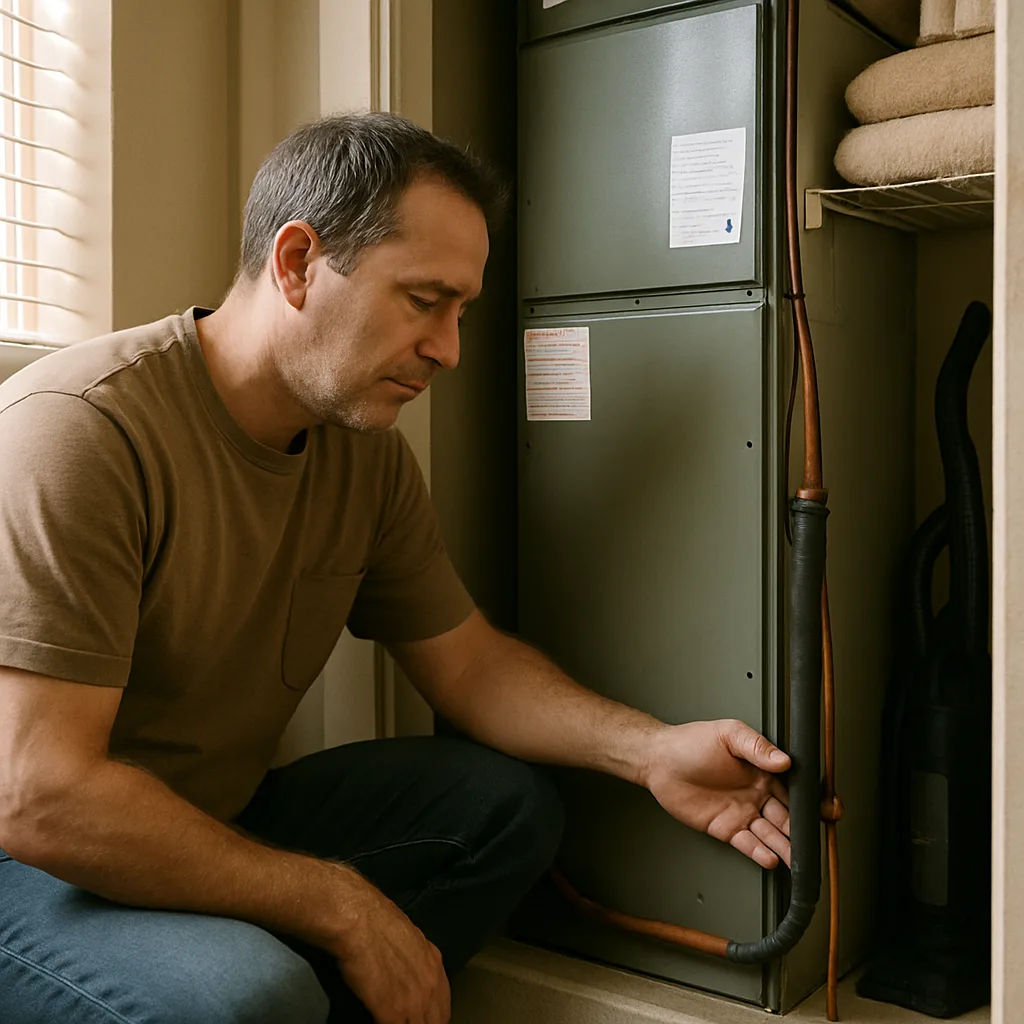
Older Sunnyvale buildings often have line sets routed through tight ceiling plenums during installations completed decades ago. We find kinked, corroded, or undersized lines in those spaces more often than building owners expect. Once we open things up, reusing that copper usually isn’t worth risking your new equipment.
- Refrigerant type mismatch between old and new equipment
- Line diameter too small or too large for the new unit’s capacity
- Corrosion, kinks, or pinholes hidden inside ceiling plenum or wall runs
- Broken-down insulation that lets the line sweat and lose efficiency
- Line-set length or routing that no longer matches the new equipment’s rated distance
Not every job requires new piping from start to finish. When it does, the work isn’t an upsell. Properly sized and installed piping keeps a brand-new unit from struggling on day one.
When You Don’t Need New Piping – Just a Recharge or Repair
Not every refrigerant problem means you need new piping. Sometimes the cause is a small leak or low charge, not a failed line set. Warm air, hissing near the outdoor unit, or light frost on the copper line can point to a leak. A recharge and leak repair can often fix the problem.
Sometimes it really is just one leak. Nothing more.
The gauges tell us what’s happening. When our team connects manifold gauges and checks pressures, we can usually distinguish a piping job from a smaller repair within minutes. Many Sunnyvale buildings put up in the 80s and 90s have line sets routed through unconditioned space. Summer heat can bake the insulation and loosen a joint over time. That’s a repair, not a rebuild.
When does a recharge stop being enough? You may need new piping if the copper is corroded in several places. The same applies when the line set is the wrong size or the same leak has been patched twice.
If the system is under ten years old and the leak is isolated to one fitting, don’t accept a full replacement without a clear reason. We’d rather tell you the truth and earn your next call than sell you work your system doesn’t need.
Thinking about Refrigerant piping installation? Let’s talk.
Call Today, Get Service Today. Xtreme Air Services is ready to help.
Inside a Professional Refrigerant Piping Installation in Sunnyvale
Most Sunnyvale buildings we work in have the line set running through unconditioned space to a rooftop or ground-set condenser. That run matters. Texas summers can push those spaces past 130 degrees by afternoon. We schedule brazing work during the morning whenever possible because extreme heat affects how the copper handles and how fast solder sets.
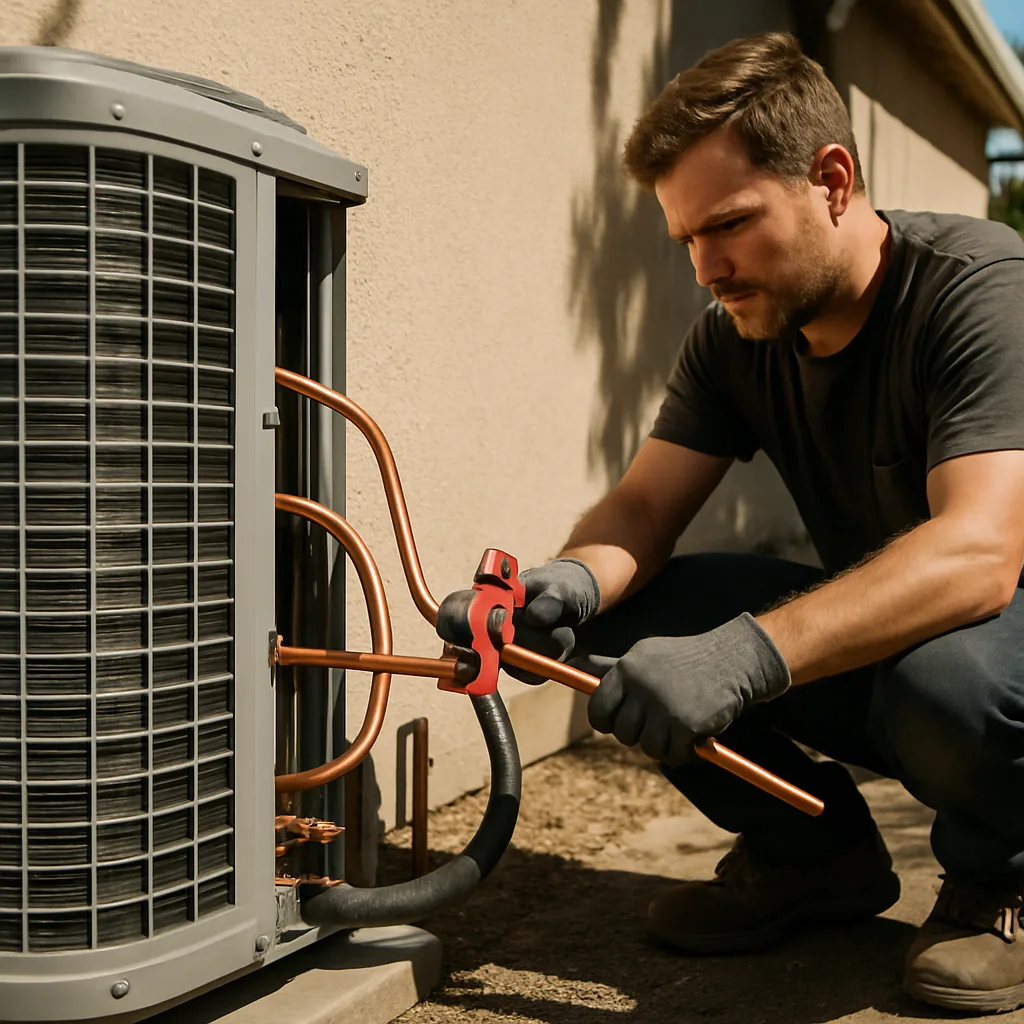
- We cut and fit the copper lines to match your equipment’s connection points. Each line is sized for the new system’s tonnage.
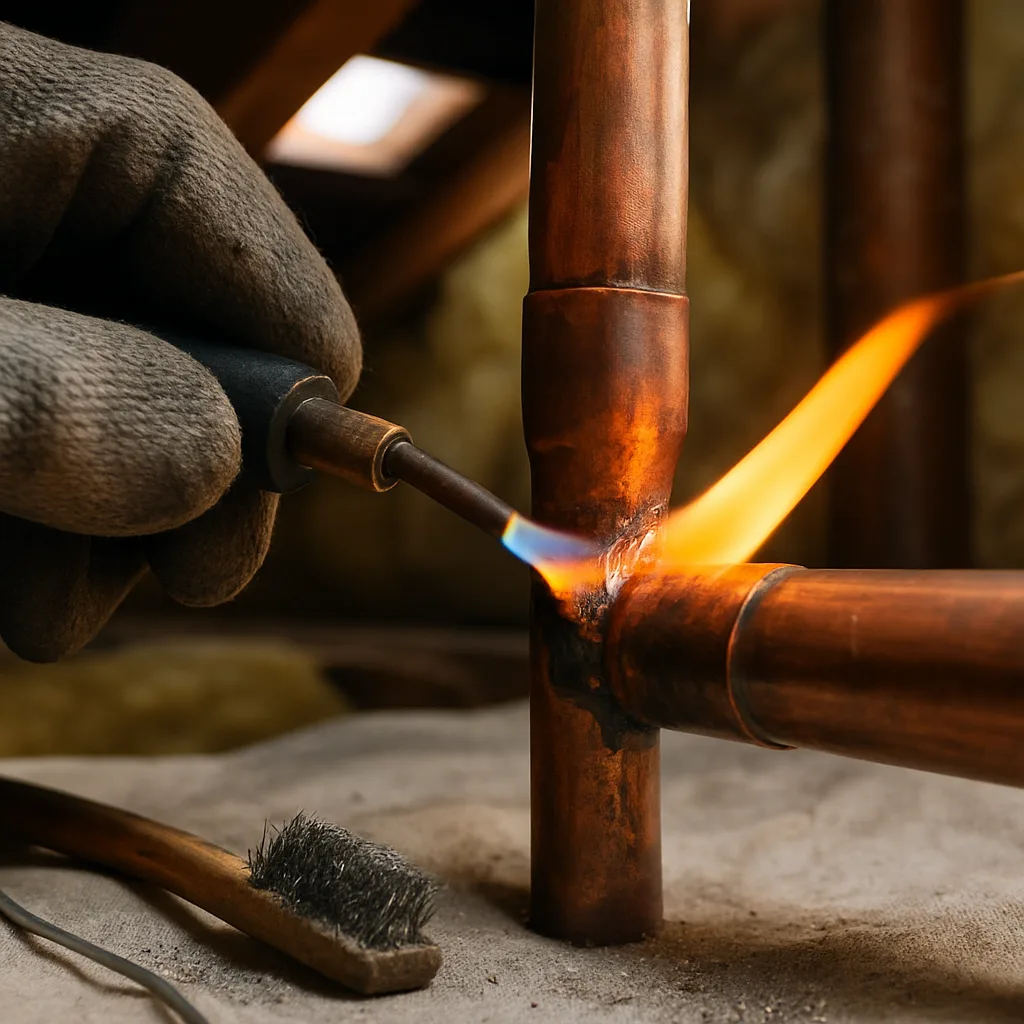
- We braze every joint while running a nitrogen purge through the line. This keeps oxidation and scale from forming inside the pipe.
- We test the whole system, usually well above normal operating pressure. Then we hold that pressure and check for any drop.
- Once the pressure holds, we pull a deep vacuum to remove moisture and air. Moisture in a line set is a leading cause of early compressor failure.
- We check the vacuum level with a micron gauge instead of guessing. The reading must hold steady before we move on.
- We charge the system to the manufacturer’s specifications. Then we confirm the superheat and subcooling readings are where they should be.
Skip one of these steps, and the system may run for a few weeks before failing. We see this every week on jobs where someone rushed the work. A short vacuum or skipped nitrogen purge may not cause trouble on day one. It can show up as a coil failure eight months later.
Longer line-set runs, tight equipment access, or a condenser far from the indoor unit add time to the job. That’s normal, and you should ask about it before work starts.
What Drives Refrigerant Piping Cost Up or Down
Here’s the straight answer: no two jobs cost the same because buildings and system layouts differ. A standard like-for-like job using existing connections costs less than routing new line sets through a tight ceiling plenum. Older Sunnyvale buildings can make that routing harder. Most straightforward swaps we run fall in the $1,000 to $2,000 range. Across all refrigerant piping work, the wider range is $500 to $3,000. Your price within that range depends on several practical factors, not guesswork.
- Equipment size and efficiency. Bigger tonnage and higher SEER2 systems need larger or more precisely sized line sets.
- Line-set runs. A short, straight run costs less than a long run across a roof or around ductwork.
- Access. Roof curbs, tight ceiling plenums, and older buildings with less clearance require more time and careful work.
- Condition of existing lines. If the old piping is corroded or undersized, we can’t reuse it.
- Code upgrades and permits. Some jobs need updated connections or documentation to meet current code.
- Custom fabrication. Odd angles or unusual equipment placement may require pipe work built on-site instead of using standard parts.
Brand and model matter too. Manufacturers specify different line-set sizes and connection types. The piping that worked with your last system may not fit the new one.
Before hiring anyone, ask what’s included. Our included scope covers materials, professional installation, startup and testing, and removal of the old unit. Duct, electrical, or plumbing modifications aren’t included unless we’ve discussed them upfront. The same applies to code corrections and permits. We charge a $26 to $99 service-call fee. If you move forward with us, we credit that fee toward the job. No surprise math at the end.
Frequently Asked Questions
Common questions about Refrigerant piping installation
How soon can you get to my Sunnyvale building for a refrigerant piping problem?
We schedule piping jobs around your equipment access and the time of day. Sunnyvale roofs and ceiling plenums can hit 130 degrees or more by afternoon, so we often plan brazing work for the morning when the heat is lower. This keeps the copper easier to handle and helps the solder set right. If your AC is struggling in the heat, call us and we will work out a time that fits your operation and the weather.
What happens when a technician checks my refrigerant piping?
We start by connecting manifold gauges to check your system’s pressure. This tells us in minutes whether you have a small leak or a bigger piping problem. We also look at the copper lines for frost, oily residue, or cracked insulation. Based on what we find, we explain whether you need a simple recharge or a full piping replacement. You will know the reason behind our recommendation before any work begins.
Why do older Sunnyvale buildings have more refrigerant piping issues?
Many Sunnyvale buildings put up in the 80s and 90s route line sets through unconditioned space. Years of extreme heat bake the insulation and can loosen joints over time. This shows up as frost on the copper, hissing near fittings, or an AC that just cannot keep the building cool. Once insulation breaks down, the copper sweats and corrodes faster. Catching this early can save your compressor from a bigger, more costly repair down the road.
Do I need new refrigerant piping when I install a new AC unit?
Not always, but often yes if your old system used R-22 refrigerant. Newer units run different refrigerants at different pressures, and old copper may not handle them safely. Line size matters too. A new high-efficiency unit may need a different diameter than what is already running through your ceiling plenum. We check the existing lines first and only recommend new piping when reusing the old copper would risk your new equipment.
How long does a refrigerant piping installation usually take?
It depends on your equipment access and how far the line set has to run. Longer runs, tight ceiling plenums, or a condenser set far from the indoor unit all add time. Every joint gets brazed with a nitrogen purge, then pressure tested and vacuumed down before we charge the system. Skipping these steps can save time up front but often leads to a coil failure months later, so we do not rush this part.
How can I tell if it’s a small leak instead of a bad line set?
Light frost on the copper, a faint hiss near the outdoor unit, or warm air from your vents often point to a small leak, not failed piping. Our gauges show us the real story within minutes. If the leak is isolated to one fitting and your system is under ten years old, a recharge and repair is usually enough. We only recommend full piping replacement when corrosion, wrong sizing, or repeated leaks make it the safer choice.
Ready to Get Started?
Call 972-288-2263 Today, Get Service Today.