


Dehumidification System Installation in Sunnyvale: Get Ahead of the Humid Season
Ducted dehumidification tied into the return side of your air handler, so the whole building dries out instead of one room with a bucket under it.
What’s Covered on This Page
- Signs Your Building Needs Ducted Dehumidification
- When a Portable Unit Beats a Ducted System (and When It Doesn’t)
- How Ducted Dehumidifiers Connect to Your HVAC System
- What Drives the Cost of a Dehumidification System
- The Installation Process From Assessment to Startup
- How fast can you get someone out for a dehumidifier install in Sunnyvale?
- What should I expect when your technician shows up to install my dehumidifier?
- Why does my Sunnyvale building stay humid even though the AC runs all the time?
- How long does a ducted dehumidifier installation take?
- Should I just buy a portable dehumidifier instead of installing a ducted system?
Signs Your Building Needs Ducted Dehumidification
North Texas summers dump a lot of moisture into the air. Most buildings here weren’t built to fight it alone. Your AC removes some humidity while cooling, but it’s not built to be your main defense. When the space cools but the air stays heavy, something else is going on.
- Musty smells in storage rooms, above the ceiling, or in janitorial closets that never fully air out
- Condensation forming on windows, cold pipes, or the AC’s supply vents
- Wood floors cupping or doors that suddenly stick in their frames
- Small mold spots appearing in bathrooms or corners with poor airflow
- Your AC running almost constantly while the room cools but the air still feels sticky
- Staff or tenants with allergies or asthma feeling worse indoors than outdoors
We see this often in buildings with air handlers above the ceiling, which describes much of Sunnyvale’s commercial stock. Humid air in that unconditioned space sits directly above the ductwork. That moisture can work its way into occupied areas over time. Notice a musty smell whenever you open a storage room? That’s usually a humidity problem, not a cleaning problem.
When a Portable Unit Beats a Ducted System (and When It Doesn’t)
Not every damp room needs a building-wide fix. A portable unit may be enough for one foggy restroom or a janitorial closet that never dries out. Plug it in, empty the tank, and you’re done.
Ducted dehumidification system installation makes sense when the moisture problem follows you from room to room. You may notice musty corridors, damp storage rooms, or sweating windows while the AC runs. That’s a building problem, not a spot problem. Your HVAC system may need a unit connected to the ductwork to treat every zone it serves.
- A portable unit is probably enough for one damp room or a seasonal issue that clears up on its own
- Ducted dehumidification is worth it if two or more rooms stay humid no matter what you do
- Buildings with slab foundations and ductwork in unconditioned space may trap moisture in the system, not just one room
- If staff are emptying a portable unit’s tank more than once daily, the building may have a larger moisture problem
We get calls from facilities managers who want a bigger portable unit, and sometimes that’s the right call. We won’t talk you into a ducted installation if a $200 box from the supply house solves the problem. But if you’ve tried that and still fight mildew every summer, another portable unit may not help. The ductwork may need to be part of the fix.
How Ducted Dehumidifiers Connect to Your HVAC System
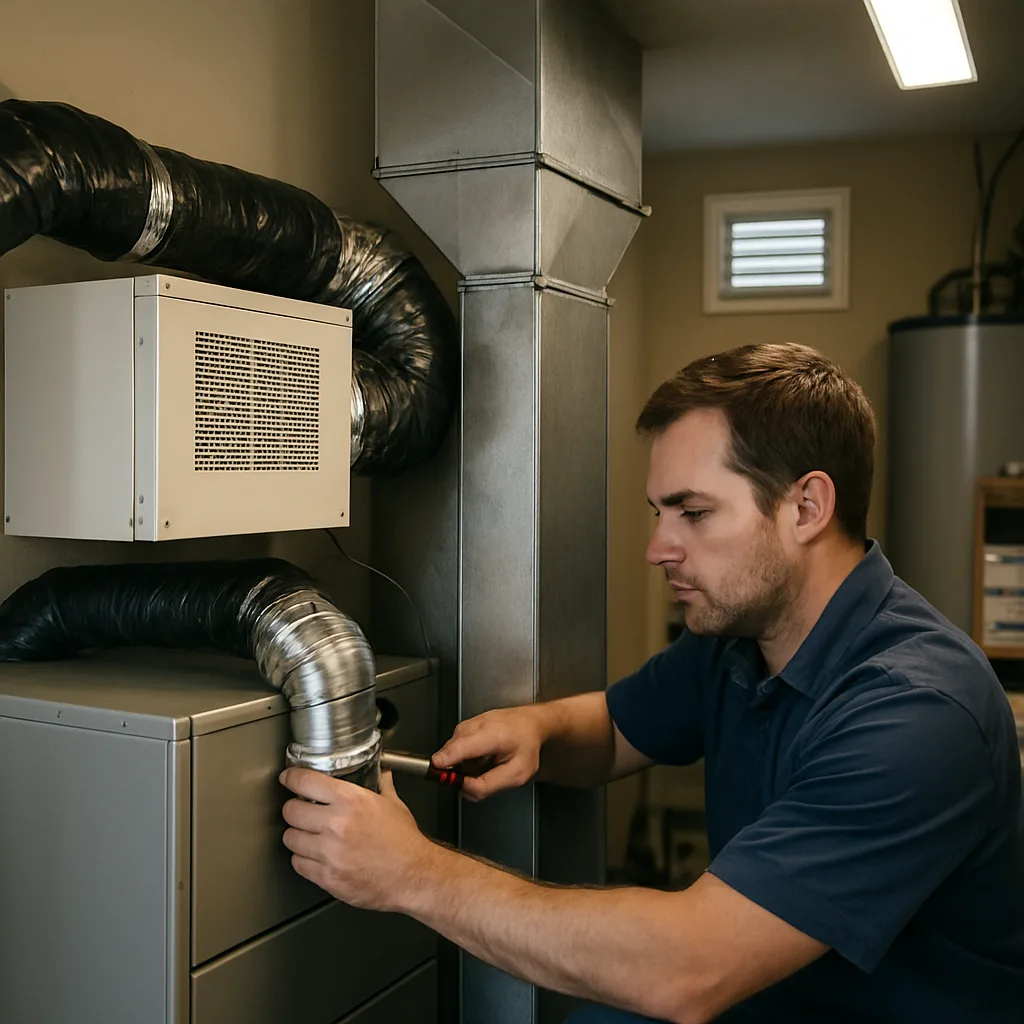
A ducted dehumidifier isn’t a standalone box you plug in and forget. It connects directly to your ductwork, usually near the return side of your air handler. That connection matters more than people think.
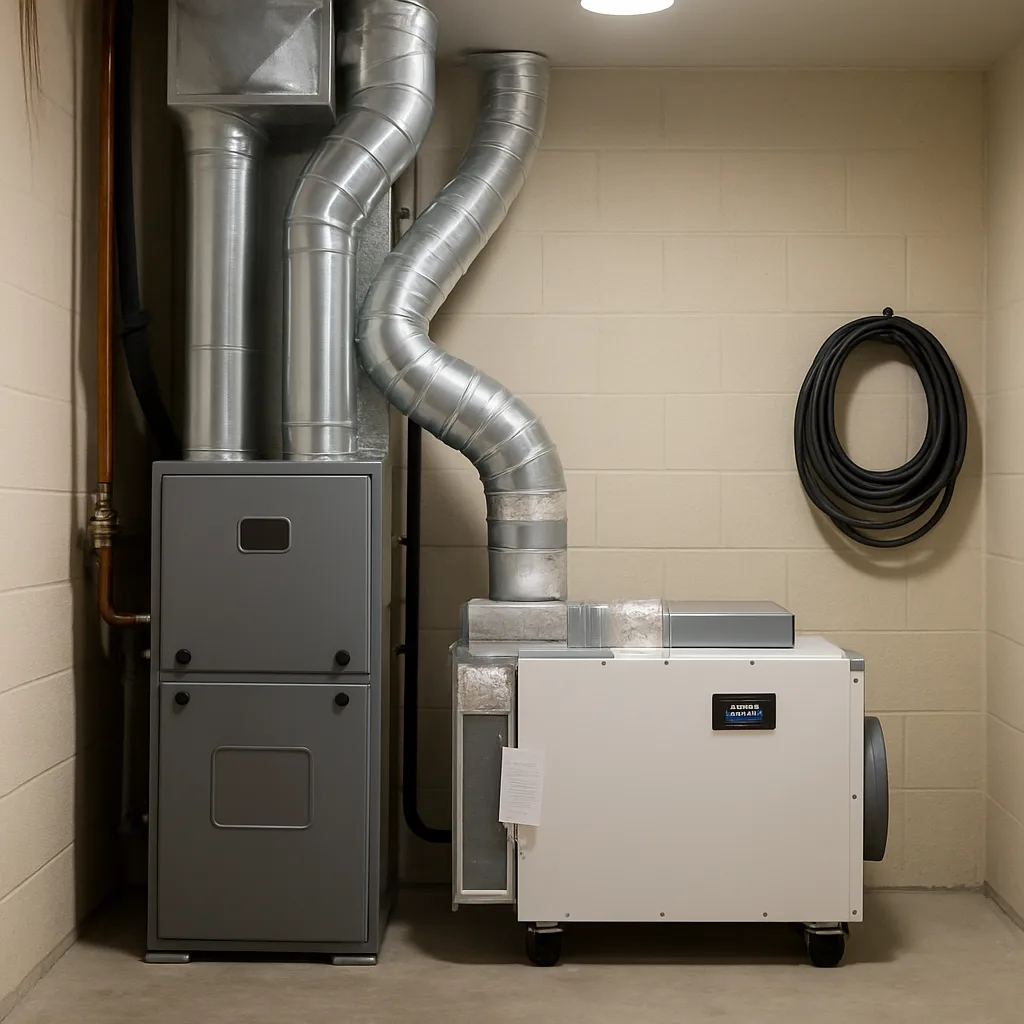
Here’s the plain version. The unit pulls humid air from your return duct and removes the moisture. It then sends drier air through the supply side. It works alongside your AC, not against it. Most Sunnyvale buildings run air handlers above the ceiling or on the roof, so we usually mount the dehumidifier nearby. It connects to the same main ducts your system already uses.
That layout keeps the installation compact. It also lets us work with existing connections instead of running new ductwork through your ceiling.
- Duct connection points on the return and supply sides, sized to match airflow
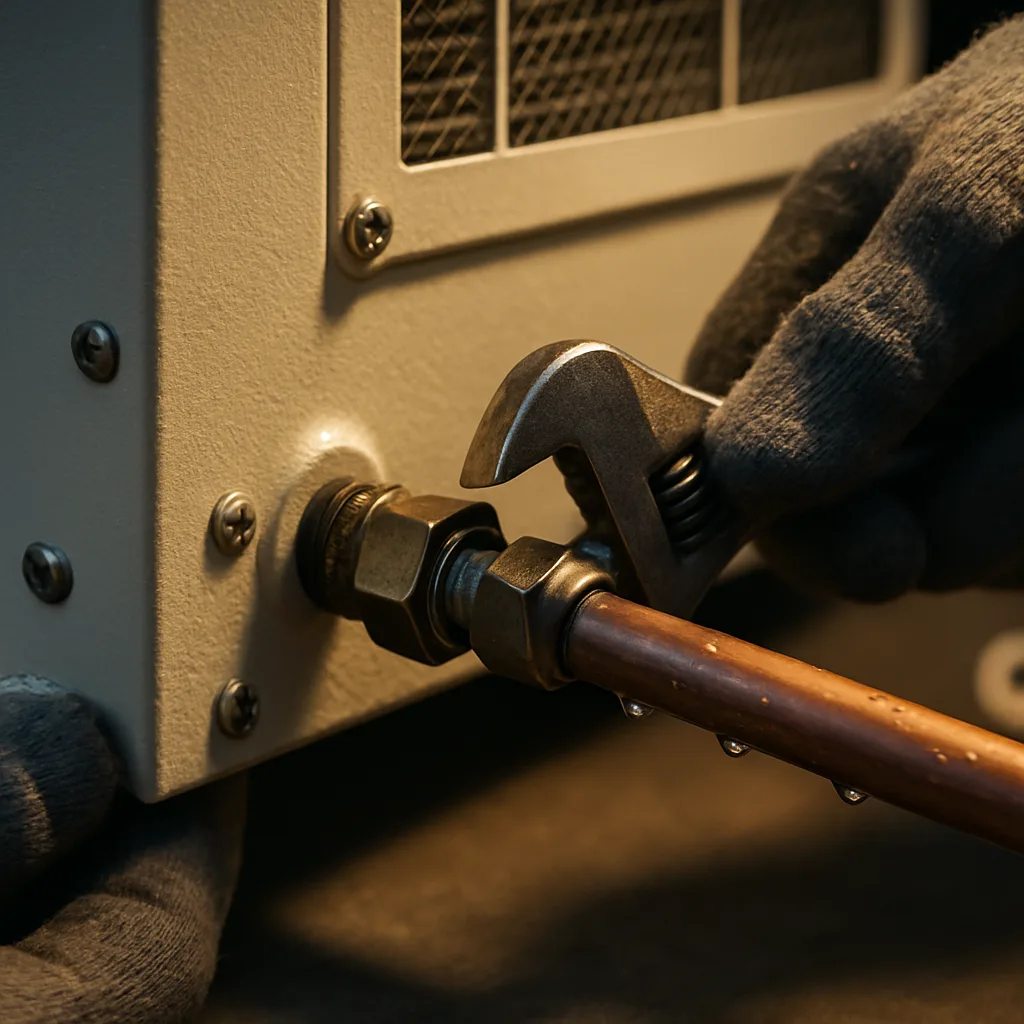
- A condensate drain line, either separate from or shared with your AC’s existing line
- Low-voltage control wiring connected to a humidistat, so the unit knows when to run
- An electrical connection, usually on a standard circuit or a dedicated one if the unit requires it
Ductwork condition changes everything here. Older ducts with leaks or crushed sections won’t move the air a dehumidifier needs. We check them before touching anything else. Skip that step, and you may pay later through poor performance or a callback.
Ready when you are – get in touch today.
Call Today, Get Service Today. Xtreme Air Services is ready to help.
What Drives the Cost of a Dehumidification System
What makes one dehumidifier job cost more than another? Several factors affect the price, and none are a mystery once someone explains them.
The unit’s size and capacity matter most. A ducted system connected to your ductwork removes more moisture than a small standalone unit and costs more. Efficiency also plays a role. Higher-efficiency models cost more upfront but may cost less to run over time. Brand and model affect the price, just as they do with other equipment.
- How easy the installation location is to reach, since tight ceiling plenums and roof curbs take longer
- The condition of your existing ductwork, wiring, or plumbing connections
- Whether the job needs code corrections before we can connect the unit
- Permit requirements, depending on the scope of the work
- Any custom fabrication needed to fit the unit into your specific setup
Many Sunnyvale buildings have HVAC equipment above the ceiling or on the roof, and access can change the labor time considerably. Tight spaces slow the work. Older wiring may also need attention before we connect a new unit.
Here’s the honest range. Most dehumidification installs across the industry run $1,200 to $3,500 depending on the factors above. A standard like-for-like install uses existing connections and requires no major modifications. This common version typically lands between $1,700 and $2,600. That price covers equipment, professional installation, startup, testing, and removal of any old unit. It excludes duct, electrical, or plumbing modifications, code corrections, and permits unless we spell them out beforehand.
We charge a $26 to $99 service-call fee to inspect your setup. If you move forward with us, that fee is credited toward the job. Financing is also available on qualifying installations with approved credit, so you can spread out the upfront cost.
The Installation Process From Assessment to Startup
Before anyone touches your ductwork, we check the whole setup. We review square footage, humidity readings, and the layout of your existing system. Many Sunnyvale buildings run HVAC through unconditioned space above the ceiling. Connecting a dehumidifier there takes a different approach than working with a mechanical room system.

- We measure current humidity and check the space for moisture problems, mold spots, or musty odors.
- We calculate the right capacity for your square footage. An undersized unit runs constantly, while an oversized one short-cycles.
- We confirm how the unit will connect. It may use your existing ductwork or operate independently with its own drain line.
- We install the equipment and secure the mounting. Then we run the drain line so the condensate has somewhere to go.
- We wire the unit and connect its controls, including your preferred humidistat settings.
- We start the unit and test its airflow, moisture readings, and cycling.
- We explain the settings before leaving, so you aren’t left guessing later.
Most jobs take a few hours and won’t shut your building down.
We don’t leave after merely switching on the unit. We stay until the readings look right. That’s the difference between a dehumidifier that’s installed and one that’s working. We’ve seen improperly installed units and drain lines pitched the wrong way. Nobody on site knows until water appears where it shouldn’t.
Frequently Asked Questions
Common questions about Dehumidification system installation
How fast can you get someone out for a dehumidifier install in Sunnyvale?
We usually schedule a visit within a few days of your call. Sunnyvale summers push moisture into buildings fast, so we try not to make you wait through another sticky week. When you call, tell us if you’re seeing musty smells or foggy windows. That helps us bring the right tools on the first trip. Most jobs get scheduled, inspected, and installed within one visit once we see your equipment layout and ductwork.
What should I expect when your technician shows up to install my dehumidifier?
Your technician will check your ductwork, equipment access, and electrical setup before touching anything. Since most Sunnyvale buildings have air handlers above the ceiling or on the roof, we spend extra time confirming the ducts can handle the added airflow. We’ll walk you through the connection points, the drain line, and where the humidistat will sit. You’ll know the plan before any work starts. No surprises, no guessing about what’s happening above your ceiling.
Why does my Sunnyvale building stay humid even though the AC runs all the time?
Your AC cools the air but wasn’t built to handle heavy humidity on its own. Most Sunnyvale buildings run ductwork through unconditioned space, and hot, humid air sits right above those ducts all summer. That moisture works its way into occupied areas over time. If the building feels sticky while the AC runs nonstop, that’s the sign your system needs backup, not a colder setting.
How long does a ducted dehumidifier installation take?
A standard installation using your existing ductwork usually takes one day. Tighter ceiling plenums or older duct connections can add extra time, since we check everything before we connect the new unit. We test the drain line, the electrical connection, and the humidistat before we leave. If your ductwork needs repairs first, we’ll tell you that upfront so there’s no surprise mid-job.
Should I just buy a portable dehumidifier instead of installing a ducted system?
A portable unit works fine if only one room stays damp, like a janitorial closet or a single restroom. Ducted dehumidification makes more sense if musty smells or sweating windows show up in multiple rooms. If staff are emptying a portable unit’s tank more than once a day, your building likely has a bigger moisture problem tied to the ductwork, not just one space.
Ready to Get Started?
Call 972-288-2263 Today, Get Service Today.