


Gas Line Repair in Sunnyvale: Fast, Licensed Fixes You Can Trust
Corroded, leaking, and undersized gas lines repaired and pressure-tested, with the affected appliances relit and checked.
What’s Covered on This Page
- Warning Signs of a Gas Leak at Home
- Utility vs. Plumber: Who Fixes the Line
- When a Repair Call Isn’t an Emergency
- Inside a Gas Line Repair Visit
- Why Clay Soil and Freeze Cycles Stress Older Lines
- How fast can you get to my house for a gas line repair in Sunnyvale?
- What happens when your plumber arrives for a gas line repair?
- Why do gas lines fail more often in older Sunnyvale homes?
- Should I call the gas utility or a plumber when I smell gas?
- Is a faint gas smell near one appliance always an emergency?
Warning Signs of a Gas Leak at Home
Natural gas has no smell on its own. Utility companies add a chemical called mercaptan. It smells like rotten eggs or sulfur, helping people notice leaks. If you smell it near your stove, water heater, or furnace, don’t wait to see if it fades.
- A rotten egg or sulfur smell, especially near appliances or where a line enters the house
- A hissing or whistling sound close to a pipe, meter, or connection
- Dead or yellowing grass in one patch above a buried gas line
- A pilot light that won’t stay lit or burns with a strange color
- Sudden headaches, dizziness, or nausea that clear up once you’re outside
We get calls from people who smelled something faint for a week before picking up the phone. It wasn’t nothing, and it’s not something to guess about. If you’re standing in your kitchen wondering whether that smell is real, it’s worth checking.
Older homes around Sunnyvale often still have steel gas lines installed decades ago. Steel corrodes underground over time. That’s why hissing near an outdoor meter or a dead strip of lawn deserves a same-day look, not a wait-and-see approach.
Utility vs. Plumber: Who Fixes the Line
Here’s the split most folks don’t learn until they’re standing in the yard smelling gas. The utility company owns the meter and everything on its side. That includes the main line running under the street and up to the meter. Everything past the meter belongs to you. That includes pipes entering your house, running under your slab, or feeding your grill or pool heater. That’s where we come in.
Smell gas at the meter or coming from the ground near the curb? Call the utility first. They’ll shut it down and check their side, usually free. If you smell gas inside or near an appliance connection, call a licensed plumber. The same applies to lines running through your attic or under the house.
We get calls after the utility has confirmed its side is clear. At that point, the homeowner needs a repair on the house side. That’s normal. Leaks often show up where a fitting connects to an appliance or an older line has started corroding.
Not sure which side you’re on? Don’t guess. Our team is licensed and insured. Master Plumber Larry Breedlove holds the license this work runs under. When you call, you’ll talk to someone who can quickly tell you whether the utility or a plumber should handle it.
When a Repair Call Isn’t an Emergency
Smell rotten eggs or hear hissing near the meter? That’s an emergency. Leave the house, call the gas company, then call us. Not every gas line problem works like that.
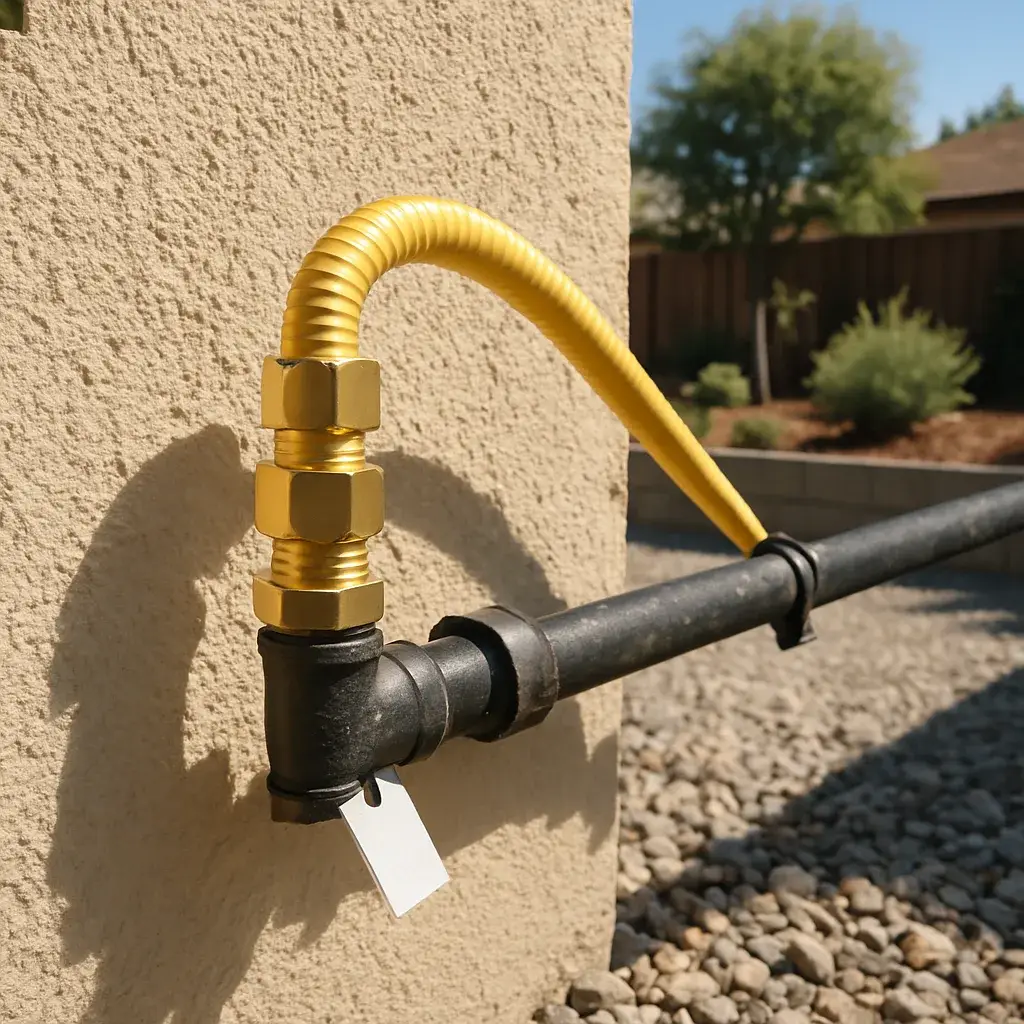
We get calls every week from people who notice a weak, musty odor near an old capped line. It may be in the attic or garage. Others find that their outdoor grill hookup no longer holds. Those problems need repair, but they’re not always a crisis.
- A faint smell only near one fixture, not spreading through the house
- A pilot light that’s out but the appliance smells normal
- An unused line you’re capping off before a remodel
- Low flame or weak burner performance on a stove or furnace
If the appliance itself is acting up, that’s a different job. Our gas line repair covers the line and fitting, not the furnace or water heater it feeds. We’ll tell you plainly if that’s the problem, even if it calls for a different repair.
Not sure what you’re dealing with? That’s a fair and common question.
Call us and describe what you’re smelling or seeing. We’ll ask a few questions and tell you whether someone should come today. If it can wait, we’ll help you schedule a visit. Our service-call fee runs $26 to $99. It’s credited toward the repair if you move forward with us.
Need help with Gas line repair?
Call Today, Get Service Today. Xtreme Air Services is ready to help.
Inside a Gas Line Repair Visit
Here’s what a repair visit looks like. You call, and we ask a few questions about the smell or your meter reading. Then we send a technician your way. Once on site, we follow a set sequence. The cause is often a bad fitting or corroded section, not a mystery leak spread across your yard.
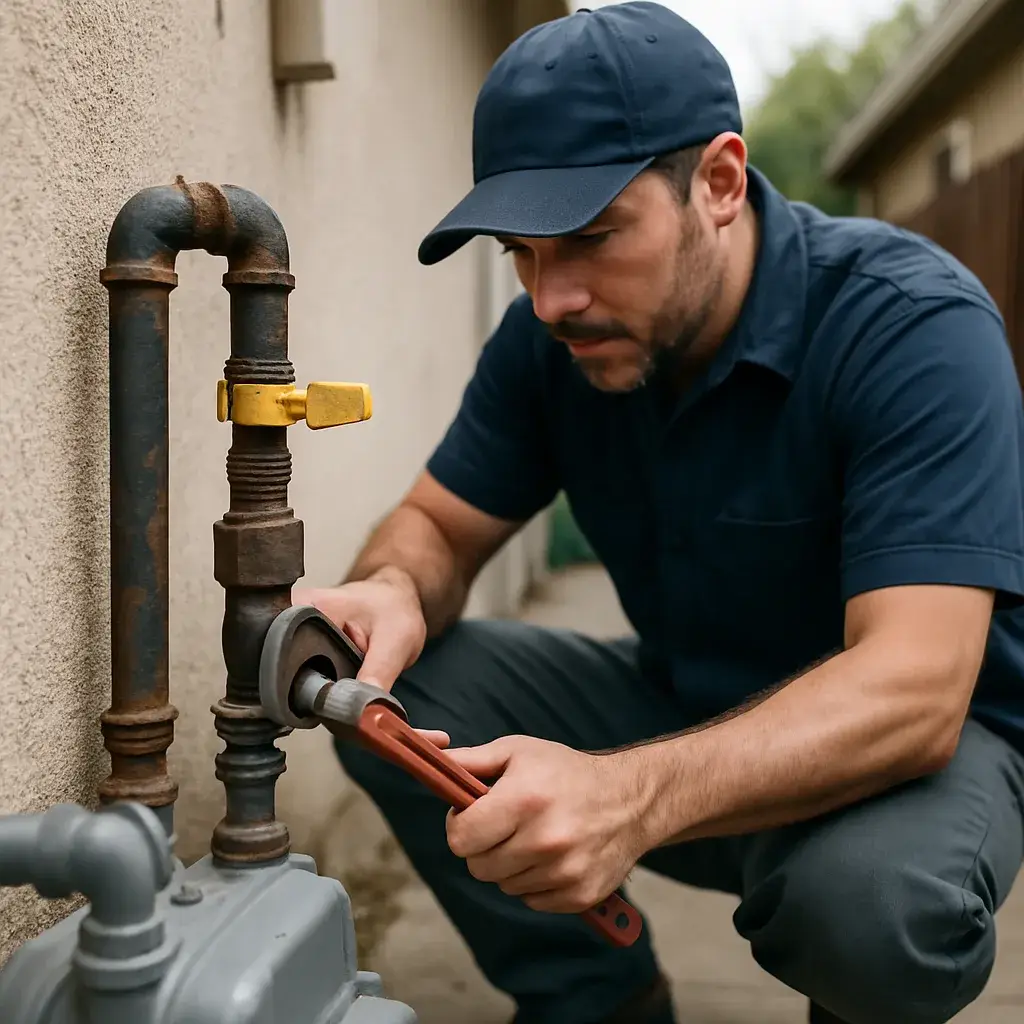
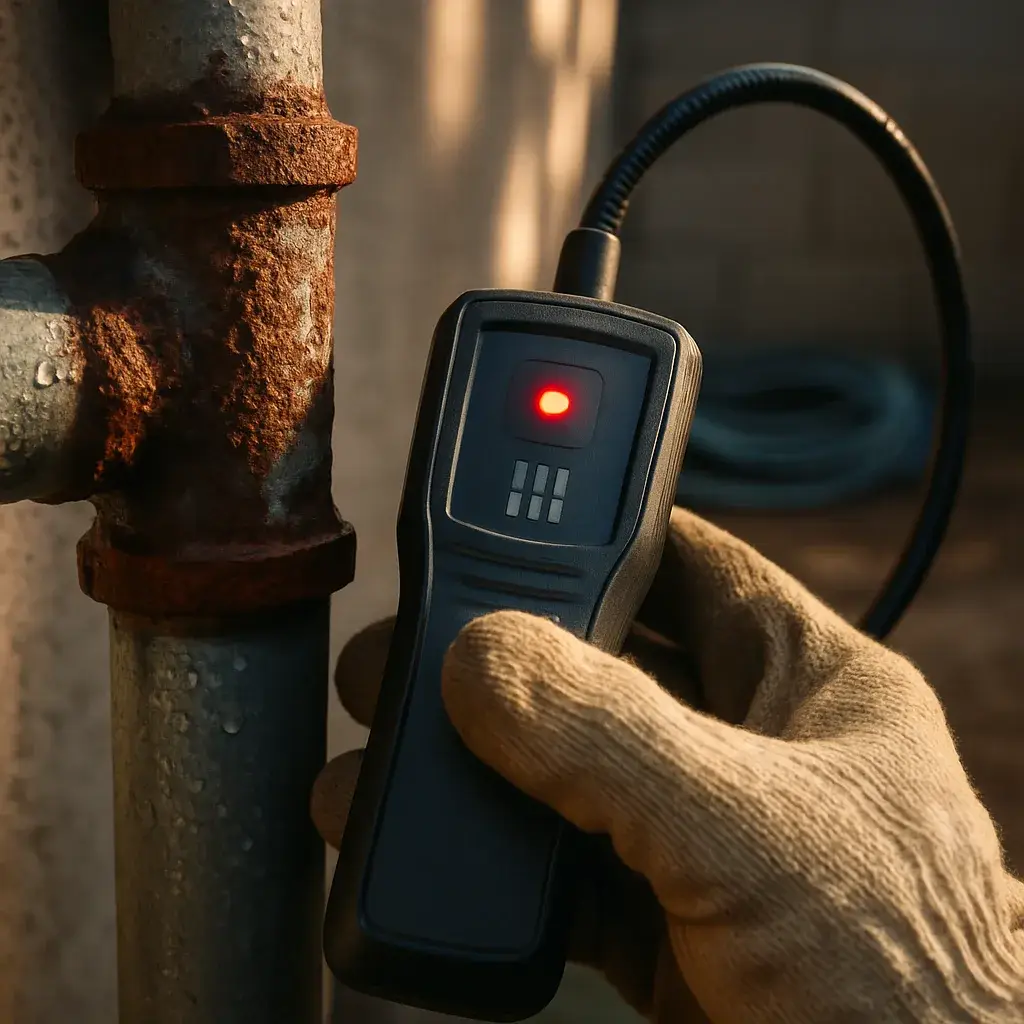
- We walk the line with a gas detector and soap-bubble test to pinpoint the spot. It may be under a slab, in the attic, or at an appliance connection.
- We shut off gas to that section so we can work safely. We avoid cutting off your whole house when possible.
- We repair or replace the damaged pipe or fitting, matching the material already in your home.
- We test the repaired line to confirm it holds and check for leaks nearby.
- We turn the gas back on and relight pilot lights if needed. Then we explain what we found.
The service-call fee runs $26 to $99. The price includes diagnosis, labor, the standard repair, and testing. Full line replacement, appliance repair, and code upgrades aren’t included. If you need one of those, we’ll quote it separately before touching anything.
Most calls are this simple: one fix, one visit, done.
Why Clay Soil and Freeze Cycles Stress Older Lines
Sunnyvale sits on blackland prairie clay, and that soil moves a lot. It swells when wet and shrinks hard when dry. That constant movement puts pressure on anything buried underneath, including your gas line. Older steel and galvanized lines don’t flex well. They crack at joints, fittings, or other spots where the pipe is already weak.
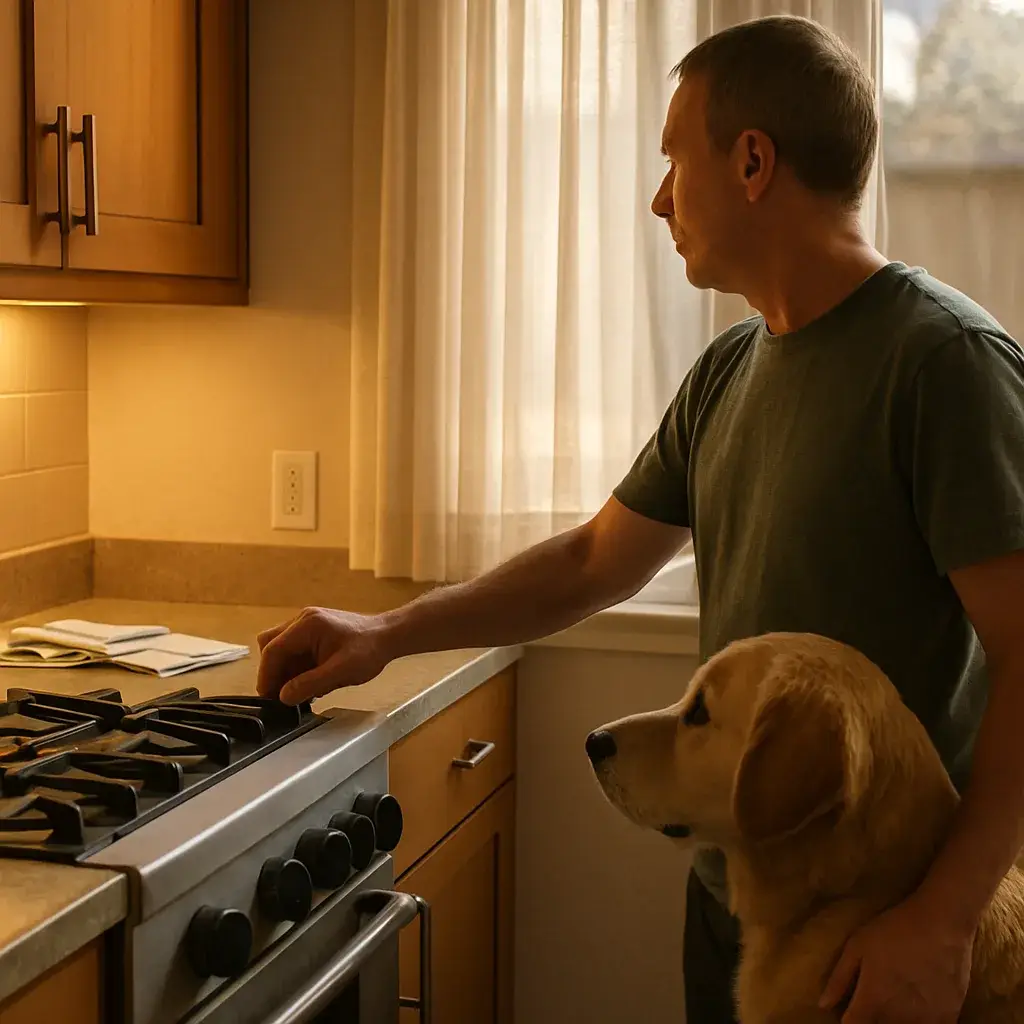
Freeze cycles make it worse. We don’t get long winters here, but sharp cold snaps can bring a quick thaw. That freeze-thaw swing moves the soil again. It can stress a fitting that has held for twenty years. Sometimes a joint finally gives out after one too many cycles.
Homes built before the 1990s in this area are more likely to have older pipe material. After decades of ground movement, that material can become brittle. Newer subdivisions with PE plastic lines tend to handle shifting soil better.
- A hissing sound near the meter or along a buried run
- A rotten-egg smell that gets stronger after rain or a cold front
- Dead or yellowing grass in a straight line across your yard
- A pilot light that won’t stay lit for no clear reason
One bad joint isn’t the same as a failing system. Most calls we run involve one damaged section that we find and fix during the same visit. The soil may have caused the stress, but the repair itself is usually small.
Frequently Asked Questions
Common questions about Gas line repair
How fast can you get to my house for a gas line repair in Sunnyvale?
We treat gas smells and hissing sounds as same-day calls, not next-week appointments. When you call, we ask a few quick questions about what you’re smelling or hearing, then send a technician your way. Homes with older steel lines near the meter or a dead patch of grass over a buried pipe get priority, since those signs point to real corrosion. If your situation sounds urgent, we’ll tell you right away instead of making you wait to find out.
What happens when your plumber arrives for a gas line repair?
Your technician walks the line with a gas detector and a soap-bubble test to find the exact spot causing trouble. Once we find it, we shut off gas to just that section, not your whole house, so you’re not left without hot water or a stove all day. We repair or replace the damaged pipe or fitting using material that matches what’s already in your home, then test it before turning the gas back on and relighting pilot lights.
Why do gas lines fail more often in older Sunnyvale homes?
Older steel and galvanized lines crack more easily because Sunnyvale sits on clay soil that swells and shrinks with every rain and dry spell. That constant ground movement puts pressure on buried pipe, especially at joints and fittings that have been in the ground for decades. Sharp cold snaps make it worse, since a quick freeze-thaw swing shifts the soil again. If your home was built before the 1990s, that older pipe is more likely to give out after years of this stress.
Should I call the gas utility or a plumber when I smell gas?
It depends on where the smell is coming from. If you smell gas at the meter or near the curb, call the utility company first, since they own the line up to your meter and will check it for free. If the smell is inside your house, near an appliance, or in your attic, that’s your line, and you need a licensed plumber. If you’re not sure which side you’re on, just call us and describe what you’re noticing.
Is a faint gas smell near one appliance always an emergency?
Not always, but it still needs a look. A rotten egg smell that spreads through the house or hissing near your meter is an emergency, so leave and call right away. But a weak, musty smell only near one fixture, like an old capped line in the garage, usually isn’t a crisis. Call us and describe what you’re smelling. We’ll tell you whether it needs a same-day visit or can wait for a scheduled repair.
Ready to Get Started?
Call 972-288-2263 Today, Get Service Today.