


What Are the Most Common Questions About Generator Pad / Placement?
The pad, clearance, and placement questions we answer most often on Sunnyvale, TX job sites.
What’s Covered on This Page
- How Far Does the Generator Need to Be From Windows, Doors, and Eaves?
- Will the Pad Settle, Crack, or Tilt Over Time?
- Does the Pad Need to Be Poured Concrete, or Is a Composite Pad Enough?
- What Happens If the Pad Sits in a Low Spot That Collects Water?
- Will the Generator’s Location Be Noisy or Visible From the Yard or Windows?
- What issues come up most often with generator pad placement?
- How long do I need to wait before the generator can sit on the pad?
- Can I pick the spot for my generator myself?
- What if my yard doesn’t have an obvious good spot for the pad?
- Does this job always need a permit?
- Will a pad installed now ever need attention down the road?
How Far Does the Generator Need to Be From Windows, Doors, and Eaves?
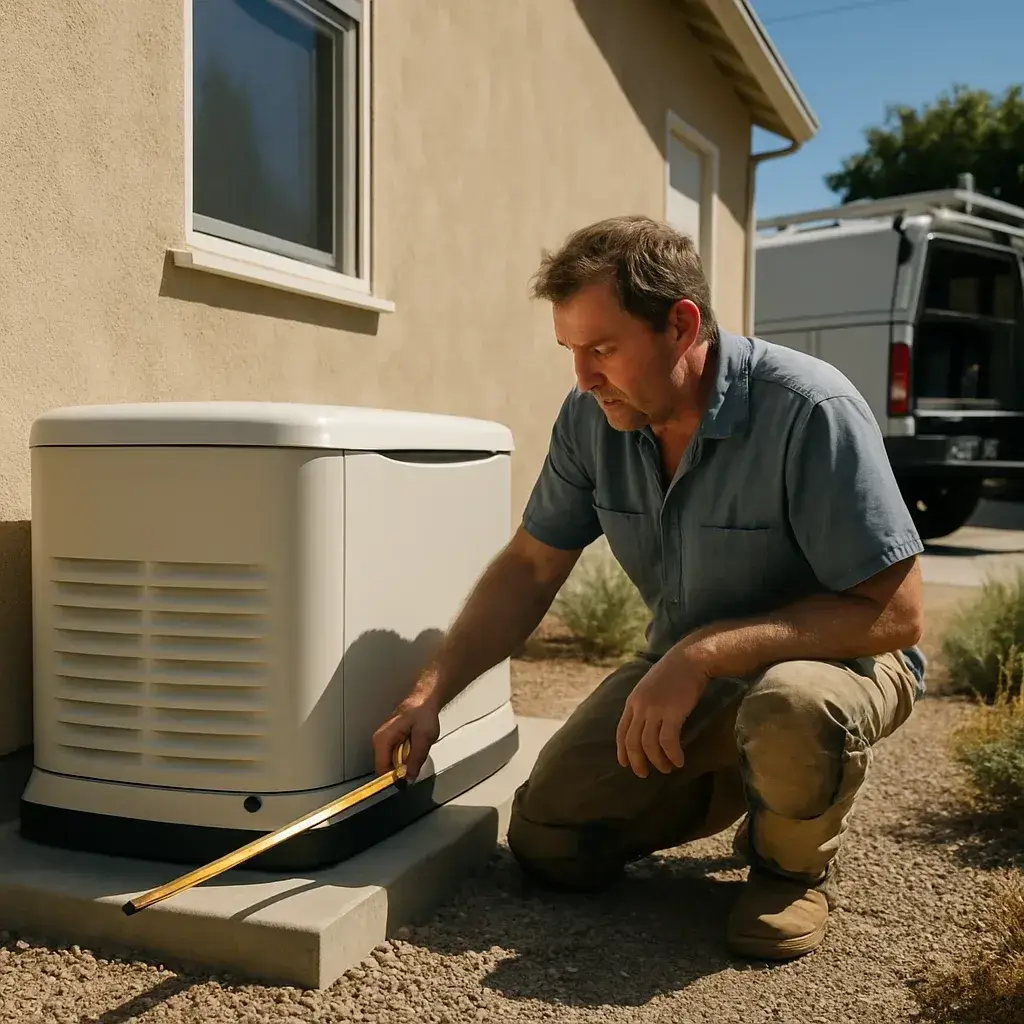
Manufacturers publish minimum clearances from windows, doors, and fresh air intakes, and local code layers its own requirements on top of that. We follow both, not just whichever number happens to be smaller.
The exact distance depends on the generator model and the specifics of your lot, so we’re not going to hand you one number that fits every house. A smaller portable-style standby unit has different clearance needs than a larger whole-home unit sized for a bigger DFW home. What we can tell you is what we’re checking for on every single site visit.
- Distance from operable windows and doors, so exhaust can’t reach the inside of the house
- Distance from any fresh air intake or crawl space vent
- Clearance from the eave line above, since some units need open sky access for proper ventilation
- Setback from property lines, which is often a code requirement separate from the manufacturer spec
- Service access on at least one side, so a technician can reach the unit for maintenance later
Here’s the part a lot of homeowners don’t expect. Sometimes the spot that looks most convenient, tucked against the back of the house near the electrical panel, doesn’t meet clearance once we measure it against the nearest window or door. When that happens, we look at the next best option on the property instead of shrinking the clearance to make the first spot work. It’s the same reason we handle placement to code with the proper permits and inspections when they’re required: a generator sited too close to a window is a problem you can’t easily undo once the pad is poured.
Site grading, distance from the home, and any code upgrades a particular spot needs all factor into what a pad and placement job runs, right alongside the pad material itself. We walk you through those factors and the clearance findings for your yard before you approve anything, so you know exactly where the unit will sit, and why, before a shovel goes in the ground.
Will the Pad Settle, Crack, or Tilt Over Time?
A pad that settles, cracks, or tilts is the top worry we hear before a job even starts, and it’s a fair one. A generator sits outside in Texas weather year-round, and the ground underneath it moves more than most people expect.
Most tilting and cracking comes down to what’s under the pad, not the pad itself. Clay soil around Sunnyvale and the greater Dallas-Fort Worth area expands when it’s wet and shrinks when it’s dry, and if a pad sits on unprepared or loose fill, that swelling and shrinking works on it every season. Poor drainage makes it worse: water pooling under one edge of a pad softens the soil there faster than the rest, and that’s how a level surface turns into a lean.
We deal with this at the site prep stage, not after. Before we set anything, we grade the site and check how water moves across it. A pad set on graded, compacted ground with a slight slope away from the house holds level a lot longer than one dropped on whatever dirt happens to be there.
Pad material matters too. A poured concrete pad and a composite pad behave differently under weight and moisture, and the right call depends on your soil, your generator’s size, and how the site drains. We size and position every pad to the clearance requirements the generator needs from the home, then level and secure it as part of the installation.
No pad is immune to ground movement forever. Heavy clay soil can shift enough over the years that any pad, poured by anyone, may eventually need a look. What tips the odds in your favor is proper prep on day one. If your site has drainage problems, a low spot, or heavy clay, we’ll tell you that up front, because it changes what we recommend.
If you want the full rundown on how we handle this job from site check to final placement, our page on Generator Pad / Placement in Sunnyvale walks through it in more detail.
For cost specifics on pad type, site prep, and clearance work, that’s covered on our pricing page rather than here.
Does the Pad Need to Be Poured Concrete, or Is a Composite Pad Enough?
Both work. It comes down to your soil, your generator’s weight, and what your local code inspector wants to see. A poured concrete pad is the traditional choice, and it’s what we recommend on softer or uneven ground. It takes longer to cure before we can set the unit, usually a day or two of dry time, but once it’s down it doesn’t shift or settle the way a lighter pad can on wet clay soil, which is common across parts of North Texas.
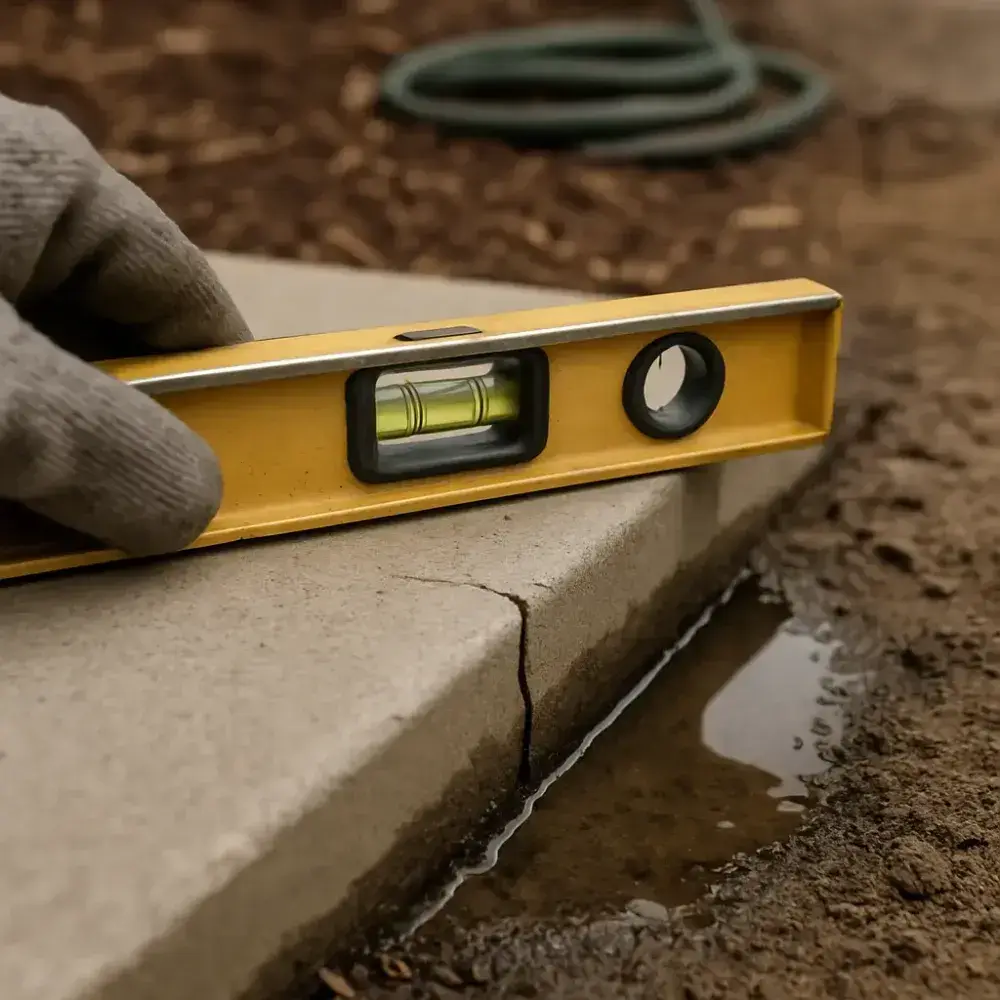
Composite pads are the newer option, and for a lot of homes they’re a solid fit. They’re pre-formed, dense, and rated to carry standby generator weight, and we can set one the same day since there’s no cure time. On stable, well-graded ground, a composite pad performs about the same as concrete over the long run. Where we’d steer someone toward concrete instead is a sloped yard, loose fill dirt, or a spot near the foundation where the ground has settled before.
Either way, the pad has to sit level and keep the generator at the clearance distances your local code requires from windows, doors, and vents. That clearance number matters more than the pad material itself, and we check it every time we set a unit, whether the surface underneath is poured or composite.
Site grading and access are what really move the job. A flat, easy-to-reach spot with good drainage keeps the work simple. A sloped yard, a tight side gap between houses, or ground that needs extra leveling before the pad goes down adds time either way, concrete or composite. When someone asks why one neighbor’s setup came in different from another’s, it’s rarely the pad brand; it’s the ground it’s sitting on.
We don’t have a default we push. We look at the yard, the generator size, and the code clearance, then tell you which pad fits. If your ground is solid and graded well, composite saves you a day of waiting on cure time. If it isn’t, we’ll say so before you spend money on a pad that has to be redone in a year. You can see how pad type and site prep affect what a job like this runs on our pricing page.
Not sure what your Generator pad / placement project needs? Ask us.
Call Today, Get Service Today. Xtreme Air Services is ready to help.
What Happens If the Pad Sits in a Low Spot That Collects Water?
Water pooling around the pad is the question we hear most from people planning a generator install. A generator sits low to the ground and pulls in air right at that level, so a pad set in a natural low spot in the yard can end up sitting in standing water after a heavy North Texas storm.
Most yards in Dallas-Fort Worth have some grade to them, but clay soil doesn’t drain fast. Water that would soak into sandy soil somewhere else can sit on top of clay for a day or two after a big rain. If the pad is set at grade level in a spot where runoff naturally collects, that water has nowhere to go, so it just sits against the base of the unit.
What people notice, if this goes unaddressed, is a generator that sits in mud or shallow water every time it storms. Over time, that kind of standing moisture works against the cabinet, the base, and anything at ground level on the unit. It’s not usually something that shows up right away, which is why we look at drainage before we set the pad, not after.
Site grading and drainage direction are part of what we look at before we ever pour or set a pad. We check where water moves across the yard during rain, not just where the ground looks flat and convenient. Sometimes the best spot for wiring and gas line distance isn’t the best spot for water, and that’s a real tradeoff we’ll walk you through rather than just picking the easy location.
What we do about it comes down to a few things: setting the pad a few inches above grade so runoff sheds off it instead of pooling, angling the pad slightly if the yard calls for it, and, where the site genuinely doesn’t drain well on its own, discussing added site prep before the pad goes down.
Pad and placement work is one part of a larger backup power project for most homeowners, and we handle generator sizing and consultation, transfer switch installation, and fuel line connection as part of that same job, so drainage decisions get made alongside the rest of the install rather than as an afterthought.
If your yard doesn’t have an obvious high spot, that’s not unusual, and it’s not something you need to solve yourself before calling. It’s exactly the kind of thing we walk the site for before quoting the work.
Will the Generator’s Location Be Noisy or Visible From the Yard or Windows?
It can be, depending on where the yard allows the pad to go. A generator has to sit a set distance from windows, doors, and the property line, and away from anything combustible like a wood fence or dryer vent. Those clearance rules come from the manufacturer and the local code, not from what looks best on the lawn, so the spot that keeps the unit out of sight from the porch isn’t always the spot that’s allowed.
Sound is part of the same conversation. A standby generator runs its engine to keep power going during an outage, which means vibration and motor noise for as long as the power’s out, sometimes hours. A pad placed right outside a bedroom window puts that noise closer than most people want once the unit kicks on at 2 a.m. during a storm.
We walk the yard with you before we pour or set anything. We look at where the meter and gas line sit, since the generator has to connect to both, and we check the clearances required from windows, doors, and the property line. From there we talk about what’s visible from the street, the patio, or the neighbor’s fence line, and whether fencing or landscaping can screen the unit without blocking the airflow it needs to run safely.
- Required clearance from windows, doors, and vents
- Distance from the property line and any easements
- Sightlines from the patio, driveway, or street
- Room for airflow around the unit so it isn’t boxed in by fencing or plants
Some yards give you a few good options. Others really only have one spot that meets clearance and still reaches the gas line and electrical panel without a lot of extra piping. When that’s the case, we’ll say so before the pad goes in, rather than let you find out after it’s poured. That’s part of what our generator installation service covers from the start, not just the pad itself.
Site prep, distance from the house, and any grading work all affect what a pad costs, and that gets laid out in writing before we start, with the full breakdown covered on our pricing page.
See our full generator pad and placement service in Sunnyvale for what the complete job involves.
Frequently Asked Questions
Common questions about Generator Pad / Placement in Sunnyvale
What issues come up most often with generator pad placement?
The most common issue is finding out the spot a homeowner picked first doesn’t meet clearance from a window, door, or vent. We check that before we talk pad size at all. Ground movement is the other concern people ask about, since clay soil in this area can shift with wet and dry seasons. We handle both by grading the site and checking clearances before any pad goes in, so problems get caught before the work starts.
How long do I need to wait before the generator can sit on the pad?
It depends on the pad type. A poured concrete pad needs a day or two of dry time before it can carry the generator’s weight. A composite pad is pre-formed, so we can set it the same day since there’s no cure time. Which one makes sense for your yard depends on your soil and how the ground drains, not just how fast you want the job finished.
Can I pick the spot for my generator myself?
You can tell us where you’d like it, but the final spot has to meet clearance from windows, doors, and vents. Sometimes the spot that looks easiest, like against the back wall near the electrical panel, doesn’t measure out once we check it. When that happens, we look at the next best spot on the property instead of shrinking the clearance to make the first one work.
What if my yard doesn’t have an obvious good spot for the pad?
We work with what your lot has. If drainage is poor, the ground is low, or the soil is heavy clay, we’ll tell you that before you approve anything, because it changes what pad type and site prep we recommend. Every yard is different, so the right setup for one house isn’t always the right one next door.
Does this job always need a permit?
Not every job does, but when placement requires a permit or inspection, we handle that as part of the work. Whether one applies depends on your generator and where the unit ends up on your property. We walk through the clearance findings and any code requirements for your yard before a shovel goes in the ground.
Will a pad installed now ever need attention down the road?
Heavy clay soil can shift enough over the years that any pad, poured by anyone, may eventually need a look. Proper site grading and drainage work on day one lower the odds of that happening early. That’s why we check drainage and compact the ground before setting anything, rather than placing a pad on whatever dirt happens to be there.
Ready to Get Started?
Call 972-288-2263 Today, Get Service Today.