


Generator Pad / Placement: When It’s Not the Right Fit for Your Project
The Sunnyvale projects where a new generator pad is not the right call — and what we would do instead.
What’s Covered on This Page
- We Don’t Take Every Generator Pad / Placement Job
- Properties Outside Our 60-Mile Service Area Aren’t a Fit
- Requests to Skip Permits or Code Clearances Aren’t a Fit
- Labor-Only Installs on Customer-Supplied Generators Aren’t a Fit
- Pad Placement Is a Separate Scope From Hookup and Sizing
- How do I know if my generator pad project isn’t a fit for us?
- Who shouldn’t hire us for this work?
- What should I do instead if you turn down my job?
- Why won’t you just pour the pad and let someone else handle the rest?
We Don’t Take Every Generator Pad / Placement Job
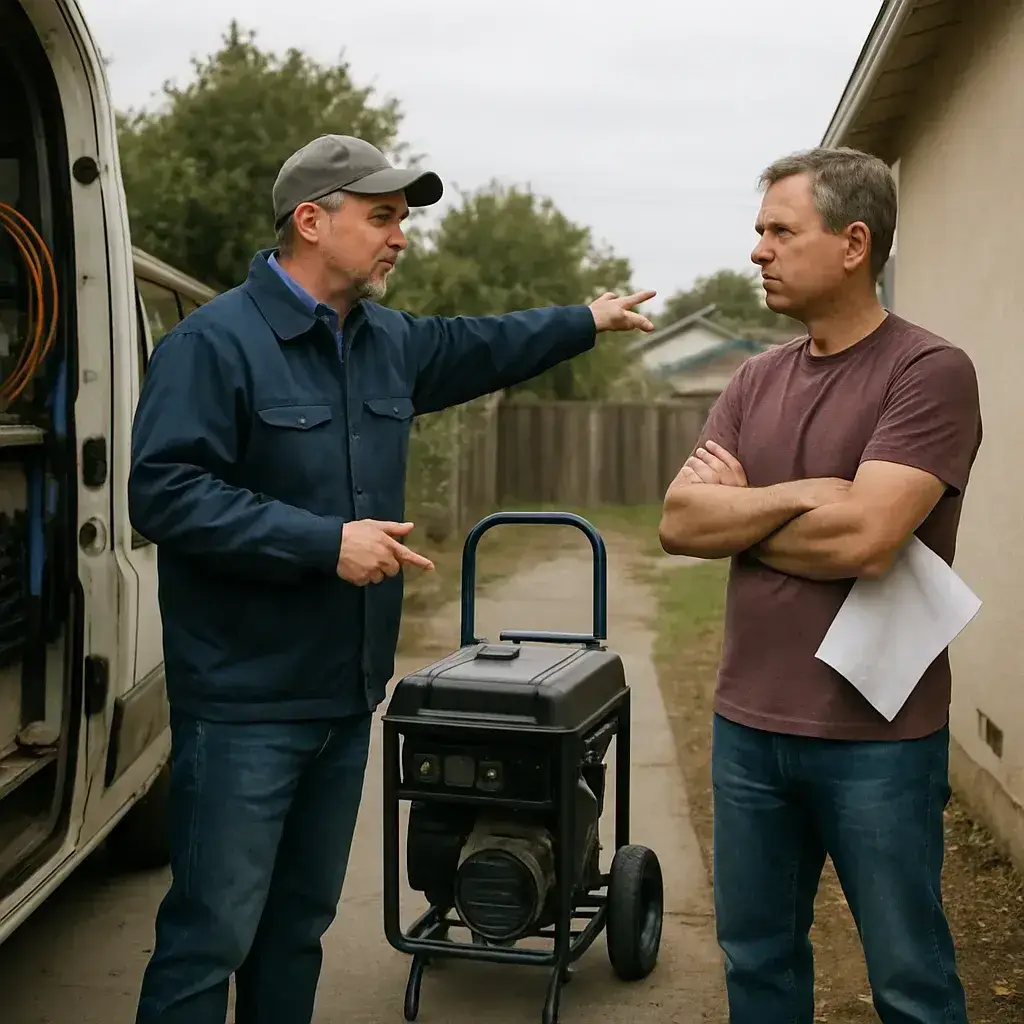
Generator pad and placement work looks simple from the outside. Pour a pad, set the unit, check the clearances. But there are a few situations where we won’t take the job, and we’d rather tell you now than after you’ve called.
Distance is the first one. We cover Sunnyvale and the greater Dallas-Fort Worth Metroplex, including Dallas, Fort Worth, Plano, Frisco, Allen, Irving, Carrollton, and the surrounding towns, within about 60 miles. If your property sits outside that radius, we’ll say so rather than send a truck out for a one-time pour with no way to handle the follow-up work later. A generator pad isn’t a job you want done by someone who can’t come back if the ground settles or the unit needs to be reset.
Code and permits are the second one. Generator placement comes with real clearance rules, distance from windows, doors, fresh air intakes, property lines, and sometimes local permit requirements depending on the jurisdiction. We do this work to code, with permits and inspections when they apply. If someone wants us to set a unit closer than code allows just to save a few feet of pad, or skip the permit step entirely, that’s a job we’ll pass on.
The third one is pad-only work for a generator we didn’t sell and aren’t installing or connecting. We back our installs with a workmanship warranty, and that only holds up if we’re the ones sourcing the unit, sizing the pad correctly for its footprint and vibration load, and handling placement as part of a full install. A bare concrete pour for a generator bought somewhere else, with no connection work attached, isn’t something we generally take on.
If any of that describes your situation, the better move is a local concrete contractor for a standalone pad, or a generator company that can handle the full install where your property sits. If you’re inside our service area and want the pad, placement, and hookup handled as one job, that’s where we’re a fit.
Properties Outside Our 60-Mile Service Area Aren’t a Fit
If your property sits outside our 60-mile service radius, we’re not the right call for your generator pad or placement job. We cover Sunnyvale and the greater Dallas-Fort Worth Metroplex, including the same core cities and towns listed above. That’s a real line we hold, not a soft suggestion.
A pad and placement job isn’t a one-and-done delivery. It sets up the fuel line connection, the electrical transfer switch, and the load testing that come after it. If we pour a pad two hours from Sunnyvale, we can’t reasonably get a truck back out for those follow-up steps, and we won’t pretend a one-time visit covers a generator installation the way it should. So if you’re past our radius, we’ll tell you rather than schedule something we can’t fully stand behind.
This matters more for generator work than for a lot of what we do. A pad that’s poured wrong, sized wrong, or set at the wrong clearance from the house creates problems for whoever installs and services the unit later. If you’re outside our area, look for a local contractor who can handle the pad, the hookup, and the annual service without a long drive every time something needs attention.
If you’re inside our coverage area, the pad and placement work follows the same process as any generator installation service we handle, from sizing the site to setting clearances to code. You can read more about how we approach generator pad and placement in Sunnyvale, including what goes into positioning a unit correctly on your property.
- Core coverage: Sunnyvale, Dallas, Fort Worth, Plano, Frisco, Allen, Irving, Carrollton
- General rule: within roughly 60 miles of Sunnyvale, Texas
- Why it matters here: pad work is tied to fuel line, electrical hookup, and later service visits
None of this is about the size of the job. A pad and placement job runs smaller than a full generator installation, and we could technically pour concrete anywhere a truck can reach. We just don’t think it’s right to take that job if we can’t be there for what comes after: the load testing, the annual service, the call if something needs adjusting. If you’re not sure whether your address falls inside our radius, ask us directly when you call. It’s a quick answer either way.
Requests to Skip Permits or Code Clearances Aren’t a Fit
A generator has to sit a set distance from windows, doors, and fresh air intakes, and it has to sit on a stable, level surface that keeps it above grade and away from standing water. Those clearance numbers come from the manufacturer and from local code, not from guesswork, and they don’t flex just because a spot is more convenient or a fence line gets in the way.
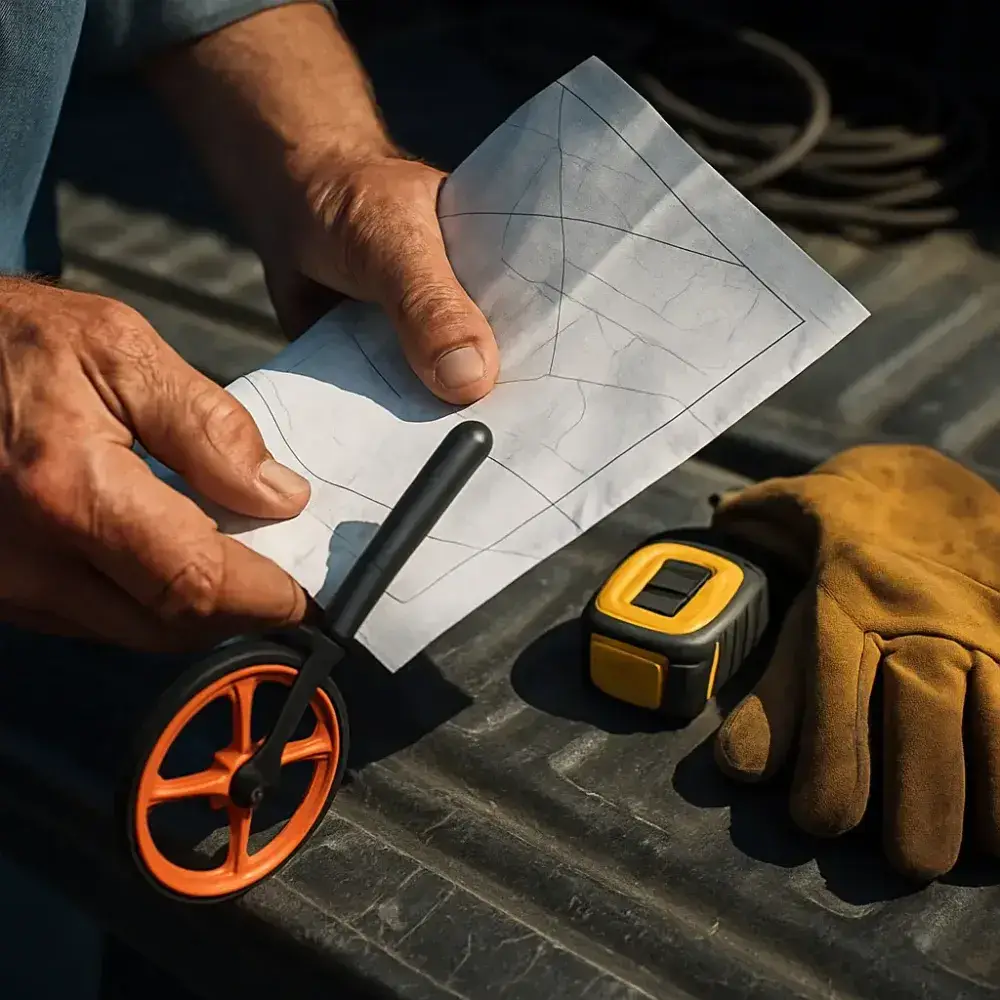
We get asked sometimes to set a unit closer to a window than code allows, or to skip the pad prep and just set the generator on dirt or an old slab that’s cracked and uneven. We won’t do either one. A generator placed too close to the house can push exhaust toward a window or vent, and a unit sitting on an unstable pad can shift, settle, or throw the transfer switch wiring out of alignment over time.
Every job we do is performed to code by licensed technicians, with the proper permits and inspections when they’re required. If the ask is to skip a permit or set a unit in a spot the code doesn’t allow, we’ll respectfully pass on that piece of the job rather than sign off on placement we can’t stand behind.
This isn’t about paperwork for its own sake. A code inspection on a generator install checks the same things we’d want checked anyway: clearance from openings, proper grounding, and a pad that will hold the unit level for years, not just for the first winter storm.
- Placement inside the minimum clearance distance from windows, doors, or fresh air intakes
- Setting the unit on bare dirt, a cracked slab, or another surface that isn’t rated to hold it level long-term
- Skipping the local permit or inspection step on a job where one is required
- Positioning the generator where it blocks a required service clearance around the unit itself
If a site genuinely doesn’t have a spot that meets clearance requirements, that’s worth knowing before any pad gets poured. We’ll walk the property with you, point out where the code allows placement, and work from there rather than force a spot that doesn’t fit. Our generator sizing and consultation covers that groundwork so the pad goes down once, in the right place.
Not sure what your Generator pad / placement project needs? Ask us.
Call Today, Get Service Today. Xtreme Air Services is ready to help.
Labor-Only Installs on Customer-Supplied Generators Aren’t a Fit
If you bought a generator on your own and just want us to pour the pad and set it in place, we’re probably not the right call. We back every generator pad and placement job with a workmanship warranty, and that warranty only makes sense on equipment we can source, verify, and stand behind ourselves. When a unit shows up in a box from somewhere else, we don’t know its full service history, whether it was stored right, or if it even matches the clearance and venting specs for the spot you have in mind.
This isn’t about the pad work itself. Pouring or setting a pad and leveling a generator to code clearance is straightforward work we do regularly as part of our generator installation service. The issue is pairing that work with equipment we didn’t sell and can’t warranty. If something’s off with the unit later, a mount that looked solid on day one, a base that wasn’t rated for that generator’s weight, or clearances that don’t match the manufacturer’s spec, we’d rather not put our name on a job where we can’t answer for the equipment side.
We also generally don’t do labor-only installs for the same reason. It’s the same principle we apply across HVAC, plumbing, and electrical work: we install what we can verify, and we stand behind it afterward. A generator pad job is a small piece of a bigger picture, backup power assessment, correct generator sizing, and a transfer switch installation that all has to line up. When we handle the whole project through our generator installation service, we control those pieces and the warranty means something.
So what’s the better option if you already own a generator? Talk to whoever sold it to you about installation, or look for a contractor who’s willing to install customer-supplied equipment without a workmanship guarantee attached. That’s a legitimate path for some people. It’s just not ours. If you’re still deciding on a generator and haven’t purchased one, that’s a different conversation entirely, and one we’re glad to have, since we can size it, place it, and back the whole job from the start.
Pad Placement Is a Separate Scope From Hookup and Sizing
Pad placement is the ground work. It’s pouring or setting a pad, leveling it, and positioning the generator so it sits at the right clearances from your house, windows, and vents. That’s the whole job. It isn’t sizing your generator, running gas or electrical lines, or wiring a transfer switch, and we don’t blur those together on the invoice or in the conversation.
We quote pad/placement as its own line item because it prices out differently than the rest of a generator project. What’s included is the pad material, professional set and leveling, and clearance verification against code. What’s excluded is the generator unit itself, the gas or electrical hookup, any heavy site grading, code corrections, and permits unless we’ve already said otherwise in writing.
- Included: pad material and install, leveling, clearance check against code setback rules
- Not included: the generator, gas line connection, electrical hookup, transfer switch wiring
- Not included: major site grading, drainage fixes, or permit filing unless stated up front
- Separate services: generator sizing and consultation, generator fuel line connection, transfer switch installation
If you’re standing in your yard trying to figure out where a whole-home standby unit should go and what size you need, pad placement by itself won’t answer that. That’s a sizing and site conversation first. We do generator sizing and consultation as its own step, and it’s the piece that tells you what pad footprint, clearance, and fuel connection you’re working toward before concrete gets poured.
Someone who already owns a generator, has a spot picked out, and just needs the physical pad and setting done right is exactly who this scope fits. Someone starting from zero, no unit yet, no sizing done, no fuel line run, needs more than pad placement covers. Trying to save a step by skipping sizing usually means redoing the pad once the right unit and clearances are known, which costs more than doing it in order the first time.
You can see how pad placement fits into the full project on our generator installation service page, alongside sizing, fuel line connection, and transfer switch work.
See our full generator pad and placement service in Sunnyvale for what the complete job involves.
Frequently Asked Questions
Common questions about Generator Pad / Placement in Sunnyvale
How do I know if my generator pad project isn’t a fit for us?
Three things rule a job out: your property sitting outside our 60-mile radius, a request to skip code clearances or permits, and pad-only work for a generator we didn’t sell or install. If any of those describe your situation, we’ll tell you upfront instead of scheduling the job. We’d rather point you toward the right option than pour a pad we can’t fully stand behind.
Who shouldn’t hire us for this work?
Anyone outside our 60-mile Sunnyvale service area, anyone who wants a unit placed closer than code allows, and anyone looking for a standalone pad for a generator sourced elsewhere. Our workmanship warranty depends on us sizing the pad, sourcing the unit, and handling the full install together. A bare concrete pour with no connection work isn’t something we take on.
What should I do instead if you turn down my job?
Look for a local concrete contractor if you just need a standalone pad, or a generator company that covers your property’s location for a full install. Either option can handle the pad, hookup, and follow-up service without the distance or scope problems we run into. We’d rather send you toward the right fit than take a job we can’t service afterward.
Why won’t you just pour the pad and let someone else handle the rest?
Because a pad isn’t a stand-alone piece of the job. It has to be sized for the generator’s footprint and vibration load, and set at the right clearance for the fuel line and electrical hookup that come next. If we’re not doing that full install, we can’t guarantee the pad was built right for it. That’s why we keep pad work tied to a complete generator installation.
Ready to Get Started?
Call 972-288-2263 Today, Get Service Today.