


Commercial HVAC Installation in Fort Worth: What to Know Before You Sign a Quote
New commercial systems scoped and sized for your building, with what's included and what costs extra laid out first.
What’s Covered on This Page
- Know What Scope Tier Your Installation Falls Into
- Verify the Contractor’s License Before You Sign Anything
- Expect a Fort Worth Mechanical Permit on Every Installation
- What Happens From Site Visit to Startup
- Decide if Repair Can Solve the Problem Instead
- How long does a commercial HVAC installation take in Fort Worth?
- Can my business stay open during the HVAC installation?
- Does my landlord need to approve a commercial HVAC installation?
Know What Scope Tier Your Installation Falls Into
That $10,000-$100,000 range is wide on purpose. A small office unit and a full multi-unit retail building aren’t the same job, and we won’t pretend they are. The good news is that most installs fall into one of three clear tiers. Once you know which one is yours, the number starts to make sense.
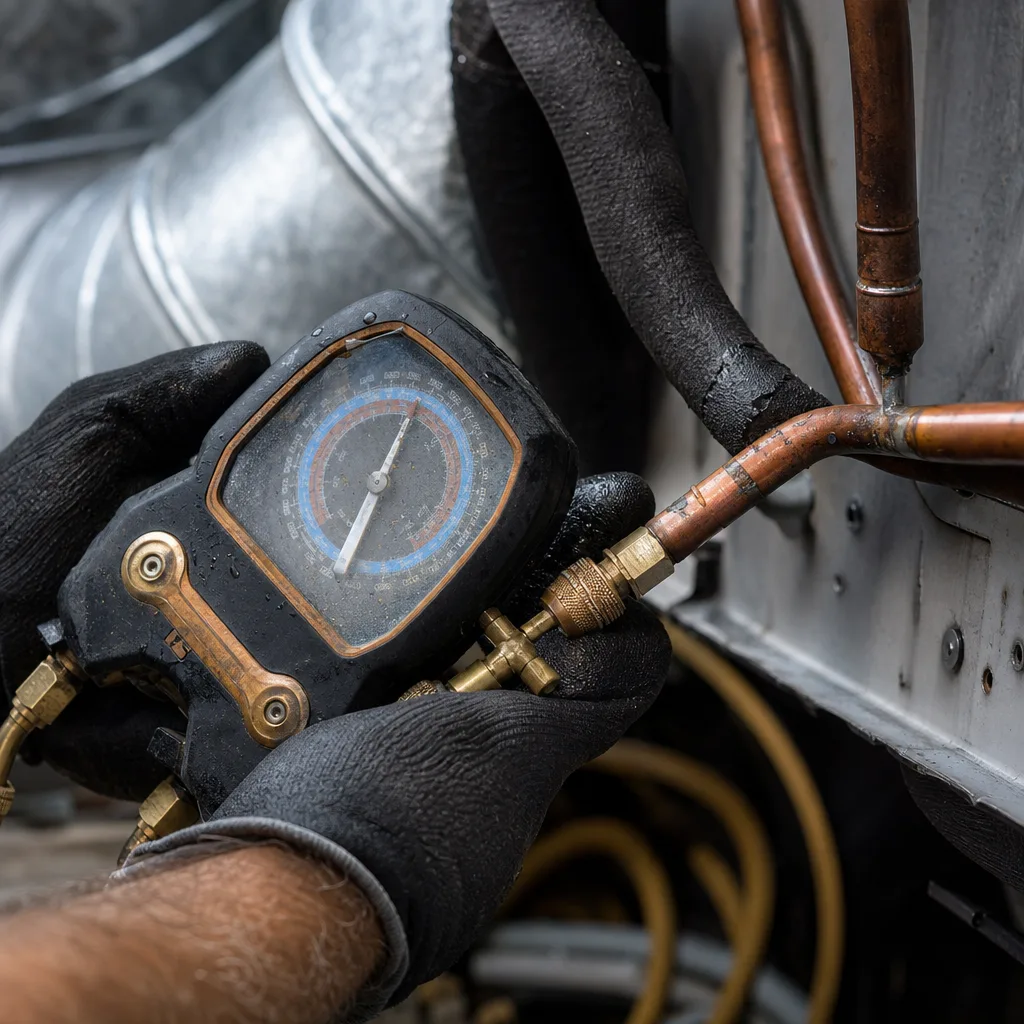
Tier 1 is the like-for-like replacement. This is our most common job. You’re swapping old equipment for new using the existing connections, with no major changes to your building. It typically runs $28,000-$64,000. That covers the equipment and materials, professional installation, standard connections, startup and testing, and haul-away of the old unit. If your ductwork, wiring, and plumbing are in good shape and the new unit fits where the old one sat, you’re probably here.
Tier 2 is a replacement with modifications. The new equipment is close to what you had, but something around it has to change. Maybe the ductwork is leaking or sized wrong. Maybe the electrical service can’t carry the new load. Maybe an inspection turns up something that has to be brought up to current code. These items aren’t part of a standard install. Duct, electrical, and plumbing changes, code corrections, and permits are excluded unless they’re written into your quote. We’ll list them as separate lines so you can see exactly what each fix costs.
Tier 3 is a larger or custom job. Higher tonnage, multiple units, tight or hard-to-reach equipment spots, or custom fabrication all push the price toward the upper end of the range. If your building needs ductwork fabricated to fit an odd space, or the equipment has to go somewhere a standard rig can’t easily reach, plan for this tier.
Here’s what moves the price within any tier:
- Size and capacity. More tonnage means bigger equipment and a bigger price.
- Efficiency rating. A higher SEER2 or AFUE number means the unit uses less energy to cool or heat. It costs more up front and can lower your monthly bills.
- Brand and model.
- Ease of access. A clear roof hatch costs less to work with than a crowded mechanical room.
- Condition of existing ductwork, wiring, and plumbing.
- Code upgrades and permits.
- Any custom fabrication.
One honest tip: if you’re not sure which tier you’re in, don’t guess based on the age of your building. Two buildings built the same year can need very different work depending on how they’ve been kept up. The only way to know for sure is to have someone look at your equipment, your ducts, and your electrical before giving you a number.
If the total is more than you planned for, flexible financing is available on qualifying installations and larger jobs, on approved credit. That can let you replace failing equipment now instead of nursing it through another Texas summer.
Verify the Contractor’s License Before You Sign Anything
A commercial HVAC install is a big check to write. Before you sign, take ten minutes to confirm that the company on the quote is licensed to do the job. That short step protects your building, your tenants, and your money.
In Texas, air conditioning and refrigeration contractors are licensed by the Texas Department of Licensing and Regulation, called TDLR. Anyone can look up a license for free on the TDLR website. You don’t need to take a contractor’s word for it.
Here’s what to check:
- The license number is printed on the quote. If it’s missing, ask for it. A real contractor won’t mind.
- The name on the license matches the company. Look the number up and make sure it belongs to the business you’re hiring, not a friend or a former employer.
- The license class fits your job. Texas licenses come in different classes, and some limit the size of system a contractor can work on. Ask which class they hold and whether it covers the tonnage on your quote.
- They’re pulling the permit. Ask who’s filing with the City of Fort Worth. It should be the licensed contractor, under their own license. If you’re asked to pull it yourself as the owner, treat that as a red flag.
- They can show proof of insurance. Ask for a certificate of insurance. Many landlords and property managers require one before any crew can go on the roof.
- Their techs are certified to handle refrigerant. Commercial units hold a lot of it, and federal rules say only certified technicians can work with it.
Watch the electrical side too. Many installs need a new disconnect, a bigger breaker, or new wiring to carry the load. That work calls for a licensed electrician. If the HVAC company plans to hand it off, ask who’s doing it and check that person’s license as well.
Why go to all this trouble? When something goes wrong with unlicensed work, you’re the one stuck with it. An install done without a proper permit can fail inspection, delay a lease, or come up when you sell or refinance the building. A low bid from an unlicensed crew can cost far more than it saves once the work has to be torn out and redone.
We make this part easy. Xtreme Air Services is licensed and insured, and our HVAC license number is TACLA29023C. Look it up on the TDLR site before we ever set foot on your roof. We’d rather you check than wonder. If you have questions about our license class, insurance, or how the permit will be handled for your building, just ask. You’ll get a straight answer from a real person.
Expect a Fort Worth Mechanical Permit on Every Installation
Plan on a mechanical permit for your commercial HVAC installation in Fort Worth, even if it’s a straight swap of one rooftop unit for another. Some owners see the permit as red tape that slows the job down. It’s really your proof that the new system was put in safely and checked by someone who doesn’t work for your contractor.
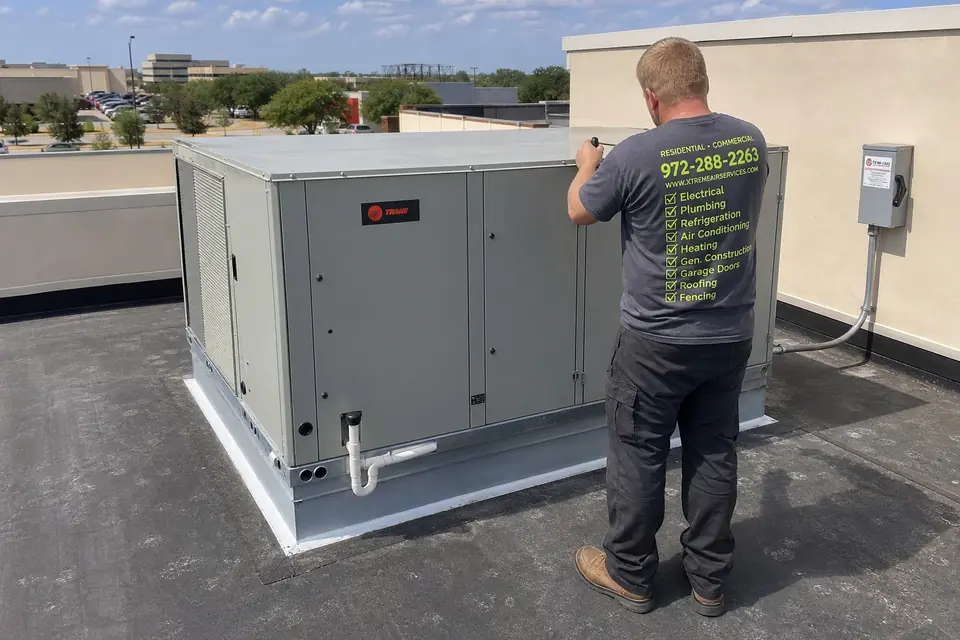
You already know the licensed contractor should be the one filing it. Here’s what the process looks like from your side.
- The application. The contractor files with the City of Fort Worth and describes the equipment, its size, and where it’s going. Bigger jobs, or jobs that change ductwork, add tonnage, or move equipment, may need drawings and a plan review first.
- Related permits. If the install needs new wiring, a bigger breaker, or a new disconnect, expect an electrical permit too. Gas heat sections and condensate drain changes can bring in other trades and their own sign-offs.
- The inspection. A city inspector checks the finished work. That usually means equipment mounting, clearances, electrical connections, gas piping if you have it, and drainage.
- Final approval. Once the inspection passes, the permit is closed out. That closed permit is the piece of paper you want in your file.
On cost, be ready for a separate line. Permits aren’t part of a standard installation unless they’re written into your quote. When you compare bids, check whether each one includes the permit. A quote that leaves it out isn’t cheaper. It just hasn’t counted everything yet.
On timing, the permit and inspection are part of the schedule, not something extra stacked on top. If your current unit is limping along, start the process before it quits on a 100-degree day. Waiting until the equipment fails in July puts the permit, the equipment order, and the crew all on the clock at once, while your tenants or customers sit in the heat.
A few things help the inspection go smoothly:
- Make sure someone can let the inspector onto the roof or into the mechanical room on inspection day.
- If you lease, get your landlord’s written okay before work starts. Many leases require it for rooftop work.
- Tell your contractor about any past work that may not have been permitted. It’s better to know before the inspector finds it.
After the job, keep the closed permit with your equipment paperwork. Buyers, lenders, insurers, and future tenants may ask for it. An open or missing permit can hold up a sale or a refinance, and fixing it later usually means opening up work that’s already finished.
If a contractor tells you the permit isn’t needed, or offers to knock money off the price to skip it, take that as your answer about how they’ll handle the rest of the job.
Need help with Commercial HVAC installation?
Call Today, Get Service Today. Xtreme Air Services — Fort Worth is ready to help.
What Happens From Site Visit to Startup
A good commercial install follows a clear path. Each step gives you a chance to see that the job is being done right, not just done fast. Here’s how it should go.
1. The site visit. Someone should walk your building, not just look at a photo of the old unit. That means checking the existing equipment and its size, the roof curb or pad it sits on, and how the crew will get to it. It also means checking the ductwork, the electrical supply, the gas line if you have gas heat, and where the condensate drains. Expect questions about your hours, how many people are in the space, and what goes on there. Those answers shape everything that comes next.
2. Sizing the system. Don’t let anyone just match the tonnage on the old nameplate. Buildings change. An office that’s now a restaurant, or a warehouse that added a break room, needs different cooling than it did 15 years ago. A cooling load calculation works out what your space needs. A unit that’s too big turns on and off in short bursts. It wears out faster and leaves the air damp and sticky. A unit that’s too small runs all day and still can’t keep up on a Fort Worth afternoon in August.
3. The written quote. This is where the tier you landed in earlier gets confirmed on paper. Any modifications should show up as their own lines.
4. Ordering and scheduling. Commercial equipment isn’t always sitting on a shelf. While it’s on order, the permit you read about above moves forward. This is also when you plan the shutdown with your contractor. Ask how long your building will be without cooling, and whether the work can happen early in the morning or on a slow day. If the new unit has a different footprint than the old one, a curb adapter may need to be made so it sits right on your roof. Rooftop jobs may also need a crane, which has to be booked ahead.
5. Install day. The old unit is shut down, its refrigerant is recovered, and it’s disconnected and removed. The new unit is set in place and tied into your ducts, power, gas, drain, and thermostat. Haul-away of the old unit is part of our standard installation, so you’re not left with a dead rooftop unit sitting in your parking lot.
6. Startup and testing. This step separates a finished job from a unit that’s simply bolted down. Startup and testing are included in our standard installation. Before anyone calls the job done, the new system should be checked for:
- The right refrigerant charge for the unit
- Good airflow at the supply registers
- Correct voltage and amp readings on the electrical side
- Heat that fires and runs safely, if your unit has a heat section
- A condensate drain that flows freely, so water stays out of your ceiling
- Thermostat or building controls that turn the system on and off when they should
If some rooms run hot while others run cold after startup, the air may need to be balanced so each area gets its fair share. Bring it up before the crew leaves.
7. The handoff. Once the city inspection passes, you should walk away with the equipment model and serial numbers, the filter size, and a clear idea of when the system needs its first maintenance visit. Keep that paperwork with your closed permit. The next person who works on your system will thank you.
Watch Our Video
See How We Handle Commercial HVAC installation in Fort Worth
Xtreme Air Services — Fort Worth
Decide if Repair Can Solve the Problem Instead
Not every failing unit needs to be replaced. Plenty of commercial systems that quit on a hot afternoon need one part, not a whole new rooftop unit. Before you spend $28,000 or more on an install, find out whether a repair will get you back to normal.
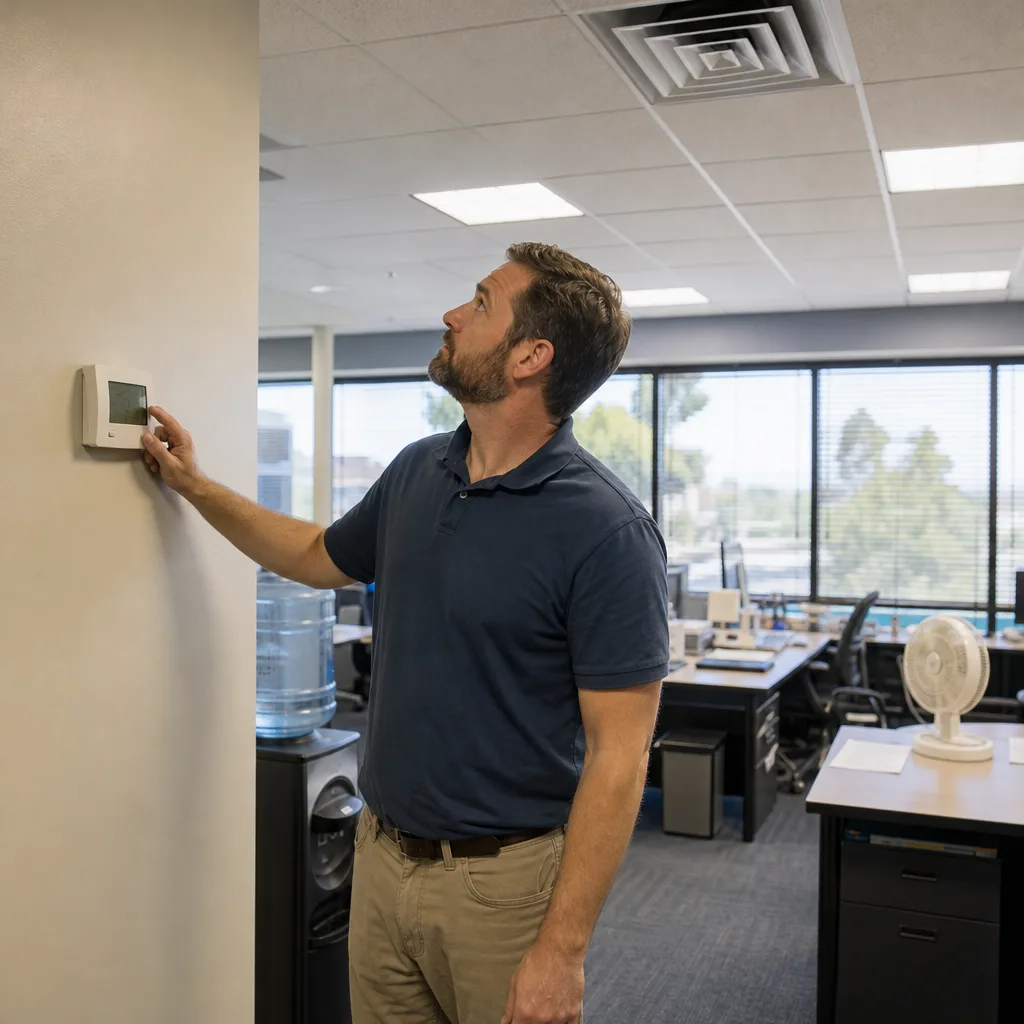
Repair is usually the right call when one thing broke and the rest of the system is in good shape. Common examples:
- A bad capacitor or contactor. These are small electrical parts that help the motors start. When one fails, the unit may hum and do nothing. They’re quick and inexpensive to replace.
- A failed fan or blower motor. The unit runs but moves little or no air. Swapping the motor often fixes it.
- A clogged condensate drain. Water backs up, trips a safety switch, and shuts the system off. Clearing the line solves it.
- Dirty coils. The unit runs but can’t keep up because heat can’t move through the grime. A good cleaning can bring back a lot of lost cooling.
- Thermostat or control problems. The equipment is fine, but it isn’t getting the right signal to turn on or off.
- A small refrigerant leak on a younger unit. If it can be found and sealed, repair often makes sense.
Replacement starts to make more sense when the problems pile up. Watch for these signs:
- The same unit keeps breaking down, and each repair only buys a few weeks.
- The compressor fails on an older unit. The compressor is the heart of the system, and replacing it on aging equipment can cost a big share of a new unit.
- The cabinet, coils, or base pan are rusted through, or the heat section shows cracks or damage.
- The unit runs all day and still can’t keep the space comfortable, even after it’s been serviced.
- Your building changed. A space that went from storage to a busy kitchen or crowded office may need more cooling than the old unit can ever give.
- The unit uses an older refrigerant that has become scarce and costly to refill.
Here’s a simple way to think about it. Look at the age of the unit, how often it’s needed work, and what this repair costs. A pricey repair on a young unit with a clean history is usually worth it. A pricey repair on an old unit that’s been patched over and over usually isn’t. Then you’re just paying to keep failing equipment alive a little longer.
There’s also a middle path. If you already know replacement is coming, a smaller repair can keep your business cool while the permit moves forward and the new equipment is on order. That can make sense in a Fort Worth summer. Waiting weeks with no cooling isn’t an option for most stores, offices, or restaurants.
To find out which side of the line you’re on, start with a diagnostic visit, not an install quote. Our service-call fee is $26-$99, and it’s credited toward the repair if you go ahead with Xtreme Air Services. If a repair will do the job, that’s what we’ll tell you. We handle commercial HVAC repair and maintenance and rooftop unit service too. You don’t need a new system to get the help you need.
Frequently Asked Questions
Common questions about Commercial HVAC installation
How long does a commercial HVAC installation take in Fort Worth?
Most like-for-like swaps take one to a few days once the equipment is on site and the permit is filed. The real wait is often before install day, since commercial equipment isn’t always in stock and has to be ordered, and the Fort Worth mechanical permit has to move through review and inspection. If the job needs duct, electrical, or custom fabrication work, plan on more time for those extra steps.
Can my business stay open during the HVAC installation?
In most cases, yes, since the old unit usually keeps running until install day itself. Talk to your contractor about scheduling the shutdown early in the morning or on a slower day to limit the time your building goes without cooling. If a rooftop crane is needed, that has to be booked ahead, so ask about timing as soon as you get your quote.
Does my landlord need to approve a commercial HVAC installation?
Check your lease before work starts, since many commercial leases require written landlord approval for rooftop work. This matters even for a straightforward swap, because the City of Fort Worth will inspect the finished job and expects someone to be able to let the inspector onto the roof or into the mechanical room. Getting that approval early keeps the permit and inspection process on schedule.
Ready to Get Started?
Call (817) 677-1907 Today, Get Service Today.