


Boiler Installation in Fort Worth
Boiler installs for buildings that heat with water, with what's included and what drives the cost explained.
What’s Covered on This Page
- Boiler Installation Is Mechanical Contractor Work, Not a Furnace Swap
- Signs Your Building Needs a New Boiler
- When Repair Makes More Sense Than Full Installation
- What Happens During a Boiler Installation
- What Drives Boiler Installation Cost
- How long does a boiler installation take from start to finish?
- Can I keep my old radiators or baseboards when I get a new boiler?
- Do I need a bigger boiler if I finished my basement or added a room?
- What should I ask a boiler installer before I hire them?
Boiler Installation Is Mechanical Contractor Work, Not a Furnace Swap
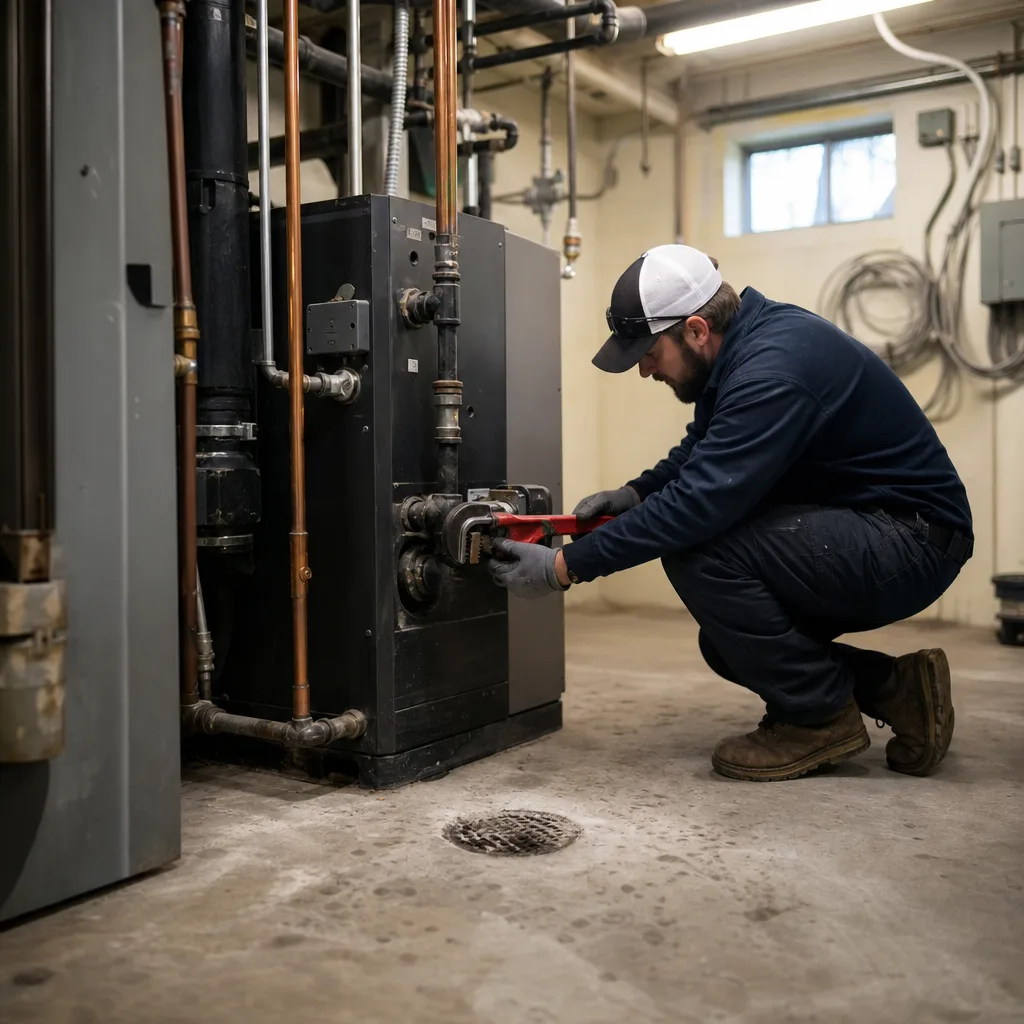
Here’s the part a lot of folks don’t expect. Boiler installation isn’t like swapping a furnace. A furnace heats air and pushes it through ducts. A boiler heats water, then sends that hot water (or steam) through a closed loop of pipes to radiators, baseboards, or tubing in your floors. When you replace the boiler, you’re plugging a new heart into an old set of arteries. Everything it connects to has to work with it.
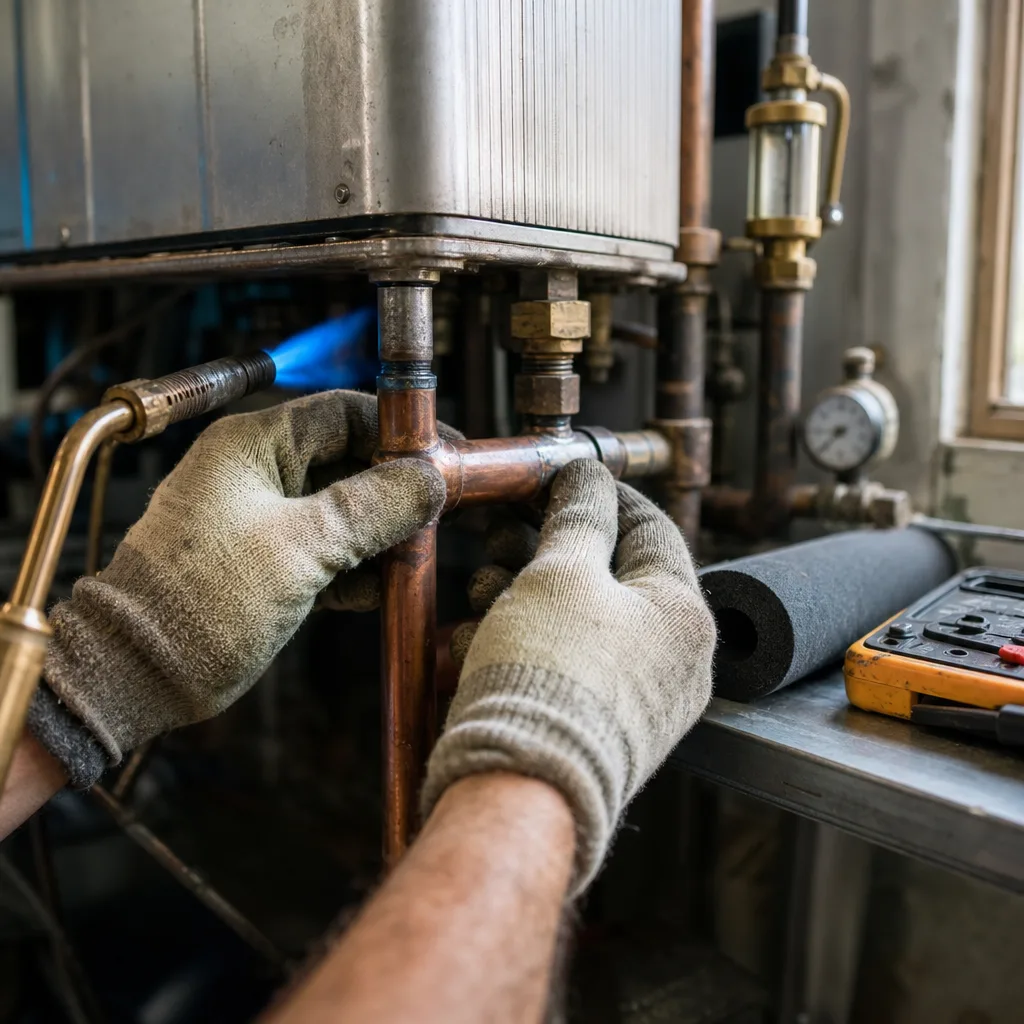
In North Texas, most homes heat with forced air, so plenty of heating companies rarely touch hydronic systems. If you’ve got a boiler in an older Fort Worth home or a commercial building downtown, you want someone who works with pressurized water systems and doesn’t treat yours like a furnace.
A real boiler installation touches all of this:
- Sizing: the boiler should match how much heat your building loses, not just the number printed on the old unit’s label.
- Near-boiler piping: the pipes right around the boiler control how water flows in and out. Bad piping can make a brand-new boiler short-cycle, run loud, or wear out early.
- Circulator pumps: these move the hot water through your home. They have to fit the new boiler and the length of your pipe runs.
- Expansion tank: water grows as it heats. This tank gives it room so pressure doesn’t climb too high.
- Pressure relief valve: this is a key safety part. It lets water out if pressure ever gets dangerous.
- Venting and gas or electrical hookups: a gas boiler has to vent exhaust safely outside, and newer high-efficiency models often vent differently than the old one did.
- Startup and commissioning: filling the system, purging trapped air, setting pressure and temperatures, and testing every zone before anyone calls it done.
Skip any one of those and the trouble shows up later. You might see cold rooms at the end of the loop, banging or gurgling pipes, or a relief valve dripping on the floor. Sometimes you get a boiler that turns on and off all day and burns more fuel than the old one did. None of that is the boiler’s fault. It’s an install that treated a system like a single appliance.
That’s why boiler work sits on the mechanical side of our business, right next to boiler system design, hydronic heating installation, piping installation, pump installation and repair, and boiler commissioning. Those all fall under one team, so the people sizing your boiler also understand the pipes and pumps it has to push water through.
Xtreme Air Services is a licensed and insured HVAC, plumbing, and electrical contractor (HVAC License #TACLA29023C). That matters with a boiler, because the job crosses all three trades. Water, gas or power, and controls all meet in the same corner of your mechanical room. When one accountable team handles every piece, you aren’t stuck coordinating three contractors who each blame the other when something isn’t right.
Signs Your Building Needs a New Boiler
Not every boiler problem means you need a new boiler. Since a boiler is one part of a bigger system, a lot of trouble that seems to come from the boiler starts somewhere else in the loop. So before you spend money on a new unit, it helps to know which signs point to replacement and which ones point to a repair.
These signs usually mean the boiler itself is reaching the end of its life:
- Water leaking from the boiler body. A drip from a fitting or valve can often be fixed. Water coming from the boiler itself, or rust and corrosion on the casing, often points to damage inside that isn’t worth repairing.
- Repairs keep stacking up. If you’ve paid for one fix after another over the last few winters and each one only buys a little time, your money may do more good going toward a new boiler.
- Parts are hard to find. On older boilers, replacement parts can be slow to arrive or no longer made. That turns a simple repair into a long wait with no heat.
- Your heating bills climb while comfort drops. If you’re paying more each winter for the same or less warmth, the boiler may be losing efficiency as it ages.
- It can’t keep up on the coldest days. North Texas doesn’t get many hard freezes, but when one hits, a worn-out boiler is often the first thing to fall behind. Rooms stay cold even though it runs nonstop.
- Your building changed. An addition, a finished space, or a change in how a commercial space is used can leave the old boiler the wrong size for what it has to heat now.
Now the honest part. Some symptoms sound serious but often have nothing to do with the boiler wearing out:
- Cold radiators at the top of the house or the end of a run, with gurgling sounds. That’s often air trapped in the lines. Purging the air can bring the heat right back.
- A pressure relief valve that keeps dripping. This often traces back to the expansion tank we covered above, not to the boiler.
- Some zones heat and others don’t. A failed circulator pump or zone valve can cause this. Replacing one part costs far less than a whole new boiler.
- The boiler won’t fire at all. This can come from a bad thermostat, a control board, or an ignition part. Those are usually repairable.
If what you’re seeing fits the second list, you may only need boiler repair. Replacing a boiler to fix a pump problem leaves you with a new boiler and the same bad pump.
That’s why the person checking your system should look at the whole loop before giving you a price. They should check the pumps, the tank, the valves, and the controls. Then they should tell you plainly whether the boiler is the problem. If it is, you’ll know what to replace and why. If it isn’t, you keep your boiler and fix what’s broken.
When Repair Makes More Sense Than Full Installation
If your boiler is sound and the trouble is a part, fix the part. That’s the honest answer, and it’s the right call more often than people expect. A new boiler is a big spend. It should solve a problem a repair can’t.
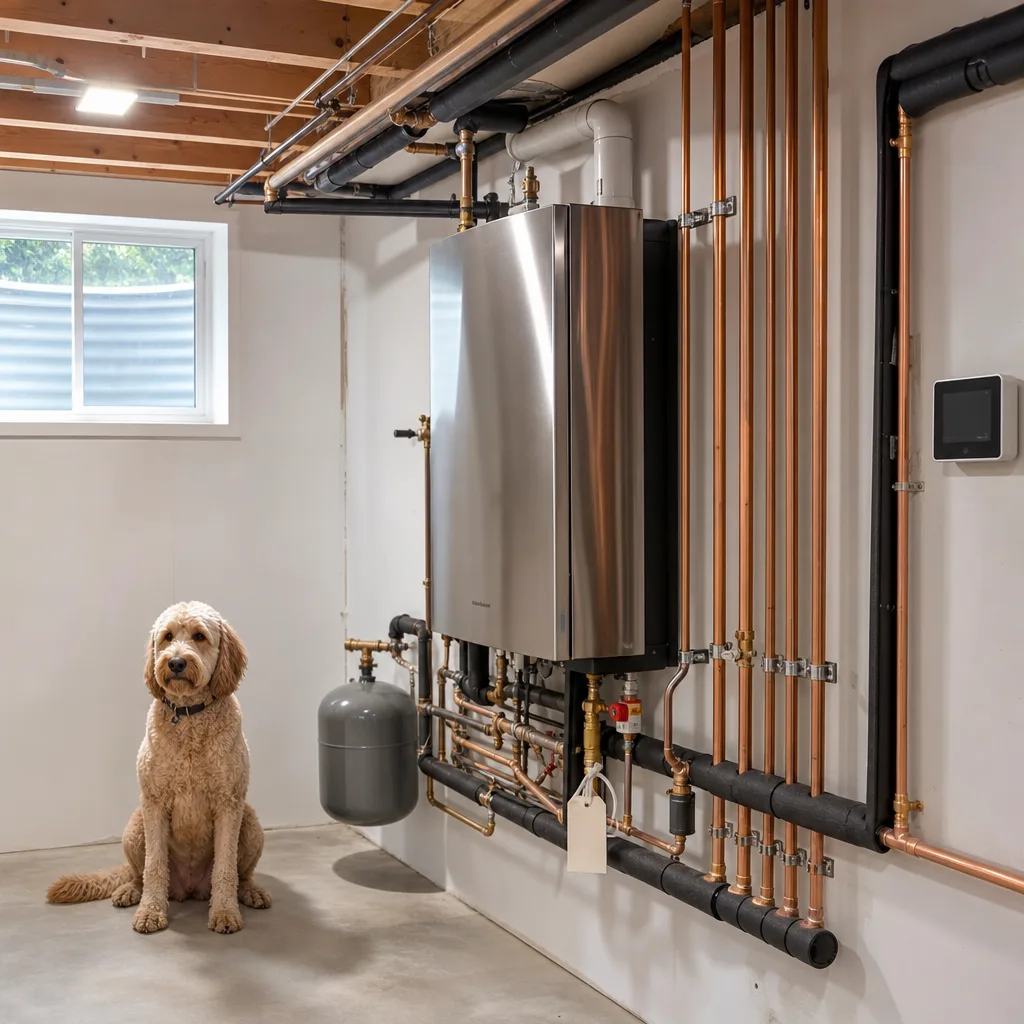
Here’s how to tell when repair is the smarter move:
- The boiler body is dry and solid. No leaks from the boiler itself and no rust eating through the casing means the core of the unit still has life in it.
- It’s the first real problem in years. One failed part on a boiler that’s run quietly for a long time isn’t a pattern. It’s normal wear.
- The part is still easy to get. If the fix can happen in a day or two, you’re back to heat fast without a big project.
- The repair costs a small share of a new install. Paying for one fix to buy several more good winters is a fair trade.
- The rest of your system is in good shape. If the pipes, radiators, and controls all work well, a new boiler alone won’t change much about how your home feels.
There’s also a North Texas reason to slow down. Our heating season is short compared to colder parts of the country. A high-efficiency boiler burns less fuel, but when it only runs hard for a few months a year, those savings add up slowly. If efficiency is your only reason to replace a boiler that still works, the payback may take longer than you’d like. That doesn’t mean don’t upgrade. It means upgrade when the old one is truly done, not just because a newer model exists.
Sometimes the best answer is to repair now and plan later. Say your boiler is getting older and a pump fails during a cold front. You can fix the pump, get your heat back today, and then plan a replacement for the warmer months. You’ll have time to compare options and budget for it, instead of making a rushed choice in a cold house. For a commercial building, that can mean keeping tenants warm through the winter and scheduling the install when the heat’s off and nobody’s affected.
And if nothing’s broken at all, you may not need either one. Regular boiler maintenance can catch small issues, like a weak pump or low system pressure, before they turn into a no-heat call.
When you do call us to look at a boiler, there’s a $26-$99 service-call fee, and it’s credited toward the repair if you proceed with Xtreme Air Services. So finding out the real problem doesn’t lock you into a new boiler. If a repair is the right answer, that’s the answer you’ll get, along with upfront flat-rate pricing before any work starts.
Replacement makes sense when the boiler itself is failing, when repairs keep stacking up, or when your building has outgrown it. Outside of those cases, keep the boiler you have and fix what’s broken.
Have questions? We’re happy to help.
Call Today, Get Service Today. Xtreme Air Services — Fort Worth is ready to help.
What Happens During a Boiler Installation
A good boiler installation follows a clear order, and most of the important work happens before the old boiler ever comes out. If you know the steps, you’ll know what to ask and you’ll be able to spot a job that skips ahead.
Here’s how it should go, start to finish:
- A look at the whole system. Before anyone quotes a price, the installer should check your building, not just the old boiler’s label. That means looking at the pipes, the pumps, the venting, and how many zones you have. This is where the sizing we talked about earlier gets done.
- A written quote that spells out the job. You should see which boiler you’re getting, what’s included, and what isn’t. Ask directly about permits and any code fixes, since those are often handled separately.
- Planning the heat-off window. Your heat will be off while the old boiler is out and the new one goes in. A simple like-for-like swap is a shorter job than one that needs new venting or piping. For a business, this is when you pick a day that affects tenants or staff the least.
- Draining and removing the old boiler. The system is shut down, the water is drained, and the gas or power is safely disconnected. Then the old unit is pulled out and hauled away.
- Setting and connecting the new boiler. The new unit goes in place. The near-boiler piping, pumps, expansion tank, and relief valve are connected or updated to match it. Venting is set up for the new model, which matters most when you’re moving from an older boiler to a high-efficiency one.
- Startup and testing. The system is filled, bled of air, set to the right pressure, and tested zone by zone, as covered above. A boiler that just turns on hasn’t been tested yet.
- A walkthrough with you. Before the installer leaves, you should know where the shutoffs are, what normal pressure looks like on the gauge, and how to work your thermostat or controls.
With Xtreme Air Services, a standard boiler installation includes the equipment and materials, professional installation, standard connections, startup and testing, and haul-away of the old unit. Duct, electrical, or plumbing changes, code corrections, and permits aren’t included unless your quote says so. We tell you that up front so nothing on the final bill catches you off guard.
Pay attention to step five. That’s where older Fort Worth homes and buildings can surprise you. If the existing pipes are corroded, the venting doesn’t suit a modern boiler, or the gas line or electrical isn’t up to code, it’ll come up here. A careful installer finds those things during the first look and puts them in the quote. That way you aren’t hearing about them halfway through the job with the heat already off.
One more thing to watch for. If someone wants to skip the first look and quote you over the phone using only the old boiler’s model number, that’s a furnace-swap mindset. A boiler is part of a system, and the quote should prove the installer looked at that system.
Watch Our Video
See How We Handle Boiler installation in Fort Worth
Xtreme Air Services — Fort Worth
What Drives Boiler Installation Cost
A boiler installation with Xtreme Air Services typically falls between $6,000-$20,000. Our most common job runs $8,800-$14,500. That’s a standard like-for-like boiler installation that uses your existing connections with no major modifications. That price covers equipment and materials plus professional installation, startup, and testing. Commercial jobs run higher.
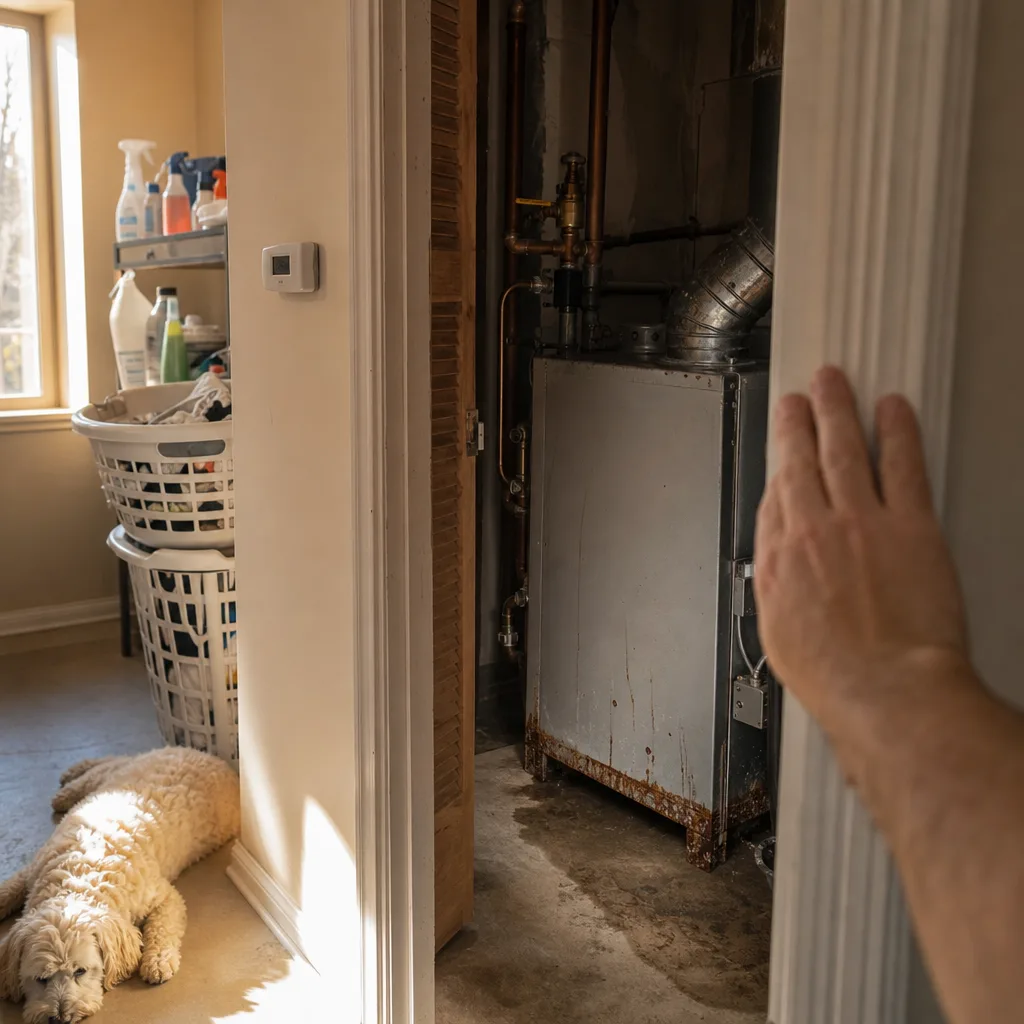
Why such a wide range? Because the price follows your whole system, not just the box. Here’s what moves it up or down:
- Size and capacity. A building that loses more heat needs a bigger boiler, and bigger boilers cost more. Sizing it right also keeps you from paying for heat you’ll never use.
- Efficiency. AFUE is the number that tells you how much of your fuel turns into heat instead of going up the vent. A higher number burns less gas but costs more up front. With our short heating season, weigh that extra cost against how much you really run the heat.
- Brand and model. Different makes and models carry different price tags, even at the same size.
- Ease of access. A boiler in an open mechanical room comes out faster than one squeezed into a tight closet. More labor means a higher price.
- Condition of the existing plumbing, wiring, and venting. Corroded pipes, an aging gas line, or wiring that can’t handle new controls all add work.
- Code upgrades and permits. If the current setup doesn’t meet today’s code, it has to be brought up before the new boiler can run.
- Custom fabrication. Some jobs need piping or venting built to fit an odd space or a different boiler layout.
Two of those catch people off guard. The first is venting. Moving from an older boiler to a high-efficiency model can mean new vent piping and a drain line, because these boilers make water as they burn. The second is the age of the building. In older Fort Worth homes and buildings, pipes and gas lines that worked fine with the old boiler may need repair once they’re opened up. Both usually land outside the standard job. Modifications, code corrections, and permits aren’t included unless your quote says so.
Picture two neighbors on the same street who both need a new boiler. One is doing a like-for-like swap in a roomy utility room. The other is moving to a high-efficiency unit, needs new venting, and has rusty piping around the old boiler. Their quotes will look very different, and neither one is being overcharged. Their systems just need different work.
Before you sign with any installer, ask these questions:
- Did you size this boiler for my building, or just copy the old label?
- Is new venting or piping in this price, or is it extra?
- Who pulls the permit, and is that cost in the quote?
- What happens to the price if you find a problem after the old boiler comes out?
A good installer answers all four without dodging. With us, you get upfront flat-rate pricing and approve the price before any work starts. If the number is more than you planned for, flexible financing is available on qualifying installations and larger jobs, on approved credit.
Frequently Asked Questions
Common questions about Boiler installation
How long does a boiler installation take from start to finish?
A standard like-for-like boiler swap usually takes one day, since the heat-off window covers draining the old unit, setting the new one, and testing it zone by zone. If the job needs new venting, piping, or code corrections, plan for a longer window. A good installer should tell you the expected timeline during the first look at your system, before any work starts.
Can I keep my old radiators or baseboards when I get a new boiler?
Yes, in most cases your radiators, baseboards, or floor tubing stay as they are. The new boiler has to be sized and piped to match what’s already in place, which is why near-boiler piping and pump sizing matter so much. If your old piping is corroded or undersized, that gets flagged during the system check, not after the heat is already off.
Do I need a bigger boiler if I finished my basement or added a room?
Possibly, since a boiler needs to match how much heat your whole building loses, not just copy the old unit’s size. An addition or finished space can outgrow the original boiler, leaving cold rooms even when it runs nonstop. This is one of the specific things a proper sizing check during the first system look is meant to catch.
What should I ask a boiler installer before I hire them?
Ask if they sized the boiler for your building instead of copying the old label, and whether new venting or piping is already included in the price. Also ask who pulls any required permits and what happens to the price if they find a problem once the old boiler is out. A straight answer to all of those is a good sign you’re working with someone who treats the boiler as part of a full system, not a one-box swap.
Ready to Get Started?
Call (817) 677-1907 Today, Get Service Today.